
The best email marketing tactics for plastic surgeons center on a segmented, six-email post-consult nurture sequence that runs across 30 days. The Day 7 financing email is the highest-converting single touchpoint: lead with a real monthly payment figure (around $354/month for a breast augmentation financed over 24 months via CareCredit), not a vague "financing available" notice. Segment contacts by procedure interest and funnel stage before writing a single word. Run everything on a HIPAA-compliant platform — GoHighLevel with HIPAA configuration or Paubox Marketing — and pair the email system with Google Ads and SEO so the top of your funnel stays full while email converts leads over a 3-to-12-month decision window.
-
Segment first, write secondList structure drives results more than subject lines do
-
Day 7 is the right time for financingLead with a monthly payment figure, not "financing available"
-
30–50% lift from segmented campaignsOver unsegmented lists, per ClinicGrower 2026 research
-
Never use Mailchimp for procedure-specific emailsNot HIPAA compliant on any plan — full stop
-
One landing page per CTA in the sequenceBroken CTAs kill sequences that otherwise work
-
3–5 hours to build; 30 minutes/week to runMap, write, and configure the initial sequence once
-
Post-surgery sequence generates your best new leadsSatisfied patients at 6 weeks post-op are your top referral source
-
Email converts a 3–12 month decision windowThe only channel that stays present without the patient seeking you out
Email marketing for plastic surgeons is the only channel built to stay present across a 3-to-12-month decision window without requiring a prospective patient to seek you out again. Google Ads drives the initial inquiry. SEO builds organic visibility. Email is what converts that inquiry into a booked consultation when the patient is ready — which, for major procedures like rhinoplasty, breast augmentation, or a tummy tuck, often happens months after the first contact. Most plastic surgery practices lose those leads entirely because their follow-up stops at one or two emails and then goes silent. This guide walks you through building the full system: a segmented nurture sequence, a Day 7 financing email that reads like patient education, a reactivation campaign for cold leads, a post-surgery retention sequence, and the HIPAA-compliant platform configuration that makes all of it legally defensible. Plan on 3–5 hours to map, write, and configure the initial sequence, then roughly 30 minutes per week to monitor and refine.
Before you start
- A CRM or email platform configured for HIPAA compliance — GoHighLevel (HIPAA configuration available on higher plans) or Paubox Marketing (built HIPAA-compliant from the ground up). Not Mailchimp.
- A segmented contact list organized at minimum by procedure interest (facial, breast, body) and funnel stage (new lead, post-consult, post-surgery).
- Written marketing consent from each contact, separate from treatment consent forms — documented and stored in your CRM.
- A before-and-after photo library sorted by procedure, with signed patient photo consent forms on file for every image you plan to use in email campaigns.
- At least one dedicated landing page per primary CTA in the sequence: re-consult booking, financing application, review submission.
- Active accounts with at least one patient financing partner: CareCredit, Alphaeon Credit, Cherry, or PatientFi — with merchant fee structures you understand and can explain in email copy.
Segment Your Email List Before You Write a Single Word
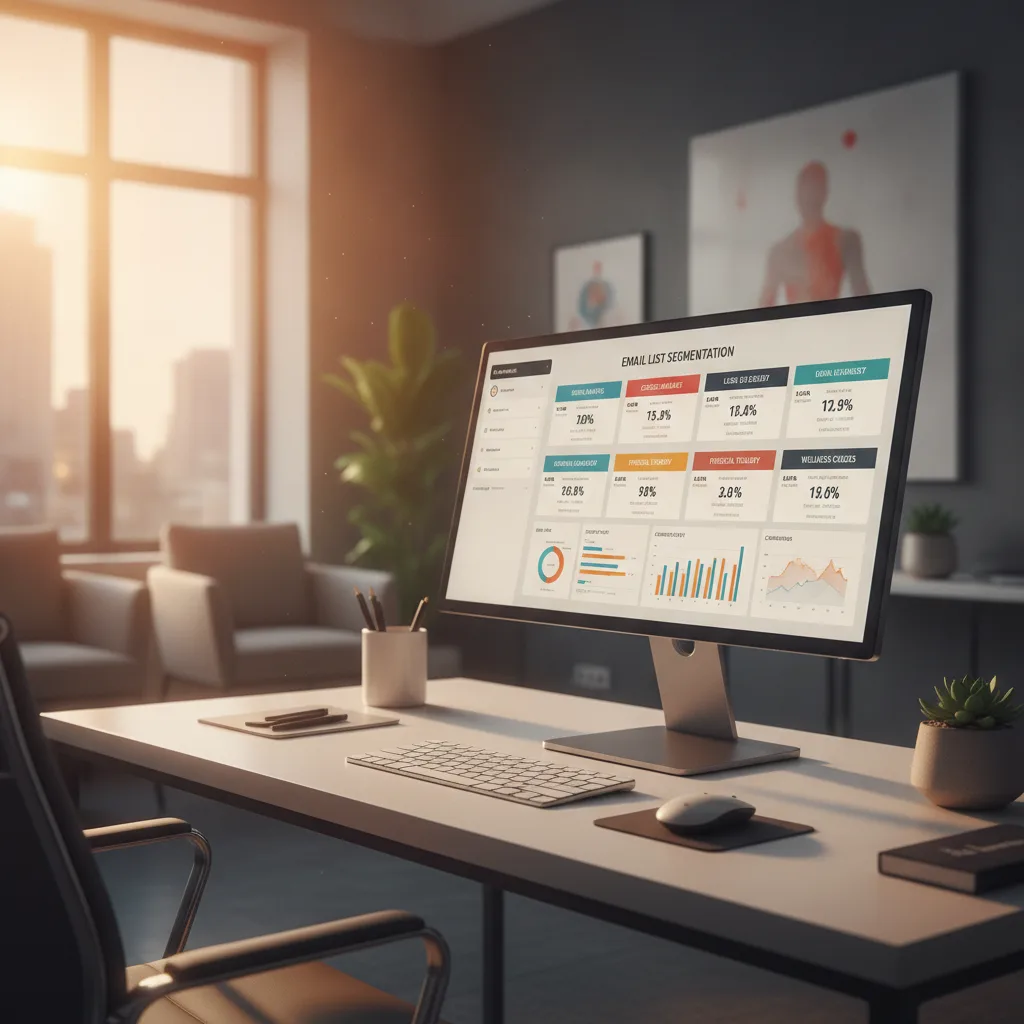
Segmented email campaigns for plastic surgery practices produce 30–50% higher open and conversion rates than unsegmented lists, according to ClinicGrower's 2026 research — which means your list structure determines your results more than your subject line does. Start with two dimensions: procedure interest (facial procedures like rhinoplasty and facelifts, breast procedures including breast augmentation and lifts, and body procedures like tummy tuck and liposuction) and funnel stage (new inquiry, post-consult, post-surgery). Those six buckets are the foundation everything else runs on.
Dynamic content is what makes segmentation pay off in practice. A breast augmentation prospect should receive emails referencing breast augmentation before-and-after results, her specific recovery timeline, and financing amounts sized to that procedure. Generic 'cosmetic procedure' language signals to prospective patients that you're sending the same email to everyone — which undermines the trust you're building. If your platform supports dynamic content blocks, map each block to a procedure tag at this stage so the automation does the personalization work later, keeping your email marketing campaigns relevant to each recipient without manual effort.
Many practices skip segmentation because it feels like extra setup time. The tradeoff is real: without it, you'll eventually conflate a rhinoplasty inquiry with a Botox patient, send irrelevant content, and watch unsubscribe rates climb. Spend two hours here. It's the step that unblocks everything else in this guide — and the step that makes it possible to nurture leads over a long decision timeline without burning your list.
GoHighLevel
From $97/mo (HIPAA configuration on higher plans)
All-in-one platform with CRM, pipeline automation, and email — the most practical compliant option for plastic surgery marketing agencies running segmented nurture sequences.
Paubox Marketing
From $199/mo
Built HIPAA-compliant from the ground up, signs a BAA, encrypts all outbound email in transit and at rest — the right choice if your plastic surgery practice manages its own email without an agency.
HIPAA Warning
Mailchimp is not HIPAA compliant and cannot be made compliant on any plan. Constant Contact will sign a BAA but its terms prohibit including procedure-specific health information. Using either platform for a post-consult sequence that references a patient's specific inquiry puts your practice at regulatory risk. Configure GoHighLevel or Paubox Marketing before you build any sequence.
Build the Six-Email Post-Consult Core Sequence
The proven post-consult email sequence for surgical procedures runs six touchpoints across 30 days: Day 0 is a thank-you and next-steps email, Day 3 covers a procedure education series with FAQs, Day 7 introduces financing options, Day 14 delivers a before-and-after gallery for the specific procedure, Day 21 features a surgeon video, and Day 30 is a re-consult offer or decision nudge. Most plastic surgery practices send one follow-up email after a consultation and stop. A six-email sequence converts leads that a single follow-up never would, because the decision timeline itself stretches 3–12 months for most procedures — and many practices never build the system to stay consistent across that window.
The Day 0 thank-you email is your highest-read message in the entire sequence — welcome emails average an 83.63% open rate across industries, making it a powerful tool for first impressions. That also makes it the worst possible place to introduce financing. Use it to recap what was discussed in the consultation, confirm the surgeon's name and direct line, and set clear expectations for what the patient will receive over the coming weeks. The first impression should be warmth and clinical credibility, not a payment offer.
Day 3 belongs to procedure education. Answer the five questions every patient searches after their consultation: What does recovery actually look like? How long until results are visible? What are the risks? Will I need time off work? Can I see more results for my specific concern? Pull your surgeon's real answers — generic health content copied from a medical reference site reads exactly like what it is, and it doesn't build trust in your practice specifically. Patient success stories and patient testimonials from past patients who had the same procedure belong here too, not as promotional emails but as social proof that answers the same questions your prospective patients are already asking.
Sequence Timing Note
These day intervals assume a prospect who has not yet booked. Once a patient books a procedure, pull them out of the nurture sequence immediately and move them to a pre-op and post-op care track. Sending a financing email to someone who already paid in full generates complaints and unsubscribes — and signals that your system isn't paying attention.
Write the Day 7 Financing Email as Patient Education, Not a Sales Push
The Day 7 financing email should lead with a monthly payment figure, not just announce that financing is available. 'Most patients finance their breast augmentation for $200–$354 per month' is more actionable and less salesy than 'financing is available' — the former answers the question the patient is already asking, the latter sounds like a payment desk follow-up. A breast augmentation in Austin typically runs $7,000–$9,500; financed over 24 months at 0% via CareCredit, an $8,500 procedure comes to roughly $354/month. That number belongs in the email subject line or the first sentence, not buried in a footnote.
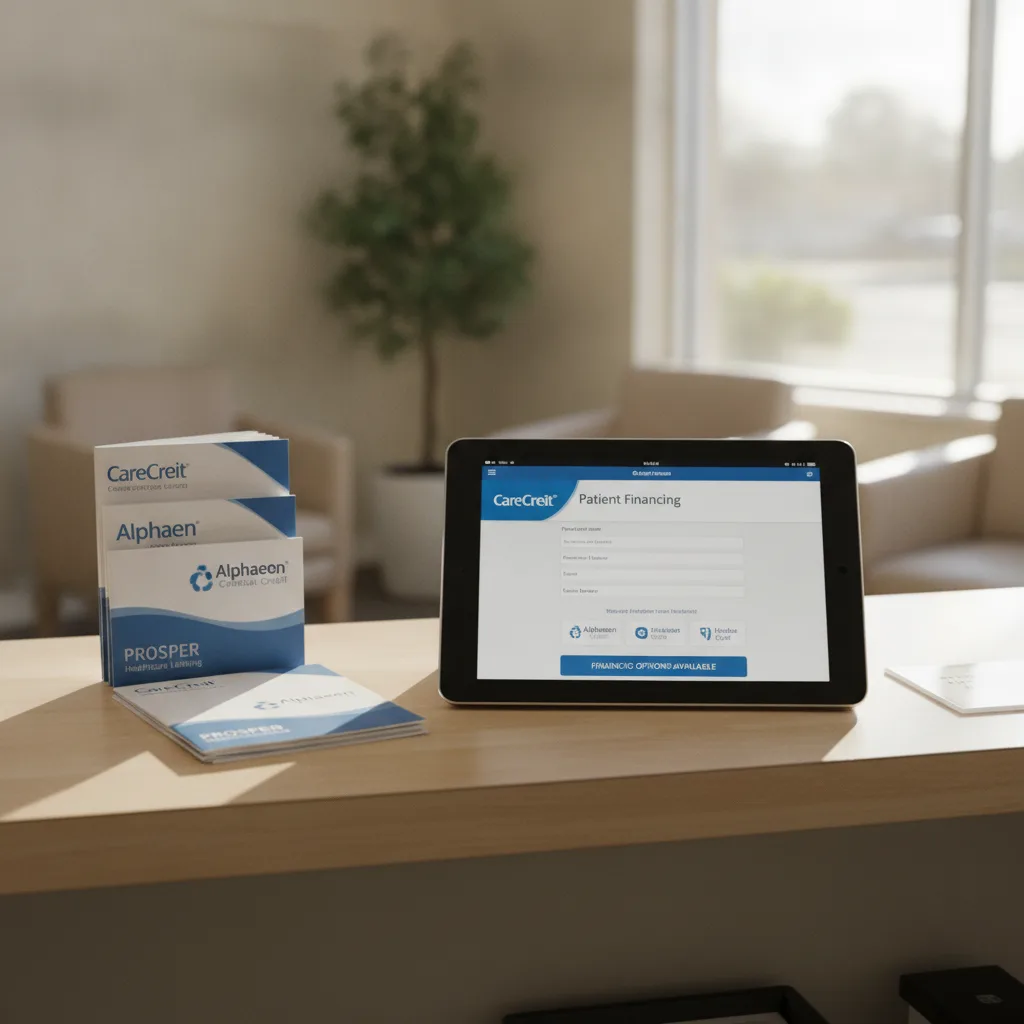
Frame the email around patient education, not promotion. Walk through the four main financing options available as of 2026: CareCredit (0% promotional APR for 6–24 months, accepted at 260,000+ providers nationally), Alphaeon Credit (0% for 6–24 months, designed exclusively for elective cosmetic procedures), Cherry (more flexible approval thresholds, shorter-term plans), and PatientFi (built specifically for surgical financing with higher approval rates for cosmetic procedures). One important detail to include: CareCredit's 0% promotional rate reverts to 26.99% retroactively if the balance isn't cleared by the promotional deadline. Telling patients this upfront is the kind of transparency that builds trust — and distinguishes your practice from competitors who leave patients to discover that detail on a bill.
The case for this email is documented. Research from PatientFi and Plastic Surgery Practice found that 40% of patients who did not move forward with plastic surgery would have said yes if they had known financing was available. And Synchrony's Healthcare Journey Research found that 57% of plastic surgery patients delay or avoid a procedure due to out-of-pocket cost concerns, while 83% say they would pursue additional services if flexible payment options existed. Most plastic surgery clinics only mention financing to patients who explicitly raise cost concerns. The Day 7 email is how you stop leaving that revenue on the table — without making every consult feel like a financing pitch.
CareCredit
No cost to patient at 0% promo; merchant fee applies to practice
Largest patient financing network at 260,000+ providers; 0% promotional periods of 6–24 months make it the most recognizable option to include in email copy.
Alphaeon Credit
Merchant fee varies; 0% promo for 6–24 months
Designed exclusively for elective cosmetic and aesthetic procedures — higher approval rates for the plastic surgery patient profile than general healthcare credit cards.
PatientFi
Merchant fee varies by plan
Built specifically for surgical financing; frequently cited by plastic surgery practices for higher approval rates and a straightforward patient-facing application flow.
Cherry
Merchant fee varies
More flexible approval thresholds than CareCredit — useful for patients who have been declined elsewhere and would otherwise go silent.
Set Up Dedicated Landing Pages for Every CTA in the Sequence
Set up a separate landing page for each primary call to action in your nurture sequence: re-consult booking, financing application, review submission, and photo consent form. Many practices conclude 'email doesn't convert' when the actual problem is a single broken CTA in a six-email sequence. If a prospect clicks your Day 30 re-consult offer and lands on your practice homepage instead of a booking page, you've lost that conversion — and it looks like the email failed when the email actually worked.
Each landing page should match the email it comes from in tone, procedure focus, and visual content. The Day 14 before-and-after gallery email should link to a procedure-specific gallery page, not a general results overview. The Day 7 financing email should link to a page that shows the same monthly payment examples from the email body, plus a financing application button for each provider you work with. Clear instructions on each page reduce friction and reduce unnecessary calls to your front desk from confused patients who clicked through but couldn't figure out what to do next.
Mobile optimization is non-negotiable here. Over 70% of plastic surgery website traffic arrives on mobile, which means your landing pages will almost certainly be viewed on a phone. Mobile-optimized pages with large tap targets and simple forms are essential — test every CTA on a real iOS device before the sequence goes live. A button that's too small to tap or a form that breaks on mobile is enough to kill an otherwise well-built sequence, and it's the kind of error that's easy to miss during desktop testing.
Webflow
From $23/mo (CMS plan)
GPS's preferred platform for building SEO-forward, mobile-optimized landing pages — faster to publish and easier to update than WordPress for individual CTA pages.
GoHighLevel (built-in funnel builder)
Included with GoHighLevel subscription
If you're already running your email sequences in GoHighLevel, its built-in landing page builder keeps tracking and attribution in one platform without additional integration work.
Build the Reactivation Campaign for Cold Leads
Reactivation campaigns for cold leads work best when they re-engage with something genuinely new: fresh before-and-after results, a special consultation offer, or a financing promotion that removes the original barrier — not a generic 'just checking in' message. A lead who expressed interest six months ago and went silent doesn't need a reminder that you exist; they need a reason to reconsider. 'A lot can change in 60 days — financing options, procedure availability, recovery timing' gives the patient a reason to re-engage without implying they should have already booked.
The reactivation sequence typically runs three emails over two weeks, spaced four to five days apart. The first email re-introduces the practice with something new — a patient story from a past patient who had the same procedure, or a new before-and-after result from your gallery. The second email addresses the most common barrier for that procedure segment: for breast augmentation and tummy tuck leads, that barrier is almost always cost, which makes it the right place to resurface financing options with updated monthly payment figures. The third email is a low-pressure re-consult offer — a free 15-minute phone call or a discounted follow-up consultation, depending on your practice's approach. Keep calls to action simple and specific in each email.
One rule holds across all reactivation campaigns: do not start with an apology for not being in touch, and don't open with a promotional discount. Both signal desperation. The tone should read like a knowledgeable coordinator reaching out with genuinely useful updates — not a practice that hasn't thought about the patient in months and suddenly wants a booking. Stay consistent with the voice and visual identity of the original nurture sequence so the email feels like a continuation, not a cold outreach.
Build the Post-Surgery Retention Sequence for Existing Patients
Post-surgery email sequences are a direct revenue lever most plastic surgery practices ignore. Roughly 40% of cosmetic surgery patients are repeat patients, and approximately 90% are satisfied with their procedure outcomes — the conditions are ideal for a structured retention sequence targeting complementary procedures and referral incentives. The sequence has three phases: post-op care emails timed to recovery milestones (days 3, 7, 14, and 30 post-surgery), a satisfaction and testimonial request at 6–8 weeks when patient outcomes are visible, and a complementary procedure introduction at 3–6 months.
The post-op care emails are not marketing — they're clinical support. Clear instructions for what to expect at each recovery stage, when to call the office, and what's normal versus what warrants concern. These emails reduce patient anxiety, cut unnecessary calls to your front desk staff, and directly increase patient satisfaction scores. Satisfied patients who felt supported through recovery are the most reliable source of word-of-mouth referrals and online reviews — both of which improve search results visibility for your practice over time.
The 6-week review request is where email marketing connects directly to your online reputation. At that point, satisfied patients have visible results and are emotionally at peak satisfaction. A short, plain-language email asking them to share their experience — with a direct link to your Google profile — generates glowing reviews more reliably than any third-party review management platform, because it arrives at exactly the right moment. Those reviews drive credibility with new prospective patients, improve organic search results visibility, and cost nothing to generate beyond the email itself. The post-surgery sequence is the most cost-effective marketing investment in your entire system once it's running.
Referral Incentives
If your practice offers referral incentives, the 3–6 month post-surgery email is the right place to introduce them — after the patient has had time to see and share their results. Tie the referral ask to their outcome: 'If you've been happy with your results, we'd love to meet the people in your life who've been asking about your transformation.' Avoid introducing referral incentives in the immediate post-op period, when patients are focused on recovery, not recommendations.
Connect Email to Your Broader Marketing Strategies: Google Ads, SEO, and Social
Email marketing for plastic surgeons works best as one channel in a multi-channel system, not a standalone lead generation tactic. Google Ads and Local Service Ads drive the initial inquiries that feed your email list; SEO builds the organic search visibility that keeps new leads arriving without paying per click every month; social media channels like Instagram and Facebook keep your practice visible during the long consideration window. Email is the channel that converts those leads over a 3–12 month decision timeline — the only channel that stays present across that entire window without requiring the patient to seek you out again.
Coordinate your email campaigns with your paid ad campaigns. If you're running Google Ads promoting a specific procedure, make sure the post-consult nurture sequence for that procedure is live and tested before the ads go up. Many practices invest heavily in Google Ads, drive consultation inquiries, and then lose those leads to silence because no structured follow-up exists. The ads generate the lead; the email sequence closes it. Both have to be running for the system to work — and both need dedicated landing pages that match the ad's procedure focus and tone.
Track your email metrics in the same dashboard where you track paid ad performance: cost per lead, conversion rate from inquiry to booked consultation, and revenue per email sequence. The healthcare and medical email benchmark as of 2026 is a 43.75% average open rate and 2.25% click rate (MailerLite, data from 3.6M+ campaigns). If your open rates fall below that threshold, start with subject line testing. If click rates are low, audit your landing pages first — most of the time, the email copy isn't the problem. Use CallRail to connect email send data to actual booked consultations so you're measuring true ROI, not just open rates.
CallRail
From $45/mo
Tracks phone calls generated by email campaigns using dynamic number insertion — connects email send data to actual booked consultations so you can measure true ROI, not just open rates.
Google Ads
Varies by budget and market
Primary paid channel for driving new plastic surgery inquiries into the top of the email nurture system; works best when each ad campaign feeds a matching post-consult sequence.
The One Mistake That Voids the Entire Sequence
Every step in this guide falls apart if your platform isn't HIPAA compliant. A post-consult sequence that references a specific procedure by name is sending protected health information. Mailchimp and standard Constant Contact plans do not qualify, and using them for procedure-specific nurture emails exposes your practice to regulatory risk that no open rate is worth. Set up GoHighLevel with HIPAA configuration or Paubox Marketing before you build anything else. Your marketing team or agency should confirm in writing that a Business Associate Agreement is in place and that email content is encrypted in transit and at rest.
Plastic surgery practices that consistently book from their email list share one thing: they treat the post-consult sequence as a system, not a series of one-off messages. They build it once, test it, and let it run. The financing email converts because it arrives at Day 7, after trust is established, with real monthly payment numbers instead of vague payment options language. The reactivation campaign works because it shows up with something new rather than a check-in that implies the patient forgot to book. And the post-surgery sequence generates referral incentives and glowing reviews that keep the top of the funnel full without spending more on ads. At Geek Powered Studios, we build and run this exact system for plastic surgery practices — the sequences, the landing pages, the HIPAA-compliant platform configuration, and the Google Ads campaigns that feed new leads into the top. We've done it for Lakeway Cosmetic Dentistry (105% increase in ads leads, 133% conversion rate increase) and San Antonio Eye Specialists (196% PPC leads in six months). We include a custom website at no extra cost, we don't lock you into a long-term contract, and we work with one practice per specialty per market. If you want to see exactly how the system would work for your practice, book a free strategy session and we'll map it out.
Frequently Asked Questions
Ready to get started? Contact Geek Powered Studios today.