
Fence company marketing budgets run $1,500–$4,000 per month for small operators doing $250K–$500K in annual revenue, $3,000–$8,000 per month for mid-size companies at $500K–$1.5M, and $6,000–$15,000-plus for established companies above $1.5M. The first dollars belong in Google Local Services Ads — averaging $53 per lead across an 888-contractor dataset — paired with a complete Google Business Profile that costs almost nothing in dollars but earns 42% more direction requests versus bare listings. Growth-stage fence companies typically need to push toward 10–15% of target revenue to actually move market share, not just maintain it. Where most owners lose money: flat year-round ad budgets, shared pay-per-lead platforms like Angi, and Google Smart campaigns with no negative keyword list.
-
$53/lead via Google LSALowest cost per lead of any paid fence channel in 2026
-
$1,500–$15,000+/moFull budget range across all fence company revenue tiers
-
Put first dollars in LSA and Google Business ProfileHighest ROI starting point before any other channel
-
$54.60 CPL on $10,200 ad spendTennessee fence company result with structured Search campaigns
-
Run seasonal budgets, not flat onesPeak demand is April–July; off-season spend burns money
-
One page can't rank for every fence typeEach material and city needs its own dedicated page
-
10–15% of target revenueWhat growth-stage fence companies actually need to spend
-
Track every lead by channel before scalingCallRail reveals what's working before you double down
Marketing budgets for fence companies run from $1,500 to $15,000-plus per month depending on company size, market competition, and how aggressively you want to grow — but the number itself matters less than where the money goes. Most owners either underfund the channels that produce estimate requests or overspend on platforms that send the same fence lead to four competitors at once. The U.S. fencing market reached approximately $10.32 billion in 2026, up from $9.81 billion the prior year, driven by residential construction, property security demand, and suburban growth across the country. The contractors capturing that opportunity aren't spending more than their competitors — they're spending smarter, starting with the right channels and building from there. This guide gives you a real breakdown of what to spend, where to spend it, and what to stop paying for.
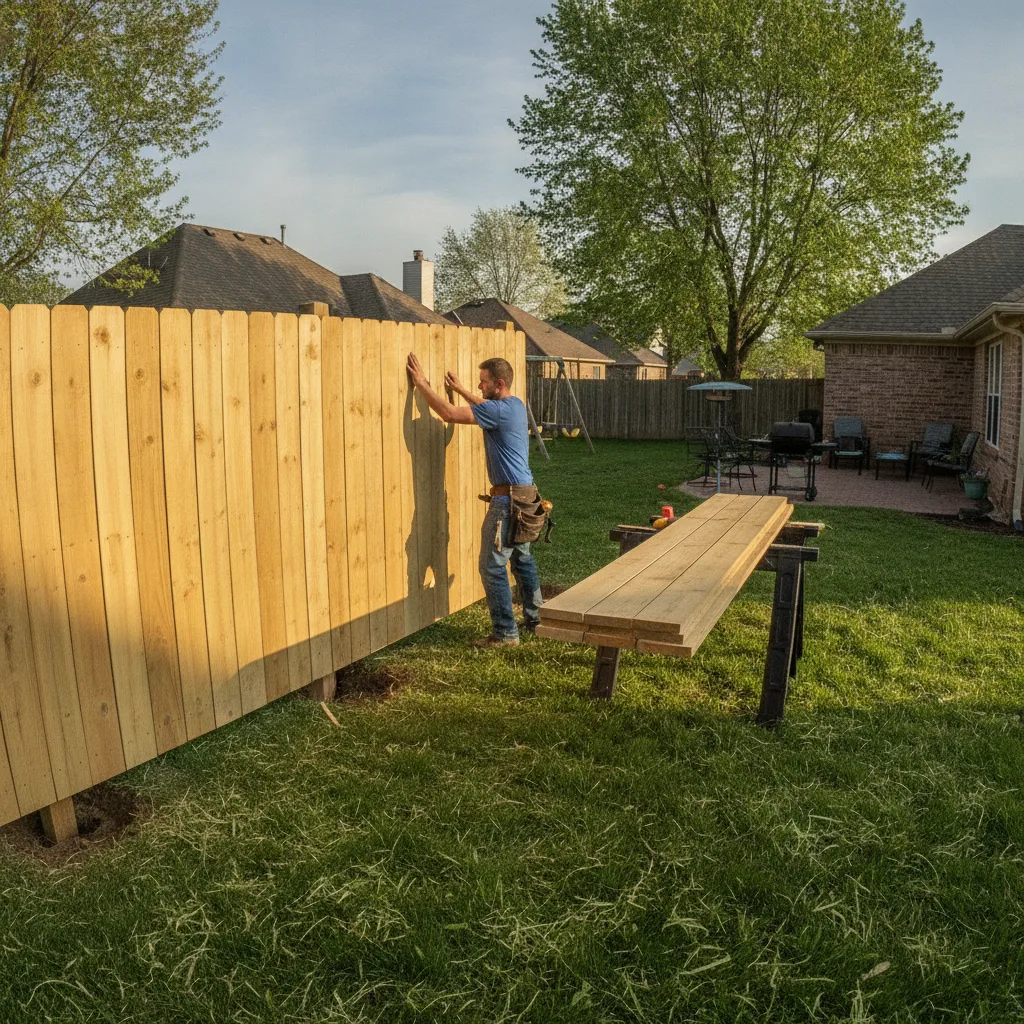
Fence Company Spend by Revenue Tier: What It Costs in 2026
| Tier | Price range | What's included | Best for |
|---|---|---|---|
| Starter | $1,500 – $4,000/mo | Google LSA, Google Business Profile optimization, local SEO foundation | Fence companies doing $250K–$500K in annual revenue that need their first predictable lead flow beyond referrals |
| Growth | $3,000 – $8,000/mo | Google LSA, structured Google Search Ads with negative keywords, material-specific SEO pages, light Meta Ads | Mid-size fence companies doing $500K–$1.5M in revenue that are ready to compete across multiple channels and fence types |
| Scale | $6,000 – $15,000+/mo | Full multi-channel system: LSA, Search Ads, Meta Ads, aggressive SEO, content, reputation management, CRM automation | Established fence companies doing $1.5M-plus in revenue that want to dominate their market and grow crew capacity |
What You Get at Each Budget Level
Starter
At this tier, the first dollars go to Google Local Services Ads — the highest-ROI paid channel for fence contractors in 2026, averaging $53 per lead across an 888-contractor dataset with $6.72 million in tracked spend. That's table stakes. The second priority is a complete, photo-rich Google Business Profile. A fully optimized profile costs almost nothing in dollars but earns 42% more direction requests and 35% more website clicks versus bare listings, per the Google/Oxera study. A fence company at this tier should expect 15–30 qualified leads per month when these two channels are properly dialed in. Yard signs at every job site and radius mailers to the 50 nearest neighbors after each completed project add neighbor marketing at almost zero incremental cost.
What this budget does not cover is a true multi-channel system. There's no room for Meta Ads, and local SEO at this range takes 6–12 months to compound into real organic traffic. The math still works: a $5,000 average job at 50% gross margin yields $2,500 in profit against a $53–$75 cost per lead, so even modest volume justifies the investment. A fence company owner at the lower end of this tier should focus on getting every inquiry to convert before expanding the channel mix — because more leads mean nothing if the phone goes unanswered for three days.
Growth
This is where fence marketing starts to compound. A properly structured Google Search Ads campaign — tightly themed ad groups, a negative keyword list blocking 'DIY,' 'jobs,' 'salary,' and 190-plus other non-buyer terms — produces leads in the $40–$75 range versus $100-plus from unoptimized Smart campaigns. The difference between those two numbers isn't bidding harder; it's keyword relevance and negative keyword discipline. A Tennessee fence company proved this at scale: 186 conversions at $54.60 cost per lead on $10,200 in total Google Ads spend (Samuel Henke PPC, 2024). Budget allocation at this tier should roughly follow: Google Ads 35–40%, local services ads 15–20%, local SEO and website 15–20%, Meta Ads 15–20%, with the remainder on reputation management and tracking tools like CallRail.
The website also needs dedicated service pages for every fence type installed: wood fence, vinyl fence, chain link, aluminum and ornamental iron, privacy fence, and at least one location page per service-area city. Each fence type is a different buyer with a different budget and decision timeline. A homeowner researching privacy fence cost is further along in the purchase process than one searching 'wood fence vs. vinyl fence' — and they each need a page built for that specific search. A single catch-all fencing services page cannot rank for all of those searches simultaneously because search engines rank individual pages on specific topics. Website content quality and page structure are what drive rankings, not just the number of pages you publish.
Scale
At this budget, fence marketing becomes a system rather than a tactic. Google Search Ads and local services ads run simultaneously to cover both branded and non-branded intent. Meta Ads run pre-spring campaigns in February and March targeting homeowners researching wood privacy fence cost and pool enclosure options before spring demand peaks and competitors flood every auction. By the time April arrives and peak season hits, the pipeline is already full. Dedicated content pages answer every material comparison question a homeowner asks before requesting a free estimate — wood fence installation versus vinyl, chain link versus ornamental iron, permit requirements and code compliance by city.
CRM automation via GoHighLevel ensures follow-up emails and text messages go out within minutes of every estimate request, because speed-to-contact is where booked jobs are won or lost. At the higher end of this tier, commercial fencing projects and HOA direct outreach become viable secondary channels that most competitors ignore entirely — and they represent average job values well above the residential baseline. SEO compounds organic traffic month over month, reducing reliance on paid search over a 12–18 month horizon. Clients at this level typically see the clearest return on investment because every channel reinforces the others: ads capture new searches, reviews convert fence inquiries into calls, and SEO builds rankings that keep working even when ad spend pauses.

Pros and Cons of Paid Fence Marketing Strategies
- $53/lead via Google LSA is the most cost-efficient paid channel for fence contractors as of 2026, based on $6.72M in tracked spend across 888 contractors — and it runs pay-per-lead, not pay-per-click, so you only pay when a homeowner actually contacts you.
- Google Business Profile costs almost nothing in dollars — just time and photos. A complete, photo-rich profile is the difference between appearing in the Google Maps 3-pack and being invisible to homeowners searching 'fence company near me.' More photos earn 42% more direction requests and 35% more website clicks. Send every customer a direct Google review link immediately after project completion to build the review count that closes high-ticket fence sales.
- Referrals close at 50–65% and a $200 referral fee on a $6,000 fence job is a 3.3% acquisition cost — far lower than Google Ads at 5–8% or Angi at 12–18% of job value per booked job. The catch: referrals don't scale on demand and dry up when a crew has a slow month.
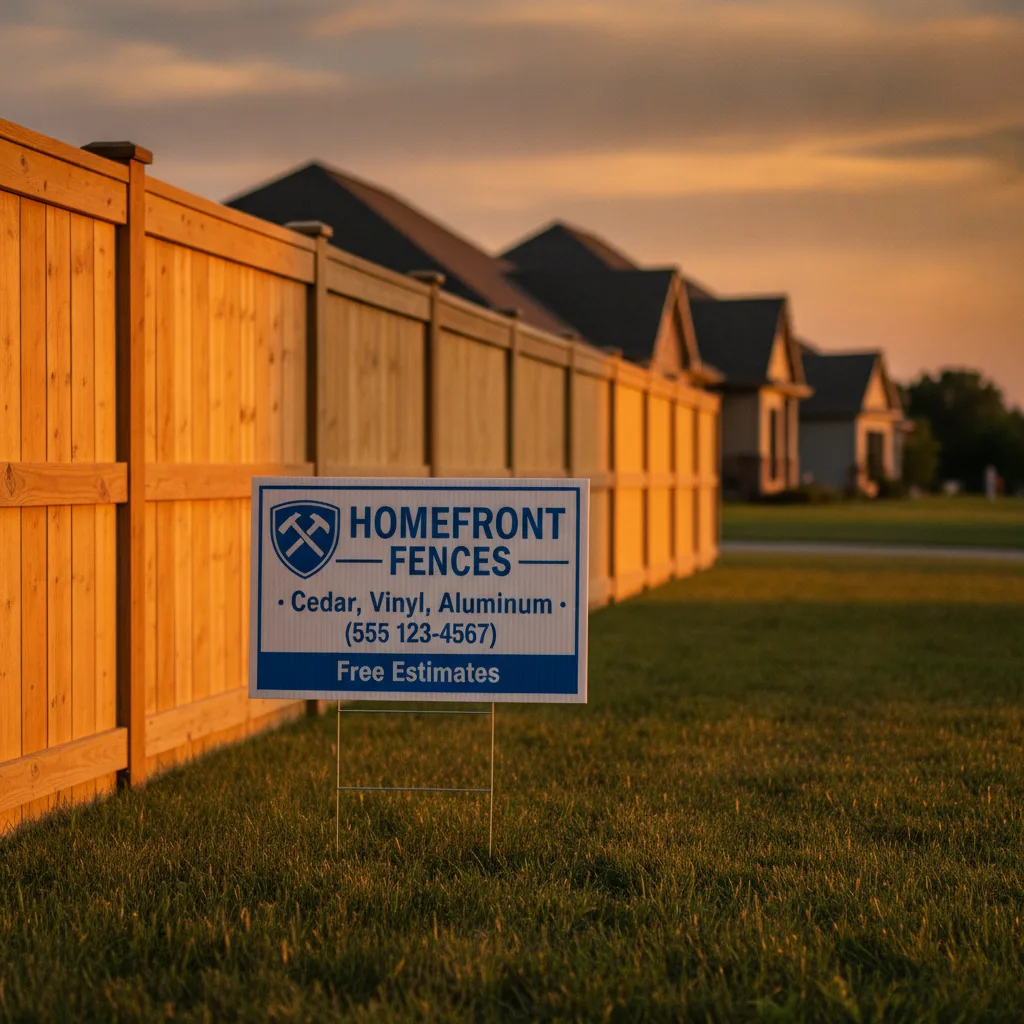
- Yard signs and radius mailers after project completion are among the highest-ROI fence marketing tactics available — the physical fence installed in a neighborhood creates awareness before a single dollar of advertising is needed, and neighbors who see the completed job are already pre-sold on quality.
- Material-specific SEO pages compound over time giving a fence company organic traffic for wood fence, vinyl fence, chain link, ornamental iron, and privacy fence searches — each a distinct buyer with a different budget and decision timeline. These pages produce leads months or years after the initial build.
- Gross margins of 40–60% make the ROI math on paid search unusually favorable: a $5,000 average job value at 50% margin yields $2,500 in gross profit against a $50–$75 cost per lead, which is why fence installation is one of the stronger home services trades for paid advertising compared to lower-margin work like plumbing service calls or HVAC tune-ups.
- Flat year-round ad budgets burn money in the off-season because fence installation peaks March through August. Overpaying October through January when homeowners aren't actively searching means underfunding April through July when spring demand is highest and every competitor is bidding for the same fencing keywords.
- Angi and Thumbtack shared leads close at 15–20% versus 28–35% for exclusive Google Ads leads. A $65 Angi lead routinely costs more per booked job than a $90 Google Ads lead once the close rate difference is factored in — and you're competing against three other fence contractors on every single inquiry. When lead drops happen on those platforms, there's no budget buffer and no alternative channel already running.
- Google Smart campaigns with no negative keywords quietly drain ad spend on DIY searchers, job seekers, and 'how to' queries. Most fence companies running their own ads have fewer than 15 negative keywords; a properly built list should block 190-plus fencing keywords that signal non-buyer intent. Every wasted click is a dollar that can't produce a real estimate request.
- One 'Fencing Services' page cannot rank for every fence type because search engines rank individual pages for specific topics. Lumping wood fence, vinyl fence, chain link, and aluminum onto one page signals authority on none of them — and leaves you invisible in searches that buyers use when they've already decided on a material.
- SEO takes 6–12 months to produce meaningful organic leads which means fence companies that skip paid search while waiting on SEO will face a real lead gap in the first two quarters — a common and painful miscalculation that stalls crew capacity and forces owners to cheap out on hiring.
- No tracking means no optimization Without CallRail routing calls by channel, a fence company owner has no way to know whether leads are coming from Google Ads, LSA, organic search, or yard signs — and can't cut what's not working before it does real budget damage. Tracking isn't optional; it's the only way to manage spend with confidence.
How to Set Your Fence Company Marketing Budget: 6 Steps with Exact Numbers
- Start with your revenue target, not last year's percentage Most fence company marketing budget advice says to spend 5–10% of revenue, but growth-stage businesses often need 10–15% to actually move market share — so anchor your number to where you want to be in 12 months, not where you are today, and multiply that target revenue figure by your chosen percentage to get a clear dollar figure.
- Put your first dollars into Google LSA and your Google Business Profile Before any other channel, Google Local Services Ads at an average of $53 per lead and a fully optimized Google Business Profile that costs almost nothing in dollars give you the fastest path to qualified estimate requests — expect 15–30 calls per month when both are properly set up.
- Add a structured Google Search Ads campaign with a real negative keyword list A properly built Search campaign with tightly themed ad groups and 190-plus negative keywords blocking DIY, jobs, and salary queries can bring cost per lead down to $40–$75 — the Tennessee fence company case study hit $54.60 CPL on $10,200 in total ad spend, proof that structure beats raw budget.
- Build dedicated pages for every fence type and service-area city Each fence material — wood fence installation, vinyl fence, chain link, ornamental iron, privacy fence — and each city in your service area needs its own page, because search engines rank individual pages for specific searches and a catch-all page ranks for none of them, leaving buyers who've already decided on a style invisible to you.
- Shift budget seasonally, not flat across 12 months Run full ad spend April through July when spring demand peaks, reduce to shoulder spend in February through March and August through September, and redirect winter dollars — January through the slowest weeks — toward SEO and content rather than burning them on low-demand months.
- Track every lead by channel before you scale Set up CallRail or a comparable call-tracking tool so you know exactly which channel — LSA, Search Ads, organic, or referral — is producing booked estimates before increasing any line item in your marketing budget, because scaling the wrong channel is how fence companies fall into the same overspend traps they started with.
The Pay-Per-Lead Platform Trap
Angi and Thumbtack send the same fence lead to multiple contractors simultaneously, dropping close rates to 15–20% on shared leads. Run the math: a $65 Angi lead that closes at 17% costs roughly $382 per booked job, while a $90 exclusive Google Ads lead closing at 30% costs $300 per booked job. The nominally cheaper lead ends up costing 27% more per booked job — and when lead drops happen on those platforms, there's no budget buffer and no alternative channel already running to pick up the slack.
Geek Powered Studios has helped fence companies and home services contractors build marketing systems that generate real, trackable leads — not vanity clicks or inflated impressions. Our work with Serview Home Pros produced 25 qualified leads and a 6% conversion rate starting from nearly zero online presence. Every engagement includes a custom website at no extra cost, no long-term contract, and market exclusivity in your city — meaning we don't work with your direct competitor while we're working with you. Fence company owners across Texas, Florida, and the rest of the country who struggle to identify where their ad spend is actually going come to us for a clear breakdown and an action plan tied to real numbers. If your current fence marketing budget isn't producing predictable estimate requests every week, let's look at the numbers together and find exactly where the dollars are going and where they should go.
Frequently Asked Questions
Ready to get started? Contact Geek Powered Studios today.