
Electrician email marketing returns $36–$45 for every $1 spent as of 2026, making it the highest-ROI digital marketing channel available to electrical contractors. The system that produces that return is not a newsletter — it is three automation triggers built on your existing customer database: a post-job follow-up sequence (Day 1 thank-you plus Day 14 referral ask), date-triggered maintenance reminders tied to panel upgrade and generator install dates, and a four-window Texas seasonal calendar covering April storm prep, summer surge season, October generator readiness, and December lighting safety. A 500-contact list running all three triggers at a 2% per-send conversion rate and a $500 average ticket produces $5,000 per campaign on a platform cost of $13–$149 per month.
-
$36–$45Email ROI per $1 spent in home services (2026)
-
3–5 hoursTime to build and launch all three triggers
-
28–35%Target open rate for home service email lists
-
13–18xRevenue lift from automated flows vs. one-off campaigns
-
$13–$149/moPlatform cost range from Mailchimp to Housecall Pro
-
59%Share of home service leads driven by referrals (Jobber 2026)
-
85%+Email capture rate when techs ask during invoicing
-
2% per sendConversion rate that produces $5,000/campaign on 500 contacts
Electrician email marketing returns $36–$45 for every $1 spent in home services as of 2026, making it the highest-ROI digital marketing channel available to electrical contractors — ahead of Google LSA, paid ads, and direct mail. Most electricians never see that return because they treat email as a newsletter strategy: write something when you have time, send it to everyone, wonder why conversion rates are low. The system that actually produces revenue is three automation triggers built on the customer database you already own. This guide walks through each trigger step by step, names the right platform at each budget tier, and gives you the subject line formulas and revenue math to know whether the effort is worth it before you start.
Before you start
- A customer database of at least 50 past jobs with email addresses captured at invoicing — 85%+ capture rate is achievable when techs ask during payment
- A verified business email domain (e.g., info@yourbusiness.com) — Gmail or Yahoo addresses trigger spam filters and destroy deliverability for your real customer list
- One platform matched to your shop size: Mailchimp Essentials ($13/mo) for solo operators under 300 contacts, Jobber Campaigns add-on ($29/mo) for 1–4-truck shops, Housecall Pro for 2–8-tech operations, or ServiceTitan Marketing Pro for $1M+ firms
- Basic job-type tags or audience segments in your CRM separating residential from commercial, and panel/generator/EV charger jobs from standard service calls
- A Google Business Profile to receive the review requests your post-job sequence will generate
- 30 minutes to write three core email templates before you turn on automation

Build and Segment Your Electrician Email List Before Sending a Single Campaign
Your customer database is the asset — the email platform is just the pipe. Post-job email capture rates hit 85%+ when technicians ask for the customer's email as part of the standard invoice or payment process, which means the list-building bottleneck for most electrical businesses lives in the field, not in the inbox. Add a single line to your close-out script: 'Can I grab your email for your service records and any maintenance reminders?' That one habit change fills your list faster than any web form, and it keeps your audience segments clean from day one because job type is captured at the same moment.
Segment your existing contacts into four groups before you build any automation: (1) residential homeowners who had standard service calls, (2) customers with panel upgrades already completed, (3) customers with generator or whole-home surge protection installs, and (4) EV charger installation customers. These four groups need different messaging — a panel upgrade customer is a prime candidate for a generator email; an EV charger customer is not yet a panel upgrade prospect. Sending the same message to all four trains your audience to ignore everything. Targeted campaigns by job type consistently outperform broadcast blasts on open rate, click-through rate, and booked jobs.
Property managers and light commercial accounts belong in a fifth segment. Their service history and decision-making timeline differ enough from residential customers that blending them into the same campaigns hurts conversion rates on both sides. Most electricians skip this split and wonder why their open rates drop after 90 days. The customer retention math is simple: relevant messages to the right audience segments produce repeat business; irrelevant marketing messages produce unsubscribes.
Jobber Campaigns add-on
$29/month
Native to the Jobber CRM used by most 1–4-truck shops; pulls job-type tags automatically so segmentation requires no manual list exports.
Mailchimp Essentials
$13/month
Best fit for solo operators with fewer than 300 contacts who export from QuickBooks or a spreadsheet; audience tags replicate basic segmentation without a field-service CRM.
ServiceTitan Marketing Pro
Custom (enterprise)
Right choice for electrical contractors at $1M+ revenue; audience segments update in real time from dispatch data with no manual work.
Do not buy a list
Purchased email lists for electricians produce spam complaint rates above 0.5%, which gets your sending domain blacklisted and kills deliverability for your real customer list. Every contact in your system should be someone who paid you for electrical work or explicitly asked to hear from you. There are no shortcuts here that don't cost you the channel entirely.
Set Up the Post-Job Follow-Up Sequence: Your Highest-ROI Email Campaigns
Automated email flows outperform one-off campaigns by 13–18x on revenue metrics, and the post-job sequence is the single highest-leverage automation an electrical contractor can build. The structure is simple: Day 1 sends a thank-you with the completed job summary and a direct link to your Google Business Profile for a review; Day 14 sends a referral ask. Two follow-up emails. That sequence does more revenue work than a monthly newsletter ever will, and it runs without anyone on your team remembering to send it.
The Day 1 thank-you email should confirm the work completed, include the technician's name, and ask for a Google review with a direct link — not a link to your website homepage. Subject line formula: '[Tech Name] wanted to make sure everything looks good at [street address].' That specificity gets 28–35% open rates on home service lists, well above the 19.21% all-industry average, because it reads like a personal follow-up rather than a marketing message. Happy customers who receive this email within 2 hours of job completion leave reviews at a measurably higher rate than those who receive it the next day.
The Day 14 referral email is where most electricians leave money on the table. According to Jobber's 2026 Home Service Trends Report, referrals drive 59% of lead volume for home service businesses, and referred customers spend 25% more on their first job and are 3x more likely to refer friends in turn. The framing that converts: lead with what the referred friend gets ('Your neighbor gets $50 off their first service call') rather than what the referrer earns. That single framing shift is the difference between an email that books new customers and one that gets deleted. Satisfied customers who already trust your electrical business are your most effective sales channel — the referral ask turns that trust into new business consistently.
Housecall Pro
From $149/month (Essentials)
Post-job automation fires within minutes of job close in the mobile app — no manual trigger needed for 2–8-tech shops running multiple daily jobs.
Timing matters
Send the Day 1 thank-you within 2 hours of job completion, not the next morning. Open rates on same-day follow-up emails run 15–20% higher than next-day sends because the job is still fresh and the customer is still in a satisfied mindset. Configure your platform to fire the trigger automatically at job close, not on a scheduled morning batch.
Build Date-Triggered Maintenance Reminder Email Sequences Tied to Service History
Date-triggered email sequences generate recurring revenue without requiring anyone on your team to remember which customer is due for service — the automation fires based on the install date stored in your CRM. For electrical contractors, three triggers produce the most consistent repeat bookings from existing customers: an annual panel assessment reminder sent 11 months after a panel upgrade, a generator service reminder sent 10 months after generator installation, and a surge protector test reminder sent every 12 months for whole-home surge protection customers. These service reminders are the clearest example of consistent communication that pays for itself.
The revenue math on these date-triggered sequences is straightforward. A panel upgrade runs $1,500–$5,000; an annual panel assessment reminder that converts 10% of your panel upgrade customer list into a $200–$400 inspection call pays for your email platform 20 times over. Generator installation averages $5,000–$15,000; a customer who paid that much will respond to a service reminder. EV charger installation averages $800–$2,000, and the residential service and repair segment is growing 14.6% annually — those customers are prime candidates for a surge protection upsell email 6 months post-install. These are not manufactured urgency emails; they address real safety inspections that the equipment actually needs.
Subject lines for maintenance reminders outperform generic subject lines by a wide margin when they include the service type and a timeframe. 'Your generator is due for its annual service (before storm season)' beats 'Important message from ABC Electric' on every metric. Keep the email body to three short paragraphs: what needs attention, why it matters in plain language, and a single clear call-to-action button to book online or call your direct line. No coupons, no sales pitch — just a useful reminder that positions your electrical business as the one that actually looks out for existing clients after the completed job.
If your CRM lacks install-date fields
Use Jobber's custom fields or a Mailchimp tag formatted as YYYY-MM to store install dates. A spreadsheet-based workaround: sort by job date, filter by job type, and upload a refreshed segment monthly until you migrate to a platform that handles date triggers natively. This is worth the manual effort — the revenue from a single annual reminder campaign covering 50 panel upgrade customers at 10% conversion is 5 inspection calls at $300 average, or $1,500 per send.

Build the Texas Seasonal Email Calendar for Your Electrical Business
Texas weather patterns create four predictable email windows each year where safety reminders convert at the highest rates. April is spring storm prep: send a whole-home surge protection email to any customer who doesn't already have one installed. The subject line 'Storm season starts in 3 weeks — is your panel protected?' speaks to a real, time-bound risk. June through August is surge and heat season: HVAC circuits, outdoor outlets, and aging panels under summer load are legitimate safety concerns, not manufactured urgency — send relevant messages about outlet safety and panel capacity to your older-home segment. October is generator readiness: send to your generator install list and to any customer in a neighborhood with recurring outage history. December is holiday lighting safety: a genuinely helpful email about safe outdoor outlet loads and GFCI requirements that positions your team as the expert to call before a problem happens.
The content ratio for electrician email marketing should be 80% genuinely helpful content — safety tips, energy-saving advice, seasonal reminders — and 20% promotional offers or seasonal promotions. Treating every email as a coupon trains existing customers to ignore all emails. A December safety email that teaches homeowners how many amps a typical holiday lighting setup draws, then mentions you offer a free outlet assessment with any service call, converts at a higher rate and produces fewer unsubscribes than a '15% off this month only' blast. The 80/20 rule applies to every email in your calendar, not just the seasonal ones.
Sync these seasonal campaigns to your slow periods, not your busy ones. Most Texas electricians are fully booked June through August. Schedule the surge protection emails for late May to capture the pre-season window when customers are planning ahead rather than reacting to an emergency. The October generator email should go out the first week of October, before the first cold front, so customers have time to schedule before your calendar fills. Pre-loading all four seasonal campaigns in a single planning session — one afternoon per year — means your marketing efforts run on schedule without anyone on your team managing a send calendar month to month.
Constant Contact Lite
From $12/month
Calendar-based scheduling UI makes it easy to pre-load all four seasonal campaigns in a single planning session; a solid fit for shops without a dedicated field-service CRM who want simple seasonal promotions on autopilot.
Write Compelling Subject Lines and Electrician Email Copy That Get Opened
Electrician email subject lines that include a specific service type, a timeframe, or the customer's street name consistently outperform generic subject lines. Five formulas that work for electrical contractors: (1) '[Tech Name] finished your panel work — here's what we found' (post-job follow-up), (2) 'Your generator hasn't been serviced since [month, year]' (maintenance reminder), (3) 'Before the next storm: whole-home surge protection for [neighborhood]' (seasonal), (4) 'Your neighbor on [street] just upgraded their panel — here's why' (social proof with before and after context), (5) 'One thing most older homes in [city] are missing' (EV charger installation or panel upgrade lead). Each formula makes the marketing message feel relevant rather than broadcast, which is what keeps your audience engaged over months and years of consistent communication.
Keep the body of each electrician email under 200 words. Three paragraphs maximum: a clear statement of what you're addressing and why it matters right now, one sentence of credibility — years in business, number of completed projects, a specific success story — and a single call-to-action. No attachments, no PDFs, no image-heavy templates that break on mobile. Plain text with one linked button renders cleanly in every inbox and avoids spam filters. This is not a design challenge; it is a communication discipline. Shorter emails get read. Longer emails get deleted.
The 80/20 content rule applies to the body of each email, not just the subject line. An electrician email that leads with 'Did you know 48 million U.S. homes have panels over 40 years old?' and then offers a $99 panel assessment gives the reader a reason to care before it makes an offer. That sequence — educate, then ask — produces higher click-through rates and fewer unsubscribes than leading with the discount. Track your open rates and click-through rates monthly. If open rates drop below 20%, test a new subject line formula before changing the body content — subject lines are the single highest-leverage variable in electrician email marketing performance.
Use before and after photos sparingly
Before and after photos of completed electrical work — panel replacements, EV charger installs, surge protector upgrades — add credibility in post-job follow-up emails and seasonal campaigns. Keep images under 600px wide and under 100KB so they load on mobile without triggering spam filters. One photo per email maximum. More than one image per send reliably increases spam classification rates on major inbox providers.
Track Performance Metrics and Scale Your Electrician Email Marketing System
Electrician email marketing returns $36–$45 for every $1 spent in home services as of 2026 — the highest ROI of any digital marketing channel, ahead of Google Local Services Ads and paid ads combined. That number only holds if you track three core performance metrics: open rate (target 28–35% for home service lists), click-through rate (target 3–5% for service-specific emails), and booked jobs attributed to email (track with a unique booking link or a 'How did you hear about us?' field in your online scheduler). Most electricians never connect email sends to booked jobs, which is why they underestimate the channel and cut it before it matures. CallRail assigns unique tracking phone numbers to each campaign so inbound calls from seasonal and maintenance reminder sends are attributed correctly — critical for shops whose customers prefer calling over clicking a link.
A 500-contact list at a 2% conversion rate per email send produces 10 booked jobs per campaign. At a $500 average residential service call ticket, that is $5,000 per send. A 1,000-client list at 20% open rates can drive 10–20 monthly bookings. Scale comes from adding contacts to the system consistently — not from increasing send frequency. Sending 1–2 emails per month to an engaged list outperforms weekly sends every time; over-sending is the primary driver of unsubscribes on electrical contractor lists and the fastest way to destroy a list that took years to build.
Reactivation campaigns are the fastest way to grow revenue from a stale list of existing customers. Segment any contact who hasn't opened an email in 12 months and send a single win-back message: 'It's been a while — here's a $75 credit on your next service call.' Expect 5–8% of dormant contacts to rebook. Those customers already trust your electrical business; they just need a reason to reconnect. The revenue from a single reactivation campaign typically covers the cost of your email platform for the entire year. Once the base system is running and you can see the results, consider adding a marketing agency or part-time specialist to build out segmentation layers, A/B test subject lines at scale, and construct unsold-estimate reactivation flows — but build it yourself first so you can evaluate that work with real data.
CallRail
From $45/month
Assigns unique tracking phone numbers to email campaigns so inbound calls from seasonal and maintenance reminder sends are attributed correctly — essential for shops whose customers prefer calling over clicking.
When to hire help instead of DIY
Build the three triggers yourself first — post-job sequence, maintenance reminders, seasonal calendar. Once those are running and producing measurable results, bring in a marketing agency or specialist to add segmentation layers and A/B test subject lines. Outsourcing before you understand the system means you cannot evaluate the work or identify missed opportunities. The electrician marketing strategies that compound over time are built by owners who understand what they're measuring.
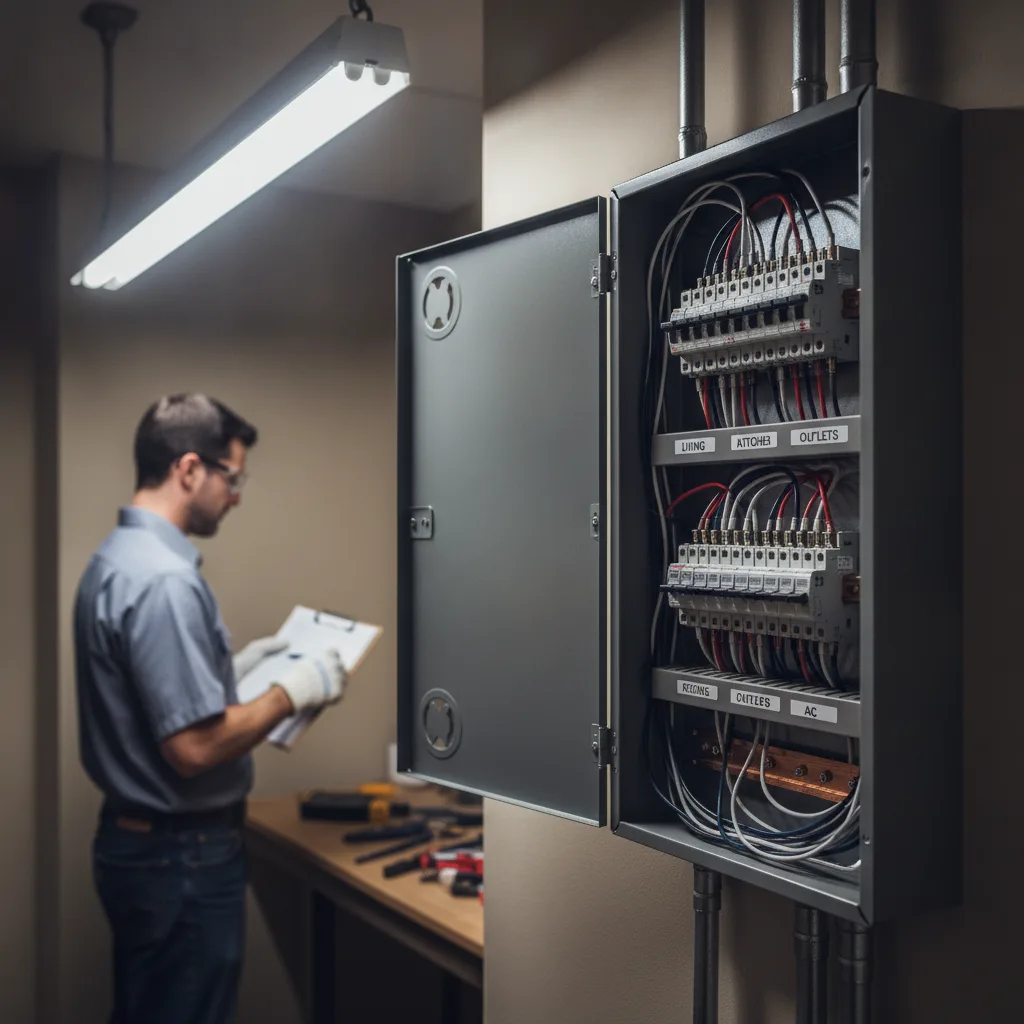
The Biggest Mistake Electrical Contractors Make With Email Marketing
Most electricians build a list, send two newsletters, see a 1% conversion rate on the second one, and conclude that email marketing does not work for their electrical business. The actual problem is always the same: they sent broadcast campaigns to an unsegmented list instead of building the three automation triggers that run without manual effort. A monthly newsletter requires someone to write it every month. A post-job sequence, a set of date-triggered maintenance reminders, and a four-email seasonal calendar require setup time once, then run for years. If you are relying on paid ads or word-of-mouth alone and not activating your existing customer database, you are paying to acquire customers you already own. That is the missed opportunity that adds up to tens of thousands of dollars in recovered repeat revenue over a 12-month period.
Electrician email marketing in 2026 is not a newsletter strategy — it is a three-trigger revenue system built on your existing customer database. The post-job sequence books reviews and referrals automatically. Date-triggered maintenance reminders convert panel upgrade and generator install customers into annual recurring service calls. The Texas seasonal calendar captures the four predictable demand windows before your competitors do. A 500-contact list running all three triggers at a 2% per-send conversion rate and a $500 average ticket produces $5,000 per campaign month. The platform cost is $13–$149/month. The ROI math for a functioning electrician email marketing system is $36–$45 returned per $1 spent — and sustainable growth from a channel you fully control. Build the triggers, track the three core metrics, and add contacts consistently. That is the system. Start with the post-job sequence this week and the other two triggers will follow naturally once you see what consistent follow-up does to your repeat booking rate.
Frequently Asked Questions
Ready to get started? Contact Geek Powered Studios today.