
For restoration companies that need calls today, Google Ads and LSA are non-negotiable — ads serve the same day, and LSA converts emergency-intent queries above 18%. But PPC in this vertical is structurally rigged against independents: the median CPL hit $676 in 2026 and SERVPRO spends roughly $1.94 million per month to set the auction floor. The smarter long-term play is to use PPC as a revenue bridge while home restoration SEO services build a parallel asset: Google Map Pack position and organic search rankings that deliver leads below $25 per lead by year three. Run both. Split 60% PPC to 40% SEO in months 1–6, shift to 50/50 at month 12, then to 40/60 at year two when organic CPL data proves the case. Use CallRail and BrightLocal to track every channel from day one.
-
$676/leadGoogle Ads median CPL for water damage restoration in 2026
-
$156/leadLSA average CPL nationally — a far better starting point
-
Below $25/leadOrganic CPL at SEO maturity by year three
-
4–6 monthsTime for existing domains to generate consistent organic leads
-
$19.90 vs. $4.40SEO ROI vs. paid ads ROI per $1 invested in restoration
-
50–70% more leadsLift from running LSA and Google Ads simultaneously
-
47% of restoration companiesDon't track CPL by channel — the first thing to fix
-
60–90 daysTimeline for Google Map Pack movement with consistent GBP optimization
PPC and home restoration SEO services are not competing choices — they are sequential budget decisions with a specific split that maximizes ROI at every stage of a restoration company's growth. As of 2026, the median Google Ads CPL for water damage restoration has hit $676, up 34% in two years, and SERVPRO spends roughly $1.94 million per month to set the local auction floor. Independent restoration companies that try to outspend franchises on paid ads lose. The ones that use PPC and LSA as a revenue bridge while building organic search rankings and Google Map Pack position through home restoration SEO services are the ones still standing at year three — with a CPL below $25 and a lead asset no franchise can buy away.
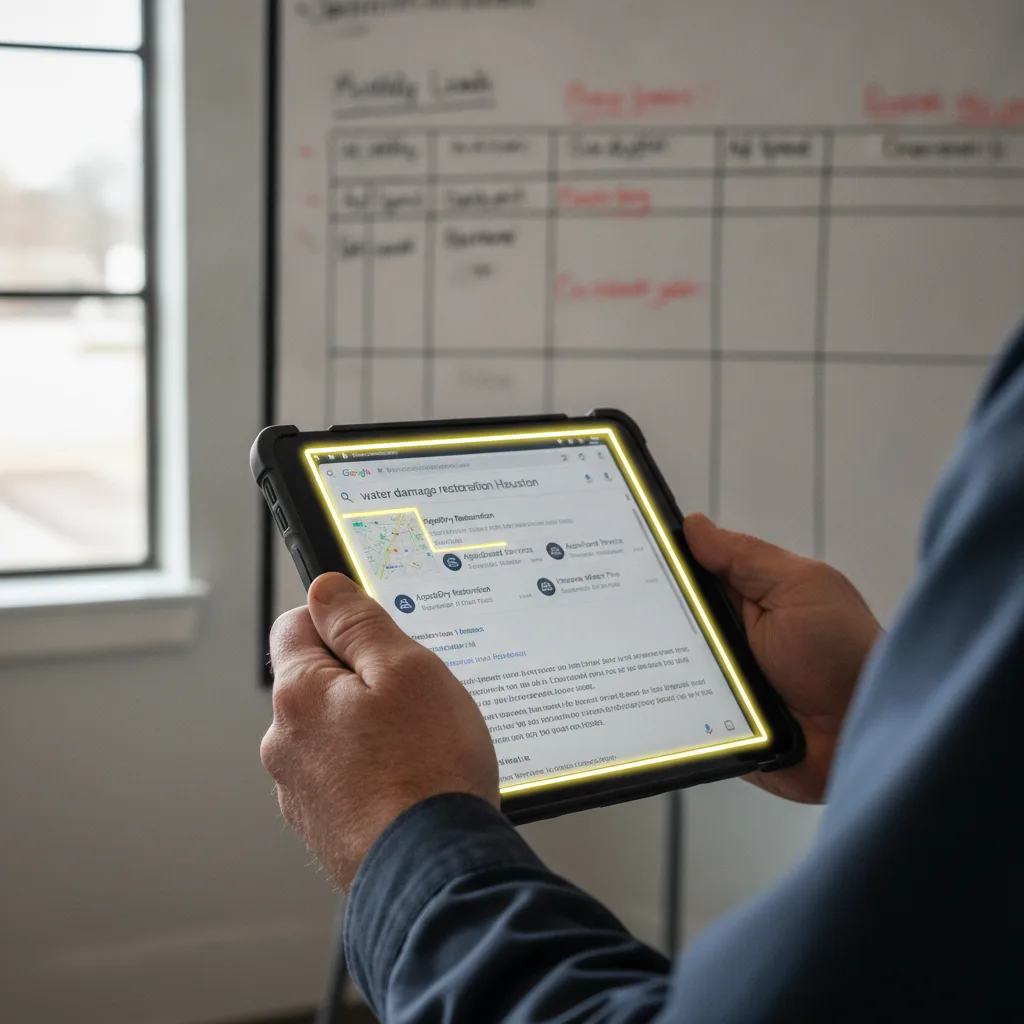
Option A
PPC & LSA
Immediate leads, escalating costs, zero residual value
- Same-day lead flow: ads serve immediately after account approval — the only channel that works in a company's first week.
- LSA at $156 average CPL: Google Guarantee badge converts emergency-intent queries without requiring Quality Score history or a polished landing page.
- 18%+ conversion rate: emergency water damage restoration queries convert at 2–3x the 7.33% home services average, making a $676 CPL economically viable at $3,000–$12,000 average job values.
- Budget dependency: leads stop the day spend stops — no search engine rankings, no Map Pack position, no residual asset built.
Option B
Home Restoration SEO Services
Slow start, compounding returns, Map Pack dominance
- $19.90 ROI per $1 invested: versus $4.40 for paid ads — the highest-return channel in the restoration industry at maturity.
- Below $25 CPL by year three: organic search delivers 42–61% of inbound leads at month 12, at a cost per lead no PPC campaign can match.
- Map Pack as the moat: local SEO and Google Map Pack dominance is the highest-leverage counterstrategy for independents who cannot match SERVPRO's ad budget.
- Compounds after investment slows: search engine rankings and Map Pack position persist even when monthly SEO spend decreases — the opposite of PPC.
How PPC and LSA Work for Restoration Companies: Instant Visibility, Structural Disadvantages
Google Ads for restoration companies serve immediately after account approval, placing paid ads in positions 1–3 of search results for high-intent queries like 'water damage restoration near me' or 'emergency mold removal.' Water damage restoration PPC converts above 18% on emergency-intent queries — 2–3x the home services average — because the searcher already knows what they need and search intent is crisis-driven. At a $3,000–$12,000 average residential job value and 70–80% gross margins on water mitigation, a $676 CPL still yields a 3–5x revenue-to-acquisition ratio at a 30% close rate.
LSA occupies the zero position above standard search results, and the Google Guarantee badge functions as instant trust-building for panicked homeowners searching at 10 PM with a flooded basement. Google LSA CPL averages $156 nationally in 2026, up roughly 40% since 2023, with 70% of restoration contractors now on the platform. Running LSA alongside standard Google Ads generates 50–70% more leads than either channel alone, because the dual stack captures both the zero position and paid search positions 1–3 below it.
The structural disadvantage of paid ads is permanent: the moment spend stops, leads stop. PPC builds no search engine rankings, no local listings authority, and no Map Pack position — it is a rental, not an asset. Worse, SERVPRO operates 2,370+ U.S. locations and spends approximately $1.94 million per month on PPC, setting an auction floor that independent restoration companies cannot match. In competitive Texas markets like Houston and Dallas, CPL regularly exceeds $1,447. A $676 median CPL means a 30% close rate costs roughly $2,253 in ad spend per acquired customer before overhead. That math gets worse every quarter as digital marketing auction pressure increases.
The 47% of restoration companies that do not track CPL by channel — as of 2026 — are the ones bleeding budget silently. Without CallRail segmenting water damage, fire damage, mold remediation, and storm response into four separate campaigns connected to Google Ads and Google Analytics 4, there is no way to know which search terms and ad groups are burning money and which are producing booked jobs.
How Home Restoration SEO Services Work: Local SEO, the Google Map Pack, and Service Pages That Compound
Home restoration SEO services for restoration companies operate on three parallel tracks: technical SEO to ensure search engines can crawl and index a restoration company's website correctly, local SEO to build Google Map Pack position and local search rankings, and content marketing to capture the full range of restoration-related search terms from emergency queries to insurance-adjuster research. A Screaming Frog technical audit identifies crawl issues, missing meta tags, and site structure problems that prevent search engine visibility before any content investment is made.
Local SEO for restoration companies centers on Google Business Profile optimization. A Google Business Profile that shows 'closed' at 10 PM loses ranking eligibility for the highest-value late-night emergency restoration services queries. Restoration companies operating 24/7 must set explicit 24/7 business hours in GBP or they are algorithmically excluded from emergency searches when search demand peaks. Beyond hours, uploading high-quality photos of actual restoration projects matters: Google Vision AI reads photo content as local relevance signals, and BrightLocal citation management ensures NAP (name, address, phone) consistency across local directories and directory listings that Google uses to verify local businesses.
Service-specific pages are the conversion engine of restoration SEO. A restoration company's website with a single generic services page converts visitors at 0.55x the rate of a site with dedicated pages for water damage restoration services, fire damage restoration, mold remediation services, storm cleanup, and emergency water damage restoration. Firms with 20+ indexed service and FAQ pages outrank thinner competitors in 78% of head-to-head market comparisons. Effective keyword research via Semrush identifies relevant keywords by search volume and separates emergency-intent search terms (high CPL on paid ads, high conversion rate organically) from informational queries that build trust with insurance adjusters and restoration clients.
Schema markup using LocalBusiness and Service types in JSON-LD lifts organic CTR 20–40% for restoration service pages and drives 3x more Google AI Overview appearances — making it the single highest-leverage technical SEO task per hour invested for restoration businesses. The SEO strategy compounds: search engine rankings built in month 6 generate leads in month 18 without additional spend, while a parallel content marketing program publishing educational content weekly produces the organic traffic and online reviews that convert insurance-adjuster referrals that PPC cannot capture. Local SEO work done correctly in months 1–6 produces Map Pack movement in 60–90 days and consistent organic lead flow by month 6 on established domains.
PPC & LSA vs. Home Restoration SEO Services: The 8-Dimension Comparison
| Dimension | PPC & LSA | Home Restoration SEO Services |
|---|---|---|
| Cost Per Lead (2026) | Google Ads: $676 median ($1,447 in Houston/Dallas); LSA: $156 average | Below $25/lead by year three (organic CPL at SEO maturity) |
| Time to First Lead | Same day — ads serve immediately after account approval | 4–6 months for existing domains; 6–12 months for new domains |
| Lead Volume Ceiling | Capped by daily budget; 50–70% lift when LSA + Google Ads run simultaneously | 42–61% of total inbound leads organic at 12 months; no per-click cost ceiling |
| Long-Term ROI | $4.40 returned per $1 invested in paid ads (restoration vertical) | $19.90 returned per $1 invested in SEO (restoration vertical) |
| Budget Dependency | Leads stop the day spend stops — no residual asset built | Search engine rankings and Map Pack position persist after investment slows |
| Emergency Search Coverage | 18%+ conversion rate on emergency-intent queries; 24/7 coverage with bid adjustments | GBP set to 24/7 hours required; Map Pack moves in 60–90 days with consistent optimization |
| Competitive Exposure | SERVPRO spends ~$1.94M/month on PPC — independents cannot win an auction war | Local SEO and Map Pack dominance is the highest-leverage counterstrategy for independents |
| Channel Tracking | 47% of restoration companies don't track CPL by channel; CallRail fixes this immediately | Organic CPL requires BrightLocal + CallRail to attribute Map Pack and organic calls correctly |
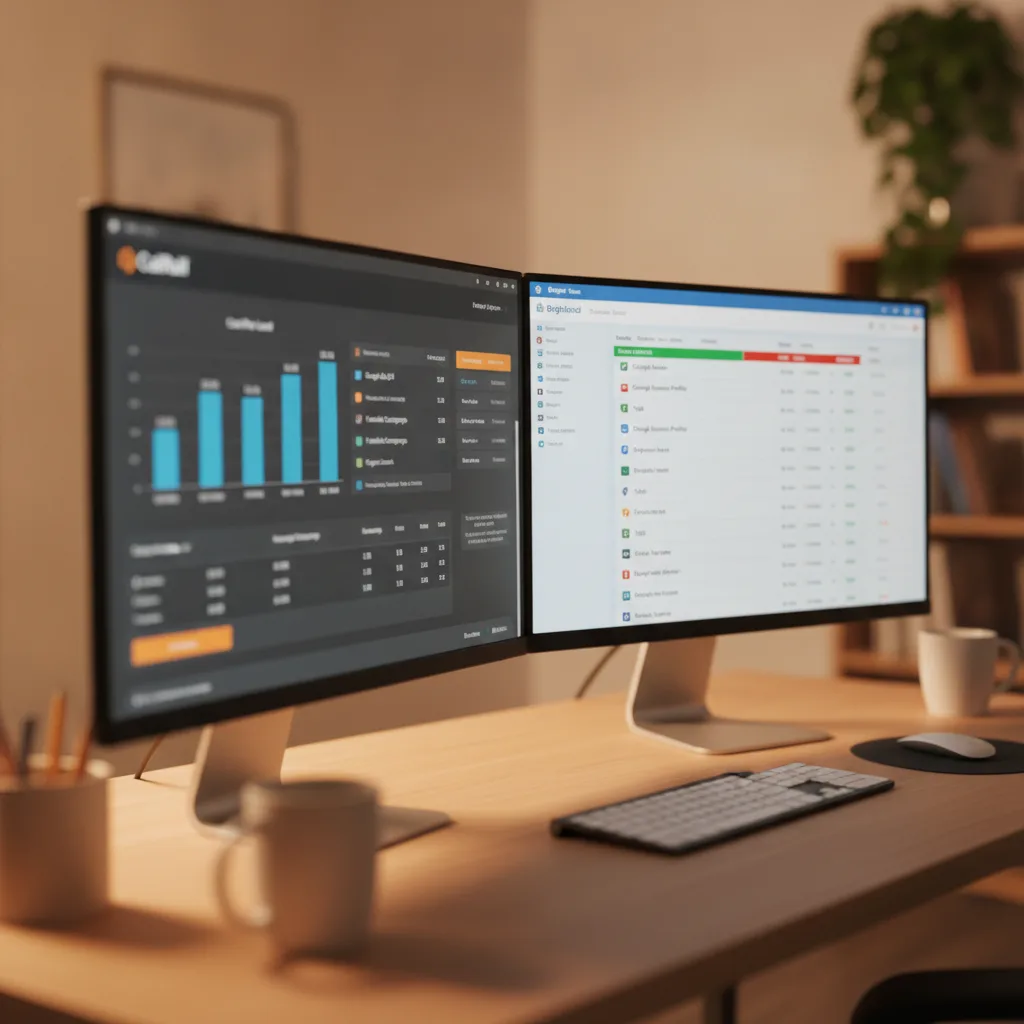
The One Tracking Fix 47% of Restoration Companies Haven't Made
As of 2026, 47% of restoration companies do not track cost per lead by channel — which means PPC accounts can hemorrhage budget for months before anyone notices. The fix is not complicated: install CallRail with four separate campaigns (water damage, fire damage, mold remediation, storm response), connect it to Google Ads and Google Analytics 4, and pull CPL by campaign weekly. Once you know your organic CPL versus your paid CPL, the budget split decision makes itself. Restoration companies that implement channel-level CPL tracking within the first 30 days of a new campaign consistently catch waste that would otherwise compound for quarters.
Restoration Companies That Should Prioritize PPC and LSA First
PPC and LSA are the correct starting point for any restoration company that cannot defer revenue for 4–6 months. Zero-day lead flow is a business survival issue, not a preference, and no amount of search engine optimization changes that reality in week one.
- New restoration companies under 12 months old with no organic search rankings — same-day lead flow is non-negotiable and SEO for restoration companies cannot deliver it.
- Companies entering a new service area where the Google Business Profile and local citations have not yet been established — local search demand exists but your restoration business is invisible to it.
- Operators running seasonal or storm-response surge campaigns where 4–6 months of SEO build time is not available and emergency service calls must be captured immediately.
- Any restoration business where water damage Google Ads convert above 18% on emergency-intent queries and average job values of $3,000–$12,000 make a $676 CPL economically viable at a 30% close rate.
- Companies that have not yet installed CallRail and do not know their current CPL by channel — start paid ads, instrument everything, and build the data foundation that makes the SEO-to-PPC shift later a data decision.
Start with LSA at $156 average CPL before scaling standard Google Ads to $676 median CPL. The Google Guarantee badge and zero-position placement in search results convert emergency intent without requiring Quality Score history or an optimized landing page. Use the 60% PPC / 40% SEO split from day one — not 100% PPC — so the SEO foundation builds while paid ads keep the phones ringing.
Restoration Companies That Should Prioritize Home Restoration SEO Services
Established restoration companies spending $676 per paid lead when organic leads cost below $25 at maturity are leaving the most significant cost reduction opportunity in digital marketing on the table. The case for shifting budget toward home restoration SEO services strengthens every month paid CPL climbs.
- Established companies 12+ months in market already receiving organic traffic but not tracking it — organic CPL drops below $25 at maturity versus $676 for Google Ads, and most restoration companies don't know their organic number.
- Independent operators who cannot outspend SERVPRO's ~$1.94M/month PPC budget and need a durable local search rankings asset that franchises cannot buy away from them.
- Multi-location restoration operators who can build location-specific service pages — firms with 20+ indexed pages outrank thinner competitors in 78% of head-to-head market comparisons.
- Restoration businesses targeting mold remediation services and fire damage restoration, where informational content and positive reviews drive insurance-adjuster referrals that PPC cannot capture.
- Companies spending 10–12% of gross revenue on digital marketing with no compounding return — the restoration SEO program is the only channel where month 18 returns are higher than month 6 returns without increasing spend.
Home restoration SEO services do not replace PPC for emergency water damage restoration coverage — they reduce dependence on paid ads progressively as organic CPL drops and Map Pack position solidifies. A restoration company spending $1,500/month on SEO that closes one incremental $4,000 job is immediately cash-flow positive before accounting for the compounding effect on referrals, online reviews, and local visibility that builds over the following 12 months.
Why the Restoration Industry's Structural Demand Makes Both Channels Non-Negotiable
U.S. insured property losses from natural catastrophes reached $103.1 billion in 2025, and more than 1 in 50 insured homes files a water damage or freezing claim annually. The restoration industry carries a 95% business survival rate during economic downturns. This structural demand means the question is not whether restoration companies should invest in digital marketing — it is whether they build that investment on a rental (paid ads) or an asset (organic search rankings). The answer is both, sequenced correctly.
The 60/40 PPC-to-SEO split in months 1–6 is not a compromise — it is the math. Paid ads cover revenue while local SEO builds the foundation. By month 12, when organic search contributes 42–61% of inbound leads, the split shifts to 50/50. By year two, when organic CPL is below $25 and paid CPL is still climbing toward $700+, the split moves to 40/60. The restoration company that follows this sequence outlasts competitors who either burned out on PPC costs or starved their business waiting for SEO to produce leads on a new domain.
Budget Guide by Revenue Stage: Which Scenario Fits Your Restoration Business?
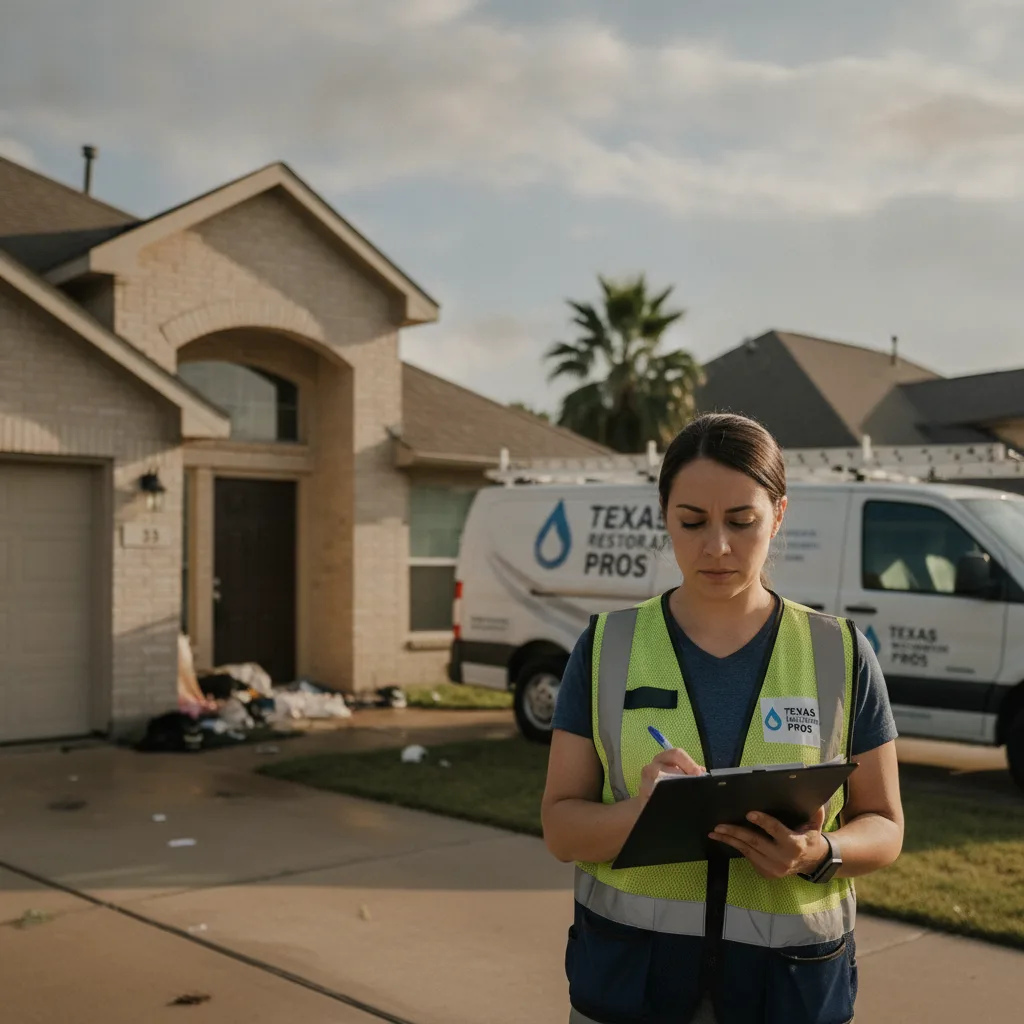
Scenario A
The Established Restoration Company Ready to Cut Its PPC Dependency
A restoration company operating for 18+ months in a single Texas market, spending $8,000/month on Google Ads at a $676 median CPL, has already proven its close rate. The math now works against them: at 30% close rate, each acquired customer costs roughly $2,253 in ad spend alone, before overhead. At this stage, shifting $3,000 of that monthly budget into home restoration SEO services — keyword research via Semrush, Screaming Frog technical audit, BrightLocal citation management, and Google Business Profile optimization set explicitly to 24/7 hours — starts building the asset PPC never delivers: Map Pack position and organic search rankings that persist when spend drops.
By month 12, organic search delivers 42–61% of inbound leads at a CPL below $25. The $5,000 remaining in PPC still covers emergency water damage restoration and fire damage restoration queries where same-day response is the only acceptable outcome. The SEO program compounds. The PPC spend shrinks. The budget split reaches 40/60 PPC-to-SEO by year two, and the company's customer acquisition cost drops faster than any ad optimization could achieve.
Scenario B
The Phase-by-Phase Budget Split That Wins Emergency Leads at Every Stage
The restoration industry's structural demand — $103.1 billion in U.S. insured property losses in 2025, with more than 1 in 50 insured homes filing a water damage claim annually — means restoration companies that invest in both channels simultaneously outperform single-channel operators consistently. The recommended split: 60% PPC/LSA and 40% SEO in months 1–6, shifting to 50/50 at month 12 when organic delivers 42–61% of leads, then to 40/60 at year two when organic CPL is below $25. Running LSA alongside standard Google Ads generates 50–70% more leads than either channel alone, because LSA occupies the zero position above standard search results while paid search fills positions 1–3 below it.
The SEO side of the budget during months 1–6 focuses on three tasks: set Google Business Profile to explicit 24/7 hours (a GBP showing 'closed' at 10 PM loses ranking eligibility for the highest-value late-night emergency searches), build service-specific pages for water damage restoration, fire damage restoration, mold remediation services, and storm cleanup, and add JSON-LD schema markup using LocalBusiness and Service types — which lifts organic CTR 20–40% and drives 3x more Google AI Overview appearances. CallRail tracks every call by channel from day one, so the budget shift at month 12 is based on CPL data, not instinct. This is the approach that turns a $676 CPL problem into a $25 CPL advantage.
Scenario C
The Brand-New Restoration Company That Cannot Wait for SEO to Build
A restoration company that launched in the last 90 days has one non-negotiable: it needs calls today. SEO for restoration companies on a new domain takes 6–12 months to generate consistent inbound call volume. That timeline is not a flaw — it reflects how search engines build trust in new local businesses. But a new company cannot defer revenue for a year. LSA at $156 average CPL is the right starting point, not $676 Google Ads, because LSA's Google Guarantee badge and zero-position placement convert emergency intent without requiring a landing page or Quality Score history.
The 60/40 PPC-to-SEO split starts in month one, not month six. The SEO investment during this early phase is not about ranking yet — it is about building the foundation that makes ranking possible: accurate NAP (name, address, and phone number) across local directories, verified Google Business Profile with 24/7 hours and high-quality photos of restoration projects that Google Vision AI reads as local relevance signals, and a restoration company's website with separate service-specific pages for water damage, mold remediation, fire damage, and storm response. By month four, Map Pack movement begins. By month 12, the company has two channels producing leads, with organic CPL already dropping toward the $25 target — and the PPC spend it could never have survived on alone is now supplemented rather than replaced.
PPC and LSA are not optional for a restoration company that needs calls this week. But PPC in the restoration industry is structurally rigged against independents: median CPL hit $676 in 2026, up 34% in two years, and SERVPRO sets the auction floor at roughly $1.94 million per month. The restoration companies that win long-term are not the ones that spend more on paid ads — they are the ones that use PPC as a revenue bridge while a parallel SEO strategy builds the one asset no franchise can replicate: a Google Map Pack position and organic CPL that drops below $25 by year three.
Start the SEO investment in month one, even if it is only 40% of the budget. Use CallRail and BrightLocal to track every channel from day one. Build service pages for every core service — water damage restoration services, fire damage restoration, mold remediation, and storm response — and set Google Business Profile to explicit 24/7 hours before the first ad goes live. Add JSON-LD schema markup to lift organic CTR and search engine visibility in Google AI Overviews. Shift the budget split as organic CPL data proves the case.
That is how independent restoration companies outlast the franchises — not by outspending them in an auction they cannot win, but by building local search rankings, positive reviews, and organic search results that compound in value every month while paid ad costs keep climbing. The seo for restoration companies program that starts in month one at 40% of budget becomes the primary lead channel by year two. The restoration business that waits until year two to start it never catches up.
Frequently Asked Questions
Ready to get started? Contact Geek Powered Studios today.