
Email marketing for fencing companies cannot function as a re-engagement or seasonal promotions channel — wood fences last 15–20 years, which means your average residential customer will never buy a second fence. The correct strategy is a three-phase referral system built on job-completion triggers: a 4-email post-install sequence that asks for a referral within 30 days, a material-specific maintenance calendar that resurfaces your brand every 22–24 months, and a neighborhood clustering play that targets adjacent addresses after each install. The tool stack is Jobber Connect ($139/mo) plus Klaviyo plus Zapier ($19.99/mo) plus Referral Rock ($200/mo) — under $400/mo total. Referral leads cost $14 each versus $85 for Google Ads, with 3–5x higher conversion rates once they book.
-
$14Average cost per referral lead vs. $85 for paid search
-
30 daysWindow to convert a happy customer into an active referrer
-
4.5xReferral lead volume lift from 20% to 90% job coverage
-
Under $400/moTotal tool stack: Jobber + Klaviyo + Zapier + Referral Rock
-
41%Of email revenue generated by automated flows (5.3% of sends)
-
22 monthsWhen to trigger the wood fence staining reminder email
Email marketing for fencing companies returns $36–$45 for every $1 spent — higher ROI than Google Ads, social media marketing, or home service marketplace leads. But that number only holds if you build the right kind of email system. The standard home-services email playbook — seasonal promotions, reactivation campaigns, loyalty newsletters — produces near-zero results for fence contractors because the average residential customer will never buy a second fence from the same company. Wood fences last 15–20 years; vinyl 20–30 years. That repeat-purchase horizon forces every email touchpoint to do one thing: move a satisfied customer closer to introducing a neighbor. This guide builds the three-phase automated system that does exactly that — in 3–5 hours of setup and under 30 minutes of monthly management.
Before you start
- Active field service management account in Jobber (Connect plan at $139/mo for Zapier access), Housecall Pro (MAX plan at $299/mo), or ServiceTitan with API enabled
- Email platform account in Klaviyo, ActiveCampaign, or Mailchimp — Klaviyo recommended for date-triggered flows
- Zapier account (Starter plan at $19.99/mo) to bridge job-completion triggers from your FSM tool to your email platform
- A completed-jobs contact list of at least 50 past customers with email addresses captured at quote, booking, or invoice stage
- Referral incentive decided before building sequences: $200–$300 cash reward per referred homeowner who books an estimate — not a discount
- Basic familiarity with email list segmentation by fencing materials: wood, vinyl, chain-link, aluminum — required for maintenance reminder targeting
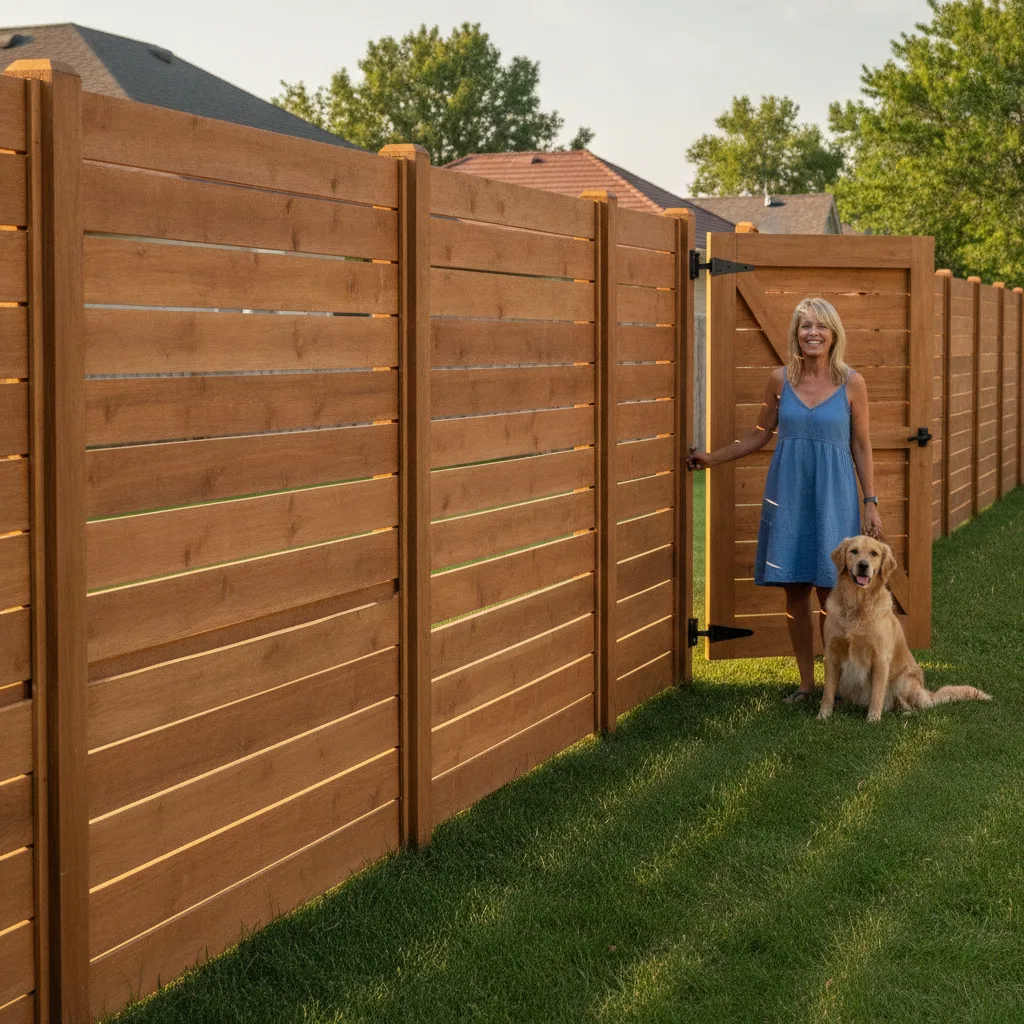
Understand Why Email Marketing for Fencing Companies Demands a Referral-First Strategy
Email marketing for fencing companies cannot function as a re-engagement channel because the average residential customer will never buy a second fence from the same company. Wood fences last 15–20 years; vinyl 20–30 years. That repeat-purchase horizon means the standard home-services email playbook — seasonal promotions, reactivation campaigns, loyalty offers — produces near-zero ROI for fence contractors. The only durable revenue multiplier email can unlock in the fence industry is the referral. Google Ads, local SEO, and social media marketing reach strangers. Email is the only digital marketing channel that speaks directly to the person who already trusts you.
The math makes a referral-first fence marketing strategy the obvious default. A referral lead costs $14 on average versus $85 for paid search and $120 for a home service marketplace lead — a 6x cost efficiency gap. Referred customers then spend 25% more per transaction and retain at a 37% higher rate than customers acquired through paid channels. On a $3,277–$6,300 average fence installation job, a $200–$300 referral reward represents 3–9% of revenue, well within acceptable customer acquisition cost ranges for fence contractor marketing.
The gap that email closes is the ask. 83% of consumers say they are willing to refer a brand they trust, but only 29% actually do without being prompted. That 54-point gap between willingness and action is not a trust problem — it is a systems problem. A structured, automated email referral sequence is the mechanism that closes it. Consistent effort on this one system, applied to every completed job, is what separates fence companies that generate 4.5x more monthly referral leads from those relying on word of mouth alone.
Why discounts fail as referral rewards for fence contractors
A $200 discount on future fencing services sounds generous but delivers zero perceived value to a customer whose fence will last another 15 years. Use cash rewards or gift cards instead. A $250 Visa gift card for a referred homeowner who books a free estimate is the industry benchmark as of 2026 — it works for both residential and commercial clients and requires no conditional future purchase.
Connect Your Field Service Platform to Your Email Automation Engine
The trigger for every email sequence in this system is job completion logged in your field service management platform. Jobber's Connect plan ($139/mo) unlocks Zapier integration and is the most cost-efficient entry point for fence contractors. Housecall Pro requires its MAX plan ($299/mo) for the same API access. ServiceTitan includes native automation triggers at its standard tier. Whichever platform you run, the integration path is identical: job marked complete in the FSM tool fires a Zap that pushes the customer record — name, email, job address, fencing materials type, and completion date — into your email platform.
Set up four custom data fields in your email platform before you build any flows: (1) material type — wood, vinyl, chain-link, or aluminum; (2) job completion date; (3) referral status — none, sent, or converted; and (4) last email sent date. These four fields are what allow targeted campaigns to outperform unsegmented blasts by up to 760% in revenue. The difference is sending a wood-staining reminder to the 40% of your list who installed wood fences — not blasting every subscriber with irrelevant fencing solutions they do not need.
Klaviyo is the recommended email platform for fence company marketing because its flow builder handles date-based triggers natively — critical for sending a staining reminder exactly 24 months after job completion. ActiveCampaign is the strongest alternative for fence companies that also want CRM-style pipeline features for nurturing commercial clients. Mailchimp works for contractors who only need broadcast campaigns and a basic automation, but its date-relative triggers require workarounds that add setup complexity and create ongoing maintenance risk.
Jobber (Connect plan)
$139/mo
Unlocks Zapier integration to fire job-completion triggers into Klaviyo or ActiveCampaign automatically — the lowest-cost FSM entry point for fence email automation as of 2026.
Klaviyo
Free up to 250 contacts; ~$45/mo for 1,000 contacts
Date-based flow triggers and material-type segmentation make it the strongest email engine for fence maintenance reminders and referral sequences tied to job completion dates.
Zapier (Starter)
$19.99/mo
Bridges Jobber or Housecall Pro to Klaviyo without custom API work — one Zap handles the job-completion-to-email-list push that starts every automated sequence.
Referral Rock
$200/mo
Generates unique referral tracking links per customer, attributes inbound leads to the correct referrer, and automates the $200–$300 reward fulfillment — eliminates the manual tracking that kills most fence referral programs.
Build the Post-Install Sequence: Convert Satisfied Customers Within 30 Days
The post-install email sequence is a 4-email flow that runs over 30 days and has one goal: turn a satisfied customer into an active referrer before the excitement of a new fence fades. Automated email flows generate 41% of total email revenue from only 5.3% of sends, according to Klaviyo's 2026 dataset — the post-install flow is where fence contractor marketing earns its keep. Home service email lists open at 28–35%, well above the 19.21% all-industry average, because recipients expect and welcome job-related follow-up. This is the single most effective fence marketing investment you can make for the time spent.
Email 1 fires 24 hours after job completion: a short delivery confirmation with a before and after photos request and a link to leave a Google Business Profile review — keep it to three sentences. Email 2 fires on Day 3: a material care guide specific to the fence type installed, covering wood staining schedules, vinyl cleaning tips, and chain-link rust prevention. This is content marketing that earns trust because it delivers maintenance tips the customer actually uses. Email 3 fires on Day 10: the referral ask. Name the reward clearly: 'We're offering $250 cash for every neighbor or friend you refer who books a free estimate with us.' Include the unique Referral Rock link. Email 4 fires on Day 30: a one-question satisfaction check with a second referral nudge for customers who opened Email 3 but did not click.
A 4–7 email touch sequence converts 27% better than sequences that stop at 1–2 touches — most fence contractors send one thank-you email and stop there. The full 30-day flow, with segmented care guides and an explicit referral ask, separates fence companies that generate 4.5x more monthly referral leads from those that rely on hoping a satisfied customer mentions them to a neighbor. Moving from 20% to 90% job coverage on referral requests produces that 4.5x lift — and automation is the only way to maintain 90% coverage consistently across every completed job, every month, without adding headcount.
Timing the referral ask: Day 10, not Day 1
Sending a referral ask in the same email as the delivery confirmation feels transactional and reduces click rates. Wait until Day 10 — after the customer has lived with the fence for over a week, answered any punch-list questions, and received the care guide. Satisfaction peaks in the 7–14 day window post-installation, which is the correct referral ask window for residential fence installation services.

Build the Maintenance Calendar: Keep Your Fencing Business Top of Mind Between Jobs
Wood fence staining is required every 2–3 years, and this maintenance interval is the most underused revenue touchpoint in fence company marketing. Set a date-triggered flow in Klaviyo that fires an email to all wood-fence customers at the 22-month mark post-installation — two months before the staining window opens. The email subject line: 'Your [City] wood fence is due for staining this spring — here's what to do.' This is not a newsletter; it is a specific, job-triggered maintenance tip tied to a real date. That specificity is precisely why home service email open rates reach 28–35% versus the 19.21% all-industry average — relevant, job-triggered content earns opens that generic email campaigns never will.
Segment this flow strictly by fencing materials. Wood customers get the staining reminder at 22 months. Vinyl and aluminum customers — whose fences need only occasional cleaning — get a different flow: a 12-month check-in asking if any panels were damaged in storms, plus a referral refresh. Chain-link customers get a rust and tension-wire inspection reminder at 18 months. Segmented campaigns outperform unsegmented blasts by up to 760% in revenue precisely because they send relevant fencing solutions to the right segment instead of blasting every subscriber with sends that do not apply to their fence material. This is the fence company's online presence compounding in the inbox over time.
Each maintenance email should include three elements: a specific fence maintenance tip (not generic advice — 'apply an oil-based semi-transparent stain within 30 days of power washing for maximum wood penetration'), an offer to quote the staining work or a referral to a trusted partner if your company does not perform that service, and a re-prompt of the referral program with the current reward amount. Contractors using integrated referral automation report 30% more referral leads in the first quarter compared to manual programs. The maintenance email resurfaces that referral ask without it feeling like a cold pitch — it arrives in context, attached to a service the customer actually needs. That is effective fence marketing that compounds with every job in your history.
Execute the Neighborhood Clustering Play to Turn Each Fence Installation Into a Local Lead Signal
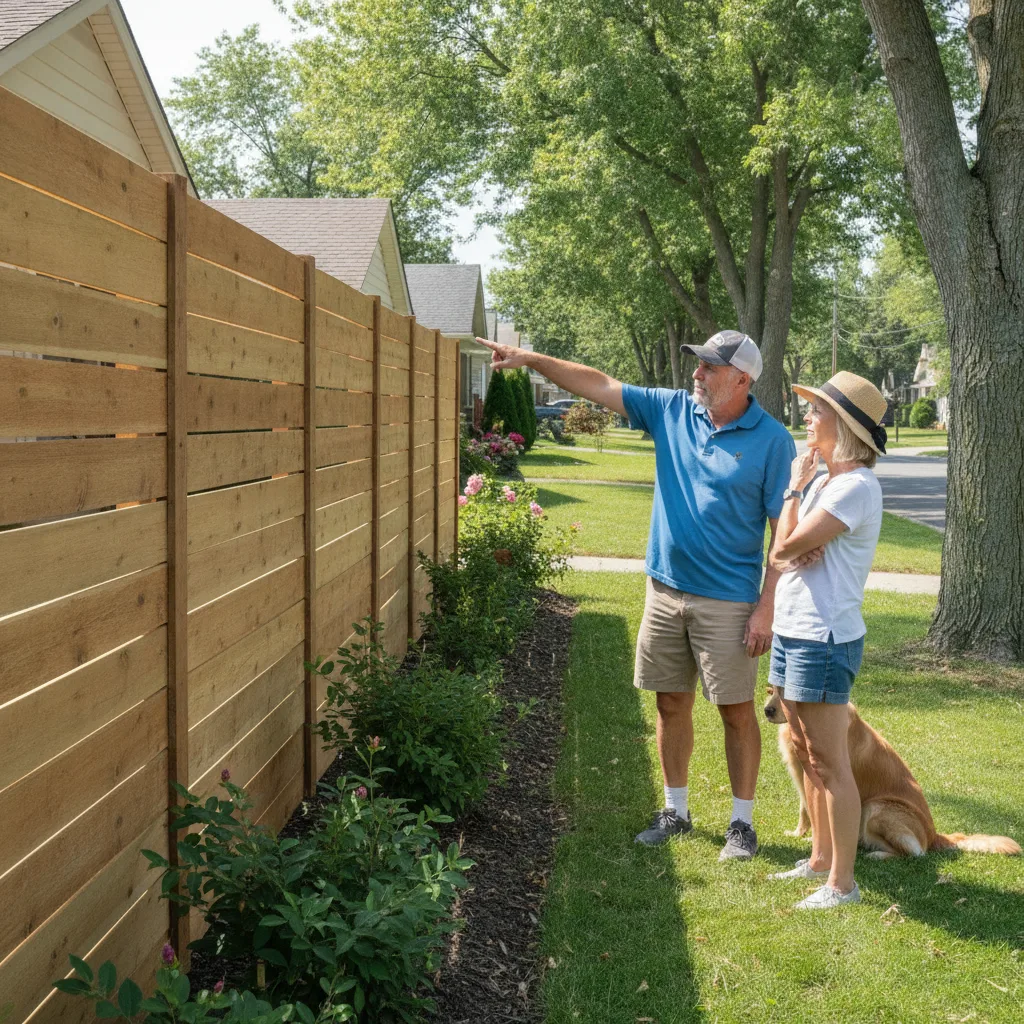
A newly installed fence is visible to 8–15 neighboring homes, and each of those neighbors is a potential customer who has just seen a real-world demonstration of your fence installation services. The neighborhood clustering play uses job-completion data to target adjacent addresses with a timed email campaign. Export the installation address from Jobber, identify surrounding homes using USPS EDDM's free address lookup, and cross-reference those addresses against any email contacts in your list from prior quote requests or past jobs in the same zip code. Match rates of 15–25% are typical for fence contractors with 200 or more contacts — enough to generate a meaningful local search signal in every service area where you work.
For matched addresses, trigger a short 2-email sequence: Email 1 references the specific street — 'We just installed a privacy fence on [Street Name] — if you've noticed it, here's what your neighbors chose and why.' Include before and after photos and a call to action for a free estimate. Email 2, sent 14 days later, adds social proof: customer testimonials from the same neighborhood, a Google Business Profile review link, and the current referral reward. This hyper-local content marketing approach drives higher open rates because it references a landmark the recipient recognizes. Community engagement at this level — neighbor-to-neighbor visibility — is the highest-ROI fence marketing tactic that no digital marketing agency's paid ads can replicate.
Neighborhood clustering also feeds local SEO indirectly. Each job completion at a new address gives you a legitimate location signal to reference in your Google Business Profile posts and service-area pages. Fence contractors who document completed projects by neighborhood — 'Cedar privacy fence installations in [Subdivision Name], [City]' — build organic traffic from homeowners running a potential clients search for local fence companies in their specific area. Strong search engine optimization for local search starts with real project data, not keyword stuffing. The email sequence and the local SEO content strategy share the same asset: the job address and the before and after photos. Create both outputs from a single post-job workflow to maximize your marketing spend efficiency and strengthen your fence company's online presence in that zip code.
CAN-SPAM and neighborhood email targeting
You can email contacts who have previously requested a quote or interacted with your business — that is a legitimate business relationship under CAN-SPAM. You cannot cold-email addresses you have never had contact with. The neighborhood clustering play works only on matched addresses in your existing contact database. For cold neighbor outreach, use EDDM postcards alongside the email sequence — not email alone.
Measure and Optimize Your Fence Company Email Marketing Strategy
Track five metrics monthly to determine whether your fence email marketing strategy is generating referral leads or just inbox clutter. First, flow open rate — target 28% or higher for home service lists. Second, referral link click rate — target 4% or higher on the Day 10 referral ask email; Klaviyo Analytics shows this at the individual email level without a third-party tool. Third, referral conversion rate — leads who book an estimate divided by unique referral links clicked. Fourth, cost per referred lead — should stay below $50 including the reward payout and platform costs. Fifth, referral-to-close rate — referred leads convert at 3–5x the rate of paid search leads, so a below-average close rate signals a sales process issue, not an email issue. These metrics form the core of any effective fence contractor marketing plan that prioritizes sustainable growth over vanity numbers.
Run a quarterly audit of your segment accuracy. Confirm no vinyl or aluminum fence customers are receiving wood-staining reminders, that all jobs completed in the prior quarter entered the post-install flow within 48 hours of completion, and that your bounce rate stays below 2%. Nutshell's 2026 email benchmarking data flags lists above 2% as deliverability risks that can suppress open rates across the entire account — a deliverability problem is the fastest way to destroy the marketing strategy you spent 5 hours building. Remove hard bounces after every send and suppress unengaged subscribers (no open in 12 or more months) to protect sender reputation and maintain your strong online presence in the inbox.
Benchmark your fence company email marketing performance against these 2026 standards: home service email flows average a 5.58% click rate versus 1.69% for one-off campaigns; referral programs that systematically prompt satisfied customers see 86% higher revenue versus the prior year; and companies investing in referral automation report 30% more referral leads in Q1 versus manual programs. If your referral email click rate is below 3%, test a subject line change and a more specific reward statement before changing the flow structure. If your referral conversion rate is below 8%, the issue is usually the estimate booking process — friction in scheduling — not the email. Use these benchmarks as the basis for data-driven decisions about where to optimize first, and share the results with any marketing agency or internal team member responsible for lead generation.
Klaviyo Analytics
Included in Klaviyo plan
Flow-level revenue attribution shows exactly which email in the post-install sequence drives referral clicks — no third-party analytics tool needed for this specific measurement.
Referral Rock
$200/mo
Tracks referral link attribution, automates reward fulfillment, and provides a referral conversion dashboard that connects email sends to booked estimates — closes the attribution gap between email click and closed job.
Do Not Build This System Without Capturing Emails at the Quote Stage
The entire referral email system in this guide depends on having a customer email address tied to every completed job. Most fence contractors lose this data because they never ask for an email during the estimate call or on the paper quote form. Add an email field to your digital quote form in Jobber or Housecall Pro and make it required before sending the estimate — do this before you build any flows. A list of 50 verified email addresses from completed jobs is worth more than a 5,000-contact list scraped from neighborhood directories, because only the former can legally receive the post-install and referral sequences that drive the $14 referral lead cost versus $85 for paid search. Email capture at the quote stage is not a marketing task; it is an operational requirement for every fence company that wants to generate leads from past customers.
Fencing is the only major home-services trade where email marketing cannot sell the core service twice — the product outlasts the customer relationship by a decade or more. That constraint is not a weakness; it is a focusing mechanism. It forces every email touchpoint to do one thing: move a satisfied customer closer to introducing a neighbor. The three-phase system in this guide — post-install referral sequence, material-specific maintenance calendar, and neighborhood clustering play — produces referral leads at $14 each versus $85 for Google Ads, with 3–5x higher conversion rates and 37% better retention once those referred customers close. The tool stack is Jobber Connect at $139/mo plus Klaviyo plus Zapier plus Referral Rock: under $400/mo total to operate a referral engine that compounds with every job you complete. Set up the Jobber-to-Klaviyo Zap today, build the 4-email post-install flow this week, and you will have the foundation of a fence company marketing strategy built for the reality of the fencing business model — not borrowed from trades that can sell the same customer twice.
Frequently Asked Questions
Ready to get started? Contact Geek Powered Studios today.