
Foundation repair AdWords (Google Search Ads) delivers leads at $130–$180 CPL in 2026, with Smart Bidding Target CPA starting points set at $190–$210. That CPL is not the problem. Most foundation repair contractors overpay because of five structural campaign errors: broad informational keywords, homepage traffic instead of dedicated landing pages, no call tracking, a 30-day patience window instead of 90, and a leaky call-handling process. At a 25–30% close rate, cost per booked foundation repair job runs $500–$720. Against a $10,000 DFW average ticket, that is a 5–7% marketing cost-per-sale. Fix the five structural problems, hold the campaign for 90 days, and calculate cost per booked job instead of CPL. The math works when the campaign is built correctly.
-
$130–$180Normal CPL range for foundation repair Google Ads in 2026
-
$60–$75Local Services Ads CPL — roughly half the Search Ads rate
-
$500–$720Cost per booked foundation repair job at a 25–30% close rate
-
3x more leadsGained by lifting landing page CVR from 5% to 15%
-
90 daysMinimum Smart Bidding ramp before judging campaign performance
-
42% vs. 90%Typical vs. best-in-class call booking rates — a hidden CPL multiplier
Foundation repair AdWords campaigns cost $130–$180 per lead in 2026, and most foundation repair contractors assume that number is the problem. It is not. The CPL is high because the category is high-value. Foundation repair jobs average $5,176 nationally and $12,000 in Dallas-Fort Worth, where Blackland Prairie clay causes extreme seasonal heave and soil settlement. At that ticket size, the CPL math is forgiving. What is not forgiving is running a campaign with five structural defects that inflate cost per booked job by 2x or 3x and make a profitable channel look like a money pit. This guide runs through the real 2026 benchmarks, then walks you through the six steps that fix what is actually broken. Budget 45–90 minutes to audit an existing campaign, 2–3 hours to implement all the fixes.
Before you start
- Active Google Ads account with at least 30 days of campaign data and access to the Search Terms report
- CallRail or equivalent call tracking installed on your landing page — or $55/month budgeted to add it before making any other changes
- A dedicated foundation repair landing page separate from your homepage — not a generic website page — to receive paid traffic
- Your average job ticket and close rate for the last 90 days, pulled from your CRM or job management software
- Google Local Services Ads account set up or in progress, even if Search Ads are your primary lead generation channel
- A shared Google Sheet or equivalent log for recording every campaign change with date, what changed, and the metric you expected to move

Read the Real Foundation Repair AdWords Benchmarks Before Touching Your Bids
Foundation repair Google Ads cost-per-lead runs $130–$180 in 2026, with Smart Bidding Target CPA starting points set at $190–$210 — making it one of the highest CPL categories in home services. That number shocks contractors who are used to $40 HVAC leads, but the comparison is wrong. Foundation repair jobs average $5,176 nationally and $12,000 in Dallas-Fort Worth, where Blackland Prairie clay causes extreme seasonal heave. The CPL math is forgiving at that ticket size. Foundation repair businesses that understand this distinction stay in the channel. The ones that do not quit right before the data resolves.
Google Local Service Ads deliver foundation repair leads at $60–$75 per lead in standard markets — roughly half the Search Ads rate — because LSA bills per verified contact, not per click. Metro CPCs for foundation repair keywords averaged $35–$95 per click in 2026, with 'foundation repair near me' hitting $49 per click. At that CPC, a homepage that converts at 3–5% costs $980–$3,267 per lead. A dedicated landing page converting at 15–25% brings that number to $140–$633. The benchmark is not your problem. Your conversion funnel is.
Before adjusting a single bid, record three numbers: your current CPL, your 90-day close rate, and your average job ticket. At $150–$180 CPL with a 25–30% close rate, cost per booked job runs $500–$720. Against a $10,000 Texas ticket, that is a 5–7% marketing cost-per-sale — well within industry norms. Foundation repair contractors who quit foundation repair marketing early almost always quit before the math resolves.
Google Ads Search Terms Report
Free (in-platform)
The fastest way to see whether your clicks are coming from buyers actively searching for repair services or researchers — pull it before making any other change
CallRail Lead Tracking
$55/month
Ties every inbound call to the exact keyword and ad that drove it, so CPL math is based on real leads data instead of guesses
Texas Contractors: Run Your Own Math
DFW foundation repair averages $12,000 per job and Houston ranges $8,000–$15,000. At those ticket sizes, your break-even CPL is higher than the national benchmark — meaning you can afford to pay more per lead than a contractor in a $5,000-average market and still hit the same return on ad spend. The foundation repair industry in Texas is not like other markets. Treat it that way.
Fix Your Keyword List: Cut Informational Terms, Add Transactional-Intent Searches
Broad informational keywords like 'foundation problems' and 'crack in wall' attract researchers, not buyers — and they cost $35–$95 per click in competitive Texas markets. Transactional-intent terms produce more qualified leads at lower effective CPL: 'foundation repair company,' 'foundation crack repair quote,' 'foundation inspection near me,' 'helical pier underpinning cost,' and 'crawl space repair estimate.' Homeowners searching those phrases have already decided to call someone. The question is whether they call you or a competitor. Most homeowners searching transactional terms are ready to book within 24–48 hours.
Build your negative keyword list the same week you launch. Without filtering out terms like 'DIY,' 'cost of,' 'how to,' 'what causes,' and 'signs of,' foundation repair ad spend bleeds into non-converting informational traffic immediately. Pull the Search Terms report every week for the first 30 days and add every non-buyer phrase you see as a negative. In high-CPC markets, one week of unfiltered broad-match traffic can waste $500–$2,000 on clicks that were never going to convert into calls or form submissions. Focus your ad spend exclusively on homeowners searching with purchase intent.
Segment campaigns by problem type, not just geography. Foundation repair companies that build separate ad groups for helical pier underpinning, basement waterproofing, wall stabilization, crawl space repair, and crawl space encapsulation — each with its own dedicated landing page — consistently produce lower CPL than contractors running a single broad campaign. The ad copy matches the search, the landing page matches the ad copy, and Quality Score climbs. Higher Quality Score means lower CPC and better ad position without raising bids. This is the core of any effective foundation repair PPC strategy.
Negative Keyword Starter List
Add these on Day 1: DIY, how to fix, what causes, signs of, cost of, average cost, pictures, images, free, rent, home depot, youtube, videos, training, jobs hiring, career. Expand the list weekly from your Search Terms report. A clean negative keyword list is the fastest way to cut wasted spend without touching bids.
Build Dedicated Landing Pages for Foundation Repair Google Ads Traffic
Sending paid foundation repair traffic to a homepage instead of a dedicated landing page is the single most common reason PPC campaigns underperform. Homepages convert at 3–5%. Dedicated home services landing pages convert at 15–25%. Improving a foundation repair landing page conversion rate from 5% to 15% effectively triples lead volume without adding a dollar to ad spend — the same 100 clicks that produced 5 leads now produce 15. That is the highest-leverage change most foundation repair companies can make to their Google Ads campaign, and it requires no web development budget beyond the landing page itself.
A high-converting foundation repair landing page has five non-negotiable elements: a headline that matches the ad's keyword (if the ad says 'foundation crack repair,' the page says 'Foundation Crack Repair in [City]'), a phone number above the fold with click-to-call on mobile, before and after photos of completed jobs, Google review star ratings visible without scrolling to build trust and reassure hesitant homeowners, and a single call-to-action — book a free inspection. Remove the navigation menu. Every link that is not the CTA is an exit ramp. Page load time also matters: reducing from 4.2 seconds to 1.4 seconds has lifted phone calls from landing pages by 45% in home services tests. Most homeowners searching on mobile will abandon a slow page before it fully loads.
Build a separate landing page for each problem-type ad group. The helical pier campaign points to a helical pier landing page. The crawl space repair campaign points to a crawl space page. The foundation crack repair campaign points to a foundation crack page. The basement waterproofing campaign points to a basement waterproofing page. This structure lifts Quality Score across every ad group, lowers CPC, and gives you clear data on which foundation repair services attract the most search demand in your service area. Messaging is sharper, and more calls follow.
Unbounce or Instapage
$99–$149/month
Purpose-built landing page builders with A/B testing — faster to launch and iterate than waiting on a web development team for each new service page
Google PageSpeed Insights
Free
Flags mobile load-time issues that inflate bounce rates and suppress Quality Score on foundation repair ads
One Page Per Service, Not Per City
If you serve Dallas, Fort Worth, and Arlington, use geo-targeted ad copy and dynamic keyword insertion rather than building 15 city-specific landing pages. Start with one page per service type, verify it converts, then add city variants if volume justifies it. Spreading a limited budget across too many thin pages is a common growth trap for foundation repair companies early in their PPC journey.
Install Call Tracking to Track Leads and Identify Which Ads Actually Book Jobs
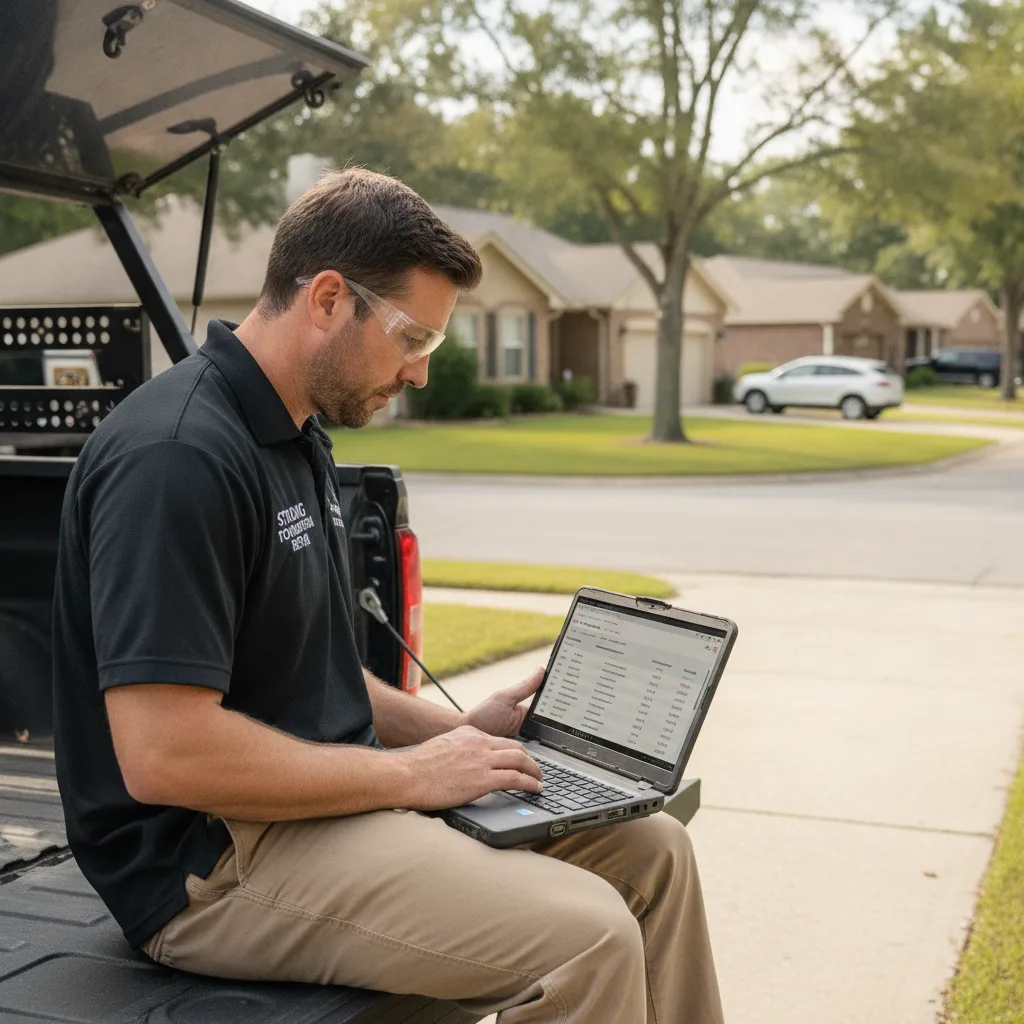
The typical foundation repair contractor books only 42% of inbound calls into actual jobs. Best-in-class operations using call tracking and CSR training hit 90% — a gap that directly doubles or triples effective CPL without touching a single bid or budget setting. If you are spending $5,000 per month on Google Ads and booking 42% of calls, you are paying for 58% of your leads twice: once for the click, and once when your team loses the caller to a competitor who answered faster and had a cleaner call process. This is a hidden CPL inflator that lives entirely outside the Google Ads interface.
CallRail is the default call tracking tool for foundation repair companies doing $1M–$10M in revenue. The Lead Tracking plan at $55/month covers dynamic number insertion, call recording, and transcription. The Lead Conversion plan at $165/month adds conversation intelligence, which flags price shoppers, identifies callers who said 'I already got a quote,' and scores calls as qualified or unqualified automatically. For a company spending $3,000–$5,000 per month on PPC, paying $165/month to track leads by quality is not optional — it is the only way to calculate real CPL. As of 2026, CallRail's integrations with Jobber, JobNimbus, JobTread, and Workiz allow bidirectional sync so booked jobs flow back into the platform for closed-loop reporting, giving your agency or internal team a direct view of ad spend to revenue.
Track every conversion type, not just form submissions. Foundation repair leads are predominantly phone calls, not form fills. Set up four conversion actions in Google Ads: calls from ads using a Google forwarding number, calls from the landing page using CallRail dynamic number insertion, estimate form submissions, and booked inspection confirmations if your CRM supports import. A campaign producing 10 qualified calls that book 7 inspections outperforms one generating 30 cheap form fills that book 2. Without tracking all four conversion types, Smart Bidding optimizes toward the wrong signal and high-value calls get underweighted in the algorithm.
CallRail Lead Tracking
$55/month
Tracks calls by keyword and ad, records conversations, and shows which foundation repair keywords produce real leads vs. tire-kickers
CallRail Lead Conversion (Conversation Intelligence)
$165/month
Automatically scores call quality and flags price shoppers — critical for justifying CPL to ownership and helping Smart Bidding optimize toward high-value calls
The Missed-Call Problem
As of 2026, 20–30% of inbound calls to home service businesses never connect — they hit after-hours voicemail, overflow queues, or simply ring out. That missed-call rate is a hidden CPL inflator: you paid for the click but never captured the lead. CallRail's missed-call text-back feature and after-hours routing address this directly. If 28% of your bookable demand arrives outside standard hours, an answering service or automated callback pays for itself in the first week.
Give Smart Bidding 60–90 Days Before Judging Google Ads Performance
Most foundation repair campaigns require 60–90 days for Smart Bidding to exit the learning phase and optimize reliably. Stopping after 30 days is almost always a pacing problem, not a channel problem. Google's Target CPA algorithm needs 30–50 conversions per month to operate effectively — at $130–$180 CPL, that means the campaign must generate consistent volume before the model has enough data to make meaningful bid adjustments. Contractors who launch in October and cancel in November never see what the campaign looks like in January, when foundation repair search demand climbs with fall soil settlement and homeowners start actively searching after noticing seasonal movement in their homes.
Set your initial Target CPA at $190–$210 — matching the 2026 recommended starting point — not at your goal CPL of $130. Starting too low tells the algorithm to restrict traffic so aggressively that the campaign starves before it learns. Let Smart Bidding run at the higher target for 45 days, collect conversion data, then step the target down by $20 every two weeks until you reach your goal CPL. Most foundation repair contractors see CPL decrease between months 2 and 3, not between weeks 1 and 2. That pattern is consistent across campaigns and markets.
Resist the urge to make more than one major change per week during the learning phase. Changing bids, budgets, and ad copy simultaneously resets the learning period and extends the ramp by weeks. Make one change, wait 7–10 days for data to stabilize, then evaluate. Document every change in a shared Google Sheet with the date, what changed, and the metric you expected to move. That log becomes the campaign's audit trail and the clearest evidence of what actually drives CPL up or down in your specific market. Without it, you are flying without instruments.
When to Pause vs. When to Push
Pause a campaign if CPL is running above $250 for more than 14 consecutive days after the 45-day mark. That signals a structural problem — likely a landing page or keyword issue — not a Smart Bidding learning problem. Fix the structural issue first, then restart the learning window. Do not simply raise the budget to chase volume when conversion rate is the broken variable. More clicks into a leaky funnel is not a PPC strategy.
Calculate Cost Per Booked Job to Know if Your Foundation Repair Marketing Is Actually Working
Cost-per-lead is the wrong metric for evaluating foundation repair Google Ads performance. Cost per booked job is the right one. At $150–$180 CPL with a 25–30% close rate on qualified leads, the cost per booked foundation repair job runs $500–$720. Against a $10,000 average job — the DFW Texas baseline — that is a 5–7% marketing cost-per-sale. Most contractors would write a check for $600 every time it guaranteed a $10,000 job. The contractors who understand that math are the ones still running ads in Q4 while their competitors are wondering why the phone stopped ringing.
Use this formula every month: (Total ad spend) / (Total booked jobs attributed to PPC) = Cost Per Booked Job. If you spent $4,500 in August and booked 7 foundation repair jobs from PPC leads, your cost per booked job is $643. Compare that to your average job ticket ($10,000–$12,000 for a DFW pier job, $4,500–$8,000 for foundation crack repair) and your target marketing cost percentage — most profitable foundation repair businesses run 6–10% of revenue on marketing. The channel is working if cost per booked job stays under 8% of your average ticket. That is the number your agency or internal team should report on, not just CPL.
Layer Local Service Ads alongside Search Ads to lower blended CPL and reach homeowners through both the Google Guaranteed badge and standard paid search. LSA leads cost $60–$75 in standard Texas markets and close at 25–40% for foundation repair companies with 50-plus Google reviews and a fast call-back process. Running LSA alongside foundation repair AdWords is not either/or — Local Service Ads handle brand-trust buyers who want the Google Guaranteed badge, while Search Ads capture high-intent searches for specific services like 'helical pier installation quote' or 'foundation inspection near me.' Foundation repair businesses running both channels consistently see blended CPL 20–30% below Search-only campaigns. Local SEO compounds both channels over time, since organic rankings reduce the paid search cost per lead generation dollar you need to spend to maintain visibility across your full service area.
Google Local Services Ads
$60–$75 per verified lead (standard Texas markets)
Pays per verified contact rather than per click, cuts blended CPL, and the Google Guaranteed badge builds trust and lifts close rates for foundation repair companies with strong review counts
Google Ads Conversion Import (CRM Integration)
Free (requires CRM with import support)
Imports offline conversion data — booked inspections, signed jobs — back into Google Ads so Smart Bidding can optimize toward real revenue, not just form fills
The Right Marketing Partner Runs Both Channels
An agency that understands foundation repair marketing should be able to show you blended CPL across Local Service Ads and Search Ads, not just campaign-level numbers. If your marketing partner reports CPL by channel but not by booked job, you are missing the number that actually tells you whether the marketing system is working. The right marketing partner for a foundation repair business is one who treats cost per booked job as the primary KPI, not cost per click or cost per form submission. Choosing that agency is as important as any campaign-level fix in this guide.
Don't Cancel Google Ads at Day 45 — That's When It Finally Works
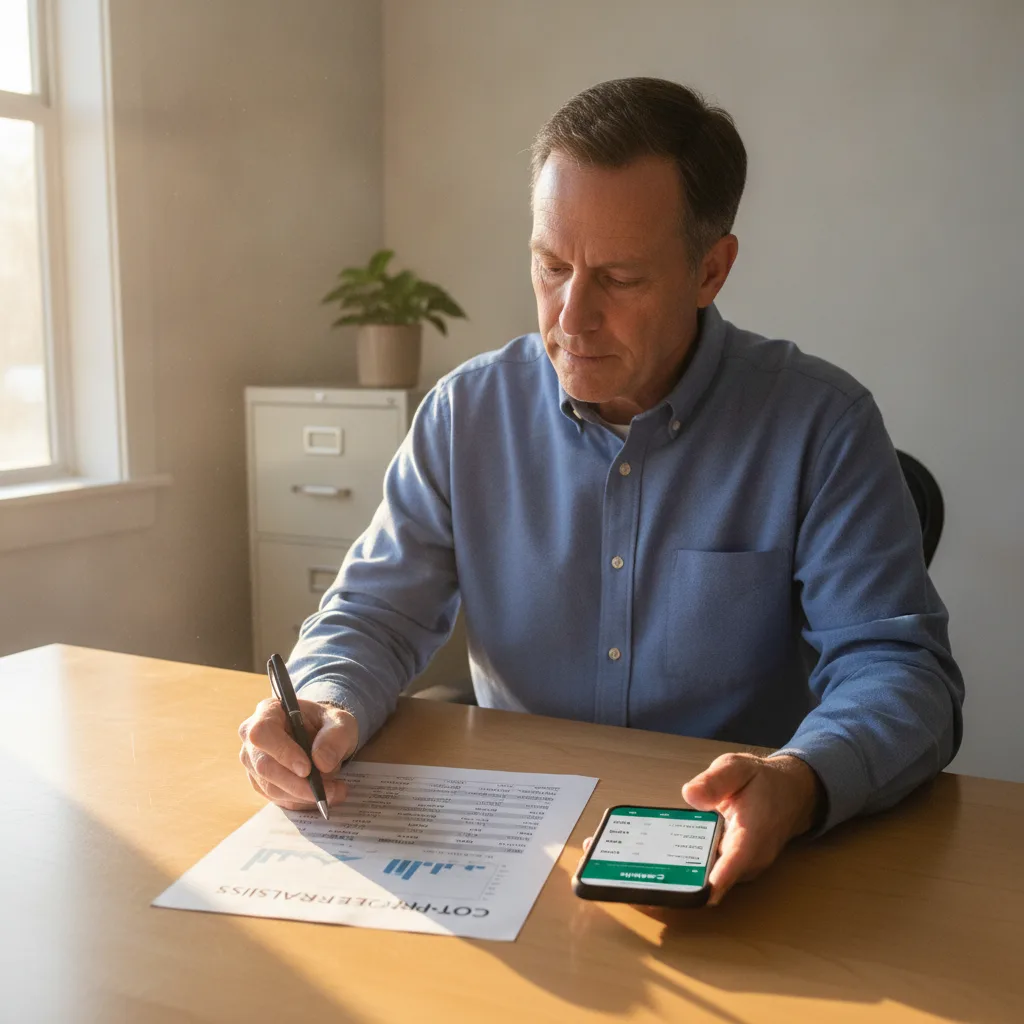
The most expensive mistake foundation repair contractors make with Google Ads is quitting at day 45–60 — exactly when Smart Bidding is exiting the learning phase and CPL is about to drop. If your campaign is structurally sound — transactional keywords, dedicated landing pages, CallRail installed, negative keyword list maintained — a rising CPL in weeks 3–6 is normal algorithm behavior, not channel failure. Set a 90-day review date before you launch, not a 30-day kill switch. The foundation repair companies winning on paid search aren't the ones with the biggest budgets. They're the ones who stayed in the game long enough for the data to work, and who had a marketing system built to convert every click that arrived.
Foundation repair AdWords campaigns are expensive to run and expensive to walk away from. At $130–$180 CPL, every structural mistake — a homepage instead of a dedicated landing page, broad keywords instead of transactional ones, no call tracking, a 30-day patience window instead of 90 — multiplies cost and masks what the channel can actually do. Fix the six variables in this guide, hold the campaign for 90 days, and calculate cost per booked job rather than CPL. For a DFW or Houston contractor averaging $10,000–$12,000 per foundation repair job, a $600–$720 cost per booked job is not a problem. It is a growth lever. The next step is a full campaign audit against the benchmarks in Step 1 — pull your Search Terms report, check your landing page conversion rate in Google Analytics, and verify CallRail is firing on every call source before you touch a single bid.
Frequently Asked Questions
Ready to get started? Contact Geek Powered Studios today.