
Medical weight loss center marketing costs $1,500–$3,000/month at the Foundation tier (local SEO, Google Business Profile, reputation management), $3,000–$6,000/month at the Growth tier (SEO plus Google Ads and Local Service Ads), and $6,000–$12,000/month at the Scale tier for full-channel campaigns in competitive metros like Austin, Houston, and Dallas. Building an in-house team runs $300,000–$550,000 per year in fully-loaded payroll before a dollar of ad spend. CPL by channel: Google Local Service Ads ($40–$120), Google Ads ($80–$300), Meta Ads cold audience ($45–$110), and organic SEO at maturity ($15–$45). The GLP-1 boom has pushed the $28 billion weight loss industry into one of the most competitive digital advertising markets in healthcare — and the cheapest-looking agency is almost never the cheapest option once HIPAA compliance costs land.
-
$1,500–$15,000+/moFull range of medical weight loss center marketing budgets
-
$15–$45 CPL at month 12Organic SEO cost per lead at maturity — lowest of any channel
-
$40–$120 CPL via LSAsGoogle Local Service Ads — pre-qualified calls, lower than standard PPC
-
$3,600–$7,200 patient LTVGLP-1 program revenue per 12-month enrolled patient
-
$18–$45 CPC for GLP-1 termsGoogle Ads cost per click in competitive Texas metros
-
$200K–$2M loss in 12 monthsTrue cost of a non-compliant agency engagement for a mid-size clinic
-
7–12% of gross revenueRecommended marketing spend for clinics under $5M revenue
-
$300K–$550K/yearFully-loaded in-house marketing team cost before ad spend
Medical weight loss center marketing costs $1,500–$15,000+ per month in 2026, and the number that matters most is not the retainer — it is the cost per lead by channel. Google Local Service Ads deliver pre-qualified calls at $40–$120 CPL. Standard Google Ads run $80–$300 CPL. Organic SEO drops to $15–$45 at the 12-month mark. Meta Ads cold audiences hit $45–$110. Those gaps explain why two clinics spending the same monthly budget can produce wildly different patient volumes. The $28 billion US weight loss industry as of 2026 has also created a new compliance cost layer that does not appear on any agency rate card: HIPAA-compliant tracking, FTC-safe GLP-1 copy, and Meta policy-compliant creative are not optional add-ons for a medical weight loss clinic — they are the price of staying in the game. This guide breaks down every tier, every channel CPL, and every hidden cost so clinic owners and agency buyers can evaluate weight loss clinic marketing proposals with real numbers in hand.
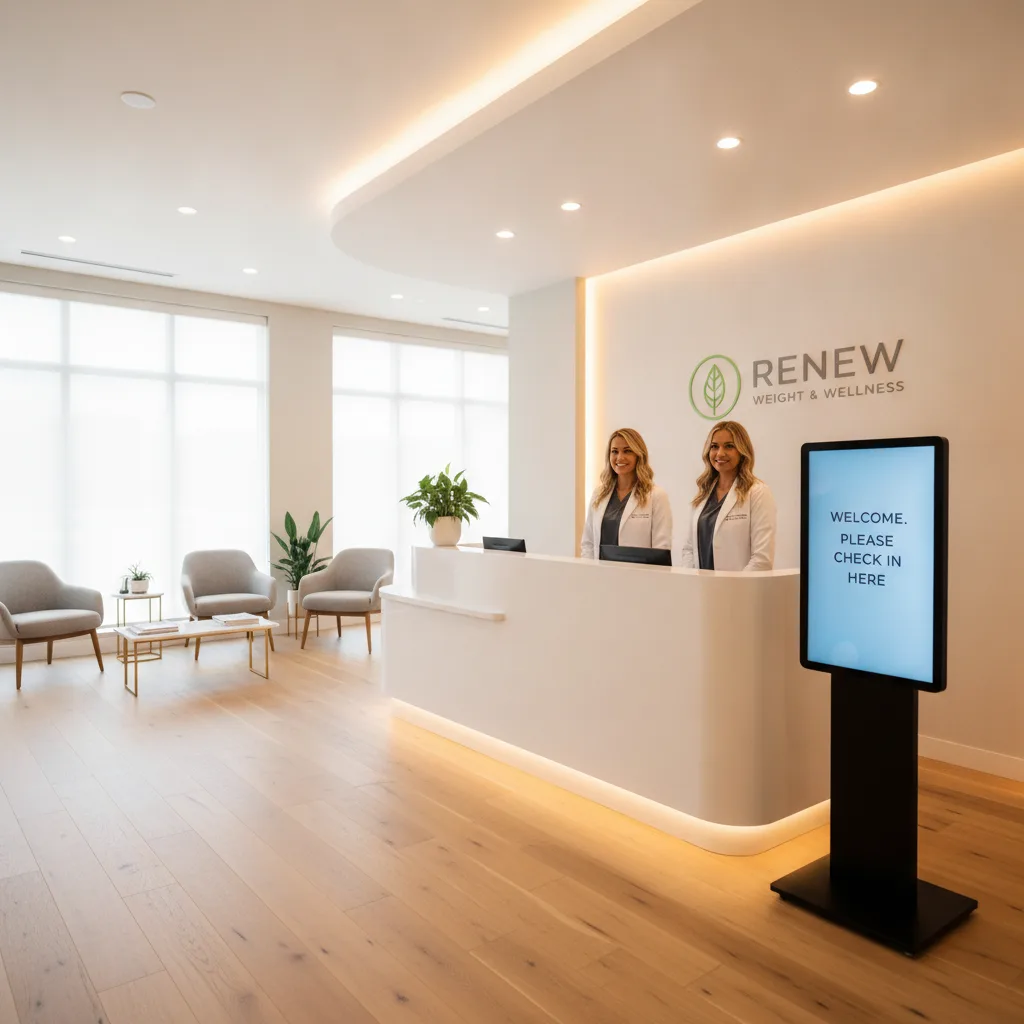
Weight Loss Center Marketing Costs in 2026: What You Actually Pay
| Tier | Price range | What's included | Best for |
|---|---|---|---|
| Foundation | $1,500 – $3,000/month | Local SEO, Google Business Profile optimization, 1–2 blog posts/month, reputation management via Podium, basic CallRail conversion tracking | Solo providers or single-location clinics in smaller markets building initial digital visibility |
| Growth | $3,000 – $6,000/month | SEO with 4 blogs/month, Google Ads ($1,500–$3,000 managed spend), Local Service Ads, full reputation management, monthly strategy calls | Established clinics in mid-size markets targeting 40–80 patient inquiries per month |
| Scale | $6,000 – $12,000/month | Full-channel: Google Ads, Meta Ads, advanced SEO, content marketing, email/SMS retention ($300–$800/month), GLP-1 landing pages, CallRail tracking, monthly performance reporting | Multi-location clinics or single-location practices in competitive metros (Austin, Houston, Dallas) targeting aggressive patient volume growth |
| Enterprise / In-House | $300,000 – $550,000/year (fully-loaded payroll, before ad spend) | In-house marketing director, SEO/content specialist, paid media manager, tools stack ($1,500–$4,000/month: CallRail, Podium, HubSpot, HIPAA-compliant analytics), plus full ad spend on top | Multi-location groups or PE-backed practices with volume and infrastructure to justify headcount |
What You Get at Each Medical Weight Loss Marketing Tier
Foundation
The Foundation tier covers the baseline infrastructure every medical weight loss clinic needs before spending a dollar on paid ads. That means a fully optimized Google Business Profile, consistent NAP citations across directories, 1–2 GLP-1 or program FAQ blog posts per month, and a reputation management system using Podium to capture patient reviews and build social proof in the local community. CallRail goes in from day one so every inbound call is attributed to its source — organic search, maps, or direct.
At this spend level, organic SEO CPL starts high (often $80–$120 in months 1–3) but drops to $15–$45 per lead by month 12 as informative blog posts and location pages earn authority in search results. This tier is not enough to compete aggressively in markets like Austin, Houston, or Dallas — but it builds the foundation that makes every future dollar of ad spend more efficient and positions clinics as a trusted authority in their local area before scaling paid channels.
Growth
The Growth tier is where most single-location medical weight loss clinics doing $2M–$5M in annual revenue should operate. It combines active search engine optimization content production — four GLP-1, program comparison, and patient education posts per month — with a live Google Ads campaign targeting high-intent terms like 'weight loss clinic near me' ($12–$20 CPC) and GLP-1-specific terms ($18–$45 CPC). Google Local Service Ads run in parallel at $40–$120 CPL for pre-qualified calls. Monthly strategy calls keep budget allocation responsive to which channel is producing qualified leads.
Combined LSA and paid search typically generate 40–80 patient inquiries per month in mid-size markets at this spend level. The management fee structure at this tier runs either a flat monthly fee or 12–15% of ad spend, whichever is greater. Pay-per-click (PPC) campaigns at this tier require meticulous keyword research and structured GLP-1 landing pages to attract quality leads and keep CPL inside profitable range — without that foundation, the math on paid search breaks down quickly.
Scale
The Scale tier runs every revenue-generating channel simultaneously and ties them together with shared reporting. Google Ads ($2,500–$5,000 in managed spend) targets high-intent weight loss services queries. Meta Ads focused on education-first GLP-1 creative ($1,500–$3,000 in social spend on Facebook, Instagram, and social media platforms) target prospective clients at the awareness stage. A full SEO content program with GLP-1 FAQ hubs and location pages builds more organic traffic month over month. Email and SMS retention sequences ($300–$800/month) reduce patient churn and reactivate lapsed program participants, improving patient engagement and supporting a strong reputation among existing clients.
Meta CPL for consultation requests runs $45–$110 cold and $20–$60 on retargeting audiences. On paid search, well-optimized GLP-1 consultation pages convert at 6–12%, cutting cost per acquired patient to $120–$200. At this tier, clinics in a competitive market have a real shot at outranking telehealth nationals in their local area — but only with HIPAA-compliant server-side tracking (not a standard Meta Pixel) and meticulous keyword research baked into every pay per click (PPC) campaign.
Enterprise / In-House
Building an in-house team is the most expensive option and the least flexible one. A competent core team — marketing director ($90–$150K base), SEO and content specialist ($60–$90K), and a paid media manager — runs $300K–$550K annually in fully-loaded payroll before a single dollar of ad spend. Add tools like CallRail, Podium, HubSpot, and a HIPAA-compliant analytics stack and you're looking at another $18K–$48K per year in overhead. That is before any paid media budget hits.
For most weight loss clinics under $5M in annual revenue, this math does not work. A specialist agency at $6,000–$12,000/month delivers comparable output at a fraction of the cost, with no recruiting risk and no learning curve on GLP-1 compliance requirements. The in-house model makes sense only when the practice has the patient volume, infrastructure, and internal project management to actually direct a full marketing team — typically a multi-location group or PE-backed practice with dedicated operations staff.

Pros and Cons of Hiring a Specialist Medical Weight Loss Marketing Agency
- $3,600–$7,200 patient LTV makes even a $200 patient acquisition cost look like an excellent trade — GLP-1 program patients enrolled for 12 months at $300–$600/month generate that in program fees alone, before labs and ancillary services, supporting sustainable growth for any clinic that gets the acquisition math right.
- $15–$45 organic SEO CPL at maturity is the lowest long-run acquisition cost of any channel — search engine optimization compounds month over month once GLP-1 content and location pages earn authority in search results, improving online visibility and generating more organic traffic without increasing spend.
- Google Local Service Ads deliver pre-qualified calls at $40–$120 CPL meaningfully lower than standard Google Ads ($80–$300 CPL range) — because Google verifies the business before showing the ad, which screens out low-intent clicks and helps clinics attract quality leads from the right audience in their local community.
- Negative keyword filtering cuts cost-per-sale by 25–65% for professional medical weight loss programs by stripping out searches for free programs, DIY diets, and supplement queries that will never convert to a consultation booking — one of the highest-ROI optimizations available in any PPC campaign.
- Content marketing drives 6x more ROI than traditional advertising at roughly 62% lower cost — informative blog posts, GLP-1 FAQ hubs, and patient education video are the primary organic authority tools that position clinics as a trusted authority in the weight loss industry and foster trust with prospective clients on their weight loss journey.
- One active PCP referral relationship generates 3–8 new patients per month at near-zero CPL — a single physician referral program partner at a $5,000 patient LTV can produce $25,000/month in revenue, making referral programs the highest-ROI channel for established clinics with an existing medical network and a measurable impact on sustainable growth.
- Organic SEO takes 3–6 months before meaningful ranking gains appear in search results — clinics that need patient volume now must run paid channels in parallel and treat SEO spend as a 12-month investment, not a 90-day fix for immediate patient inquiries.
- Meta Ads policy violations suspend accounts with no warning — before/after creative, body-image language, and sensitive health audience targeting are all explicitly restricted on social media platforms. A suspended Meta account can take weeks to reinstate and wipes retargeting audiences built over months, eliminating all the patient engagement data collected.
- Standard Meta Pixel installations violate HIPAA — server-side tracking is required for any medical weight loss clinic running Facebook or Instagram ads. Non-compliant setups expose clinics to federal enforcement, not just ad account suspension, and the compliance cost always lands somewhere — either upfront or in a settlement.
- GLP-1 Google Ads CPCs hit $18–$45 per click in competitive markets like Austin and Houston — without meticulous keyword research and a well-structured GLP-1 landing page converting at 6–12%, the math on paid search breaks down fast and CPL climbs well outside profitable range for weight loss services.
- A bad agency engagement can cost $200,000–$2,000,000 in lost patient flow over 12 months — not from direct fees, but from account suspensions requiring 12–18 months to recover, wasted ad spend of $30,000–$150,000 per year, and the opportunity cost of competitors compounding their authority while your campaigns sit offline.
- 62% of independent practices spend only 1–5% of gross revenue on marketing — enough to maintain visibility in the digital space, not enough to grow. Clinics targeting active growth in a $28 billion weight loss market need 8–14% of gross revenue allocated to marketing efforts, per the 2026 Gartner CMO Spend benchmarks.
How to Set Your Medical Weight Loss Marketing Budget: 6 Steps
- Anchor your budget to revenue, not a gut number Medical weight loss clinics under $5M in annual revenue should plan 7–12% of gross revenue for marketing — 8–14% for active growth mode — so a $3M clinic has a defensible budget range of $210,000–$420,000 per year, or $17,500–$35,000 per month, which is far more than most owners expect when they first start planning weight loss center marketing.
- Match your channel mix to your patient volume timeline If you need patient volume within 60 days, Google Ads and Local Service Ads must anchor the budget at $2,500–$8,000 per month including managed spend; if you are playing an 18-month game to achieve sustainable growth, shift more toward SEO and content marketing where CPL drops to $15–$45 at maturity and generates more organic traffic without ongoing ad spend.
- Price GLP-1 keywords before you set your paid search cap GLP-1-specific search terms cost $18–$45 CPC in competitive metros — run a Google Keyword Planner estimate for your target city before committing a monthly ad spend cap, or you will exhaust budget on 50 clicks that produce only 3–6 consultation requests, making effective medical weight loss marketing impossible at that channel level.
- Confirm HIPAA-compliant tracking is in place before any paid campaign launches Server-side tracking (not a standard Meta Pixel) is required for medical weight loss advertising on Facebook and Instagram — if your agency cannot explain their HIPAA tracking setup in plain language, that is a clear signal the compliance cost will land on your clinic later in the form of enforcement action or account suspension.
- Require channel-level CPL reporting, not blended averages Google Ads, LSA, Meta, and organic SEO produce wildly different CPLs ($80–$300, $40–$120, $45–$110, and $15–$45 respectively) — blended reports hide which channels are generating qualified leads and which are burning budget, so insist on a channel-level breakdown with measurable results from day one of any digital marketing engagement.
- Build your physician referral program in parallel with paid channels A single active physician referral relationship generating 3–8 new patients per month at near-zero CPL can offset $5,000–$10,000 per month in paid acquisition costs — structuring a formal referral program costs almost nothing to implement and pays back faster than any digital channel in the first 90 days, making it an essential piece of any effective weight loss marketing approach.

The Compliance Trap That Turns a $3,000/Month Agency Into a $500,000 Problem
A generalist agency running a standard Meta Pixel on a medical weight loss clinic's site — standard practice outside healthcare — creates a HIPAA exposure that has resulted in six-figure federal settlements. Add a Google Ads suspension from non-compliant weight loss creative and you are looking at a 12–18 month recovery window during which competitors compound their digital authority while your campaigns sit offline. The true 12-month cost of a poorly managed medical marketing engagement is $200,000–$2,000,000 in lost patient flow, wasted spend, and account recovery time — numbers documented from real mid-size practice cases, not worst-case projections.
San Antonio Eye Specialists came to Geek Powered Studios and hit record-breaking sales months within six months: +196% PPC leads and +156% organic leads. The math worked because the channel mix was right, the tracking was clean, and the team already knew the regulatory landscape before the first campaign went live. Medical weight loss clinic marketing in 2026 runs on the same principle: the right budget tier, the right CPL benchmarks by channel, and an agency that does not learn HIPAA compliance on your clinic's budget. A well-designed, user-friendly website is included free with every retainer, and there are no long-term contracts — so the only thing holding your clinic back from a predictable, scalable patient acquisition system that attracts new clients and supports every patient's weight loss journey is booking the first conversation.
Frequently Asked Questions
Ready to get started? Contact Geek Powered Studios today.