
Ophthalmology SEO for San Antonio Eye Specialists involved five parallel workstreams: a Webflow site rebuild that lifted PageSpeed from 78 to 92, local SEO and Google Maps optimization, a Google Ads overhaul centered on surgical-intent keywords, physician-led Facebook creative, and CallRail-based lead tracking installed across every channel from day one. The result over six months: ranked keywords doubled from 469 to 949, organic leads climbed 156% year over year, paid leads jumped 196%, and Facebook cost per lead dropped to $20 against an industry benchmark of $250. No single tactic produced those numbers. The tracking infrastructure made every optimization decision possible.
-
469 → 949Ranked keywords in SEMrush after six months of ophthalmology SEO work
-
$20 vs. $250GPS Facebook CPL vs. ophthalmology industry benchmark, same channel
-
Track before you optimizeCallRail attribution was the first install, not an afterthought
-
+196% paid leadsGoogle Ads and Facebook combined after keyword specificity overhaul
-
Physician-led creative winsDr. Iskander as ad face outperformed every stock-imagery variant tested
-
Ophthalmology is not optometrySeparating surgical from optometry search terms was the single biggest ad fix
-
78 → 92 PageSpeedWebflow rebuild unlocked Core Web Vitals and search engine rankings
-
+156% organic leads YoYCompounding result of local SEO, on page SEO, and off-site authority work
San Antonio Eye Specialists came to Geek Powered Studios with a problem that most ophthalmology practices recognize but few can quantify: money going out, nothing coming in that could be traced. The previous agency had run ads without keyword specificity, built a website that underperformed on Core Web Vitals, and left the practice with zero lead tracking infrastructure. Every booked consultation was untraceable. This is a channel-by-channel account of what GPS changed, why each decision was made, and what the data showed at the six-month mark. It is also a transparent look at what ophthalmology SEO actually requires from a marketing partner who understands the specialty.
What to Have Ready Before the Engagement Starts
- Access to your existing Google Ads account — GPS needs to audit keyword targeting, ad messaging, and historical spend before making a single change. Most ophthalmology practices arrive with optometry search terms running in a surgical practice's ad account.
- A Google PageSpeed Insights score for your current site. If you're below 85, technical SEO and Core Web Vitals work will be part of the roadmap from day one.
- Confirmation of what lead tracking, if any, is in place. If you cannot connect a booked appointment to a specific source, every optimization decision that follows is guesswork — and CallRail configuration will be the first task.
- An export of your current ranked keyword count from SEMrush or Google Search Console. That baseline number is what everything gets measured against at 3 and 6 months.
- A clear list of your highest-margin service lines: LASIK, premium IOLs, cataract surgery, retina treatment. Keyword research and ad messaging will prioritize surgical intent from the start.
- A decision on physician-led ad creative. The medical director or lead surgeon outperforms stock imagery in ophthalmology advertising — consistently and by a wide margin.
- Clarity on your geographic draw area. One metro versus multiple locations determines how many local SEO landing pages need to be built and how Google Maps optimization is structured.
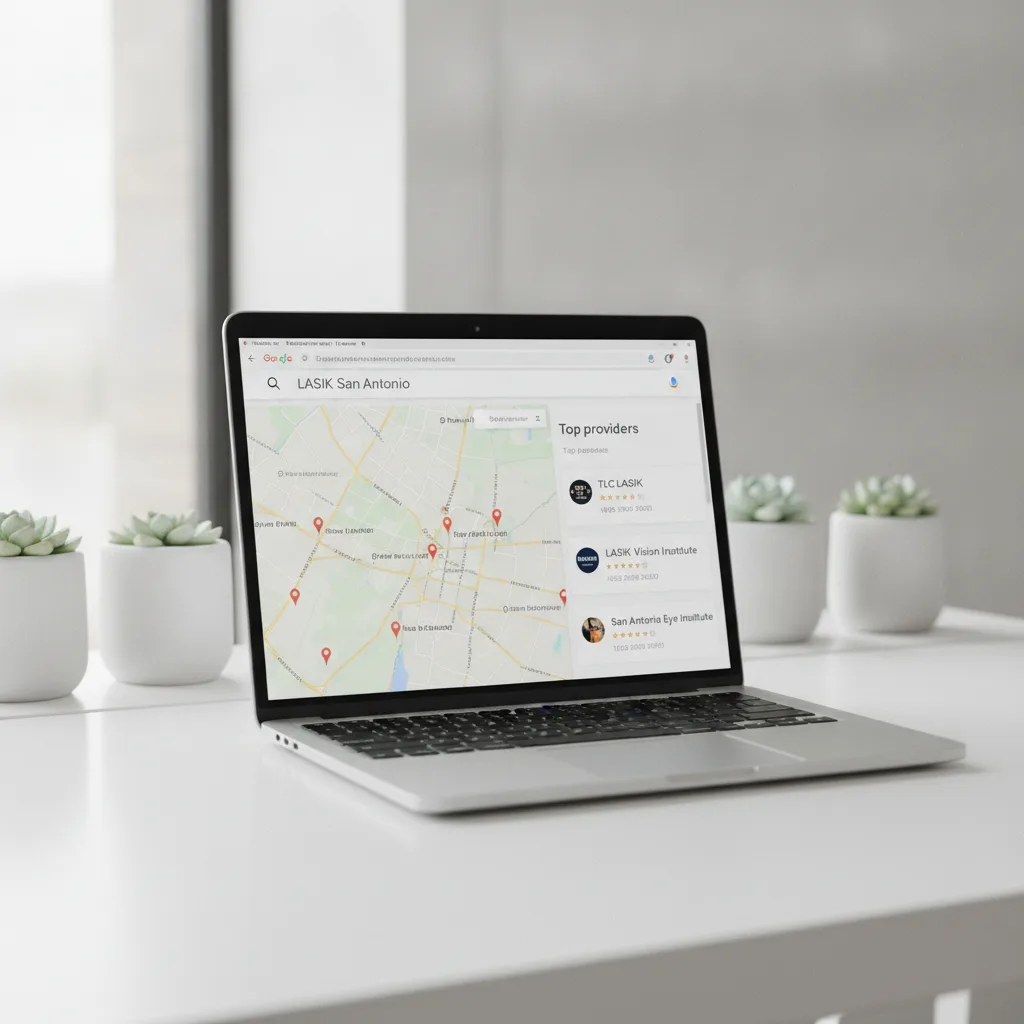
Discovery Phase
The Before State: What Was Actually Broken
San Antonio Eye Specialists came to Geek Powered Studios spending thousands of dollars a month with a previous agency and had nothing to show for it: no meaningful increase in qualified leads, no lead tracking, and ad messaging that was not matched to the practice's actual service lines. That last point matters more than it sounds. The practice is an ophthalmology clinic, not an optometry office. Those are two distinct specialties with two distinct patient intents, and the ads were not making that distinction. Ophthalmologists treat medical and surgical eye conditions — cataracts, glaucoma, retina disease, LASIK and refractive surgery. Optometrists prescribe glasses and contacts. Conflating them in a Google Ads account is not a minor inefficiency; it is a structural problem that guarantees unqualified leads.
The website compounded the problem. Technical and graphical issues meant the site did not reflect the caliber of the practice, and slow load times hurt both the patient experience and search engine rankings. Without CallRail or any attribution tool in place, the team had no way to connect a booked appointment back to a specific ad, keyword, or page. Every dollar spent was effectively untracked. That is not a marketing problem — it is a data infrastructure problem, and it has to be solved before anything else makes sense.
Before GPS touched the account, SEMrush showed 469 ranked keywords across all positions. That baseline number is the starting line, not the finish. The question was which of those keywords were driving surgical-intent patients — people searching online for 'LASIK San Antonio' or 'cataract surgery San Antonio' — versus informational or optometry-adjacent traffic that would never convert to a procedure consultation.
Why this matters for your practice
If you cannot attribute a lead to its source, you are not running a marketing program — you are running an expense. The first deliverable of any credible ophthalmology SEO engagement should be a tracking infrastructure, not content or ads. Attribution is what makes every optimization decision after it possible.
Weeks 1–6
Website Rebuild and Technical SEO: Building on a Foundation That Can Rank
GPS migrated the San Antonio Eye Specialists site to Webflow specifically to meet Google Core Web Vitals requirements. The result was a PageSpeed score jump from 78 to 92. That 14-point swing is not cosmetic — Google uses page speed as both a direct ranking factor and a proxy for patient experience, and ophthalmology practices with slow sites lose prospective patients before those patients ever read a service description. The Webflow migration addressed the structural performance issues that the previous site could not fix within its original platform.
The rebuild also addressed on page SEO at the structural level: sitemap architecture, meta descriptions, title tags, and individual pages built around procedure-specific search terms. For an ophthalmology clinic competing in a metro market like San Antonio, that means a dedicated page for cataract surgery, a dedicated page for LASIK surgery, a page for glaucoma treatment, and so on — each one written with keyword research that reflects how prospective patients actually search, not how the practice internally categorizes its services. Generic 'Services' pages do not rank. Purpose-built pages that target specific search terms do, and they give search engines a clear signal about what each page covers.
Technical SEO at this stage also included connecting Google Search Console and Google Analytics so that web traffic data, keyword rankings, and crawl errors were visible from the start. This is not optional infrastructure. It is how the team tracks whether on page SEO changes are producing movement in search results, and how quickly. Google Search Console in particular surfaces the exact search queries driving impressions and clicks, which feeds directly back into keyword research decisions in later phases.
Weeks 4–12
Local SEO: Earning the Google Maps 3-Pack and Attracting New Patients Through Local Search
Local SEO for an ophthalmology practice is harder than it looks because the Google Maps local pack only shows three results for any given local search — not ten. That is a narrower target than organic page-one rankings, and it requires a different set of signals: consistent NAP (name, address, phone) data across online directories, a fully optimized Google Business Profile, and inbound links from credible local sources. GPS used Moz Local for citation cleanup and consistency across directories including Healthgrades, Zocdoc, and Vitals, then paired it with manual outreach to build links from HARO, university partnerships, local news stations, and government sources. Automated tools handle the foundational citation work; they cannot replace the relationship-based outreach that earns the high-authority placements that move local search rankings.
Google Business Profile optimization was a core part of the local SEO strategy. As of 2026, ophthalmology practices with optimized profiles and 50 or more reviews average 40% more inbound calls than practices with incomplete profiles (Moz Local, 2025). For San Antonio Eye Specialists, that meant completing every profile field, adding procedure-specific service descriptions, and building a systematic review generation process. Positive reviews feed both the Google Business Profile ranking algorithm and the trust signals that convert a searcher into a patient who actually books a consultation.
Service pages were built around San Antonio-specific search terms — 'cataract surgery San Antonio,' 'LASIK San Antonio,' 'eye surgery San Antonio' — to capture local search results rather than competing nationally for terms the practice could not realistically rank for. Local search rankings are won city by city, not in the abstract. Each page needed to signal to Google that this ophthalmology clinic serves this specific geographic area, with the authority to back it up. That combination of on-site local signals and off-site citation consistency is what allows an ophthalmology website to rank higher than larger competitors who have not done the local groundwork.
What the data says about speed
A New York City ophthalmology practice that focused exclusively on Google Business Profile optimization — no website overhaul — saw a 29.3% year-over-year increase in GBP calls within 10 months (Cataract and Refractive Surgery Today, Sep 2024). Local SEO strategies produce measurable results faster than most ophthalmology practices expect, even in the most competitive markets.
Weeks 2–8
Google Ads Overhaul: Keyword Research and Surgical Intent Are the Whole Game
The single most impactful fix in the Google Ads account was keyword specificity: clearly separating ophthalmology search terms from optometry search terms. The previous agency's ads were capturing optometry searches for an ophthalmology clinic. That is not a minor inefficiency — every click on an optometry keyword is a wasted dollar and a wasted lead slot from a potential patient who was never going to book a surgical consultation. GPS restructured the account around surgical-intent search terms and rewrote the ad messaging to match, ensuring that every ad was speaking to a prospective patient with the right procedure in mind.
For LASIK and elective refractive procedures, Google Ads cost per lead runs $80–$200 because the procedure's bilateral case value supports that spend. The general ophthalmology median sits at $30.88 CPL based on LocaliQ's analysis of 3,542 US search campaigns (Oct 2024–Sep 2025). Knowing both benchmarks tells you exactly which campaigns are performing and which are bleeding. The account restructure gave the GPS team the data to make those calls — and CallRail tracking made every lead attributable to the specific keyword and ad that produced it.
Within six months, paid channels produced a 196% increase in leads. That result comes from cleaner keyword targeting, tighter ad-to-page message match, and the attribution infrastructure that made optimization possible. When you know which search terms are converting to booked consultations, you can shift budget toward what's working and cut what is not. Without tracking, that optimization loop does not exist. It is the difference between managing a marketing program and guessing at one.

Weeks 4–10
Facebook Ads: Physician Credibility as the Creative Strategy to Attract New Patients
GPS's most striking creative discovery on this engagement was that featuring Dr. Nader Iskander — the medical director — as the face of Facebook ad creative dramatically outperformed stock imagery or practice-focused visuals. Pairing the physician's credibility with a promotional offer produced Facebook leads at $20 each. The industry benchmark for similar ophthalmology practices is $250 per lead. That is not a marginal difference — it is a 92% reduction in cost per qualified lead on the same channel, and it held consistently across the campaign.
The mechanism behind this result is trust. Elective procedures like LASIK involve patients making a decision about their eyesight and committing $5,000–$7,000 to do it. They are not clicking on a generic eye graphic. They respond to a recognizable, credentialed physician who addresses their specific concern directly. Dr. Iskander, MD, FACS, embodies exactly the kind of credibility that moves prospective patients from scroll to click. The promotional offer then gives them a reason to act now rather than continue searching online.
Facebook and Google Ads serve different roles in an ophthalmology digital marketing strategy. Google Ads captures demand that already exists — patients actively searching for a provider. Facebook Ads generate demand by reaching patients who have not started searching yet but match the demographic profile of a LASIK or cataract surgery candidate. Running both channels in parallel with unified lead tracking through CallRail is what produced the 67% increase in overall digital leads across all channels. Neither channel alone would have reached that outcome.
Months 2–6
On Page SEO and Patient Education Content: Doubling Keyword Coverage
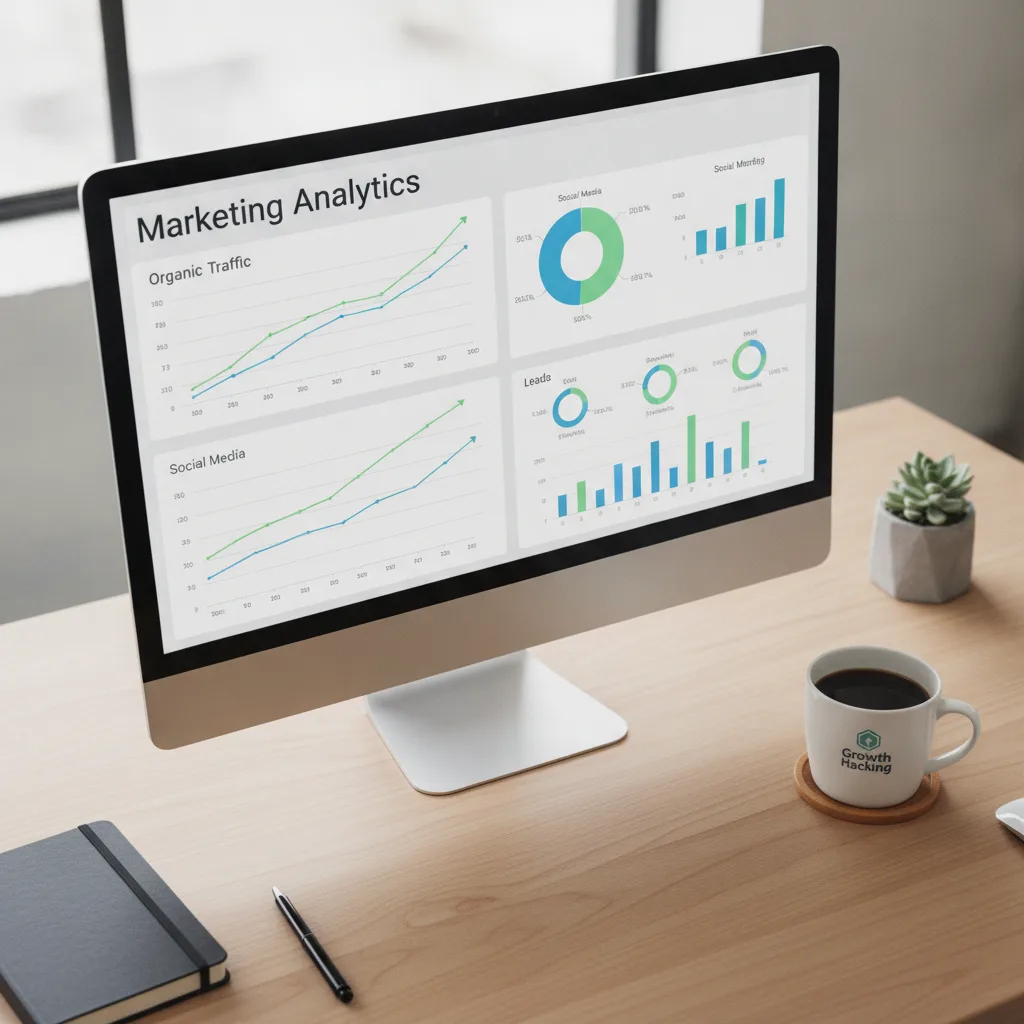
Ranked keywords grew from 469 to 949 in SEMrush over the course of the engagement — a 103% increase in keyword coverage — with first-page rankings achieved for high-volume terms including 'LASIK San Antonio' and 'eye surgery San Antonio.' That kind of search engine ranking growth does not come from optimizing one page. It comes from a structured keyword research process that maps every procedure and condition the practice treats to the search terms prospective patients use, then builds or rewrites individual pages to target those terms specifically. The ophthalmology website needs to cover the full scope of its ophthalmology services with dedicated pages, not a single generic services list.
Patient education content — blog posts on conditions like cataracts, glaucoma, diabetic retinopathy, and dry eye — serves a dual purpose in an ophthalmology SEO strategy. It captures patients searching online at the awareness and consideration stages, before they have decided on a provider. And it builds topical authority with search engines, which signals that this ophthalmology website covers its subject matter with depth and that Google should trust it to rank higher for related queries. Long tail keywords — condition-specific, symptom-specific, procedure-specific queries — are where organic traffic compounds fastest, because competition is lower and patient intent is often higher.
As of 2026, AI Overviews appear on more than 47% of health-related search queries (BrightEdge, 2025). Content that answers a specific patient question with a direct answer in the opening sentence is the same content that gets surfaced in AI Overviews and cited by other search engines. The SEO strategies that worked for San Antonio Eye Specialists are the same ones that position a practice's content for AI search going forward. That is not a future concern. It is the current reality for any eye care practice trying to rank higher and reach more patients through organic search.
Months 2–6 (Ongoing)
Off-Site SEO and Authority Building: What Google Sees Beyond Your Website
Off-site SEO is where most ophthalmology practices underinvest, because it is slower and less visible than on page changes. For San Antonio Eye Specialists, GPS built inbound links through HARO responses, university partnerships, local news station features, and government agency mentions. Each of those link sources carries a different type of authority signal — editorial credibility from news outlets, institutional credibility from universities, and geographic relevance from local government sources. Together, they tell Google that this practice is a recognized authority in its field and in its metro market. That is a signal that on page SEO alone cannot replicate, and it is what separates a practice ranking in the top three from one ranking on page two.
Local citations in online directories — consistent NAP data across Healthgrades, Zocdoc, Vitals, Yelp, and niche ophthalmology directories — reinforce the practice's geographic relevance for local search results. Moz Local automated the citation audit and submission process, but manual outreach was required for the high-value placements that move search engine rankings most. The two approaches are complementary: automated tools handle scale, manual relationship-building handles authority.
The SEO performance payoff from off-site work is slower to appear in search results than technical fixes, but it compounds in a way paid channels cannot. A link from a local university's ophthalmology resource page does not expire the way a paid ad campaign does. It continues to pass authority for years. That is why the organic CPL for a well-established ophthalmology SEO program typically falls well below what paid search can sustain at scale — the asset keeps working after the initial effort. Helping practices build that kind of durable online visibility is the core value proposition of an integrated SEO engagement.
Month 6 and Beyond
Healthcare Marketing Results and What Comes Next for Your Ophthalmology Clinic
Within six months, San Antonio Eye Specialists hit record-breaking sales months. The published numbers: 196% increase in leads through paid channels, 156% increase in organic leads year over year, 67% increase in overall digital leads, and 949 ranked keywords versus 469 at the start. Dr. Iskander's own assessment: 'Ophthalmology is a competitive niche and a reputable, knowledgeable marketing partner is paramount.' That quote reflects something real — the ophthalmology-optometry keyword distinction alone would have escaped most generalist agencies, and it was the single most impactful structural fix in the Google Ads account.
The case for an integrated paid-plus-organic ophthalmology SEO strategy is straightforward. Google Ads and Facebook Ads produce new patients immediately but stop the moment spend stops. Organic search and local SEO compound over time — an ophthalmology clinic that builds first-page keyword rankings and Google Maps authority today is building a lead channel that gets cheaper per patient as months pass. The practices that build both in parallel sustain patient volume without sustaining proportional spend increases. That is the structural advantage that an SEO-first engagement creates.
For healthcare marketing in a specialty like ophthalmology, where 71% of patients now find providers through online search rather than physician referrals (Direction, 2026), the online presence is not a supplement to the practice — it is the front door. What San Antonio Eye Specialists' results show is that a focused, channel-specific engagement with a marketing partner who understands the specialty can produce measurable, attributable growth in under six months. The team understands the ophthalmology-optometry distinction, the surgical-intent keyword map, the Google Maps ranking signals, and the physician-creative effect on Facebook. Those are not generic digital marketing skills. They are specific to eye care, and the results reflect that specificity.
The Keyword That Most Agencies Get Wrong in Ophthalmology
The most expensive mistake in ophthalmology Google Ads is not a bidding error — it is targeting optometry keywords for a surgical practice. Searches for glasses, contacts, and eye exams are optometry intent. Searches for cataract surgery, LASIK consultation, and retina specialist are ophthalmology intent. When the previous agency ran San Antonio Eye Specialists' ads without that distinction, every click on an optometry search term was a wasted dollar and an unqualified lead. GPS rebuilt the account around surgical-intent keywords, and paid leads jumped 196%.
San Antonio Eye Specialists went from untracked spend and mismatched ad messaging to record sales months in six months. The work was keyword research tied to procedure intent, a website that could actually rank higher in search results, local SEO that built Google Maps visibility, and Facebook creative that put the right physician in front of the right target audience. If your ophthalmology clinic is spending on digital marketing without being able to attribute a single booked consultation to a specific source, that is the starting point. GPS has solved exactly that problem before, with published results to prove it. The free custom website is included, there is no long-term contract, and GPS works with one ophthalmology practice per market. Book your free strategy session and find out what the same ophthalmology SEO approach would look like for your practice.
Frequently Asked Questions
Ready to get started? Contact Geek Powered Studios today.