
As of 2026, PPC for plastic surgeons on Google Ads produces an average cost per lead of $379 and a full patient acquisition cost of $1,824 — nearly double what organic search costs at $874. In Tier 1 metros like Dallas, Houston, and Miami, the CPL climbs to $548 and acquisition cost hits $2,657. Three variables control where a practice lands in that range: market tier, keyword intent level, and landing page type. A rhinoplasty campaign in a mid-size market with a consultation-focused landing page and a tight negative keyword list can hit $233 CPL. The same campaign sending traffic to a homepage in a major metro will clear $500. The math still works at a $379 CPL when a single rhinoplasty generates $8,500 in revenue — but only if you measure patient acquisition cost, not CPL alone.
-
$379National average CPL for plastic surgery Google Ads in 2026
-
$1,824True patient acquisition cost once lead-to-consultation rate is applied
-
10.7%PPC lead-to-consultation conversion rate vs. 18.9% for organic search
-
19.4% vs. 6.2%Consultation landing page converts 3x better than information page
-
$445Surgical acquisition cost via injectable-first funnel vs. $1,644 direct
-
30 conversions/monthMinimum threshold before switching from Manual CPC to Target CPA
-
15–30%Wasted ad spend recovered through aggressive negative keyword management
PPC for plastic surgeons costs $379 per lead on average nationally — and $1,824 per acquired patient once the 10.7% lead-to-consultation conversion rate is applied. That number climbs to $2,657 per patient in Tier 1 metros like Dallas, Houston, and Miami. Before any plastic surgery practice commits ad budget to Google Ads, the marketing team needs to understand three variables that control where in the CPL range a campaign lands: market tier, keyword intent, and landing page type. This guide walks through all seven steps to build a compliant, measurable plastic surgery PPC campaign — from clearing Google's healthcare compliance requirements to deploying the injectable-first funnel that cuts surgical patient acquisition cost by 73%.
Before you start
- Google Ads account with healthcare advertiser identity verification completed — required before any plastic surgery ads can serve on Google Search
- LegitScript certification if your practice offers telehealth or prescription-adjacent services ($975 application fee plus $2,150 per year per domain)
- Minimum monthly ad budget committed: $2,500 for mid-size markets, $8,000 for major metros like Miami, Dallas, or Houston
- CallRail account ($55/month Lead Tracking plan) configured to track call and form conversions separately per procedure campaign
- Procedure-specific landing pages built — one per major procedure — not your homepage or general services page
- Google Analytics 4 with conversion events firing correctly so the algorithm has clean data from day one
Understand the Real CPL Math Before You Set a Budget
As of 2026, plastic surgery PPC on Google Ads produces an average cost per lead of $379 and a full patient acquisition cost of $1,824 — nearly double what organic search costs at $874 per patient. That gap exists because the lead-to-consultation conversion rate for paid search is only 10.7%, versus 18.9% for organic. A lower CPL does not equal a lower patient acquisition cost when the channel converts at roughly half the rate. Any plastic surgery marketing strategy built around CPL alone will cut the wrong campaigns when budget pressure hits.
The $379 national average masks a wide range by market tier. In Tier 1 metros — the top 10 US markets including Dallas, Houston, and Miami — the average CPC hits $38.60, the CPL reaches $548, and the full patient acquisition cost climbs to $2,657. That is 2.8 times what a practice in a market under 250,000 people pays. Surgical keyword CPCs in major metros run $55–$100+ per click; the same relevant keywords in mid-size markets run $8–$25. This is the most important number to establish before setting an ad budget: your market tier determines your floor.
Procedure type moves the CPL number just as much as market tier. As of 2026, rhinoplasty PPC generates a $233 CPL, facelifts come in at $301, mommy makeovers at $322, and liposuction at $182. Neurotoxins and fillers sit at $54. Those are averages from a panel study of 74 practices tracked through June 2026 — not aspirational targets. A new campaign in a competitive market should budget toward the higher end of each range for the first 60 days while the algorithm accumulates conversion data. Patient acquisition cost has risen 82.9% since 2020 — from $997 to $1,824 — an annualized increase of roughly 11.9%. Budget projections built on 2022 or 2023 data understate current spend requirements by $300–$600 per acquired patient.
Reality Check
Patient acquisition cost has risen 82.9% since 2020, driven partly by a 40–60% rise in plastic surgery CPCs over the past three years. Budget projections built on older data produce unrealistic expectations that erode trust between the practice and its marketing team within the first quarter.
Clear Google's Healthcare Compliance Requirements Before Spending a Dollar
Google requires healthcare advertiser identity verification before any plastic surgery Google Ads campaign can serve — practices that skip this step find their accounts suspended, often without a clear reinstatement timeline. The verification process requires submitting business documents, confirming the practice address, and agreeing to Google's healthcare advertiser policies. Plan five to ten business days for review. This is not optional and is not the same as a standard Google Ads account setup. Healthcare advertising regulations at the platform level carry real consequences for non-compliance: suspension of all campaigns with no traffic until the issue is resolved.
Practices offering telehealth consultations or any prescription-linked services face a second compliance layer: LegitScript certification. The application fee is $975, plus $2,150 per year per domain at the standard tier. Without it, Google will not serve ads for those service lines in most US states. Budget this cost into the first-year plastic surgery marketing plan — it is not optional for practices advertising online consultation booking. LegitScript also signals patient trust and credibility to potential clients who see the certification badge on the practice website.
Meta Ads carry their own restrictions for cosmetic surgery content. Before-and-after images are prohibited in Meta's ad creative policy for cosmetic procedures, which limits the visual proof that drives click-through rates on Facebook and Instagram. Plan Meta creative around credentials, patient testimonials with written quotes, success stories, and procedure education rather than transformation imagery. This restriction is also why Google Ads, despite higher CPCs, remains the primary patient acquisition channel for most plastic surgery practices — it captures high-intent search queries that social media platforms cannot replicate.
LegitScript Healthcare Merchant Certification
$975 application + $2,150/year
Required by Google before serving ads for practices with telehealth or prescription-adjacent services; without it, entire campaign categories get blocked
Google Ads Identity Verification
Free
Mandatory for all healthcare advertisers before any plastic surgery campaign can serve on Google Search
Build Your Google Ads Campaign Architecture Around Individual Procedures
One campaign per procedure is the correct structure for plastic surgery PPC — not one campaign for the entire practice. A single campaign mixing rhinoplasty, breast augmentation, and facelift keywords forces the algorithm to optimize across procedures with vastly different CPCs, CPLs, and margin profiles. Separate campaigns let you set individual budgets, track procedure-level CPL, and pause underperformers without touching top performers. This architecture is how cosmetic surgeons build measurable results instead of pooled averages that hide which procedures are actually profitable to advertise.
Keyword research and search intent are the variables that move CPL more than bid amount. The keyword 'rhinoplasty consultation' converts at 12.8%; the generic keyword 'rhinoplasty' converts at 1.2% — a 10x gap on the same traffic source. Build each ad group around consultation-intent and location-qualified terms: 'rhinoplasty consultation Dallas,' 'breast augmentation surgeon Houston,' 'facelift near me.' These high intent keywords cost more per click but produce CPLs 60–80% lower than generic informational terms. Search intent determines whether a click becomes a lead. Keyword research determines whether you're bidding on clicks that can convert.
Start every new campaign on Manual CPC bidding. A plastic surgery campaign must accumulate 30 conversions per month before switching to Target CPA — below that threshold, the Google algorithm spends erratically and CPL inflates. For most single-location plastic surgery practices, that means 60–90 days on Manual CPC while building conversion history. Switching to Target CPA too early is one of the most common reasons plastic surgery PPC budgets produce inflated CPLs in months two and three. Effective strategies for bidding discipline during ramp-up include weekly budget pacing reviews and manual bid adjustments by device and time of day.
Pro Tip
Run non-surgical procedures (Botox, fillers) in separate campaigns from surgical procedures. CPCs for injectables run $3–$10 versus $8–$100 for surgical keywords. Mixing them causes the algorithm to over-invest in whichever procedure gets more clicks, not whichever produces the highest patient value — and it makes procedure-level CPL tracking impossible.
Build Procedure-Specific Landing Pages That Convert Paid Traffic
A consultation-focused procedure landing page converted plastic surgery paid search traffic at 19.4% versus 6.2% for a procedure-information page in a documented A/B test with a Dallas practice — a 3x gap on identical keyword traffic. Sending paid clicks to a homepage or general services page produces results closer to the 6.2% floor. The average plastic surgery website converts just 2.3% of all visitors; dedicated procedure pages built for consultation intent routinely reach 15–19%. The difference in conversion rates at scale is the difference between a profitable campaign and a donation to Google.
Each landing page needs five elements to hit the upper end of the conversion range: a single, clear call to action (book a consultation, not 'learn more'), a headline that mirrors the ad's keyword intent, the surgeon's board certification and credentials visible above the fold, patient testimonials or success stories with specific procedure details, and a contact form with no more than four fields. Pages with seven or more form fields consistently underperform. Mobile performance matters here: over 60% of plastic surgery ad clicks land on a mobile device, so the form must load and submit cleanly on iOS and Android. A user-friendly mobile experience is not a design nicety — it is a CPL variable.
Dedicated landing pages reduce CPL 20–45% compared to homepage traffic, according to procedure-level testing across multiple plastic surgery clinics. That CPL improvement compounds directly into patient acquisition cost. A practice spending $8,000 per month in a major metro that cuts CPL by 30% through landing page optimization adds roughly 4–6 additional consultation leads per month at no additional ad spend. The procedure pages also improve Quality Score, which lowers CPC over time — a second-order benefit that further reduces the cost of attracting patients.
Unbounce
From $99/month
Build and A/B test procedure landing pages without developer dependency; integrates directly with Google Ads for conversion tracking per page variant
CallRail
$55/month (Lead Tracking plan)
Tracks which landing page and keyword produced each phone call, separating form leads from call leads so you measure true CPL per procedure
Eliminate Wasted Ad Spend With Aggressive Negative Keyword Management
Aggressive negative keyword management reclaims 15–30% of wasted ad spend in documented plastic surgery PPC accounts. Without a negative keyword list, plastic surgery campaigns serve on queries from job seekers, medical students, people researching complications, and anyone searching celebrity procedure names — none of whom are prospective patients. In Miami-market accounts running $55–$85 CPCs, that 15–30% waste translates to $1,200–$2,400 per month burned on website traffic that cannot convert. This is the most common source of hidden loss in new plastic surgery marketing campaigns.
The core negative keyword list for any plastic surgery Google Ads campaign should include: 'free,' 'DIY,' 'recovery,' 'gone wrong,' 'jobs,' 'celebrity,' 'school,' 'nurse,' 'medical assistant,' 'botched,' 'lawsuit,' and 'malpractice.' Add procedure-adjacent terms that signal research rather than purchase intent: 'how to,' 'what is,' 'risks of,' and 'side effects of.' Build this list before the campaign launches — waiting until the first month's search term report to add negatives means paying for that education at $22–$85 per click. The ad spend that disappears into irrelevant queries is ad budget that cannot attract patients with real consultation intent.
Review the search terms report weekly for the first 60 days, then monthly once the campaign matures. New waste patterns emerge as the algorithm expands match types. Broad match keywords in high-CPC markets are the single largest source of hidden loss — a 'rhinoplasty' broad match in Houston will serve on 'rhinoplasty school programs' at $22+ per click. Phrase match or exact match with a tight negative list produces lower impressions but reliably lower CPL across surgical procedure campaigns. Negative keyword discipline is ongoing work, not a one-time setup task.
Set Up Conversion Tracking That Captures Every Lead Type
Plastic surgery practices generate leads through three channels that require separate conversion tracking: phone calls, web forms, and online booking tools. Tracking only form submissions undercounts leads by 40–60% for most plastic surgery clinics, because a significant portion of potential patients searching surgical procedures prefer calling over submitting a form. CallRail's $55/month Lead Tracking plan assigns unique phone numbers to each campaign and keyword, sending call conversion data directly to the Google Ads interface alongside form data. Without call tracking, your CPL reporting is wrong — and you will cut the campaigns driving your highest-value leads.
Configure Google Ads to import both call conversions (calls over 60 seconds) and form-fill conversions as separate conversion actions. Do not aggregate them into a single 'lead' conversion, because calls and forms have different close rates and require different follow-up workflows. Tracking them separately lets the marketing team identify which procedure campaigns drive calls versus form completions, and adjust ad copy and landing page design accordingly. Practices responding to consultation inquiries within 5 minutes convert 21% of leads to booked consultations; those waiting 30 minutes or longer convert just 7%. Conversion tracking surfaces that gap in response time — but only if you also measure speed-to-response inside your CRM alongside your ad platform data.
Add audience targeting layers using Google's in-market audiences for cosmetic surgery and healthcare services. These audiences do not restrict delivery — they inform bid adjustments that shift ad spend toward users already in the patient journey for cosmetic procedures. A +20% bid modifier on users already in-market for cosmetic surgery improves CPL without narrowing reach to potential patients outside that segment. Combine with geographic bid adjustments: if your practice draws from a 15-mile radius, reduce bids for users beyond 20 miles rather than excluding them entirely, which preserves auction participation while concentrating spend closer to the clinic.
CallRail
$55/month (Lead Tracking plan)
Assigns unique tracking numbers per campaign and keyword; sends call conversion data directly to Google Ads for accurate CPL calculation across all lead types
Google Analytics 4
Free
Required for form-fill conversion tracking and cross-channel attribution; connects to Google Ads to populate the conversion column with real lead counts from day one
Watch out
Meta descriptions and ad extensions are often overlooked as conversion tracking touchpoints. If a patient clicks a call extension directly from the SERP without visiting the landing page, that call still needs a CallRail tracking number to appear in Google Ads as a conversion. Configure call extensions with dynamic number insertion, not your practice's main phone line.
Add an Injectable-First Funnel to Cut Surgical Patient Acquisition Cost by 73%
The injectable-first patient pathway produces a surgical acquisition cost of $445 — compared to $1,644 for a patient who arrives searching directly for surgery. That $1,199 difference is the most underused insight in plastic surgery digital marketing. Running Botox and filler campaigns at $3–$10 CPCs fills the practice schedule with non-surgical patients, and a documented portion of those patients convert to surgical procedures over 12–24 months — at a fraction of the direct-surgical search acquisition cost. Non-surgical CPLs run $40–$150 for injectables versus $182–$322 for surgical procedures. The lower CPL makes it easier to generate volume, fill the schedule, nurture relationships with potential clients, and build the patient trust that leads to surgical consultations.
The math justifies the channel mix shift. A five-year patient lifetime value for a multi-procedure surgical patient is $33,700. Acquiring that patient through an injectable funnel at $445 versus a direct surgical search at $1,644 preserves $1,199 in margin per patient — which, across 20 surgical patients per year sourced through the injectable pathway, is $23,980 in recovered margin annually. That figure exceeds the total annual ad spend for many mid-size market plastic surgery practices. The injectable funnel is not a discount channel. It is a long-term patient acquisition strategy that improves ROI across the full plastic surgery marketing effort.
Structure the injectable campaign as a separate Google Ads campaign with its own budget, landing page, and conversion tracking. Microsoft Advertising is worth adding here: plastic surgery keywords on Microsoft run 30–50% below Google CPCs, and the audience skews slightly older — aligning well with facelift, blepharoplasty, and body contouring patients who represent the highest surgical revenue per procedure. Microsoft Ads also face fewer restrictions on cosmetic surgery content than Meta's social media platforms, giving the marketing team more flexibility in ad creative. Local SEO and local visibility round out the full digital presence that makes the injectable funnel work: potential patients who engage with injectable ads often research the practice on Google Maps and read online reviews before booking.
Microsoft Advertising (Bing Ads)
No minimum spend; CPCs typically 30–50% below Google
Reaches an older demographic that skews toward facelift, blepharoplasty, and body contouring procedures at significantly lower CPCs than equivalent Google campaigns
Channel Mix Insight
Do not pause injectable campaigns when surgical booking is full. Injectable patients are future surgical patients. Pausing the funnel to manage current capacity creates a 12–18 month hole in the surgical pipeline that no amount of burst spend fills quickly. Keep injectable campaigns running at minimum budget during capacity crunches rather than switching them off entirely.
The Number That Should Change Your PPC Conversation
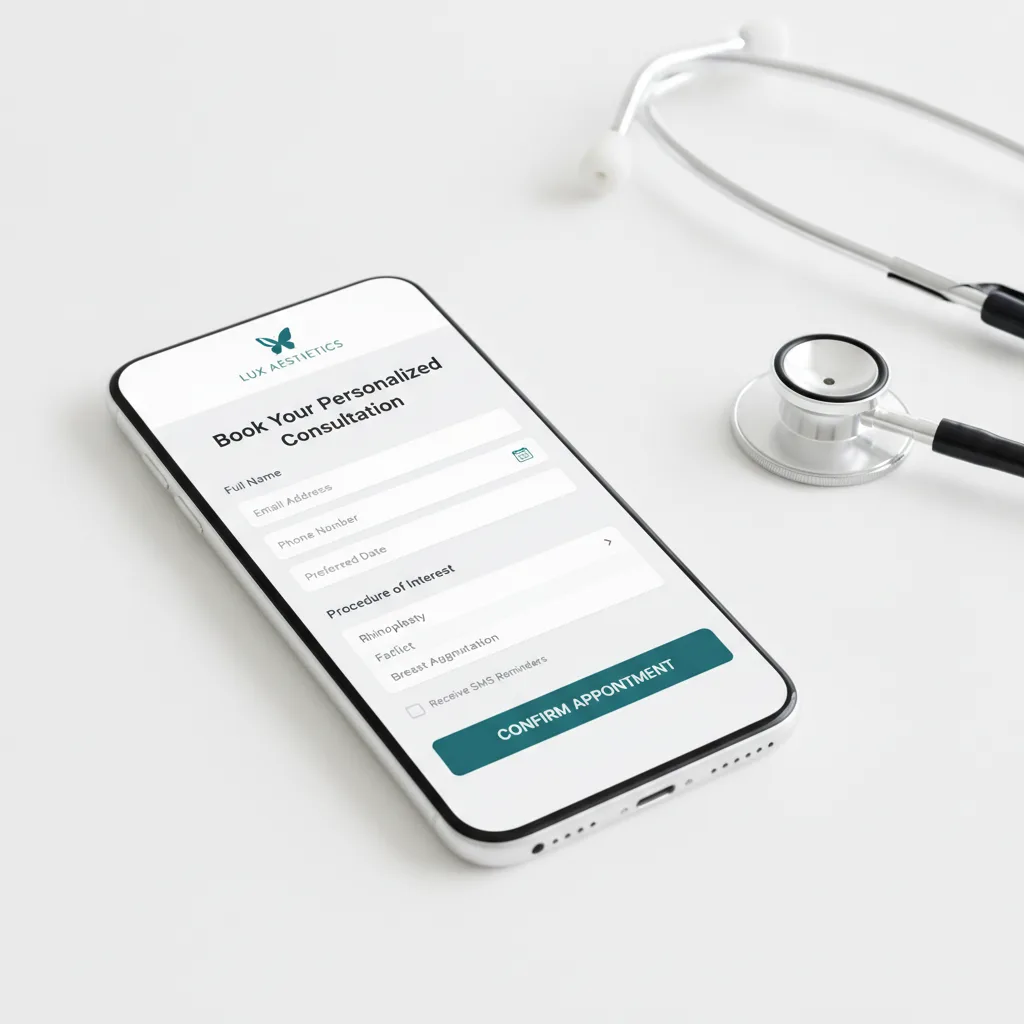
A $379 average CPL sounds manageable until you apply the 10.7% lead-to-consultation conversion rate and arrive at a $1,824 patient acquisition cost — or $2,657 in a Tier 1 metro. That is not a reason to avoid PPC for plastic surgeons. A single rhinoplasty at $8,500 or a mommy makeover at $18,000 makes a $400 CPL look trivial. The reason to know the real number is to stop measuring campaign success by CPL alone and start measuring by patient acquisition cost against procedure revenue. Practices that track CPL without tracking consultation conversion rate and procedure close rate are optimizing the wrong metric — and they will cut the wrong campaigns when budget pressure hits.
PPC for plastic surgeons is not a volume play. It is a margin discipline exercise. The practices that run profitable Google Ads campaigns in 2026 know their procedure-level CPL benchmarks, hold their landing pages to a 15%+ consultation conversion rate, block wasted spend before it accumulates, and treat injectable campaigns as surgical pipeline investments rather than low-value filler bookings. The national average CPL of $379 is a starting point for the math — not the goal. The goal is a patient acquisition cost that sits at 3–5% of the procedure revenue it generates. At a $1,824 acquisition cost against a $33,700 five-year patient value, PPC earns its place in the plastic surgery marketing strategy. It just requires the infrastructure — CallRail for call attribution, procedure-specific landing pages, Target CPA only after 30 conversions per month, and a live negative keyword list — to prove it.
Frequently Asked Questions
Ready to get started? Contact Geek Powered Studios today.