
Dental website design costs in 2026 range from $0 to $30,000+ depending on the tier: DIY builders like Wix run $0-$50/month; dental SaaS platforms like ProSites run $4,000-$8,000/year all-in; freelancers charge $1,500-$5,000; small agencies charge $4,000-$12,000; and premium dental marketing agencies charge $8,000-$30,000+. The build fee covers only 40-60% of your true three-year cost. Mandatory WCAG 2.1 AA accessibility compliance as of 2026 adds $1,500-$5,000 for remediation. A conversion-optimized dental website that moves visitor-to-appointment-request rates from 2% to 5% generates enough new patient revenue to pay back a $10,000 build in under 30 days at 1,000 monthly visitors.
-
40-60%Build fee as share of true 3-year cost
-
$1,500-$5,000WCAG 2.1 AA proactive remediation cost
-
8-16 weeksRealistic agency build timeline including PMS integration
-
2% vs 8-12%Standard vs. optimized dental site conversion rate
-
$4,500Average patient lifetime value over 7 years
-
24-30 monthsBreak-even: owned agency build vs. SaaS rental
-
$50,000-$150,000Federal ADA lawsuit defense cost, win or lose
-
2.3xAgency premium over freelancer for comparable dental builds
Dental website design cost in 2026 ranges from $0 to $30,000+ depending on which of the five pricing tiers your build lands in, and the build fee covers only 40-60% of what you will actually spend over three years. This guide gives dental practice owners and DSO buyers a concrete decoding framework: the five tiers with real all-in numbers, the six hidden fees buried in most contracts, the WCAG 2.1 AA compliance deadlines already in effect for most practices, PMS integration timelines, and the conversion math that proves whether a $10,000 dental website build pays for itself faster than a $1,500 template. Work through these seven steps with your current quotes in hand and you will finish knowing exactly which vendor to hire and which contract clauses to rewrite before signing. The dental website design companies that earn long-term clients are the ones who can answer every question this guide raises with a specific number and a track record to match.
Before you start
- Have three competing quotes from dental website design companies or freelancers in hand, or a defined budget range if you are starting from scratch.
- Pull your current monthly visitor count and appointment-request conversion rate from Google Analytics 4, or ask your current vendor for the GA4 report.
- Confirm your practice employee headcount: the WCAG 2.1 AA compliance deadline differs for practices above and below 15 employees as of 2026.
- Know which practice management system (PMS) you use: Dentrix, Eaglesoft, Open Dental, or Curve. Integration complexity directly affects build cost and timeline.
- Set a realistic all-in monthly budget, not just a one-time build budget, before evaluating any vendor proposals.
- Confirm in writing whether you own your current site outright or whether it reverts to the vendor if you cancel. This changes your negotiating position entirely.
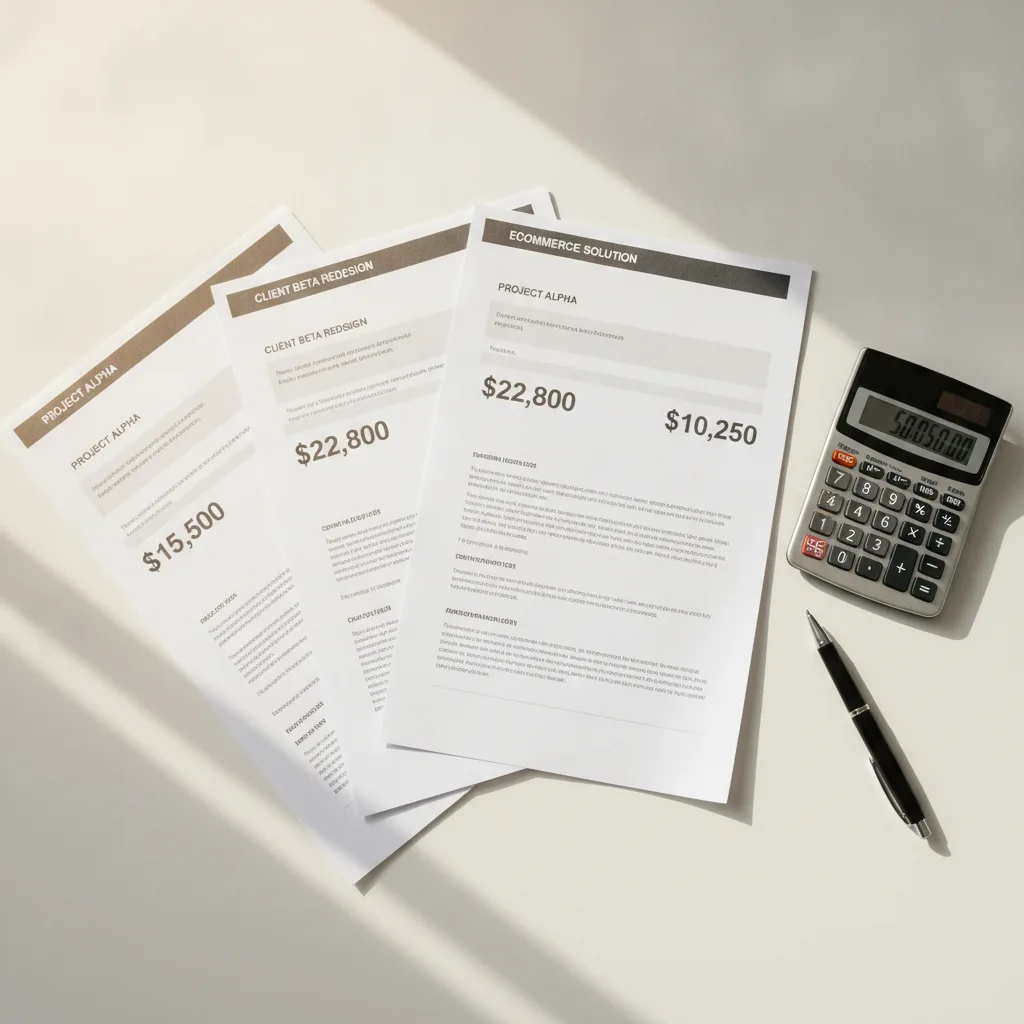
Map Your Quote to the Five Pricing Tiers for Dental Website Design
Dental website design cost in 2026 falls into five distinct tiers, and the tier determines everything downstream: what you own, what you get, and what you will owe every month after launch. The tiers are: DIY builders (Wix, Squarespace) at $0-$50/month; dental web specialists selling pre-built dental templates as 'custom' at $499-$1,499 one-time; freelancers at $1,500-$5,000; small agencies at $4,000-$12,000; and premium dental marketing agencies at $8,000-$30,000+. Rosemont Media, a dental-only agency based in San Diego, California, publishes its package range at $5,000-$21,500 as a useful named anchor for the premium tier. Across the industry, companies in every category from startups to enterprise DSOs need to match their budget tier to their actual growth goals before they start contacting vendors. The right web design choice reflects your practice's vision, your audience's preferences, and how many new patients you need each month to hit your revenue goals. When you explore your options, the goal is not simply to find the cheapest solution but to find the one best suited to your size, specialty, and long-term digital strategy.
The DIY tier is almost never the savings it appears to be. Building a dental website yourself on Wix or Squarespace takes most dentists 30-50 hours in the first year. At a conservative billable rate of $200-$500 per chair-side hour, that DIY 'savings' costs $6,000-$25,000 in lost clinical revenue before you factor in the $200-$800 annual platform fee. The math does not favor self-builds for any dental practice generating more than $400,000 in annual revenue. Your dental practice website is the first impression prospective patients get of your practice, and a poor one costs you more in lost appointments than any design fee. That first impression carries your branding, your credibility, and your ability to convert visitors into scheduled patients. A well-designed site that reflects your office aesthetics and showcases your team immediately signals quality and professionalism to every potential patient who lands on your pages.
Freelancers at $1,500-$5,000 are the right call for a brand-new solo practice with fewer than 300 monthly website visitors and no immediate local SEO ambitions. Small agencies ($4,000-$12,000) add project management, brand identity work, and post-launch support that most freelancers skip. Premium dental marketing agencies justify the 2.3x agency premium over freelancers through deep technical expertise in PMS integration, HIPAA-compliant form architecture, and conversion-focused web design baked in from day one rather than bolted on after launch. These agencies and their dedicated teams bring extensive experience in dentistry-specific web design that general web design firms simply cannot match, and they specialize in building high-converting websites that attract more patients and deliver tangible results for practices across Texas, California, and the broader USA.
Google Analytics 4
Free
Pull your current visitor count and bounce rate before contacting any dental website design company. These numbers anchor every ROI conversation.
Wix / Squarespace
$16-$49/month
Viable for pre-revenue startups only. Not recommended for established dental practices billing more than $400K annually.
ProSites / Officite
$150-$400/month + $500-$2,000 setup
Dental SaaS platforms that sit between DIY and a full agency build. All-in annual cost runs $4,000-$10,000. Understand that total before comparing to agency quotes.
Ownership Check
Before placing yourself in any tier, confirm in writing whether you own the finished site or whether the code and content revert to the vendor at contract end. This single clause separates real assets from rentals. It is buried in the terms of most dental SaaS platforms and some small web design firms.
Calculate True All-In Cost, Not Just the Build Fee
The headline quote from any dental website design company covers only the build fee, which is typically 40-60% of what you will actually spend over three years. A $4,000 agency build paired with a $700/month all-in retainer covering hosting, maintenance, and a starter SEO package costs $29,200 over three years. A $12,000 build with a $300/month maintenance-only retainer costs $22,800 over the same period. Build fee alone is a useless comparison metric. You need the 36-month total cost of ownership, and any marketing agency that cannot produce that number on request is not a development partner worth trusting. Practices that do this math before signing avoid the budget pressure that comes from surprise invoices six months into a contract. Agency buyers evaluating multiple vendors at scale should filter every proposal through this lens before they decide.
Six cost categories never appear in a headline quote: monthly maintenance retainers at $100-$500/month (often framed as optional but functionally required for security patches and plugin updates); search engine optimization sold as a separate monthly service after the build at $1,000-$4,000/month for a full dental SEO retainer; hourly content update charges at $100-$200/hour; HIPAA and BAA compliance platforms like Compliancy Group or Medcurity at $150-$400/month; online booking integrations where NexHealth starts at $350/month and Weave at $400/month when billed directly; and SSL certificates at $50-$200/year when not bundled into hosting. Each of these line items is essential for a secure, compliant, well-designed dental practice website that performs consistently over the long term. When you review pricing across multiple companies, look at the complete picture, not just the build number.
Agency-managed hosting runs $15-$50/month and should always be bundled into the retainer. If a vendor quotes it separately, treat it as an immediate negotiating point. Add these six categories to every quote you receive, build a 36-month total, and compare vendors on that number. The dental website design company with the lowest build fee almost never wins that comparison. Practices that invest in getting this math right before signing deliver better long-term results and avoid the budget pressure that comes from surprise invoices six months into a contract.
Compliancy Group / Medcurity
$150-$400/month
HIPAA compliance platforms covering BAA management, risk assessments, and audit logs. Required if your site collects any patient health information via forms.
NexHealth
Starting at $350/month
Bidirectional online booking that integrates with Dentrix and Eaglesoft. Saves 3.1 hours/week of front-desk data entry, worth roughly $6,200/year at a $40/hour loaded staff cost.
Weave
Starting at $400/month
Combines online booking, two-way texting, and review requests. Reduces the number of separate software vendors your dental website needs to integrate with.
Three-Year Math
Ask every vendor for a 36-month cost projection that includes build fee, hosting, maintenance, and any required compliance or integration add-ons. If they refuse or say those costs 'vary,' treat the refusal as a red flag about contract transparency.
Audit Every Quote for Six Hidden Fees Before Signing
Six hidden fees appear in dental website contracts often enough that you should treat them as standard until proven otherwise. Run this audit on every proposal before you sign: Is the monthly maintenance retainer disclosed upfront or buried in the service agreement? Is search engine optimization priced separately, and at what monthly rate? Are content updates billed hourly at $100-$200/hour, or are a defined number of revisions included? Is there a HIPAA BAA in place, and does the vendor cover it or charge separately? Is online booking integration included, or is it a pass-through cost from NexHealth, Weave, or a similar platform? Does the contract contain a site-ownership clause that prevents you from taking the code if you leave? These are the elements that matter most when you compare proposals and decide which development partner to choose. SMEs and solo practices should check these points with equal attention to enterprise buyers: the contracts are often identical, and the financial exposure scales with practice revenue.
The site-ownership clause is the most financially damaging hidden term in the digital marketing space for dental practices. Dental SaaS platforms like ProSites and Officite explicitly retain the website if the practice cancels. You are renting digital real estate. Some web design firms use the same structure without advertising it. Any contract language that says 'the website is licensed to the practice for the term of this agreement' means you own nothing at the end. Insist on a clause confirming full source-code and content transfer upon final payment. That transparency is non-negotiable for any established practice investing in long-term online presence and growth. When you build a WordPress or custom-developed site that you own outright, that asset grows in search equity and domain authority over time, benefiting your online visibility for years.
HIPAA add-ons deserve a separate negotiation with any development partner you are evaluating. The 2025 HIPAA Security Rule Final Rule added mandatory multi-factor authentication, network segmentation, and annual asset inventories for dental practices. If your new dental website includes patient contact forms, intake forms, or appointment-request fields that transmit protected health information, the vendor must sign a Business Associate Agreement. Compliance platforms to satisfy this requirement run $150-$400/month. Budget for it whether the vendor charges separately or bundles it, because OCR fines start at $137 per violation. A secure, compliant website is not a feature upgrade; it is a baseline requirement for any healthcare organization and a top priority for any practice that takes patient trust seriously.
Contract Must-Have
Require written confirmation of three things before signing: you own the site upon final payment, a signed BAA is in place if the site collects patient data, and the monthly retainer is fixed or subject to a defined annual cap rather than open-ended at the vendor's discretion.

Price in WCAG 2.1 AA Compliance Before the Build Starts
As of April 2026, HHS finalized WCAG 2.1 Level AA as the mandatory accessibility standard for dental practice websites under Section 504 of the Rehabilitation Act. Practices with 15 or more employees had a hard compliance deadline of May 11, 2026. Practices with fewer than 15 employees must comply by May 10, 2027. This is a current legal obligation for most dental practices, not a future concern. Any dental website design company quoting you a new build without explicitly listing WCAG 2.1 AA compliance as a contract deliverable is either cutting costs on your behalf or unaware of the federal requirement. Either way, your organization takes on the liability. Healthcare providers who let outdated sites run past the compliance deadline face compounding risk at every passing month. A user-friendly website that scores well on accessibility also tends to convert more visitors into patients, so the investment pays back in multiple ways.
As of 2026, 96% of dental websites have at least one WCAG violation. Defending a single federal ADA accessibility lawsuit costs $50,000-$150,000 in legal fees regardless of outcome, compared to $1,500-$5,000 for proactive remediation on a small dental site. Demand letter settlements run $4,000-$15,000 before any federal filing, and that cost grows the longer the site stays non-compliant. For healthcare practices of any size, accessibility is not optional. A user-friendly website that scores well on accessibility also tends to perform better in search engine rankings and drive more traffic from organic search, so the investment pays back in multiple ways. Agencies that specialize in healthcare digital marketing build accessibility into their development process from day one, making compliance a feature rather than a retrofit.
When reviewing web design proposals, confirm that WCAG 2.1 AA is listed as a specific acceptance criterion, not a vague 'accessibility-friendly design' phrase. The technical requirements include sufficient color contrast ratios, keyboard-navigable menus, alt text on all images, ARIA labels on form fields, and captions on any video content. If a vendor cannot name these requirements, they are not building a compliant site. Run a free WAVE or axe DevTools scan on your current site today. If violations appear, get a remediation quote before a demand letter arrives. An accessible site builds trust with potential patients and demonstrates the quality and dedication your practice stands for. Dental practices in California, Texas, and across the USA face the same federal standard regardless of state law, so the location of your office does not change your compliance requirements.
Compliance Deadline
Practices with 15 or more employees were required to comply by May 11, 2026. If you have not audited your site, run a free WAVE or axe DevTools scan today and get a remediation quote immediately. Proactive remediation at $1,500-$5,000 is the only rational choice against a $50,000-$150,000 lawsuit defense cost.
Set a Realistic Build Timeline and PMS Integration Scope
A full custom dental website build at a reputable dental marketing agency runs 8-16 weeks from kickoff to launch. The breakdown: weeks 1-2 cover discovery and brand identity positioning; weeks 3-6 cover design mockups and client approval rounds; weeks 7-12 cover web development and PMS integration with Dentrix, Eaglesoft, Open Dental, or Curve; and a final 30-day post-launch monitoring window closes the project. Any vendor promising a custom build in under six weeks is starting from a template they call 'custom' or skipping the monitoring phase. Both shortcuts cost you later. Confirm the team assigned to your project, ask for a named project manager, and check their portfolio for examples of completed dental projects before you sign. A smooth launch sets the foundation for consistent performance in search and patient engagement for years to come.
PMS integration is where timelines slip and budgets expand. Connecting your dental website's online booking to a bidirectional PMS sync requires API credentials, sandbox testing, and usually two or three revision cycles when appointment types and operatory availability do not map cleanly to the booking widget's logic. Budget an extra two weeks for any bidirectional PMS sync. Confirm which version of Dentrix or Eaglesoft you are running: some older on-premise installations require a middleware connector that adds both cost and time. The latest technology in booking integration handles most of this automatically, but verify the vendor's track record with your specific PMS version. A smooth integration directly improves the patient experience and reduces front-desk workload from day one. Well-organized systems for appointment scheduling also enhance the ease with which prospective patients contact your office and complete bookings.
Multi-location dental groups and DSOs should budget separately. A group practice with three to five locations runs $18,000-$35,000 for a custom website with location-specific pages and centralized booking logic. DSO or franchise builds with ten or more locations start at $35,000 and extend to 20-28 weeks for enterprise projects. For DSO buyers evaluating a design agency, ask specifically for a named project manager and a written change-order process. Scope creep on multi-location dental builds is the primary reason projects run 40% over budget. The agencies that consistently deliver on time are the ones that handle scope in writing, not in conversation. Practices across different geo locations need location-specific SEO and landing pages to drive more visitors from each local area, and that adds both value and complexity to the development scope.
CallRail
Starting at $45/month
Wire call tracking into the site at launch, not after, so you have a clean baseline for measuring new-patient calls from day one.
GA4 (Google Analytics 4)
Free
Confirm the vendor sets up GA4 conversion events for appointment requests and phone clicks before launch. Post-launch setup as a separate engagement is a common upsell tactic.
Timeline Red Flag
If a vendor promises launch in under four weeks for a 'custom' dental website, ask to see the template library they are building from. Custom means original design files, not a skin applied over a pre-built dental theme.
Compare Dental Website Design Companies by What They Actually Deliver
Dental website design companies divide into three real operating categories: dental-only specialists, full-service digital agencies with a dental vertical, and general web design firms that accept dental clients. Dental-only specialists like Rosemont Media (San Diego, California, $5,000-$21,500), TNT Dental, Delmain, and Identity Dental Marketing have pre-built PMS integration workflows and dedicated copywriters who understand treatment hierarchies, clear service descriptions, and patient engagement strategy from the first discovery call. These agencies and their teams bring extensive experience in dentistry-specific web design that general web design firms simply cannot match, and they specialize in helping dental practices grow their online presence, drive more traffic, attract more visitors, and improve their Google Business Profile rating and search rankings. General web design firms charge $83/hour on average according to DesignRush 2026 benchmarks but require you to educate them on dental services, HIPAA requirements, and patient journey logic, adding billable hours and revision cycles throughout the project. When you check a firm's portfolio, look specifically for dental industry examples and ask which clients they would recommend speaking with directly. Award-winning web design credentials matter only when the awards come from recognized organizations like the Davey Awards or W3 Awards, not local business directories.
ProSites and Officite sit in the dental SaaS category: predictable monthly billing, fast launch timelines of 4-6 weeks, mobile compatibility built in, and clear service descriptions across pre-approved page templates. All-in cost for ProSites runs $4,000-$8,000/year; Officite runs $5,000-$10,000/year. Those annual figures look attractive against a $12,000 agency build until year three, when the agency build is paid off and the SaaS fee keeps compounding. The break-even point between a SaaS rental and an owned agency build is 24-30 months for most single-location practices. Consensus Creative, Probey Services, and a range of mid-sized businesses also operate in this space, offering tailored solutions for practices that want more flexibility than SaaS but more structure than a freelancer. Agency buyers evaluating these options at scale should filter by team size, client portfolio depth, and whether they offer a dedicated account manager as a standard feature. An award-winning agency operating out of San Francisco, London, or Austin may have an impressive portfolio, but verify they have completed dental-specific projects in your market area before you commit.
A full-service digital agency specializing in healthcare digital marketing and dental marketing offers the broadest digital marketing solutions scope: web development, search engine optimization, Google Ads, search engine marketing, social media marketing, social media management, content marketing, and reputation management under one contract. These agencies are experienced at helping dental practices grow their online presence and improve their standing across digital channels. The tradeoff is cost. A full-service digital agency retainer for a growth-focused single-location practice typically runs $2,500-$5,000/month all-in, amortizing the build fee over the contract term. That is the right investment for a practice generating $1.2M or more in annual revenue and targeting 20-30 new patients per month. For a practice at $400K-$800K in revenue, a $6,000-$10,000 build paired with a $1,000-$1,500/month local SEO and local search retainer is the more appropriate starting point, with digital advertising including PPC and paid ads added when the organic foundation is in place. An award-winning digital marketing agency that is active in your market and carries a clientele of dental practices similar to yours in size and specialty is the clearest signal that they can deliver measurable results for your practice too.
Award-Winning Web Design Claims
Many dental website design companies advertise award-winning web design credentials and position themselves as an award-winning agency. Ask which awards, from which organization, and in which year. Davey Awards and W3 Awards are legitimate industry benchmarks with transparent judging criteria. 'Best of [City]' listings from local business directories are not, and they do not correlate with conversion performance or search rankings.
Run the Conversion Math to Justify Your Dental Website Budget
Most dental websites convert 2-5% of visitors into appointment inquiries, and conversion rates at this level leave significant revenue on the table. Conversion-optimized sites built by dental marketing specialists reach 8-12%. On 1,000 monthly visitors, moving from 2% to 5% generates 30 additional appointment requests per month. At a $1,200 average treatment value and a 60% acceptance rate, those 30 lead inquiries produce 18 new patients worth $21,600/month, or roughly $259,200 in added annual revenue. A $10,000 website build that drives measurable growth at that rate pays for itself in under 18 days. Patient acquisition through a high-converting dental website significantly enhances revenue more reliably than paid ads alone, because organic search traffic compounds over time while digital advertising spend stops generating results the moment you stop paying. Well-designed sites with strong UX, responsive design on all mobile devices, and easy-to-find contact information are the foundation of any sustainable digital strategy for dental care practices. AI-powered tools are increasingly used to optimize conversion rates and improve engagement, helping practices identify gaps in their appointment-request flow and implement fixes faster than manual analysis allows.
Custom photography is the highest single-ROI add-on available at any budget level. An on-site shoot costs $800-$1,500. Healthgrades 2024 data shows providers with professional photos receive 60% more patient interactions, and Google Business Profiles with photos earn 35% more website clicks. Replacing stock dental photography with real team and office images is the fastest conversion lift available, faster than a full website redesign and orders of magnitude cheaper. Stunning, authentic visuals build trust and credibility with potential patients before they ever click the contact button or schedule button. A good dentist deserves a website that showcases their team, their office aesthetics, and the quality of their dental care with precision and authenticity. Graphics and visual elements that reflect your practice's actual environment are among the best ways to stand out from competitors in a crowded local market. Patient testimonials and reviews displayed prominently on the site further engage visitors and reinforce that commitment to excellence. Practices that invest in authenticity and quality visual content consistently see higher engagement, more conversions, and better long-term results from their digital presence.
Patient lifetime value (PLV) is the final multiplier in this math. The average dental patient is worth $4,500 over seven years of treatment. At a patient acquisition cost of $150-$300, the return on a well-designed dental website with strong local SEO is 15:1 to 30:1 over the patient's relationship with the practice. Use PLV, not build fee, as your primary budget benchmark. A $10,000 site that acquires five new patients in its first month has already returned its cost with six-plus years of recurring dental care revenue still ahead. Tools like Hotjar and Podium, wired in at launch, keep that math improving over time by surfacing exactly where prospective patients and potential patients drop out of the appointment-request flow. The goal is not just to create a beautiful site but to implement a complete digital solution that delivers business tangible results and drives long-term growth. Practices that commit to this strategic approach, collaborating closely with their agency and providing regular feedback, consistently see their online visibility and patient volume increase year over year. A passionate team dedicated to your mission, focused on achieving excellence, is the partner that helps your practice thrive in an increasingly competitive digital landscape.
Hotjar
Free to $99/month
Session recordings and heatmaps show exactly where prospective patients abandon your appointment-request flow. Fix those friction points before blaming traffic volume.
Podium
Starting at $399/month
Automates Google review collection post-visit and integrates with the website's review widget. Review count and rating directly affect local search rankings, patient trust, and new patient acquisition.
Conversion Baseline
Before approving any new dental website design, ask the vendor to document your current conversion rate in GA4 as a written baseline. If they cannot pull that number, they have no objective way to prove their design improved performance, and you have no way to hold them accountable to a measurable growth target.
The Contract Clause That Costs Practices More Than Any Build Fee
Site ownership language is the single most expensive term in a dental website contract, and it is almost never mentioned in the sales pitch. Dental SaaS platforms like ProSites and Officite and some web design firms license the site to you for the duration of the agreement. When you cancel, the site stays with the vendor. You restart from zero: no domain equity, no content archive, no design files. Before signing any dental website design contract, require a written clause confirming that full source code, all media assets, and the domain transfer to you upon final payment. If the vendor objects, that resistance tells you everything you need to know about who the contract was written to protect.
You now have the five pricing tiers with real all-in numbers, the six hidden fees to audit in every proposal, the WCAG 2.1 AA compliance deadlines already in effect for most dental practices, the PMS integration timeline benchmarks that separate realistic vendors from optimistic ones, and the conversion math that turns a $10,000 dental website build into a 15:1 return on patient lifetime value. Take every quote you received and rebuild it as a 36-month total cost of ownership. Confirm site ownership in writing. Verify WCAG compliance is a listed contract deliverable, not a marketing phrase. Then compare vendors on the metric that actually matters: cost per new patient acquired, not cost per page designed. The dental website design companies with data-driven strategies that can answer that question with a real number and a track record to back it are the only ones worth hiring. Whether you are an independent practice owner in Austin or a DSO buyer managing dozens of locations across California and Texas, the framework is the same: invest with precision, demand transparency, and hold every development partner accountable to measurable results. Practices that thrive in the current digital landscape are the ones that treat their website as a revenue-generating asset, not a marketing line item, and partner with agencies whose mission is to deliver excellence at every stage of the engagement. In conclusion, the difference between a practice that grows and one that stays flat often comes down to a single decision: choosing a development partner that focuses on strategy, performance, and long-term success rather than one that simply builds a beautiful site and moves on.
Frequently Asked Questions
Ready to get started? Contact Geek Powered Studios today.