
Effective SEO for a foundation repair company requires a three-layer keyword architecture: symptom pages (floor sloping, bowing basement walls, sticking doors), dedicated service pages for each repair method, and cost/comparison pages that win the research phase. Layer those with a fully optimized Google Business Profile and city landing pages for every suburb you serve. Foundation repair keywords average a keyword difficulty of just 5.8 — the lowest of any home-service category studied — which means the leads are accessible. A well-executed campaign drives organic cost per lead below $30 by month 12, versus $35–$95 per click on Google Ads for the same terms. Map Pack movement starts within 60–90 days of GBP optimization. Full organic ROI lands at month 12.
-
5.8 KD averageLowest keyword difficulty of any home-service category studied across 4,782 keywords
-
50% of organic trafficShare driven by symptom guide pages on high-performing foundation repair websites
-
8 service pages minimumOne dedicated page per repair method — helical piers, push piers, mudjacking, crawl space, and more
-
60–90 daysTime to first Map Pack movement after Google Business Profile optimization begins
-
Below $30 CPLOrganic cost per lead at month 12 vs. $35–$95 per click on Google Ads
-
20+ leads/monthQualified inspection requests achievable by month 12 from organic search alone
SEO for a foundation repair company is not a single-keyword problem. Every foundation repair contractor in Texas has already tried to rank for 'foundation repair near me' — and most are losing that fight to national franchise call centers and aggregator sites with domain authority built over a decade. The real opportunity sits in the searches that happen before homeowners ever call anyone: symptom searches, service-specific searches, and cost searches that collectively represent the majority of search demand in the foundation repair industry. Foundation repair keywords average just 5.8 keyword difficulty across 4,782 contractor keywords studied as of 2026 — the lowest of any home-service category analyzed. That's not a crowded battlefield. That's an open field with $9,000–$25,000 pier jobs waiting for the contractor who builds pages for every stage of the homeowner search. This guide covers the six steps that take a foundation repair website from near-invisible to generating 20+ qualified leads per month by month 12, with a realistic timeline, specific cost data, and the exact page architecture that works.
Before you start
- A verified Google Business Profile listing already claimed for your business location — unverified profiles cannot appear in the Map Pack
- Access to your CMS (WordPress or Webflow preferred) with the ability to create and publish new pages without a developer
- A complete list of every foundation repair service you offer: mudjacking, helical piers, push piers, crawl space repair, wall stabilization, slab repair, pier and beam leveling, crack injection
- Basic familiarity with Google Search Console so you can submit new pages for indexing and monitor impressions and keyword data
- At least 10 real customer photos from actual job sites — before-and-after shots of crack repairs, pier installs, and crawl space encapsulation work
- A call-tracking number from CallRail (starts at $45/month) so you can tie inbound calls to specific pages and keywords from day one
Map the Three Search Stages Your Foundation Repair Customers Actually Use
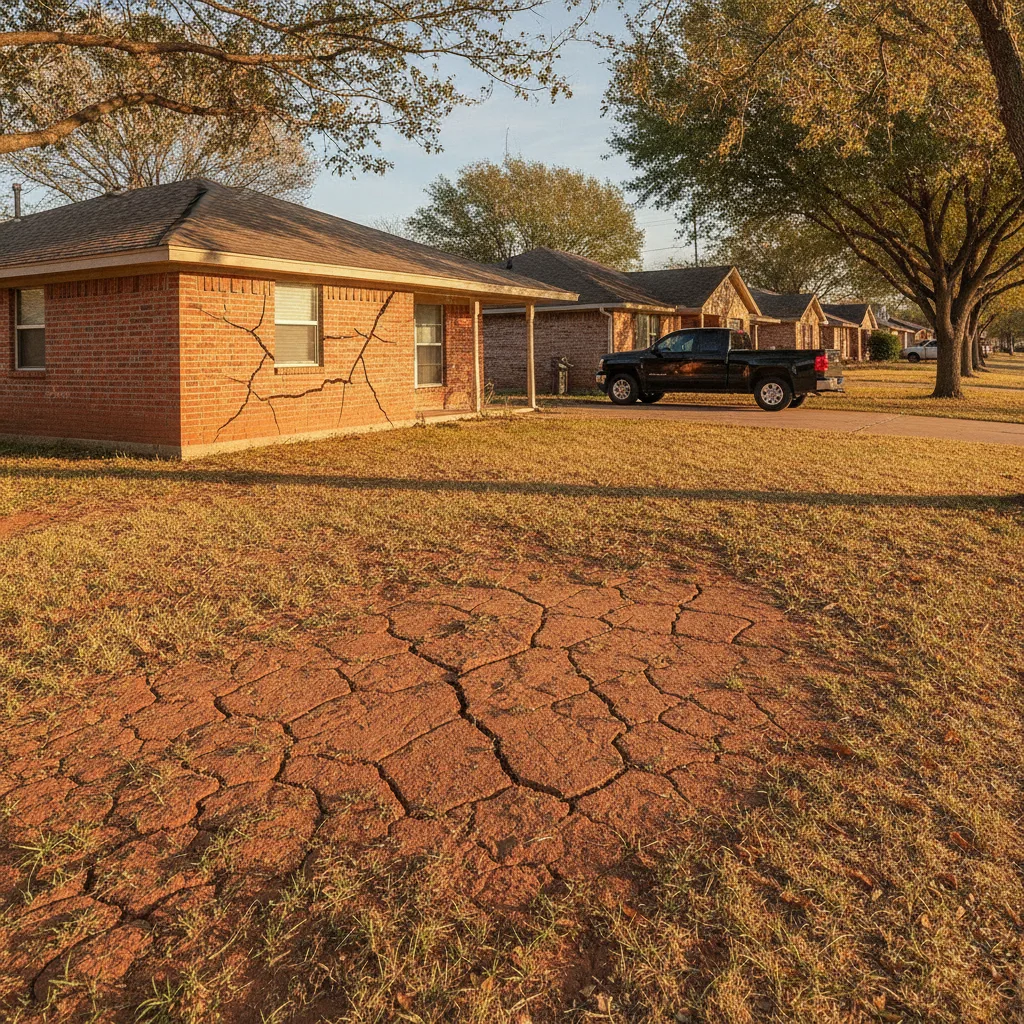
Foundation repair SEO must cover three distinct search stages — symptom, education, and action — because skipping any one stage means missing that homeowner entirely. A homeowner who notices floor sloping or a sticking door isn't searching 'foundation repair near me' yet. They're searching 'why is my floor uneven' or 'horizontal crack in basement wall.' That's the symptom stage, and it accounts for roughly 50% of organic traffic on mature foundation repair websites. Most contractors and most marketing agencies ignore it completely and wonder why their lead generation stays flat.
The education stage is where homeowners confirm they have a real problem and start comparing solutions. Searches like 'foundation repair cost,' 'helical piers vs. push piers,' and 'is a bowing basement wall dangerous' live here. These are high-intent searchers who are close to buying — they just need clear answers before they call. Cost-focused terms like 'pier installation cost' and 'mudjacking vs. foam jacking' pull in homeowners who are actively comparing contractors and ready to request estimates. This is where your cost and comparison pages do their work.
The action stage is the 'foundation repair near me' and 'foundation repair contractor [city]' territory that every foundation repair business already fights over. As of 2026, 89% of those searches trigger the Google Map Pack, and the top 3 Map Pack positions capture 42% of all clicks. You need to be there. But if your foundation repair website only targets action-stage searches, you're competing for a fraction of the total search demand and handing the rest to whoever publishes symptom and education content. Build a keyword map that covers all three stages before you write a single page. Your keyword map is a living document — search demand for foundation repair jumped 34% in Q1 2026, and the contractors capturing that growth had built their content 60–90 days before the spike arrived.
Google Search Console
Free
Shows exactly which queries already send impressions to your foundation repair website so you can see which search stages you're already visible in — and which you're missing entirely.
Ahrefs Webmaster Tools
Free (site owner tier)
Pulls keyword difficulty and search volume for every search stage so you can prioritize the highest-value terms. Foundation repair keyword difficulty averages just 5.8 — use Ahrefs to confirm which specific terms in your market sit below that average.
Why this matters beyond month one
Most foundation repair contractors treat keyword research as a one-time task. It's not. Review your keyword map every quarter. Seasonal demand in Texas spikes after drought, heavy spring rains, and hard freeze events — roughly 8 months of elevated search volume per year. Contractors who update and expand their content before each seasonal spike capture the growth; those who don't hand it to competitors who do.
Build Symptom Guide Pages That Catch Homeowners Before They Call Anyone
Symptom guide pages are dedicated pages for visible foundation warning signs — floor sloping, bowing basement walls, sticking doors and windows, diagonal cracks above door frames — and they catch worried homeowners before those homeowners even know they need a foundation repair contractor. These pages account for roughly 50% of organic traffic on high-performing foundation repair websites, and they carry an average keyword difficulty of just 5.8, which is the lowest of any home-service category studied across 4,782 contractor keywords. Most foundation repair companies ignore this entirely and leave that traffic to general home improvement sites and national content farms.
Each symptom page needs a single, self-contained answer at the top: what causes this symptom, how serious it typically is, and what a homeowner should do next. A 'horizontal crack in basement wall' page should explain that horizontal cracks signal lateral soil pressure — one of the most serious foundation problems a homeowner can face — that bowing basement wall repair runs $4,000–$12,000 per wall depending on severity and method (carbon fiber straps vs. steel reinforcement), and that a structural engineer should evaluate any crack wider than 1/4 inch. That's a genuinely useful answer that Google AI Overviews will cite and that a worried homeowner will trust. The page converts because it earns trust before it asks for anything.
For Texas-based foundation repair contractors, add regional specificity that national franchise pages structurally cannot replicate. Houston's Beaumont clay shrinks and swells 3–4 inches seasonally, directly causing pier movement and slab cracking. The Blackland Prairie expansive clay running from San Antonio through Austin to Dallas is the root cause of the majority of foundation repair jobs across the state's most populated corridor. A symptom page that explains why a homeowner in Round Rock is seeing floor sloping after last summer's drought — and ties that to the specific expansive clay soil under their slab — demonstrates expertise that a franchise call center page never will. Google's January 2026 core update penalized 28% of thin home-services pages that lacked demonstrated expertise. Regional soil content is your differentiation and your defense.
Which symptom pages to build first
Start with these six: 'horizontal crack in basement wall,' 'floor sloping or uneven floors,' 'sticking doors and windows,' 'gap between wall and ceiling,' 'diagonal cracks above door frames,' and 'bowing basement wall.' Each is a separate page — not a single blog post listing all six symptoms. One topic, one page. That's how you qualify for individual rankings.
Create One Dedicated Service Page Per Foundation Repair Method
A single Services page listing mudjacking, helical piers, crawl space repair, slab repair, and pier and beam leveling as bullet points cannot rank competitively for any of those terms — each represents a different search, a different homeowner situation, and often a different price point. Your foundation repair website needs one dedicated page per service. That's not optional after Google's January 2026 core update. It's the baseline for any foundation repair business that wants to appear in local search results for high-intent queries.
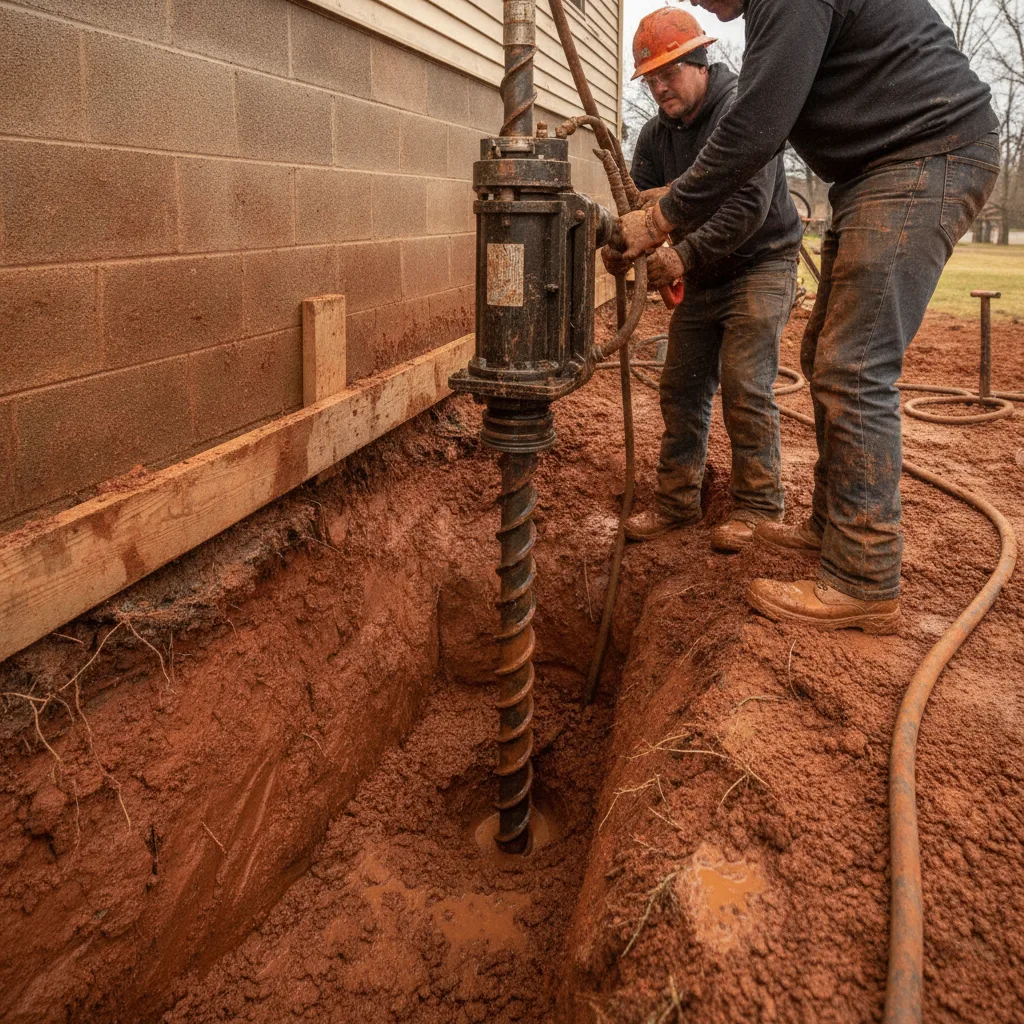
Each service page needs four elements to rank and convert: the specific repair method explained in plain language, real cost ranges with 2026 data, actual job-site photos from your own crews, and a clear call to action tied to an inspection booking or free estimate. For helical piers: installation runs $1,400–$3,100 per pier with 6–10 piers typical, totaling $9,000–$22,000. Steel push piers run $1,200–$3,000 per pier for $9,000–$25,000 total. Mudjacking and slab jacking run $500–$1,300. Crawl space encapsulation and repair runs $2,000–$7,000. Publish those numbers. A homeowner who reads your helical pier page and understands they're looking at a $9,000–$22,000 project is a better lead than one who calls without any price context — they've self-qualified before the first conversation. That's what shortens your sales cycle.
Your minimum service page list: helical pier installation, steel push pier installation, slab jacking and mudjacking, crawl space repair and encapsulation, bowing basement wall repair (carbon fiber straps and wall anchors), pier and beam leveling, foundation crack injection, and concrete lifting. Eight pages minimum. Each targets a different high-intent search. Each qualifies leads before they call. Each structural repair services page also strengthens the topical authority of your entire domain, which helps every other page on the site rank faster. Build pages for common foundation types and structural repair needs in your specific market — in Texas, that means slab foundations dominate, so lead with those.
Webflow or WordPress
Webflow from $23/mo; WordPress free (hosting ~$20/mo)
Both platforms let you build and publish new service pages without a developer. Webflow's page templates make it faster to replicate a proven service page structure across all eight repair types — just be sure to write unique copy for each.
CallRail
From $45/mo
Assigns a unique tracking number to each service page so you know exactly which foundation repair service pages are generating calls — not just traffic. Essential for proving ROI on each individual page.
Gotcha: don't copy-paste your service page template
Google's content systems flag near-duplicate pages within the same domain. Each service page needs unique copy, unique cost data, and unique photos. The structure can repeat — the words and images cannot. This is the most common mistake foundation repair companies make when scaling from 1 service page to 8.
Build Foundation Repair Cost and Comparison Pages That Win the Research Phase
Foundation repair cost pages target homeowners who are actively searching and close to buying — and they deserve dedicated pages because they're among the highest-converting content on any foundation repair website. The national average for a foundation repair project in 2026 is $5,100–$5,174, with a typical range of $2,200–$8,135. Piering projects — the highest-value work in the foundation repair industry — run $9,000–$25,000. A homeowner researching those numbers is not window shopping. They have a real problem and they're deciding who to trust with a $10,000–$25,000 decision. Your cost page is the first conversation you have with that person.
A foundation repair cost page should answer four questions: what does the repair type typically cost in your metro, what drives the price up or down (number of piers needed, soil type, accessibility, settlement severity), how does your pricing compare to alternatives, and what does the process look like from inspection to completion. Include real cost ranges from your own foundation repair projects — not just national averages. A Dallas contractor quoting Blackland Prairie pier work will see different per-pier costs than a contractor in Houston dealing with Beaumont clay. Regional specificity makes your cost page more trustworthy and harder for national franchise sites to replicate. Home inspector and realtor referral sources often send clients directly to cost pages when they need to explain repair options — that's another reason to publish real numbers.
Comparison pages — 'helical piers vs. push piers,' 'mudjacking vs. polyurethane foam lifting,' 'pier and beam vs. slab foundation repair' — catch homeowners who've done enough research to understand their options but haven't decided. These pages don't need to be long. They need to be clear. A table comparing installation time, cost per pier, load capacity, and soil suitability answers the question faster than five paragraphs of prose. End every cost and comparison page with a single clear call to action: 'Get a free foundation inspection' or 'Schedule your estimate.' No secondary asks. One action. Contractors who publish real ranges also qualify leads before the phone rings, which is how you achieve an organic cost per lead below $30 by month 12 — fewer tire-kickers, more booked inspections with realistic expectations.
Publish cost ranges — not ranges with asterisks
Contractors often resist publishing price ranges for fear of losing bids on price alone. The opposite happens in practice: homeowners who see real ranges self-qualify before calling, which means your sales process starts from a position of trust rather than sticker shock. Vague 'call for pricing' pages convert at half the rate of pages with real cost data.
Optimize Your Google Business Profile to Own the Map Pack for Foundation Repair Services
A well-optimized Google Business Profile drives more calls than the website itself for most foundation repair companies. As of 2026, businesses with complete, optimized GBP listings receive 7x more clicks than those with incomplete listings — and that gap compounds over time as review counts and GBP post history build. The Map Pack is where 89% of 'foundation repair near me' searches land, and the top 3 positions capture 42% of all clicks. Google Business Profile optimization is the fastest lever in this entire playbook. Map Pack movement appears within 60–90 days of starting this work — no other SEO tactic moves that fast.
Google Business Profile optimization for foundation repair contractors starts with category selection. Set 'Foundation Repair Service' as your primary category. Add secondary categories for every structural repair service you offer: waterproofing, crawl space repair, and concrete repair all have their own GBP categories. Then build out your services list inside GBP with individual entries for each repair method — helical pier installation, push pier installation, wall repair, wall anchors, carbon fiber straps, crawl space encapsulation, crack injection, mudjacking. Each service entry is another surface where Google Maps can match your profile to a searcher's query.
Post to your GBP at minimum twice per month. Before-and-after job photos from actual foundation repair projects in your service area drive GBP engagement faster than any other content type. Geo-tagged photos — shot on a phone with location services on — signal to Google where your crews are working, which strengthens local visibility across your entire service area. Reviews are the third pillar: a foundation repair company with 50+ Google reviews averaging 4.7 stars ranks measurably higher in the Map Pack than a competitor with 12 reviews at 4.2. Ask for reviews at job completion, every time, with a direct link. A Houston foundation repair contractor we tracked improved their average Map Pack rank from 16.4 to 3.7 in 8 months by combining Google Business Profile optimization with consistent photo uploads and a structured review generation process. That's the difference between invisible and booked.
Google Business Profile Manager
Free
The direct dashboard for managing categories, services, photos, posts, and reviews — the five levers that drive Map Pack rankings for foundation repair contractors. No third-party tool replaces direct access to this dashboard.
Podium
From $399/mo
Automates review request texts at job completion so foundation repair crews don't have to remember to ask — and sends the homeowner directly to your GBP review link. Podium users consistently generate reviews 3x faster than manual follow-up processes.
GBP gotcha: service area settings limit your local visibility
If you serve a 50-mile radius but only list your home city, Google restricts your Map Pack visibility to that city only. Add every city and suburb you actively serve in the Service Area section of your GBP. For Texas contractors, that often means adding 8–15 cities across your metro. Do this before you start posting content — service area settings affect how Google Maps indexes your profile for surrounding searches.
Build City and Neighborhood Landing Pages to Capture Local Foundation Repair Searches Across Your Service Area
Over 90% of foundation repair searches carry local intent, and a single city-level page for your home market leaves every surrounding suburb and neighborhood unaddressed. Foundation repair contractors serving Austin, Houston, Dallas, or San Antonio need dedicated pages for every city and major suburb in their service area — not one generic 'We serve the greater Houston area' line buried in a footer. Each city page targets a different local search: 'foundation repair Katy TX,' 'foundation repair Sugar Land,' 'pier installation Round Rock.' Each is a separate ranking opportunity with its own traffic ceiling and its own pool of homeowners actively searching for structural repair services.
A city landing page for a foundation repair company needs to do three things: establish local relevance, demonstrate soil and structural knowledge specific to that city, and convert the visitor into an inspection request. Local relevance means naming the specific neighborhoods and zip codes you serve, referencing housing stock age, and including a job-site photo from a real foundation repair project in that city. For Texas markets, soil specificity is your strongest trust signal — a Pearland city page that explains how Beaumont clay under older slab homes causes seasonal pier movement tells a homeowner you understand their specific problem. That's the kind of content that earns trust and generates form fills and calls, not generic filler about 'quality foundation repair services in the area.'
Don't build city pages all at once and publish them in a batch. Google flags mass-published thin pages, especially after the January 2026 core update. Build 2–3 city pages per month, give each genuine unique content and at least one local photo, and submit each page to Google Search Console for indexing after publishing. Target your highest-revenue cities first — your home metro, then adjacent suburbs where your crews already work. At 2–3 pages per month, you'll have 10+ indexed city pages live within four months, which aligns with the 3–6 month window when local organic rankings start moving meaningfully for foundation repair contractors. Each of those pages is a separate lead channel that compounds as rankings improve.
Shortcut: use real jobs to differentiate city pages
The fastest way to make city pages rank is to pull 2–3 real foundation repair jobs from that city — repair type, number of piers installed, and outcome — and include that as a brief case study. One real job story from a Pearland homeowner beats 300 words of generic 'we serve the area' filler every time. It's also the exact type of content Google's 2026 E-E-A-T signals reward: first-hand experience, documented.

The Realistic Timeline for Foundation Repair SEO
Foundation repair SEO takes 6–12 months to build full rankings and meaningful lead volume. Early Map Pack movement appears within 60–90 days of GBP optimization. Organic ranking improvements for local keywords show up at months 3–6. Full ROI — where your organic cost per lead drops below $30 vs. $35–$95 per click on Google Ads for the same terms — hits at month 12 for a well-executed campaign. Run Google Local Service Ads in parallel during the ramp-up period and let SEO compound in the background. The contractors who build the biggest organic lead volume are the ones who started 12 months ago. The second-best time is today.
The global foundation repair service market reached $3.57 billion in 2026 and is growing at 6.8% annually. The average keyword difficulty for foundation repair terms sits at just 5.8 — the lowest of any home-service category studied. The leads are there. The search volume is there. Foundation repair businesses that build a full three-layer keyword architecture — symptom pages, dedicated service pages, cost pages, city pages, and a complete Google Business Profile — are the ones booking $9,000–$25,000 pier jobs from organic search at a cost per lead below $30. That's what a full foundation repair marketing system actually looks like. At Geek Powered Studios, we're a marketing agency that understands foundation repair specifically: the soil, the search behavior, the seasonal demand cycles, the search engine optimization work that moves the needle, and the technical fixes that don't. We built this exact playbook for Serview Home Pros, taking them from near-invisible online to 325 ranked keywords and 25 qualified leads per month with a 6% conversion rate. If you're ready to stop depending on referrals and start owning your local search results, get your free strategy session and we'll map out exactly which pages your foundation repair website needs to build first.
Frequently Asked Questions
Ready to get started? Contact Geek Powered Studios today.