
A whole-home repipe costs $4,000–$15,000 for most single-family homes in 2026, with a national average near $7,500. PEX-A runs $3.50–$7.00 per square foot installed; copper runs $8.00–$14.00. A 1,500 sq ft home with PEX lands at $4,500–$8,500 all-in. Slab foundations — the default in Texas and the Sun Belt — push costs 25–50% higher because crews must reroute lines through attics and walls. The three costs most often excluded from base quotes are the permit ($50–$800), drywall repair ($300–$1,500+), and water main replacement ($600–$2,500 if needed). Get at least three itemized bids from licensed plumbers before signing anything.
Every number below comes from 2026 contractor pricing data — use these as your baseline before you call the first plumber.
$4,000–$15,000
—
Full repipe range for most single-family homes in 2026
$3.50–$7.00/sq ft (PEX) vs. $8.00–$14.00/sq ft (copper)
—
Installed cost per square foot by pipe material
+25–50% labor premium
—
Slab foundation surcharge on top of any base repipe quote
$300–$1,500+ drywall repair
—
Frequently excluded from base repipe quotes — confirm in writing
$4,500–$11,500
—
Houston market repipe range as of May 2026
10% contingency
—
Budget buffer recommended given 2026 material cost pressure
A whole-home repipe costs $4,000–$15,000 for most single-family homes in 2026, with a national average near $7,500 — but that range hides the variables that actually determine your number. Foundation type alone can shift a $6,000 PEX quote to $10,000. Pipe material choice changes cost per square foot by 40–60%. And three line items that rarely appear in a base quote — the permit, drywall repair, and water main replacement — routinely add $1,000–$5,000 to a project a homeowner thought was already priced. This guide breaks down what you'll actually pay, by home size, material, and foundation type, so you can evaluate bids instead of just accepting them.

What a Whole-Home Repipe Costs in 2026
| Tier | Price range | What's included | Best for |
|---|---|---|---|
| PEX Repipe — Standard Access (Crawlspace or Raised Foundation) | $4,500 – $9,000 | PEX-A pipe throughout, all supply lines, permit filing, basic wall patching not always included | 1,500–2,000 sq ft homes with accessible foundations, typically built after 1995 |
| PEX Repipe — Slab Foundation | $7,500 – $14,600 | PEX-A pipe rerouted through attic and walls (no slab penetration), permit, per-bathroom fees | Homes on concrete slabs — standard in Texas and Sun Belt markets — with 2–4 bathrooms |
| Copper Repipe — Any Foundation Type | $9,000 – $20,000+ | Type-L or Type-M copper supply lines throughout, solder fittings, permit, standard access labor | Homeowners prioritizing 50–70-year lifespan, or where acidic water chemistry or code requires copper |
| Polybutylene or Galvanized Replacement — Urgent Scenario | $3,000 – $8,000 | Full removal of failed legacy pipe, PEX-A replacement throughout, permit, city inspection | Homes built 1978–1995 with polybutylene pipes, or pre-1960 homes still on original galvanized steel |
What You Get at Each Tier
PEX Repipe — Standard Access (Crawlspace or Raised Foundation)
PEX-A (the Uponor/Engel-method variant) is the 2026 industry standard for residential repiping, running $3.50–$7.00 per square foot installed. A 1,500 sq ft home typically lands at $4,500–$8,500 all-in. Labor accounts for roughly 70% of that total, which is why the plumber's crew size and efficiency matter far more than raw pipe cost. PEX-A requires 30–50% fewer fittings than copper, which directly cuts labor hours and reduces the number of potential leak points inside your walls.
For a two-bathroom home without slab complications, this tier is the fastest and most cost-effective path to a 40–50-year plumbing system. The schedule runs 3–5 days for most homes in this size range. Water is turned off only during working hours — roughly 8 AM to 5 PM — and restored each evening, so most families stay in the home throughout.
PEX Repipe — Slab Foundation
Slab foundations are the rule, not the exception, in Texas and across the Sun Belt. Because pipes can't be accessed from below, crews must reroute supply lines through attics and interior walls, adding 25–50% to labor costs — roughly a 35% surcharge on the total project. A 2,000 sq ft slab home with three bathrooms can reach approximately $14,580 once that slab premium and the $800 per-extra-bathroom fee are applied.
If your home has a history of slab leaks — each repair runs $2,000–$4,000 and does nothing to stop the next failure — this tier is almost always the smarter financial call over continued patching. Two prior repairs already puts most homeowners at $4,000–$8,000 spent on fixes that haven't addressed the underlying pipe degradation.
Copper Repipe — Any Foundation Type
Copper runs $8.00–$14.00 per square foot installed — 40–60% more than PEX for the same home. A 1,500 sq ft home in copper costs $9,000–$12,000; a 2,000 sq ft home can hit $8,000–$20,000 depending on access and bathroom count. The lifespan justifies the premium for some buyers: copper lasts 50–70 years under normal water chemistry and remains the preferred choice where acidic water or code requirements make plastic less practical.
Copper pipe material alone costs $2.00–$8.00 per linear foot versus $0.40–$2.00 for PEX — and on a slab home, those labor hours multiply fast. Some Houston contractors use a hybrid approach: PEX-A inside walls and Type-L copper at the main entry point. That's worth asking about directly when comparing bids.
Polybutylene or Galvanized Replacement — Urgent Scenario
Polybutylene pipe was installed in an estimated 6–10 million U.S. homes between 1978 and the mid-1990s. It degrades on contact with chlorinated water, and as of May 2026, most homeowners insurance carriers either flag it or refuse to cover it outright. Replacement typically costs $3,000–$8,000 — less than a full new-construction replumb because the pipe run is being swapped, not extended. In Houston, PB is still common in homes from that era, and buyers routinely negotiate its replacement into the purchase price.
Galvanized steel supply lines have a 20–50-year service life. Any home still running original galvanized from before 1960 is operating on pipes that are at least 66 years old and well past their rated lifespan. Both scenarios warrant a full repipe, not a spot repair — the pipe material itself is the problem, not just the individual failure points.
Pros and Cons of a Full Repipe
- $4,500–$8,500 for a standard 1,500 sq ft PEX repipe — a one-time investment that eliminates 40–50 years of supply-line maintenance and failure risk.
- PEX-A cuts labor hours by 30–50% compared to copper, keeping total project costs predictable and project schedules tight at 3–5 days for most homes.
- A full repipe resolves recurring slab leaks permanently — each patch repair costs $2,000–$4,000 and buys no protection against the next failure.
- Polybutylene removal restores insurability: most carriers flag or deny coverage on homes with PB pipes still in service as of 2026.
- Texas homeowners pay among the lowest repipe costs nationally — typically $4,500–$11,500 in Houston versus up to $30,000 for comparable homes in California.
- Water is restored each evening during the project, so most families stay in the home throughout the 3–7 day timeline without renting elsewhere.
- Drywall repair ($300–$1,500+) is frequently excluded from the plumber's base quote — confirm in writing whether wall patching and paint are bundled before you sign.
- Permit fees add $50–$800 depending on your city, and skipping a permit creates serious legal and resale exposure that no repipe savings can offset.
- Slab foundations push total project costs 25–50% higher on labor alone — a $7,000 PEX quote on a crawlspace home can become $10,000+ on the same square footage over a slab.
- Quotes for identical work vary by $2,000–$5,000 between contractors, making a single bid a poor decision framework — get at least three itemized proposals before committing.
- Raw material costs rose approximately 8% since 2025 and as of May 2026, upward price pressure is still active — budget a 10% contingency on any quote.
- A general contractor supervising the project adds a 13–22% markup on top of the plumber's price, which is rarely visible in the initial estimate — hire the plumber directly.
How to Choose Your Budget and Evaluate Bids
- Identify your pipe material before calling anyone Check your water heater closet or exposed lines under a sink — gray flexible plastic is polybutylene (budget $3,000–$8,000), orange or blue flexible tubing is PEX (likely a prior partial repair), and rigid silver pipe showing surface rust is galvanized steel, which signals a full repipe is overdue.
- Know your foundation type — it's the biggest price variable after material Slab-foundation homes in Texas add 25–50% to labor costs because crews reroute lines through attics and walls, so a PEX project quoted at $6,000 for a raised foundation can realistically hit $8,500–$10,000 on the same square footage over a slab.
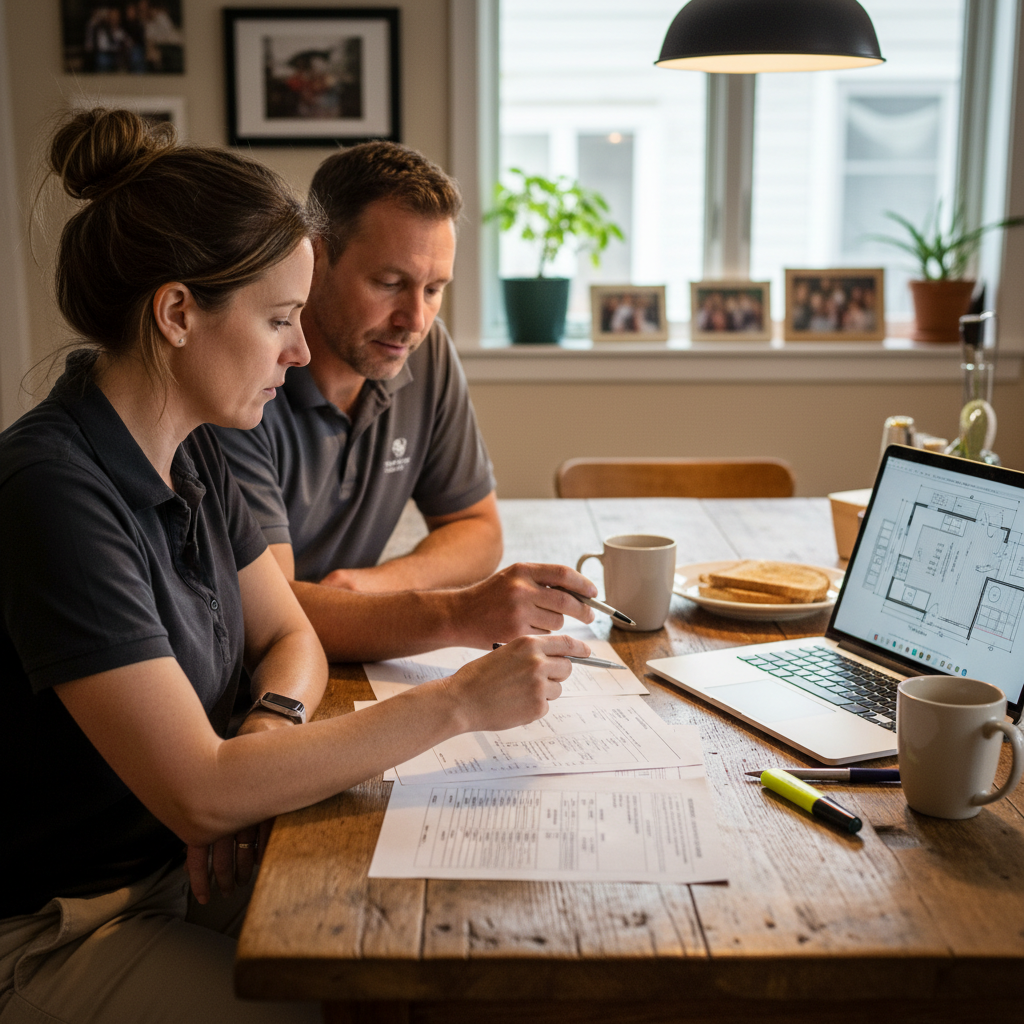
- Get three itemized bids from licensed plumbers — not one, not two Quotes for identical repipe scope vary by $2,000–$5,000 between contractors, and only an itemized bid — with pipe type, linear footage, bathroom count, permit, and drywall listed separately — lets you make a fair comparison.
- Ask every contractor four specific questions before signing Confirm: (1) Is drywall repair and paint included or separate? (2) Who pulls the permit and schedules the city inspection? (3) What pipe brand and grade are you using — PEX-A vs. PEX-B matters for longevity. (4) Is the water main included, or billed separately at $600–$2,500?
- Run the repair-vs.-replace math before accepting another patch quote Two or more slab leak repairs in the past three years means you've likely already spent $4,000–$8,000 on fixes that haven't stopped the underlying pipe degradation — a full PEX repipe starting at $4,500 is almost certainly the lower total cost over five years.
- Budget a 10% contingency and time the project before peak season Material costs rose approximately 8% since 2025 and remain elevated as of May 2026, licensed plumber availability tightens each summer in Texas markets, and drywall repair frequently adds $300–$1,500 that wasn't in the original quote — build that buffer in before you sign.
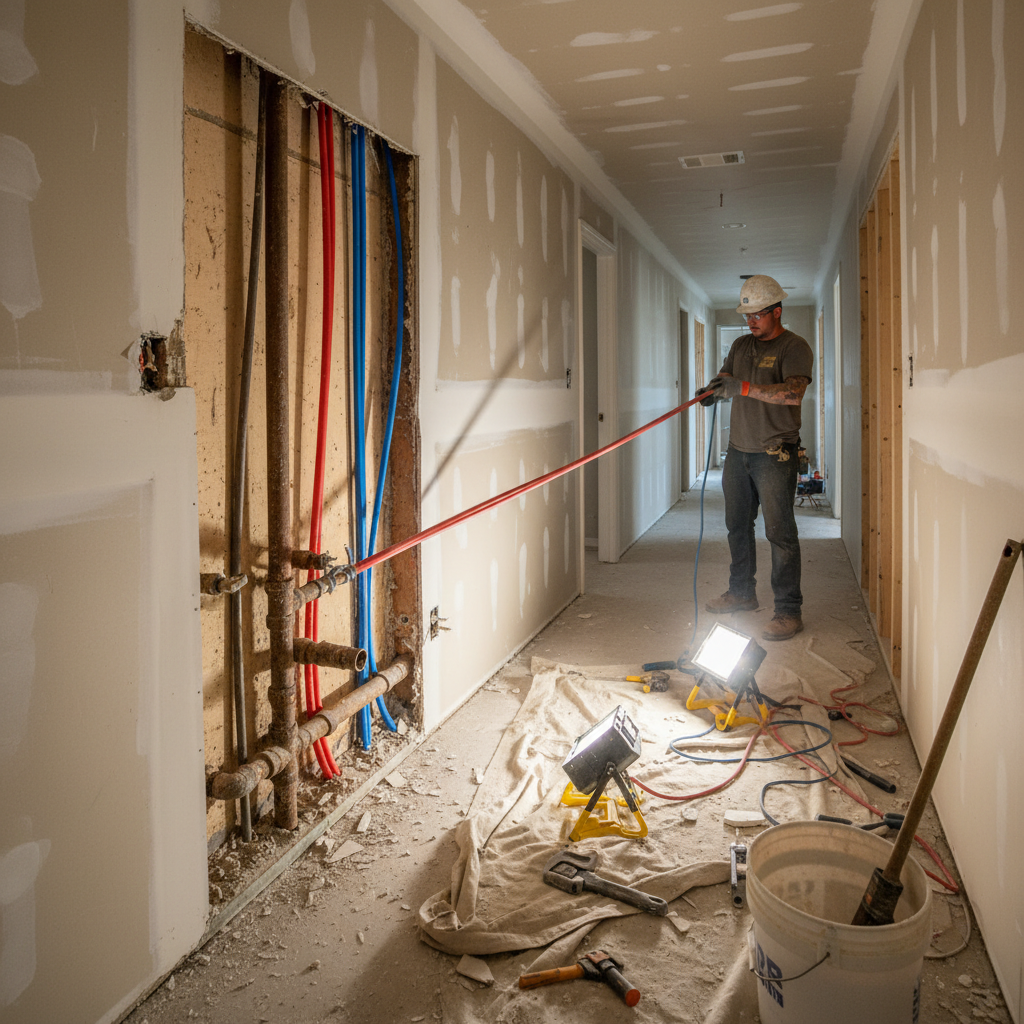
Three line items are excluded from most base repipe quotes: the permit ($50–$800), drywall repair and paint ($300–$1,500+), and water main replacement if it's needed ($600–$2,500). A Houston homeowner who accepts a $6,500 repipe quote without confirming these are bundled can easily land at $9,000+ by the time the drywall crew leaves — ask for written confirmation on all three before signing anything.
A whole-home repipe is the kind of project most homeowners delay until a burst pipe or an insurance notice forces the decision — and that delay almost always costs more. If your home has polybutylene, original galvanized, or a slab-leak history, the math on a $4,500–$9,000 PEX repipe versus continued spot repairs closes fast. The right move is three itemized bids from licensed, TSBPE-certified plumbers (in Texas), written confirmation that permit and drywall are included, and a clear answer on pipe grade before you sign. Get those three things right, and a 40–50-year plumbing system is a straightforward investment — not a gamble.
Frequently Asked Questions
Quick answers to the questions homeowners ask most about this topic.
Q.
What is the average cost to repipe a house in 2026?
A.
A whole-home repipe costs $4,000–$15,000 for most single-family homes in 2026, with a national average near $7,500. A 1,500 sq ft home with PEX-A pipe runs $4,500–$8,500 all-in. Copper pushes that same home to $9,000–$12,000 or higher. Labor accounts for roughly 70% of the total, so the plumber's crew efficiency matters far more than the pipe material's raw cost. Texas homeowners typically pay $4,500–$11,500 — well below California, where comparable projects can reach $30,000.
Q.
What hidden fees are typically left out of repipe quotes?
A.
Three costs are excluded from most base repipe quotes: the permit ($50–$800 depending on your city), drywall repair and paint ($300–$1,500+), and water main replacement if it's needed ($600–$2,500). A homeowner who accepts a "$6,500 repipe" quote without confirming these are bundled can easily land at $9,000+ by the time the drywall crew leaves. Ask every contractor for written confirmation that all three are either included or itemized separately before signing.
Q.
What factors affect repipe cost the most?
A.
Foundation type is the single biggest price variable after material choice. Slab foundations — standard in Texas and most Sun Belt markets — add 25–50% to labor costs because pipes must be rerouted through attics and walls rather than accessed from below. Bathroom count adds roughly $800 per extra bathroom beyond the first two. Home size, pipe material (PEX-A vs. copper), and whether the water main needs replacement all compound from there. A general contractor supervising the project adds a further 13–22% markup on the plumber's price.
Q.
When do repipe prices spike, and how can I time my project to avoid the peak?
A.
Licensed plumber availability tightens every summer in Texas markets, which pushes both prices and lead times up from roughly May through September. Raw material costs for copper and petroleum-based plastics rose approximately 8% since 2025 and remain elevated as of May 2026, so waiting for a price drop is not a reliable strategy. The best timing is late fall or winter, when contractor schedules are lighter. Budget a 10% contingency regardless of when you book — material surcharges and drywall adds are the two costs most likely to move your final number.
Q.
How can homeowners save money on a whole-home repipe?
A.
For most Texas homeowners with a slab-leak history, a full PEX repipe is the lower total cost over five years. Each slab leak repair costs $2,000–$4,000 and does nothing to stop the next failure — it patches one point on a pipe system that is degrading throughout. Two repairs already puts you at $4,000–$8,000 spent with nothing to show for it. A full PEX repipe starting at $4,500 eliminates the entire supply-line risk and installs a 40–50-year system. If your home also has polybutylene pipe, the insurance math accelerates the decision: most carriers flag or refuse to cover homes with PB still in service as of 2026.
Q.
Is a whole-home repipe worth it, or should I keep repairing slab leaks?
A.
For most Texas homeowners with a slab-leak history, a full PEX repipe is the lower total cost over five years. Each slab leak repair costs $2,000–$4,000 and does nothing to stop the next failure — it patches one point on a pipe system that is degrading throughout. Two repairs already puts you at $4,000–$8,000 spent with nothing to show for it. A full PEX repipe starting at $4,500 eliminates the entire supply-line risk and installs a 40–50-year system. If your home also has polybutylene pipe, the insurance math accelerates the decision: most carriers flag or refuse to cover homes with PB still in service as of 2026.