
Fence contractor marketing works best when it starts at the job site and expands outward. Plant an 18x24-inch yard sign on every completed installation, hand the homeowner a $150 referral card at handoff, drop postcards to the 20–30 nearest addresses within 5 days, and trigger a 3-email post-install sequence at days 30, 90, and 180. That physical-plus-digital referral engine generates fence leads at $14 each — far below the $53 average for Google Local Service Ads or $85 for paid search. Layer in a fully optimized Google Business Profile, material-specific local SEO service pages for each fence type you install, and properly structured Google Local Service Ads to capture homeowners outside your immediate neighbor radius. Run this full system in order — referral engine first, digital infrastructure second, paid ads third — and you generate qualified leads at three distinct cost tiers while building compounding local authority in every neighborhood your crews work.
-
$14/leadAverage cost per referral lead from the post-install email sequence
-
$53/leadAverage Google Local Service Ads cost per lead for fence contractors (2026)
-
3–5 callsAdditional inbound calls generated per yard sign left 2–3 weeks post-install
-
4.5xMore monthly referral leads from systematic post-install email follow-up vs. none
-
$115–$180Cost per acquisition via neighbor postcard drop vs. $750+ from Google Ads
-
43.9%LSA lead-to-booked-job rate for fence contractors — highest of any paid channel
-
Under $400/moFull referral automation tool stack: Jobber, Klaviyo, Zapier, Referral Rock
-
16% higher LTVLifetime value premium for referred customers vs. paid-channel customers (Wharton)
The most profitable fence contractor marketing system as of 2026 isn't Google Ads — it's the neighborhood your crew just finished working in. A single completed fence installation is visible to 8–15 neighboring homes, each one a prospect who just watched your team do the work. Fence companies doing $2M–$5M in annual revenue that aren't systematically mining that visibility are leaving qualified leads on the table at $14 a piece while paying $53–$85 per lead on paid channels instead. This guide builds the full system in the right order: a physical referral engine off every completed job, a digital infrastructure layer that catches homeowners outside your neighbor radius, and a paid channel stack that generates immediate fence leads while local SEO matures. Setup takes 3–5 hours. Ongoing maintenance runs 2–3 hours per week. The payoff is a lead generation machine that compounds with every fence you install.
Before you start
- A CRM or job management platform — Jobber, ServiceTitan, or equivalent — that records customer addresses and job completion dates
- A Google Business Profile already claimed and verified for your fence company
- A basic email list of past customers (50 contacts is enough to start the post-install sequence)
- A consistent process for photographing completed fence installations before and after — this feeds your GBP, service pages, social content, and postcard creative
- A defined service area with at least 3–5 zip codes you actively work in
- A website with dedicated service pages for each fence type you install: wood, vinyl, chain link, ornamental iron, privacy fence, aluminum
Plant a Yard Sign and Leave Referral Cards on Every Completed Fence Installation
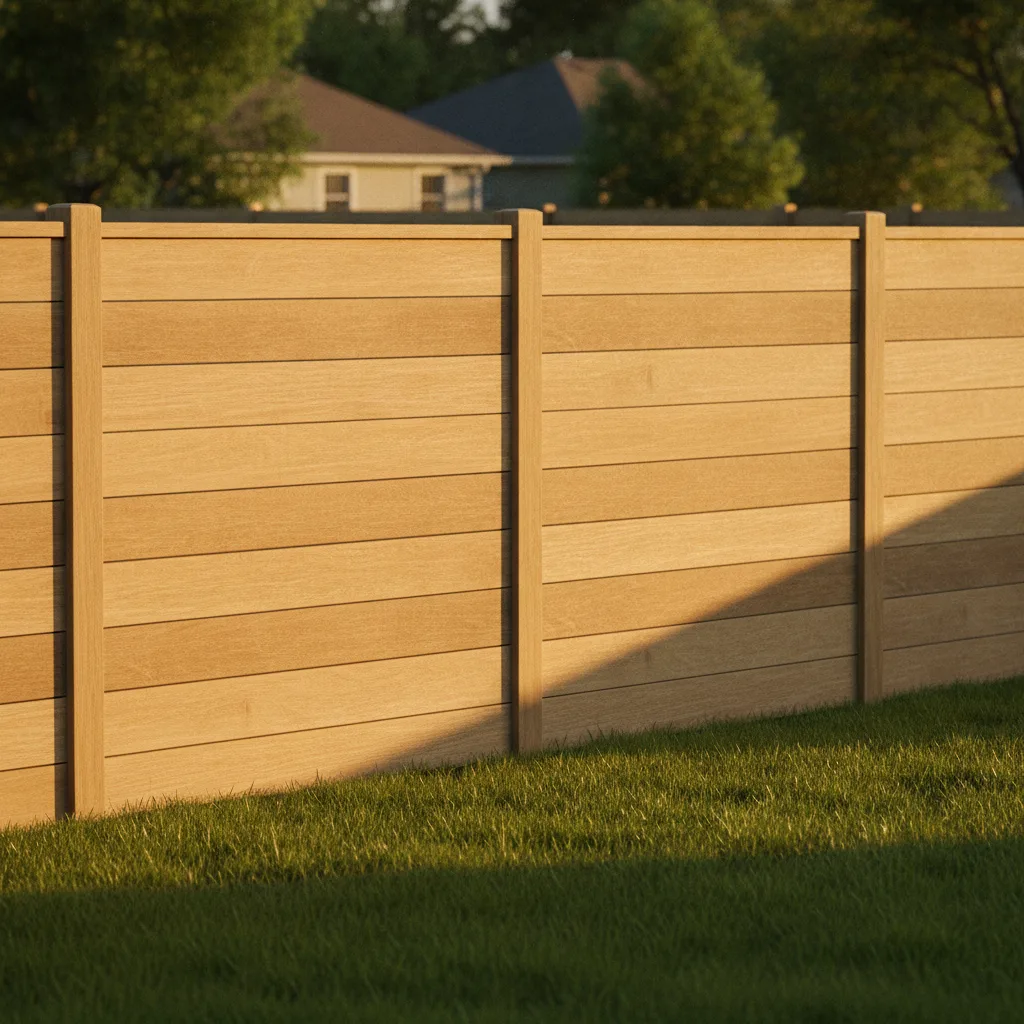
A newly installed fence is visible to 8–15 neighboring homes, and a branded yard sign turns that visibility into calls — fence contractors who leave 18x24-inch signs posted for 2–3 weeks after project completion average 3–5 additional inbound calls per installation. At $9.50–$12.00 per sign, the math is hard to argue with. The sign needs your company name, phone number, and one line of social proof ('5-Star Rated, 200+ Austin Installs' works well). Order in batches of 25–50 from GotPrint or VistaPrint to keep the unit cost down and maintain consistent supply in your trucks.
Pair the yard sign with branded referral cards handed to the homeowner at project handoff — not mailed later, delivered in person while you're walking the finished fence together. Cards cost roughly $0.23 each and carry a direct offer: 'Know a neighbor who needs a fence? Send them our way and we'll send you $150 when they book.' That $150 referral incentive is far cheaper than the $85 blended cost per lead from paid search, and the close rate on a neighbor referral runs 40–60% versus just 7% on a shared Angi or HomeAdvisor lead. Quality leads at a fraction of the cost per lead — that's the referral card's real value.
The handoff moment is the highest-trust interaction you'll have with a customer. They just watched your crew finish the job. Ask for the referral out loud, then back it up with the card. Fence contractors who do this consistently report it as their highest-ROI physical marketing tactic: low cost, high trust, zero tech required. This is proven — not theoretical.
GotPrint or VistaPrint
$9.50–$12.00/sign
Fast turnaround on 18x24 corrugated yard signs with full-color printing; order in batches of 25–50 to keep unit cost down
MOO or Canva Print
~$0.23/card
Branded referral cards with a clean design that homeowners will actually keep rather than toss
Pro tip
Ask the homeowner's permission before posting the yard sign — most say yes, and asking builds goodwill. If they decline, leave a stack of referral cards and a thank-you note instead. Either way, you walk away with a referral mechanism in play.
Launch a 3-Email Post-Install Sequence Targeting Referrals, Not Repurchases
The biggest mistake fence companies make with email marketing is treating it like a newsletter channel. Wood fence installation lasts 15–20 years and vinyl fence installation lasts 20–30 years — the original buyer isn't your next customer. Their neighbors are. A post-install email sequence sent at day 30, day 90, and day 180 after project completion — focused explicitly on generating neighbor referrals from the original buyer — produces 4.5x more monthly referral leads than doing nothing, and delivers fence leads at roughly $14 each. That's the lowest cost per lead of any marketing channel available to fence contractors in 2026.
Email 1 (Day 30): A 'How's the fence holding up?' check-in with a material-specific care tip — sealing schedule for wood fence installation, cleaning frequency for vinyl fence installation. Close with a direct referral ask and the $150 offer. Keep it under 150 words. Email 2 (Day 90): Share a before-and-after project photo from a nearby install (with the homeowner's consent) and re-state the referral offer. This email works because it shows what a finished fence looks like while reminding your existing customer the incentive is still live. Email 3 (Day 180): A softer check-in asking for a Google review, with a secondary referral ask. By month six, the homeowner has had plenty of time to talk to neighbors — this email catches the ones who meant to refer but forgot.
This sequence generates fence leads at roughly $14 per lead versus $53 on Google Local Service Ads or $85 on paid search. The tool stack that automates it costs under $400 per month total: Jobber triggers job completion, Zapier passes the data to Klaviyo, and Referral Rock tracks payouts and shows which customers are your top referral sources. Set it up once and it runs on its own — that's the point of automation. For local businesses running lean crews, this is the highest-ROI use of a small marketing spend.
Klaviyo
From $45/mo
Best-in-class email automation with trigger-based sequences; connects to Jobber via Zapier to fire emails based on job completion date
Zapier
From $29/mo
Passes job completion data from Jobber to Klaviyo and Referral Rock without any manual work — the integration glue the whole system depends on
Referral Rock
From $200/mo
Tracks referral submissions, automates reward payouts, and shows which customers generate the most booked jobs — so you know where to focus
Jobber
From $69/mo
Field service management platform that stores customer addresses, job types, and completion dates — the data trigger for the entire referral email system
Watch out
Don't run a generic monthly newsletter alongside this sequence — it dilutes the referral ask and trains recipients to ignore your emails. The post-install sequence works because it's timed, personal, and specific to the customer's project. Keep them completely separate, and make sure every email includes a visible unsubscribe link to stay CAN-SPAM compliant.
Run a Neighbor Postcard Drop Around Every Completed Fence Installation
Within 5 days of completing a fence installation, mail a postcard to the 20–30 nearest addresses around the job site. The neighborhood clustering play works because 15–25% of neighbors contact the same fence company within 12 months of seeing a nearby install — and a postcard that arrives while your crew's work is still fresh accelerates that timeline. One fence company owner who tracked this over 12 months sent 340 postcards per batch and averaged 5–8 leads and 2–3 booked jobs per batch. Cost per acquisition: $115–$180, versus $750+ from Google Ads. That's a significant difference in marketing spend per job.
The postcard copy is simple: 'We just finished a fence installation in your neighborhood — here's what we built.' Use a before-and-after photo on the front. On the back: your phone number, a QR code linking to your free estimate request page, and a time-limited offer ('Schedule your free estimate before [date 30 days out] and we'll waive the permit filing fee'). You're not selling on price — you're selling proof. The fence is sitting two streets away. Local homeowners can drive by and see it. That physical credibility closes conversations that ads alone can't.
Use Every Door Direct Mail (EDDM) through USPS to mail carrier routes adjacent to the job site. EDDM cuts postage to $0.203 per piece for large batches, and you don't need a mailing list — you select routes by zip code on the USPS website. For a 30-piece drop per job at 20 jobs per month, total postcard marketing spend runs roughly $200–$400 per month including design and print. That's a predictable, trackable line item with proven results. Add call extensions to your phone number on the postcard so mobile recipients can tap to call directly.
Key detail
Track every postcard batch by job address in your CRM and record which ones generate calls or form submissions. After 90 days you'll know which neighborhoods cluster best and can prioritize those zip codes for future marketing spend. Your job history becomes a targeting database — that's a real competitive edge.

Treat Your Google Business Profile as a Living Fence Marketing Asset
42% of all local search clicks go to the Google Maps map pack — fence companies outside those top 3 positions receive almost no clicks from local search results. A fully optimized Google Business Profile is the single most cost-efficient way to build online visibility and capture that traffic, and fence companies that update their profile consistently with project photos and posts outrank those who set it up once and leave it alone. The minimum update cadence: 4 project photos per month and 2 Google Posts per month. That level of consistent effort is enough to maintain strong local search rankings in most markets.
The Google Business Profile optimization checklist for fence contractors: set your primary category to 'Fence Contractor,' not 'General Contractor.' Add secondary categories for each fence type you install. Fill out every service listing with material-specific descriptions that include terms like 'wood fence installation,' 'vinyl fence installation,' 'privacy fence,' 'chain link,' and 'ornamental iron.' Upload before-and-after project photos with the neighborhood or city name in the file name before uploading — Google reads that metadata. Turn on messaging and commit to a 2-hour response time during business hours; response time affects local search rankings and helps you build credibility with prospects in your local market.
Reviews are the fastest way to move up in the map pack and generate more calls. Ask every customer for a Google review at the same handoff moment you give them the referral cards. A text message sent 24 hours after project completion — with a direct link to your Google review page — converts at 3–5x the rate of a verbal ask. Target 2–4 new reviews per month as a baseline. Reach 8–10 per month and you'll start displacing competitors in your core service area within 4–6 months. Use a tool like Podium to automate the review request text so the request goes out consistently on every job.
Common mistake
Don't stuff your GBP description with every fence material keyword at once — Google reads it as spam and it hurts more than it helps. Write the description as a human would read it, and let your service listings, photo captions, and Google Posts carry the keyword specificity that drives local search results.
Build Material-Specific Local SEO Service Pages for Each Fence Type You Install
A single 'Fence Installation' page on your website is not a local SEO strategy — it's a placeholder. Fence contractors who rank for multiple high-intent searches build dedicated service pages for every fence type they install: wood fence installation, vinyl fence installation, chain link, privacy fence, ornamental iron, aluminum. Each page targets a specific search intent ('wood fence installation Austin TX'), answers the questions homeowners ask during the research phase (privacy fence cost, how long does vinyl last, do I need a permit for fence installation), and includes before-and-after project photos from local jobs. These are the service pages that generate organic traffic and qualified leads at $0 cost per click once they rank.
Each service page should run 600–900 words, include your city or service area in the H1 and at least two subheadings, and mention specific material details: vinyl fence installation averages $4,045 versus $3,065 for wood at national benchmarks; wood fence labor runs $17–$45 per linear foot depending on style; privacy fence cost varies by height and material. Close every page with a clear free estimate CTA. Add an FAQ section at the bottom targeting the questions homeowners type into Google and AI search engines — that's how you get cited in Google AI Overviews and Perplexity answers, which is where research-phase buyers increasingly start their process. Tools like Surfer SEO or Clearscope tell you exactly which terms your service pages need to outrank the current top 3 in your city.
Local SEO for fence companies produces meaningful ranking results in months 4–6 and meaningful lead volume by months 7–12. It requires consistent effort, not instant results. But a fence company ranking on page one for 'wood fence installation [city]' pulls in qualified buyers at $0 cost per lead versus $53 on paid channels. Search engine optimization compounds over time — every new service page and every fresh project photo on a ranked page extends your online presence further. Use BrightLocal to track your rankings by zip code and audit citation consistency across directories like Yelp and the major data aggregators.
Surfer SEO or Clearscope
From $89/mo
Tells you exactly which terms, questions, and content structure your material-specific service pages need to outrank the current top 3 results in your city
BrightLocal
From $39/mo
Tracks local search rankings by zip code, monitors Google Business Profile performance, and audits citation consistency across directories
Run Google Local Service Ads to Generate Immediate Fence Leads While SEO Matures
Google Local Service Ads are the most cost-efficient paid lead generation channel available to fence contractors in 2026, averaging $53 per lead with a 43.9% book rate — producing a paying customer for roughly $233. LSAs appear above everything else in local search results, including standard Google Search Ads, and they display your reviews, your Google Guarantee badge, and your phone number before a homeowner clicks anything. For fence contractors with a strong review count, LSAs perform best because trust signals are built into the ad unit itself. This is what exclusive leads look like — one call, one company, no competing bids from the same shared lead pool that Angi and HomeAdvisor sell.
LSA setup requires verifying your business license, insurance, and background checks through Google's portal. Plan 2–3 weeks for approval. Once live, set your weekly budget by how many leads your crews can actually close. If your team can handle 8–10 new jobs per month, budget $450–$550 per month on LSAs to hit that volume. Respond to every LSA lead within 5 minutes during business hours — Google's algorithm demotes fence contractors with slow response times, and your cost per lead rises accordingly. Use CallRail to track which calls came from LSA versus other marketing channels so you know exactly what your ad spend is producing.
Layer Google Search Ads on top of LSAs once your LSA campaigns are stable. A properly structured Search Ads campaign for a fence company — segmented by fence type, not lumped into one generic campaign — produces results like the documented Tennessee case study: 186 conversions at $54.60 cost per lead on $10,200 in ad spend at a 14.20% conversion rate. Add lead form extensions to your Search Ads to capture estimate requests directly from the search results page, reducing friction for mobile users. Avoid Smart campaigns entirely — they waste ad spend on fence supply searches and DIY queries. Run phrase and exact match keywords only, with negative keywords for 'rent,' 'repair kit,' 'DIY,' and 'supplies.' Use call extensions on every ad group so prospects can reach you directly from the search results.
Google Local Services Ads (LSA) portal
Pay per lead (~$53 avg)
Highest-trust ad unit in local search; displays your reviews and Google Guarantee badge before the homeowner clicks — and generates immediate leads while your SEO builds
CallRail
From $45/mo
Tracks which calls came from LSA, Google Search Ads, organic search, or postcards — so you know exactly which fence marketing channels are producing booked jobs
Critical
Don't run LSAs and Google Search Ads with the same budget pool without separating their tracking. LSA leads come through Google's platform; Search Ads leads come through your website. Without call tracking and form tracking split by source in CallRail, you can't tell which channel is pulling its weight — and you'll overspend on the wrong one. Conversion optimization starts with accurate attribution.
Add Social Proof Content and a Formal Referral Program to Lock In Compounding Growth
Before-and-after fence project photos produce 3x the click-through rate of standard image ads in documented Meta campaigns — and they cost nothing extra to produce if your crews are already photographing completed jobs. Post every completed project to your Facebook and Instagram pages with the neighborhood name tagged, the fence type named, and a caption that answers the question a homeowner would type: 'Privacy fence installation in [City] — cedar wood, 6-foot height, completed in 2 days. Get your free estimate.' This doubles as organic social media marketing content and ad creative when you're ready to run Instagram ads or Facebook retargeting campaigns for website visitors who didn't submit an estimate request. Meta Ads average $23 per lead for fence contractors — lower intent than LSA, but useful for top-of-funnel reach in zip codes where you're building local presence.
Nextdoor is the most homeowner-concentrated major social platform, with 77% of its users being homeowners — and fence companies almost never use it with any intention. Claim your Nextdoor Business page, post project completions with neighborhood tags, and respond to any home improvement questions in your service area. Real estate agent partnerships are another underused tactic: agents routinely refer buyer clients who need privacy fence installation or ornamental iron for curb appeal before listing. An 'Agent Partnership Brief' sent to 15–20 agents in your core neighborhoods is a low-cost way to add a commercial fencing projects referral channel to your pipeline on top of the residential referral engine. Industry insights show this works particularly well for fence contractors near active real estate markets.
A formal referral program closes the loop on everything above. The $150 referral card from Step 1 is the starting point, but a tracked program with $200–$300 payouts per referred job that closes — managed through Referral Rock — converts passive satisfaction into active referrals. The research is clear: referred customers convert 3–5x better than paid-channel buyers, spend 25% more, retain 37% longer, and carry 16% higher lifetime value, per Wharton and Journal of Marketing data. A fence business built on systematic referral capture isn't just cheaper per lead — it produces better customers who generate more referrals. That's the compounding math that makes fence marketing built on neighborhood clustering the long-term play.
Nextdoor for Business
Free (organic); paid ads available
77% homeowner user base makes it the highest-concentration social media platform for fence contractor marketing — and almost no competitors are using it intentionally
Meta Ads Manager
Self-serve; fence leads avg $23/lead
Before-and-after project photos outperform standard image ads 3x on CTR; use retargeting to reach website visitors who didn't submit a free estimate request
Scale note
Referral volume alone cannot scale past a revenue ceiling — it depends on how many jobs you're completing. Once you hit the referral ceiling in a given neighborhood, Google Local Service Ads and Google Search Ads extend your reach into new zip codes where you have no existing customers. Run both systems in parallel from the start. The referral engine keeps your cost per lead low; the paid channels keep your crews booked in new territory.

The Channel Stack That Fence Contractors Get Backwards
Most fence companies start with paid ads, skip the post-install follow-up, and wonder why their cost per lead keeps climbing. The correct order is: first, systematize the referral engine off every completed job (Steps 1–3) — that's your $14/lead channel. Second, build your Google Business Profile and local SEO foundation (Steps 4–5) — that's your long-term organic lead machine that drives free traffic as it matures. Third, run Google Local Service Ads for immediate fence leads while SEO matures (Step 6). Fourth, layer in social content and a formal referral program to compound everything above (Step 7). Start the sequence out of order and you're paying $53–$85 per lead for leads you could have generated for $14 from the neighborhood you already worked in. Fence contractor marketing built on the right sequence produces better results at lower marketing spend — every time.
Serview Home Pros came to Geek Powered Studios with nearly zero online presence — no rankings, no organic traffic, no referral system in place. Within the engagement they hit 325 ranked keywords, $25 qualified leads, and a 6% conversion rate. That's what fence contractor marketing built on the right channel stack actually looks like in practice. We work with one fence company per market — exclusivity is real. If your metro is open, we'll show you exactly what a full referral and digital marketing system would generate for your specific service area. No generic pitch. Just data from fence businesses like yours. Book your free strategy session and we'll bring the numbers to the call.
Frequently Asked Questions
Ready to get started? Contact Geek Powered Studios today.