


The highest-ROI plumber marketing tools for slow-season cash flow in 2026 are Google Local Services Ads ($57 CPL, 44.5% book rate), Google Business Profile optimization (free, drives 55% of all plumbing leads), and email reactivation campaigns ($36–$44 return per $1 spent). For plumbing companies doing $2M–$5M in annual revenue, a speed-to-lead automation layer (GoHighLevel or ServiceTitan) and a software-driven referral program (Referral Rock, $25 CPL) round out the core stack. Maintenance plan marketing is the only strategy that converts slow-season work into predictable annual recurring revenue of $100,000–$300,000. A full-service digital marketing company like Geek Powered Studios integrates all channels into one accountable system, delivering qualified plumbing leads at $25 each versus the $250 industry average.
-
$25/leadWhat Geek Powered Studios delivered vs. the $250 industry average
-
$57 CPL, 44.5% book rateGoogle LSAs — most cost-efficient paid channel for plumbing in 2026
-
$36–$44 per $1 spentEmail marketing ROI — highest of any plumbing marketing channel
-
$100K–$300K ARRRecurring revenue potential from maintenance plan marketing at scale
-
3–5x more booked jobsFrom the same ad spend with a 5-minute speed-to-lead response system
-
83% of plumbing search trafficSits inside Google — GBP plus organic search — at zero incremental ad cost
-
25–40% lower CPCSlow-season paid ad window — same budget goes further in off-peak months
-
12–18% referral conversion rateSoftware-driven referral programs vs. under 3% for manual card/verbal asks
Slow season for most plumbing companies isn't a demand problem — it's a systems problem. Homeowners still need drain cleaning, water heater installation, and whole-home plumbing inspections. What dries up is the marketing engine that connects your plumbing business to that demand. Home service cost per lead rose 10.51% year-over-year in 2025, and 74% of contractors have no off-season strategy at all. That's not a market problem — that's a gap your competitors are leaving wide open. This list cuts through the noise: every plumber marketing tool and idea here comes with a real CPL benchmark, a named tool that executes it, and a realistic revenue projection for a plumbing company doing $2M–$5M in annual revenue over 90 days. The slow season is the best time to build the marketing infrastructure your plumbing business should have been running all year. Here's where to start.
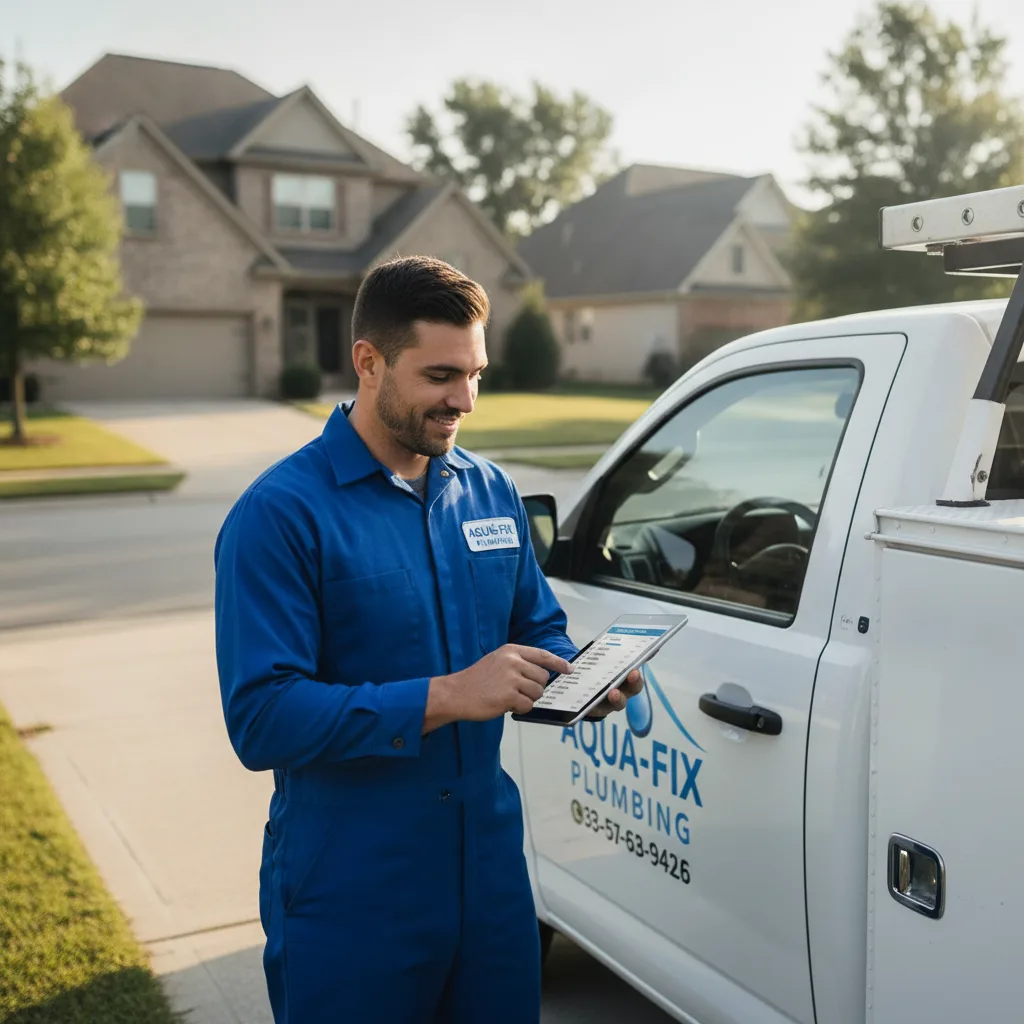
Geek Powered Studios
Visit website ↗Geek Powered Studios is a full-service digital marketing company headquartered in Austin, TX, serving plumbing contractors and home service businesses nationwide. SEO, paid media, web design, and conversion optimization run as a single integrated retainer rather than disconnected line items. Deep vertical expertise in home services — HVAC, plumbing, roofing, electrical — means every plumbing marketing strategy is grounded in industry-specific search behavior, not generalist playbooks. The agency tracks qualified plumbing leads back to revenue, not impressions or rankings, making it the clearest accountability model in the plumbing marketing company landscape.
Best for
- Home services contractors ready to scale beyond word-of-mouth referrals
- Multi-location plumbing companies investing in local SEO and paid media simultaneously
- Businesses that want SEO, PPC, and web design managed under one roof
- Brands that benchmark on qualified leads and booked jobs, not vanity metrics
- Plumbing companies with a $3,500+/mo marketing budget ready for integrated digital marketing strategies
Watch-outs
- Retainer model — engagements typically run 6+ months; month-to-month, no long-term contracts
- In-house team only — no offshore subcontracting, which limits throughput on very high-volume content requests
- Specialized in home services and healthcare; other verticals require a discovery call to assess fit
- Texas-headquartered; most case studies are nationwide home services and healthcare practices
- Performance benchmarks are tied to qualified leads and revenue — not impressions, rankings, or click volume
Bottom line
Geek Powered Studios delivered qualified leads at $25 each for one home-services client — versus the $250 industry average — making it the highest-ROI plumber marketing firm on this list for companies ready to invest in an integrated system.
Google Local Services Ads (LSAs)
Visit website ↗Google Local Services Ads are the most cost-efficient paid channel for residential plumbing contractors as of 2026, averaging $57 per plumbing lead with a 44.5% book rate and 6.85x closed ROAS across 230 accounts tracked by SearchLight Digital. That's 64% cheaper per lead than non-branded Google Ads ($183) and well under half the blended paid search average. During the slow season, LSA spend dials up or down weekly — no long-term commitment, and you pay only for leads that call or message, not clicks. Google Local Services Ads also display the Google Guaranteed badge, which builds trust with local homeowners evaluating multiple plumbing companies at once.
Best for
- Plumbing companies that need immediate leads without a 3–6 month SEO ramp-up
- Emergency plumbing services and high-intent local search demand
- Contractors who want Google's Guaranteed badge to build credibility with potential customers
- Filling schedule gaps during summer lull or post-holiday shoulder season
- Teams using CallRail to attribute which LSA calls actually converted to booked jobs
Watch-outs
- Lead quality varies by market — dispute management requires active weekly attention
- LSA local search rankings depend on review count and recency; 4.8+ star rating required for top-3 placement in most metro markets
- Not a substitute for local SEO — LSA visibility disappears the moment you pause ad spend
- Budget needs active management; slow weeks can produce overdelivery if spend caps aren't set
- Requires background checks and license verification before going live — plan 2–4 weeks for setup
Slow-season verdict
At $57 CPL and a 44.5% book rate, a $2,000 slow-season LSA budget generates roughly 35 leads and 15–16 booked plumbing jobs — translating to $6,750–$7,200 in booked revenue at a $450 average ticket for drain cleaning and water heater work.
Google Business Profile Optimization for Local Search
Visit website ↗Fifty-five percent of plumbing leads come from Google Maps and Business Profile listings, with another 28% from organic search below the local pack — meaning 83 cents of every dollar of plumbing search traffic lives inside Google. GBP signals account for 32% of local Map Pack ranking weight, the single largest ranking factor per Whitespark's 2026 Local Search Ranking Factors report. Plumbing businesses with 100+ photos on their GBP get roughly 520% more calls than the average listing. This is the highest-ROI free marketing action a plumbing company can take during the slow season, and Podium automates the review request cadence that keeps the profile ranking.
Best for
- Plumbing contractors who haven't updated their GBP in 6+ months and want to attract local customers without ad spend
- Building local search visibility in specific service areas and the surrounding local community
- Generating organic plumbing leads from 'plumber near me' searches and emergency plumbing queries
- Companies ready to use Podium or Birdeye for automated review requests after every service call
- Plumbing businesses that want faster ranking movement — GBP updates show results in 2–4 weeks vs. 3–6 months for service pages
Watch-outs
- Position 1 in the local Map Pack requires a median of 464–2,241 Google reviews with a 4.8-star rating across 20 U.S. cities — this is a long-term build
- GBP spam from competitors (fake local listings, keyword stuffing in business names) requires active monitoring
- One photo per week is the minimum viable cadence — inconsistent posting signals an inactive business to Google's algorithm
- Positive reviews can't be incentivized — Podium and Birdeye automate the ask, not the reward
- GBP alone won't rank you for high-value service pages; local SEO and a fast plumbing website are required in parallel
Slow-season verdict
At mature search engine optimization, GBP-sourced leads cost $25–$45 each versus $91+ from Angi or Thumbtack — and a plumbing company spending the slow season posting weekly photos and running automated review requests via Podium can realistically add 20–35 organic plumbing leads per month by the following spring at zero incremental ad spend.
Email Marketing Campaigns and Customer Reactivation
Visit website ↗Email marketing delivers $36–$44 for every $1 spent, making it the highest-ROI channel available to most plumbing businesses — and most plumbing companies either ignore it completely or send one blast per year. A single 'We Miss You' reactivation email sent to a past-customer list by a Florida contractor using ServiceTitan Marketing Pro generated $4,000 in one week and $60,000+ in total revenue. The slow season is exactly when that past-customer list — the most valuable asset in your plumbing business — should be actively working. Email marketing campaigns give you direct customer communication without paying for a single click.
Best for
- Plumbing contractors with 200+ existing customers in their CRM who haven't run a single email campaign
- Seasonal promotions for drain cleaning, water heater maintenance, and whole-home plumbing inspections
- Reactivating existing clients who haven't called in 12–24 months with a limited-time offer
- Promoting maintenance plan enrollment to existing customers during the slow season
- Plumbing companies using GoHighLevel, Jobber, or ServiceTitan with customer data sitting idle
Watch-outs
- List hygiene matters — unverified email lists get flagged as spam, destroying deliverability and sender reputation
- Generic blasts underperform; segment by service type, last job date, and service area for higher open rates
- More than 2 emails per month without strong segmentation increases unsubscribes and damages the list
- Requires integration with field service software (ServiceTitan, Jobber, Housecall Pro) to pull real customer data
- One-time campaigns work; automated drip sequences are where the $60K+ revenue numbers actually come from
Slow-season verdict
A plumbing company with 1,000 past customers, a 22% email open rate, and a single reactivation sequence offering a $49 drain inspection can realistically book 15–25 jobs in 30 days at near-zero CPL — at a $350 average ticket, that's $5,250–$8,750 in direct revenue before upsell.
Plumbing Membership and Maintenance Plan Marketing
Visit website ↗Top-performing plumbing companies generate 30–40% of their annual revenue from maintenance agreements, creating predictable cash flow during slow months and increasing business valuation 2–3x, per ServiceTitan operational benchmarks. Automated upsell workflows convert 28–34% of service calls into maintenance agreements, compared to 8–14% with verbal pitches alone. Residential plumbing service agreements price at $129–$249/year with 60–80% gross margins on the recurring revenue line. The BillyGO case study benchmark shows 2,000 members at $99/year generates $198,000 in annual recurring revenue — with pull-through repair work on top. Membership plan marketing also includes maintenance reminders that drive repeat business without any incremental ad spend.
Best for
- Plumbing businesses that experience 30–50% revenue drops in shoulder seasons and need a predictable cash flow floor
- Companies doing $2M+ that want to reduce dependence on emergency call volume for base revenue
- Operators ready to use ServiceTitan or Jobber for automated plan enrollment, billing, and seasonal maintenance reminders
- Plumbing contractors targeting property managers and repeat residential customers for commercial account growth
- Businesses that want to increase company valuation — membership recurring revenue increases it 2–3x at exit
Watch-outs
- Membership plan marketing requires a clear fulfillment process before you sell — don't launch without dispatch and scheduling systems ready
- Member churn kills recurring revenue; billing automation through Jobber or ServiceTitan is non-negotiable
- Initial ramp takes 6–12 months to generate meaningful recurring revenue at scale
- Plan pricing needs to be profitable before upsell — $129/year only works if inspection labor cost runs under $60
- Member referrals close at 60–70% versus 20–30% from paid channels — but only if the member experience is genuinely good
Slow-season verdict
A plumbing company selling 200 maintenance agreements at $179/year generates $35,800 in predictable recurring revenue annually — and the 28–34% automated upsell conversion rate means your field team does most of the selling during service calls that are already on the schedule.
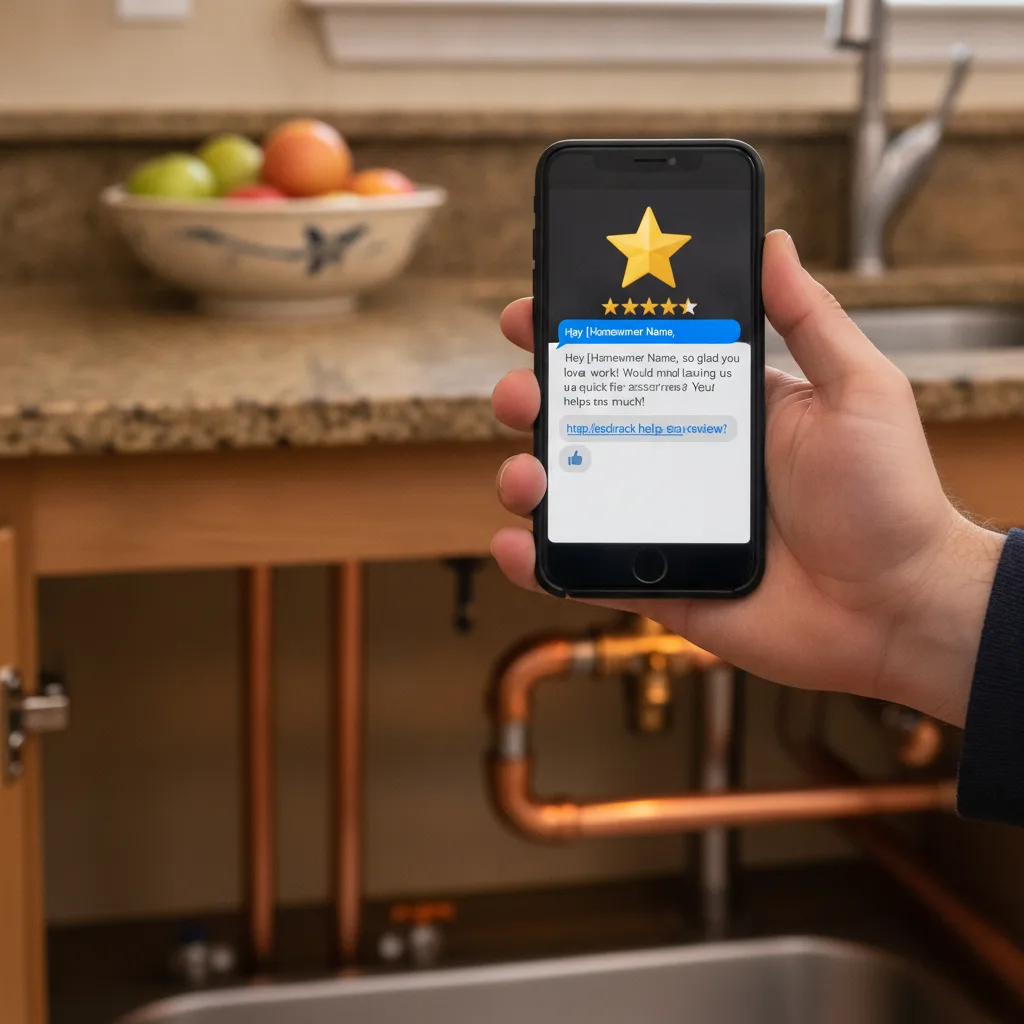
Automated Referral Program (Software-Driven)
Visit website ↗Referral leads close at 30–50% for home service contractors versus 8–15% for paid or marketplace leads, and referral programs deliver an average 5.7x ROI — with mature programs reaching 8–12x. The catch: manual programs (paper cards, verbal asks) convert fewer than 3% of happy customers into active referrers. Software-driven programs with automated ask-and-reward sequences consistently hit 12–18% referral conversion rates. Referral Rock tops the benchmarks at 14–18%; Jobber runs 10–14%; Podium integrates review requests with referral asks in one post-job workflow. Cash rewards outperform discounts 3:1 for home services referral programs — a detail most plumbing companies miss.
Best for
- Plumbing companies with 500+ past customers who are generating zero structured referrals today
- Operators who want the lowest CPL channel ($25 avg) without adding to ad spend
- Businesses already using Jobber or Podium that want referral automation added to existing workflows
- Plumbing contractors in competitive markets where paid CPLs are running $150+ per lead
- Slow-season lead generation that doesn't require any incremental marketing spend to start
Watch-outs
- Referral programs compound over time — don't expect 12–18% referral conversion in month one
- Reward structure matters: cash rewards outperform discounts 3:1 for home services programs
- Requires CRM or field service software integration to trigger automated ask-and-reward sequences
- Manual oversight still needed — automated programs still require someone reviewing reward payouts monthly
- Referral leads close higher but also bring higher service expectations — your work quality has to back it up
Slow-season verdict
A plumbing company with 1,000 past customers running a software-driven referral program at 15% conversion generates 150 referral leads per year at roughly $25 each — at a 40% close rate and a $500 average ticket, that's $30,000 in revenue from a program that costs under $3,000 annually to run.
Speed-to-Lead Automation (5-Minute Response System)
Visit website ↗Plumbing companies that respond to inquiries within 5 minutes book 3–5x more jobs from the same ad spend. An auto-text sent within 5 seconds of a form fill keeps the homeowner from calling the next result on Google — which they will do if you don't respond within that window. During slow season, when every lead costs more to acquire, losing 60–70% of your booked-job potential to slow follow-up is an operations problem masquerading as a marketing problem. GoHighLevel, Jobber, and ServiceTitan all support automated SMS and email sequences triggered on form submission. CallRail call tracking measures whether response-time improvements are actually increasing your book rate — pair it with the automation to close the attribution gap.
Best for
- Plumbing businesses running any paid ads — LSA, Google Ads, Meta Ads — who aren't tracking lead response time
- Operators where CSR team handles calls during business hours but no one follows up on after-hours form submissions
- Companies using GoHighLevel or ServiceTitan who haven't built the post-form SMS trigger yet
- Plumbing contractors in competitive markets where the first responder wins the job
- Any business spending $2,000+/month on digital marketing without a confirmed sub-5-minute response workflow
Watch-outs
- Automation handles the first touch — a human still needs to confirm the appointment within 15–30 minutes
- Generic auto-texts underperform; personalize with service type requested and a direct booking link
- CallRail call tracking is required to measure whether response-time improvements are actually increasing book rate
- Not a substitute for staffing — after-hours automation helps, but after-hours booking still requires dispatcher or on-call coverage
- GoHighLevel setup takes 1–2 weeks for proper pipeline configuration; don't rush the automation build or follow-ups misfire
Slow-season verdict
If your plumbing company is spending $3,000/month on LSA and Google Ads and booking 20 jobs, a 5-minute response system that lifts your book rate from 30% to 44% books 29 jobs from the same spend — 9 additional jobs at zero incremental ad cost, worth $4,500 in recovered revenue at a $500 average ticket.
Local SEO and Plumbing Website Service Pages
Visit website ↗Local search engine optimization is the only plumbing marketing strategy that compounds. Every service page, every local citation, every piece of content you build during the slow season adds ranking weight that pays out when spring and summer demand returns. Non-branded Google Ads cost $183 per lead — local SEO at maturity costs $25–$45. The Local 3-Pack captures around 44% of all clicks on local-intent plumbing searches like 'plumber near me' and 'emergency plumber [city].' A plumbing company investing in local search engine optimization during the slow season is playing a fundamentally different game than one cutting its digital marketing budget and waiting for the phone to ring. Dedicated location pages and service-specific pages for every city you cover are the foundation of long-term local visibility.
Best for
- Plumbing companies ready to build service-specific and location-specific pages for every city and service in their coverage area
- Operators targeting high-value keywords like 'water heater installation [city]' and 'drain cleaning [city]' for local search engine results
- Businesses that want to reduce paid acquisition dependency by 30–40% within 12 months through organic search growth
- Plumbing contractors in markets with 3+ service areas who need dedicated pages for each to capture local plumbing search demand
- Companies using Semrush or Ahrefs to identify which first-page keywords competitors rank for and building content to close the gap
Watch-outs
- Local SEO takes 3–6 months for service pages to rank — it's a slow-season investment, not a slow-season quick fix
- Thin or duplicate service pages hurt more than they help; every page needs unique content, local signals, and a clear call to action
- Technical site health matters: a plumbing website loading in over 3 seconds loses both rankings and conversion rate simultaneously
- Citation consistency across Yelp, Angi, and local directories is required — NAP inconsistencies suppress local search rankings
- SEO without LSA or GBP running in parallel means you're invisible while rankings build — layer channels, don't choose one
Slow-season verdict
A plumbing company that spends the slow season building 10 new service and location pages, fixing technical site issues, and earning 20–30 local citations will start seeing organic lead movement by month 3–4 — right when spring demand kicks in. Stan's Heating, Air, Plumbing and Electrical hit 150+ first-page keywords and a 300% increase in organic leads using this exact approach with Geek Powered Studios.
Seasonal Paid Ads for Upgrade and Replacement Projects
Visit website ↗Summer and fall are slower for emergency plumbing work but prime for remodel, upgrade, and water heater replacement projects. Cost per click drops 25–40% during slow seasons in competitive plumbing markets, making it the most cost-efficient window to run paid ads for non-emergency plumbing services. Branded search campaigns run $34 per lead — less than a third of non-branded Google Ads at $183 per lead. A focused slow-season pay per click advertising strategy targeting water heater installation, pipe repiping, and bathroom remodel plumbing captures upgrade demand that emergency-only positioning misses entirely. Pair Google Ads with CallRail to confirm which paid keywords actually produce booked jobs before scaling your advertising spend.
Best for
- Plumbing contractors who want to capture water heater replacement and drain cleaning demand during summer and fall shoulder season
- Operators with strong brand recognition running Google Ads at $34 branded CPL to capture existing demand efficiently
- Plumbing businesses in competitive metros where CPC drops 25–40% during the slow season — the same budget generates more leads
- Companies layering paid ads on top of local SEO and LSA to dominate the full first page of Google search results
- Operators using CallRail to track which paid keywords produce booked jobs versus tire-kickers
Watch-outs
- Non-branded Google Ads at $183 CPL are hard to make profitable on low-ticket service calls — focus budget on high-ticket projects ($500+) during slow season
- Google Ads CPC for emergency plumbing keywords hits $40+ in metro markets — not the right slow-season focus
- Paid ads without a fast, mobile-first plumbing website backing them up waste ad spend; a slow landing page kills conversion rate
- Pay per click advertising requires active bid management — set-and-forget campaigns bleed spend on irrelevant search terms
- Digital marketing spend on paid ads stops generating plumbing leads the moment you pause; always balance with at least one compounding channel like local SEO
Slow-season verdict
A $2,500/month slow-season Google Ads campaign focused on water heater installation and bathroom remodel plumbing — not emergency keywords — can generate 15–20 qualified leads at $125–$165 CPL when CPC rates are running 30% below peak; at an average project value of $1,800, three closed jobs cover the entire monthly marketing spend.

The Slow Season Is When Your Marketing Infrastructure Gets Built — or Doesn't
Seventy-four percent of contractors have no off-season strategy. Cost per click drops 25–40% during slow periods, your competitors pull back their marketing spend, and homeowners are still searching for drain cleaning, water heater installation, and whole-home inspections. The plumbing companies that dominate spring and summer didn't get lucky — they spent the slow season building their GBP, automating their referral program, launching maintenance plans, and fixing their plumbing website while everyone else was waiting for the phone to ring. The phone doesn't ring on its own. The marketing engine has to be running before demand returns — not after.
Stan's Heating, Air, Plumbing and Electrical came to Geek Powered Studios with a plumbing company that was growing but couldn't break through online. They're now a household name in their market with 150+ first-page keywords, a 300% increase in organic plumbing leads, and a 23% lift in the rate at which website visitors become paying customers. That's not a coincidence — that's what happens when local SEO, paid media, Google Business Profile optimization, and a conversion-focused plumbing website all run as a single integrated system instead of disconnected line items. Geek Powered Studios includes a custom website — an $8,000–$15,000 build — as part of every retainer. No long-term contracts, no offshore teams, no vanity metrics. We track qualified plumbing leads back to revenue and prove our value month after month. If your plumbing business is still relying on referrals and hoping the phone rings during the slow season, let's change that. Get your free strategy session and see exactly what a predictable lead generation system looks like for a plumbing company doing $2M–$5M in annual revenue. Start with #1 if you want all channels integrated; start with #2 (Google LSAs) if you need booked jobs within 30 days; start with #3 (GBP) and #4 (email reactivation) if budget is tight and you need to activate what you already have.
Frequently Asked Questions
Ready to get started? Contact Geek Powered Studios today.






Social Media Marketing (Meta Ads + Organic Video)
- Meta Ads blended CPL (plumbing): $34–$58 per lead
- Homeowners who research plumbers on social: 64%
- Video lift on plumbing websites: 157% higher conversion rate
- Tool: Meta Ads Manager + Jobber for lead form integration
Visit website ↗Sixty-four percent of homeowners research plumbing contractors on social media before making contact — checking reviews, scrolling portfolio photos, and watching before-and-after videos on Facebook and Instagram. Social media accounts for under 8% of direct plumbing leads, but it plays a major role in brand awareness and trust-building that converts cold traffic from other channels. Meta Ads run $34–$58 blended CPL for plumbing, comparable to LSA but with stronger retargeting capabilities. Short-form video ads generate 30–60% lower cost per lead than static imagery for home repair companies — and plumbing websites with embedded video see a 157% higher conversion rate than those without. Social media engagement builds the trust signals that make your other digital marketing channels more effective.
Best for
Watch-outs
Slow-season verdict
A $1,500/month Meta Ads budget targeting local homeowners with before-and-after video of drain cleaning and water heater installs can generate 25–40 leads per month at $34–$58 CPL — at a 40% close rate, that's 10–16 booked maintenance and upgrade jobs per month from a channel most local plumbing competitors are mostly ignoring.