
Foundation repair email marketing works by matching automated email triggers to the homeowner's actual decision timeline, not a weekly newsletter calendar. Map five job-status triggers: inspection booked, proposal sent, 14-day no-response, 30-day no-response, and 55-day expiry warning. Load them in GoHighLevel ($97/month with native Jobber integration) or ActiveCampaign (94.2% inbox placement). Lead every proposal email with financing math, not job cost. A $22,000 piering job framed as "from $310/month" converts sticker shock into a budget conversation. Plan for 10–12 total touches across email, SMS, and phone inside a 60-day proposal window. Mature nurture programs produce 50% more sales-ready leads at 33% lower cost per acquisition, and automated email flows return $42 for every $1 spent.
-
60 daysYour entire revenue window before a foundation repair proposal legally expires
-
10–12 touchesTotal email, SMS, and phone contacts needed to close a high-ticket piering job
-
$42 per $1 spentEmail marketing ROI per Litmus 2026 benchmark — highest of any contractor channel
-
5 triggersJob-status events that drive the entire 60-day nurture architecture
-
$310/monthHow a $22,000 piering job should be framed in proposal emails to break sticker shock
-
3–4 hoursTime to map the full sequence; 1–2 more hours to load triggers in GoHighLevel or ActiveCampaign
-
50% moreSales-ready leads generated by mature nurture programs vs. immediate hand-off (Marketo/Forrester)
-
94.2%ActiveCampaign inbox placement rate — independently tested #1 in 2026
Foundation repair email marketing solves a specific, documented problem: a homeowner receives a same-day proposal for $4,500–$11,950 in structural work, goes home, and then goes silent for four to sixteen weeks while managing fear, budget shock, and a spouse conversation. No other residential service has a decision window this long and this predictable. Dalinghaus Construction, one of the most operationally transparent foundation repair companies on record, expires proposals at 60 days because material costs and continued soil settlement make anything longer financially risky for the business. That 60-day window is your entire revenue opportunity. This 7-step playbook builds the trigger-based email sequence that keeps a high-ticket foundation repair proposal alive from inspection to signed contract, without relying on manual follow-up calls alone. Plan 3–4 hours to map the sequence and 1–2 additional hours to load triggers in GoHighLevel or ActiveCampaign.
Before you start
- An active CRM with job-status fields — Jobber, JobNimbus, ServiceTitan, or Housecall Pro — so trigger points can fire automatically when status changes
- An email platform capable of conditional automation: GoHighLevel ($97/month AI suite with native Jobber integration as of September 2025) or ActiveCampaign (94.2% inbox placement, requires a Zapier bridge to contractor CRMs)
- SPF, DKIM, and DMARC records authenticated on your sending domain — 2026 inbox placement standards require all three or Google and Yahoo route your sequence to spam
- At least one financing partner integrated into your proposal workflow, so monthly-payment framing can appear in email copy from Day 1
- A library of at least 6 before/after photos, your engineer's credentials, and your transferable warranty documentation — these are the content assets your mid-sequence emails run on
- A calendar booking link (Calendly or GoHighLevel's built-in scheduler) to embed directly in email CTAs
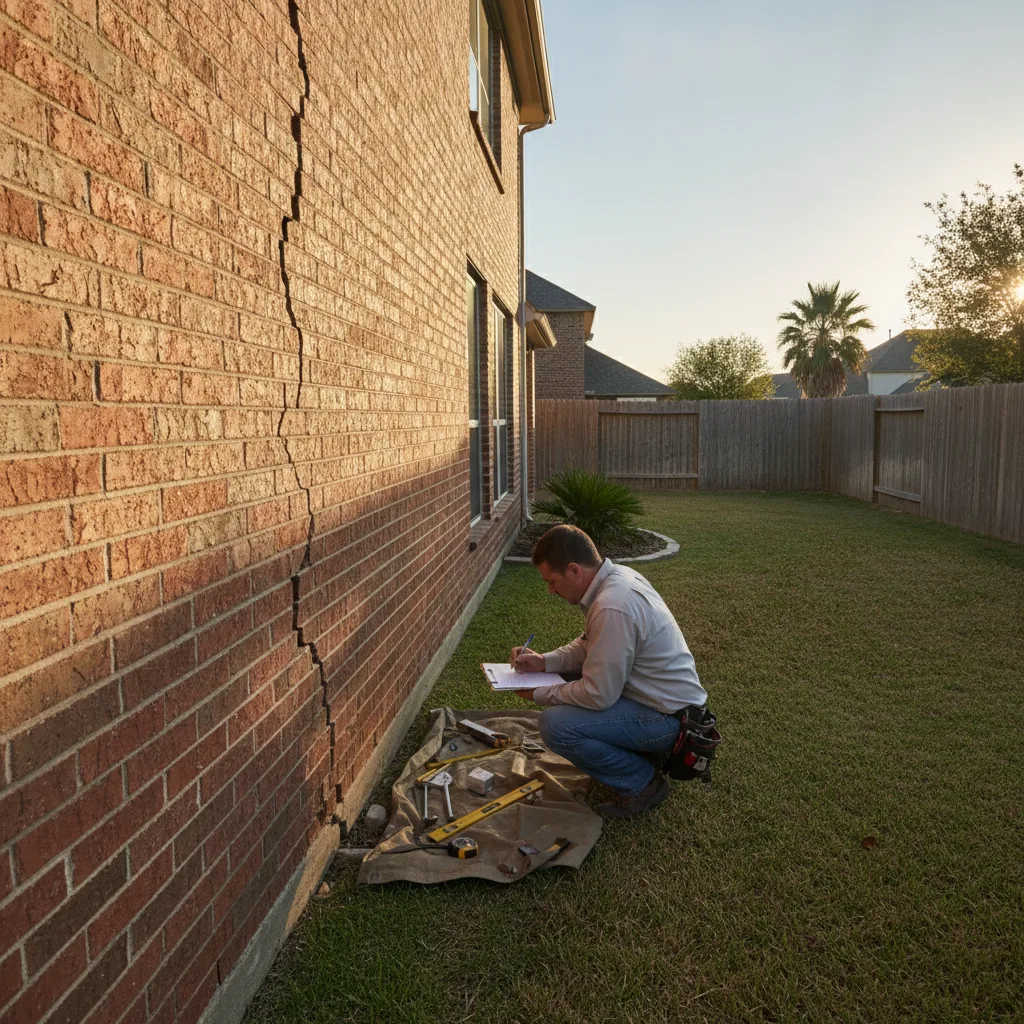
Map the Foundation Repair Decision Timeline Before You Write a Single Email
Foundation repair email marketing fails most often because the sequence is built around the sender's schedule, not the homeowner's actual decision timeline. The documented reality: inspection booking wait runs two weeks on average, proposal consideration runs another four to sixteen weeks, and Dalinghaus Construction expires proposals at 60 days because material costs and continued soil settlement make anything longer financially risky for the company. That 60-day window is your entire revenue opportunity as a business.
Texas clay-soil markets compress this further. Expansive clay swells in winter rain and shrinks hard in summer drought, producing new cracks every season. Dallas-area companies routinely book two to three months out during summer peak, which means a homeowner who fills out a form in June may not get an inspection until August, and then takes another six weeks to sign. That is a 14-to-18-week window where your proposal either stays warm through email or goes cold by default. The seasonality of clay-soil movement is not just a nuisance — it is a documented urgency trigger your email copy can use.
Before building any automation, draw a literal timeline: Day 0 (form fill), Day 14 (inspection), Day 14 (proposal delivered same day), Day 28, Day 44, Day 60 (expiry warning). Every email trigger in your sequence maps to one of those dates or a homeowner behavior, not to a newsletter calendar. The Gradient Works 2025 benchmark puts 5–12 touchpoints as the range needed to close a high-ticket deal. For foundation repair jobs, plan for 10–12 touches across email, SMS, and phone inside that 60-day window. Understanding this timeline is the only prerequisite for every step that follows.
Seasonal urgency trigger
Texas drought-flood cycles create two natural urgency windows per year: summer dry-crack season (June–August) and fall re-expansion (October–November). Build a date-based branch in your automation that swaps in a seasonal subject line during these windows. 'Your foundation moved this summer. Here is what waiting costs.' outperforms a generic follow-up because it targets a real, documented event the homeowner already sees in their yard.
Build the 5-Trigger Architecture That Drives the Entire Sequence
Automated email flows generate 41% of total email revenue from just 5.3% of total sends, with revenue per recipient running 18x higher than broadcast campaigns, according to Klaviyo's 2026 benchmark data. That gap exists because trigger-based emails arrive at the exact moment a homeowner is thinking about the decision. For a foundation repair company, five job-status triggers cover the full sales cycle: (1) inspection booked, (2) inspection completed and proposal sent, (3) 14-day no-response, (4) 30-day no-response, and (5) 55-day proposal expiry warning.
Each trigger should fire within five minutes of the status change in your CRM. Minyona's 2026 research on legacy-crack leads — the slow-burn jobs that run $10,000–$30,000 — is explicit: speed-to-lead contact within five minutes is required, because these homeowners are often reaching out to two or three companies simultaneously. The company that responds first, then maintains polite contact through week three, wins jobs that competitors abandoned on day two. Your marketing sequence is the mechanism that makes that consistency automatic instead of dependent on a sales team member remembering to follow up.
Map each trigger to a primary email plus an SMS fallback. Email delivers the detail — financing math, engineer credentials, warranty documentation, before/after photo links. SMS delivers the nudge when open rates drop. GoHighLevel handles both channels from a single workflow with no extra integration layer. ActiveCampaign users need a Zapier connection to a platform like Twilio or Podium for the SMS leg. Do not skip SMS for the 14-day and 30-day no-response triggers. Those are the exact moments where a single text has historically recovered signed contracts from leads most sales teams already wrote off as lost.
GoHighLevel
$97/month (AI Employee suite, unlimited sub-account)
Native Jobber integration (live September 2025) means job-status triggers fire without Zapier; includes email, SMS, and AI follow-up in one platform — the lowest-friction stack for agencies managing multiple foundation repair clients
ActiveCampaign
From $15/month (bills all contacts including unsubscribed as of November 2025 — audit your list before importing)
94.2% inbox placement rate, independently tested #1 in 2026; best choice for in-house teams that want deliverability over contractor-specific templates and can manage a Zapier bridge to Jobber or ServiceTitan
Zapier
From $19.99/month
Required connector between ActiveCampaign and every contractor CRM (Jobber, JobNimbus, ServiceTitan, Housecall Pro) — ActiveCampaign has zero native integrations with any of these platforms as of 2026
Write the Inspection-Booked Email: Confirm, Educate, and Set Expectations
The inspection-booked email is the highest-open email in the entire sequence and the one most foundation repair companies waste on a generic confirmation. A confirmation email that converts does three things in under 200 words: confirms the appointment date and time with a calendar-add link, names the specific problem the homeowner described in the form (cracked brick, sticking doors, sloping floors), and offers a direct link to book a 15-minute pre-inspection call. That third element matters. Trained inspectors who diagnose problems with visuals and offer financing on-site close 35–55% of inspections. The email is your first chance to warm the homeowner toward that conversation.
Use this email to introduce your team's engineering expertise and credentials. One sentence does the job: 'Your inspector holds [credential], and every diagnosis includes a written structural assessment.' That single line begins building the trust that carries through the full 60-day window. A transferable warranty mention here also seeds the value conversation before cost enters the picture. Homeowners researching foundation repair in Texas are also researching resale implications — a warranty that transfers to the next buyer is a direct answer to a question they are already asking in their own search results.
Subject line formula: '[First name], your foundation inspection is confirmed for [date].' Personalization tokens are table stakes in 2026; any platform on this list supports them. Keep the body under 180 words, include one clear CTA button (Add to Calendar), and add a secondary text link to your before/after photo gallery on your website. Open rates for appointment-confirmation emails in home services average 55–65%. Do not bury your best content below a long preamble — lead with the confirmation, follow with the credential, close with the CTA.
Do not attach a PDF
Attachments drop deliverability and trigger spam filters on Google Workspace and Microsoft 365 accounts. Link to a hosted version of your warranty document or credentials page on your website instead. This also gives you a tracked click event you can use as a behavioral trigger later in the sequence.

Build the Post-Inspection Proposal Email: Lead with Financing Math, Not Job Cost
The post-inspection proposal email is where most foundation repair companies lose the job on paper — they send the dollar figure and go silent, waiting for the homeowner to process sticker shock alone. The fix is to lead with the monthly payment, not the total. A $22,000 underpinning project framed as 'from $310/month' converts from a hard no into a budget conversation. Include the financing framing in the first paragraph of the proposal email, before any mention of total cost, and link directly to your financing application. Your financing partner integration makes this easy — the monthly payment math should be pre-calculated and ready to drop into the email template.
This email should go out the same day as the inspection, within two hours of the inspector leaving the property. The homeowner is most emotionally engaged immediately post-inspection when the problem feels real and documented. Waiting 24 hours costs you the peak engagement window. If your inspector delivers the proposal on-site (same-day delivery is the documented Dalinghaus standard), the email reinforces what the homeowner just heard in person. It is not new information competing with a busy evening. It is a written record of the conversation that keeps the decision active.
Structure the body in three short sections: what your inspector found in plain language; the recommended solution with a named method (helical piers, push piers, slab lifting, or concrete lifting as applicable); and the financing options with monthly payment prominently displayed. Close with one CTA: 'Schedule a 15-minute call to review your proposal.' Nurtured leads make purchases up to 23% faster than non-nurtured leads, and the reason is proposal emails like this one that keep the decision active instead of letting it drift into the spouse-conversation queue indefinitely.
Concrete lifting vs. full foundation repair
If your company offers concrete lifting (mudjacking or polyurethane foam lifting) as a lower-cost alternative to full piering, the proposal email is the correct place to branch your automation. Send a concrete-lifting-specific email sequence to leads whose inspection scopes that method. The cost difference — $500–$1,800 for lifting vs. $10,000–$30,000 for piering — means the decision psychology is entirely different, and the email content should reflect that.
Run the Mid-Sequence Nurture Emails (Days 7–30): Build Trust While the Homeowner Stalls
Companies with mature lead nurturing programs generate 50% more sales-ready leads at 33% lower cost per acquisition than companies that hand leads off to sales immediately, according to research by Marketo and Forrester. The mid-sequence emails — sent between Day 7 and Day 30 after the proposal — are where that gap is built or lost. Most foundation repair companies send zero emails in this window and then wonder why leads go cold. The company that sends three earns the job.
Email 1 (Day 7): Social proof. Send two or three customer stories from homeowners in the same zip code or soil type. 'A homeowner in [nearby neighborhood] had the same sticking doors and cracked brick. Here is what we found and what it cost.' Specificity by geography builds trust faster than a generic testimonials page. Include a link to your Google review profile and your Better Business Bureau rating. This is the email where your business's reputation does the selling. Email 2 (Day 14, no-response trigger): Financing deep-dive. Lay out all financing options with real payment examples at two or three price points matching your job range. For a Texas market where standard jobs run $3,300–$9,000 and piering runs $10,000–$30,000, show monthly payments at $5,000, $12,000, and $22,000. Then add one sentence: 'The longer a foundation issue sits in Texas clay soil, the more piers the repair typically requires.' That is documented engineering reality from Level Up Construction's Texas timeline guide, and it belongs in this email.
Email 3 (Day 21): Content authority. Send a link to a blog post or short video explaining exactly what your inspector diagnosed — how helical piers work, why expansive clay soil in Texas creates seasonal movement, what a transferable warranty covers. This email positions your team's expertise and answers the questions the homeowner is asking in Google between Day 7 and Day 30. Nurture email sequences get 4–10x more responses than generic blasts. The reason is content this specific, delivered to an audience already primed by a real inspection experience. Focus this email entirely on education, not the sale — the sale is handled by the next two re-engagement emails.
Fire the 30-Day and 55-Day Re-Engagement Emails: Create Urgency Without Discounting
A foundation repair proposal that expires at 60 days is a built-in urgency trigger most companies forget to use. Send a re-engagement email at Day 30 (the halfway point) and a direct expiry warning at Day 55. These are the two highest-conversion sends in the sequence for cold leads, and they require a specific structure: restate the problem, restate the consequence of delay, and give the homeowner a clear path to move forward.
Day 30 email subject line: '[First name], your foundation repair proposal expires in 30 days.' Body: one paragraph on what your inspector documented, one sentence on cost-escalation risk (more soil movement means more piers needed), one financing payment reminder, and one CTA. Under 200 words total. WebFX's 2026 home services marketing benchmarks recommend maintaining active engagement for 90–180 days on high-ticket structural leads — but for a foundation repair company with a 60-day proposal expiry, Day 30 and Day 55 are your critical re-engagement windows inside that boundary.
Day 55 email subject line: 'Your proposal expires in 5 days, [First name] — here is what happens next.' This email should be the most direct of the sequence. State the expiry date. Explain that materials (steel for piers, concrete) fluctuate and the price will need to be recalculated after 60 days. Offer two options: sign now, or book a five-minute call to extend. Include the direct calendar link. Do not discount. A transferable warranty and a licensed engineer's evaluation move skeptical homeowners far more reliably than a price reduction, and discounting at Day 55 trains future prospects to stall intentionally to wait for a deal.
After Day 60: move to a long-term drip, not the trash
Leads that pass the 60-day expiry are not dead — they are in the research phase and will surface again when the next drought cycle cracks their slab. Move them to a quarterly email list that sends seasonal content: a summer soil-moisture alert in June, a fall re-expansion reminder in October, and a year-in-review on local foundation repair costs in January. Home services companies that use email and remarketing together to maintain 90–180 day cycles recover leads competitors wrote off.
Choose the Right Email Marketing Tool Stack and Confirm It Is a Good Fit for Your Operation
Foundation repair email marketing runs on two realistic platform choices in 2026, and the right one depends entirely on who manages your marketing stack. GoHighLevel at $97/month ships a native Jobber integration (live September 2025), contractor-specific email templates, built-in SMS, and an AI follow-up assistant. It is the correct choice for agencies managing multiple foundation repair clients, or for companies that want one platform covering CRM, email, SMS, and reputation management without a Zapier layer. ActiveCampaign at $15–$149/month wins on deliverability (94.2% inbox placement, independently tested #1 in 2026) and raw automation logic. It is the correct choice for in-house marketing teams comfortable managing a Zapier bridge to Jobber or ServiceTitan and willing to build their own contractor-specific templates from scratch.
Jobber Campaigns at $29/month is the third option and the wrong one for this use case. It handles basic email and text campaigns but lacks the job-status-triggered automation depth that powers the five-trigger architecture in Step 2. It is a good fit for simpler broadcast use cases — seasonal promotions, review requests — but not for a 10-touch, 60-day nurture sequence that needs to branch on homeowner behavior and proposal status. If your operation is too small to justify GoHighLevel or ActiveCampaign today, Jobber Campaigns keeps your marketing moving until you grow into the more powerful tools.
Whichever platform you choose, confirm three technical requirements before your first live send: SPF and DKIM records authenticated on your sending domain, DMARC policy set to at minimum 'p=quarantine,' and bounce rate below 2% with unsubscribe rate below 0.5%. Those are the 2026 inbox placement thresholds for Google and Yahoo. Miss any one of them and your entire sequence routes to spam — which means the $40–$80 Google CPL leads you paid for never see the emails built to close them. Email marketing returns $42 for every $1 spent according to Litmus's 2026 benchmark, but that return assumes inbox placement. Technical setup is not optional, and it does not get easier to fix after you have sent 500 emails to a burned domain.
GoHighLevel
$97/month
Best for agencies and multi-client contractors: native Jobber integration, built-in SMS, AI follow-up, contractor snapshot marketplace — one platform replaces Zapier, a separate SMS tool, and a standalone email platform
ActiveCampaign
From $15/month (audit contact count first — billing changed November 2025 to include unsubscribed contacts)
Best for in-house teams prioritizing deliverability: 94.2% inbox placement rate leads all platforms tested in 2026; superior conditional automation logic for complex behavior-triggered branching
Jobber Campaigns
$29/month add-on
Adequate for broadcast emails and review requests; not a good fit for behavior-triggered nurture sequences — use it only if your operation is too small to justify GoHighLevel or ActiveCampaign
Zapier
From $19.99/month
Required if you choose ActiveCampaign — zero native integrations exist between ActiveCampaign and any contractor CRM as of 2026; budget $20–$50/month for the Zaps needed to connect job-status triggers

Do Not Let Deliverability Kill a Sequence You Spent Hours Building
A foundation repair email sequence only earns its $42-per-$1 return if it reaches the inbox. As of 2026, Google and Yahoo require SPF, DKIM, and DMARC authentication on every sending domain — missing any one of them routes your entire sequence to spam. Set your bounce rate target below 2% and your unsubscribe rate below 0.5% before your first live send. Clean your imported list against a tool like NeverBounce or ZeroBounce before loading it into GoHighLevel or ActiveCampaign. And if you are on ActiveCampaign, audit your contact count immediately: the November 2025 billing change now charges for unsubscribed contacts, which inflates costs on older lists without adding any send volume. Technical hygiene is not a launch-day afterthought — it is the prerequisite that makes every other step in this playbook produce results.
Foundation repair has the longest and most predictable homeowner decision window in residential contracting. Four to sixteen weeks of documented stalling while a family manages fear, budget shock, and a spouse conversation. That window is not a problem — it is a structured revenue opportunity for the company willing to show up with the right email at the right trigger point, and a guaranteed loss for the company that calls twice and marks the lead dead. A 10-touch sequence built around five job-status triggers, financing math in the first week, engineering credibility in weeks two through four, and a hard expiry warning at Day 55 gives a foundation repair business the same compounding advantage that mature nurture programs deliver across every industry: 50% more sales-ready leads at 33% lower cost per acquisition. The clay soil in Texas is not going to stop moving. The question is whether your email sequence is still running when the homeowner finally decides to fix it. Set up the sequence, confirm your deliverability stack, and let the automation do the follow-up your sales team never had time to execute consistently.
Frequently Asked Questions
Ready to get started? Contact Geek Powered Studios today.