
Foundation repair SEO beats paid search for independent Texas contractors because local search rewards proximity, review velocity, schema accuracy, and hyperlocal content — not domain authority. As of 2026, 89% of "foundation repair near me" searches trigger the Google Map Pack, and the top 3 positions capture 42% of all clicks. A 7-step system — GBP category optimization, per-service page architecture, LocalBusiness schema, a review velocity system, Texas soil-specific content, hyperlocal link building, and CallRail-based ROI tracking — produces Map Pack movement within 60–90 days and organic cost-per-lead below $15 by month 12. That is less than a quarter of what Google LSA charges at $60–$75 per lead in standard Texas markets.
-
60–90 daysTime to first Map Pack movement after GBP optimization
-
89%"Foundation repair near me" searches that trigger the Map Pack
-
$14.50Organic cost-per-lead at maturity vs. $60–$75 via Google LSA
-
5–10/monthNew Google reviews needed to sustain Map Pack dominance
-
$129/moAhrefs cost — the core tool for keyword research and rank tracking
-
6–12 hoursInitial setup time across all 7 steps before ongoing maintenance
Independent foundation repair contractors in Texas have a structural SEO advantage over Olshan, RAM Jack, and every other national franchise competing in their city — and most of them are not using it. Local foundation repair searches jumped 34% in Q1 2026, and 78% of those searches are mobile and local-intent. The contractors capturing that demand are not the ones with the biggest brand or the highest ad spend. They are the ones who have executed the local SEO fundamentals that a corporate content team managing 200 locations simultaneously gets wrong at the individual location level. This 7-step foundation repair SEO playbook walks through the exact actions that produce Map Pack movement within 60–90 days, 30–80 qualified GBP calls per month at maturity, and an organic cost-per-lead below $30 — less than half of what Google LSA charges. Total setup time: 6–12 hours. Ongoing maintenance: 3–5 hours per month.
Before you start
- An active Google Business Profile claimed and verified under your business name — not a franchise parent account
- A self-hosted website you control (WordPress or any CMS where you can create pages, edit title tags, and install a schema plugin)
- Access to Ahrefs ($129/mo) or at minimum Google Search Console (free) for keyword research and ranking data
- A BrightLocal account ($39/mo) for citation auditing and Map Pack rank tracking by ZIP code
- A CallRail account ($45/mo) to track which pages and keywords are generating actual phone calls
- At least 10 completed jobs with customer contact information — the raw material for your review-acquisition system
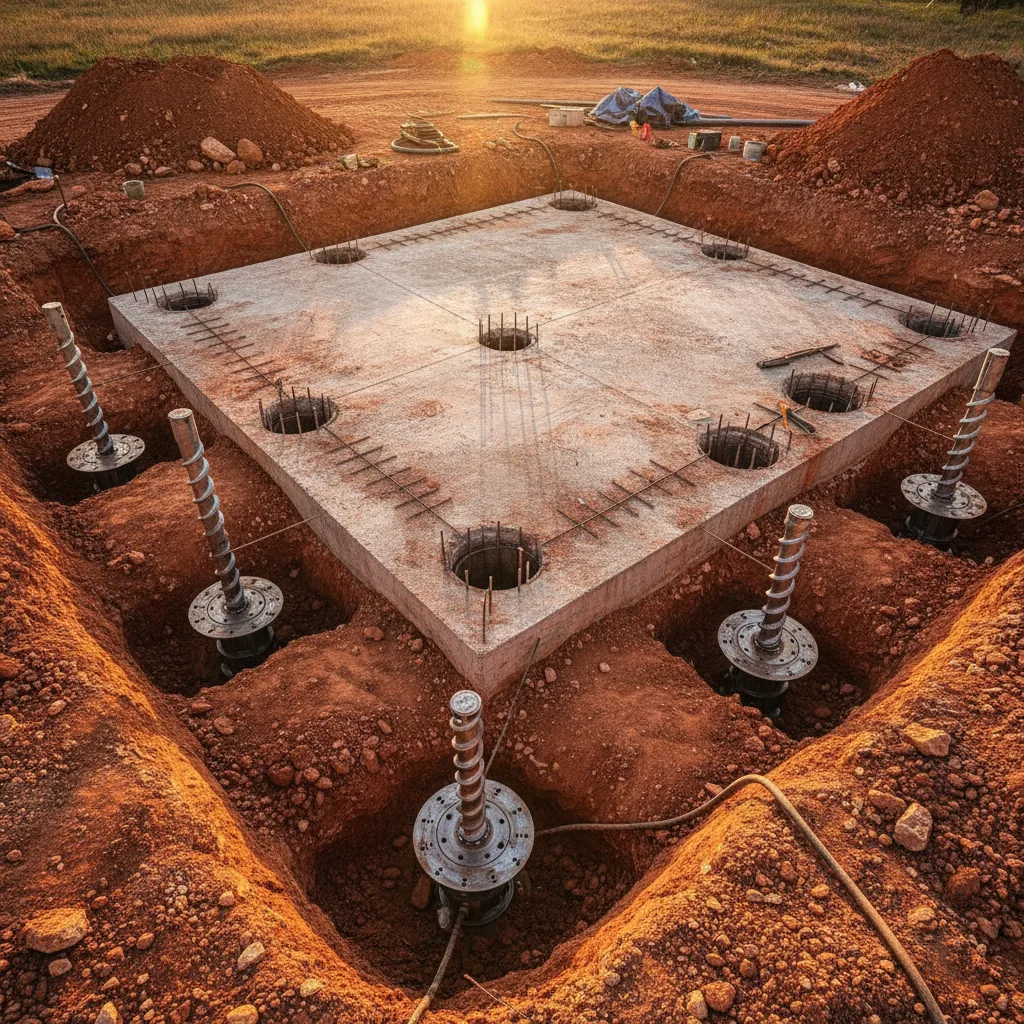
Optimize Your Google Business Profile for Foundation Repair SEO
Google Business Profile optimization is the single highest-leverage action in foundation repair SEO because 89% of 'foundation repair near me' searches trigger the Map Pack, and the top 3 positions in that pack capture 42% of all clicks. Set your primary GBP category to 'Foundation Repair Contractor' — not 'General Contractor' and not a parent franchise category. That one field alone carries more local search weight than most contractors realize, and it is frequently wrong on franchise location profiles because corporate manages hundreds of listings simultaneously and misses the local detail.
Upload a minimum of 20 photos before you do anything else with your profile. Profiles with photos generate 42% more direction requests than those without. The photos that move the needle are not stock images: shoot actual jobsite before-and-after shots, tag each image with GPS coordinates using GeoImgr (free), and name the files descriptively. 'Houston-helical-pier-installation-foundation-crack.jpg' beats 'IMG_4821.jpg' for geo relevance signals. Post one new GBP update per week with a short job description and a city name in the text.
For service-area businesses, hide your physical address and define your service area by city rather than radius. Lock your NAP (name, address, phone) to a single format across every directory — even a comma difference between 'Suite 200' and 'Ste. 200' creates citation inconsistency that suppresses local visibility. Use BrightLocal's Citation Tracker to audit and correct every listing in one dashboard. This Google Business Profile optimization step alone can shift your Map Pack position within 30–45 days when the NAP inconsistencies have been accumulating for years.
GeoImgr
Free
Embeds GPS coordinates into EXIF data on jobsite photos before you upload them to GBP, reinforcing geographic relevance signals for local search.
BrightLocal
$39/mo
Audits citation consistency across 80+ directories, tracks Map Pack rankings by ZIP code, and flags NAP mismatches that suppress local visibility.
Watch out
Do not mark your business as permanently closed or change your primary category more than once in a 30-day window. Both actions can trigger a GBP suspension that takes 2–4 weeks to resolve through Google's reinstatement form — and a suspended profile loses all accumulated review authority.
Build a Service-Page Architecture That Ranks Each Foundation Repair Service Separately
A single 'Foundation Repair Services' page cannot rank across all keyword clusters simultaneously — Google needs a dedicated URL for each service to assign topical relevance. Build individual service pages for at minimum: slab repair, helical pier installation, pier and beam leveling, crawl space repair and encapsulation, basement waterproofing, and foundation crack repair. Each page targets its own primary keyword plus a city modifier, and each should reach 800–1,200 words of original content. This is the site architecture decision that separates foundation repair websites that generate leads from those that generate impressions.
The page architecture matters as much as the content itself. Use a flat URL structure: yoursite.com/foundation-repair/helical-pier-installation/ rather than burying service pages three levels deep. Add internal links from every service page to at least two other service pages and back to your primary 'foundation repair [city]' landing page. Google's January 2026 core update penalized 28% of thin home services pages that lacked demonstrated expertise — every service page needs at least one real jobsite photo, a Texas-specific cost range ($3,300–$9,000 for most repairs), and a clear description of what the specific repair method addresses and when it is appropriate.
Run keyword research in Ahrefs to identify which cluster has the most local search volume in your primary city before deciding which page to build first. 'Foundation repair near me' pulls roughly 40,500 monthly searches nationally, but the city-specific variant — 'foundation repair Houston' or 'foundation repair San Antonio' — is what triggers your local Map Pack. Build the page for your core city service first, optimize it fully, then expand to neighboring service-area pages once the core page gains traction. Foundation companies that try to build 15 location pages simultaneously typically end up with 15 thin pages instead of 3 strong ones.
Ahrefs
$129/mo
Surfaces city-level keyword search volume, identifies which service pages competitors rank for, and tracks your own foundation repair pages week over week.
Pro tip
After Google's January 2026 core update introduced 6–8 week indexing delays for new service pages, submit each new URL to Google Search Console's URL Inspection tool immediately after publishing. Waiting for passive crawling can add another 2–3 weeks to your visibility timeline.
Implement LocalBusiness and Service Schema to Win Rich Results
Only 31% of local business websites have correctly implemented LocalBusiness schema as of 2026, which means accurate schema is still a genuine competitive advantage — especially over franchise locations whose corporate teams copy-paste a national template and never update it with local values. Add LocalBusiness schema to your homepage and Service schema to every individual service page. The fields Google's 2026 structured data guidelines weight most heavily for home services are: areaServed, serviceType, priceRange, and aggregateRating. Leave any of those blank and you sacrifice rich result eligibility and Google AI Overviews citation potential.
The areaServed field should list every city you actively serve, spelled out in full — not just your headquarters ZIP code. For serviceType, use the exact repair method: 'Helical Pier Installation,' 'Crawl Space Encapsulation,' 'Slab Repair.' For priceRange, use the Texas-specific range that reflects your actual market: '$3,300–$9,000' for standard repairs, '$10,000–$40,000' for major underpinning or house leveling work. Franchise pages routinely publish the national average ($5,176 per the 2026 national benchmark) without Texas context, which signals to Google that the content is generic rather than locally authoritative. This is a technical SEO gap you can close in an afternoon.
Validate every schema block with Google's Rich Results Test before pushing to production. A schema syntax error — a missing closing bracket, a misquoted property — negates the entire block. If you are on WordPress, the Rank Math or Schema Pro plugins handle markup generation through a UI; your job is still filling in the accurate, locally specific values the plugin cannot know. Foundation repair companies that implement schema correctly see measurable improvements in GBP visibility and structured data eligibility within 4–6 weeks of implementation.
Rank Math
Free / $59/yr Pro
Generates LocalBusiness and Service schema with a UI, reducing syntax errors while still letting you input locally specific Texas price ranges and city service areas.
Google Rich Results Test
Free
Validates schema markup before it goes live so a syntax error does not quietly remove your structured data eligibility from Google search results.
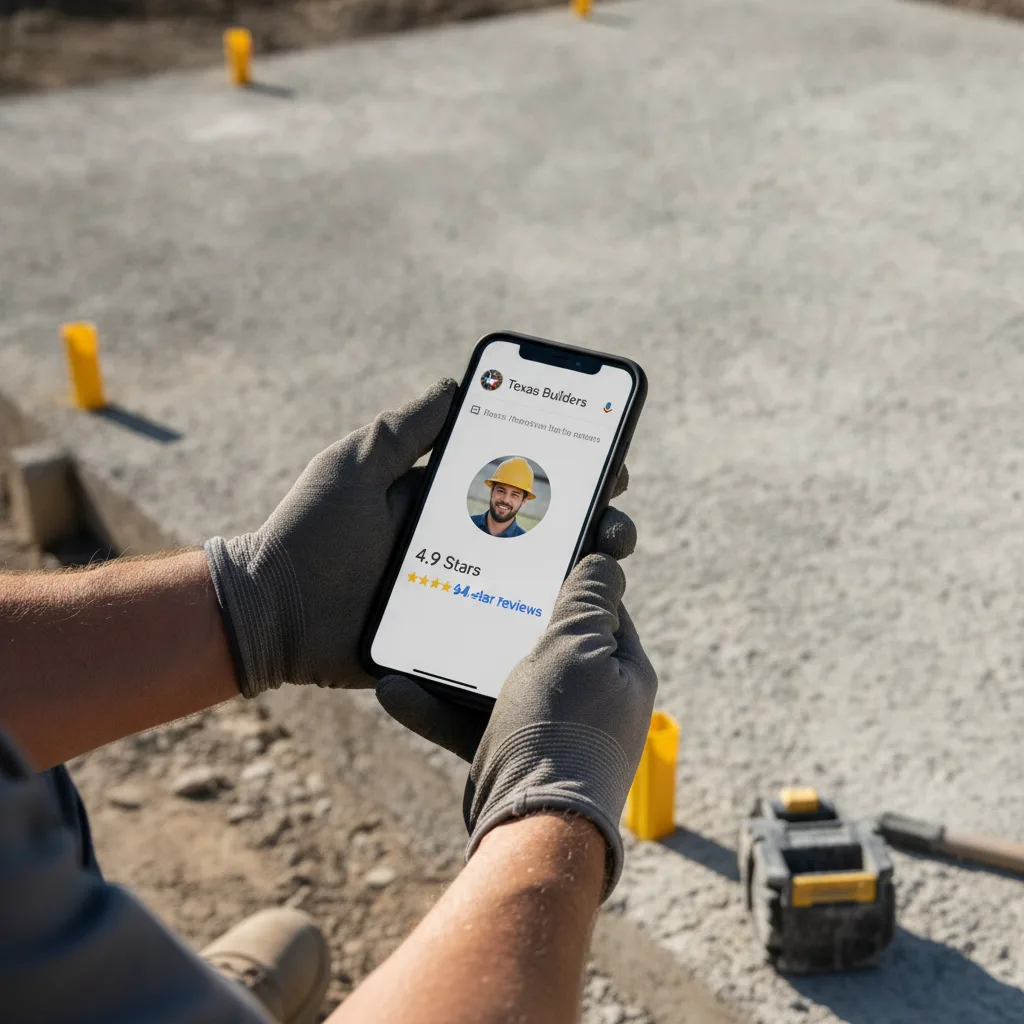
Build a Review Velocity System That Generates Qualified Leads Through Social Proof
A foundation repair contractor with 90 Google reviews at 4.8 stars will consistently outrank one with 15 reviews at 4.6 stars in the local Map Pack, all else equal — review count and recency are Map Pack ranking factors, not just trust signals for homeowners searching online. Target 5–10 new reviews per month for a mid-size operation. At that pace, you reach 90 reviews in 9–18 months, which is the threshold where Map Pack dominance becomes sustainable against national brands with significant domain authority.
The system that reliably hits that target: send a text message with a direct link to your Google review form within 24 hours of job completion. Not 72 hours, not a weekly batch — 24 hours, when the customer's satisfaction is highest and the repair is fresh. Run a follow-up process once more at day 3–5 if no review has posted. Use Podium ($399/mo) or NiceJob ($75/mo) to automate the send sequence and track the conversion rate from request to posted review. A manual follow up process loses discipline within 60 days. Automation does not.
Foundation repair customers are anxious buyers who paid $3,300–$9,000 or more for work they cannot fully evaluate. Review responses matter here more than in most trades. Respond to every review, positive and negative, within 48 hours. A response to a 5-star review that names the specific repair type — 'glad the helical pier installation on your Katy home held up through the spring rains' — adds keyword context to your GBP and builds trust with future homeowners reading the profile before they decide to call. This is the kind of social proof that directly converts visitors into booked inspections.
Podium
$399/mo
Automates review request texts at configurable intervals post-job, tracks review conversion rates, and centralizes responses across Google and Facebook in one dashboard.
NiceJob
$75/mo
Lower-cost alternative to Podium for contractors under $1M revenue; automates review requests and pushes completed reviews to your foundation repair website as a testimonials widget.
Shortcut
Ask your three most recent 5-star reviewers to update their review mentioning the specific city and repair type. Google treats review text as local content. 'Great slab repair in Cedar Park' carries more local SEO value than 'great service' — and most satisfied customers will update a review if you explain why the specific language helps.
Publish Texas Soil-Specific Content That National Brands Cannot Replicate
Texas soil conditions are a direct E-E-A-T signal, and national franchise pages almost never address them with genuine specificity. Houston's expansive Beaumont clay shrinks and swells 3–4 inches seasonally, directly causing pier movement and slab cracking. Central Texas caliche underlays much of the Austin and San Antonio market, creating different foundation repair methods and failure modes than clay. Dallas-Fort Worth's black cotton soil behaves differently again. A service page that describes foundation cracking in terms specific to Houston clay versus one that says 'expansive soils can cause damage' tells Google — and homeowners who are actively searching — exactly which content was written by someone who has worked in that market.
Build a content calendar anchored to Texas weather events. Foundation repair search volume spikes after prolonged drought (clay shrinks, piers lose lateral support), after heavy spring rains (clay expands, slabs shift), and after severe freeze events (soil heave). In Texas, those three triggers cover roughly 8 months of elevated search demand per year. Publish a blog post or updated service page within 1–2 weeks of a major weather event in your city. 'What Houston homeowners need to know about foundation cracks after the 2026 drought' is a query homeowners actually type, and it is a query that other foundation companies with national editorial calendars never respond to in time.
Educational content about warning signs — sticking doors, diagonal wall cracks, uneven floors, gaps at rooflines, foundation settling — ranks for research-phase searches and builds trust before the phone call. Foundation repair averages $5,176 nationally and runs $3,300–$9,000 in most Texas markets, making it a high-anxiety purchase homeowners research carefully before calling for a free estimate. A contractor whose site explains what a 45-degree crack above a door frame means, specifically, is the contractor that gets the call. Structure educational pages with a direct answer in the first paragraph — this is the format Google AI Overviews cite, and it doubles the chance your content appears in AI-generated answers for informational foundation repair queries.
Google Search Console
Free
Identifies which informational queries are already sending impressions to your foundation repair website so you can prioritize content around real homeowner search behavior rather than guessing.
Ahrefs Content Explorer
Included in $129/mo Ahrefs plan
Finds which Texas-specific foundation content topics have search volume but low competition — the gap between what homeowners search and what foundation companies actually publish.
Acquire Hyperlocal Backlinks That National Brands Structurally Cannot Build
Independent foundation repair contractors hold a structural link building advantage over national brands: they can earn authentic local backlinks that a franchise's corporate content team physically cannot generate at scale. The three highest-ROI sources for Texas contractors are local Chambers of Commerce (Dallas, Houston, Austin, and San Antonio chambers all maintain member directories with followed links), real estate agent referral partnerships (agents who need fast foundation disclosures for transactions will link to your foundation repair website as a trusted resource), and local news coverage of weather-related foundation events. Each of these requires local presence and local relationships — assets a franchise location page managed from a corporate office does not have.
Sponsorships convert to backlinks faster than most link building tactics. Sponsor a youth sports team in your service area — the league website posts a sponsor page with your URL. Sponsor a local neighborhood association event and request a mention on their site. A single domain-authority-30 link from a genuine local organization outweighs ten national directories in terms of Map Pack signal quality. Use Whitespark's Link Prospector ($33/mo) to identify which local organizations, neighborhood blogs, and community event pages in your city are linkable and have not already been claimed by a competitor. The goal is not quantity — it is authentic local relevance.
Do not overlook supplier and vendor relationships when building your local SEO foundation. A concrete supplier in Houston, a waterproofing materials distributor in Dallas, or a local equipment rental company may already have a 'preferred contractor' or 'partners' page on their site. These links carry strong local relevance because they confirm your physical presence and operational activity in a specific market — something a franchise location with a corporate domain and generic foundation repair pages cannot replicate. Track all link prospects in a simple spreadsheet and follow up at 30-day intervals; most local partnership links require two to three touchpoints to land.
Whitespark Local Citation Finder
$33/mo
Identifies unbuilt local citation and link opportunities by city and industry, so you can target Chamber pages, neighborhood directories, and supplier sites your competitors have not claimed.
Watch out
Avoid link schemes that package 50 national directory submissions as 'local SEO.' National directories are useful for NAP consistency but carry negligible local link authority compared to a genuine Houston Chamber membership link or a real estate referral partner page. Spend your link-building budget on real local relationships, not bulk submissions.
Track SEO Performance in Google Analytics and CallRail to Prove ROI and Refine Monthly
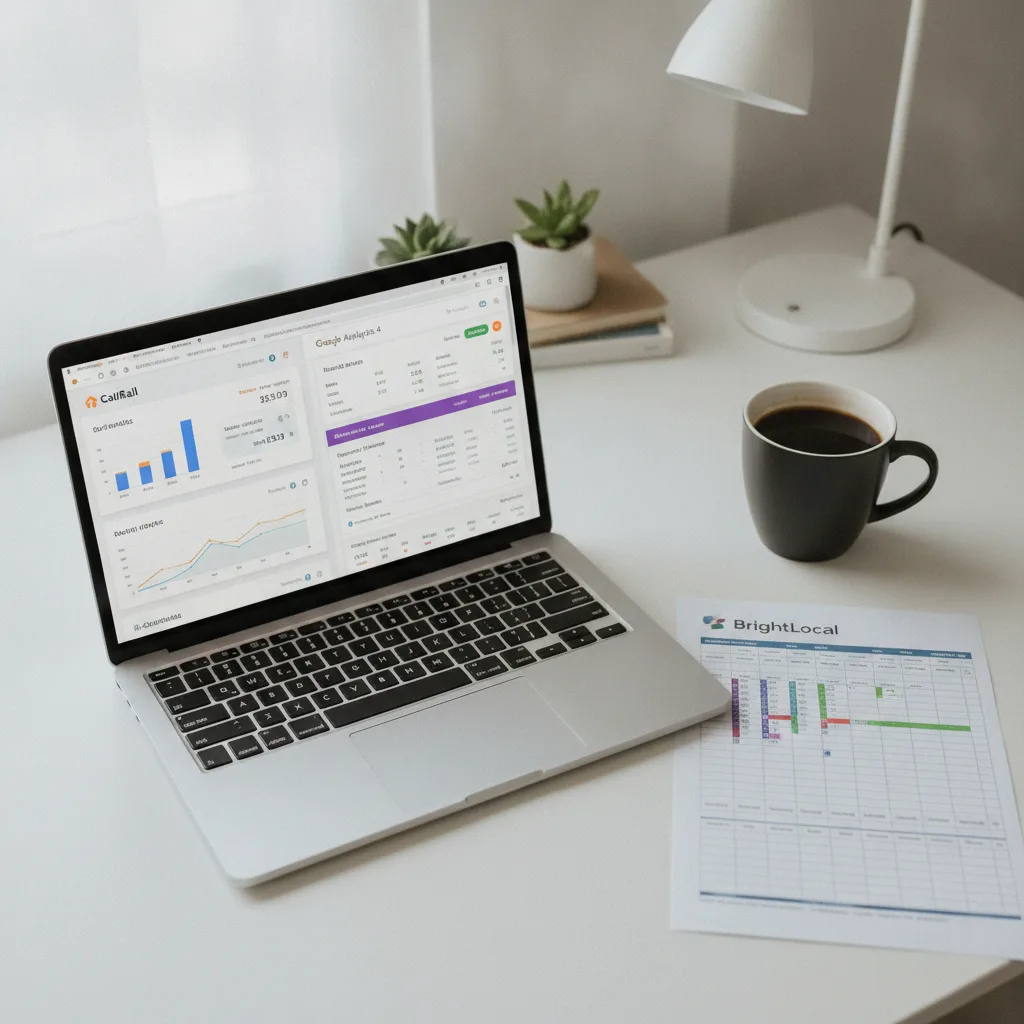
Foundation repair SEO produces Map Pack movement within 60–90 days of GBP optimization and meaningful organic traffic by months 4–6 — but only if you are tracking the right metrics to confirm the work is moving in the right direction. Set up conversion tracking in Google Analytics 4 with three events: form submission, phone call click, and 'Get Directions' click. Connect CallRail to Google Analytics so every inbound call is attributed to the specific page and keyword that generated it. Without this attribution, you cannot tell whether your helical pier installation page or your crawl space repair page is booking jobs — and you cannot defend your SEO efforts budget to yourself or to a business partner.
Track Map Pack rankings by ZIP code, not by city average. BrightLocal's Grid Tracker overlays your Map Pack position across a geographic grid of your service area, showing exactly where you rank in the northwest suburbs versus the city core. Foundation repair search results vary significantly by neighborhood — a contractor who ranks 1st in Katy may rank 6th in The Woodlands — and the grid view identifies where to concentrate next month's content and link-building effort. Pull this report monthly and prioritize the ZIP codes with the highest average job ticket values.
At month 6, compare your organic cost-per-lead to your Google Ads and LSA cost-per-lead side by side. LSA for foundation repair runs $60–$75 per lead in standard Texas markets, with paid search clicks averaging $35–$95 per click for competitive foundation repair terms. A mature local SEO program that generates 40 organic calls per month at a $580/mo tool and content budget is producing qualified leads at $14.50 each. That gap — $60-plus per lead via paid ads versus sub-$15 via organic — is the compounding business case for continuing to invest in foundation repair SEO even when monthly results feel incremental. The seo performance gap widens every year the program runs.
CallRail
$45/mo
Assigns unique tracking numbers to each service page so you can attribute inbound calls to the exact URL and keyword that triggered the search — not just 'organic traffic' as a lump category.
BrightLocal Grid Tracker
Included in $39/mo BrightLocal plan
Maps your Map Pack ranking position across a ZIP-code grid so you can see precisely where franchise competitors are outranking you and where you hold the top spot.
Google Analytics 4
Free
Tracks on-site conversions — form fills, call clicks, direction clicks — and connects to CallRail and Google Search Console for full-funnel organic attribution.
The One Mistake That Resets Six Months of SEO Progress
Changing your GBP primary category, business name, or phone number without correcting it across every citation simultaneously creates NAP inconsistency that Google's local algorithm treats as a trust signal failure. BrightLocal's 2026 citation audit data shows that a single major NAP mismatch — your GBP lists one phone number, your foundation repair website lists another — can suppress Map Pack rankings by 3–5 positions within 30 days of the change. Before you update anything on your GBP, run a full citation audit first and queue every directory update to go live the same week.
The structural argument for independent contractors is clear in the 2026 data: franchises like Olshan and RAM Jack bring domain authority, but domain authority does not win the Map Pack. Local search rewards proximity, review velocity, schema accuracy, and hyperlocal content — all things a corporate content team managing 200 locations simultaneously gets wrong at the individual location level. Local foundation repair searches jumped 34% in Q1 2026, and 78% of those searches are mobile and local-intent. The contractors capturing that demand are not the biggest foundation companies in their market. They are the ones who completed all 7 steps in this playbook and kept executing them month after month. At maturity — typically month 12 to 18 — a properly run foundation repair SEO program generates 40–60% of total lead volume from organic search at less than half the cost-per-lead of Google Ads. That is the compounding advantage franchises cannot buy with ad spend alone. Start with step 1 this week. The GBP category fix and photo upload take under two hours and produce visible results faster than any other action in this system.
Frequently Asked Questions
Ready to get started? Contact Geek Powered Studios today.