
Geofencing marketing for fence companies works by drawing virtual boundaries around competitor showrooms, Home Depot and Lowe's garden center sections, and new-construction neighborhoods, then delivering targeted mobile ads to every device that enters or exits those zones. A $1,500/month starter budget delivers 150,000 impressions at a $10 CPM. Geoconquesting audiences convert at up to 7.5% versus a 2.35% median for standard digital campaigns. The ROI math: $2,000/month at $10 CPM yields 200,000 impressions, roughly 300 clicks, 15 leads, and 3 booked jobs at a $5,000 average ticket — a 7.5:1 ROAS. Use GroundTruth Ads Manager for zero-minimum self-serve access, or Simpli.fi via a reseller for household-level addressable targeting. Set geofences at a minimum 200-meter radius; anything smaller is unreliable due to GPS drift.
-
$8–$12 CPMStandard geofencing CPM range for basic location-based targeting
-
200m minimum radiusSmallest reliable geofence size in urban Texas markets
-
7.5:1 ROASModeled return on a $2,000/month campaign at $5,000 avg ticket
-
45 daysRecommended attribution lookback window for fence job attribution
-
7.5% conversion rateHigh-intent geoconquesting audiences vs. 2.35% median digital
-
5–8 zonesOptimal geofence count for a $1,500–$3,000/month starter campaign
-
30-day retargeting windowPost-geofence-entry device follow window on most platforms
Geofencing marketing is, literally, a tactic with a fence company's name on it. You draw virtual boundaries around real locations — competitor showrooms, Home Depot garden center sections, new-construction neighborhoods — and serve targeted mobile ads to every device that enters or exits those zones. The global geofencing market hit $3.22 billion in 2025 and is projected to reach $11.85 billion by 2034 at a 14.8% compound annual growth rate. For a fence company with a $3,000–$8,000 average ticket, the ROI math is unusually favorable: a single closed job from a $1,500/month starter campaign covers the entire month's ad spend. This guide walks through all seven steps to launch a geofencing marketing campaign that drives booked fence jobs — not vanity metrics.
Before you start
- A defined service area with at least 3–5 target zip codes or neighborhoods mapped out
- A Google My Business profile and a landing page with a phone number and contact form — a CallRail tracking number is strongly preferred
- A monthly ad budget of at least $1,500 (the floor for 150,000 impressions at a $10 CPM)
- Access to a geofencing platform: GroundTruth Ads Manager (self-serve, no minimum) or a reseller account for Simpli.fi Addressable Geo-Fencing
- Static display ad creative in standard IAB sizes (300x250, 728x90, 160x600) — or $150–$300 budgeted for a designer
- A CRM or job-tracking tool such as Jobber or ServiceTitan to log which leads came from which channel so attribution connects to booked job revenue
Understand How Geofencing Marketing Works (and Why It Fits Fence Companies)
Geofencing marketing uses the global positioning system, Wi-Fi triangulation, and cellular data to create virtual boundaries around real-world locations, then delivers targeted mobile ads to any mobile device that enters or exits those boundaries — making it one of the few digital advertising formats that targets physical-world behavior instead of online behavior. When a homeowner's smartphone crosses the boundary of a geofenced area, the platform registers the event and begins serving that device personalized messages across apps, mobile browsers, and connected TV. Geofencing relies on opted-in mobile users who have granted location services permissions inside apps; the platform matches device IDs to defined geographic boundaries in real time.
For fence companies specifically, the economics are unusually favorable. The average residential fence job runs $3,000–$8,000, with full-yard installations averaging $8,000–$12,000 — high enough that a single closed lead can cover an entire month of starter ad spend. Wood fences account for 65% of residential demand at $25–$50 per linear foot installed; vinyl runs $30–$60 per linear foot. Compare geofencing advertising at a $8–$12 CPM — delivering 150,000–300,000 impressions per month for $1,500–$3,000 — against Google Ads, where CPCs for home-services keywords in competitive Texas metros have climbed 2–4x over the past two years. Geofencing is not a replacement for Google Local Services Ads, but it fills the awareness gap that pure intent-based channels miss. The benefits of geofencing for fence companies center on this distinction: you reach potential customers based on where they physically go, not just what they search.
How does geofencing work in practice? Platforms like GroundTruth and Simpli.fi collect location data from opted-in mobile users — individuals who have granted location services permissions inside mobile apps — and match device IDs to geographic boundaries in real time. The location based technology combines GPS satellites, Wi-Fi signal data, cellular signals, and in some cases radio frequency identifiers (RFID) to determine a user's location with enough precision to register when a mobile device enters or exits a defined boundary. As of 2026, that geospatial data collection process is regulated in Oregon, Virginia, and Maryland; always confirm your platform's consent methodology before signing an insertion order.
GroundTruth Ads Manager
Free to access; no minimum spend, no IO contract
Self-serve geofencing platform with no spend floor — ideal for fence companies testing location-based advertising for the first time
Simpli.fi (via reseller)
$1,500–$3,000/month through a reseller; $10,000–$20,000/month direct
Addressable Geo-Fencing matches uploaded address lists to GPS plat lines for household-level targeting — the best tool for neighborhood-specific fence campaigns
Privacy note
As of 2026, Oregon, Virginia, and Maryland have passed restrictions on selling precise geolocation data. Any platform you use should document that its location data comes from opted-in mobile users with explicit consent and user consent processes in place. Ask your platform rep for their consent methodology and data collection practices before signing an IO.
Define Your Target Zones: Where Fence Buyers Actually Go
The four highest-intent geofencing zone types for a fence company are: a competitor's location or showroom, Home Depot and Lowe's garden and fencing aisles, recently permitted new-construction neighborhoods, and zip codes where your average job ticket is highest based on past invoices. Rank these by purchase intent — someone physically inside a competitor's showroom ranks higher than someone browsing a home improvement retail store, because they have already committed to traveling for a quote. Start with competitor locations and big-box fencing aisles as your first-priority zones, then layer neighborhood-level location based campaigns on top.
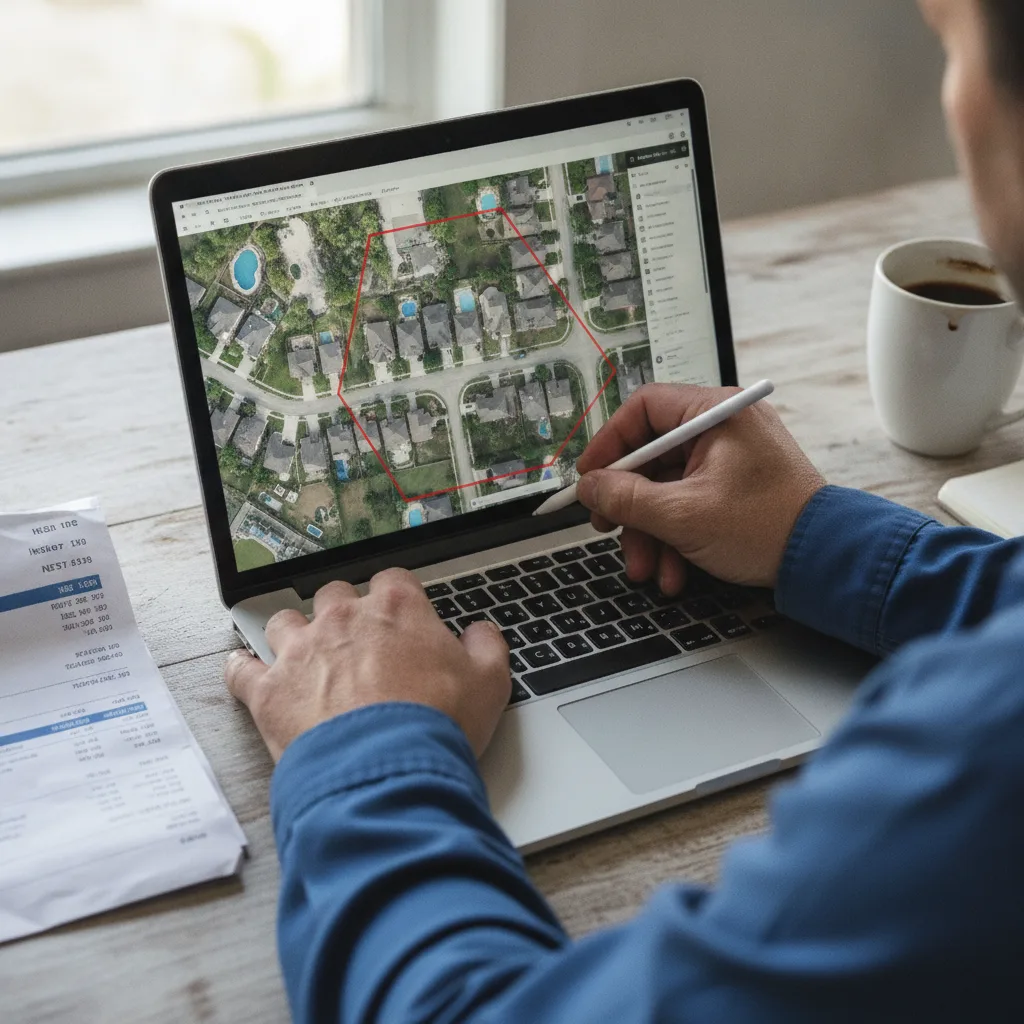
For each zone, pull the physical address and satellite view to confirm the boundary before you draw it. A Home Depot fencing aisle is not the same as geofencing the entire store parking lot — a tighter polygon focused on the building itself reduces wasted impressions on delivery drivers and employees. Use Google Maps satellite view to trace accurate polygons around the specific buildings or parking lots you want to capture. Most platforms let you draw custom polygons rather than simple radius circles, which matters when your specific physical location target is a storefront inside a strip mall or a competitor's office off a busy highway.
Complementary businesses also deserve a geofence: pool installation companies, real estate offices in target neighborhoods, and HOA management company locations where fencing upgrade decisions are made. These secondary zones expand your reach to local customers in a relevant purchase mindset without adding significant cost. A $1,500–$3,000/month starter campaign can support 10–20 active geofences before impression density per zone drops too low, but prioritize 5–8 high-intent zones over spreading budget across 20 low-quality ones.
Zone count guideline
A $1,500–$3,000/month starter budget supports 10–20 active geofences before impression density per zone drops too low to be effective. Prioritize 5–8 high-intent zones over a broader geographic area spread thin across 20 low-quality ones. Quality of targeting beats quantity every time at this budget level.
Set Geofence Sizes Correctly: The 100-Meter Rule That Most Campaigns Get Wrong
GPS imprecision makes geofences smaller than 100 meters in radius unreliable — devices bounce in and out of the boundary without physically entering the specific location, and you pay for those false triggers. The correct size depends on your market density: 200–500 meters for urban Texas markets like Houston's Inner Loop or Dallas Uptown; 500 meters to 2 kilometers for suburban markets like Katy, Frisco, or Round Rock, where residential fence jobs concentrate and lot sizes are larger. Draw too small and GPS drift kills your delivery; draw too large and you capture traffic on adjacent streets that has nothing to do with your target business location.
For competitor showrooms with small footprints — a 2,000 sq ft fencing supply shop in a strip center — use a 200-meter radius centered on the building entrance, not the parking lot edge. For Home Depot and Lowe's, a 300–400 meter radius centered on the garden center entrance captures the right behavioral signal without pulling in the entire shopping center. Setting geofences at the correct size is the single most impactful technical decision in your entire location based advertising strategy. For addressable neighborhood campaigns via Simpli.fi, the platform matches addresses to GPS-verified plat lines rather than crude radius circles, so you bypass the size problem entirely by targeting at the household polygon level.
Set your geofences to run 7 days a week, 6 a.m. to 9 p.m. local time. Fence shoppers research and request quotes during evenings and weekends at significantly higher rates than mid-day weekdays. Excluding the 9 p.m. to 6 a.m. window trims roughly 15–20% of impressions that deliver at near-zero engagement rates without reducing meaningful reach. This scheduling discipline keeps your CPM dollars working on the people and moments that actually drive local sales.
Google Maps (Satellite View)
Free
Use satellite imagery to trace accurate polygons around target buildings before uploading to your geofencing platform — prevents over-broad fences that waste budget on parking lots and adjacent streets
Choose Your Geofencing Platform Tier and Understand What You're Actually Paying For
Standard geofencing CPM in the U.S. runs $6–$15 per thousand impressions for basic location targeting, with a typical geofencing marketing campaign landing at $8–$12 CPM. Advanced features — real-time behavioral triggers, CRM integration, cross-platform syncing across mobile and CTV — push CPM to $20–$25. If a vendor quotes above $25 CPM without documented performance lift data, ask for the audit trail before signing. Local-services agencies that resell programmatic platforms typically apply a 20–40% markup on top of the wholesale rate, which is how a $9 platform CPM becomes $15–$20 in your media plan. That markup is not inherently wrong — campaign management, creative, and reporting have real costs — but you should know you're paying it.
For most fence companies starting out, there are two practical geofencing platform paths. GroundTruth Ads Manager is the self-serve option: no minimum spend, no insertion order required, and a straightforward UI for drawing geofences and uploading creative. It runs on GroundTruth's own location data network and is the lowest-friction way to test geofencing advertising without committing to a contract — the right fit for owners who want to run their own marketing efforts with self-serve tools. Simpli.fi's Addressable Geo-Fencing is the upgrade: it converts an uploaded list of street addresses — up to 1 million — into GPS- and plat-line-matched household-level fences, reaching all devices in each home including mobile, tablet, desktop, and connected TV. The $10,000–$20,000/month direct minimum makes it inaccessible without a reseller, but most local digital marketing agencies can provide access at the $1,500–$3,000/month level.
A mid-market fence company ready to add video ads and CTV to the mix should budget $5,000–$10,000/month. At that level, the geofencing campaign can run display ads while the homeowner is near a competitor's showroom, then follow them home with a :15 video pre-roll on connected TV that evening. That cross-device sequence — mobile display triggers initial awareness, CTV reinforces at home — is where geofencing capabilities start to compound into a real competitive edge.
GroundTruth Ads Manager
No minimum; CPM typically $8–$12 on self-serve tier
Zero-floor self-serve platform for fence companies running their first geofencing campaign without agency overhead
Simpli.fi Addressable Geo-Fencing (via reseller)
$1,500–$3,000/month through a local reseller agency
Household-level address targeting via GPS plat-line matching — the right tool when you want to target specific streets or neighborhoods rather than radius circles
StackAdapt
Managed campaigns typically start at $3,000–$5,000/month
Multi-channel programmatic DSP that supports geofencing alongside display, video, and CTV in a single campaign interface — strong choice for fence companies ready to layer channels
Build Ad Creative That Converts a Mobile Glance Into a Quote Request
Geofencing display ads have roughly 1.5–3 seconds to register before a user scrolls or closes the app. The creative formula that works for fence companies: lead image of a finished fence install in a recognizable Texas suburban yard, one-line value statement such as 'Wood Fence Installed in 3 Days — Free Quote,' and a single call-to-action button that goes directly to a mobile-optimized quote form or click-to-call number. No company history. No award logos. One decision: click or don't. The 300x250 banner is the highest-delivery unit across most networks; always produce it first, then adapt to 728x90 and 160x600. Timely promotions tied to zone context also lift performance — a 'Spring Install Special — Book by [Date]' ad served to devices near a new-construction neighborhood outperforms a generic brand message.
For geoconquesting zones — competitor showrooms, Home Depot garden center sections — write copy that acknowledges the purchase moment without being aggressive. 'Comparing Fence Quotes? Get Ours Free in 24 Hours' outperforms 'We're Better Than [Competitor]' because it meets the user's actual mental state. They are shopping and comparing options. Give them a reason to add you to the comparison list, not a reason to feel targeted. Use personalized messages that resonate with the specific context: someone who device enters or exits a competitor's location is already in purchase mode, and your creative should treat them accordingly.
Push notifications — if your platform supports them — achieve roughly double the open rate of standard digital advertising channels: 40% vs. 20% for conventional in-app messages. Use them for the highest-intent trigger moments: a mobile device entering a direct competitor's location, or a device that has visited the same Home Depot fencing aisle three times in two weeks. Limit push to 2–3 per week per user to avoid notification fatigue, which kills opt-in rates and burns your audience. Personalization is the variable that keeps engagement high; a notification that references the specific context ('Still comparing fence options? We install in 3 days.') outperforms a generic promotional push.
Canva Pro
$15/month
Covers all standard IAB banner sizes with photo templates — fast option for fence companies that need production-ready creative without a full design retainer
Creative shortcut
A single half-day photo shoot of a recently completed fence job ($300–$500) generates enough creative assets for 6–12 months of geofencing campaigns. Real project photos from recognizable Texas suburban yards consistently outperform stock imagery in fence company advertising campaigns — homeowners recognize the context immediately.
Activate Geoconquesting: Target Competitor Locations and Home Improvement Stores
Competitor geofencing — also called geoconquesting — is legal, widely practiced, and consistently the highest-ROI geofencing tactic for local service businesses. The audience has already physically traveled to buy what you sell. A homeowner standing in a competitor's showroom getting a fence quote has confirmed purchase intent, is actively comparing options, and is reachable via mobile device at that exact moment. High-intent geofencing audiences like this convert at rates up to 7.5%, versus the 2.35% median for standard digital campaigns. That conversion rate difference is what makes geoconquesting worth the dedicated budget.
For fence companies in Texas markets, the geoconquesting priority list runs: (1) direct competitor showrooms and offices, (2) Home Depot and Lowe's fencing and garden center sections, (3) local lumber yards that sell fence posts and panels, and (4) pool and spa showrooms. Each of these specific physical locations is a revealed-intent signal. When a mobile device enters or exits the Home Depot garden center on a Saturday morning, that is a stronger fence-purchase signal than any keyword search. Geoframing extends this further: it lets you reach mobile users who visited a target location any time in the past two years, not just during your active campaign window. Use geoframing to size your addressable audience before you launch — if a competitor's showroom shows 400 unique device visits per month in historical foot traffic data, the zone is worth geofencing.
The 30-day retargeting window after the geofence trigger means you can follow that device with sequential targeted messages across the full consideration cycle. First a quote offer, then a project gallery, then an urgency-driven 'Spots filling fast for fall installs' message. This location based marketing sequence aligns your marketing efforts with customer behavior — reaching the right person at the right time with the right message — rather than relying on them to search for you at the right moment. Geofencing campaigns that include a multi-touch retargeting sequence consistently deliver stronger results than single-exposure display runs.
Set Up Attribution Tied to Booked Jobs, Not Form Fills
The attribution lookback window for a fence company should be 30–60 days, because the research, quoting, and follow-up cycle for a $5,000 fence job rarely closes in 48 hours. A homeowner who sees your geofencing ad on a Saturday, requests a quote on Tuesday, gets the estimate on Thursday, and books the following week represents a 9-day cycle — and that is fast for residential fencing. Set your platform's conversion window to 45 days as a default, then tighten or loosen based on your actual average sales cycle from your CRM. IP address targeting on some platforms can supplement GPS-based attribution by matching devices to household IP addresses, providing an additional data layer for view-through conversions.
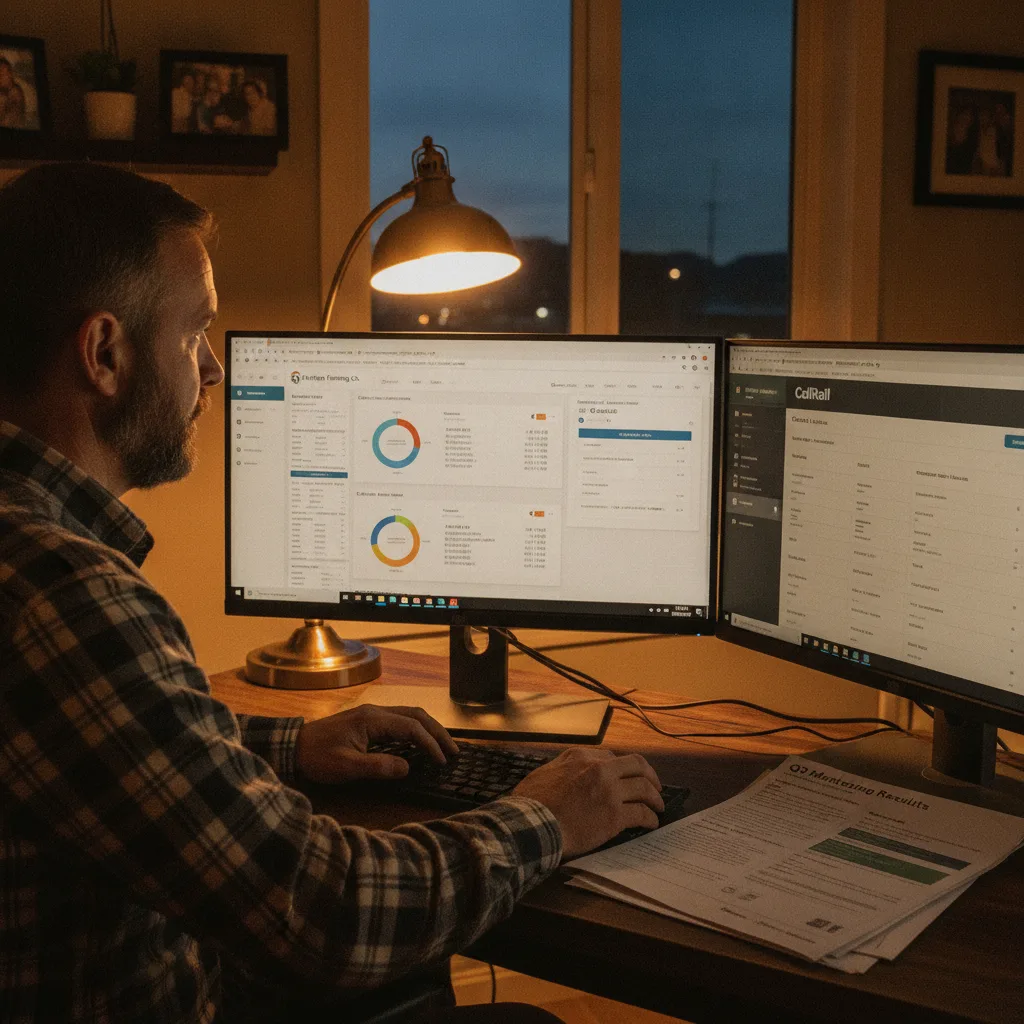
Tie attribution to booked jobs, not form fills. Form fills are a leading indicator; booked jobs are the metric that pays the mortgage. Use CallRail to assign a unique tracking number to your geofencing campaign landing page — every inbound call from that number is attributable to the campaign. For form submissions, tag the UTM source as 'geofencing' and the campaign name as the specific zone or audience. Then cross-reference your CRM's new job log against those tagged leads weekly. The KPI that matters: cost per booked job, not cost per click or cost per form submission. Most fence company geofencing campaigns look underperforming if you measure clicks but look strong when you measure booked revenue.
The ROI math for a $2,000/month geofencing marketing campaign: $2,000 at a $10 CPM delivers 200,000 impressions. At a 0.15% CTR, that is 300 clicks. At a 5% conversion rate from click to lead (form or call), that is 15 leads. At a 20% close rate, that is 3 booked jobs. At a $5,000 average ticket, that is $15,000 in revenue — a 7.5:1 ROAS. At a 30% close rate, realistic for warm inbound leads, the same math produces 4–5 jobs and a marketing ROI above 10:1. Wood fence jobs at $25–$50 per linear foot installed and vinyl at $30–$60 per linear foot mean even a 150-foot install clears the monthly ad spend. Run this model with your own average ticket and close rate before launching; it will tell you exactly how many booked jobs per month justify the budget.
CallRail
$45/month (Essentials plan)
Assigns unique tracking numbers to campaign landing pages so every geofencing-driven inbound call is captured and attributed to the correct zone or audience
Jobber
From $69/month
CRM and job-tracking tool built for field service contractors — log lead source at intake so attribution flows through to booked job revenue, not just pipeline entries
Attribution failure mode
The most common attribution mistake fence companies make: measuring geofencing ROI against form fills instead of booked jobs. A campaign generating 20 form fills that produces 2 booked jobs looks worse than a campaign generating 8 form fills that produces 4 booked jobs. Always pull job revenue data from your CRM before evaluating campaign performance. Form fill volume is a directional signal; booked job revenue is the verdict.
The #1 Reason Geofencing Campaigns Fail for Fence Companies
Geofences drawn under 100 meters in radius are the single most common technical failure in local geofencing campaigns. GPS imprecision causes devices to register as entering and exiting a sub-100-meter boundary even when the user never physically approached the location — you pay for impressions served to pedestrians on the sidewalk outside a competitor's building, not the homeowners inside comparing quotes. Always set a minimum 200-meter radius for urban zones and 500 meters for suburban markets. If your platform defaults to a 'pin drop' circle that is too small, switch to a custom polygon drawn to the building footprint and add a 200-meter buffer manually. Check your fence sizes before the campaign goes live. This one setting determines whether your geofencing marketing budget is working or wasting.
Geofencing marketing is not a branding play for fence companies — it is a precision lead-generation channel with a clear economic case. A $3,000–$12,000 average ticket means you need one to four closed jobs per year to pay for a full year of a $1,500/month starter campaign. Start with five to eight high-intent zones: two or three direct competitor locations, two Home Depot or Lowe's garden center sections, and one to two new-construction neighborhoods in your best zip codes. Use GroundTruth to test with no minimum commitment, or engage a reseller to access Simpli.fi's addressable household targeting for neighborhood-level campaigns. Set your attribution window to 45 days, track to booked jobs in your CRM, and give the campaign 60 days before drawing conclusions. Future trends in geofencing — predictive analytics layered on location data, AI-driven audience segments, and expanding IoT devices and wearables that add new location signals — will only improve targeting precision. The fence companies winning with this channel now are establishing the location based strategy and attribution methodology that will scale as the technology evolves. The businesses that win are not the ones with the biggest budgets; they are the ones who set the geofences at the right size, wrote creative that speaks to the purchase moment, and measured what actually matters.
Frequently Asked Questions
Ready to get started? Contact Geek Powered Studios today.