
For most residential water damage jobs — burst pipe, roof leak, appliance overflow, flooding — a well-marketed independent water damage company wins. Independent operators keep 8–14% more net margin than franchise operators (no royalties, no co-op fees), can perform the full water damage restoration process from water extraction through rebuild, and can outrank SERVPRO in local Google search with strong Google Business Profile signals and consistent review velocity. Franchise restoration companies hold a real structural edge on large commercial property losses where insurance carrier TPA dispatch (Alacrity, Code Blue, Contractor Connection) controls vendor selection. The deciding factor is almost always who the homeowner calls first — and that's a marketing question, not a brand question.
-
8–14%Higher net margin independents keep vs. franchise operators (PushLeads, 2026)
-
6–10% royalties + 2–4% co-opThe franchise fee stack that eats margin on every job
-
$542 avg. / $775 in DallasWater damage lead cost — highest in all home services (ResultCalls, 2026)
-
Independents can outrank SERVPROWith strong GBP signals, review velocity beats brand name in local search
-
70–80% gross marginWater mitigation — the most profitable service line to defend
-
Doubles in severity every 24 hrsWhy fast response time is a structural advantage for local independents
-
Franchises hold 6% of the marketThe brand dominance is an illusion — 62,000 firms are mostly independent
-
Build digital first, add TPA secondThe hybrid playbook for independent operators who want both pipelines
Marketing decides who gets the water damage call — not the brand name on the truck. The US restoration industry is a $7.1 billion market (IBISWorld, 2026) where no single company holds more than 5% market share and the five largest franchise brands account for roughly 6% of all 62,000 US restoration firms. When disaster strikes and water is flowing through a home, the homeowner does not consult a franchise directory — they search Google, check reviews, and contact the first company that looks credible and answers the phone. Franchise water damage companies get TPA dispatch pipelines and national co-op ad spend. Independent water damage restoration companies keep 8–14% more net margin, control their own pricing on Category 1–3 jobs, and can outrank SERVPRO in local Google search. Which model wins depends almost entirely on where the homeowner's call originates — an insurance carrier dispatch system or a Google search at 11 p.m. with standing water on the kitchen floor.
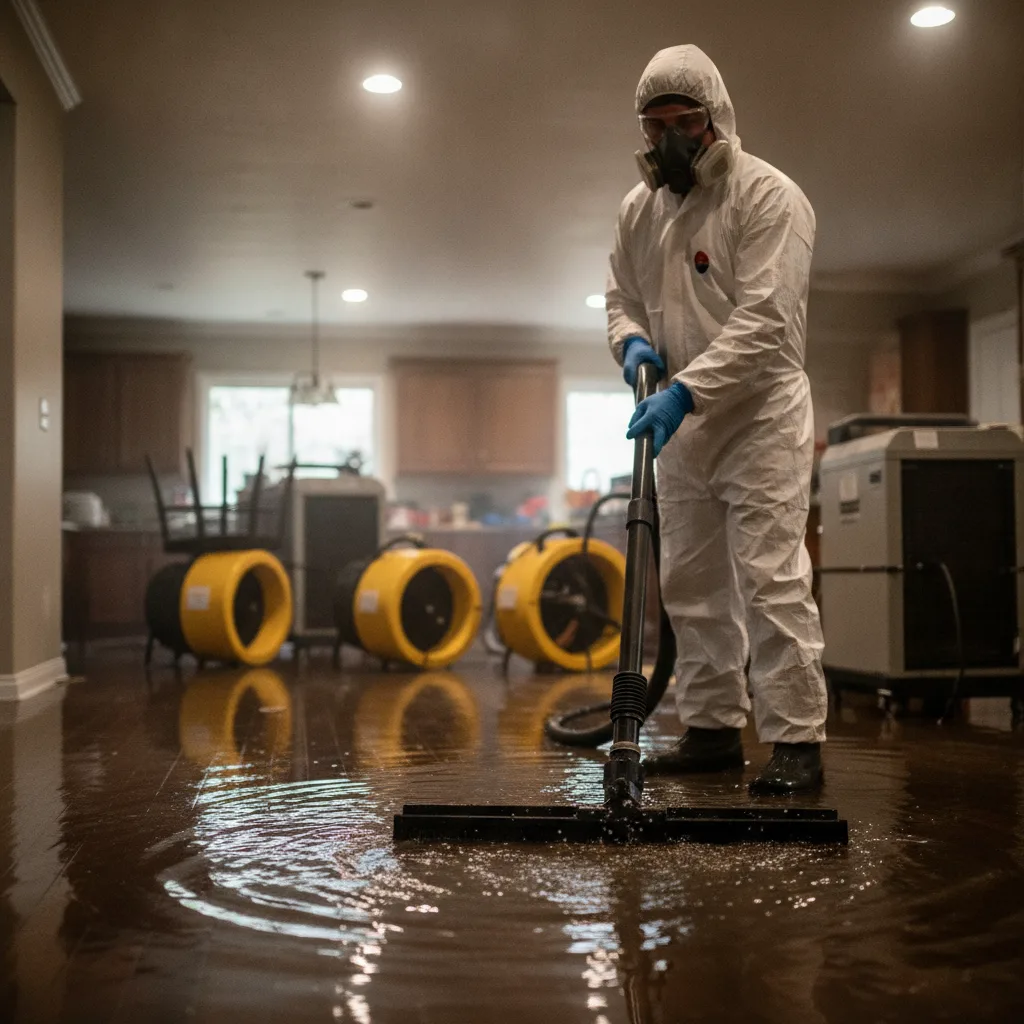
Option A
Franchise Restoration
Brand recognition, TPA referral pipelines, and national co-op ad spend — at the cost of royalties and corporate routing
- TPA dispatch access: preferred-vendor relationships with Alacrity, Code Blue, and Contractor Connection route commercial and insurance-driven jobs directly to franchise locations
- National brand credibility: SERVPRO, ServiceMaster, and PuroClean names reduce perceived risk for property managers on large commercial water losses
- Built-in marketing playbook: co-op ad spend, national SEO infrastructure, and franchise training reduce startup marketing friction — at 2–4% of gross revenue in mandatory fees
- Royalty drag on every dollar: 6–10% royalties plus co-op fees mean franchise operators net 8–14% less than independent operators running the same gross revenue
Option B
Independent Restoration
No royalty drag, full margin on every job, and the local digital signals that win the call before a TPA gets involved
- Full margin retained: no royalty or co-op fee — the same gross revenue on a water mitigation job produces meaningfully more take-home than a franchise operator sees
- Local SEO advantage: a well-optimized Google Business Profile with strong review velocity and local content depth beats franchise location pages in Google's relevance-distance-prominence algorithm
- No TPA scope restrictions: independent restoration companies can perform the full water damage restoration process — from water extraction and structural drying through drywall replacement and mold remediation — under one contract
- Pricing flexibility: no Xactimate rate caps from TPA agreements; independent operators quote Category 1–3 jobs at market rate ($1,200–$25,000+) without insurance fee compression
How the Franchise Restoration Process Works: TPA Dispatch, Co-Op Marketing, and the Brand Machine
Franchise water damage restoration companies generate most of their revenue through two channels: insurance carrier TPA dispatch and consumer brand recognition built through national co-op advertising. When a property manager or homeowner calls their insurance provider after a flooding event, the carrier routes the job through a third-party administrator — Alacrity, Code Blue, or Contractor Connection — which dispatches the nearest preferred vendor. If you're a SERVPRO or ServiceMaster franchisee on that preferred-vendor list, the job comes to you without any marketing spend on your part. That's the franchise model's core value proposition, and it's why franchise locations in high-claim markets can achieve scale quickly.
The TPA contract comes with strict requirements. Franchise operators must maintain a 60-minute on-site response time, 24/7, to hold preferred-vendor status. National call centers handle initial intake, which adds a routing layer before a local crew is ever dispatched. For large commercial property losses — a 40,000 sq ft office building, a multi-unit apartment complex — the brand name and TPA access are prerequisites for even being considered. Operators without that preferred-vendor relationship can be structurally locked out of that job category. The 24 hour emergency services requirement is non-negotiable, and delays of any kind put preferred-vendor status at risk.
The financial reality is tougher. Franchise restoration operators pay 6–10% of gross revenue in royalties plus 2–4% in mandatory co-op fees, producing net margins that run 8–14% lower than what an independent operator keeps on the same job (PushLeads, 2026). Franchise agreements typically run 10–20 years with significant early-termination penalties, and many franchisors assign non-exclusive territories — meaning a SERVPRO franchisee in north Austin may compete directly with another SERVPRO franchisee in south Austin for the same insurance dispatch jobs. The business case depends entirely on claim volume staying high enough to justify that cost structure.
Franchise location pages also struggle in local search. Corporate content teams managing thousands of locations cannot produce the review velocity or locally specific content depth — neighborhood-level flood damage cleanup pages, burst pipe response content for specific zip codes — that Google's local algorithm rewards. Skilled technicians and certified crews do excellent restoration work inside the franchise system, but the marketing infrastructure that serves 2,000-plus locations at scale is structurally unable to match the local depth an independent operator can build in a single market. That content gap is where independent operators consistently take ground, especially as Google AI Overviews now appear above the Map Pack for many local restoration searches.
How Independent Restoration Companies Win: Local SEO, Review Velocity, and Professional Water Damage Response
Independent water damage restoration companies win jobs because the homeowner — not an insurance carrier — makes the call. Water damage doubles in severity roughly every 24 hours as Category 1 clean water from a burst pipe or water supply line degrades to gray water, then to black water contaminated with bacteria and hazardous contaminants. The homeowner facing standing water in their kitchen is not comparing brand names. They're contacting the first restoration company that answers — and in 2026, that means the first result they see on Google. Speed and local visibility are the two factors that determine who gets the call, and independent operators are structurally better positioned on both.
Google's local ranking algorithm weights three factors: relevance, distance, and prominence. A well-run independent restoration company with a fully optimized Google Business Profile, 150-plus total reviews, and 5 or more new reviews per month outperforms a franchise location page on all three signals in its own home market. Review velocity is the second-strongest individual GBP ranking signal in 2026 (Geek Powered Studios internal data). Water damage keywords run $50–$150 per click in competitive markets via Google Ads, but the independent that ranks organically for flood damage cleanup and water extraction in their city captures those same homeowners at near-zero marginal cost per call after 12 months of consistent local SEO investment.
The water damage restoration process itself is a selling point for independents. With no TPA scope restrictions limiting them to extraction and drying only, an independent restoration company can handle the complete job: shutting off the water source, water removal using truck-mounted extraction units, deploying industrial air movers and dehumidifiers for structural drying, closely monitoring moisture levels in all affected areas including walls, ceilings, and insulation, removing damaged materials such as carpet, drywall, and flooring, sanitizing affected surfaces and disinfecting to prevent mold growth, and completing full reconstruction through drywall and flooring replacement. When a homeowner wants one call, one crew, and one invoice back to pre-loss condition — that's the independent's pitch. Franchise operators under TPA contracts sometimes hand off mid-job when the scope shifts from drying to rebuild, creating gaps that frustrate homeowners and generate negative reviews.
The marketing investment required is real. Independent restoration companies in growth mode typically spend 6–10% of gross revenue on SEO, targeted PPC, and review generation — up to 15% in early growth stages. That's higher than the 3–5% franchise operators average. But every dollar is discretionary and trackable. A three-truck independent in a mid-size Texas market running Google Ads through CallRail and managing review velocity through Podium can attribute every inbound call to a specific channel — something co-op ad spend inside a national franchise system can never offer. Additionally, that tracking data helps identify which services, areas, and content types are driving the most high-value calls, allowing a professional team to focus budget where it performs best.
Franchise vs. Independent Restoration: The 8-Dimension Comparison
| Dimension | Franchise Restoration | Independent Restoration |
|---|---|---|
| Lead Source | TPA/preferred-vendor dispatch (Alacrity, Code Blue, Contractor Connection) + national co-op ads | Organic search, Google Business Profile, review velocity, targeted PPC — owned channels |
| Marketing Spend | 3–5% of gross revenue; co-op fees of 2–4% are mandatory and non-negotiable | 6–10% of gross revenue (growth mode: up to 15%); every dollar is discretionary and trackable |
| Net Profit Margin | 8–14% lower net margin than independents due to 6–10% royalties on top of co-op fees (PushLeads, 2026) | Full margin retained; no royalty drag — same gross revenue means meaningfully more take-home |
| Response Time & Speed | 60-min on-site requirement under TPA contract; calls routed through national call centers first | Local owner answers directly; no routing delay — structural speed advantage when water damage doubles in severity every 24 hrs |
| Restoration Process Control | TPA contracts limit scope — may authorize water extraction and drying only, not full reconstruction | No TPA scope restrictions; can perform full water damage restoration process from extraction through rebuild |
| Local SEO & Google Ranking | Franchise location pages are generic; corporate content can't match local depth — vulnerable to independent operators with strong GBP signals | Local relevance, proximity, and review authority beat national brand pages in Google's local algorithm — independents can outrank SERVPRO |
| Restoration Costs & Pricing Flexibility | Pricing partially dictated by Xactimate rates negotiated under TPA agreements; limited flexibility | Full pricing control; can quote Category 1–3 jobs at market rate ($1,200–$25,000+) without TPA fee compression |
| Long-Term Growth Path | 10–20 year franchise agreements; non-exclusive territories mean competing with same-brand neighbors | No contractual ceiling; build equity in a local brand, own the market, and exit on your own terms |
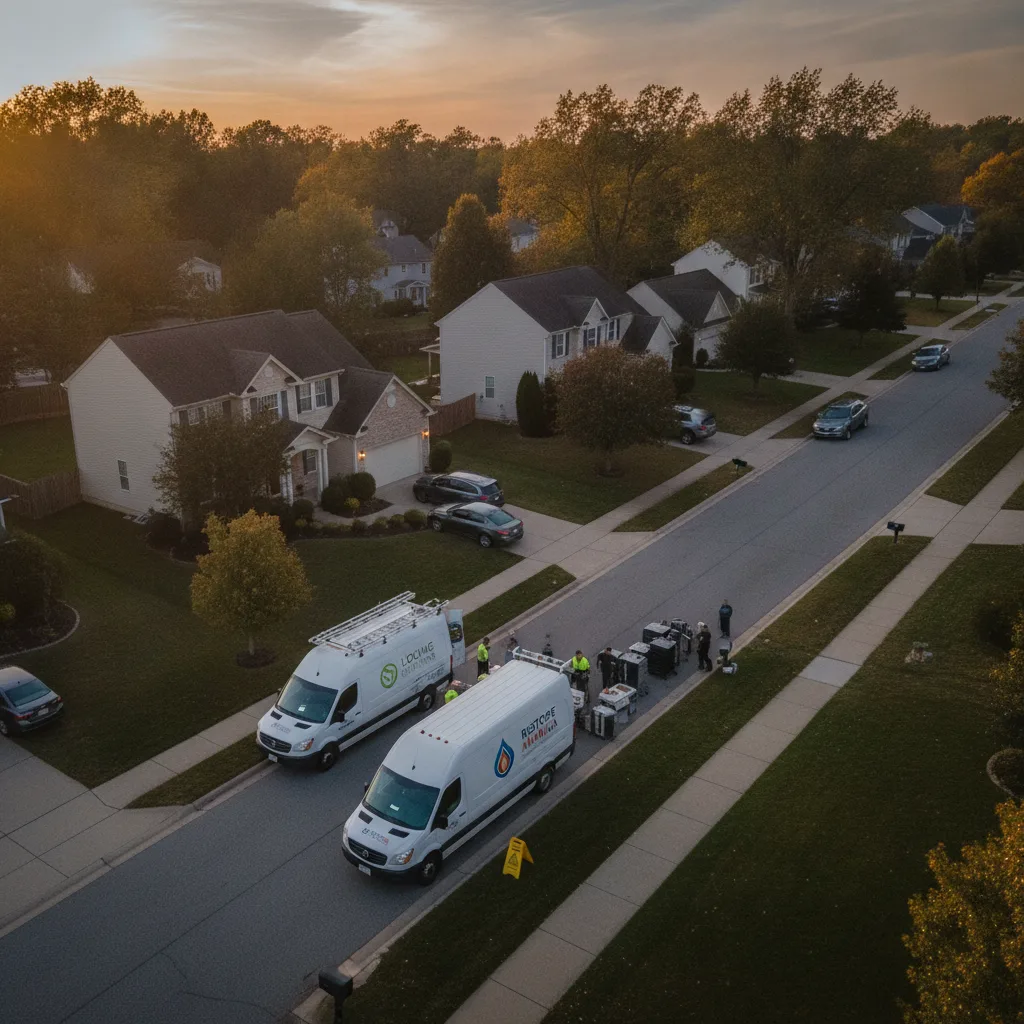
Homeowners Always Have the Right to Choose Their Own Restoration Company
When disaster strikes and an insurance company recommends a preferred vendor, that recommendation is not a requirement. Homeowners can — and regularly do — contact a local independent water damage restoration company instead. TPA-contracted restoration companies sometimes operate under scope restrictions that limit them to water extraction and structural drying, stopping short of full reconstruction when that is exactly what the property needs. A local independent with no TPA scope limitations can handle the full water damage restoration process from water removal through drywall replacement and mold remediation. Make sure your marketing clearly communicates that homeowners have this choice — and that your restoration services cover it end to end.
When the Franchise Model Actually Wins: Insurance Referral Flow and Disaster Strikes at Scale
Franchise restoration companies hold a genuine structural advantage in specific scenarios — primarily large commercial water losses and storm events where an insurance carrier controls vendor selection from the start. If you're evaluating the franchise path, here is where it actually delivers.
- Large commercial property losses and multi-state storm events where a recognized brand and TPA relationships are prerequisites for getting on the job
- Operators who want faster ramp-to-revenue and are willing to trade 8–14% of net margin for a built-in lead pipeline and national brand credibility
- Dense metro markets where TPA dispatch volume is high enough that preferred-vendor access offsets royalty costs — typically areas with high insurance claim frequency
- Restoration company owners who lack the time or appetite to build local digital marketing from scratch and prefer a franchise playbook, even with its constraints
- Businesses that want structured training, certified crews, and a proven operational system in place from day one — without building those resources independently
The franchise model is not a bad business — it's a different risk/reward tradeoff. You're trading margin for a faster, more predictable revenue ramp, and you're betting that TPA referral flow stays strong enough to justify the royalty and co-op fee stack. For large-scale commercial property water restoration and disaster response, that bet often pays off. But understand what you're agreeing to before you sign a 10–20 year franchise agreement.
When Independent Restoration Companies Win: Local Digital Signals, Full Margins, and One Call Does It All
Independent water damage restoration companies win the majority of residential jobs — and they win them on marketing, not on brand name. Here's the profile of an independent that is positioned to take market share from franchise operators.
- Residential water damage jobs — burst pipe, roof leak, flooding, appliance overflow — where homeowner choice drives the call, not insurance dispatch
- Markets where Google AI Overviews and the local Map Pack are dominated by whoever has the strongest Google Business Profile signals and review velocity, not the biggest brand name
- Operators running 2–5 trucks who want to protect their 70–80% gross margin on water mitigation without paying royalties to a franchisor
- Companies willing to invest 6–10% of revenue in SEO, review generation, and targeted PPC to build a lead pipeline that compounds over time instead of renting TPA referrals
- Independent operators ready to pursue IICRC restoration certification and TPA access as a second pipeline — not a first dependency
Water damage mitigation produces 70–80% gross margins and was named the most profitable service line by 52% of respondents in the 2026 Cleanfax Restoration Benchmarking Survey. Protecting that margin from royalty drag while building an owned digital lead pipeline is the fundamental case for staying independent — and investing in the marketing that makes the phone ring.
The Independent Operator's Hybrid Playbook: Build Owned Digital Channels, Then Layer In TPA Access
Independent water damage restoration companies do not have to choose between TPA relationships and local SEO. The strongest operators pursue both on parallel tracks. Getting listed with Alacrity or Contractor Connection requires IICRC certification, proof of insurance, and documented fast response time — none of which conflicts with running a parallel digital marketing investment. While the TPA application works through underwriting, the SEO and review-generation work compounds independently: Google Business Profile optimization, consistent review velocity of five or more new reviews per month, and deep local content targeting flood damage cleanup, mold remediation, and burst pipe response in specific neighborhoods. The key is to start building digital resources early — well before the TPA relationship is finalized — so the two pipelines develop on parallel tracks rather than in sequence.
A three-truck independent in Austin that lands even partial TPA access while simultaneously ranking on page one for 'water damage company' in their market is operating with two lead pipelines instead of one. The organic pipeline costs nothing per call after the initial investment and compounds each month. The TPA pipeline fills capacity during storm surges. Neither channel requires paying a franchisor 6–10% of gross revenue. That is the blueprint: build the digital foundation first, then layer in insurance carrier relationships as the company's restoration certification, response capacity, and review authority grow. Customers benefit too — they get a certified, well-reviewed local team that can handle everything from water cleanup through full rebuild, with no scope hand-off and minimal downtime.
Which Model Fits Your Stage: Three Water Damage Scenarios

Best for Franchises
Disaster Strikes a Commercial Property: When the Franchise TPA Pipeline Pays Off
A Category 3 black water loss hits a 40,000 sq ft commercial property on a Friday night. The property manager contacts their insurance carrier immediately, and the carrier dispatches through Contractor Connection. That is the franchise model at its best: TPA access gets the crew on-site within 60 minutes, the brand name reduces the property manager's perceived risk, and Xactimate billing keeps the claims process moving without negotiation. For large commercial water damage events where the insurance company controls vendor selection, franchise operators with preferred-vendor status have a structural advantage that marketing alone cannot replicate.
The calculus shifts the moment a homeowner picks up their phone to search rather than call their insurer first. As of 2026, water damage doubles in severity roughly every 24 hours as Category 1 clean water from a burst pipe degrades to gray water, then to black water contaminated with bacteria and hazardous contaminants. The homeowner facing standing water in their kitchen at 11 p.m. is not thinking about brand recognition — they're calling the first restoration company that answers. That is the opening independent operators with strong local SEO and 24/7 direct phone access are built to win.
Best of Both Worlds
The Independent Operator's Hybrid Playbook: Pursue TPA Access While Building Owned Digital Channels
Independent water damage restoration companies do not have to choose between TPA relationships and local SEO. The strongest operators pursue both on parallel tracks. Getting listed with Alacrity or Contractor Connection takes IICRC certification, proof of insurance, and a track record of fast response time. While that application process runs, the digital marketing work compounds independently: Google Business Profile optimization, consistent review velocity (5-plus new reviews per month), and deep local content targeting flood damage cleanup, mold remediation, and burst pipe response in specific neighborhoods. Skilled technicians and a knowledgeable team are assumed — the differentiator is who the homeowner finds first.
A three-truck independent in Austin that lands even partial TPA access while simultaneously ranking on page one for 'water damage company' in their city is operating with two lead pipelines instead of one. The organic pipeline costs nothing per call after the initial investment and compounds each month. The TPA pipeline fills capacity during storm surges. Neither channel requires paying a franchisor 6–10% of gross revenue for the privilege. That is the blueprint: build the digital foundation first, then layer in insurance carrier relationships as the company's restoration certification, response capacity, and review authority grow. Customers get a professional team ready to handle the full scope — extraction, drying, rebuild — with empathy and expertise from start to finish.
Best for Independents
One Burst Pipe, One Google Search: Why Professional Water Damage Response Wins When Marketing Decides the Call
A family wakes up to water flowing from under the kitchen sink. They shut off the water supply, grab their phone, and type 'water damage company near me.' What they see first in 2026 is a Google AI Overview citing local restoration companies with strong review authority — often above the Map Pack. The franchise location page, managed by a corporate content team across 2,000-plus locations, rarely has the review velocity or local content depth to win that moment. A well-positioned independent with 150-plus Google reviews, a fully optimized Google Business Profile, and a fast-response landing page targeting their specific city wins the call before the homeowner ever considers calling their insurance provider.
This is where the independent's marketing investment pays back at a multiplier. Water damage keywords run $50–$150 per click in competitive markets via Google Ads, with average lead costs of $542 nationally and $775 in markets like Dallas (ResultCalls, 2026). But the independent that ranks organically for flood damage cleanup, water extraction, and mold growth prevention in their home market is capturing those same homeowners for near-zero marginal cost per call. After 12 months of consistent local SEO investment, the rankings hold, reviews stack, and the lead pipeline produces calls that require no co-op fee, no royalty, and no TPA middleman. That is the water restoration business model that independents — and the marketing agencies that actually understand this industry — are built to run.
The restoration industry is a $7.1 billion market where no single company holds more than 5% market share (IBISWorld, 2026). That means the franchise brand recognition that looks dominant on a TV commercial is paper-thin at the local Google search level. Independent water damage restoration companies that invest in review velocity, Google Business Profile authority, and deep local content can outrank SERVPRO in their home market. We have seen it happen for clients — where consistent local SEO investment produced 150-plus first-page keywords and a 300% increase in organic leads over 12 months. The difference is not budget. It's focus, consistency, and the expertise to understand how local search actually works for restoration services.
If your restoration company is doing $2M or more and still relying on referrals and insurance dispatch as your primary lead sources, your digital foundation is the gap. We include a custom website (an $8K–$15K build) with every retainer, and there are no long-term contracts. We prove value month after month. Book your free strategy session and let's map out what a local SEO and PPC system built specifically for your restoration market looks like — one that fills your schedule with jobs that require no co-op fee, no royalty, and no franchisor approval.
Frequently Asked Questions
Ready to get started? Contact Geek Powered Studios today.