
A complete HVAC SEO services package covers five areas: technical SEO (site speed, mobile performance, crawlability), on-page SEO (service pages, title tags, meta descriptions), local SEO (Google Business Profile optimization, citations, reviews), content marketing (location pages, blog posts), and link building. Any proposal missing one of these is incomplete. Map Pack improvements typically appear in 30–90 days; competitive organic rankings for terms like "AC repair [city]" take 6–12 months from a cold start. Organic leads generated by HVAC SEO cost $10–$30 each — versus $100–$230 for non-branded Google Ads in the same market, per Astra Results June 2026 benchmark data. The median SEO ROI across roughly 1,000 home-service companies is 27.46x, versus Google Ads at 4.4x ROAS.
-
5 Pillars RequiredAny package missing one is an incomplete service
-
30–90 DaysTypical window for Map Pack improvements to appear
-
6–12 MonthsRealistic timeline for competitive organic rankings from a cold start
-
$10–$30 Per LeadOrganic SEO cost per lead after the investment period matures
-
27.46x Median SEO ROIAcross ~1,000 home-service companies, Q4 2025 PipelineOn data
-
Don't Quit at Month 5–6That's when compounding starts — most campaigns fail here
-
Two Distinct Search GamesMap Pack and organic require separate strategies and tracking
-
48% Gap in AI VisibilityGoogle rankings alone don't guarantee ChatGPT or AI Overview placement
HVAC SEO services are not a single product — they are five distinct work streams that have to run in parallel, on a timeline that most contractors underestimate, to produce the compounding lead volume that makes the investment worthwhile. This walkthrough covers exactly what happens during a quality HVAC SEO engagement: what the agency does in each phase, what you should expect to see and when, and what a red flag looks like at every stage. The goal is not to sell you on the idea of SEO. It is to give you the information you need to evaluate whether what you are buying — or considering buying — is the real thing.
What to Have Ready Before Your Kickoff Call
- Gather your website login credentials and Google Business Profile access — the SEO team needs both on day one to begin the audit.
- Pull your last 90 days of Google Analytics 4 data so the audit has a real baseline, not a blank slate.
- List every service you offer and every city or suburb you actively serve — this drives page architecture and determines how many service-area pages need to be built.
- Document where your leads currently come from: referrals, Google Ads, local service ads, organic, or word of mouth. This shapes how aggressively the SEO strategy needs to compensate.
- Know your average job value and close rate. A single AC replacement or system installation at $8,000–$15,000 changes the ROI math completely compared to a $200 tune-up.
- Be honest about your review count and velocity. Fewer than 50 Google reviews, or no new review in 60 days, is the first problem local SEO work will address.
- Set a realistic internal timeline expectation: Map Pack improvements can appear in 30–90 days, but competitive organic rankings for terms like 'AC repair [city]' take 6–12 months from a cold start.
Week 1–2
Discovery, Audit, and SEO Strategy: What Happens Before Any Work Goes Live
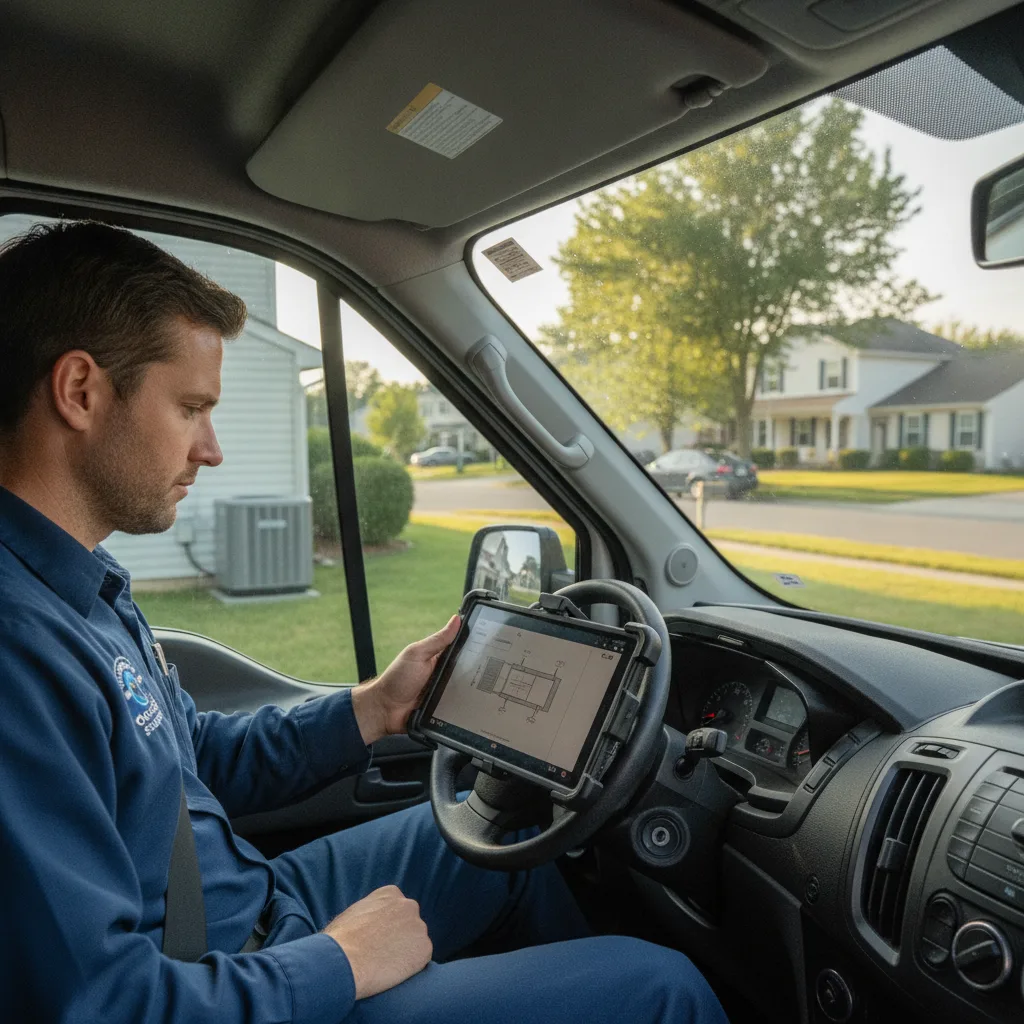
A serious HVAC SEO engagement starts with a full technical and competitive audit before a single page is written or a single keyword is targeted. The agency connects to your Google Analytics 4, Google Search Console, and Google Business Profile, then runs a crawl of your existing site to identify what is broken, what is missing, and what is already working. This is a diagnostic, not a sales presentation. The output is a prioritized list of technical fixes, content gaps, and local SEO deficiencies with a clear sequence for addressing them.
Keyword research and competitor analysis run simultaneously. The goal is mapping every HVAC service you offer to every city or suburb in your service area, then identifying which competitors own those combinations today and why. For an HVAC business doing AC repair, furnace installation, heat pump service, ductwork, and indoor air quality across eight cities, that is 40 distinct service-plus-city combinations — each of which eventually needs its own dedicated page. The audit determines which of those 40 are highest priority based on search volume, competition, and your current ranking gaps. Relevant keywords get matched to pages that do not yet exist; existing pages get evaluated for on-page SEO gaps.
The strategy document that comes out of this phase is the campaign blueprint. It lists the first 90 days of deliverables, the page-build sequence, the Google Business Profile optimization checklist, and the KPIs the campaign will be measured against. If an HVAC SEO company hands you a strategy doc that lists 'keyword rankings' as the primary KPI, that is a red flag. Rankings tied to actual phone calls and booked jobs are the right measure — tools like CallRail and LocalFalcon make that attribution possible from day one.
What to bring to your kickoff call
Have your GBP login, your website CMS credentials, a full service list with the cities you serve, and your best estimate of monthly lead volume by source. The more specific you are, the faster the audit moves and the more accurate the 90-day plan.
Weeks 2–4
Technical SEO: Fixing What Search Engine Spiders and Mobile Users See First
Technical SEO for an HVAC website addresses three things that must work before any content or link work matters: site speed, mobile performance, and crawlability. The majority of emergency and same-day HVAC service searches happen on a mobile device — someone whose AC stopped working at 9 PM is not browsing on a desktop. If your site loads slowly on a phone or buries the phone number behind two taps, you are losing those calls to a competitor whose site answers the question in three seconds.
On the crawlability side, the agency sets up or audits your XML sitemap, checks for broken internal links and duplicate pages, and confirms that search engine spiders can reach every service page you want ranked. Schema markup — the code that feeds Google AI Overviews and rich snippets in search results — also gets added in this phase for LocalBusiness, Service, and FAQPage entities. As of 2026, AI Overviews appear for roughly 30% of HVAC queries, so FAQPage markup is no longer optional if you want to show up in that real estate above the Map Pack.
Core Web Vitals are the specific speed and user experience metrics Google uses to evaluate page quality. The agency should give you a before-and-after score for each metric, not just a vague assurance that your HVAC website is 'optimized.' One HVAC contractor case tracked by Paradigm Media Networks went from page three to Map Pack top-three in 68 days after full technical and GBP work — profile views up 312%, direct GBP calls up 187%. The technical foundation is what allowed everything else to compound.
Months 1–3
On-Page SEO and Content Marketing: Building the Page Architecture That Ranks
On-page SEO for HVAC companies means every service in every city gets its own dedicated page — not a generic Services page with a city list bolted to the footer. Each page carries its own H1, title tag, meta description, and body copy targeting a specific service-plus-location combination. This page architecture is what allows search engines to match your page to a hyper-specific query like 'furnace installation Round Rock TX' rather than giving you vague credit for a catch-all page. A well-structured HVAC website serving five services across eight cities needs 40 pages built to this spec, not five. Each page needs unique copy; duplicate content across service-area pages suppresses rankings rather than helping them.
New pages roll out in monthly batches — typically two to four per month for a standard HVAC SEO retainer. Priority goes to your highest-revenue services in your most competitive cities first, then out to the suburbs and secondary service types. Location pages targeting smaller suburbs can rank in 60–120 days because competition is thinner; the high-volume city center terms take longer. Seasonal content timing is a measurable competitive advantage: Google needs four to twelve weeks to index and rank a new page for competitive queries, which means your summer AC content should publish in March and your winter heating and cooling content in August — not when the season hits.
Content marketing beyond service pages includes educational blog posts that build topical authority and answer the questions homeowners type before they are ready to call. Posts on topics like 'how long does an AC unit last' or 'why is my furnace short cycling' attract prospective customers early in the sales funnel, build trust and credibility, and generate internal links to your money pages. These posts are also the asset base that answer engines like ChatGPT and Perplexity pull from when a user asks for HVAC recommendations. As of 2026, only 48% of Google's top-ranked HVAC companies appeared in ChatGPT's recommendations when tested across 10 US cities — meaning strong search rankings alone do not produce AI search visibility. Answer engine optimization and citation-worthy content close that gap.
Red flag to watch for
If your HVAC SEO agency is publishing one blog post per month and calling it a content strategy, that is not enough. A serious campaign needs new service or location pages built monthly — and each page should target a specific service-plus-city combination with its own unique copy, not templated filler.
Months 1–2 (ongoing)
Local SEO and Google Business Profile Optimization: Winning the Map Pack
HVAC SEO in 2026 is two distinct games: the local Map Pack and organic search results. Most HVAC contractors lose because they only play one. The Map Pack captures 42–44% of all clicks on local HVAC searches and appears on over 93% of queries like 'AC repair near me.' Map Pack position one earns roughly a 32% click-through rate, position two earns 22%, and position three earns 15% — which means that first slot is often worth more than the top organic blue link on the same page. Google Business Profile signals account for 32% of local pack ranking weight, and review signals account for 16%, so together they decide nearly half of where you appear.
Google Business Profile optimization in a quality HVAC SEO retainer covers the basics — accurate NAP (name, address, phone number), primary and secondary category selection, service area configuration, and photo uploads — but also the ongoing activity that Google reads as signals of an active, relevant business: weekly posts, Q&A responses, and consistent photo additions. Fully optimized Google Business Profiles appear 70% more often in local pack results than incomplete ones, and businesses with 100 or more GBP photos receive 520% more calls on average. Those are not vanity metrics; they are the inputs that move Map Pack position and online visibility.
Review velocity matters more than review volume. Contractors with 15–20 new reviews per month consistently outrank competitors with 200 reviews accumulated in a single push. The minimum threshold for competitive Map Pack visibility is around 50 Google reviews; 75 or more is where ranking consistency improves. A good HVAC SEO company builds review generation into the monthly workflow — a follow-up sequence through your CRM or a tool like Podium — not as a one-time campaign. Citation cleanup (consistent NAP across Yelp, Angi, BBB, and industry directories) runs alongside GBP work and prevents conflicting signals that suppress local search optimization results.
Months 2–6 (ongoing)
Link Building and AI SEO: The Two Layers Most HVAC SEO Agencies Skip
Link signals carry approximately 11–15% of total local ranking weight, and for HVAC contractors the most effective backlinks are hyperlocal — not generic directories. A single link from a city's local news site on a 'best HVAC contractors in [city]' article outperforms 50 generic directory submissions. The most effective link sources for local HVAC companies are chamber of commerce listings, local news roundups, supply house partner pages, and community sponsorships. HVAC SEO specialists prospecting links for you should be identifying these local opportunities each month, not just submitting to the same national directories every agency uses. The deliverable is a monthly link prospecting report showing what links were acquired, where they came from, and what domain authority they carry.
AI SEO — also called answer engine optimization — is the layer that separates 2026-ready HVAC SEO services from what most agencies were still selling two years ago. AI Overviews now appear above the Map Pack for roughly 30% of HVAC queries, and earning placement there requires a different approach than classic search engine optimization: schema-marked FAQ pages, citation-worthy content structured so AI engines can extract and attribute specific answers, and brand mentions across third-party sites that build entity authority. This is not a future-state concern. If you are not building for AI search visibility now, the HVAC company down the street that is will own that real estate by the time Google expands AI Overviews further.
The reporting for link building and AI SEO should be just as concrete as reporting for rankings and GBP calls. Your monthly report should document which links were acquired, what their sources are, and whether your company is now appearing in ChatGPT or Perplexity responses for target queries in your market. This is work your HVAC SEO company owns entirely — but you should be able to verify it in your reporting, not just take their word for it. HVAC webmasters and digital marketing companies that cannot show this work in writing are billing for activity, not results.
Months 3–6
Months 3–6: When the Numbers Start Moving and What to Expect
At the three-month mark, you should see website traffic trending up, keyword rankings moving on your location and suburb pages, and your GBP call volume increasing month over month. What you should not expect at month three is a flood of organic leads from your most competitive primary city terms — those come later. Map Pack improvements from Google Business Profile optimization typically appear within that 30–90 day window; organic rankings for competitive HVAC keywords like 'AC repair [city]' take longer. The month-three report is a progress report, not a proof-of-concept.
The most common failure point in an HVAC SEO campaign is quitting at month five or six — right before results start compounding. This is when the page authority built over the previous months starts to accelerate search rankings, when Google's trust in the domain strengthens, and when the content published in month one starts earning the backlinks and citations that push it onto page one. HVAC companies that stay the course consistently outperform competitors in lead volume and cost per lead over a 12–24 month horizon. Organic SEO leads run $10–$30 each after the initial investment period, versus $100–$230 per lead for non-branded Google Ads in the same market, per Astra Results June 2026 benchmark data.
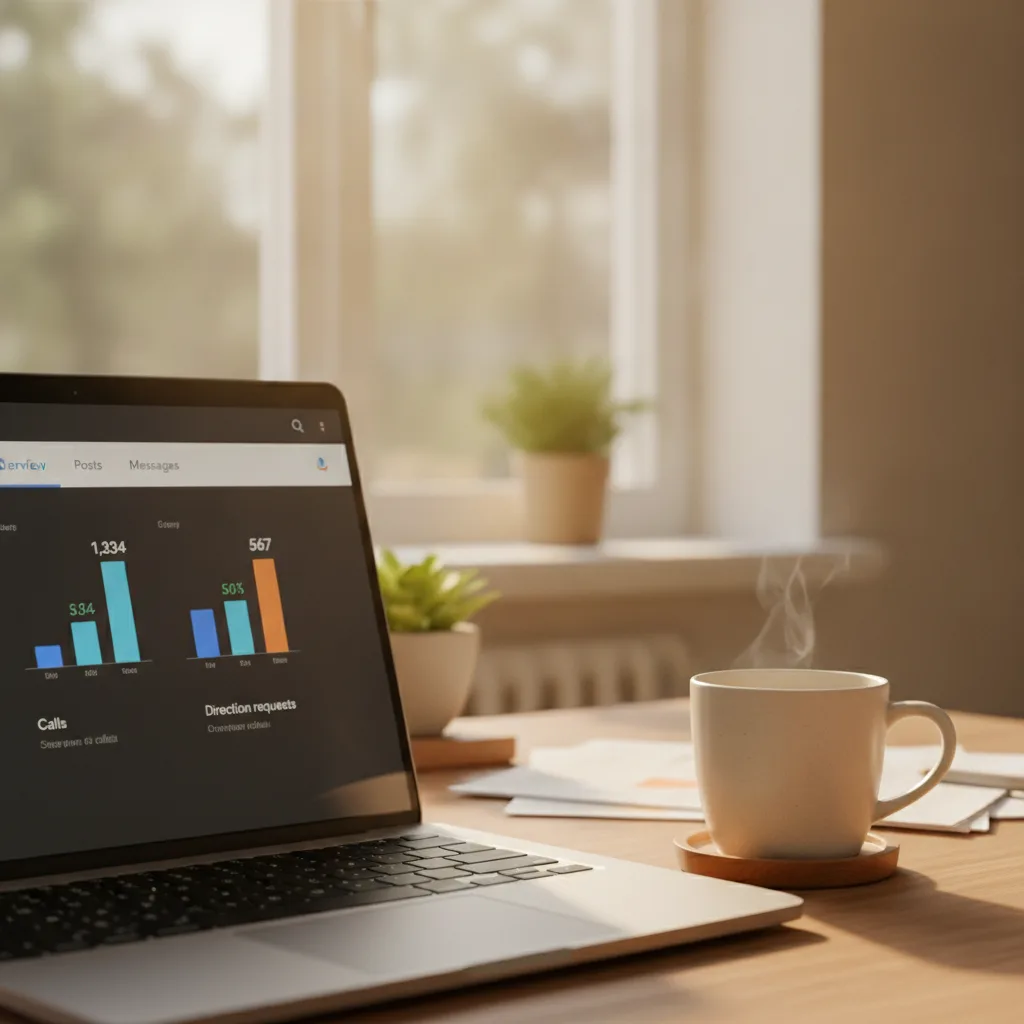
Monthly reporting at this stage should cover four things: keyword rankings tied to qualified leads (not just impressions), Google Business Profile call and direction request volume, organic website traffic growth, and cost per booked job. If your monthly report shows ranking positions but cannot connect them to phone calls, the HVAC SEO agency is measuring the wrong things. Google Analytics 4, Google Search Console, CallRail for call attribution, and LocalFalcon for Map Pack rank tracking at the zip-code level are what serious HVAC SEO experts use to close that attribution loop.
Months 6–12+
Month 6–12 and Beyond: What Full Compounding Looks Like for HVAC Companies
At month six, an HVAC SEO campaign built on all five pillars — technical SEO, on-page SEO, local SEO, content marketing, and link building — starts producing compounding returns. First-page keywords are accumulating across your service-area pages, your GBP is generating consistent call volume, and the gap between your organic lead cost and your Google Ads cost per lead is widening in your favor. Organic search generates 42% of all HVAC lead volume and converts to paying jobs at a 50% close rate — five percentage points higher than paid channels, according to 2026 benchmark data from Web Tonic. That conversion rate advantage adds up fast when you are running three or more trucks.
Stan's Heating, Air, Plumbing & Electrical is the clearest proof of what full compounding produces. A client of Geek Powered Studios since 2011, Stan's grew to 150-plus first-page keywords and a 300% increase in organic leads — not by running a one-time campaign, but by staying in the game long enough for the SEO infrastructure to compound. They became a household name in their market because organic search visibility creates brand familiarity that paid advertising alone cannot replicate. The median SEO ROI for HVAC contractors across roughly 1,000 home-service companies (Q4 2025 PipelineOn data) is 27.46x — versus Google Ads at 4.4x ROAS. Top performers in that dataset exceeded 60x.
What keeps the results growing at this stage is continuous work: new service pages added as you expand your service area, seasonal content published ahead of demand rather than reactively, GBP posts and photo updates maintained weekly, and a link prospecting program that keeps building local authority. An HVAC SEO campaign does not go on autopilot at month 12 — it shifts from building the foundation to defending and extending it. The best HVAC SEO company for your business is the one that treats month 13 with the same rigor as month one.
The compounding math
After month 12, organic leads at $10–$30 each versus Google Ads leads at $100–$230 each means every 100 booked jobs sourced from organic is saving you $7,000–$20,000 in acquisition cost compared to running on paid alone. That is the ROI math that justifies the 6–12 month buildup period.

Most HVAC Companies Are Playing Only One of Two Search Games — and Losing the Other
The Map Pack and organic search results are scored by different signals and require different work. GBP optimization, review velocity, and citation consistency drive Map Pack performance. Dedicated service pages, authoritative backlinks, and a content architecture built for both Google and AI search engines drive organic rankings. An HVAC SEO package that only addresses one of these is an incomplete service — full stop. Before signing with any HVAC SEO company, ask specifically what deliverables cover each game, and ask how they are tracked separately in monthly reporting.
Stan's Heating, Air, Plumbing & Electrical did not become a household name by running one campaign — they built 150-plus first-page keywords and a 300% increase in organic leads by staying in the game through a strategy that covered all five pillars, month after month. That is the standard a quality HVAC SEO engagement should be held to: not vanity metrics, but qualified leads, booked jobs, and a cost per lead that keeps dropping as the investment compounds. At Geek Powered Studios, every HVAC SEO retainer includes a free custom website (an $8,000–$15,000 build) and market exclusivity in your city — one HVAC client per metro, so we are never working against you. No long-term contracts either: we prove our value month after month, or you are not locked in. Book a free strategy session and we will show you exactly where you stand and what a full five-pillar HVAC SEO campaign looks like applied to your market.
Frequently Asked Questions
Ready to get started? Contact Geek Powered Studios today.