
The two-channel spring strategy for fencing contractors pairs geofencing advertising (January–February, $850–$2,400/month at $6–$15 CPM) with a seasonally scaled Google Search campaign (peaking at $7,000–$7,500/month in April) to match ad spend to a demand curve that runs 3x higher in spring than winter. Start by mapping your demand curve, building a negative keyword list to eliminate the 20–40% of fencing ad spend lost to sport-and-DIY queries, structuring campaigns by intent stage, launching geofencing campaigns in January to warm your target audience before search peaks, pre-loading Google Ads budget by mid-February, and tracking blended cost-per-lead across both channels quarterly. The full setup takes 3–4 hours; ongoing optimization is a 30-minute monthly review.
-
3xSpring vs. winter fencing search volume — the core reason flat budgets fail
-
20–40%Ad spend lost to irrelevant clicks without a negative keyword list
-
$6–$15 CPMGeofencing advertising cost vs. $8–$25 CPC on Google Search
-
Feb 15Fixed date to pre-load Google Ads budget before the spring auction floods
-
29%CPL reduction from lifting landing page conversion rate from 5% to 7%
-
$1,500–$2,000/moWinter floor budget that keeps Smart Bidding calibrated through off-season
-
28xReturn on ad spend at $7K average job value and $50 blended CPL
Fencing search demand in Texas peaks at 3x its winter volume between March and June — but the average fencing contractor runs a flat monthly Google Ads budget all year, which means they're implicitly paying 3x more per lead in December than in May. The fix isn't more budget. It's a two-channel digital marketing strategy that pairs geofencing advertising (a location-based advertising layer running January through February at $6–$15 CPM) with a seasonally scaled Google Search campaign (peaking at $7,000–$7,500/month in April) so your spend curve matches your market's actual buying curve. This guide walks through the 7-step process for building that strategy — from plotting your demand curve to measuring blended cost-per-lead across both channels. Total setup time: 3–4 hours. Total annual spend stays the same. Total leads go up.
Before you start
- Active Google Ads account with at least 90 days of conversion data — Smart Bidding requires a minimum of 50 conversions to be reliable, so check this before touching bid strategy settings.
- Google Analytics 4 property linked to Google Ads, with form-submit and phone call conversion actions firing correctly — if GA4 is not linked, you have no landing page conversion rate data to act on.
- CallRail account (or equivalent call-tracking platform) with dynamic number insertion active on all landing pages — fencing leads skew heavily toward phone calls, and tracking only form fills understates true lead volume by 30–50%.
- Minimum monthly ad budget of $3,000 for competitive Texas metros (Dallas, Houston, San Antonio, Austin) or $750–$1,500 for smaller markets — budgets below $750/month generate too few clicks to produce meaningful conversion data.
- At least one dedicated service landing page per fence type (wood privacy, chain link, vinyl, ornamental iron) — generic service pages cut conversion rates by 50% or more compared to intent-matched pages.
- Access to a geofencing platform such as GetGeofencing, GroundTruth, or Simpli.fi to execute the location-based advertising layer — each platform has different minimum spends and reporting capabilities, covered in Step 4.
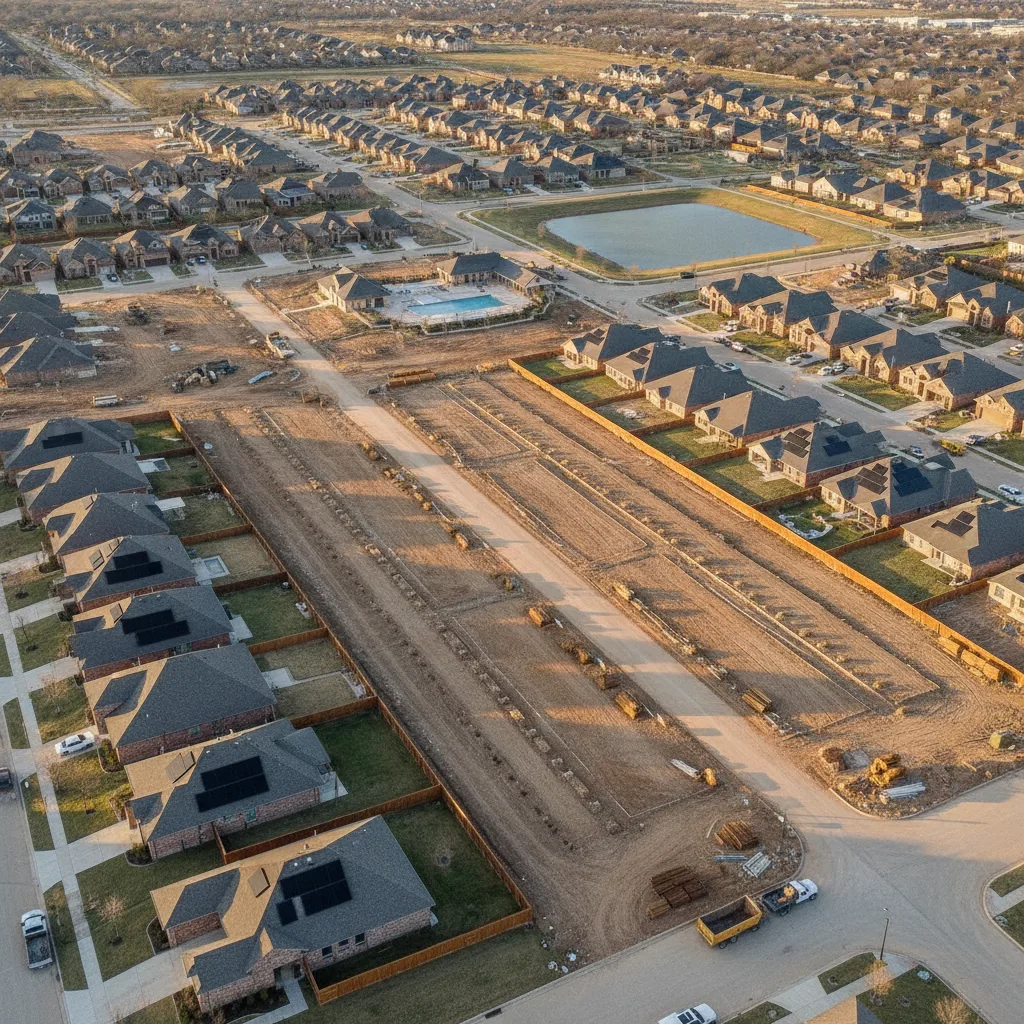
Map Your 12-Month Demand Curve Before Touching a Single Bid
Fencing search demand in Texas runs 3x higher in spring than in winter, which means a flat monthly budget implicitly pays 3x more per lead in December than in May. Pull your Google Ads Search Terms report filtered to the last two full years, export monthly impression share and average CPC by month, and plot the curve. If you have fewer than 12 months of data, supplement with Google Trends for the query 'fence installation [your city]' — the March–June spike is consistent across every Texas city we've tracked. Stop guessing at seasonality when first-party data is sitting in your account.
Mark four zones on that curve: Warm-Up (January–February), Peak (March–June), Shoulder (July–September), and Off-Peak (October–December). Each zone needs a different budget multiplier and a different bidding posture. A contractor spending $4,000/month flat across all 12 months burns $48,000 per year; reallocating the same $48,000 on a seasonal curve — $2,000 in Off-Peak, $4,500 in Warm-Up, $7,000 in Peak, $3,500 in Shoulder — produces more leads at a lower blended cost per lead without increasing total annual spend. The key takeaways from this mapping exercise set the foundation for every step that follows.
Document your current average CPL and close rate before making any changes. The fencing benchmark CPL on Google Search is $40–$60 in efficient campaigns and $75–$250 in competitive Texas markets with poor campaign hygiene. At a $7,000 average project value and a 20% close rate, a $50 CPL costs $250 per closed job and delivers a 28x return on ad spend. That math only holds when the demand curve and the budget curve move together — and only when your conversion tracking is capturing the full picture, including phone calls.
Google Ads Search Terms Report
Free (inside Google Ads)
The only first-party source that shows exactly what queries triggered your ads and what each click cost — essential for plotting your real demand curve rather than guessing from industry averages.
Google Trends
Free
Fills the gap when your own account lacks 24 months of data; confirms the March–June seasonality pattern in your specific Texas DMA before you commit to a budget reallocation.
CallRail
From $45/mo
Attributes phone calls to the exact keyword and campaign so your CPL calculation includes calls, not just form fills — fencing leads skew heavily toward phone, so tracking only forms understates true volume.
Critical distinction
Google's native seasonality bid adjustments are designed for 1–7 day events — a holiday sale, a single trade show. They are explicitly not recommended for periods longer than 14 days. The March–June fencing surge lasts 16+ weeks. Use budget scaling and adjusted tROAS/tCPA targets to handle multi-month peaks, not the seasonality adjustment tool.
Build the Negative Keyword List That Stops Hemorrhaging Budget
Without a proper negative keyword list, 20–40% of fencing ad spend goes to clicks that will never become leads. The word 'fencing' triggers ads for fencing as a sport, fencing swords, fencing lessons, fencing foils, and competitive fencing tournaments — none of which carry any purchase intent for residential fence installation. Add these terms to a shared negative keyword list and apply it to every campaign in the account before your next billing cycle. Wasted spend at $15 average CPC means 20 irrelevant clicks drain $300 before a single appointment is booked — and that wasted spend compounds daily. This is one of those fundamentals that marketers and advertisers in home services routinely skip, and it's the most expensive skip in the account.
Start with this core negative list: 'fencing sport,' 'fencing sword,' 'fencing lessons,' 'fencing foil,' 'fencing mask,' 'fencing class,' 'DIY fence,' 'fence paint,' 'fence stain,' 'fence repair kit,' 'fence panels Home Depot,' 'fence pickets Lowe's,' 'how to build a fence,' 'fence post concrete,' and 'temporary fence rental.' Also add broad negatives for 'electric fence' and 'invisible fence' unless you explicitly offer those services. Review the Search Terms report weekly for the first 30 days after launch and add new irrelevant queries as they surface — different messages and different intent signals show up as the campaign scales.
In a $5,000/month Google Ads campaign, 30% wasted spend equals $1,500/month — $18,000/year that could fund six additional months of geofencing marketing campaigns or a full landing page redesign. The negative keyword list is the single highest-ROI action in any fencing PPC account and takes under two hours to configure correctly. Prioritize quality of traffic over raw click volume: the goal is leads, not impressions.
Match type note
Apply sport-and-hobby negatives as broad match negatives so Google catches variants like 'fencing club near me' or 'adult fencing lessons.' Apply DIY and supply terms as phrase match negatives to avoid blocking legitimate queries like 'privacy fence installation quote' that happen to contain the word 'panels.'
Structure Campaigns by Intent Stage, Not by Fence Type
Most fencing contractors run one campaign with one ad group and call it done. The right structure is three distinct campaigns with separate budgets and bid strategies: a Quote-Stage campaign (high-intent: 'fence installation quote [city],' 'fence company near me,' 'privacy fence cost'), a Research-Stage campaign (mid-funnel: 'wood fence vs vinyl fence,' 'how much does a fence cost,' 'best fence for dogs'), and a Commercial/HOA campaign for higher-ticket B2B queries. Each campaign targets a different segment of your potential customers and requires its own optimization logic — you can't set a single tCPA that works across all three intent levels without overspending on research clicks and underbidding on quote-ready ones.
The Quote-Stage campaign gets roughly 65% of the budget — those searchers are ready to book. Set it to Maximize Conversions with a target CPA once you have 30+ conversions in the last 30 days. The Research-Stage campaign runs at a lower tCPA because the conversion path is longer; its job is to capture searchers before they commit to a competitor. Budget it at about 25% of total spend. The Commercial campaign, if you run one, gets the remaining 10% and targets higher CPCs willingly because the average project value justifies it. Each campaign should also have its own defined geographic radius — a broader area for research-stage campaigns, a narrower defined area for quote-stage ones where proximity to the homeowner matters most.
Dedicated service-specific landing pages are non-negotiable for this structure. A 'privacy fence installation [city]' ad that lands on a generic services page converts at 2–3%; the same ad landing on a page where the headline, hero image, proof points, and CTA all reference privacy fence installation converts at 5–7%. Lifting conversion rate from 5% to 7% cuts CPL by approximately 29% without touching bids — the clearest example of why landing page alignment is a bidding decision, not just a design preference. Craft content on each page to match the exact moment and intent of the searcher arriving from each campaign.
Google Ads Editor
Free
Build and duplicate campaign structures offline before pushing live — far faster than the web interface when creating three campaigns with separate ad groups, bid strategies, and budgets simultaneously.
Unbounce or Leadpages
From $74/mo (Unbounce) / $49/mo (Leadpages)
Build service-specific landing pages without touching your main site's CMS; A/B test headlines by fence type without a developer.

Launch Geofencing Advertising in January–February to Warm the Market Before Search Peaks
Geofencing advertising uses the global positioning system (GPS) in mobile devices, cellular data triangulation, cellular signals from nearby towers, Wi-Fi positioning, and in some platforms radio frequency identification (RFID) signals — sometimes called radio frequency identifiers or RFID tags — to create virtual boundaries around specific physical locations. When a mobile device enters or exits that geofenced area, the geofencing platform logs the real-time location data event and serves a targeted mobile ad or in-app message — either in real time or within a defined re-engagement window of up to 30 days. The technology works by drawing polygons or radius-based virtual perimeters around specific physical spaces: a competitor's storefront, a Home Depot fence aisle, a subdivision under construction, or a shopping mall anchor store parking lot. At $6–$15 CPM for standard display, geofencing is a cost-effective brand-awareness layer for contractors who can't afford to win every high-intent Google Search auction at $8–$25 CPC. Video ads on geofencing platforms run $18–$25 CPM and are worth testing for contractors with strong project photography or customer testimonials. Geofencing platforms detect when a device crosses the virtual boundary, log the event, and trigger the ad delivery — either immediately or within a defined re-engagement window.
For fencing contractors, the highest-value geofencing marketing use case is the pre-spring warm-up window: January 1 through February 28. Run geofencing campaigns targeting three location types: (1) competitor locations — draw virtual boundaries around every fence showroom and Home Depot fence aisle within your service radius, so when a homeowner browses competitor options in person, your mobile ads and in-app ads follow them home via in-app messages and push notifications; (2) new-construction zones — any subdivision where permits are being pulled for residential builds is a high-concentration source of fence-ready homeowners; (3) your existing customer neighborhoods, where referral probability is highest. Monthly budgets for a single-market geofencing marketing campaign start at $850–$2,400/month, which at $10 CPM delivers 85,000–240,000 targeted impressions per month to local customers in your defined geographic area. Setting geofences around the right physical spaces is what separates effective geofencing from spray-and-pray display buys.
Geofencing marketing works because it intercepts buyers at their physical location during the decision-making process, before they type a query into Google. A homeowner who walks through the Home Depot fence aisle in February is already planning a spring project. Your display ad — showing a completed privacy fence in a neighborhood that looks like theirs, with a 'Get a Free Estimate' CTA — reaches them as their purchase intent is forming. This is how geofencing marketing works as a complement to search, not a replacement for it: geofencing drives foot traffic attribution and view-through conversions, while Google Search captures the active searcher. Combine this location-based advertising strategy with retargeting pixels on your landing pages, and you re-engage that same mobile user when they do search in March, reinforcing your brand with personalized messages — a personalized offer tied to the fence type they were viewing — across two separate touchpoints. The global geofencing market continues expanding as location-based technology improves, with predictive analytics and wearables among the future trends that will expand what geofencing campaigns can target. Addressable geofencing — which lets you target specific household addresses by city or zip code polygon rather than a broad radius — is already available in Simpli.fi and represents the near-term evolution of hyper-local targeting for home-services advertisers.
GetGeofencing
From $850/mo (single-market display campaign)
Managed geofencing platform with conversion zone tracking built in; provides foot traffic attribution that shows how many users who saw your ad later visited your business location — critical for proving marketing ROI on a display-only channel.
GroundTruth
CPM-based, ~$8–$15 CPM for display
Strong location data accuracy using GPS and cellular data signals; offers competitor location geofencing (called Geoconquesting) as a first-class campaign type with its own reporting dashboard and foot traffic metrics.
Simpli.fi
Managed service pricing; self-serve from ~$500/mo minimum
Preferred geofencing platform for home-services agency buyers; addressable geofencing option lets you target specific household addresses by city or zip code polygon rather than just location radius, which improves audience precision for residential fence installation.
How does geofencing work, technically
Geofencing relies on a combination of signals: the global positioning system (GPS) in the mobile device, cellular data triangulation, Wi-Fi positioning, and in some platforms radio frequency identification (RFID) data. The geofencing platform uses geospatial data to draw a virtual boundary — a polygon or radius — around a particular location. When a user's mobile device enters or exits that boundary, the platform's ad server logs the event and serves a targeted mobile ad or push notification. Most reputable platforms require user consent via location services opt-in. Geofencing capabilities vary by platform: some use IP address targeting as a secondary signal when GPS data is unavailable, while others use only device-level location data for precision. The global geofencing market is growing as location-based technology improves — predictive analytics and wearables are two future trends that will expand what geofencing campaigns can target.
Pre-Load Google Ads Budget 2–4 Weeks Before the March Surge
Raise your Google Ads budget 2–4 weeks before your seasonal peak to capture better auction dynamics before competitors flood the market. The contractors who wait until March 1 to increase spend are bidding after every other fencing company in their market has already reacted to the same demand signal. A mid-February budget increase lets Smart Bidding accumulate impression share data, normalize CPCs, and enter the spring peak already in an optimized learning state rather than resetting during the highest-value 16 weeks of the year. Being proactive here is the difference between entering the auction from a position of strength and scrambling to catch up after competitors have already claimed top positions.
The specific budget ramp schedule for a Texas fencing contractor running $3,000/month baseline: February 15 — increase to $4,500/month and drop target CPA by 10% to signal Google should pursue slightly lower-cost conversions while volume is still building; March 1 — increase to $6,500/month and hold target CPA; April 1 — increase to $7,500/month, your peak allocation; June 15 — begin stepdown back to $4,500/month as demand moderates; August 1 — return to $3,000/month baseline. Total annual spend at this curve: $52,500 versus $36,000 flat — but the incremental $16,500 lands entirely in the highest-converting months, so blended CPL drops even as total spend rises. Ad spend efficiency, not raw spend volume, is the metric that matters.
Do not pause the campaign entirely in winter. Pausing a Google Ads campaign resets accumulated Smart Bidding learning data — auction signals, conversion probability by time-of-day, device bid adjustments, audience overlap data — and forces the account back into a 4–6 week learning phase. That learning phase expires in February or March, precisely when spring demand is accelerating and CPCs are climbing. Instead, maintain a reduced non-zero baseline of $1,500–$2,000/month through November–January to keep the algorithm calibrated. Pair this reduced search budget with your geofencing marketing campaign so total brand presence stays consistent even as Google search volume drops.
Bid strategy adjustment timing
Adjust tROAS or tCPA targets in increments of 10–15% at a time, not all at once. Dropping target CPA from $80 to $50 in a single edit forces Smart Bidding into a defensive posture that cuts impression share. Stagger the change over 3–4 weeks alongside budget increases so the algorithm has time to recalibrate without dropping volume.
Set Up Conversion Tracking and a Weekly Optimization Cadence
Conversion tracking for a fencing contractor must capture three actions: form submissions on landing pages, inbound phone calls lasting longer than 60 seconds, and 'Get Directions' clicks from the Google Business Profile. Import all three into Google Ads as separate conversion actions, then set only the form and phone call actions as 'Primary' (used for Smart Bidding). Direction clicks are useful as a secondary signal but should not drive bid decisions because they don't confirm lead intent. Use CallRail's Google Ads integration to pass call conversion data back to the campaign level — this step alone typically reveals that 30–50% of fencing leads arrive by phone and would have been invisible to Smart Bidding otherwise. Your attribution methodology determines what Smart Bidding optimizes toward, so getting this right is as important as the bid strategy itself.
Run a weekly 30-minute optimization check using this checklist: (1) Search Terms report — add new negatives; (2) Auction Insights — check if new competitors entered the auction at above 30% impression share overlap; (3) Landing page conversion rate in GA4 — flag any page below 4% for a headline or CTA test; (4) Call recording review in CallRail — sample 5 calls to confirm lead quality matches the keywords that drove them; (5) Geofencing dashboard — verify that the conversion zones are registering store visit events or call events from mobile users who saw display ads. Collect performance data each week and act on it — measuring performance consistently is what separates campaigns that learn from ones that drift. During Off-Peak, a biweekly review is sufficient — but never skip two consecutive weeks during the March–June Peak. Use Looker Studio to build a single dashboard that surfaces all KPIs in one place, so your team can run the weekly review in under 30 minutes without toggling between platforms.
CallRail
From $45/mo
Closes the phone-call attribution gap in fencing PPC; dynamic number insertion ties each call back to the exact keyword, campaign, and ad, so Smart Bidding optimizes on real leads rather than only form fills.
Google Analytics 4
Free
Tracks landing page conversion rates by page URL so you can compare wood-fence vs. vinyl-fence page performance and prioritize CRO effort on pages with the highest traffic but lowest conversion rate.
Looker Studio (formerly Data Studio)
Free
Build a single dashboard pulling Google Ads spend, CPL, and CallRail call volume into one view — the only way to see the full picture without toggling between three platforms during each weekly review.
Measure Blended CPL Across Both Channels and Reallocate Quarterly
Track blended CPL — total spend across Google Search and geofencing advertising divided by total attributed leads — as your primary optimization metric, not channel-level CPL in isolation. Geofencing campaigns won't show a CPL comparable to Google Search because they operate on a CPM model and drive awareness, not direct clicks. The right geofencing metrics are view-through conversions (mobile users who saw a display ad and later submitted a form or called within 14–30 days) and store visit conversions (users who entered your business location after being served a geofencing ad in a specific geographic area). GetGeofencing and GroundTruth both provide these metrics natively as part of their foot traffic attribution reporting. The attribution methodology you choose — view-through window, conversion zone radius, store visit credit — should be consistent quarter over quarter so you can compare performance data across periods without confounding variables. Use first-party data from your CRM to validate: if a closed job originated with a customer who visited a competitor location in February and then called you in March, that is geofencing working exactly as designed.
Run a quarterly budget reallocation review in March, June, September, and December. At each review, answer three questions: (1) Did blended CPL stay below $75? If not, identify whether the drag came from irrelevant search traffic (add negatives), low landing page conversion rate (test new headlines), or geofencing CPM creep (renegotiate with your platform or tighten the geofence radius to a narrower geographic area); (2) Did the geofencing advertising campaign generate measurable foot traffic attribution or view-through conversions? If the display-to-lead window exceeds 30 days, shorten it; (3) Is the spring peak budget ramping on schedule for next quarter? The February 15 pre-load date is fixed — miss it and you pay more for the same impressions in March. Self-serve tools like GetGeofencing's dashboard and Google Ads Editor make these reviews straightforward, but you need to define your KPIs before you can measure against them.
At a $7,000 average residential fence job and 20% close rate, every $50 CPL generates a 28x return on ad spend. The U.S. fence construction industry hit $20.4 billion in revenue in 2026 (IBISWorld), growing at a 3.3% compound annual growth rate since 2021, with the residential segment projected at a 5.4% CAGR through 2033 (Grand View Research). In Texas, that market is competitive enough that unoptimized advertising campaigns don't just underperform — they actively fund better-run competitors who are running this exact location-based strategy while you're still bidding flat. Online advertising for home services is not a set-it-and-forget channel. The contractors who win the spring window are the ones who treated their geofencing strategy and Google Ads account as a single integrated system — setting clear goals, defining their target audience for each channel, and reallocating budget quarterly based on performance data rather than gut feel.
Looker Studio
Free
Combine Google Ads, CallRail, and geofencing platform data into a quarterly blended CPL report — the only way to compare channel efficiency on the same denominator.
Podium
From $399/mo
Captures leads from Google Business Profile messages and webchat alongside form and call data, ensuring no inbound fencing inquiry falls through a gap in your attribution model.

Don't Let Winter Downtime Wipe Out Your Smart Bidding Data
The single most expensive mistake fencing contractors make in PPC is pausing Google Ads campaigns entirely in November through January. A full pause resets Smart Bidding's accumulated learning data — auction signals, conversion probability by time-of-day, device bid adjustments, audience overlap data — and forces the account back into a 4–6 week learning phase. That learning phase expires in February or March, precisely when spring demand is accelerating and CPCs are climbing. The fix: maintain a $1,500–$2,000/month floor budget through winter targeting only your highest-intent, lowest-CPC keywords, and supplement with a $850–$1,200/month geofencing advertising campaign targeting competitor locations and new-construction zones. You stay in the auction, Smart Bidding stays calibrated, and when March arrives, you're already bidding from a position of strength rather than scrambling to re-learn the market.
The seasonal budget curve is the strategy. Every other PPC optimization — negative keywords, landing page headlines, bid adjustments, geofencing campaign radius, location targeting refinements — is execution in service of that curve. A fencing contractor running $4,000/month flat against a 3x seasonal demand spike is, by definition, overpaying for winter leads and underfunding spring ones. The two-channel approach described here — geofencing advertising as the January–February brand warm-up layer, Google Search as the March–June conversion engine — is how you align your marketing spend to your market's actual buying behavior. The math is straightforward: $20.4 billion in U.S. fence construction revenue in 2026, concentrated in a 16-week spring window, in a market where home services conversion rates dropped 14.97% year-over-year while CPCs climbed. The contractors who win that window are the ones who showed up before it opened — with virtual boundaries already drawn around every competitor showroom in their city, and a Google Ads account that never went dark.
Frequently Asked Questions
Ready to get started? Contact Geek Powered Studios today.