
Social media marketing for dentists works best as a combined paid-plus-organic Meta system. Facebook targets household decision-makers (ages 25–55) by zip code and life events like "Recently Moved," while Instagram showcases cosmetic results. The industry average Facebook cost per lead is $76.71, but well-managed dental practices hit $30–$58 by running specific new-patient offers, using Meta Lead Ads instead of landing pages, and installing CallRail to capture the phone calls Facebook's dashboard misses. A consistent organic posting schedule — 3–4 times per week — is not optional; it reduces paid CPL by 30–50% by making the practice look trustworthy before patients book.
-
$76.71Industry average Facebook CPL for dental — the benchmark you're beating
-
$30–$58CPL range for well-managed dental Meta accounts (Delmain 47-practice data)
-
830 callsPhone leads Facebook showed as zero — only visible with CallRail tracking
-
3–4x per weekOptimal organic posting frequency; daily posting cuts per-post engagement 14%
-
$334/monthMedian Meta ad spend across 47 top-performing dental practices
-
30–50%CPL inflation when paid campaigns run without an active organic feed
-
2.25xMore reach from Instagram Reels vs. static posts (Socialinsider, 2026)
-
$50,000HIPAA fine for one dental practice's social media PHI disclosure (2022 precedent)
Social media marketing for dentists is not a brand-awareness play — it is a direct patient acquisition channel when structured correctly. As of September 2026, only 2.0% of dental practices in the MouthWatch survey of 448 practices cite Facebook and Instagram ads as a top new-patient source. That number doesn't reflect the channel's capability; it reflects how few practices install attribution, run a specific offer, and maintain the organic feed that makes paid ads cheaper. The practices that get this right generate 18–22 new patients per month from Meta while spending a median of $334/month — and they cut the $76.71 industry cost-per-lead benchmark nearly in half. This guide walks through the exact 7-step paid-plus-organic system to get there, with real CPL data from 47 practices, HIPAA guardrails, and every tool you need named and priced.
Before you start
- A verified Facebook Business Page and connected Instagram professional account for the practice
- Admin access to Meta Business Suite and Meta Ads Manager
- A CallRail account ($50–$195/month) with at least one tracking number ready to assign to your first Meta Ads campaign
- A HIPAA-compliant patient photo and testimonial consent form reviewed by your practice attorney or HIPAA compliance officer
- A minimum monthly ad budget of $300 — ideally $500 — loaded onto a Meta ad account with a payment method on file
- A Canva Pro account ($15/month) for producing on-brand static, carousel, and Reel cover creative without a full design team

Choose the Best Social Media Platforms for Your Dental Practice
Facebook is the highest-value social media platform for most dental practices because its core demographic — adults 25 to 55 — are the household decision-makers for dental care. As of 2026, Facebook's ad platform lets you target by zip code, dental insurance interest, and life events such as 'Recently Moved,' which flags people actively searching for a new dentist with no existing provider loyalty to overcome. No other social media platform offers that combination for local dental offices at $334/month in ad spend.
Instagram is the stronger platform for cosmetic and aesthetic dental services. Before-and-after carousels and Invisalign transformation Reels drive 18–32% higher inquiry rates for cosmetic-led practices compared to general content, according to research across 14 dental clinics. If your practice revenue skews toward veneers, clear aligners, and teeth whitening, Instagram should be your primary paid channel — not a secondary one. Instagram Reels and posts are now indexed by search engines including Google, meaning a patient searching 'Invisalign before and after Houston' may discover your content before visiting your website.
For most general dental practices, the right answer is Facebook as the paid-ad engine and Instagram as the visual portfolio that supports it. Running both social media platforms from a single Meta Business Suite account costs nothing extra and lets you cross-post efficiently. TikTok is worth monitoring for younger audiences (ages 16–35) and dental education content, but it lacks the zip-code and life-event targeting precision that makes Meta ads productive for local dental offices. Defer TikTok until your Meta CPL is consistently under $60. LinkedIn (formerly associated with X, formerly Twitter) and Pinterest are low-priority for patient acquisition — they belong at the bottom of any digital marketing strategies list for dental practices.
Platform Trap to Avoid
Don't spread your first $300–$500/month across three or four social media platforms simultaneously. Splitting budget across Facebook, Instagram, TikTok, and LinkedIn dilutes reach on every channel. Pick Facebook as your paid anchor, use Instagram as your organic portfolio, and add other platforms only after your Meta CPL is consistently under $60.
Fix Attribution Before Spending a Dollar on Dental Social Media Ads
Facebook's native Ads Manager shows zero leads for most dental practices not because the ads aren't working, but because dental patients call rather than fill out on-platform forms. Across Delmain's six highest-spend dental practices tracked from July 2025 to July 2026, CallRail attributed 830 phone calls to Meta Ads that Facebook's own dashboard had recorded as zero. Without call tracking, you will almost certainly cancel campaigns that are actually generating new patients — and your digital marketing strategy will stall on false data.
Install CallRail before your first Meta ad goes live. Set up a dedicated tracking number for each active campaign: one for your new-patient special Facebook campaign, one for your Instagram Invisalign campaign. CallRail's Lead Tracking tier starts at $50/month on annual billing (five local numbers, 250 minutes included), but real bills typically run 1.5x–3x the base price once minute overages factor in — budget $75–$150/month for a typical single-location dental practice. Connect CallRail to Meta via Google Tag Manager so call conversions flow back into Ads Manager and inform campaign optimization.
Also install Meta's Pixel on your website and configure a 'Contact Form Submitted' and 'Online Booking Completed' standard event. The Pixel captures patients who convert on-site through form fills or booking tools. Between CallRail phone attribution and Pixel form-conversion tracking, you will have a complete picture of what your dental social media ad spend is actually producing. This attribution gap explains why only 2.0% of practices in the MouthWatch 2026 survey of 448 practices cited Facebook and Instagram ads as a top new-patient source: the channel works for the minority that tracks it correctly, and is invisible to everyone else.
CallRail
$50–$195/month (annual billing); budget $75–$150/month real cost for a single-location practice
Captures the phone calls Facebook's dashboard misses — 830 calls across 6 practices were invisible without it.
Meta Pixel (via Meta Events Manager)
Free
Tracks on-site form submissions and booking completions so paid campaigns optimize toward actual conversions, not just clicks.
Google Tag Manager
Free
Deploys the Meta Pixel and CallRail tags without a developer for each update — saves hours per campaign launch.
Critical
Never run a Meta Ads campaign for a dental practice without a dedicated CallRail tracking number. Facebook's dashboard will show zero leads even when the campaign generates 20+ patient calls per month. Without call tracking, you make budget decisions based on false data and cut campaigns that are actually working.
Build a Consistent Posting Schedule With a Dental Content Calendar
Facebook's average organic reach for business pages is 1.37%, meaning a dental practice page with 5,000 followers reaches fewer than 70 people per unpaid post. Organic social media posts alone will not fill your schedule. Their job is to make the practice look real and trustworthy to patients who see your paid ads and then check your social media pages before booking. A dead Facebook page with three posts from 2023 kills conversions from your best-performing ad — and 78% of patients check a practice's social media presence before booking their first appointment.
Post 3–4 times per week on your primary platform. Algorithm updates in 2025–2026 reward consistency over volume: three quality posts per week that earn comments reach more people than daily filler posts that get scrolled past. Posting more than once per day decreases per-post engagement by 14%. Build a content calendar in a simple spreadsheet or Notion board — map out four weeks of posts in one sitting each month so the practice never scrambles for social media content the day of. Scheduling through Meta Business Suite means your posts go out even when the front desk is slammed.
Use this four-pillar content mix as your social media content strategy: 40% educational posts (oral hygiene tips, dental procedure explainers, dental anxiety FAQs), 30% team culture and behind-the-scenes content (staff spotlights, office tours, a day in the life of a hygienist), 20% patient testimonials and before-and-after photos with proper HIPAA consent, and 10% promotional offers (a discounted cleaning, a free whitening with new-patient exam). This ratio keeps your practice's social media presence from feeling like a billboard while surfacing offers to potential patients at regular intervals. The promotional 10% is where your paid ad content should mirror your organic voice — brand voice consistency across paid and organic is what makes the whole system feel coherent.
Meta Business Suite
Free
Schedules posts to Facebook and Instagram simultaneously, manages direct messages and comments from a unified inbox, and provides basic organic analytics — no third-party tool needed for most single-location dental offices.
Canva Pro
$15/month
Produces on-brand carousel graphics, Reel cover frames, and educational post templates without a design team — brand voice and visual consistency at scale.
Notion or Google Sheets
Free
Simple content calendar tracking: post date, format, pillar category, caption draft, and approval status in one shared doc the whole team can access.

Choose the Right Content Formats to Maximize Organic Reach and Patient Engagement
Reels reach 2.25x more people than static posts and 1.36x more than carousels, making them the default format for organic discovery on Instagram as of 2026 (Socialinsider benchmarks). A 15–30 second Reel showing a before-and-after Invisalign result, a dentist answering the top dental anxiety question, or a time-lapse of a same-day crown procedure will out-distribute any static graphic you post. Instagram Reels are now indexed by Google search engines, so a patient searching 'Invisalign before and after Austin' may find your Reel before your website — a meaningful SEO benefit that requires no additional effort beyond posting consistently.
Carousels drive the highest saves and patient engagement at a 0.55% engagement rate versus 0.48% for Reels and 0.33% for static posts (Socialinsider, July 2026). Use carousels for educational content patients want to reference later: 'Five Signs You Might Need a Crown,' an oral hygiene step-by-step guide, or a side-by-side before-and-after treatment sequence. Saves signal to the algorithm that the content is valuable, which extends its shelf life in feeds and supports patient retention by keeping the practice visible between appointments.
Reserve static posts for announcements, team photos, and holiday content where the visual stands alone. Static image engagement rates dropped 17% year over year through Q2 2026 — treat them as the minority of your social media content, not the default. The practical weekly mix for dental offices: two Reels (one educational, one team or culture), one carousel (educational or before-and-after results), and one static post (promotional or team milestone). That hits the 3–4 posts per week cadence without burning out whoever creates the content. Sharing news about dental conferences, community outreach events, or local partnerships also fits the static format well.
Format Shortcut
You do not need a professional videographer for Reels. The highest-performing dental Reels in 2026 are shot on an iPhone in portrait mode with natural light and a text overlay answering a patient question directly. A 20-second iPhone video posted every Tuesday outperforms a polished studio production posted once a month.
Launch Meta Ads for Dental Patients With a Specific Offer and Proven Targeting
Dentists pay the highest Facebook cost per lead of any industry at $76.71 on average, per WordStream's 2025 benchmark of 1,000+ campaigns — versus the cross-industry average of $27.66. The dental practices that cut that number in half do three things differently from the rest of the dental industry: they run a specific new-patient offer, they use Facebook Lead Ads with a native instant form rather than redirecting to a website, and they spend a consistent median of $334/month rather than pausing and restarting. Delmain's 47-practice dataset (July 2025–July 2026) shows a $58 average CPL and as low as $30 for top accounts — achieved at CPMs of $15.68, CPCs of $0.51, and CTRs of 3.06%, all beating industry benchmarks.
Your offer must be concrete and low-friction: a free new-patient consultation, a $99 cleaning-and-exam special, or free teeth whitening included with a new-patient exam. Generic 'Book Now' social media ads produce the lowest dental Facebook CTR of any industry — 1.05% versus a cross-industry average of 2.59%. Address the two objections dental patients actually have in your ad copy: cost ('no insurance needed') and fear ('our team is known for gentle care'). Test 3–4 creative variations per campaign — different headlines, different visuals, same offer — and let Meta's algorithm allocate budget to the winner after 500 impressions. Facebook Lead Ads with native instant forms typically deliver CPLs of $28–$55, while campaigns that redirect to an external landing page run $45–$75 — roughly a 30% premium for the extra click.
For targeting, start with zip-code radius (5–10 miles from the practice), ages 25–55, and layer in the 'Recently Moved' life-event segment to reach people actively seeking a new dentist. Add interest-based segments for the specific dental services you want to promote: Invisalign, veneers, or teeth whitening. After 90 days of running the campaign and collecting patient contact data, build a 1% lookalike audience from your existing patient email list uploaded to Meta's Custom Audiences tool — this typically cuts CPL by 20–30% compared to cold interest targeting alone. Set your campaign objective to 'Leads' and your optimization event to 'Lead' so Meta's algorithm focuses on form submissions, then layer CallRail data on top to see which leads converted to actual appointments. This is where your digital marketing strategies for paid campaigns and organic social media content come together as a single patient acquisition system.
Meta Ads Manager
Free (ad spend billed separately)
The only interface for building dental lead campaigns with zip-code, life-event, and lookalike targeting — no third-party social media advertising tool replicates Meta's own audience capabilities.
Meta Lead Ads (Instant Forms)
Free to use; CPL typically $28–$55 vs. $45–$75 for external landing pages
Keeps patients on-platform so they don't have to load a new website — reduces friction and cuts CPL by roughly 30% compared to redirect-to-landing-page flows.
CallRail
$50–$195/month
Attributes phone calls back to specific Meta campaigns so you know which ad creative generates booked appointments, not just form fills.
Budget Baseline
Start at $300–$500/month in ad spend. Below $300/month, Meta's algorithm doesn't have enough data to exit the learning phase, which requires roughly 50 optimization events. At $334/month median spend, Delmain's dataset achieved CPMs of $15.68, CPCs of $0.51, and CTRs of 3.06% — because consistent spend gives Meta's system time to find the right audience. Pausing and restarting campaigns resets the learning phase and inflates CPL every time.
Stay HIPAA-Compliant When Posting Before-and-After Photos and Patient Testimonials
HIPAA requires written patient authorization before a dental practice posts any before-and-after photos, patient testimonials, or identifying images on social media. The consent form must specify exactly what will be shared, on which social media platforms, and for how long — and patients retain the right to revoke consent at any time, requiring immediate removal from every platform where the image or testimonial appears. Verbal consent is not sufficient under HIPAA's marketing authorization standard. This applies to all social media accounts associated with the practice, including personal staff accounts — a hygienist posting a patient photo from her personal Instagram is a HIPAA violation attributable to the practice.
The financial risk is not theoretical. A dental practice was fined $50,000 for revealing a patient's name and treatment in a social media response (2022 precedent, per HIPAA Journal). In 2025, Cadia Healthcare paid $182,000 to settle allegations of disclosing protected health information on social media without authorization. As of 2026, the HIPAA enforcement landscape for social media disclosures is more active than at any previous point — dental professionals cannot treat these rules as edge cases.
Build a two-step consent workflow: first, a standing authorization form for patients who want to be featured, signed at the time of treatment; second, a pre-post review step where one designated person (typically the practice manager) approves every piece of social media content that includes a patient image or quote before it goes live. Store signed consent forms in your practice management software with the patient's chart. If a patient revokes consent, remove the content within 24 hours from all social media platforms and document the removal date. Patient communication about what you post and why builds trust — and that trust is part of what a well-managed practice's social media presence projects to potential patients checking the feed before they book.
HIPAA Shortcut
Use a stock photo library such as Adobe Stock or Unsplash for educational and promotional posts that don't feature real patients. This eliminates HIPAA consent requirements for most of your content volume and reserves the consent workflow for the high-impact before-and-after posts where real patient results are genuinely persuasive.
Track, Measure, and Optimize Your Dental Social Media Marketing Monthly
Only 19.2% of dental practices track their marketing performance closely, according to the MouthWatch 2026 survey of 448 practices — 24.3% admit it's mostly guesswork, and 10.9% don't track at all. This is exactly why Facebook and Instagram ads are credited as a top new-patient source by only 2.0% of practices: without measurement, you can't credit the channel correctly, and you can't improve what you can't see. The fix is a simple monthly dashboard that pulls four numbers: cost per qualified lead (CallRail calls plus Meta form fills), new patient bookings attributed to Meta, cost per booked appointment, and organic engagement rate by content pillar. Google Looker Studio (formerly Data Studio) connects CallRail, Meta Ads, and Google Analytics into one free reporting view so you don't have to log into three digital platforms separately.
Benchmark against Delmain's 47-practice dataset (July 2025–July 2026): CPM of $15.68, CPC of $0.51, CTR of 3.06%, and cost per qualified lead of $58 average with top accounts reaching $30. If your CPL runs above $77 — the WordStream industry benchmark — check three things first: whether your offer is specific enough, whether your campaign has exited the learning phase (requires 50+ optimization events), and whether your organic social media feed looks active and trustworthy to potential patients who click through from your ad. A page with sparse posts from months ago signals that nobody is minding the practice — and patients notice before they ever call.
Review creative performance every 30 days. Pause any ad that has run for 14 days with fewer than 0.8% CTR and replace it with a new creative variation. Shift budget toward the top-performing zip-code segment. Every 90 days, refresh your lookalike audience from an updated patient email export and rebuild your Custom Audiences with fresh data. As of September 2026, 47% of patients have used AI tools like ChatGPT or Gemini to find a healthcare provider — up from 31% just nine months prior — and those AI search systems increasingly surface social media content alongside traditional search results. A dental practice with active, keyword-rich social media posts and Reels indexed by Google builds patient acquisition discoverability across three channels simultaneously: Facebook, Instagram, and AI-powered search. That compounding effect is why patient retention and new patient acquisition both improve when the system runs consistently, month over month.
CallRail Reports Dashboard
Included with CallRail subscription ($50–$195/month)
Shows which Meta campaigns generated phone calls, call duration, and caller location — the data Meta Ads Manager won't show you.
Meta Ads Manager Breakdown Reports
Free
Breaks performance down by age, gender, placement, and creative so you can reallocate budget to the combinations that produce the lowest CPL.
Google Looker Studio (formerly Data Studio)
Free
Connects CallRail, Meta Ads, and Google Analytics into a single monthly dashboard so you can review the full patient acquisition funnel in one place without logging into three separate tools.
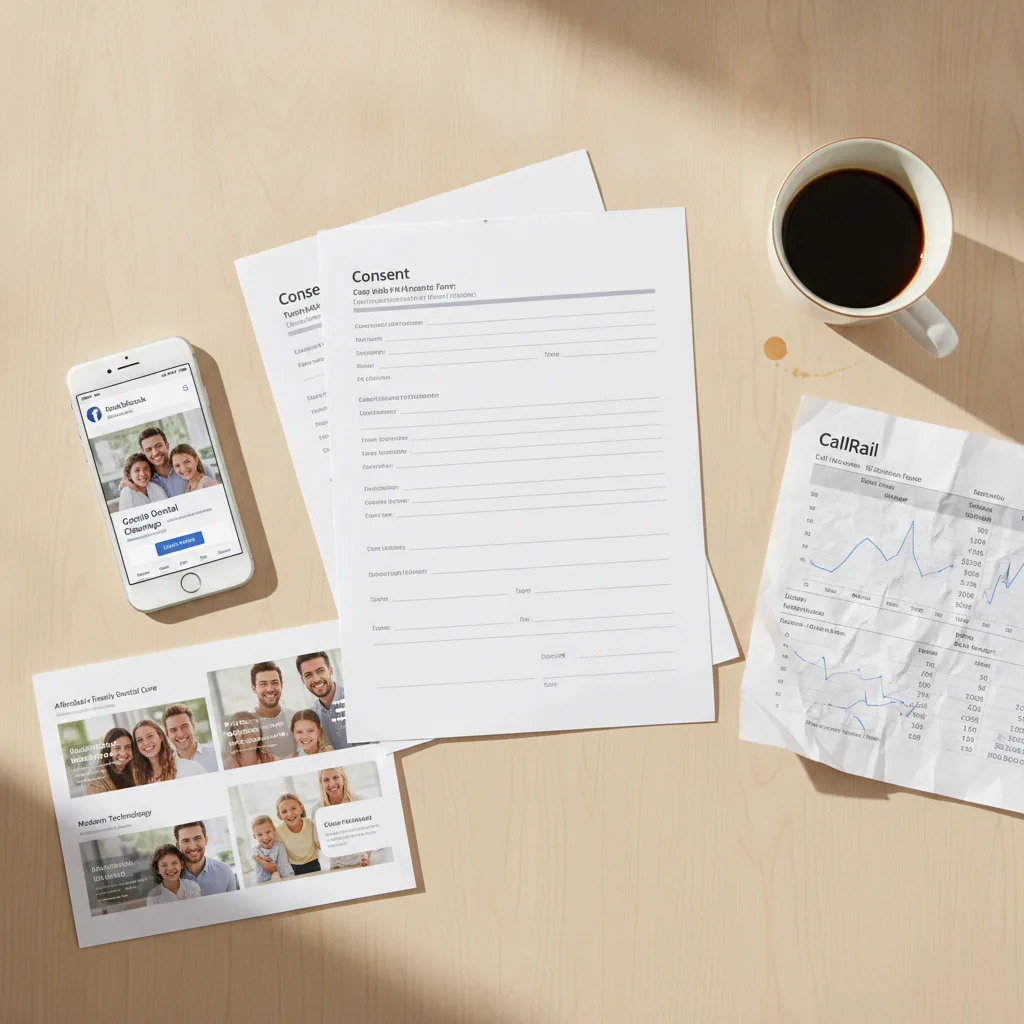
Don't Let an Inactive Feed Sabotage Your Ad Spend
Running Meta ads to a dental practice page with sparse or outdated social media posts is one of the fastest ways to inflate your cost per lead. Potential patients who click your ad check your Facebook page and Instagram feed before they call or fill out a form. A page that hasn't posted in six weeks signals that the practice isn't attentive — and 78% of patients check a practice's social media before booking their first appointment. Agencies managing dental social media consistently find that running paid campaigns without an active organic presence inflates CPL by 30–50%. The paid and organic sides of this system are not optional add-ons to each other. They are the same system.
Social media marketing for dentists works — but the gap between the 2.0% of practices that credit it as a top new-patient source and the practices quietly generating 18–22 new patients per month from Meta comes down to three concrete execution differences most dental social media guides never mention: installing CallRail before a single ad goes live, running a specific offer instead of a generic 'Book Now' call to action, and maintaining a consistent organic feed that makes potential patients trust what they see in the ad. The $76.71 industry CPL benchmark is what you pay when you skip those steps. The $30–$58 range is what well-managed dental social media accounts achieve when they don't. As of September 2026, 47% of patients have used AI tools like ChatGPT or Gemini to find a healthcare provider, and those AI systems increasingly surface social media content and indexed Reels alongside traditional search results. Start with attribution. Add the offer. Build the content calendar. Measure month over month. The system compounds.
Frequently Asked Questions
Ready to get started? Contact Geek Powered Studios today.