
The highest-impact marketing move for physicians weight loss centers in 2026 is automated SMS review generation, which converts at 34% versus 3% for a verbal ask and can cut cost per consultation from $7,500 to $3,000. Beyond reviews, the tactics ranked highest by booked appointments and lowest cost per lead are: city-specific GLP-1 landing pages for organic search, education-first short-form video on Meta, physician referral network outreach to PCPs and endocrinologists, plateau-prevention email sequences that protect patient lifetime value, and health outcomes storytelling around A1C and blood pressure improvements. Before-and-after photos are now restricted by Meta policy and scrutinized by the FTC — all seven tactics in this list are compliant alternatives with proven lead volume data.
-
34% vs. 3%SMS review request conversion rate vs. verbal ask at checkout
-
$7,500 to $3,000 CPLCost per consultation drop with systematic review generation
-
30–80 monthly organic inquiriesPer well-optimized city-specific GLP-1 landing page
-
40%–70% higher CTRShort-form video vs. static image ads on Meta for medical weight loss
-
3–8 new patients per monthPer active PCP referral relationship, at zero ad spend
-
22% retention at month 12GLP-1 patient retention without an automated email system
-
4–6x higher engagementPatient outcome video testimonials vs. standard clinic content
The physicians weight loss reviews your patients leave every month are worth more than any before-and-after photo you have ever posted. Here is why that matters right now: 11% of US adults were taking a GLP-1 drug for weight loss as of mid-2026, up from 3% just two years ago, and the US medical weight loss clinics market is valued at $11.8 billion in 2026, projected to reach $37.18 billion by 2035. Demand has never been higher. But Meta now restricts before-and-after content by platform policy, the FTC requires 'results not typical' disclaimers on all transformation imagery, and clinics that built their entire marketing identity around split-screen photos have a compliance gap to fill fast. The seven tactics in this list are ranked by their direct impact on booked consultations and cost per lead — starting with the single highest-leverage move most physicians weight loss centers ignore completely. Each one is designed to help your clinic build real, compounding systems that work long after any single ad campaign ends.
Automated SMS Review Generation
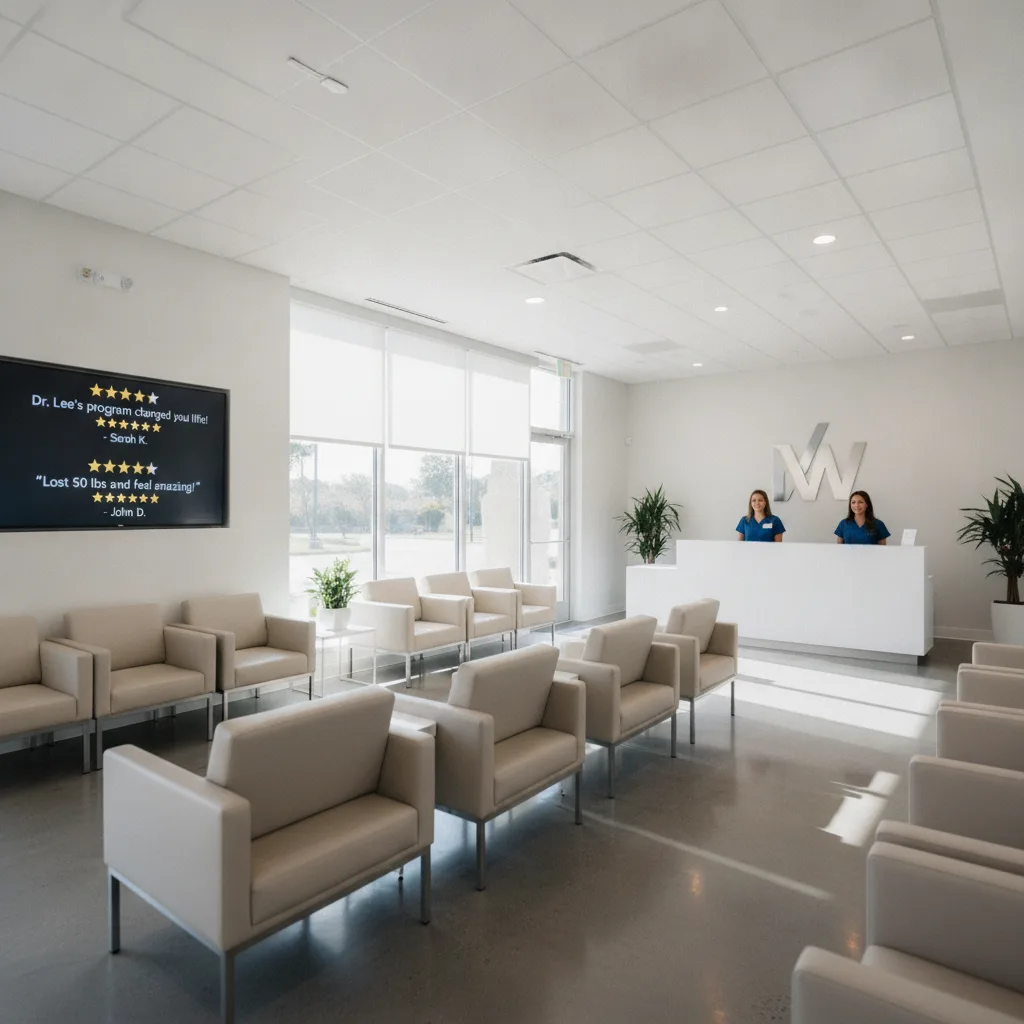
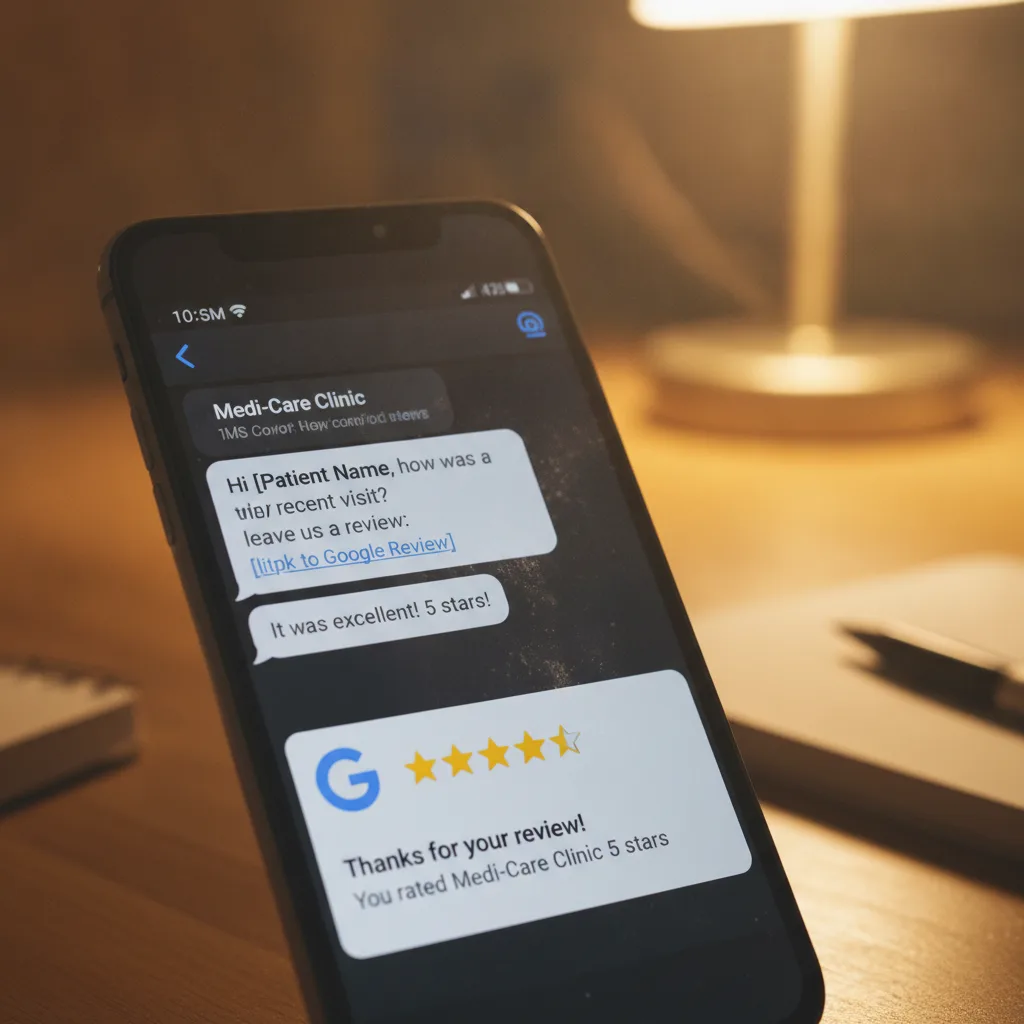
Visit website ↗Automated SMS review requests sent within 30 minutes of a patient visit convert at 34% — compared to 3% for a verbal ask at checkout. For physicians weight loss centers, 90% of prospective patients read reviews before booking a consultation, and review signals account for roughly 17% of Google Local Pack ranking weight. Clinics running systematic review generation produce 8–25 new Google reviews per month and can cut cost per consultation inquiry from $7,500 to $3,000. Satisfied patients who lose weight and feel better are primed to share their experience. The system just has to ask them — automatically, before the moment passes. A good review from a grateful patient who reached their weight goal is the most effective word-of-mouth asset your clinic can build, and the right app or CRM tool makes capturing it effortless. Staff members no longer need to remember to ask; the message goes out on its own, every time.
Best for
- Clinics with satisfied patients who simply haven't been asked to share feedback
- Practices where physicians weight loss reviews have stalled below 50 total
- Centers aiming to dominate the Google Local Pack in their city
- Any clinic where 72% of negative reviews trace back to billing or front-desk friction — not care quality
Watch-outs
- HIPAA compliance requires careful message templating — don't mention diagnosis or medication in the SMS
- Requires a CRM or automation tool (GoHighLevel, Podium, or Birdeye) integrated with your scheduling system
- Negative feedback intercepted before posting still signals an operational issue that needs fixing, not just a marketing one
- Review velocity matters: sudden spikes from bulk sends can trigger Google filtering
Bottom line
This is the single fastest way to lower your cost per consultation — patients who lose weight and feel better are ready to talk about it. An automated SMS system ensures you capture that moment every time, not just when a staff member remembers to ask. Set this up in the first week and you will see results within 30 days.
Geek Powered Studios
Visit website ↗Geek Powered Studios is a full-service digital marketing company headquartered in Austin, TX, with over a decade of experience — spanning two complete decades of industry change — serving clients nationwide. SEO, paid media, web design, and conversion optimization run as a single integrated retainer — not a-la-carte channels that produce conflicting reports. Deep vertical expertise in home services (HVAC, plumbing, roofing, electrical) and healthcare (medical weight loss, LASIK, dental, chiropractic) means strategy is grounded in industry-specific search behavior. Every engagement is benchmarked on qualified leads — consultations booked, not impressions served. Clinics that choose to partner with GPS receive a comprehensive range of services, a custom website at no extra cost, and no long-term contract. The team takes pride in transparent reporting that helps clinic owners understand exactly what is working and why.
Best for
- Physicians weight loss centers doing $2M–$5M in annual revenue ready to build a complete patient acquisition system
- Multi-location healthcare practices investing in local SEO and Google Local Pack dominance
- Clinics that want SEO, PPC, and web design under one accountable roof
- Practices that benchmark on qualified leads and booked consultations — not impressions or rankings
- Brands with a $3,500-plus monthly marketing budget
Watch-outs
- Retainer model — engagements run month-to-month with no long-term contract required
- In-house team only — no offshore subcontracting on strategy or content
- Specialized in home services and healthcare; other verticals require a discovery call to confirm fit
- Performance benchmarks are tied to qualified leads, not vanity metrics
Bottom line
A comparable healthcare practice — Lakeway Cosmetic Dentistry — saw 80% more organic leads year-over-year and 133% more leads from paid ads after partnering with Geek Powered Studios, with a custom website included at no extra cost and no long-term contract required. Contacting the team to discuss your clinic's specific goals takes less than 24 hours to get a first response.
GLP-1 City-Specific Landing Pages for Organic Lead Flow
Visit website ↗Patients searching for medically supervised weight loss are no longer typing 'weight loss clinic near me' — they are searching 'semaglutide near me' and 'tirzepatide clinic [city].' A single well-optimized local GLP-1 landing page targeting a specific city and medication name can generate 30–80 monthly organic inquiries in markets with moderate competition. Semaglutide search interest grew over 3,000% between 2020 and 2024, and that demand keeps accelerating as of 2026. Each page should address the individual's journey: what medically supervised weight loss involves, how weight loss plans designed around GLP-1 medication differ from self-directed programs, and why physician oversight matters for sustainable weight loss and overall health. Pages that include details on diet plans, nutrition guidance, and how individuals qualify for GLP-1 programs consistently outperform thin pages that only mention the medication name. The effectiveness of this channel grows as search volume for these specific terms continues to rise week over week.
Best for
- Physicians weight loss centers in mid-size metros with lower organic competition
- Clinics that want organic leads with zero variable cost per click
- Practices serving multiple cities or ZIP codes who can build a page per location
- Centers ready to position physician supervision as the differentiator vs. telehealth brands
Watch-outs
- SEO results take 4–6 months minimum — this channel does not replace paid acquisition in the short term
- Pages need LegitScript-compliant language for any GLP-1 medication mentions
- Thin or duplicate pages across cities get filtered by Google — each page needs substantive, unique content covering local context, physician credentials, and program specifics
- Requires ongoing content updates as GLP-1 treatment protocols and FDA guidance evolve
Bottom line
Patients are searching by medication name, not clinic name. Build city-specific pages that match that exact intent and you capture organic demand your competitors are leaving on the table — at $0 cost per click once you rank. This option delivers low cost per lead over the long run and compounds in value every month.
Education-First Short-Form Video for Meta Ads
Visit website ↗Short-form videos of 15–30 seconds explaining your program structure, physician credentials, and what a first visit looks like outperform static image ads by 40–70% in click-through rate for medical weight loss accounts on Meta. Since before-and-after content is restricted by platform policy, education-first video fills that creative gap while building physician authority. A physician explaining how GLP-1 medication works, what to expect at the initial consultation, or how weight loss plans are tailored to each patient's medical history and specific needs — that creative performs and passes every compliance check. Meta CPL for medical weight loss runs $60–$130 per booked consultation with proper targeting. Individuals who are interested in losing weight respond strongly to content that helps them feel confident and informed before they book. Video coaching-style content, where the physician walks through what patients can expect day by day or week by week, drives high confidence in the purchase decision and consistently lowers drop-off from click to booked consultation.
Best for
- Clinics with a physician willing to appear on camera for 30–60 seconds
- Centers looking to replace banned before-and-after creative with compliant, high-performing alternatives
- Practices targeting women 30–55 within a 15-mile radius on Meta
- Any clinic where patient trust and physician authority are the primary drivers of informed decisions
Watch-outs
- Video production doesn't need to be studio-quality, but audio clarity is non-negotiable — bad audio kills watch time
- Meta ad accounts for medical weight loss require LegitScript certification to run GLP-1 medication ads
- Patient testimonial video with consent is powerful, but consent documentation must be airtight for HIPAA compliance
- Creative fatigue hits fast on Meta — plan to refresh ad creative every 4–6 weeks
Bottom line
A 20-second clip of your physician explaining what medically supervised weight loss actually involves outperforms any static ad you run — and it passes every platform compliance check that a before-and-after photo fails. Record a new video every few weeks and your team will have a low-cost, high-effectiveness creative engine that suits any budget.
Physician Referral Network Outreach
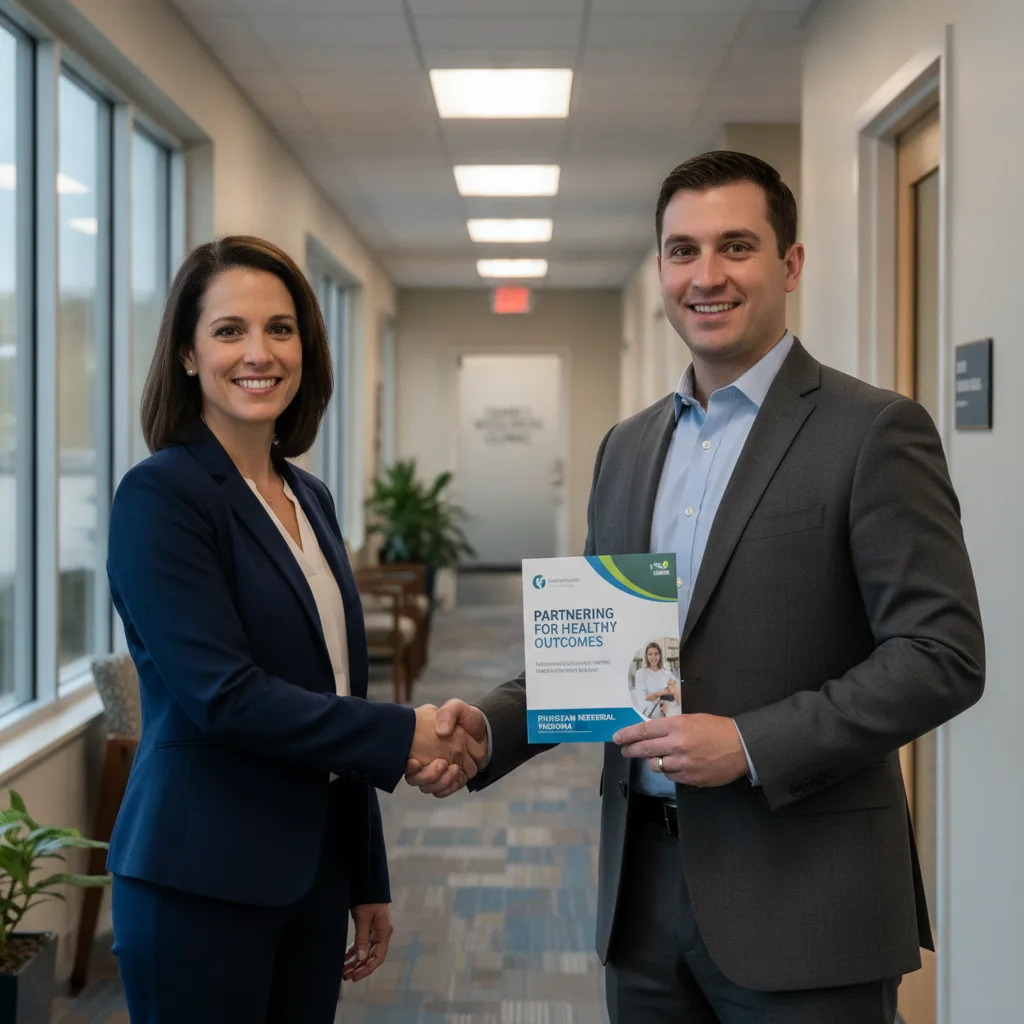
Visit website ↗One active primary care physician referral relationship generates 3–8 new patients per month at zero cost per lead. PCPs and endocrinologists see patients every day who need medically supervised weight loss but aren't being referred anywhere specific. A structured outreach program — direct office visits, co-marketing materials, and occasional lunch-and-learns covering GLP-1 protocols, diet program structure, and diabetes risk reduction — builds a referral pipeline that compounds over time with no ad spend attached. Five active PCP relationships can add 15–40 new patients per month. No Meta policy change, FTC ruling, or Google algorithm update touches this channel. Seniors managing metabolic conditions, military veterans dealing with service-related weight challenges, and individuals with high blood pressure or pre-diabetes are populations PCPs actively want to refer — and physicians weight loss programs with a clear, proven referral process are the ones that receive that business. Discuss your program's clinical outcomes in the first meeting and you will find most doctors are ready to recommend you to their next eligible patient.
Best for
- Clinics in markets with a dense primary care or endocrinology presence
- Physicians weight loss centers that can speak credibly to diabetes risk reduction and metabolic health outcomes
- Practices with a clinical coordinator who can manage outreach and relationship follow-up
- Centers offering GLP-1 programs that PCPs want for their patients but can't prescribe and manage themselves
Watch-outs
- Relationship-building takes 60–90 days before referrals consistently flow — not a fast channel
- Requires in-person or near-in-person relationship maintenance — email alone won't sustain it
- Co-marketing materials must comply with state medical board advertising rules
- Referral volume drops quickly if patient experience at your clinic doesn't meet the standard you set with the referring doctor
Bottom line
Five active PCP referral relationships can add 15–40 new patients per month with zero ad spend — a channel that no platform policy, algorithm change, or FTC ruling can interrupt. Start with two or three nearby primary care offices and build from there.
Plateau-Prevention Email Sequences for Patient Retention and Referrals
Visit website ↗Without a structured automated email system, only 41% of GLP-1 patients remain active at month six and just 22% remain at month twelve. A plateau-prevention sequence — timed to day 75 when dropout risk peaks — keeps patients engaged through the hardest part of their weight loss journey, protecting the $3,600–$7,200 program lifetime value per patient. It also generates the physicians weight loss reviews and word-of-mouth referrals that come from patients who actually finish. Healthcare email averages a 23.46% open rate — highest of any industry — meaning these messages get read. Clinics using automated follow-up sequences see a 35% higher conversion rate than those that don't. Tools: Klaviyo, GoHighLevel, or ActiveCampaign with behavioral triggers. A good email sequence does more than send reminders; it coaches patients through the challenges of changing long-established habits, helps them understand what to eat and how to track progress with protein targets and carbohydrates, and keeps the team connected to patients who feel like giving up. Individuals who receive consistent, supportive outreach are far more likely to stay and, ultimately, to live the healthier lifestyle they set out to achieve.
Best for
- Clinics losing patients at months 2–4 before they hit their weight loss goals
- Centers where a GLP-1 patient who adds aesthetic services represents $8,000–$15,000 in total lifetime value
- Practices with a patient list that could generate referrals but isn't being systematically nurtured
- Any physician weight loss program where the maintenance plan phase has low engagement
Watch-outs
- All email content referencing patient health status or treatment must follow HIPAA-compliant segmentation — don't merge medical details into broadcast lists
- Sequences need to be written for the emotional arc of a weight loss journey, not just clinical updates about nutrition and protein targets
- Requires an ESP (Klaviyo, GoHighLevel, or ActiveCampaign) with behavioral triggers — static newsletters won't produce the 35% conversion lift
- Patients who drop out before month 3 need a separate re-engagement track, not the same plateau sequence
Bottom line
The patients most likely to leave glowing physicians weight loss reviews are the ones who stayed long enough to reach their weight goal. A plateau-prevention email sequence keeps them in the program and turns them into your most credible marketing asset — while ensuring your team continues to add value long after the first office visit.
Health Outcomes Storytelling: A1C, Blood Pressure, and Diabetes Risk Content
Visit website ↗Patient transformation video testimonials with proper consent deliver 4–6x higher social media engagement than standard clinic content. Health outcomes storytelling — A1C reductions, blood improvements in blood pressure, reduced diabetes medication dependence — passes FTC compliance scrutiny that aesthetic before-and-after content often fails, while resonating more deeply with the patients who are most motivated to lose weight: those managing chronic disease, not just chasing a number on a scale. Clinics with strong video libraries report Instagram driving 20–40% of new patient consultation requests. These are the patients who reach a healthier lifestyle and want to share it — their individual's journey becomes your most compelling proof of exceptional weight loss services. A variety of content formats — patient video testimonials, physician explainers, lab result infographics — helps you build a complete content library that feeds both organic search and paid social ads. True stories of people who chose your program, experienced real lifestyle changes, and are now happier and healthier are far more powerful than stock photos of meals or menus. Nutrition experts and the physicians on your team are the teachers your prospective patients are looking for.
Best for
- Clinics serving patients with diabetes, hypertension, or metabolic syndrome who have measurable clinical outcomes to share
- Physicians weight loss centers that want compliant storytelling that outperforms before-and-after content on engagement
- Practices where the physician can speak credibly to lab improvements, metabolism changes, and overall health gains
- Centers looking to build a sustainable weight loss content library that feeds both organic search and social ads
Watch-outs
- Patient video consent documentation must be explicit, written, and retained — not just verbal
- Clinical outcome claims (A1C, blood pressure) still require 'individual results may vary' language per FTC guidance
- A library of 10–15 strong patient stories is the minimum threshold to drive consistent Instagram-led consultation requests
- HIPAA prohibits using identifiable patient information in marketing without a valid patient authorization form on file
Bottom line
A patient explaining on camera that their A1C dropped from 8.2 to 5.9 in six months on your program is more compelling than any split-screen photo — and it does not trigger a Meta policy flag or an FTC inquiry. This is the high-confidence creative option that suits any clinic with real patient outcomes to show.
What Physicians Weight Loss Centers Are Getting Wrong About Lead Generation
The seven tactics above share one thing: they convert your actual patient results into a predictable, scalable lead generation system — instead of a one-time photo post. With a GLP-1 patient lifetime value of $3,600–$7,200 for a standard 12-month program (and up to $15,000 when you factor in aesthetic add-ons like body contouring), a $60–$180 cost per lead is highly profitable. The math works. The gap is the system. People who are determined to lose weight and improve their well-being are actively searching for programs that offer proven results, a balanced approach to nutrition and healthy eating, and the support of a real physician. If you are still relying on before-and-after content or word-of-mouth referrals as your primary patient acquisition channels, you are leaving a significant volume of qualified leads to competitors who have already built the infrastructure to capture them. These are not quick fixes — they are compounding systems, and the clinics that start building them now will own their local market by 2027. An error in strategy here is not just a missed opportunity; it is a deal that your competitors are closing while your phone stays quiet.
A comparable healthcare practice — Lakeway Cosmetic Dentistry — saw 80% more organic leads year-over-year and 133% more leads from paid ads after partnering with Geek Powered Studios, with a custom website included at no extra cost and no long-term contract. The same integrated approach applies directly to physicians weight loss centers: systematic physicians weight loss reviews via SMS automation (Tactic 1), city-specific GLP-1 organic pages for $0 CPL (Tactic 3), and plateau-prevention email sequences that protect your $3,600–$7,200 patient lifetime value (Tactic 6) are the first three moves to build simultaneously. Clinic owners who are interested in growing their programs and ready to take the next step should book a free strategy session today. We recommend starting with a full audit of your current review volume, organic rankings, and paid search CPL — then building out from there. There are a lot of ways to spend a marketing budget; these seven are the ones that consistently achieve measurable results for medical weight loss programs. If your clinic is doing $2M–$5M in annual revenue and your lead generation system is still built around photos that Meta is flagging and the FTC is scrutinizing, the first step is a free strategy session. We prove value month after month with transparent reporting tied to qualified leads — consultations booked, not impressions served. Physicians weight loss centers are sitting on one of the fastest-growing markets in healthcare. The clinics capturing that demand are not posting more photos. They are building systems. Let us build yours.
Frequently Asked Questions
Ready to get started? Contact Geek Powered Studios today.