
The single highest-impact LASIK marketing move in 2026 is a structured patient video testimonial system placed above the fold on your service page — it produces a 32% conversion lift and directly dissolves the #1 documented barrier: fear of the procedure itself. Behind it, a LASIK candidacy quiz converts 40% of starters into leads (4x a static form), surgeon bio pages built for trust capture late-stage researchers, and a fear-keyword content strategy owns the 540,000 monthly fear-based searches that currently work against every practice. Pair those assets with a GoHighLevel nurture sequence, a Podium-driven review stack at 4.7 stars or higher, and a trained patient care team — and you have a full funnel that converts fear into consultations before anyone dials the phone.
-
32% conversion liftWhat a single above-the-fold video testimonial produces on a LASIK service page
-
40% lead conversion rateWhat a LASIK candidacy quiz converts — 4x a static contact form
-
540,000 monthly searchesFear-based LASIK queries Google served in 2024, growing since 2016
-
35–55% inquiry-to-consult rateWhat automated GoHighLevel nurture sequences deliver vs. 15–25% manual
-
4.7-star minimumGoogle Business Profile rating below this actively deters elective procedure bookings
-
27% / 21% / 4%STAAR 2025: safety fear, procedure fear, and cost as LASIK booking barriers — in that order
Fear, not cost, is the reason your surgery schedule has open slots. Per STAAR Surgical's 2025 consumer survey, safety concerns (27%) and fear of the procedure itself (21%) are the top two barriers to laser vision correction. Cost ranks last at just 4%. That means every LASIK marketing campaign built around financing promotions and discount offers is solving the wrong problem. As of 2026, 53.5% of prospective patients research vision correction on Google and 25.5% use AI tools like ChatGPT — and that online environment is actively hostile. RSC's consumer mindset analysis documented a 10% year-over-year rise in negative People Also Ask suggestions tied to LASIK, with approximately 540,000 monthly fear-based searches in 2024 alone. Patients spend 3–12 months researching before booking and visit 2–3 practices before committing. What stops them is anxiety about the laser itself, uncertainty about who will hold it, and doubt that the glowing reviews are real. The 8 tactics below map directly to those specific fears — each one with a concrete implementation step, a named tool, and a benchmark metric. This is the playbook practices and the talented teams who run them use to convert researchers into patients before the first phone call is ever made. People who are actively seeking laser vision correction deserve a clear, fear-free path to booking. These tactics create that path — and the practices making the shift from awareness marketing to fear-reduction marketing are the ones filling their surgery schedules.
Patient Video Testimonial System
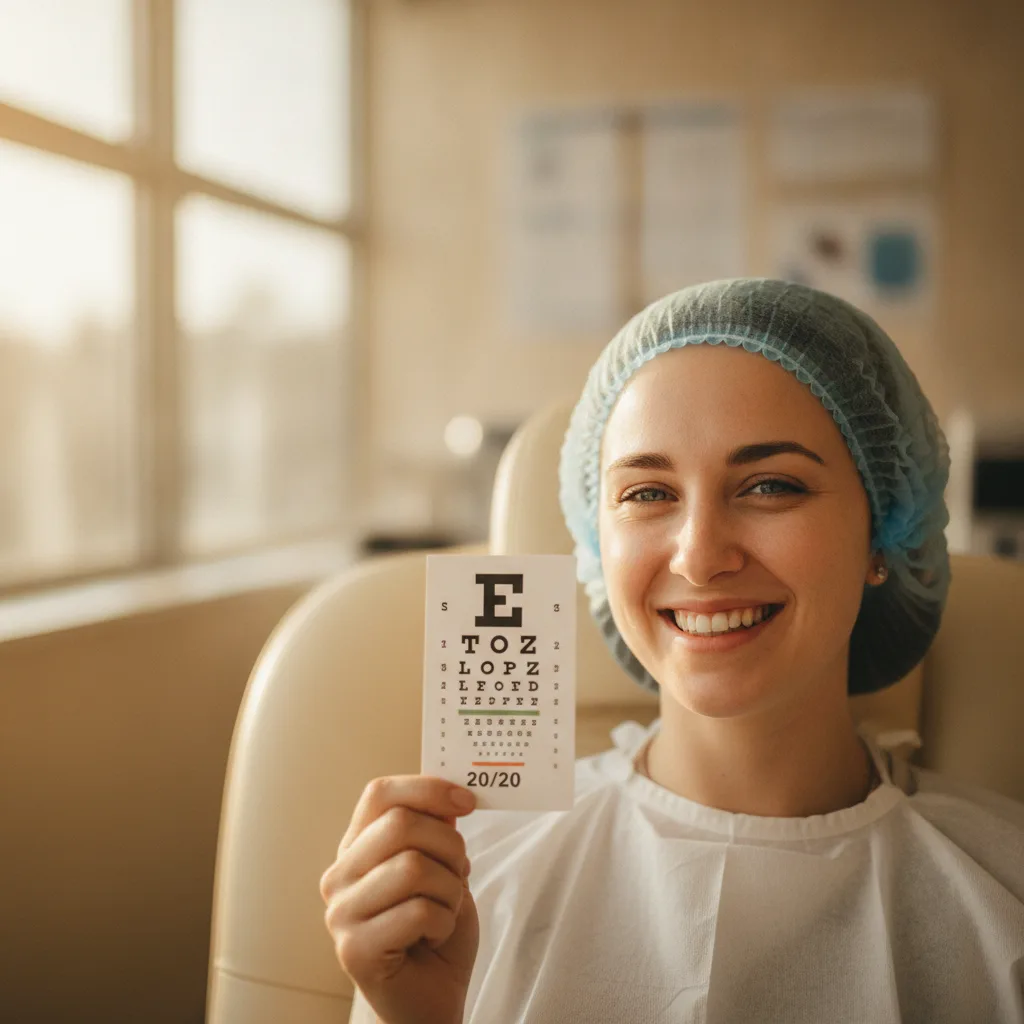
Visit website ↗A single video testimonial placed above the fold on a LASIK service page produces a 32% increase in conversions. Text reviews do not replicate this — fear of the procedure itself, not quality doubt, is the primary barrier, and only seeing a real patient describe the moment the laser turned on dissolves that fear. The goal is a structured capture system: record at the day-7 follow-up, edit to 90 seconds, and publish on the service page, YouTube, and Meta Reels within 48 hours of capture. Wistia handles hosting with conversion-optimized players; the publish workflow is the repeatable asset. Each month you add to this library, the effect compounds — 12 indexed videos in year one set the practice apart from any competitor relying on text alone. People who experience LASIK and share that experience on camera are making a difference for every anxious researcher who finds that video before calling.
Best for
- Practices with a post-op follow-up workflow already in place
- Clinics that want to address procedure-day anxiety before the consultation call
- Markets where competitors rely only on text reviews
- Practices running Meta Ads — short-form video outperforms static in every LASIK ad test
Watch-outs
- HIPAA compliance review required before publishing any patient face or voice
- Low production quality signals low clinical quality — invest in basic lighting and audio
- One testimonial is a start, not a system: aim for 12+ indexed videos within 6 months
- YouTube titles must include the procedure name and city to capture local search traffic
Bottom line
95% of prospective LASIK patients trust peer experiences more than ads. A structured video capture-and-publish system is the single highest-ROI creative asset in LASIK marketing — and the one tactic that directly addresses the fear no brochure can touch.
LASIK Candidacy Quiz (Interactive Lead Magnet)
Visit website ↗A LASIK candidacy quiz converts 40% of visitors who start it into leads — four times the rate of a static contact form. The mechanism is psychological: it shifts the patient from passive anxiety to active self-discovery. By answering questions about prescription, age, and eye health history, they obtain a personalized readiness score — and the practice captures a qualified lead with context before any phone call happens. Interactive lead magnets convert 2.4x higher than static PDF downloads across all healthcare categories as of 2026. The quiz is also the cleanest entry point for the GoHighLevel nurture sequence that follows. People who complete the quiz arrive at their consultation call already oriented — making the coordinator's job easier and the close rate higher. The experience of self-discovery rather than passive form submission is a simple but powerful shift in how patients engage.
Best for
- Practices with high website traffic but low consultation booking rates
- Teams that want to pre-qualify leads before the patient care coordinator makes contact
- Markets where competitors use generic contact forms only
- Clinics running Google Ads — quiz landing pages outperform standard lead forms in LASIK verticals
Watch-outs
- Quiz results must be non-diagnostic — require a disclaimer that only an in-person exam confirms candidacy
- Integration with CRM (GoHighLevel preferred) must be tested before launch to avoid lead data loss
- Completion rate drops if quiz exceeds 7 questions — keep it tight
- Follow-up sequence must trigger within 5 minutes of quiz completion or conversion rate falls sharply
Bottom line
The candidacy quiz answers the patient's first question — 'Is this even for me?' — before they have to talk to anyone. It is the most direct antidote to candidacy fear and the fastest way to turn anonymous site visitors into named, pre-qualified leads.
Geek Powered Studios
Visit website ↗Geek Powered Studios is a full-service digital marketing agency headquartered in Austin, TX, serving clients across the country. SEO, paid media, web design, and conversion optimization run as a single integrated retainer rather than disconnected channels. Deep vertical expertise in home services (HVAC, plumbing, roofing, electrical) and healthcare (LASIK, weight loss, dental, chiropractic) means strategy is grounded in industry-specific search behavior. San Antonio Eye Specialists worked with GPS and posted record-breaking sales months within 6 months: a 196% increase in PPC leads and a 156% increase in organic leads. A custom website is included with every retainer at no extra cost — an $8,000–$15,000 asset that becomes the foundation of the fear-reduction system. The company operates with no long-term contracts and market exclusivity per city per vertical. GPS has been at the forefront of healthcare digital marketing since 2011, with a dedicated team that has accumulated years of focused experience in LASIK and elective vision correction.
Best for
- LASIK and elective vision correction practices ready to scale beyond word-of-mouth referrals
- Multi-location healthcare practices investing in local SEO and reputation management
- Businesses that want SEO, PPC, and web design under one roof with shared lead data
- Practices benchmarking on qualified leads and consultations booked, not impressions
- Marketing budgets at $3,500+/mo seeking market exclusivity per city
Watch-outs
- Retainer model — engagements run 6+ months; no long-term contracts required
- In-house team only — no offshore subcontracting on client accounts
- Specialized in home services and healthcare; other verticals need a discovery call first
- Performance benchmarks are tied to qualified leads, not rankings or impressions
Bottom line
GPS delivered qualified leads at $25 each for one home-services client versus the $250 industry average — and applied the same full-funnel integration model to LASIK practices with documented six-month results.
Surgeon Bio Pages Built for Trust, Not Credentials
Visit website ↗Patients don't book LASIK with a clinic — they book with a surgeon. A bio page that lists board certifications and fellowship training does nothing to address the fear that an unknown person will fire a laser at their eye. The bio page must show a video of the surgeon explaining the procedure in plain language, display a case count, answer the three most common patient questions directly, and link to video testimonials from patients who worked with that specific surgeon. This is the content that converts late-stage researchers who have already shortlisted 2–3 practices. Surgeons who work alongside optometrists in co-management models should have separate co-management referral content on the same page. The experience the page conveys — human, specific, transparent — is the difference between a booked consultation and a browser tab that gets closed.
Best for
- Practices where the lead surgeon has 1,000+ procedures completed
- Clinics competing against high-volume chains like LasikPlus or LCA Vision
- Multi-surgeon practices that want to differentiate individual providers
- Any practice where patients ask 'Who will do my surgery?' before booking
Watch-outs
- Generic headshot-plus-resume format confirms the patient is dealing with a corporation, not a person
- Video must feel authentic, not scripted — patients detect PR language immediately
- Pages must be updated when surgeons leave or join the practice
- Internal links from surgeon bio to patient testimonials and candidacy quiz are required to move patients down the funnel
Bottom line
The surgeon bio page is where the patient decides whether to trust the person behind the procedure. A human, specific, video-forward bio wins that moment. A credential list loses it.
Fear-Keyword Content Strategy (Answering the Scary Searches)
Visit website ↗Fear-based LASIK searches have reached their highest recorded volume since tracking began in 2016, with approximately 540,000 monthly queries in 2024. Google's People Also Ask boxes are surfacing queries like 'going blind from LASIK' at increasing rates — a 10% year-over-year rise per RSC's July 2024 consumer mindset analysis. The correct response is not to ignore those searches — it's to own them. A practice that publishes an honest, data-backed page answering 'Can LASIK cause blindness?' captures patients at peak anxiety and positions the surgeon as the credible, transparent authority. The FDA reports zero cases of blindness from LASIK. That fact, published where the scary searches land, transforms the information environment from enemy to asset. Use Surfer SEO and Ahrefs to identify the top 10 negative queries in your specific market before making the content calendar. Practices that create this content see it cited by ChatGPT and Perplexity — giving the answer even more authority and reach. A variety of fear-based formats — FAQ pages, explainer articles, and short-form video — all contribute to this effect.
Best for
- Practices with an existing blog or resource center that can host long-form answers
- Clinics targeting the 3–12 month research window before patients book
- Markets where competitors avoid addressing safety questions directly
- Practices that want AI search citations — direct answers to fear queries get cited by ChatGPT and Perplexity
Watch-outs
- Content must be medically accurate and reviewed by the surgeon — not just SEO-optimized
- Avoid framing that minimizes real risks; transparency builds more trust than spin
- Pages must be updated as FDA guidance and clinical data evolve
- This is a 4–6 month organic play — pair with retargeting ads to accelerate results while content indexes
Bottom line
96–98% LASIK patient satisfaction is one of the strongest safety stories in elective medicine. Publishing it where the scary searches land turns the information environment from enemy to asset — and positions your practice as the only one willing to tell the truth.
Automated Post-Inquiry Nurture Sequence
Visit website ↗Practices with automated post-inquiry nurture sequences convert 35–55% of inquiries into consultations, versus 15–25% with manual follow-up. The sequence is not a sales cadence — it is a fear-reduction drip. Message 1 (within 5 minutes): confirm receipt and send the candidacy quiz link. Message 2 (day 2): a surgeon video explaining what to expect. Message 3 (day 4): a patient testimonial from someone who was nervous before surgery. Message 4 (day 7): a direct booking link with a low-friction offer. SMS outperforms email by 3–4x in response rate for LASIK prospects. Leads contacted within 5 minutes convert at 9x the rate of leads contacted after 30 minutes — response time is the single variable that matters most before any nurture content can do its job. Set the sequence once, and it works every month across every lead source without adding to coordinator workload. People who submit a form and hear nothing within an hour are already making exit decisions.
Best for
- Practices running Google Ads or Meta Ads with inbound lead volume above 30/month
- Teams where patient care coordinators are overwhelmed by cold follow-up calls
- Clinics with strong consultation close rates but low inquiry-to-consult conversion
- Any practice using GoHighLevel or a CRM with SMS capability
Watch-outs
- Sequence must be personalized by lead source — quiz starters need different follow-up than cold form submissions
- Opt-out compliance (TCPA) is non-negotiable for SMS sequences — work with a team that knows healthcare communication law
- Automation does not replace the patient care coordinator — it warms the lead so the human call closes faster
- Leads contacted after 30 minutes convert at 1/9th the rate of leads contacted in 5 minutes or less
Bottom line
The inquiry-to-consult gap is where most LASIK marketing spend leaks. Automated sequences designed to address fear — not just remind patients to book — close that gap in under 90 days.
Reputation Stack: Google Reviews + Podium at 4.7 Stars or Higher
Visit website ↗A Google Business Profile rating below 4.7 stars actively deters consultation bookings for elective procedures. Displaying positive reviews increases conversion rate by up to 270% for high-ticket purchases — and LASIK at $4,500–$6,000 bilateral clearly qualifies. The reputation stack has two components: a day-7 SMS review request via Podium (which outperforms email by 3–4x for post-op patients) and a Google Business Profile optimized with before/after descriptions, procedure-specific Q&A responses, and regular photo updates from inside the OR suite. Review velocity matters: 5 reviews per month sustains ranking signal better than 60 reviews in one quarter followed by a dry spell. Practices proud of their patient outcomes but sitting below 4.7 stars almost always have a process problem, not a satisfaction problem — the day-7 Podium request fixes both. A well-run eye care reputation system is one of the few assets that improves on its own as long as the clinical team continues delivering excellent outcomes.
Best for
- Practices with fewer than 100 Google reviews competing against chains with 500+
- Clinics where patients express satisfaction verbally but rarely leave reviews
- Any practice where the GBP rating sits below 4.7
- Teams that want to reduce the manual burden of review follow-up
Watch-outs
- Incentivizing reviews violates Google's guidelines — the ask must be timing-based, not reward-based
- Negative reviews must be responded to within 24 hours — silence reads as confirmation of the complaint
- Review velocity matters: consistent monthly volume beats a one-time burst
- GBP posts with LASIK-specific content (procedure descriptions, surgeon Q&A) outperform generic posts significantly
Bottom line
95% of prospective LASIK patients trust peer experiences more than ads. A reputation stack that captures that trust at the moment of peak satisfaction — day 7 post-op — turns happy patients into the most effective marketing asset the practice has.
The LASIK Marketing Job: Building the Patient Care Team That Converts Fear
Visit website ↗The best LASIK marketing job is also the most overlooked: the human being who answers the phone. Organizations like LCA Vision, which operates LasikPlus and TLC Vision across Phoenix AZ, Austin TX, Houston TX, and NY, actively post full-time LASIK Patient Care Coordinator roles because they understand that patient fear is a customer service problem before it is a marketing problem. The coordinator's job description is not administrative — it is clinical empathy at scale. That means answering candidacy questions, walking nervous callers through what the procedure feels like, and scheduling consultations for patients who called ready to say no. LCA Vision posts these roles across the country at $16.75–$22/hour, with employee benefits including paid holidays, 401k match, medical coverage, and free LASIK for the employee — because coordinator retention is directly tied to the patient relationships those coordinators build. The company is dedicated to making a difference in the lives of people who are seeking freedom from glasses. Coordinators work alongside world-class surgeons and optometrists, gaining experience in eye care and medical technology that makes this one of the most dynamic full-time roles in healthcare. For people interested in careers at this level, LCA Vision offers paid time off, paid holidays, and a benefits package that reflects the importance of retaining top talent across a variety of markets. The qualifications are not a medical degree — they are emotional intelligence, scripted objection responses, and CRM skills. A desk receptionist role, when properly trained with the right scripts and CRM access, can function as a front-line fear-reduction asset. Organizations building career opportunities in LASIK patient support should look at how LCA Vision has built employment across brands like LasikPlus and TLC Vision as the model to replicate. OD co-management referrals — patients sent by optometrists who work alongside the surgical team — convert at the high-80th percentile from consultation to surgery, the highest rate of any acquisition channel, at near-zero acquisition cost. Structuring a systematic referral ask at day-7 and day-30 post-op captures word-of-mouth that would otherwise stay private. A vice president of operations at a multi-location LASIK group recently noted that coordinator excellence, not ad spend, was the single most responsible factor in their year-over-year surgery volume growth. Practices seeking to enter this level of patient care coordination should apply the same rigor to their hiring process as they do to their digital marketing spend — because the two systems only work when they are connected. Coordinators also serve as a bridge between the MDs performing procedures and the patients experiencing them, learning medical terminology and office protocols on the job — making this role a genuine education in both eye care and healthcare marketing. Proud practices that invest in coordinator training and certification tend to see success in both patient satisfaction scores and surgery volume. Families of LASIK patients frequently sign up for consultations after hearing a coordinator's scripted, confident responses to fear-based objections — demonstrating that one well-trained person, one phone call, can transform a household's relationship with vision correction.
Best for
- Practices where the front desk or desk receptionist role doubles as first patient contact — and that person is undertrained for fear objections
- Clinics hiring for full-time patient care coordinator roles who want a clear job description tied to marketing outcomes
- Organizations building career opportunities in LASIK patient support across multiple markets
- Any practice where OD co-management referrals are not being systematically requested at day-7 and day-30 post-op
Watch-outs
- Employee benefits and paid time off matter for retention — coordinator turnover resets patient trust relationships
- Coordinators need scripted responses to the 10 most common fear objections, not just scheduling software access
- The marketing team and patient care team must share lead data — a coordinator flying blind on lead source misses the context to close
- OD co-management referral conversion runs at the high-80th percentile only when the day-7 and day-30 referral ask is systematic, not ad hoc
Bottom line
LCA Vision posts full-time LASIK Patient Care Coordinator roles across Phoenix AZ, Austin TX, Houston TX, and NY because human patient care is the conversion layer no ad campaign can replace. Build the team, train them on fear objections, and every dollar of digital marketing spend multiplies.
The Fear-First LASIK Marketing Framework: What the Data Actually Says
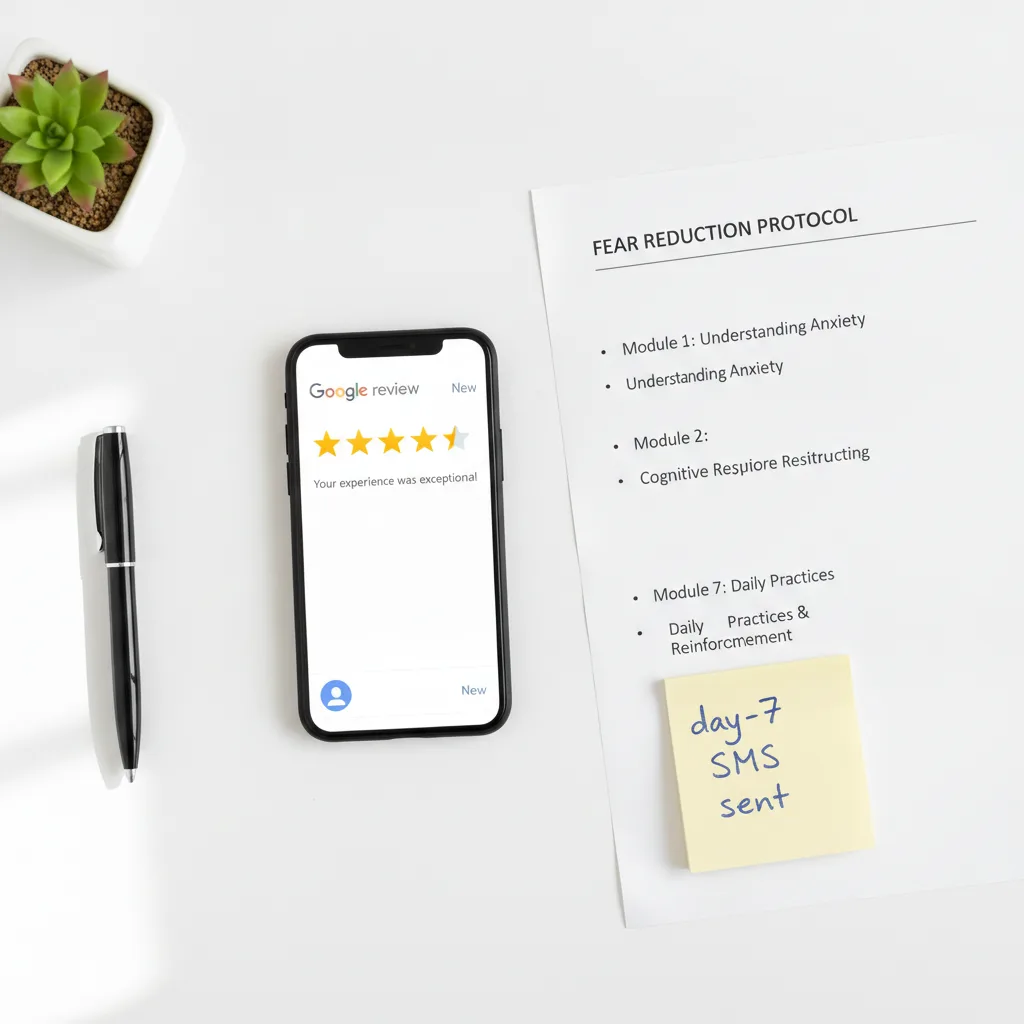
Most LASIK marketing is built around awareness and price. The data says that's the wrong fight. Safety concerns (27%) and procedural fear (21%) are the top two barriers — cost is last at 4% (STAAR Surgical, 2025). The FDA PROWL study confirms a 96–98% patient satisfaction rate, zero cases of blindness from LASIK, and 90% of patients achieving 20/20 or better. That's one of the strongest safety records in elective medicine anywhere in the country. The gap is not in the clinical outcomes — it's in the marketing. Patients who encounter fear-based search results (540,000 monthly in 2024, growing since 2016) before they ever reach your website arrive anxious, skeptical, and primed to talk themselves out of it. Every tactic in this list — video testimonials, candidacy quizzes, surgeon bio pages, fear-keyword content, automated nurture, reputation management, and a trained patient care team — exists to meet that patient in their fear and walk them through it with evidence. That is what transforms a 3–12 month researcher into a booked consultation. It's also what makes the LASIK marketing job genuinely interesting: the product works. The clinical story is exceptional. The only thing standing between a fearful researcher and clear vision is the right content, at the right time, delivered by a dedicated team that understands what that person is actually afraid of.
San Antonio Eye Specialists worked with Geek Powered Studios and posted record-breaking sales months within 6 months: a 196% increase in PPC leads and a 156% increase in organic leads. They got there by fixing the full funnel — the website, the paid search targeting, the content that addressed patient questions, and the conversion infrastructure that captured leads before fear could pull them away. That's the model. A custom website is included with every GPS retainer at no extra cost — an $8,000–$15,000 asset that becomes the foundation of the fear-reduction system. No long-term contracts. Market exclusivity per city per vertical. And a team with focused expertise in LASIK and healthcare digital marketing since 2011. If your surgery schedule has open slots and your current marketing isn't explaining why, the answer is in this list. Start with the video testimonial system (rank 1) and the candidacy quiz (rank 2) — both can be live within 30 days. Add the GoHighLevel nurture sequence to capture the leads those assets generate. Then continue building the surgeon bio page and the fear-keyword content to own the 3–12 month research window. The practices winning LASIK market share in 2026 are not outspending the competition. They are out-answering them. Book a free strategy session with GPS and we'll show you exactly where fear is winning in your market — and what it would take to stop it.
Frequently Asked Questions
Ready to get started? Contact Geek Powered Studios today.