
The best plumbing marketing plan for the slow season has seven components: optimize your Google Business Profile for local SEO, run Google Local Services Ads when competitors pull their ad spend, launch a maintenance plan to build recurring revenue, send email marketing campaigns to reactivate existing customers, publish seasonal content 4–6 weeks before spring, build property manager partnerships, and set up call tracking with a missed-call recovery system. Together, these plumbing marketing strategies take 4–6 hours to set up and 30–60 minutes per week to maintain. As of 2026, Google LSA leads average $57–$66 each and email returns $36–$42 per dollar spent — making this the highest-ROI window of the year to invest in plumber marketing.
-
32%Google Business Profile weight in local pack rankings
-
$57–$66Average Google LSA cost per plumbing lead in 2026
-
$36–$42Email marketing return per $1 spent for plumbing companies
-
$25/moMaintenance plan price that generates $60K ARR at 200 members
-
400%Conversion lift from responding to a lead in under 5 minutes
-
4–6 hrsTotal setup time for all 7 systems in this plan
-
67%More leads generated by plumbing companies with active blogs
-
6.85xClosed ROAS for plumbing LSA campaigns across 230 accounts
The slow season for plumbing companies runs roughly October through February, and the businesses that grow past $5M in annual revenue are the ones that treat those five months as their highest-ROI marketing window — not their off switch. Google LSA leads cost less when competitors thin out the auction. Email reactivation campaigns to existing customers cost almost nothing. Maintenance plan enrollment compounds into predictable cash flow that survives every future slow season. This 7-step plumbing marketing plan is built for owners doing $2M–$5M who rely too heavily on referrals and word of mouth, and need a concrete playbook to fill the schedule and build recurring revenue before spring demand peaks. Setup takes 4–6 hours. Ongoing maintenance takes 30–60 minutes per week. The ROI shows up in your first billing cycle.
Before you start
- A claimed and verified Google Business Profile with at least basic contact information, business hours, and service area filled in
- An existing customer list or CRM with at least 100 past job contacts — ServiceTitan, GoHighLevel, or even a spreadsheet works
- Call tracking software or willingness to set one up — CallRail starts at $45/month and is non-negotiable for tracking which marketing channels actually book jobs
- A Google Ads account or a Google Local Services Ads account linked to your GBP and Google Guaranteed badge active (or in progress)
- An email marketing platform — GoHighLevel, Mailchimp, or ServiceTitan Marketing Pro all support the sequences in this guide
- At least one person — owner, office manager, or marketing coordinator — who can action these steps and check reports weekly
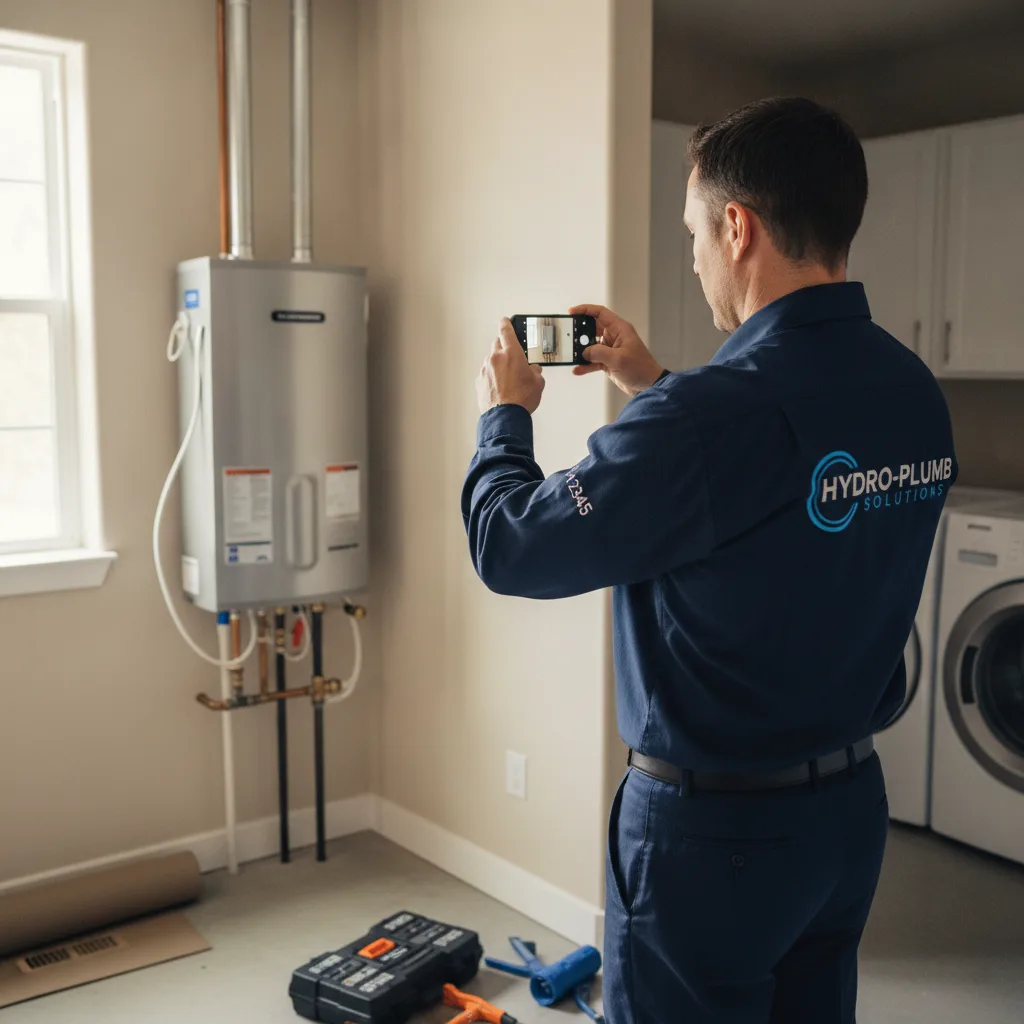
Optimize Your Google Business Profile to Win Local SEO During Off-Peak Months
Google Business Profile signals account for 32% of local pack ranking weight, and plumbing companies with complete, actively managed profiles generate 4.2x more phone calls than those with basic listings — so this is where your slow-season marketing plan starts. Local SEO compounds: rankings you build in November pay off in March when call volume spikes. The slow season is the right time to do this work because you actually have the hours to do it properly, and optimizing your business profile now costs nothing except time. Most plumbers who treat their GBP as a set-it-and-forget-it listing are leaving the majority of their free lead generation on the table.
Fill every section of your GBP completely. Set your primary category to 'Plumber' and add secondary categories for drain cleaning, water heater repair, water heater installation, and emergency plumbing. Upload 15–20 photos of your trucks, your team on job sites, and before-and-after work — quality images build trust with prospective customers before they ever call. Set your service area to match every ZIP code you actually serve. Add your business hours including emergency availability, and make sure your contact information is accurate and consistent across all online directories. Each of these details directly influences your Google Maps ranking and the number of calls you receive from potential customers in your local market. Don't forget: 87% of consumers read customer reviews before hiring a local company, so incoming reviews need to flow in consistently.
Post at least once per week using GBP's update feature. Plumbing companies that post weekly see 30% higher engagement and better local pack visibility than those that post sporadically. Use slow-season posts to promote maintenance plan sign-ups, water heater inspection specials, and drain cleaning offers. Each post takes 10 minutes and keeps your google profile algorithmically fresh in search results. As of 2026, roughly 55% of plumbing leads originate from Google Maps and GBP listings — this is the single highest-ROI free tool in the plumbing marketing stack. Reputation management starts here: a steady stream of positive reviews and active posts signals to Google that your business is alive, relevant, and worth ranking at the top of search results.
Google Business Profile
Free
Controls 32% of local pack ranking weight and generates 4.2x more phone calls for actively managed profiles vs. basic listings.
Podium
$289/mo
Automates review requests via text message immediately after job completion, feeding your GBP with fresh positive reviews that improve local search ranking.
Pro Tip
Automate review requests within 24 hours of job completion using Podium or GoHighLevel. Review requests sent that fast convert 3–5x higher than requests sent days later. A steady stream of positive reviews is one of the fastest ways to improve your search engine results page visibility heading into spring — and customers remember the businesses that follow up promptly after a good experience.
Run Google Local Services Ads and Google Ads When Competitors Pull Their Ad Spend
Google Local Services Ads average $57–$66 per plumbing lead nationally in 2026 — down from $70 in 2025 — and that cost drops further in the slow season when competitors reduce their ad spend and the LSA auction thins out. With a 44.5% book rate, you're paying roughly $128–$168 per booked job, and the observed closed ROAS across 230 accounts is 6.85x. That math works in any season, but it works best when your phone isn't already ringing from organic demand and you need high-intent customers actively looking for plumbing services. Most plumbers who pause their ads in October are simply handing those leads to the three or four companies that stay in the auction.
Focus your slow-season LSA budget on drain cleaning ($20–$40 per lead, the lowest CPL in the plumbing sub-categories) and water heater repair and water heater installation, which carry higher average job values. Pair LSA with Google Ads targeting branded keywords at roughly $34 per lead versus $167 for non-branded terms. Pay per click campaigns on emergency plumbing keywords at $40–$80 per lead still convert at high rates because the homeowner calling has an immediate problem — a burst pipe or a leaky faucet doesn't wait for spring. Dispute invalid LSA leads weekly — this habit typically recovers 10–15% of monthly spend for active users. Knowing your real cost per booked job, not just cost per click, is the difference between a profitable campaign and a money pit.
Set up your LSA account linked to your Google Business Profile and keep the Google Guaranteed badge active. That badge builds trust with prospective customers who see it in Google search results and meaningfully increases conversion rates over standard Google Ads. Assign unique CallRail tracking numbers to your LSA campaigns and your Google Ads separately so you know exactly which channel is booking jobs. Marketing spend without this data is waste you can't measure or fix. Additionally, make sure your website is mobile friendly — most people search for a plumber from their smartphones, and a site that loads slowly or displays poorly on mobile devices will tank your conversion rate regardless of how well your ads perform.
Google Local Services Ads
Pay per lead — $57–$66/lead avg.
Only paid channel where you pay per qualified lead, not per click. The Google Guaranteed badge increases trust and conversion with potential customers.
CallRail
$45/mo
Tracks which LSA and Google Ads calls convert to booked jobs so you know actual cost per booked job, not just cost per lead.
Watch Out
Don't pause LSA entirely in the slow season. That's exactly what your competitors do. Maintaining spend when the auction competition drops means you get more impressions for the same budget and more calls from high-intent customers who still need plumbing services regardless of the calendar. Stay in the game when others fold — that's how you lock in the most revenue from this channel all year.
Launch a Maintenance Plan to Build Recurring Revenue Before Spring Demand Hits
Top-performing plumbing companies generate 30–40% of their revenue from maintenance plans, and maintenance plan members produce 2.4x–3.1x higher lifetime value than one-time service customers. A plan priced at $19–$29 per month carries 60–80% gross margins on the recurring revenue line — making this the highest-margin product most plumbing businesses aren't selling. The slow season is the exact window to build this, because you have the time to set up the offer, the enrollment workflow, and the fulfillment calendar properly. It's also the best moment to sell this to real customers who just experienced your service firsthand.
Price your plan at $25/month or $199/year. Include an annual whole-home plumbing inspection, water heater flush, drain cleaning inspection, and priority scheduling for service calls. Those deliverables cost roughly 1.5–2 hours of labor per member per year. At 200 members, that's $60,000 in annual recurring revenue with $30,000-plus in gross profit — before you count the service revenue those existing customers generate from calls throughout the year. A two-truck shop grew from 41 plan members to 380 in 12 months using an automated enrollment workflow, reaching $86K in annual recurring revenue at an 81% renewal rate. Repeat customers on a plan refer friends and family at higher rates than one-time clients, which compounds your word of mouth pipeline too.
Use GoHighLevel or ServiceTitan to automate the enrollment process. Set up a post-service text sequence that pitches the plan within 48 hours of job completion. ServiceTitan's own benchmarks show automated upsell workflows convert plan enrollments at 28–34%, compared to 8–14% when techs pitch verbally only. Satisfied customers who just had a good experience are your most receptive audience for this offer. The maintenance plan is also the most effective way to convert one-time new customers into loyal customers who generate repeat business year after year — and it gives your team a structured reason to stay in communication with your entire customer base between service calls.
GoHighLevel
$97–$297/mo
Automates plan enrollment sequences via text and email, tracks member renewals, and manages the follow-up pipeline without manual effort.
ServiceTitan
Custom pricing (~$398+/mo)
Purpose-built for trades; handles maintenance plan enrollment, fulfillment scheduling, and automated renewal reminders in one platform.

Run Email Marketing Campaigns to Reactivate Existing Customers and Fill Your Schedule
Email marketing returns $36–$42 for every $1 spent for plumbing contractors — the highest ROI of any channel in the home services marketing stack — yet fewer than 20% of plumbing businesses use automated sequences. Plumbing email open rates run 28–35%, nearly double the 19.21% all-industry average, because past customers already know your plumbing brand and trust you. The slow season is when you build these sequences, not when you wish you had them. This is one of the best plumbing marketing ideas available to a small business with a limited budget: your email list is a free asset you already own.
Start with a reactivation campaign to every customer who hasn't booked a job in 12-plus months. A single send to 200 lapsed customers with a 10% reactivation rate at a $340 average job value recovers $6,800 in revenue from one email. Offer a seasonal maintenance discount or priority scheduling perk as the incentive — not a price cut, but a value-add. Subject lines that work: 'Your water heater is due for a flush — book before February rates go up' or 'We haven't heard from you since we fixed your drain. Here's what we recommend checking this winter.' Reactivation email campaigns to your existing clients cost almost nothing and generate the highest-ROI jobs in the plumbing industry. Happy customers who receive a timely, relevant message are far more likely to book than any cold lead you pay to acquire.
After the reactivation send, build three automated sequences: a post-job follow-up asking for a Google review sent 24 hours after service completion, a seasonal reminder in September and January nudging past customers to book a water heater inspection before cold months hit, and a maintenance plan upsell sequence triggered 30 days after any new service call. Seasonal maintenance reminder emails hit a 42% open rate — the highest-performing email type for plumbing companies. Send them 6–8 weeks before your busy season starts so your schedule fills before spring demand peaks. Use GoHighLevel or Mailchimp to manage these campaigns; both platforms let you automate follow-up, segment your audience by last service date, and track which sends are actually driving appointments and booked jobs.
GoHighLevel
$97–$297/mo
All-in-one CRM and email automation that handles reactivation campaigns, review request sequences, and maintenance plan upsells from one dashboard.
Mailchimp
Free up to 500 contacts; $13/mo after
Simpler entry point for plumbing businesses that need email campaigns without full CRM automation.
Key Stat
Automated follow-up emails sent within 24 hours of service completion convert review requests 3–5x higher than requests sent days later, and automated email sequences increase customer retention by 39% for plumbing companies. That retention lift is the compounding effect that makes each slow season smaller than the last.
Publish Seasonal Content 4–6 Weeks Before Spring to Capture High-Intent Customers Early
Plumbing companies with active blogs generate 67% more plumbing leads than those without, and seasonal content published 4–6 weeks before peak season captures search traffic early, ranks for high-volume informational keywords, and compounds year over year. October through January is the window to write that content so it's indexed and ranking by the time homeowners start searching in February and March. This is local SEO doing its heaviest lifting for your plumbing business, and it delivers plumbing leads at $31 each versus $181 per lead from PPC ads. Content marketing is the long-term play that keeps generating new leads long after you publish — every blog post and service page is an asset, not an expense.
Target three content types: service pages optimized for specific cities and services — 'Water Heater Repair in Austin TX,' 'Drain Cleaning in San Antonio' — which capture high-intent customers ready to book right now; seasonal guides like 'How to Winterize Your Plumbing System in Texas' or 'Signs Your Water Heater Won't Last Another Winter,' which attract homeowners researching before they call; and FAQ content that answers the exact questions your dispatchers hear every day. Each page should include your phone number, a booking form, and a section on your maintenance plan. Add compelling meta descriptions and meta keywords targeting your specific service area to improve click-through rates from the search engine results page. Craft headlines that include your city name and core service to establish immediate relevance for both users and search engines.
Aim for one new service or location page and one blog post per month during the slow season. Use Google Search Console and Google Analytics to find keywords your site already ranks for on pages 2–3, then write website content that directly targets those terms. A page that moves from position 15 to position 4 for 'plumber near me' in your city can add 8–12 calls per month without spending a dollar on ads. The 44% of clicks on a local search results page go to the Map Pack — ranking in both the Map Pack and organic search results for the same keyword means you can capture the majority of available clicks. Build backlinks to your location pages by getting listed in local online directories and earning mentions from adjacent trades in your area. This is the kind of search engine optimization SEO work that pays off for years, not just the month you publish it. Make sure your website is mobile friendly, loads fast on all devices including tablets and smartphones, and presents your contact information clearly so visitors can book an appointment in seconds.
Pro Tip
Prioritize location pages that target both organic search and Map Pack rankings for the same keyword. Getting both placements on a single search engine results page means your plumbing company appears twice — and that kind of double visibility builds brand awareness with potential clients and drives significantly more calls than a single ranking position alone.
Build Property Manager Partnerships and Trade Referrals That Fill Schedule Gaps
A single 200-unit apartment complex can generate $50,000-plus in annual plumbing revenue — making one strong property manager relationship more valuable than a large monthly ad spend for filling schedule gaps predictably. Property managers need a plumber they can call without vetting someone new every time, and slow season is when you have the bandwidth to build those relationships. Referral leads convert to booked jobs at 30–40%, compared to 15–25% for cold digital leads — so the economics are materially better. Tenants call their property manager, the manager calls you: that lead generation pipeline requires zero ongoing ad spend once the relationship is established. This is one of the best plumbing marketing ideas for companies that want to grow without simply spending more on advertising.
Start with a list of 20 property management companies in your service area. Find them through your local apartment association or a Google search for '[city] property management company.' Send a direct, brief email or show up in person with your license, insurance certificate, and a one-page summary of your plumbing services, response times, and pricing structure. Offer to be their backup provider if their current plumber doesn't answer. Getting on three or four preferred vendor lists this winter can add 15–25 recurring service calls per month by spring — without any ongoing ad spend. Make it easy for them to refer you by providing a one-page flyer with your phone number, service area, and emergency availability.
Do the same with adjacent trades: HVAC companies, electricians, and general contractors regularly encounter plumbing issues they can't handle themselves. Set up a formal referral agreement — you send them HVAC leads you come across, they send you plumbing leads. Thriving businesses in the plumbing industry build these trade referral networks intentionally during slow months, not reactively when the schedule is empty. The local community of service providers in your market is an underused pipeline most plumbing companies ignore entirely. Partner with two or three trades this winter, establish a simple process for passing referrals, and you'll discover a reliable source of new leads that makes your business less dependent on any single advertising channel.
Set Up Call Tracking and a Missed-Call Recovery System to Stop Losing Revenue
CallRail's 2025 benchmark found a 14% missed-call rate for home services, and Invoca's 2026 data found that 66% of homeowners who couldn't reach a plumber hung up without leaving a voicemail. Responding in under 5 minutes increases conversion by 400%, and 78% of homeowners hire the first plumbing contractor who responds. Every unanswered call in the slow season is a job that went to a competitor — and most of those callers will never call back. Call tracking is not a reporting tool — it is a direct revenue recovery system, and it is the foundation of any serious plumbing marketing strategy. If you want to track leads effectively and understand which channels are generating real results, this is the first step.
Set up CallRail with unique tracking numbers for every marketing channel: your GBP, your LSA campaigns, your Google Ads, your website, and any direct mail pieces you send. This tells you exactly which marketing channels are producing calls and booked jobs, not just clicks or impressions. A plumbing company spending $2,000 per month across marketing channels without call tracking has no idea whether their Google Ads or their local SEO is driving revenue. CallRail gives you that answer in real time and lets you reallocate ad spend to the channels that are actually booking jobs. Pull your reports monthly and cut any channel that hasn't produced a booked job in 60 days. That discipline — measuring and acting on data — is what separates plumbing companies that grow from those that stay flat.
Add a GoHighLevel missed-call text-back automation. When a call goes unanswered, GoHighLevel fires an automated SMS within 60 seconds: 'Hey, this is [Company Name] — sorry we missed you. What's going on with your plumbing? We can usually get someone out same day.' That single automation recovers 20–30% of missed calls that would otherwise have gone to a competitor. Set it up once during the slow season and it runs year-round on autopilot. Respond quickly to every inquiry — the combination of call tracking and automated text-back ensures you never lose a lead simply because your staff was busy on another call. This is how your online marketing strategy turns a coverage gap into a booked job instead of lost revenue.
CallRail
$45/mo
Assigns unique tracking numbers to every marketing channel so you know which campaigns are actually booking plumbing jobs, not just generating clicks.
GoHighLevel
$97–$297/mo
Automates missed-call text-back sequences so every unanswered call gets an immediate SMS response, recovering revenue that would otherwise go to a competitor.
Watch Out
Don't track leads without acting on the data. Pull your CallRail report monthly and kill any channel that hasn't produced a booked job in 60 days. Slow season is the right time to audit your marketing efforts and cut what isn't working — not when you're too busy running crews to look at the numbers.

The Slow Season Is Your Competitors' Blind Spot — Don't Waste It
Most plumbing companies go dark on marketing from October through January. They pause ads, stop posting on their Google Business Profile, and wait for the phone to ring in spring. That's the window where the plumbing companies that grow do their best work: building maintenance plan member bases, publishing local SEO content, setting up email sequences, and locking in property manager relationships. The compounding effect of those marketing efforts shows up in March and April when calls come in and you're already at capacity while competitors scramble. The best plumbing marketing strategies aren't about spending more — they're about spending smarter and building systems when you have time to build them right. Stan's Heating, Air, Plumbing and Electrical didn't become a household name by accident. With Geek Powered Studios running their digital marketing strategy, they built 150-plus first-page keywords, grew organic plumbing leads by 300%, and increased their conversion rate by 23% — compounding year after year since 2011. We run the same playbook for plumbing companies across Texas and beyond: local SEO that owns the Map Pack, Google Ads and LSA campaigns managed to actual cost per booked job, email sequences that reactivate your existing customers on autopilot, and a new website built to convert — included at no extra cost with your retainer, no long-term contract required. Book your free strategy session and we'll show you exactly what a plumbing marketing plan built for your market and your business goals looks like.
When this plan is running at full strength, here's what success looks like: your GBP is generating 4x more calls than it was in October, your LSA campaigns are booking jobs at $128–$168 each with a 6x-plus ROAS, your maintenance plan is producing $5,000-plus in monthly recurring revenue from a growing member base, your email sequences are filling the schedule with reactivated existing clients on autopilot, and your CallRail dashboard shows exactly which channels are driving revenue so you can cut waste and scale what works. You'll have established referral partnerships with property managers and adjacent trades, a mobile friendly website that converts visitors into appointments, and content marketing assets ranking in Google search that generate more leads every month for free. The next slow season will still come. But with these systems in place, it won't hit anywhere near as hard — and by February, you'll be at capacity while your competitors are just turning their ads back on. The time to build this is now, while you have the hours to do it right.
Frequently Asked Questions
Ready to get started? Contact Geek Powered Studios today.