
The plastic surgery marketing case studies with the best documented results share three traits: procedure-specific landing pages, verified conversion tracking through CallRail or Google Ads, and a Google Business Profile with 25+ reviews averaging 4.7+ stars before any paid spend begins. HD Esthetique generated 3,236 consultation leads at $77 each from Google Ads. A New Mexico practice grew consultation requests 96% through local SEO. A GBP-focused campaign delivered 285% more patient calls in under five months. None of these results required a new tactic. All of them required the same foundation: one page per procedure, call tracking on every channel, and a review base above the patient trust threshold before a dollar of ad spend went live.
-
$77/leadHD Esthetique's Google Ads cost per consultation lead from $249K in bilingual Search and Performance Max spend
-
285%Increase in patient calls from Google Business Profile optimization alone, achieved in under 5 months
-
$200 vs. $610+Patient acquisition cost for organic SEO versus paid search, with organic converting at 18.9% vs. PPC's 10.7%
-
25 reviews at 4.7+ starsMinimum Google review threshold before any paid campaign should go live, per the pre-flight checklist
-
251%Conversion increase in 2 months by fixing broken tracking and removing duplicate keywords, before changing a single ad
-
2% landing page CVRMinimum procedure page conversion rate to confirm in GA4 before increasing any paid channel budget
-
1,000%+Revenue growth at Bitner Facial Plastics after replacing siloed retainers with a unified reporting and growth system
-
39%Share of GLP-1 patients considering a surgical procedure, representing the highest-growth untapped content segment in 2026
Plastic surgery marketing case study data from 2026 shows a clear pattern: the campaigns that moved real numbers were built on procedure-specific landing pages, verified conversion tracking, and a Google Business Profile that cleared the patient trust threshold before a dollar of paid spend went live. This post covers seven named campaigns across Google Ads, local SEO, content marketing, website design, social media presence, and brand rebuild, each with the specific tactics and dollar figures behind the results. The goal is to give practice owners and agency buyers enough specificity to make a data-backed investment decision, not a retainer-of-faith one.
Before you start
- Google Ads account with conversion tracking enabled and CallRail installed for call tracking, not just form fills
- Google Business Profile claimed, verified, and populated with procedure-specific services and at least 10 photos
- A website converting at 1%+ on procedure pages, confirmed in Google Analytics 4 or via Hotjar session recordings
- At least 20 Google reviews averaging 4.0+ stars before any paid campaign goes live
- Procedure-specific landing pages built separately from your main site navigation, one page per procedure
- A defined cost-per-consultation target, typically $95–$230 per lead depending on procedure type
Plastic Surgeon Marketing Case Study Benchmark: Know Your Baseline Numbers Before Spending a Dollar
The plastic surgery industry runs on numbers that most practices never track: as of September 2026, the average US plastic surgery practice holds a 4.74-star Google rating with a median of 107 reviews across 874 practices in 20 metros. Only 14.5% list weekend hours. That gap between the median and what patients require, 68% will not book below a 4-star average and 47% skip any practice with fewer than 20 reviews, is your first conversion problem, and no ad spend fixes it.
Before reading the case studies below, pull three numbers from your own data: your current monthly consultation volume, your website's conversion rate on procedure pages in GA4, and your Google Business Profile's monthly call volume. A plastic surgery practice spending $2,000 per month in Google Ads at a 0.5% landing page conversion rate generates fewer than 2 consultation requests per month. The same budget at 2% generates 2–5. That math does not change regardless of how strong the ad copy is. Diagnose first; spend second.
Patient research behavior sets the stakes clearly: 95% of patients used the internet to gather information before their plastic surgery consultation, and 68% started there. The 2024 ASPS Statistics Report logged nearly 1.6 million cosmetic surgical procedures and over 28.5 million minimally invasive procedures in the US. Breast augmentation ranked second at 306,196 procedures; rhinoplasty and tummy tucks rounded out the top five. That procedure volume exists. The question is which practice's website, Google Ads account, and GBP captures it.
CallRail
From $45/mo
Tracks phone calls from Google Ads, organic search, and GBP separately so you know which channel produced the consultation call, not just the click.
Google Analytics 4
Free
Set up procedure-page conversion events to measure form submissions and click-to-call actions at the landing page level before spending on ads.
Hotjar
From $32/mo
Session recordings reveal where prospective patients drop off on procedure pages, critical before building new landing pages or running paid traffic.
Benchmark first
Practices with fewer than 20 Google reviews or a website converting below 1% on procedure pages should complete Steps 5 and 6 before running any paid campaigns. Ads amplify what is already there, good or bad.
Google Ads for Plastic Surgery: What HD Esthetique and Allure Esthetic Actually Did
Google Ads is the fastest patient acquisition channel in plastic surgery: HD Esthetique, a cosmetic surgery clinic in South Miami, generated 3,236 consultation leads from $249,000 in ad spend at $77 per lead using bilingual Search and Performance Max campaigns, verified through September 2026. The breakdown matters: 1,104 of those leads came in Spanish, a direct result of building separate bilingual ad groups rather than running one English campaign with Spanish ad copy bolted on. For cosmetic surgeons serving bilingual markets, this campaign structure is the single biggest conversion variable most agencies ignore.
Allure Esthetic in Seattle generates 200 consultations per month from Google Ads alone, based on 5,000+ monthly ad clicks at a 4% conversion rate. That rate is more than double the 3.8% average landing page conversion rate for plastic surgery procedures, a gap explained by procedure-specific landing pages and call extensions that let patients reach the front desk without filling out a form. For procedure keywords, Google Ads CPC runs $12–$28, with a typical cost per consultation lead of $95–$230 depending on procedure competitiveness.
A separate two-month Google Ads case study for Dr. Veerle Rotsaert's practice produced a 251% increase in conversions and a 12% click-through rate against an industry standard of 4–6%. The three fixes: removing duplicated keywords that split Quality Score, correcting broken conversion tracking that had been crediting zero conversions to active campaigns, and writing hyper-personalized ad copy tied to specific procedures rather than generic board-certified surgeon messaging. Average patient acquisition cost via Google Ads across these campaigns runs $126, with 22% of leads converting to a booked procedure at a $6,000–$15,000 average case value.
Google Ads (Performance Max + Search)
Ad spend dependent; min. $2,000/mo recommended
Performance Max campaigns across Google's full inventory complement Search campaigns for procedure-intent keywords; bilingual campaign structures require separate asset groups per language.
Unbounce
From $99/mo
Build and A/B test procedure-specific landing pages without a developer; healthcare landing pages on Unbounce average 5.1% conversion, above the 3.8% plastic surgery norm.
Google policy
Google prohibits before-and-after imagery in standard display and Performance Max image assets. Use surgeon credentials, patient testimonial copy, and procedure outcome language instead. Violating this policy triggers ad disapproval and account flags that take weeks to clear.
Local SEO Case Study: How Plastic Surgery Practices Added 150–285% More Consultation Calls from Organic
Local SEO is the highest-efficiency patient acquisition channel in plastic surgery: organic search produces an 18.9% conversion rate at roughly $200 per patient acquired, compared to $610+ and a 10.7% conversion rate for paid search. The tradeoff is time. Competitive procedure terms in major metros take 6–12 months to rank, while Google Business Profile visibility can move in 60–120 days. The 44% of local clicks that go to the Google Maps local pack reward practices that build both GBP authority and on-page content in parallel.
Three case studies define what local SEO looks like when it works. First: a New Mexico plastic surgery practice grew from 44 to 86 consultation requests per month, a 96% lift, alongside a 165% increase in search visibility and 157% qualified pipeline growth through a focused SEO and AI search campaign that built 58 AI citation targets in addition to traditional keyword positions. Second: a well-established plastic surgery practice increased patient calls and consultation leads by 285% from its Google Business Profile alone in under 5 months, using a keyword-targeted review strategy and systematic GBP optimization. Third: Casas Aesthetics logged a 2,928% increase in Google Business Profile traffic with a 60% lift in website clicks, going from essentially zero GBP visibility to a dominant local map pack presence.
Intellius Medical's Dallas-area case study demonstrates what sustained local SEO output looks like at scale: roughly 150 new consultation calls per month from organic search alone, built on a content footprint of 537 interlinked URLs and 350,000 words of surgeon-reviewed content. That content volume is not a requirement for every practice, but the underlying structure is. Each page targets a specific procedure-plus-city keyword, interlinks to related procedure pages, and earns local citations from medical directories and regional publications. Keyword research drives the entire architecture: you cannot build 537 pages efficiently without knowing exactly which rhinoplasty and body contouring terms have the best volume-to-competition ratio in your market.
BrightLocal
From $39/mo
Tracks local pack rankings by procedure keyword and city so you can see GBP position changes week over week, not just organic ranking.
Podium
From $399/mo
Automates review request texts to existing patients post-appointment; practices using Podium typically reach the 107-review median within 3–4 months of consistent use.
Surfer SEO
From $89/mo
Keyword research and content grading for procedure pages; identifies the exact NLP terms that top-ranking plastic surgery pages use so writers can match topical authority.

Landing Pages and New Website Design: The Conversion Fix That Changes Everything for New Patients
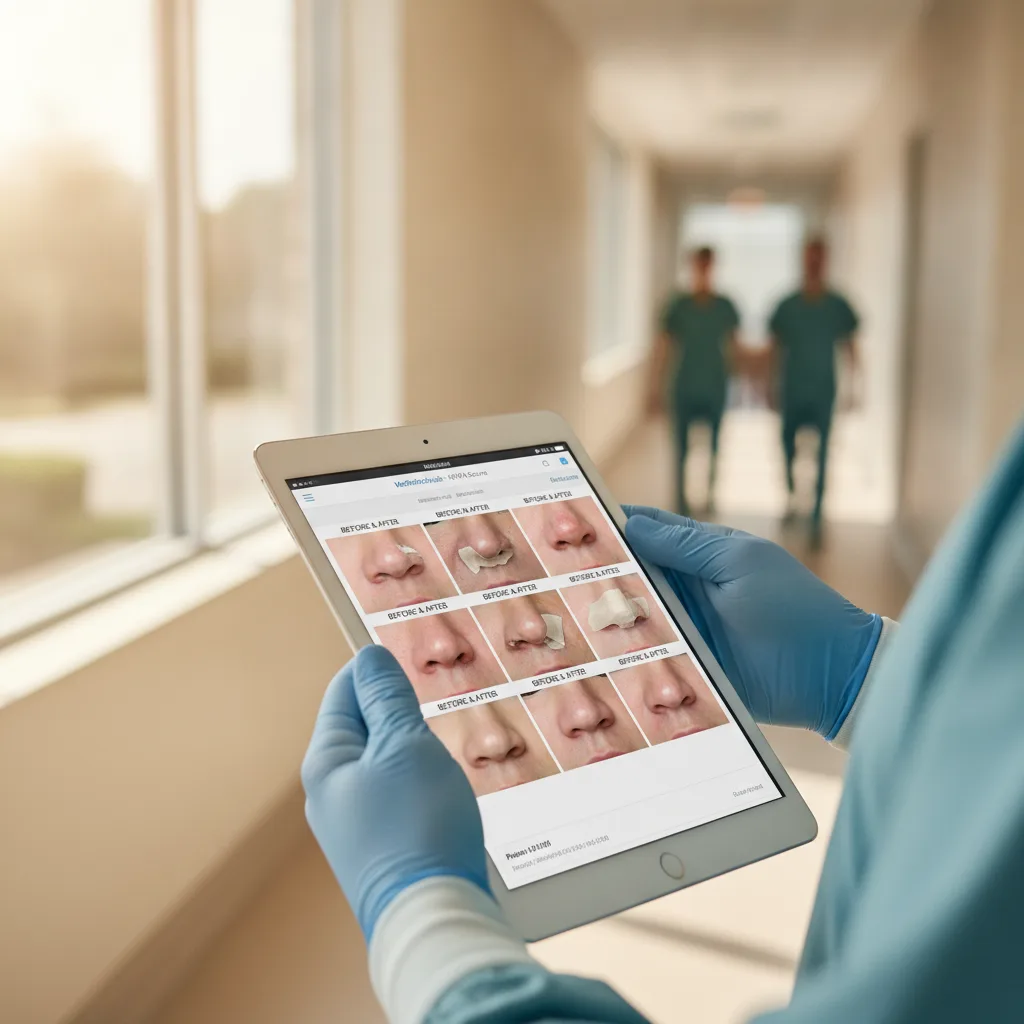
Before-and-after results drive up to 83% of patient acquisition on plastic surgery websites, making the gallery page the highest-stakes page on the site and simultaneously the single most common HIPAA liability. Before-and-after photos require a patient authorization that must be retained for 6 years; penalties for non-compliant images run $100–$50,000 per photo. Use RxPhoto or a HIPAA-compliant gallery tool that stores signed consents alongside the image file. Gallery pages must load under 3 seconds on mobile devices to avoid bounce rates that kill conversion, and Cloudflare's CDN handles that compression without a developer.
A Boca Raton plastic surgery center achieved a 55.9% conversion increase year-over-year, a 40% Google clicks lift, and a 211% increase in organic referral visits after Cardinal Digital Marketing built dedicated location pages and a structured Google Business Profile strategy. The Central Florida plastic surgery practice documented by BlueTone Media grew organic traffic 63% year-over-year and increased contact form completions by 28% through procedure-focused content creation, XML sitemap optimization, and local link building, without a full redesign. The common thread in both cases: each procedure got its own page with its own keyword target, its own before-and-after gallery section, and its own call-to-action rather than a generic contact form at the bottom of a services overview.
A practice spending $5,000 or more per month in cosmetic surgery ad spend without dedicated, procedure-specific landing pages is losing booked consultations every day. The math is unambiguous: moving from a 0.5% to a 2% landing page conversion rate at $2,000 per month in ad spend shifts outcomes from fewer than 2 consultation requests to 2–5. A new website or landing page build is not a vanity project. It is a direct revenue multiplier, and it is the one infrastructure investment that improves every other channel simultaneously. Practices should benchmark their current procedure page conversion rate in GA4 before any agency proposes an ad spend increase.
RxPhoto
From $149/mo
HIPAA-compliant before-and-after photo management with built-in patient consent storage; essential for practices using gallery content as a patient acquisition tool.
Cloudflare
Free to $200/mo
CDN and image compression to keep gallery pages loading under 3 seconds on mobile devices; slow galleries are one of the top causes of high bounce rates on plastic surgery sites.
HIPAA reminder
Google's display network prohibits before-and-after imagery in ads, but your website gallery is the primary acquisition surface for patients who already have high purchase intent. Keep the gallery HIPAA-compliant with RxPhoto or a comparable tool. Do not use standard photo hosting or your CMS media library for patient photos without a signed, retained consent.
Content Marketing and SEO for Plastic Surgery: The Long-Runway Channel That Compounds
Content marketing and search engine optimization compound in a way paid ads do not: Batniji Facial Plastic Surgery recorded a 142% increase in organic conversions after a dedicated content marketing and SEO engagement with Dagmar Marketing, without increasing ad spend. Studio 3 Marketing's SEO work for Ciaravino Total Beauty produced a 54% web traffic compound annual growth rate and the number-one ranking for Top Breast Surgeon Houston. For Dr. Rady Rahban, the result was 7.8x web traffic over five years and 97 page-one keywords. These outcomes take 12–24 months to build, which is exactly why practices that start now have a structural advantage over competitors who keep delaying.
The New Mexico plastic surgery case study adds an AI search dimension that most agencies are not yet tracking: Fuel Online built 58 AI mentions and citation targets alongside traditional keyword positions, contributing to a 157% qualified pipeline increase. As of 2026, ChatGPT, Perplexity, Claude, and Google AI Overviews pull from the same authority signals that organic rankings use: named surgeons, specific procedure outcomes, cited statistics, and targeted content that answers the exact questions prospective patients type. Patient education content organized around procedure FAQs, recovery timelines, and pricing ranges earns citations from AI engines. Generic brand copy does not.
The GLP-1 patient segment is a content opportunity most plastic surgery practices have not yet addressed. As of 2026, 39% of GLP-1 patients under the care of ASPS member surgeons are considering a surgical procedure, 41% are considering a nonsurgical one, and 20% have already had plastic surgery. Body contouring content, covering tummy tuck, arm lift, and thigh lift, targeted at patients who have completed GLP-1 weight-loss cycles is a high-intent search cluster with low current competition. A practice that publishes four to six procedure pages targeting body contouring after weight loss keyword variants before the competition catches up will own those rankings for years. Semrush's competitive gap analysis is the fastest way to confirm which of those terms your competitors are not yet ranking for.
Surfer SEO
From $89/mo
Content grading for procedure and FAQ pages; keyword research identifies which body contouring terms have the best volume-to-competition ratio for GLP-1 patient content.
Semrush
From $139.95/mo
Competitive gap analysis shows which procedure keywords your competitors rank for that your practice does not, the starting point for content prioritization and patient education strategy.
Social Media Presence and Brand Rebuild: The Patient Acquisition Channels Most Cosmetic Surgeons Undervalue
Social media influenced 48.5% of patients who considered cosmetic surgery, per peer-reviewed research published in Plastic and Reconstructive Surgery Global Open in September 2026, and 40% of those patients said social media influenced their surgeon selection specifically. That is not awareness data; that is conversion data. An engagement strategy built around before-and-after results, surgeon Q&A Reels, and patient education carousels functions as a mid-funnel conversion tool, not just brand building. Practices that treat Instagram as a posting obligation rather than a patient acquisition channel are leaving a documented conversion surface unoptimized.
Google began officially indexing public Instagram posts from professional accounts in July 2025, meaning well-optimized Reels, before-and-after carousels, and procedural posts now surface in Google search results for prospective patients. A rhinoplasty before-and-after Reel posted with the surgeon's name, city, and procedure keyword in the caption is now an SEO asset, not just a social asset. Practices that have not audited their Instagram business profile for keyword-rich captions and alt text are leaving a Google-indexable surface unoptimized. Use Later to schedule posts and create consistent caption templates that build social proof while also feeding the Google index.
Brand rebuild produces documented patient volume results: a peer-reviewed case study published September 3, 2026 in Plastic and Reconstructive Surgery Global Open recorded a 91% increase in website traffic and a 21% increase in new patient volume in one year following a professional rebranding initiative. Bitner Facial Plastics achieved 1,000%+ revenue growth and 400%+ return on ad spend after replacing siloed retainers and fragmented reporting with a unified growth system. The brand alignment and reporting consolidation was the change, not a new campaign. Patient trust anchors both outcomes: 68% of patients require a minimum 4-star Google average before booking, and reaching the 107-review median through Podium's automated text request system takes 2–3 months, not a year.
Podium
From $399/mo
Automated post-appointment review request texts to existing patients; the most direct path to reaching the 107-review median that top-performing practices hold as of September 2026.
Later
From $25/mo
Instagram scheduling with keyword-rich caption templates; helps practices maintain a consistent posting cadence for the Google-indexed Instagram content surface.
The Pre-Flight Checklist: What to Confirm Before Any New Patient Acquisition Spend
Every plastic surgery marketing case study above succeeded because the foundational assets were in place before the channel spend went live. The pre-flight checklist is not optional. It is the difference between a 251% conversion increase and a $5,000/month retainer that produces vanity metrics and no booked consultations. The decision-making process for where to invest next marketing dollars must start here, not with the channel. Check each item before signing an agency agreement or increasing ad spend.
The five non-negotiable items: First, at least 25 Google reviews averaging 4.7+ stars. Below this threshold, 47% of prospective patients will not book regardless of how well your ads perform. Second, a website converting at 2%+ on at least one procedure-specific landing page, confirmed in GA4. Third, your Google Business Profile fully optimized with procedure-specific services, 10+ photos, Q&A answered, and a weekly post cadence. GBP optimization alone produced a 285% consultation lift in under 5 months in a documented case study. Fourth, CallRail or equivalent call tracking installed and verified, with separate tracking numbers for each major channel so you can see which sources drive actual calls, not just clicks. Fifth, conversion tracking in Google Ads verified end-to-end. Broken tracking was the primary failure mode in the Mechanysm case study where fixing it alone produced a 251% conversion increase in two months.
Budget context from a September 2026 peer-reviewed framework: most plastic surgery practices allocate 1%–5% of annual revenue to marketing, averaging around $15,000 per year. Practices pursuing aggressive new patient acquisition should plan 8%–10% of annual revenue, with agency retainers running $5,000–$15,000 per month. The Bogota plastic surgeon who generated $40,000 in international revenue in two weeks at a 30:1 ROI did not achieve that with a $1,500/month retainer and a shared-resource agency team. The investment level has to align with the business goals and match the outcome expectation. If your current marketing partner reports on impressions and organic sessions without tying those to monthly consultation volume, that is the first thing to fix.
Quick gut-check
If your practice cannot confirm all five pre-flight items are in place, spend the next 30 days fixing them before increasing any paid channel budget. A $500 investment in Podium to build reviews and a one-time landing page build at $1,500–$3,000 will produce a better return than adding $2,000/month in Google Ads to a site converting at 0.5%.
Don't Spend on Ads Until Your Foundation Converts
The most common failure mode in plastic surgery marketing is not a bad campaign. It is a good campaign pointing at a broken foundation. Before any paid spend increase, confirm your procedure landing pages convert at 2%+, your Google Business Profile has 25+ reviews at 4.7+ stars, and your CallRail tracking accurately attributes calls to the right channel. Every case study above that produced triple-digit results had these three assets in place before the agency touched the ad account. The ones that failed, and they exist even if agencies don't publish them, typically had none of the three.
The seven case studies in this post span Google Ads at $77 per lead, local SEO producing 285% more consultation calls, content marketing compounding at 54% CAGR, and a brand rebuild delivering 1,000%+ revenue growth. None of them required a new tactic. All of them required the same things: procedure-specific assets, verified conversion tracking, a review base above the patient trust threshold, and an agency reporting on consultations booked, not clicks generated. The data-driven strategies that moved real numbers in these case studies are available to any plastic surgery practice willing to audit the foundation before adding spend on top of it. Start with the five pre-flight items. Then call the agency.
Frequently Asked Questions
Ready to get started? Contact Geek Powered Studios today.