
Competitive procedure-level rankings for plastic surgeons — rhinoplasty, facelift, breast augmentation — take 6–12 months in most US metros. Google Business Profile fixes show traction in 14–30 days. Map Pack movement becomes measurable at 60–90 days. Procedure pages start appearing on pages 4–6 by Month 3 and enter the top 10 by Month 6. The full system costs $1,200–$3,500 per month at Texas market rates and produces patient acquisition costs around $200 per consultation — roughly 3x more efficient than the $610-plus Google Ads delivers. One facelift booked through organic search each month covers the entire annual SEO investment.
-
14–30 DaysWhen GBP fixes show first measurable traction in Search Console
-
60–90 DaysWhen Google Maps local pack movement becomes trackable by zip code
-
$200 vs. $610+Organic patient acquisition cost vs. Google Ads cost per consultation
-
18.9% vs. 10.7%Organic conversion rate vs. PPC conversion rate for plastic surgery leads
-
2,200 WordsAverage word count of procedure pages holding positions 1–3 in competitive markets
-
44%Share of all clicks and calls captured by Google Maps local pack results
-
$1,200–$3,500/moPlastic surgery SEO cost in Texas markets; one facelift covers the full year
-
89%Healthcare queries that now trigger a Google AI Overview as of 2026
Effective SEO for plastic surgeons produces patient acquisition costs around $200 per consultation — roughly 3x more efficient than the $610-plus Google Ads delivers — but only when it follows a specific phase-by-phase system. The US cosmetic surgery market sits at $21.63 billion as of 2026, with 1.58 million surgical procedures performed in 2024 alone. Organic search drives 38% of all US plastic surgery website traffic. The demand is there. The question most practice owners and agency buyers are actually asking is: how long until we see it? This guide gives you a milestone-by-milestone ranking clock — from Day 14 through Month 12 — with the exact actions, tools, and metrics that prove progress before a single new consultation arrives.
Before you start
- A Google Business Profile claimed and verified for your practice location
- Google Search Console and Google Analytics 4 installed on your website
- A Semrush ($139/mo) or Ahrefs ($129/mo) subscription for keyword research and competitor gap analysis
- Individual procedure pages on the site — or budget and writers to build them (one page per procedure per location)
- A review management process using Podium ($399/mo) or Birdeye ($299/mo) to automate post-procedure SMS requests
- CallRail ($45/mo) installed so phone calls are attributed to organic search, Google Maps, or paid channels from day one

Run a Keyword and Competitor Gap Audit to Choose Your Procedure Targets
Effective SEO for plastic surgeons starts with choosing the right procedure keywords before writing a single word of content. As of 2026, rhinoplasty drives roughly 90,000 US searches per month, liposuction about 83,000, tummy tuck about 62,000, breast augmentation about 45,000, and mommy makeover about 36,000 — those are the five categories worth building dedicated procedure pages around first. Trying to rank for all of them simultaneously from a standing start is a losing strategy; rank the procedures by revenue per case and local search volume, then attack them in order.
Pull your top three competitors' ranking keyword lists in Semrush or Ahrefs using the Keyword Gap tool. Identify valuable keywords they hold on page one that your site does not appear in the top 50 for — those gaps are your fastest path to organic traffic. Long-tail keyword variants with three or more words, such as 'facelift surgeon accepting new patients Houston' or 'rhinoplasty before and after Dallas,' convert at 2.8x the rate of single-word searches and face far less competition in most Texas metros.
Plastic surgery falls squarely inside Google's YMYL classification — Your Money or Your Life — meaning every procedure page is evaluated under the strictest E-E-A-T standards. A surgeon's board certification, fellowship training, surgical volume, and professional recognition are not marketing talking points; they are literal ranking signals that must appear on each procedure page, not just footer copy. Build your keyword list with that E-E-A-T layer in mind from the start. A facelift averages $12,000–$19,000 in surgeon fees, so even one extra case per month from organic search covers a full year of plastic surgery SEO services at Texas market rates of $1,200–$3,500 per month — prioritize by revenue, not search volume.
Semrush
$139/mo
Keyword Gap and Position Tracking tools identify competitor procedure rankings and surface long-tail targets your site is missing.
Ahrefs
$129/mo
Content Gap report and SERP history show which procedure pages have held top-3 positions for 6-plus months — the pages worth modeling.
Prioritize by revenue, not volume
A facelift averages $12,000–$19,000 in surgeon fees. One extra case per month from organic search covers a full year of SEO investment at Texas market rates. Rank that page first, even if rhinoplasty has higher search volume.
Fix Technical SEO and Core Web Vitals Before Publishing New Content
Technical SEO problems prevent Google from crawling and indexing your procedure pages, and no amount of content investment fixes a plastic surgery website that Google cannot read. Run a full crawl with Screaming Frog (free up to 500 URLs) and cross-reference errors against Google Search Console's Coverage report. Common blockers for plastic surgery practices: pages marked noindex from a prior developer, slow mobile load times due to uncompressed before-and-after gallery images, and duplicate title tags across procedure pages that signal thin content to Google's algorithms.
Core Web Vitals are a direct ranking factor, and mobile devices account for the majority of patient searches. Target a Largest Contentful Paint under 2.5 seconds, a Cumulative Layout Shift score below 0.1, and an Interaction to Next Paint under 200ms. Before-and-after photo galleries are the single biggest culprit for LCP failures on plastic surgery websites — convert images to WebP format and implement lazy loading to cut load time by 40–60% without sacrificing visual quality. These technical fixes are search optimization prerequisites, not optional improvements.
Structured data earns up to a 30% boost in click-through rate on search results by adding star ratings, physician credentials, and procedure-specific details directly to the search snippet. Implement MedicalProcedure, Physician, and LocalBusiness schema on every relevant page. Google AI Overviews appear on roughly 89% of healthcare-related queries as of 2026, and structured data is one of the primary signals that gets a practice's content cited inside those AI answers rather than displaced by them. LegitScript certification and MedicalProcedure structured data are now required for full search visibility on most plastic surgery keywords — without schema, your procedure pages cannot qualify for rich results or AI Overview citations.
Screaming Frog SEO Spider
Free up to 500 URLs; £249/yr unlimited
Crawls the entire site and surfaces broken links, duplicate meta descriptions, missing title tags, and noindex errors in one report.
Google Search Console
Free
Shows exactly which procedure pages Google has indexed, which are excluded, and which Core Web Vitals are failing on mobile.
Schema is required, not optional
LegitScript certification and MedicalProcedure structured data are now required for full search visibility on most plastic surgery keywords as of 2026. Without schema, your procedure pages cannot qualify for rich results or AI Overview citations — and 89% of healthcare queries now trigger an AI Overview.
Build Individual Procedure Pages That Meet YMYL Content Standards
One dedicated page per procedure per location is the single highest-leverage action in plastic surgery SEO. A documented case study found that building 12 individual procedure pages — replacing a single generic services page — produced a 156% increase in organic traffic within four months and a 43% lift in consultation bookings. Competitors holding positions 1–3 on procedure-level searches average 2,200 words per page, with structured sections covering candidate criteria, procedure steps, costs, recovery timelines, risks, and before-and-after galleries. That word count is the floor, not the ceiling.
Each procedure page must lead with surgeon-authored or surgeon-reviewed content that surfaces E-E-A-T signals above the fold: board certification (ABPS), fellowship training, surgical case volume, and peer recognition. Authorship markup linking back to a physician bio page reinforces these signals across the site. Google measures these signals on YMYL healthcare content at the strictest threshold. Meta descriptions for procedure pages should include the city name and a specific outcome claim — 'Board-certified Houston rhinoplasty surgeon. View before-and-after photos and book a consultation.' — because the meta description is the ad copy that converts a ranking into a click.
Target a mix of primary procedure terms and local modifiers for each page: 'rhinoplasty Houston,' 'nose job surgeon Katy TX,' and longer patient-intent phrases like 'how much does rhinoplasty cost in Houston.' Internal linking from blog posts, the surgeon bio page, and the homepage to each procedure page distributes authority and signals topical depth. Content creation is not a one-time build — update each procedure page at least once per quarter to signal freshness, since Google's December 2025 Core Update hit healthcare content hardest, recording a volatility score of 8.7 out of 10. Roughly 67% of health-related websites saw significant ranking changes in that update; practices with thin service pages were the ones that dropped.
2,200 words is the floor, not the ceiling
Top-ranking procedure pages average 2,200 words. That word count only works if it covers costs, recovery, candidacy, FAQs answering questions patients actually ask, and a before-and-after gallery. High quality content beats quantity every time Google runs a core update — but thin content never beats comprehensive content in the plastic surgery space.
Optimize Your Google Business Profile for Local SEO and Map Pack Rankings
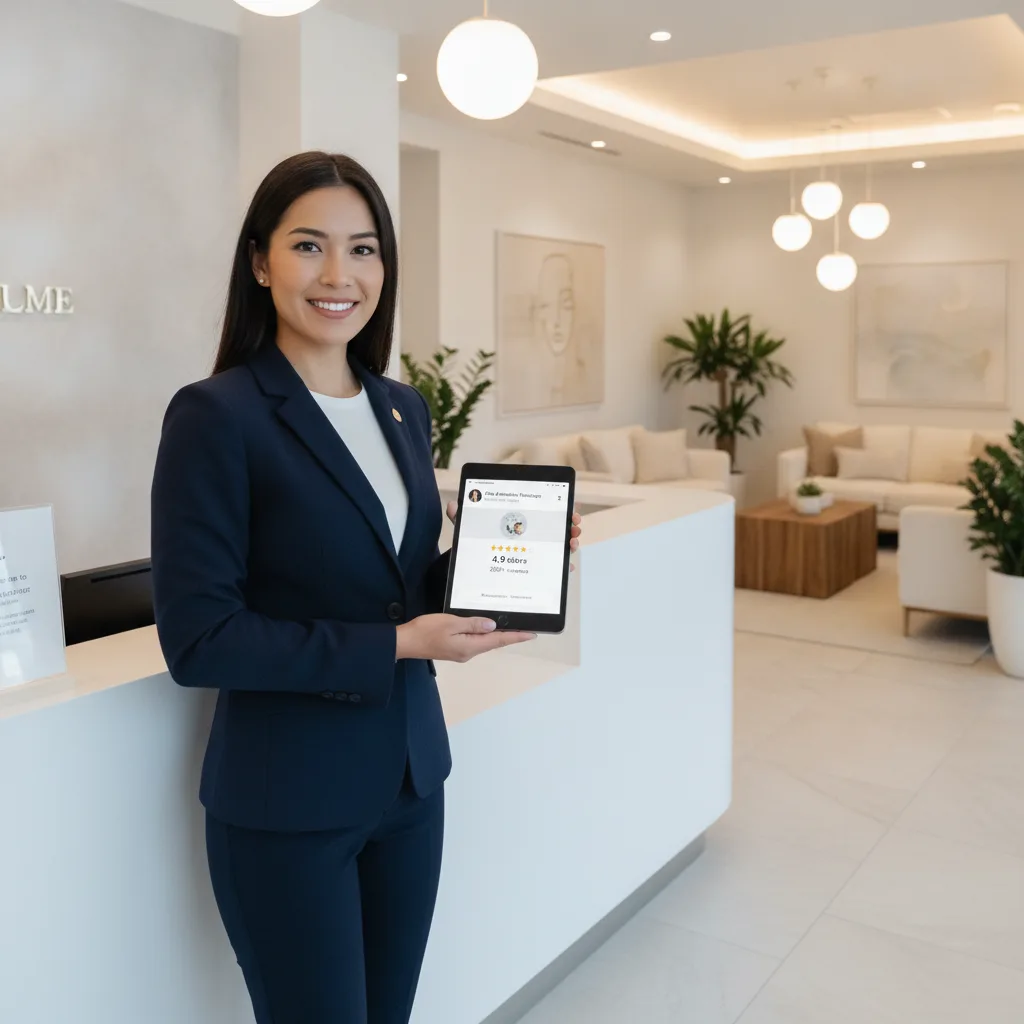
Google Maps local pack rankings capture 44% of all clicks and calls for local-intent plastic surgery searches — 'rhinoplasty near me' or 'plastic surgeon Austin' — making Google Business Profile optimization the fastest-return action in the entire plastic surgery SEO stack. GBP fixes show initial traction in 14–30 days, and Map Pack movement becomes measurable in 60–90 days, making this the first milestone marker that proves the SEO strategy is working before procedure pages reach competitive organic search engine results positions.
Google Business Profile optimization for plastic surgery practices means completing every available field: primary category set to 'Plastic Surgeon,' all relevant secondary categories added, services listed at the procedure level (not just 'plastic surgery'), hours confirmed accurate, and the website URL pointing to the correct location page. Add at least 20 photos of the practice interior, staff, and before-and-after results with geotagged metadata. Consistent practice information — name, address, and phone number matching exactly across the GBP, website, and every directory listing — is a non-negotiable local ranking factor that BrightLocal's citation audit tool surfaces in minutes. Multi-location practices need a separate citation profile for each office address.
Competitive markets require 150–400 reviews with consistent recent activity to dominate the Google Maps local pack. Review velocity matters more than raw count: 74% of consumers only value reviews from the last three months, and a practice with 40 static reviews is systematically outranked by a competitor with 200 reviews and 15 posted in the last 90 days. At least 68% of patients require a 4-star minimum before booking a consultation, and 47% will not trust a practice with fewer than 20 reviews. Reputation management is not a separate marketing program — it is a direct local SEO input. An automated SMS request via Podium or Birdeye sent within 48 hours of a post-procedure appointment delivers review velocity without requiring staff to manually chase patients.
BrightLocal
$39/mo
Audits NAP consistency across 50-plus directories, tracks Google Maps ranking by zip code, and identifies citation gaps hurting local SEO.
Podium
$399/mo
Automates SMS review requests post-procedure, routing patients directly to Google or RealSelf to maximize review velocity.
Birdeye
$299/mo
Monitors reviews across Google, Healthgrades, RealSelf, and Yelp from a single dashboard and flags negative reviews before they decay ratings.
Build Authority Through Backlinks, Citations, and Reputation Signals
Authority building for plastic surgery practices works on two tracks: earned backlinks from high-authority medical and local publications, and consistent citations across healthcare directory listings. Backlinks from ASPS.org, Healthgrades, RealSelf, Doximity, and local news sites signal domain authority to Google's algorithms and directly improve procedure page rankings. A single editorial mention in a city magazine or a quoted expert appearance in a news article on cosmetic procedures can produce backlinks that accelerate ranking timelines by 4–6 weeks. Practices with strong backlink profiles from national organizations like ASPS and ASAPS carry more ranking weight than those relying solely on on-page content.
Directory listings for plastic surgery practices must cover Google Business Profile, Yelp, Healthgrades, RealSelf, Vitals, Castle Connolly, and Zocdoc at minimum. Consistent practice information — identical NAP data across all platforms — is the baseline requirement for local search visibility. BrightLocal's citation builder automates submissions to 50-plus directories and flags discrepancies that suppress local pack rankings. Multi-location practices need a separate citation profile for each office address, not a single profile listing multiple locations.
Patient testimonials on the practice website, video testimonials on procedure pages, and surgeon-authored articles published on third-party medical sites all contribute to E-E-A-T prominence signals. Google measures how often the surgeon's name appears as a cited authority across the web — not just on the plastic surgery website. A board-certified surgeon quoted in a cosmetic surgery marketing publication or recognized by a national society carries more ranking weight than a dozen generic blog posts on the same topic. A complete, active RealSelf profile with patient testimonials, before-and-after photos, and answered Q&As functions as a high-authority backlink and a local prominence signal — practices that ignore it hand authority to competitors who maintain active profiles.
BrightLocal
$39/mo
Builds and audits citations across 50-plus healthcare and local directories, tracking NAP consistency at the zip code level.
RealSelf is a ranking signal, not just a review platform
A complete, active RealSelf profile with patient testimonials, before-and-after photos, and answered Q&As functions as a high-authority backlink and a local prominence signal. Practices that ignore it hand authority to competitors who maintain active profiles in the plastic surgery aesthetics space.
Optimize for Generative Engine Optimization and AI Search Visibility
Generative Engine Optimization (GEO) is now a required layer of any plastic surgery SEO strategy, not an optional add-on. As of 2026, AI assistants account for 45% of local recommendations alongside Google's dominant search market share, and Google AI Overviews appear on roughly 89% of healthcare-related queries. When an AI Overview is present, organic click-through rates drop by an estimated 61% for everyone not cited inside the AI answer — meaning the goal of search optimization shifts from ranking on page one to being the source the AI cites.
Getting cited in AI search results from ChatGPT, Perplexity, and Google AI Overviews requires content structured to answer specific questions patients ask in self-contained paragraphs. Write procedure pages with clear FAQ sections that lead with a direct answer sentence — 'Rhinoplasty in Houston costs $7,000–$15,000 total, including anesthesia and facility fees' — followed by two to three supporting sentences. AI systems extract these answer units and attribute them to the source. This structure also satisfies Google's helpful content signals for YMYL pages and improves organic visibility across classic search engine results as well.
Practices that implemented GEO alongside traditional plastic surgery SEO in 2025 reduced patient acquisition costs by 19% within six months. The tactical requirements: structured data markup on every procedure page, FAQ schema on Q&A sections, physician-attributed authorship markup, and high-authority backlinks pointing to the specific page being optimized. AI search engines weight citation density — how many other authoritative sources reference the same practice or surgeon — as heavily as Google weighs backlinks for classic organic search engine results. Cosmetic surgery marketing strategies that ignore the AI search layer are operating on a 2023 playbook in a 2026 search environment.
AI Overview citations require a different content structure
AI answers do not cite pages that bury the answer three paragraphs in. Every procedure page FAQ, cost section, and recovery timeline must open with a single sentence that is a complete, standalone answer. That sentence is what Perplexity, ChatGPT, and Google AI Overviews pull and attribute to your practice.
Track the Ranking Clock with CallRail and Monthly KPI Reviews
Plastic surgery SEO produces measurable signals at every phase — the mistake is waiting for consultation requests before checking progress. Set up four tracking layers from day one: CallRail for phone call attribution by source (organic vs. GBP vs. paid search), Google Search Console for keyword impression and position trends, BrightLocal for Maps ranking movement by zip code, and Google Analytics 4 for conversion optimization on form submissions and booking page visits. With these four search tools in place, you can show clear evidence of progress at Day 14 (GBP data populating in Search Console), Month 3 (keyword impressions rising for target procedure terms), Month 6 (Map Pack positions moving into the top 5 for at least two procedures), and Month 12 (stable page-one rankings producing qualified patient leads at an organic conversion rate of 18.9% versus PPC's 10.7%).
The milestone calendar for plastic surgery SEO in a Texas metro looks like this: Days 14–30, GBP fixes indexed and citation corrections live; Days 60–90, Map Pack movement measurable for 'plastic surgeon [city]' searches; Month 3, procedure pages indexed and appearing on pages 4–6 for target keywords; Month 6, two to three procedure pages in the top 10, organic website traffic up 30–50%; Month 12, stable competitive rankings for the primary procedure, patient acquisition cost around $200 versus $610-plus for Google Ads. One additional facelift booked through organic search each month — at $12,000–$19,000 per case — repays the annual SEO investment at any Texas market rate. Breast augmentation at $4,575–$8,000 per case achieves the same ROI within two to three bookings.
The ad policy landscape as of 2026 makes organic search the only compounding patient acquisition channel for most plastic surgery practices. Meta's January 2025 lower-funnel ban removed consultation bookings as an optimization event for healthcare advertisers. Plastic surgery is not eligible for Google Local Services Ads in most US markets. Google removed Mature Cosmetic Procedures from its Sexual Content restrictions on September 22, 2025, opening paid reach for breast augmentation and body contouring, but paid search still costs $8–$25 per click and delivers a 10.7% conversion rate versus organic's 18.9%. Organic search drives 38% of US plastic surgery website traffic and produces patient acquisition costs around $200 — roughly 3x more efficient than paid search. The ranking clock is non-negotiable, but the compounding return makes it the most durable lead generation channel available to plastic surgeons in a competitive market.
CallRail
$45/mo
Attributes inbound phone calls to organic search, Google Maps, or paid channels — the clearest proof that SEO is generating qualified patient leads.
Google Analytics 4
Free
Tracks conversion optimization on form submissions and booking page visits, segmented by procedure page and traffic source.

The YMYL Timeline Is Not Negotiable — But the Compounding Is Real
Plastic surgery sits inside Google's strictest content classification. Google's December 2025 Core Update produced healthcare ranking volatility of 8.7 out of 10 — the highest score of 2025 — with roughly 67% of health-related websites experiencing significant ranking changes. Practices that cut corners on E-E-A-T signals, procedure page depth, or structured data are the ones that dropped. The 6–12 month timeline for stable competitive procedure rankings reflects how long Google takes to accumulate enough trust signals before surfacing a YMYL page to prospective patients making high-stakes decisions. Practices that invest consistently for 12 months and hit the milestone benchmarks — 150-plus reviews, 2,200-word procedure pages, GBP fully optimized, structured data in place — achieve organic patient acquisition costs around $200 per consultation. That is three times more efficient than the $610-plus paid search delivers. One facelift case each month, at $12,000–$19,000 in surgeon fees, covers a full year of plastic surgery SEO services at Texas market rates of $1,200–$3,500 per month.
The ranking clock for SEO for plastic surgeons starts the day the first technical fix goes live — not the day new content publishes, not the day a retainer is signed. Practices that treat the 6–12 month timeline as a reason to delay are handing local Map Pack positions, procedure-level page-one rankings, and AI Overview citations to competitors who started earlier. Organic search drives 38% of US plastic surgery website traffic as of 2026, and the US cosmetic surgery market sits at $21.63 billion with 1.58 million surgical procedures performed in 2024 alone. The demand exists. The digital presence required to capture it is a seven-step system with a known timeline and proven ROI math. The only question is whether your procedure pages are the ones patients and AI search engines find when they search.
Frequently Asked Questions
Ready to get started? Contact Geek Powered Studios today.