
To turn weight loss program reviews into booked consultations, build a 7-step system: define marketing-grade reviews (specific pounds lost, secondary health benefit, program name), close the HIPAA and FTC compliance gap with attorney-drafted authorization forms, automate review requests via Podium or Birdeye triggered by your practice management system, use review velocity to climb the Google Local Pack, deploy testimonials above the fold on your landing page, distribute reviews across Instagram Reels, email nurture sequences, and Google Business Profile posts, then measure three KPIs monthly: review velocity, landing page conversion rate, and consultation close rate. As of 2026, 90% of patients read weight loss program reviews before choosing a provider, and review velocity influences 20-25% of Local Pack rankings.
-
90%Of patients read reviews before choosing a weight loss provider
-
3–5 hoursTotal setup time; system runs automatically after that
-
6–8/monthNew Google reviews needed for top-3 Local Pack in metro Texas
-
Up to 380%Conversion lift from reviews on high-priced service landing pages
-
$25,000Documented HIPAA fine for posting patient photos without proper authorization
-
4.5–4.9 starsIdeal Google rating range — a perfect 5.0 can signal manipulation
Weight loss program reviews are the highest-ROI marketing asset most clinics already own — and systematically fail to collect. As of 2026, 90% of patients read reviews before choosing a weight loss provider, and 84% check them before booking a single consultation. Those patients are not reading your ad copy or your homepage headline. They are reading what past patients said about losing weight on your plan, what changed in their body beyond the scale, and whether the program felt worth the $800–$1,500 per month it costs. This 7-step system shows clinic owners and their agency teams how to define, collect, comply with, and deploy patient results — turning every pound lost into a booking asset that compounds without a cost-per-click.
Before you start
- Active Google Business Profile claimed and verified for your clinic location(s)
- A practice management system (Jane App, Kareo, or similar) that can trigger post-visit workflows based on appointment type or outcome flag
- HIPAA-compliant testimonial authorization form drafted or reviewed by your healthcare attorney — a generic media release or standard intake consent is legally insufficient for marketing use
- Podium or Birdeye account (free trial available on both) with SMS sending capability connected to your clinic's phone number
- At least 5 completed patient cases with documented results: pounds lost, weeks on program, and at least one secondary health improvement each
- Basic CMS access to your clinic's landing page to add or edit a testimonials section above the fold
Define What a Marketing-Grade Weight Loss Program Review Actually Is
A marketing-grade weight loss program review contains three elements: a specific result in measurable units (pounds lost, weeks to goal, dress sizes dropped), at least one secondary health improvement (blood pressure, energy, chronic pain in the knees, sleep quality), and a named program or treatment context so the reader understands what produced the result. Vague praise like 'This place changed my life!' is not marketing-grade. It cannot be cited by an AI search engine, cannot anchor an FTC-compliant disclosure, and gives a prospective patient no basis for deciding whether the program fits their situation.
The secondary health improvement matters more than most clinic owners realize. People who decided to research a GLP-1 program because of blood sugar issues, pain in their knees, or persistent fatigue respond to reviews that mirror their own reasons for seeking help. A review that says 'I lost 34 pounds in 16 weeks on the semaglutide plan and my doctor cut my blood pressure medication in half' speaks to three separate patient personas at once. Train your front desk and care coordinators to ask one follow-up question after a milestone appointment: 'Besides the weight, what else feels different in your body?' That answer is the secondary hook — and it is usually the detail that converts a reader who was stuck on the fence.
Video beats text at every conversion metric as of 2026. Video testimonials lift B2C landing page conversions by 61% and produce up to 80% higher overall conversion rates than written-only reviews. As of 2026, 87% of businesses use video testimonials, up 21% in two years. A 60-90 second phone-recorded Reel filmed in-clinic immediately after a milestone appointment outperforms a polished studio shoot because it reads as authentic rather than produced. Patients discuss health improvements alongside weight loss — not just dress size — in short, unscripted clips. That is the format people love to watch and share.
Quick filter
Score each submitted review on three criteria: specific number (pounds, weeks, or lab value), secondary benefit (energy, pain, blood sugar, sleep), and program name. All three: marketing-grade. Two: edit with the patient's permission before publishing. One or zero: thank the patient privately and ask a follow-up question before requesting a public post.
Close the HIPAA and FTC Compliance Gap Before Publishing Anything
Under HIPAA, any patient testimonial that includes Protected Health Information — a name, photo, video, or treatment detail — requires explicit written authorization before publication in any clinic-controlled channel. A general media release or the consent form patients sign at intake is legally insufficient for marketing use. One clinic paid a $25,000 HIPAA fine specifically for posting patient photos and health information on its website without proper marketing-specific authorization. Your authorization form must be drafted or reviewed by a healthcare attorney, must specify exactly where the content will appear (website, Instagram, Google, email), and must include an expiration date. Two years is standard practice across the industry.
The FTC compliance trap is separate from HIPAA and catches more clinics off guard. Under the FTC's revised health products guidance, if a weight loss testimonial reports results that are not typical — for example, 'I lost 50 pounds in six months' — the ad must clearly and conspicuously state what results consumers can actually expect. The old 'results not typical' disclaimer is no longer sufficient. This means every testimonial you publish must be paired with a disclosure that reflects your program's actual average outcome. If your semaglutide program averages 18-22 pounds lost over 12 weeks, that number must appear near every individual testimonial that reports a higher result. Clinics that skip this step agree to significant liability without realizing it.
Build a compliance checklist into your content approval workflow before any review goes live. The checklist has four gates: (1) signed HIPAA marketing authorization on file with an active expiration date, (2) FTC typicality disclosure drafted and approved by counsel, (3) patient-approved final text or video reviewed for accuracy, (4) expiration date calendared for annual audit. Clinics that miss this step face not just fines but the removal of their entire testimonial library — resetting their Google review count to zero and losing landing page conversion assets that took months to build.
Solutionreach
Custom pricing (typically $300–$500/mo for clinics)
Stores HIPAA-compliant patient communication records and flags consent status — useful for tracking which patients have active marketing authorizations on file and which are past their two-year expiration.
Annual audit rule
Set a recurring calendar event every October to audit all published testimonials. Any authorization that has passed its two-year expiration date triggers an immediate unpublish. Re-request authorization before the content goes back up. Missing this step is how clinics accumulate compliance debt that surfaces during a state board audit.
Build an Automated Review Request System That Runs Without Staff Effort
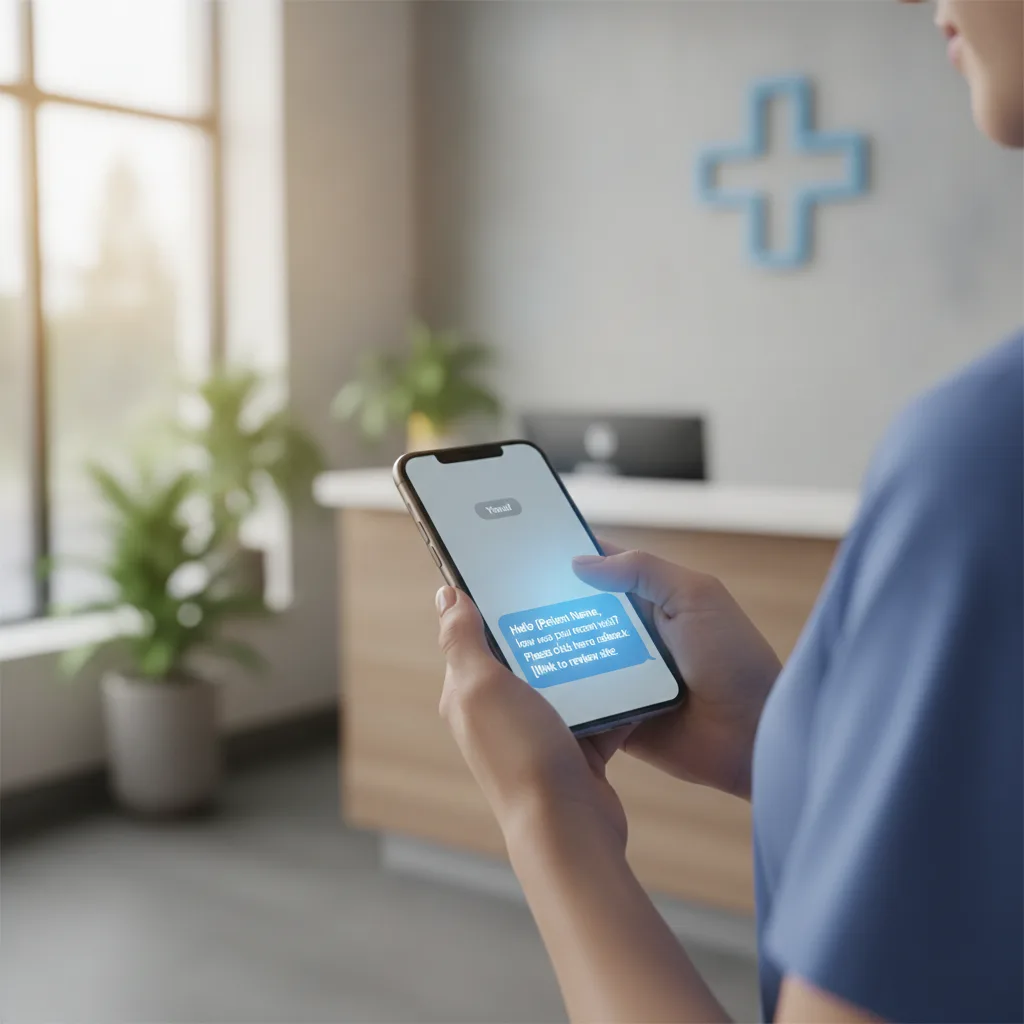
Most patients who lose weight on your program and feel great about their results will never leave a review — not because they are unhappy, but because they forget and nobody asked. An automated post-visit SMS sent within 24 hours of a milestone appointment (week-8 check-in, program graduation, or first 20-pound goal) closes that gap without requiring front desk intervention. The timing of the trigger is the critical operational detail: neither Birdeye nor Podium knows when a patient completed a treatment phase, so your practice management system must fire the trigger based on appointment type or outcome flag, not visit count.
For single-location clinics with a Google-first strategy, Podium's SMS-first workflow is the right starting point. It automates review requests to Google and Facebook, integrates with most practice management platforms via Zapier, and produces a 2-2.5x review volume increase in the first 90 days. For multi-location groups or any clinic that needs coverage across Healthgrades, Yelp, Zocdoc, and 200-plus other platforms simultaneously, Birdeye is the correct choice. It delivers a 3x review volume increase in the first 90 days with its automated post-visit SMS system. The decision is not about which app is better in the abstract — it is about how many locations you manage and how broadly you need reputation monitoring to reach.
Configure three message variants in your SMS workflow to avoid response fatigue: a milestone message ('You hit your 20-pound goal — we are so proud of you. Would you share your experience?'), a program-graduation message ('You completed the program. Your results are inspiring — a 30-second Google review helps families like yours find us.'), and a 14-day re-send for non-responders. Cap total outreach at two attempts per patient per program cycle. A clinic that activates this system goes from collecting 3-4 organic reviews per month to 10-15 within the first quarter — a shift that directly moves its Google Local Pack position.
Podium
From $399/mo
SMS-first review automation focused on Google and Facebook — best fit for single-location weight loss clinics that want fast Google review velocity without enterprise overhead.
Birdeye
From $299/mo per location
Monitors 200-plus review platforms and automates post-visit SMS requests — the right choice for multi-location GLP-1 clinic groups needing broad reputation coverage.
Zapier
From $19.99/mo
Connects your practice management system to Podium or Birdeye so appointment completions automatically trigger review requests without manual exports or staff effort.

Use Review Velocity to Climb Weight Loss Program Rankings in the Google Local Pack
Google Reviews influence 20-25% of Local Pack ranking signals, and review velocity — how frequently new reviews arrive — is the single factor Google weighs most heavily when sorting weight loss clinics in the map pack. A clinic with 80 reviews averaging 4.7 stars will almost always outrank a competitor sitting at 150 total reviews with no recent activity. The algorithm reads stale review volume as a signal that the business is inactive or declining. Three new reviews per month sustained over six months will move a clinic from position 5-7 in the local pack to position 1-3 in most mid-sized Texas markets.
The ideal Google rating for a medical weight loss clinic sits between 4.5 and 4.9 stars. A perfect 5.0 rating can appear suspicious to Google's algorithm and may signal review manipulation — costing ranking rather than improving it. This means suppressing or ignoring negative reviews is the wrong plan. Respond to every negative review within 48 hours, address the specific concern, and offer a direct resolution path. A handled negative review signals to both Google and prospective patients that real people run the clinic. One negative review responded to professionally does less damage than five ignored. Beyond that, review velocity also feeds AI Overview citations in Google Search — when a patient asks an AI engine 'What is the best weight loss program in Dallas?' the AI pulls structured data from Google Business Profiles including recent review text.
Clinics whose reviews mention specific program names — semaglutide, GLP-1, intermittent fasting protocols, calorie counting coaching — are more likely to surface in AI-generated answers than clinics with generic praise. This is exactly why marketing-grade reviews (Step 1) and AI search visibility are directly linked, not separate workstreams. The review text is the training data the AI reads to understand what your clinic actually does and who it helps. A review that says 'I learned to eat differently, stopped taking diet pills, and lost 28 pounds in 12 weeks on the clinic's semaglutide plan' is doing SEO and AI citation work simultaneously.
Velocity benchmark
Target a minimum of 3 new Google reviews per month to stay competitive in a metro market. In high-competition markets like Austin, Dallas, or Houston, 6-8 per month is the floor for top-3 local pack positioning. Pull your current 90-day review count from Google Business Profile Insights before activating your automated system so you have a clean baseline to track against.
Deploy Weight Loss Program Reviews on Your Landing Page Above the Fold
Placing 3-5 patient testimonials with photos, first names, program context, and FTC-compliant disclaimers on your weight loss program landing page produces a 10-15% lift in consultation bookings. Add pricing transparency on the same page — showing your $800-$1,500/month GLP-1 program range or total 6-month investment of $3,000-$18,000 depending on plan — and that lift jumps to 30-40%. The single most effective landing page layout puts a video testimonial within the first two scrolls, a 3-review text block with star ratings below the hero section, and a disclaimer line anchored directly beneath the testimonial cluster. That disclaimer reads: 'Average patient on our 12-week semaglutide plan loses 18-22 pounds.'
Conversion data backs the investment: displaying reviews on a landing page raises conversion by up to 380% for high-priced services, which is exactly the category medical weight loss occupies at $3,000-$18,000 per six-month program. Revenue per website visitor increases by 62% when testimonials are present. These are not marginal improvements. They are the difference between a landing page that converts at 3% and one that converts at 8-15%, which is the benchmark for optimized medical weight loss pages as of 2026. Every week a clinic runs paid traffic to a testimonial-free landing page, it pays for clicks that a competitor with a testimonial section is converting.
Structure each testimonial block to do three jobs at once: cite a specific result so an AI engine can quote it, name the program so the reader self-selects, and include the FTC-required expected-results disclosure so the clinic stays compliant. Example structure: 'Maria T. lost 31 pounds in 14 weeks on our GLP-1 semaglutide plan. She also reported better energy levels and less chronic pain in her knees. [Disclaimer: Patients on our 12-week program lose an average of 18-22 pounds. Individual results vary based on starting weight, diet adherence, and exercise habits.]' That block is compliant, citable, and conversion-optimized simultaneously.
Distribute Weight Loss Reviews Across Every Patient Touchpoint
Weight loss clinics with strong patient transformation content libraries report Instagram driving 20-40% of new patient consultation requests as of 2026. The format that performs: 60-90 second Reels where a patient describes the weight loss journey in their own words — starting point, the program plan they committed to, what they eat now versus what they used to eat, and the moment they realized their body had changed. Avoid static before-and-after photos. Ad platforms flag them, and organic reach on static transformation images dropped sharply in 2025. Health improvement narratives stay up and earn shares. A patient saying 'I used to struggle with intermittent fasting until the clinic's plan shifted my metabolism' is an awesome piece of content that platforms reward with reach.
Inside your email nurture sequence, add a testimonial block at Day 7 — the point where new leads go cold fastest. Adding social proof to nurture emails cuts unsubscribe rates by up to 18%. The Day 7 email structure: subject line that names a specific result ('How Maria lost 31 lbs without surgery or diet pills'), one 3-paragraph patient story in the body, the FTC-required average results disclosure, and a single CTA to book a consultation. Do not use this slot for a promotional offer. The testimonial does the persuasion; the offer competes with it.
Post one testimonial per week to your Google Business Profile as a Google Post. These posts appear in the Knowledge Panel during branded searches and in some Local Pack results. A clinic posting weekly testimonials with the patient's first name, program name, and pound result signals ongoing activity to Google's algorithm — reinforcing the review velocity signals from Step 4. Instagram, email nurture, and Google Posts together mean a prospective patient encounters your patient results at least three times before they book. Three exposures is the minimum repetition threshold for high-consideration healthcare decisions costing $800-$1,500 per month. Incorporate this cadence into a simple content calendar and batch-schedule it monthly.
Meta Business Suite
Free
Schedule Instagram Reels and Facebook posts in one place — use it to batch-post testimonial videos on a weekly cadence without daily manual uploads.
Canva Pro
$15/mo
Build HIPAA-compliant testimonial graphics with patient photos, first names, and FTC disclaimer text in a brand-consistent template that posts correctly to both Instagram and Google Business Profile.
Measure Review ROI With Three Numbers and Adjust Monthly
Three metrics determine whether your review system is working: (1) review velocity — new Google reviews per 30 days, with a floor of 3 for competitive markets and a target of 6-8 for metro Texas markets; (2) landing page consultation conversion rate — anything below 8% on a testimonial-optimized page means the testimonials are not specific enough or the FTC disclosure is placed too prominently and disrupting the flow; (3) consultation-to-patient close rate — if your review quality is high, patients arrive pre-sold and close rates should run 55-70% for GLP-1 programs priced at $800-$1,500 per month. Track all three in a simple app or spreadsheet and review them on the same day each month.
Pull a monthly report from your practice management system that matches new patient source (Google, Instagram, email, referral) to their first appointment date. Cross-reference with your Google Business Profile Insights to identify which review months coincided with traffic spikes. A 30-day lag between a review surge and a booking surge is the standard pattern. Clinics that run this report monthly identify which patient story type drives the most consultations — chronic pain resolution, rapid weight loss, or metabolic health improvement — and then prioritize collecting more reviews in that category. The data tells you where to point the system.
Set a 90-day review system audit: check that HIPAA authorizations are current, verify all published testimonials still carry active consent, confirm FTC disclosures reflect your actual average program outcomes (which shift as your patient population and diet protocols change), and update your SMS request templates if response rates have dropped below 15%. A response rate below 15% on the initial SMS usually means the message is too long, the timing is off, or the trigger is firing at the wrong appointment type. Adjust one variable at a time and re-measure for 30 days before changing a second variable. That discipline — one change, 30 days, then evaluate — is what separates clinics that get better results from those that stay stuck.
Benchmark to beat
90% of patients read weight loss program reviews before choosing a provider, and 84% check reviews before booking a single consultation. If your clinic is generating fewer than 3 new Google reviews per month, you are effectively invisible to the majority of your prospective patients — regardless of how much you spend on paid search or social ads.

The Compliance Trap That Wipes Out Your Entire Review Library Overnight
Every testimonial your clinic has published without a current, marketing-specific HIPAA authorization is a liability, not an asset. One complaint to HHS triggers an audit. The audit finds the missing authorizations. The result is a mandatory takedown of every affected testimonial — resetting your Google review count, gutting your landing page, and eliminating the social proof that was driving 20-40% of your consultation requests. Run the audit in Step 2 before you collect a single new review. A $25,000 fine for a single patient's photo posted without proper consent is the documented outcome for clinics that skipped this step. The system only pays off if the foundation is clean.
The clinics filling their consultation calendars in 2026 are not the ones with the biggest ad budgets. They are the ones with 80 Google reviews averaging 4.7 stars, a landing page with three specific patient stories and an FTC-compliant disclosure, and an automated SMS workflow that collects 6-8 new reviews per month without front desk effort. The review system described here costs less than one month of Google Ads spend to implement — and it compounds. Every new marketing-grade review adds to the ranking signal, the landing page conversion rate, and the AI search citations that bring patients in without a cost-per-click. Start with Step 2 (compliance), activate Step 3 (automation), and deploy to your landing page within 30 days. The patients losing weight in your program right now are your best marketing asset. Most clinics leave that asset sitting in a chart note.
Frequently Asked Questions
Ready to get started? Contact Geek Powered Studios today.