
Electrician social media marketing works best as a three-layer system: automated review generation tied to your field service software, a weekly before/after content loop that feeds both organic reach and paid ad creative, and an active presence in 10–25 local neighborhood Facebook Groups. As of 2026, Facebook lead ads average $45 CPL for home services versus $93.69 on Google Search — but only when the campaign uses a 15–20 mile radius, native lead forms, and Meta's Conversion API for accurate attribution. The system takes 3–5 hours to build and 30–45 minutes per week to maintain. Response speed is the single highest-leverage variable: leads contacted in under 5 minutes convert at 30–50%, while leads that wait 24 hours convert at 5–15%.
-
$45 vs. $93.69Meta CPL versus Google Search CPL for electricians in 2026
-
3–5 hoursTotal setup time to build all three system layers
-
74%Consumers who ignore reviews older than 90 days — why weekly review volume matters
-
30–50% vs. 5–15%Lead-to-appointment rate: sub-5-min response vs. 24+ hours
-
3xEngagement lift before/after photos generate over any other post type
-
$75/monthNiceJob review automation — lowest-cost starting point for the review engine
-
24–25%Customer acquisition cost reduction from a structured referral program
-
30–45 min/weekOngoing maintenance time once all three layers are live
Electrician social media marketing fails for most Texas contractors because it gets treated as a single tactic instead of a system. A boosted Facebook post here, a Google ad there, a review request sent once six months ago. The result: CPL averaging $93.69 on Google Search, a Facebook page with 11 stale reviews, and no measurable return from social media marketing spending. The fix is a three-layer system — automated review engine, before/after content loop, and neighborhood Facebook Group presence — that takes 3–5 hours to build, 30–45 minutes per week to maintain, and compounds into a referral flywheel that cuts CPL to the $27.66–$45 Meta range. This guide walks through each layer in sequence, with specific tools, dollar amounts, and the failure modes that kill campaigns before they can produce results.
Before you start
- An active Facebook Business Page with service areas, phone number, and hours filled out completely — this is your social media profile hub and must be accurate before any paid advertising runs
- A field service management tool already in use — Jobber, Housecall Pro, or ServiceTitan — so review automation can trigger automatically on job close
- A smartphone with a decent camera on every truck for before/after photo capture at every job site
- Admin access to your Meta Business Suite account to configure lead forms and install the Conversion API (CAPI)
- A CRM or spreadsheet to track lead response time — the single biggest variable in whether Facebook leads convert to booked appointments
- A shortlist of 10–25 active neighborhood Facebook Groups in your service areas, with 2,000-plus members each, identified before you post

Automate Your Review Engine So Fresh 4-Star-Plus Reviews Arrive Every Week
Electrician social media marketing fails at the foundation when the Facebook page has fewer than 20 reviews or reviews older than three months — because 47% of consumers won't hire a business under that 20-review floor, and 74% ignore reviews that are more than 90 days old (BrightLocal Local Consumer Review Survey, 2026). Those aren't edge cases. They are the majority of your potential customers making a quiet no-hire decision before they ever call.
The fix is a closed-loop review automation tied directly to your field service management software. NiceJob ($75/month, no contract) integrates with Jobber, Housecall Pro, and ServiceTitan: the moment a technician marks a job complete, NiceJob fires an SMS and email sequence that routes satisfied customers to Google or Facebook to leave a review. Users consistently report 2–4x review volume increases within the first few months. GatherUp ($99/month per location) adds more robust multi-location controls if you run multiple service area offices. Podium (approximately $399/month with a 12-month contract) bundles review automation with two-way texting and webchat, making it the right call if you also need an all-in-one communication platform for your electrical business.
Reputation management is not a campaign you run once. As of 2026, 68% of consumers will only hire a business with 4-plus stars — up from 55% in 2025 — and review signals account for 17% of Google Local Pack ranking factors (Whitespark). Review signals directly affect your search engine results pages placement, which means this step isn't just social media work — it feeds your search engine visibility too. Set the automation live, then treat weekly review volume as a KPI you check on the same cadence as job count. The goal is a minimum of 4–6 new reviews per month, every month, so your electrical business never drops below the recency threshold that kills trust with potential customers.
NiceJob
$75/month, no contract
Triggers SMS and email review requests automatically when jobs close in Jobber or Housecall Pro; users report 2–4x review volume increases.
GatherUp
$99/month per location
Better multi-location controls and review analytics for electrical contractors operating across multiple Texas service areas.
Podium
~$399/month, 12-month contract
All-in-one platform combining review automation, two-way SMS, and webchat — worth the premium if you need unified customer communication.
Don't skip the response step
89% of consumers expect businesses to respond to both positive and negative reviews, and 53% expect negative review responses within 7 days. Build a 10-minute weekly block into your schedule to reply. A public, professional response to a 2-star review does more for your online reputation than ignoring it ever could — and it shows potential clients that your electrical company takes customer feedback seriously.
Build a Before/After Content Loop for Your Electrical Business That Feeds Organic Reach and Paid Ad Creative
Before-and-after project photos generate 3x more engagement than any other post type for contractor accounts on Facebook (PipelineOn, 2026), and before/after photo pairs specifically drive up to 2.3x more audience engagement than single-image social media posts. For electricians, the best-performing subjects are panel upgrades (200-amp service upgrades are a visual before/after that homeowners immediately understand), knob-and-tube wiring replacements, and EV charger installations. Shoot both states every single job. It takes 60 seconds and costs nothing. This is the most cost-effective content creation available to an electrical company.
Content creation for your electrical business should rotate across four formats: before/after panel photos (2x per week), 5-star review screenshots with the customer's first name and neighborhood (1x per week), 60–90 second process video content shot vertical on a smartphone (1x per week), and a local signal post mentioning a specific neighborhood or city you just serviced (1x per week). That gives you 5 social media posts per week — the minimum effective frequency for contractor Facebook accounts in 2026. Consistency beats volume. A well-captioned before/after posted Tuesday and Friday outperforms a 15-post sprint that drops off after two weeks. Regular posts keep social media users engaged and maintain your brand identity across social networks.
The secondary payoff from this content loop is paid advertising creative. Your highest-organic-engagement before/after posts become the creative foundation for Facebook lead ad campaigns. This avoids the trap most electricians fall into — spending money on polished graphic-designer social media ads that look like ads, when raw, real job-site photos with a simple caption outperform that approach at a fraction of the production cost. Your organic social media posts become a free A/B test for which visuals to put paid social dollars behind. Optimizing content this way — letting organic data drive paid creative decisions — is one of the proven strategies that separate top-quartile electrical contractors from the rest.
Posting frequency reality check
3–5 posts per week is the minimum, not the maximum. If your team can only sustain 3, commit to 3 and keep them consistent. An electrician business that posts 3 times a week for 12 straight months beats one that posts daily for six weeks and then goes dark. Social media analytics will confirm this — consistent accounts show steadily rising organic reach, while inconsistent ones flatline after each gap.
Collect Reviews and Repurpose Them as Social Proof Across All Social Media Platforms
Review screenshots shared as Facebook social media posts close a trust loop that a blank profile never can. When a homeowner in Plano sees a 5-star review from another Plano homeowner mentioning a specific street or subdivision, that review functions as a neighborhood referral — which converts at 3–5x the rate of cold advertising (Deloitte, 2024; DemandSage, 2026). Format the screenshot to show the reviewer's first name, the star rating, and the first two sentences of the review. Crop out the full last name for privacy. Customer testimonials presented this way carry far more weight than any marketing copy your team could write.
As of 2026, 97% of consumers read reviews for local businesses before hiring, and 41% always read reviews — up from 29% in 2025 (BrightLocal). But Google's share of review traffic dropped from 83% to 71% this year, while AI tools like ChatGPT surged from 6% to 45% of consumers using them for local recommendations. That shift matters for digital marketing for electricians: Facebook reviews and social proof posts now feed the AI-sourced business discovery layer, not just search engine results pages. An electrical company with consistent, recent, hyperlocal review content on Facebook is more likely to be cited by ChatGPT or Perplexity when a homeowner uses these tools as a second largest search engine alternative and asks for a local electrician recommendation.
Share customer reviews across all the social media platforms where your business has a presence — not just on the platform where the review was originally posted. A Google review screenshot works just as well on Facebook. A Facebook review can be quoted in a caption under a finished-job photo on Instagram. Cross-posting review content costs zero extra time and multiplies the visibility of each piece of social proof your customers generate. This is one of the best marketing strategies for electrical contractors who want more leads without increasing ad spend: let satisfied customers do the marketing across every social media network your business is active on.
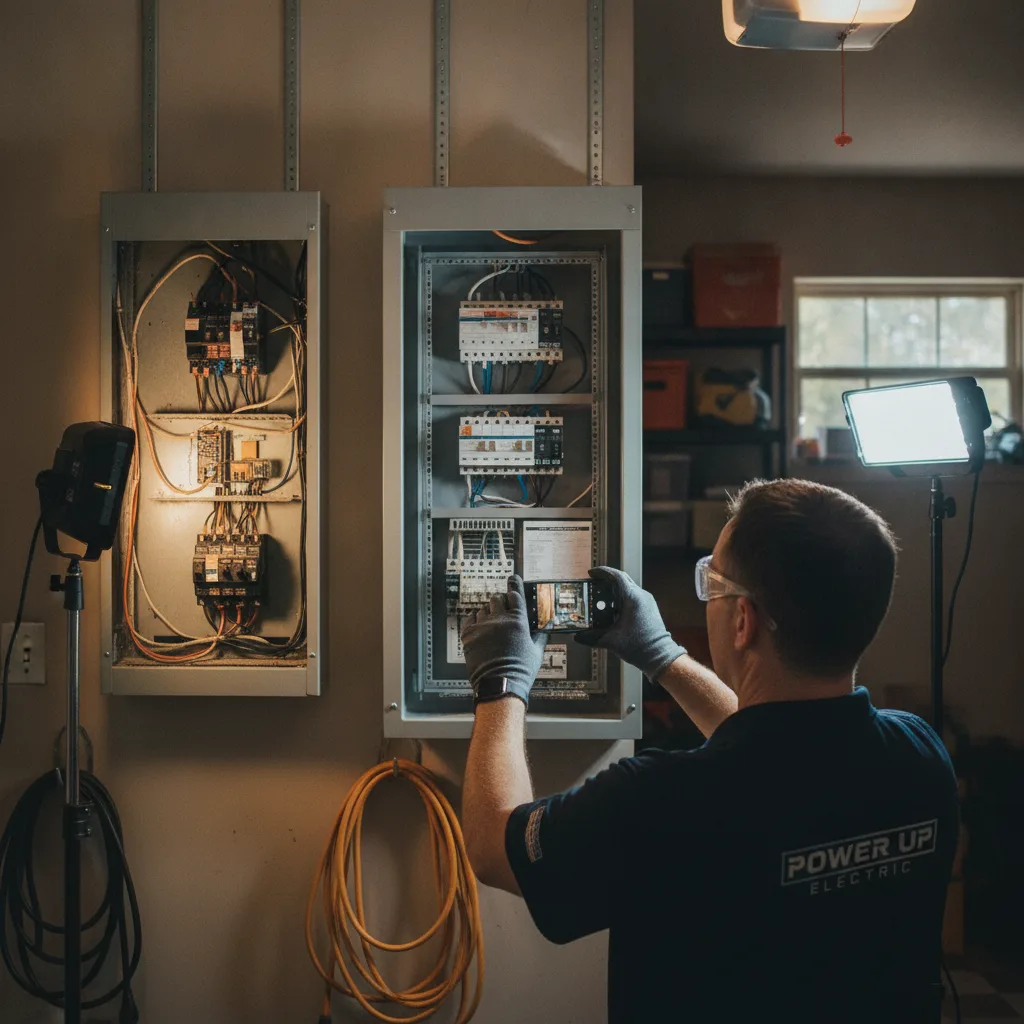
Join 10–25 Neighborhood Facebook Groups to Reach Local Customers as a Neighbor, Not an Ad
Organic reach on a Facebook business page is effectively dead for most electrical contractors — but local community Groups are a genuine exception for electrician social media marketing. Neighborhood groups in Texas metros typically hold 2,000–15,000 social media users each, and they are where your target audience of homeowners asks for recommendations before they run a search. An electrician who shows up as a helpful neighbor inside these groups — answering questions about panel age, circuit breaker noise, or EV charger requirements — earns trust that no paid advertising can replicate. This is the lowest-cost lead channel available to home service companies operating in competitive Texas markets.
Identify 10–25 active groups in your service areas: search Facebook for '[City] Neighbors,' '[Subdivision] Community,' and '[ZIP code] Homeowners.' Evaluate each group for member count (minimum 2,000), posting activity (at least 5 posts per day), and whether the rules permit business recommendations. Join as your personal profile, not your business page — group admins reject business pages more often than personal profiles. Once accepted, spend the first two weeks only commenting and answering questions. Do not pitch electrical services. The electricians who generate 1–3 organic leads per month from group activity are the ones who answer 10 questions before they ever mention their company name. People search for recommendations from neighbors they trust, not from businesses they've never heard of.
Scaling from 5 active groups to 25 quintuples your reach without quintupling your work. A consistent cadence of 1 post or comment per group per week — about 5 minutes of attention per group — keeps you visible without triggering spam flags. One documented landscaping business generated 15 leads from a single well-timed local group post (Hook Agency, 2026). For electricians in Dallas, Houston, Austin, or San Antonio, where local Facebook Groups are dense and active, this channel directly feeds word-of-mouth referrals that cost 24–25% less to acquire than leads from paid channels. More calls, more new customers, and stronger brand identity in local communities — all from free stuff that just requires consistency.
Group posting rule
Never post promotional content to a neighborhood group without reading its rules first. Most allow business recommendations only in response to a direct homeowner request. Violating group rules gets you removed and banned — costing access to thousands of potential local customers at once and permanently damaging your social media presence in that community.
Run Facebook Lead Ad Campaigns for Electricians With a 15–20 Mile Radius and Native Lead Forms
Facebook lead ads for home services average $27.66 cost per lead versus $93.69 on Google Search for electricians — a 70% reduction in CPL — but that number assumes the social media campaigns are set up correctly (WordStream/LocaliQ, 2025; BaaDigi, 2026). Two setup errors erase most of that advantage: radius targeting that is too wide, and sending prospects to an external website instead of a native Facebook lead form. Fix both before you spend a dollar on paid advertising. The average Meta CPC for home services is $2.30 with a 2.1% CTR and a roughly 10% conversion rate from click to lead — meaning every dollar in paid social ads needs to work efficiently from the first impression.
Meta's Advantage+ AI-driven targeting in 2026 requires a tight 15–20 mile pin-drop radius centered on your dispatch location. Without that geographic pin, the algorithm serves social media ads to homeowners in zip codes your trucks can never reach. For a Dallas-based electrician, that means paid social ads landing in Waxahachie or Denton when your technicians only run Plano to Irving. Set the radius, lock it, and check it weekly — Meta's algorithm will try to expand it. On ad format, lead form ads that keep prospects inside Facebook convert 30–40% better than redirect-to-website ads, because every extra click loses a percentage of your audience. Use Facebook's native instant form, pre-fill name and phone from the user's profile data, and ask one qualifying question: 'What type of electrical service do you need?' These social media services give your team qualified leads, not raw clicks.
Budget realistically for Texas markets. Electrician digital marketing on paid social typically starts at $1,000–$1,500/month in ad spend for a new campaign, scaling to $3,000–$5,000/month once you have conversion data. At the 2026 average Meta CPL of $45 and a 30–50% lead-to-appointment rate (for electrical contractors who respond in under 5 minutes), a $1,500/month spend generates roughly 33 leads and 10–16 booked appointments. At an average electrical job value of $400–$600, that math works. At a 24-plus-hour response time, that same $1,500 produces 2–5 appointments. Response speed is not a detail. It is the campaign. This is the pay per click reality that most electricians don't account for when they evaluate whether Facebook ads work.
Meta Ads Manager
Free (ad spend separate)
The only place to configure radius targeting, Advantage+ social media campaigns, and native lead forms for Facebook and Instagram social media ads.
Jobber or Housecall Pro
$49–$149/month depending on plan
Connects to Meta lead forms via Zapier to auto-create a new job record the moment a lead submits — eliminating the manual step that causes slow response times and lost new clients.
iOS attribution and the Conversion API
Without Meta's Conversion API (CAPI) installed server-side, iOS attribution loss runs 30–50% of conversions — meaning your Meta Ads Manager is reporting roughly half your actual leads. Install CAPI through your website platform (most WordPress, Webflow, and ServiceTitan site builders have a native integration) before you read a single campaign report. Social media analytics that don't account for this gap will show misleading CPL numbers and lead you to kill campaigns that are actually generating high quality leads.
Close the Flywheel: Turn Facebook Leads and Group Contacts Into a Structured Referral Program
Referral marketing delivers 3–5x higher conversion rates than other acquisition channels, and businesses with a structured referral program see customer acquisition cost drop by 24–25% (Deloitte, 2024; DemandSage, 2026). For electricians, the referral flywheel closes like this: the review automation from Step 1 generates fresh 5-star positive reviews, those reviews get shared as Facebook posts per Step 3, the posts build authority in neighborhood groups per Step 4, and group members who see consistent social proof become the highest-quality referral sources in your pipeline. One documented HVAC contractor traced more than 25% of new business to referrals that originated from customers sharing positive experiences on Facebook and Nextdoor — the same proven strategies apply directly to electrical contractors. This is the compounding effect that separates best marketing strategies from one-off tactics.
Formalize the referral ask at the job close. After the technician marks a job complete in Jobber or Housecall Pro — the same trigger that fires the NiceJob review request — send a second message 48 hours later: 'If you know a neighbor who needs an electrician, we'd love to help them. We offer a $50 credit on your next service for every referral that books.' Keep the incentive simple and the friction low. No referral portal, no app download. A text message with a first name and phone number is enough to generate new leads. Track referral source in your CRM by adding a 'Referred by' field on every new job record — this data feeds monthly reports that tell you which layer of the system is producing the highest return.
The final piece of digital marketing for electricians that most business owners skip is monthly reporting on which layer is working. Check three numbers every month: new reviews posted (target: 4-plus), Facebook group leads generated (track with a UTM link or a simple 'How did you hear about us?' question at booking), and Meta ad CPL versus the previous month. Use social media analytics tools inside Meta Business Suite to track these trends over time. If CPL rises above $60, check creative freshness first — before/after content that has run for 90-plus days loses effectiveness and needs to be rotated. The system self-corrects when you measure it. Monthly reports aren't optional; they are what turns a social media marketing effort into a predictable lead channel for your electrical business.
When to hire a digital marketing partner instead of DIY
If your monthly Meta ad spend exceeds $3,000 and you are not tracking CAPI attribution, running creative tests quarterly, or monitoring group activity consistently, the cost of doing it wrong exceeds the cost of a qualified digital marketing partner. At that spend level, a 20% CPL improvement from better CAPI setup alone saves $600/month — more than most social media specialists or agency management fees for a single-location electrical company. Social media marketing for electricians scales better with expert support once ad spend crosses that threshold.

The One Number That Kills Facebook Campaigns Before They Start
Meta's lead-to-appointment rate for home services is 30–50% when your team responds in under 5 minutes. It collapses to 5–15% when response time exceeds 24 hours. That is not a small gap — it is the difference between a $45 CPL that pencils out and a $45 CPL that hemorrhages budget. Before you scale Facebook ad spend, confirm that every inbound lead from a native lead form triggers an automated SMS reply within 60 seconds (Jobber and Housecall Pro both do this via Zapier). Speed of response is the single highest-leverage variable in electrician social media marketing, and it costs nothing to fix.
The three layers of this system — review automation, before/after content, and neighborhood group presence — are each useful on their own. But the reason top-quartile electrical contractors achieve 5–8x ROAS on Meta while the average electrician business gets mediocre results from social media marketing is that the layers compound. Fresh reviews become ad creative. Ad creative drives group curiosity. Group authority generates referrals that cost 24–25% less to acquire than paid leads. And every new customer the system produces feeds the review automation that restarts the cycle. Building it takes one focused weekend. Maintaining it takes 30–45 minutes a week. The alternative is paying $93.69 per lead on Google Search for every job indefinitely — and watching competitors who built the system take the neighborhood groups, the AI recommendations, and the referral network you left on the table. For electrical contractors in Dallas, Houston, Austin, and San Antonio who are ready to stop guessing at social media and start running a measurable system, this is where it starts.
Frequently Asked Questions
Ready to get started? Contact Geek Powered Studios today.