
Email marketing for plumbing companies returns $36–$42 for every $1 spent, the highest ROI of any channel in home services marketing as of 2026. The seven templates every plumbing business should run are: post-service follow-up (45–60% open rate), water heater anniversary reminder, review request, seasonal maintenance reminder, referral request, win-back for lapsed customers, and a CAN-SPAM-compliant footer structure. Set triggers in Jobber, GoHighLevel, or Mailchimp, and the entire system runs under one hour per month after the initial 3–5 hour setup. Segmenting your email list by service type and last-job date before sending anything increases open rates by 38% and conversion rates by 24% compared to blasting the same message to everyone.
-
$36–$42Returned per $1 spent on plumbing email marketing
-
45–60%Open rate on post-service follow-up emails
-
38% higherOpen rates from segmented lists vs. single blasts
-
$53,088Maximum CAN-SPAM fine per violating email sent
-
11 monthsPost-install trigger for water heater anniversary email
-
3–5 hoursOne-time setup time for all 7 automated templates
-
25–50 charsSubject line length for full mobile display on iOS and Android
-
$1,020Incremental bookings from one automated 400-contact campaign
Plumbing companies doing $2M–$5M in annual revenue typically have one powerful marketing asset sitting completely unused: a list of 400–1,500 past customers with email addresses attached to real job history. Email marketing returns $36–$42 for every $1 spent for plumbing contractors, the highest ROI of any channel in the home services marketing stack as of 2026. This guide walks through the exact 7 email templates every plumbing business should have running, the subject lines that produce 28–35% average open rates, the platform setup that takes 3–5 hours once and runs under one hour per month after that, and the compliance rules that protect your sender reputation and keep the FTC out of your inbox.
Before you start
- A list of past customers with email addresses — even 200–300 contacts is enough to generate real bookings
- An email marketing platform account: Mailchimp ($20/mo for 500 contacts), Jobber or Housecall Pro ($49–$129/mo with built-in email), or GoHighLevel ($97/mo for the full CRM and automation stack)
- Customer job history data showing last service date and service type — critical for segmentation and triggered campaigns
- A Google Business Profile with a direct review link you can paste into the review request email template
- Basic familiarity with copy-paste editing inside an email platform's template builder
- A valid physical business address for your email footers — this is a CAN-SPAM requirement, not optional

Segment Your Email List Before You Send a Single Message
Plumbing companies that segment their email list by service type and last-job date see 38% higher open rates and 24% higher conversion rates versus sending the same message to everyone. That gap exists because a homeowner who just had a drain cleared has completely different needs than one whose water heater was installed 11 months ago. Sending them the same email wastes both contacts and trains spam filters to route your future messages to junk.
Start with three core segments: active customers (last service within 12 months), lapsed customers (13–18 months since last service), and win-back candidates (18+ months inactive). Within the active segment, tag by service type: water heater, drain and sewer, leak repair, fixture install, and emergency call. These tags become the triggers for every automated email in steps 2 through 7. If your platform is Jobber or Housecall Pro, this data already exists in your job history. In GoHighLevel, build a custom field for 'last service date' and 'service category,' then import your job history CSV. Many plumbing businesses skip segmentation because it feels like extra work upfront — it isn't optional. Build your segments once and every template you deploy from this point forward lands in the right inbox at the right time.
Segmented campaigns achieve 14% higher open rates and 28% higher click-through rates compared to non-segmented campaigns in home services email marketing. Sending every campaign to your entire subscriber list is one of the fastest ways to damage your deliverability and your reputation with Gmail and Yahoo's spam filters. The good news: this single step, done right before you send anything else, makes every other template in this guide more effective.
GoHighLevel
$97/mo (Starter)
Replaces standalone CRM, email marketing, review management, and form tools; runs alongside Jobber or ServiceTitan for field operations
Jobber
$49–$129/mo
Built-in email marketing with job history already synced — no CSV import needed to build segments from past service data
Mailchimp
$20/mo (500 contacts)
Lowest entry cost for smaller lists; tags and audience segments handle the three-segment structure outlined here without extra tools
Quick Win
If you have fewer than 500 contacts, skip advanced tagging for now. Separate your list into two groups: serviced in the last 12 months versus older than 12 months. That single split will outperform a blast to everyone and protects your sender reputation from day one.
Write and Automate the Post-Service Follow-Up Email
Post-service follow-up emails achieve 45–60% open rates for plumbing companies, making them the single highest-performing email type in the entire marketing stack. The reason is simple: the customer just handed you money and had a technician in their home. You are top of mind. Send this email within 24 hours of job completion — the same evening or the following morning. Waiting longer than 48 hours cuts open rates significantly.
Subject line (keep it under 40 characters): 'Thanks for letting us help, [First Name].' Body copy is three short paragraphs: (1) Thank them by name and mention the specific plumbing service performed — not 'your recent plumbing service,' but 'the water line repair at [address].' (2) Tell them what to watch for in the next 30 days and give one helpful tip tied to the work done. (3) Close with a clear call to action: a direct link to your booking page if they need anything else, plus your emergency line. Keep the whole email under 150 words. Plain text outperforms designed newsletters here because it reads like a note from the technician, not a marketing blast.
Pair this email with an SMS message sent 2 hours after job completion. A combined email and SMS post-job sequence consistently outperforms either channel alone for plumbing companies. The SMS handles the immediate check-in ('How did everything go today?'); the follow-up email handles the relationship and the booking link. Set both up as a two-step automation triggered by job status changing to 'complete' in your field software. This two-channel approach is a powerful tool for staying connected to clients after service calls without any manual effort from your team.
Gotcha
Do not ask for a review in this email. That's template 4. Mixing a review ask into the thank-you email makes it feel transactional and cuts the warm response rate. Keep the post-service follow-up purely about the customer's experience.
Build the Water Heater Anniversary Reminder Template
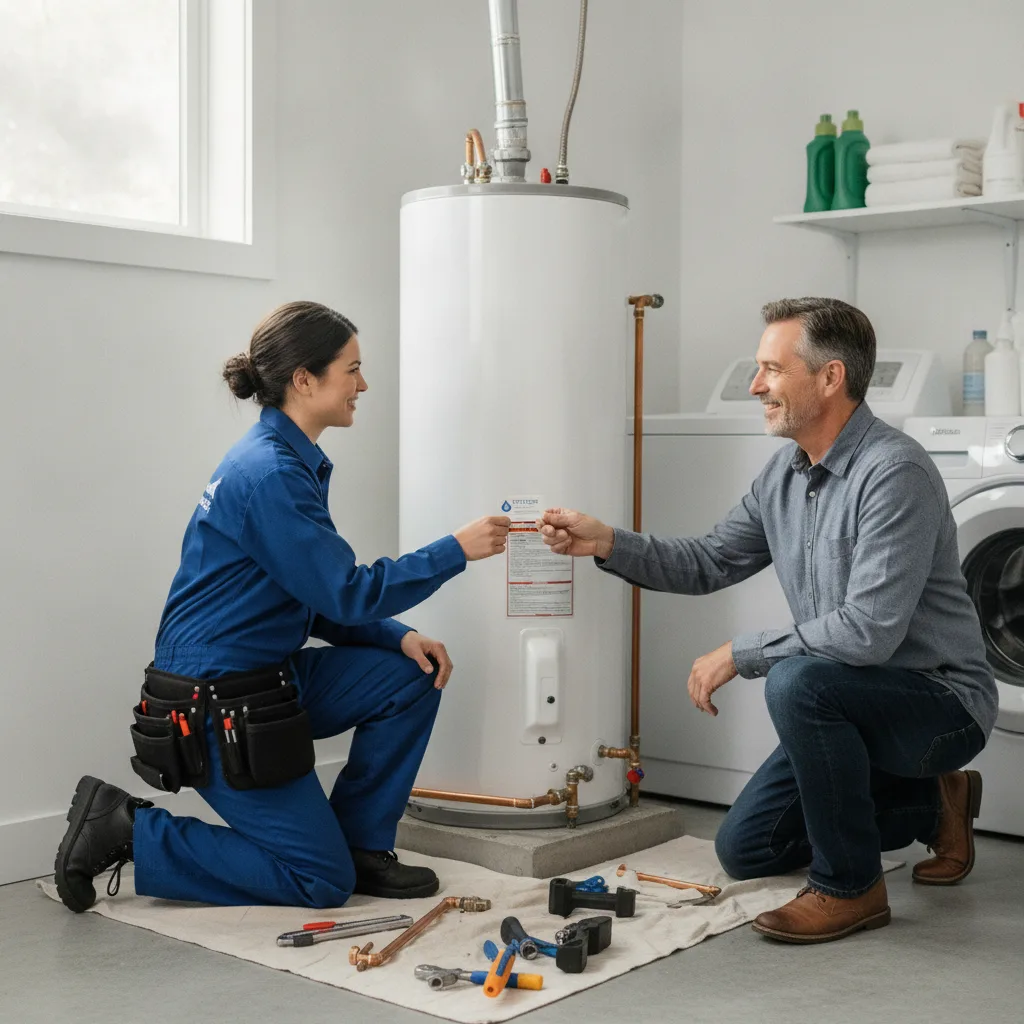
Water heater anniversary reminder emails sent 11–12 months after installation are among the highest-converting triggered campaigns a plumbing company can run because they tie to a known, predictable maintenance need. Set the trigger to fire at 11 months post-install — early enough to book the annual flush before the customer forgets, late enough that the timing feels useful rather than pushy. This trigger requires a 'water heater install date' field in your CRM or job history, which is why the segmentation work in step 1 matters.
Subject line: 'Your water heater is due for its annual flush, [First Name]' (49 characters — right at the mobile display limit). Body copy: open with the useful fact that water heaters that skip annual flushing accumulate sediment that shortens tank life by 2–3 years. Name the specific unit if your job notes captured the model. Give them a one-click booking link to schedule the flush. Close with a P.S. that mentions water heaters fail most often between years 8–12 — if theirs is approaching that window, offer a free assessment. That P.S. is what turns a maintenance reminder into a potential replacement sale.
This template works because it delivers personalized content tied to a real event in the customer's home. Generic newsletter subject lines underperform service-specific ones by 40–60% in open rate. 'Your water heater' in the subject line is not a trick — it's accurate. The homeowner knows their unit got installed and knows maintenance matters. You're doing them a genuine service by sending this, which is exactly why it converts. Many plumbers skip this trigger because setting it up requires pulling install dates from job records, but the incremental revenue from water heater flush and replacement bookings makes it one of the highest-ROI templates in this entire system.
ServiceTitan Marketing Pro
Add-on to ServiceTitan subscription
Natively reads install date from job records and fires triggered anniversary emails without manual list exports
GoHighLevel
$97/mo
Custom date-field triggers let you fire the 11-month reminder automatically from a 'water heater install date' field without leaving the platform
Deploy the Review Request Email at the 24-Hour Mark
Review request emails sent the morning after a completed job outperform any other send timing for plumbing companies. Send this as a separate email from the post-service follow-up — 18–24 hours later, not in the same message. By then the customer has had time to notice the fix held, and the experience is still fresh enough to generate a response. The review request is its own distinct template in your automation sequence, not a P.S. in another email.
Subject line: 'Quick favor, [First Name] — 60 seconds?' (38 characters). Body: name the actual technician who did the work ('Mike mentioned he had a great visit with you yesterday'). Include a direct link to your Google review form — not a link to a page with a button, but the actual review URL. Keep the ask to two sentences and nothing else after the link. Do not offer discounts, gift cards, or any incentive for requesting reviews — Google prohibits incentivized reviews and can remove them. Reputation management built on compliant review requests compounds over time; shortcuts get reviews deleted and can get your Google Business Profile penalized.
Review request emails are part of your broader reputation management strategy, and that strategy directly affects your search results rankings. More Google reviews at a higher average rating means better visibility in local pack results, which feeds more organic leads into your pipeline. This one email template, deployed consistently after every completed job, generates more reviews than any other tactic for plumbing companies. Many plumbing businesses leave this template out of their email marketing campaigns entirely and wonder why their review count stagnates. Requesting reviews via email is both compliant and effective — just follow the rules.
Compliance Note
Google's review policies prohibit steering — you cannot send this email only to customers you think will leave 5 stars. Send it to everyone after every completed job. Filtering recipients by assumed sentiment is a policy violation and can get your Google Business Profile penalized. Send to all, every time.
Create the Seasonal Maintenance Reminder Email Campaigns
Seasonal maintenance reminder emails should go out 4–6 weeks before the relevant season, not the week of. For plumbing companies in Texas and Sun Belt markets, the two highest-ROI send windows are late September (pre-winter pipe protection) and late February (pre-summer water heater stress season). Northern market shops add a third send in October for freeze prep. Build four pre-made templates in your platform so your team can deploy them each year by updating only the date and any promotional offer — the body copy stays the same.
Each seasonal email follows the same structure: one subject line under 50 characters that names the specific plumbing issue tied to the season ('Freeze warning: protect your pipes this week'), two short paragraphs of genuinely helpful tips — name the actual risk, like 'exposed pipes in garages and attics are the first to fail below 20 degrees F' — and one clear call to action with a booking link or phone number. The 80/20 rule applies here: 80% of the email content is the helpful tip, 20% is the offer. 'Book a pipe insulation inspection before the first freeze — slots fill fast' is a promotional offer, but it comes after two paragraphs of useful seasonal guidance.
Plumbing businesses that run consistent seasonal email campaigns build a customer base that calls them first rather than searching Google when a problem hits. That's the compounding effect email marketing delivers that Google Ads can't — your existing customers already trust you. Seasonal greetings and updates also give you a natural contact cadence that keeps your business top of mind between emergency calls, which is exactly where you want to be when pipes freeze or a water heater goes down in August. These email campaigns require zero new leads and zero ad spend.
Set Up the Referral Request and Win-Back Email Templates
Referral requests belong in a separate email sent 7–10 days after the post-service follow-up, once you've confirmed the customer is satisfied. Subject line: '[First Name], know anyone who needs a good plumber?' (50 characters exactly). Body: two sentences explaining your referral program — if you offer a service credit or gift card, name the specific dollar amount — followed by a direct link to a referral form or a simple 'reply to this email with their info.' Make it frictionless. The ask should take 30 seconds to act on. Referrals from satisfied existing customers close at a higher rate than any new client acquired through ads because trust transfers with the recommendation.
Win-back email sequences for customers inactive 18 months or more are the highest-ROI campaign type for plumbing companies with a list older than 2 years. The trigger is simple: last service date crosses the 18-month threshold. The subject line: 'It's been a while — here's something for you, [First Name].' Body: acknowledge the gap without making it awkward ('We know life gets busy'), offer a limited-time exclusive deal on a seasonal service or inspection, and include a clear call to action with a booking link. Win-back emails work because the contact already knows your business and had a positive experience — you're not starting from scratch.
The math on win-back campaigns is straightforward. A win-back email to 400 inactive contacts at a 25% open rate and 3% click-to-book rate generates approximately $1,020 in incremental bookings at a $340 average job value — with no ad spend. Many plumbing businesses ignore their lapsed customer list and spend that budget chasing new clients through Google Ads. The economics don't support it. Property managers on your list need a separate version of this template that focuses on 24/7 emergency response and multi-unit maintenance contracts rather than individual homeowner plumbing tips — the same message sent to both audiences cuts response rates in half.
Segment This One
Property managers and commercial clients need their own win-back template. The homeowner version talks about household plumbing issues and pipe inspections. The property manager version leads with SLA availability and maintenance contract pricing. Sending the wrong version to either audience cuts response rates in half.
Comply with Email Marketing Laws and Protect Your Deliverability
The CAN-SPAM Act imposes fines of up to $53,088 per violating commercial email, and it applies to every plumbing company regardless of list size — including when a marketing agency sends on the business's behalf. Every commercial email you send must include a valid physical postal address, a clear opt-out mechanism, and a subject line that is not deceptive about the email's contents. Opt-out requests must be honored within 10 business days. These are federal requirements, not guidelines. Following email marketing laws protects your plumbing business from regulatory fines and, more immediately, from the sender reputation damage that gets your messages blocked by Gmail and Yahoo before they ever reach your existing customers.
Beyond legal compliance, your deliverability depends on two technical habits. First, maintain an 80% text to 20% image ratio in your email templates. Spam filters are more likely to block emails that are predominantly images, and many plumbing email newsletters fail inbox placement because they're built like flyers. Second, never send every campaign to your entire subscriber list without segmentation first. Sending messages to your full list regardless of relevance increases bounce rates and spam complaints, which damages your sender reputation with every major inbox provider over time.
Send on Tuesday or Thursday at 10 AM or 1 PM local time. Those two windows produce the best click-to-open rates for plumbing campaigns as of 2026. Keep subject lines between 25–50 characters so they display fully on Android and iOS without truncation. Test one variable per campaign — subject line A versus subject line B, or one send time versus another — before scaling. Personalized subject lines lift open rates by 22–26% over generic alternatives for plumbing companies, but that lift disappears if your email marketing platform marks you as a spam sender before the message even reaches the inbox. Clear message strategy and clean sending habits are inseparable.
Platform Note
If you're using GoHighLevel for email marketing, the platform includes built-in unsubscribe handling and CAN-SPAM footer insertion. You still need to supply a valid physical address and review every subject line for accuracy — the platform handles mechanical compliance elements, not your content.
Don't Let a Dormant List Cost You Bookings This Season
Most plumbing businesses sitting on a list of 400–1,000 past customers are leaving thousands of dollars in repeat bookings, referrals, and water heater replacements on the table every month. Email marketing returns $36–$42 for every $1 spent for plumbing contractors — the highest ROI of any channel in the home services marketing stack. The 7 templates in this guide are the minimum viable system to start capturing that return. Set them up once, automate the triggers, and they run without you. The only thing slower than starting is not starting.
Serview Home Pros started with almost no online presence and reached $25 per qualified lead with a 6% conversion rate after building a full lead generation system with Geek Powered Studios — email included. If your plumbing business already has a customer list and a solid reputation, you're ahead of where they started. The email marketing templates in this guide give you the framework to turn that list into consistent calls, more reviews, and water heater replacement leads this season. If you want the full system built, automated, and integrated with your CRM and Google Ads campaigns, that's exactly what we do for home services companies across Texas and the Sun Belt. No long-term contracts. Free custom website included with every retainer. Get your free strategy session and we'll show you what a real email marketing system looks like for a plumbing business at your revenue level.
Frequently Asked Questions
Ready to get started? Contact Geek Powered Studios today.