Entity SEO for Home Services Contractors: The 2026 Complete Guide
November 26, 2026
💡 Quick Answer
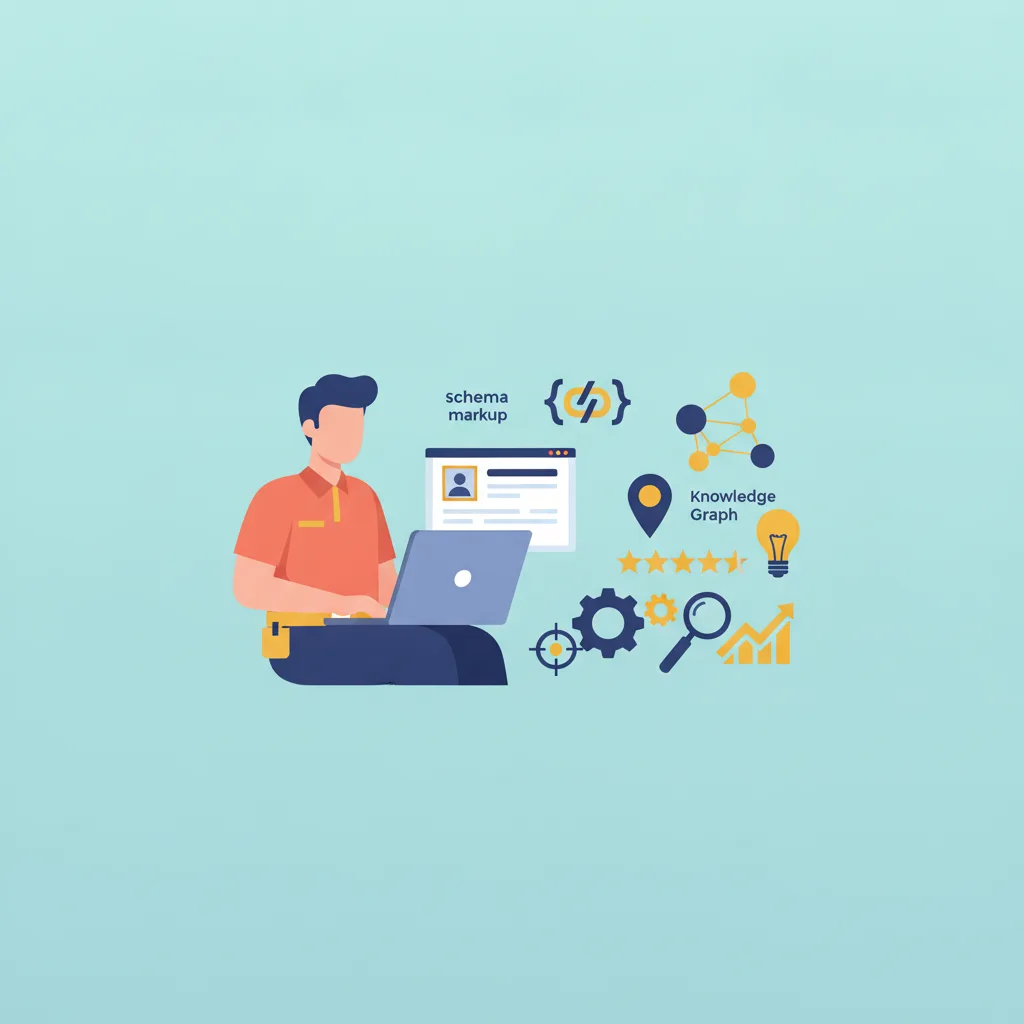
Entity SEO is the practice of making your business a clearly defined, well-connected entity in Google's Knowledge Graph — not just a website that ranks for keywords. For HVAC companies, plumbers, and roofers, that means Google and AI engines like ChatGPT and Gemini recognize your business as a real-world thing with a name, location, service categories, and verified relationships to other known entities. Ranking in the Google local 3-pack and being recognized as a Knowledge Graph entity are two separate scoring systems. Per SOCi's 2026 Local Visibility Index, ChatGPT recommends only 1.2% of the business locations that appear in Google's local pack — meaning Maps visibility alone does not guarantee AI citation. Entity-based SEO is the work that closes that gap: trade-specific schema markup, NAP consistency across directories, sameAs cross-links, hub-and-spoke internal linking, and content that earns high entity salience scores from Google's natural language processing systems.
📊 Key Takeaways
Six facts that define entity SEO for home services contractors in 2026 — one per chapter.
1.2% vs. 35.9%
ChatGPT recommendation rate vs. Google 3-pack appearance for the same businesses (SOCi, 2026). Maps rank and AI citation are separate scoring systems.
5.8x more likely for AI Overviews
Entities with 15 or more confirmed attributes in the Knowledge Graph are 5.8x more likely to be selected for an AI Overview. GBP completeness is the fastest path there.
FAQPage schema = 3.2x AI Overview citation rate
Pages with FAQPage schema markup are 3.2x more likely to be cited in a Google AI Overview, which now appears on 68% of local business-type queries.
62% higher entity salience with internal links
Pages with 5 or more contextual internal links from topically related pages achieve 62% higher entity salience scores than pages with fewer than 2 links.
220% more AI Overview citations in 90 days
Businesses completing full entity alignment — Wikidata, sameAs schema, and GBP verification — saw a 220% increase in AI Overview citations within 90 days (Whitespark, 2025).
3 steps before anything else
Verify GBP, audit NAP consistency across top 10 directories, deploy trade-specific schema markup. In that order. Everything else builds on this foundation.
You rank second in the Google local pack. Your reviews are solid. You're running Google Ads. And yet when a homeowner asks ChatGPT to recommend an HVAC company in your city, your name doesn't come up. That's not a reviews problem or an ads problem. It's an entity problem — and it's the gap that entity SEO closes.
What this guide covers
Entity SEO is the practice of making your business a clearly defined, well-connected entity in Google's Knowledge Graph — not just a website that ranks for keywords. For a local HVAC company, plumber, or roofer, entity-based SEO means Google and AI engines like ChatGPT and Gemini recognize your business as a real-world thing with a name, location, service categories, and verified relationships to other known entities. This guide covers what entity SEO is, why your Google Maps ranking doesn't guarantee AI visibility, what signals actually move the needle — schema markup, NAP consistency, internal linking, entity relationships — how to audit where you stand today, and what a realistic timeline looks like. It does not cover enterprise brand strategy, e-commerce SEO, or pure keyword optimization tactics.
Chapter 1 · Foundation
What Is Entity SEO — and Why Does It Matter for Contractors?
Entity SEO is the practice of making your business a clearly defined, identifiable entity in Google's Knowledge Graph — distinct from every other business that shares your trade or city. Unlike traditional keyword-based search engine optimization, which focuses on what words appear on a page, entity-based SEO focuses on what real-world thing those words describe. Google launched its Knowledge Graph in 2012 and has since built a database of billions of entities — people, places, organizations, and concepts — each with a unique identifier called a KGMID. When Google's AI generates a local answer, it queries that entity graph rather than crawling individual web pages. If your business isn't a recognized entity in that graph, you don't exist in the answer. That's the gap entity SEO closes.
Entity SEO is not a replacement for keyword SEO — it is the layer underneath it. Keywords describe what people type in a search bar; entities describe what people are actually searching for as real-world things. Search engines use entity recognition to disambiguate meaning: 'Austin Plumbing' as a concept versus a specific business you've verified, categorized, and cross-referenced across the web. For a home services contractor, entity clarity means Google confidently shows your business for branded searches, local intent queries, and AI recommendations without confusion about which 'ABC Plumbing' in which city it's dealing with. That disambiguation is what semantic search is built on — and it's what separates the businesses AI tools cite from the ones they ignore.
The practical difference shows up fast when you look at AI recommendation rates. Per SOCi's 2026 Local Visibility Index, ChatGPT recommends only about 1.2% of business locations that appear in Google's local 3-pack 35.9% of the time. Ranking in the top three on Google Maps and being recommended by an AI tool are two separate scoring systems. Maps ranking relies on proximity, relevance, and reviews. AI recommendations rely on entity clarity — how well search engines understand who you are, what you do, where you do it, and how many trusted sources corroborate those facts. User intent matters to both systems, but how they resolve it is fundamentally different.
As of 2026, 88% of local businesses have no active strategy to appear in AI search results, yet 35% of consumers already use ChatGPT or Gemini to find local services. That gap is the early-mover opportunity. A plumber or roofer who builds solid entity signals now is positioning ahead of competitors who are still chasing blue-link rankings while their customers are typing questions into AI tools instead. Entity SEO helps local businesses appear across multiple AI-driven search surfaces that now dominate query results — and the contractors who understand this shift first will own those recommendations.
Key takeaway
Entity SEO and Google Maps ranking are separate scoring systems: ChatGPT recommends only 1.2% of locations that appear in the Google local 3-pack, so Maps visibility alone does not guarantee AI citation.
Chapter 2 · Mechanics
Google's Knowledge Graph and Entity Clarity: Key Elements Search Engines Use to Recognize Your Business
Google's Knowledge Graph assigns every recognized entity a unique identifier and stores structured facts about it — name, category, location, relationships to other entities. For a local contractor, the primary entity is the business itself, intrinsically linked to a geographic entity representing the city or service area it covers. When Google's systems evaluate a local business, they're looking for corroborated evidence across multiple sources that this entity is real, clearly defined, and trustworthy. Missing any of the core signals creates entity ambiguity — Google may treat inconsistent listings as potentially distinct entities, suppressing both map-pack and AI visibility.
A strong local business entity requires seven things working together: a consistent business name across all web properties, a verified physical address or service area, clearly defined service categories, connections to known industry and location entities, consistent citations on trusted directories, structured data that explicitly defines entity properties, and authoritative content that demonstrates expertise. These aren't independent checklist items — they're reinforcing signals that help search engines confirm they're looking at the same entity across dozens of sources. Think of it as corroboration: the more independent sources agree on the same facts about your business, the more confident Google becomes in surfacing you in relevant search results.
The fastest way to test where you stand: search your business name on Google desktop. If a Knowledge Panel appears on the right side of the results showing your hours, address, photos, and reviews — Google has recognized you as a known entity. No panel means your entity signals are insufficient or ambiguous. For most home services contractors, the Knowledge Panel path runs through Google Business Profile first, then expands to cross-platform corroboration. Entities with 15 or more confirmed attributes in the Knowledge Graph are 5.8x more likely to be selected for AI Overview generation, so completeness of GBP data is not optional — it's the core entity anchor for every signal that follows.
Entity clarity also affects how natural language processing systems score your content. Google's NLP assigns an entity salience score from 0 to 1 to each entity detected on a page, indicating how central that entity is to the document. Research by Kalicube (2025) found pages where the primary entity achieves a salience score above 0.7 rank an average of 4.2 positions higher than pages where the same entity scores below 0.3. The free audit tool for this is Google's own Natural Language API — paste your service page text in and see which entities Google detects and at what salience score. A score below 0.5 on your own business entity on your own homepage is a red flag: search systems are reading that page as being about something else, or about nothing in particular.
What Context Clues Help Search Engines Understand Your Entity
Service category: Google needs to know you're an HVACBusiness or Plumber — not a vague 'contractor.'
Location entity: Your city, service area, and region should appear consistently in content, schema, and directory listings.
Related entities: Linking to or being mentioned alongside known local entities (the Austin Energy rebate program, your city's utility provider) adds contextual relevance.
Consistent terminology: Using your trade name, city name, and business name consistently across all platforms helps search engines identify and confirm your entity without ambiguity.
Semantic keywords: Trade-specific terms like 'heat pump installation' or 'panel upgrade' reinforce what your entity does and which user queries it should resolve.
Key takeaway
Entities with 15 or more confirmed attributes in Google's Knowledge Graph are 5.8x more likely to be selected for AI Overview generation — completeness of your Google Business Profile is the fastest path to that threshold.
Chapter 3 · Implementation
Schema Markup and NAP Consistency: Entity Signals That Move the Needle for Home Services
Schema markup is the most direct on-page signal for entity SEO, and NAP consistency is the most important off-page one. For home services contractors, both need to be implemented with trade-specific precision — not generic defaults. Using the wrong schema type or having a single character difference in your business name across directories creates the kind of entity ambiguity that causes AI tools to skip or misrepresent your business in generated answers. Structured data is the bridge between your website and Google's Knowledge Graph — without it, search engines rely on less reliable context clues to identify and define your entity.
The right schema types for home services contractors are trade-specific LocalBusiness subtypes, not the generic LocalBusiness tag: HVACBusiness for HVAC companies, Plumber for plumbing contractors, RoofingContractor for roofers, Electrician for electricians. Using the specific subtype gives a stronger topical signal to Google's entity graph and significantly increases inclusion in AI-generated answers. The 2026 schema stack that matters for contractors is: trade-specific subtype on the homepage and contact page, Service schema with areaServed on each city-service page, AggregateRating only where on-page reviews actually back it up, FAQPage schema on every service page for AI Overview citation eligibility, and Organization schema with sameAs cross-links to your verified Google Business Profile, Yelp, and Facebook. That sameAs array is what tells Google's systems these are all the same entity, not five different businesses.
Pages with proper FAQPage schema are 3.2x more likely to be cited in a Google AI Overview. That's not a minor optimization — it's a structural decision about whether AI tools pull from your page when answering a user query about HVAC repair in your city. AI Overviews now appear on 68% of local business-type queries per Whitespark's 2026 analysis, and brands cited inside an AI Overview recover about 35% more clicks than uncited brands at comparable positions. FAQPage schema is a direct path into that pool, and it's available to any contractor willing to mark up their service pages correctly.
NAP consistency has gained new importance specifically for AI visibility. Whitespark's 2026 Local Search Ranking Factors report introduced a new 'AI Search Visibility' category, and three of the top five factors in that category are citation-related — because AI models like ChatGPT cross-reference business data across directories before recommending a business. The practical implication: audit every directory listing and make sure your business name, address, and phone number match character-for-character. 'ABC Heating & Cooling' and 'ABC Heating and Cooling' are not the same entity to Google's systems. That ampersand is enough to create entity ambiguity and suppress your visibility in relevant search queries.
Google Natural Language API
Entity audit
Free tool at cloud.google.com/natural-language. Paste any page text and see every entity Google detects, plus salience scores from 0 to 1. Use it to confirm your business and trade appear as the top page entities.
Google Search Console
Measurement
Track branded search impressions over time — a rising trend confirms your entity is gaining recognition. The Performance report filtered to branded queries is your entity SEO progress dashboard.
Whitespark Local Citation Finder
Citation audit
Finds directory listings where your NAP appears and flags inconsistencies. Run an audit before building new citations — fixing mismatches first prevents entity ambiguity from compounding.
Schema.org Validator
Structured data
Google's Rich Results Test (search.google.com/test/rich-results) confirms your schema markup is valid and eligible for rich result features before you push it live.
Key takeaway
FAQPage schema makes a service page 3.2x more likely to be cited in a Google AI Overview — and AI Overviews now appear on 68% of local business-type queries, making structured data a revenue decision, not just a technical one.
Chapter 4 · Architecture
Internal Linking and Entity Relationships: How to Wire Your Site and the Web for AI Search Visibility
Internal linking is the mechanism that wires entity relationships across your website, and external entity relationships — connections to other recognized local entities — amplify your visibility in AI search results. Both work on the same principle: the more corroborated and interconnected your entity is, the more confidently search engines and AI systems surface it. A contractor with a well-linked site and strong external entity relationships appears in AI search results 3.7x more frequently than one with fewer than three mapped entity connections, per 2025 research. The architecture of your site is as much an entity signal as any single piece of content.
Hub-and-spoke internal linking is the most effective structure for entity-based SEO. The hub page — typically your main service page or homepage — links to and receives links from all related cluster pages: city-specific landing pages, individual service pages, and blog content covering trade-specific topics. Pages with 5 or more contextual internal links from topically related pages achieve 62% higher entity salience scores than pages with fewer than 2 internal links. The anchor text matters too: use it to reflect entity relationships, not just keyword variations. 'Austin HVAC repair' as anchor text signals a relationship between your business entity and both a service entity and a location entity — that's the connection map Google's systems are building as they interpret context across your site.
External entity relationships work the same way but off your site. Building connections to recognized local entities — earning a mention in a local chamber of commerce directory, sponsoring a local event that gets indexed, being listed in a local landmark's vendor or partner page, creating a Wikidata entry for your business — all expand your entity connection map. These aren't just backlinks in the traditional sense. They're corroborations that your entity exists in the real world and has relationships with other identifiable entities. When AI systems cross-reference related entities before making a recommendation, each of these connections is a vote that your business is real, local, and trustworthy.
One practical tactic most contractors skip: create city-service pages that explicitly reference local entities your audience knows. An HVAC page for Austin that mentions the Austin Energy rebate program, links to the city's utility provider, and discusses climate patterns specific to Central Texas is building entity context around your business — not just placing a keyword. That contextual relevance tells search engines and AI systems what your business does, where it does it, and what other known entities it connects to. The difference between a page that ranks for the same keyword a dozen competitors target and an entity that gets cited in an AI-generated answer is precisely this kind of semantic depth. User searches for 'best HVAC company Austin' resolve to the entity with the strongest, most corroborated web of connections — not necessarily the page with the most exact-match keywords.
Core Entities Every Contractor Site Should Connect
Your verified Google Business Profile (sameAs link in Organization schema)
Your city or service area as a geographic entity — referenced consistently in content, schema areaServed, and directory listings
Trade associations and certification bodies relevant to your license (ACCA, PHCC, NRCA, NECA)
Local chamber of commerce or BBB listing — both are known, trusted entities Google cross-references
Utility providers and municipal programs relevant to your services (rebate programs, permit offices)
Wikidata entry for your business, especially if you serve a wide area without a single physical storefront
Key takeaway
Pages with 5 or more contextual internal links from topically related pages achieve 62% higher entity salience scores — hub-and-spoke internal linking is the site architecture decision that makes entity-based SEO work at scale.
Chapter 5 · Measurement
How to Audit Your Entity SEO and Measure Progress Over Time
Entity SEO has a measurable timeline and clear diagnostic signals — it's not a black box. The audit starts with two free tools and a Google search, and progress can be tracked across Knowledge Panel appearance, branded search control, and AI citation rate. Knowing what to measure prevents the most common contractor mistake: abandoning entity work too early because the results aren't visible in traditional rank tracking. Entity research and ongoing measurement are what separate contractors who see real AI visibility gains from those who do the work once and wonder why nothing changed.
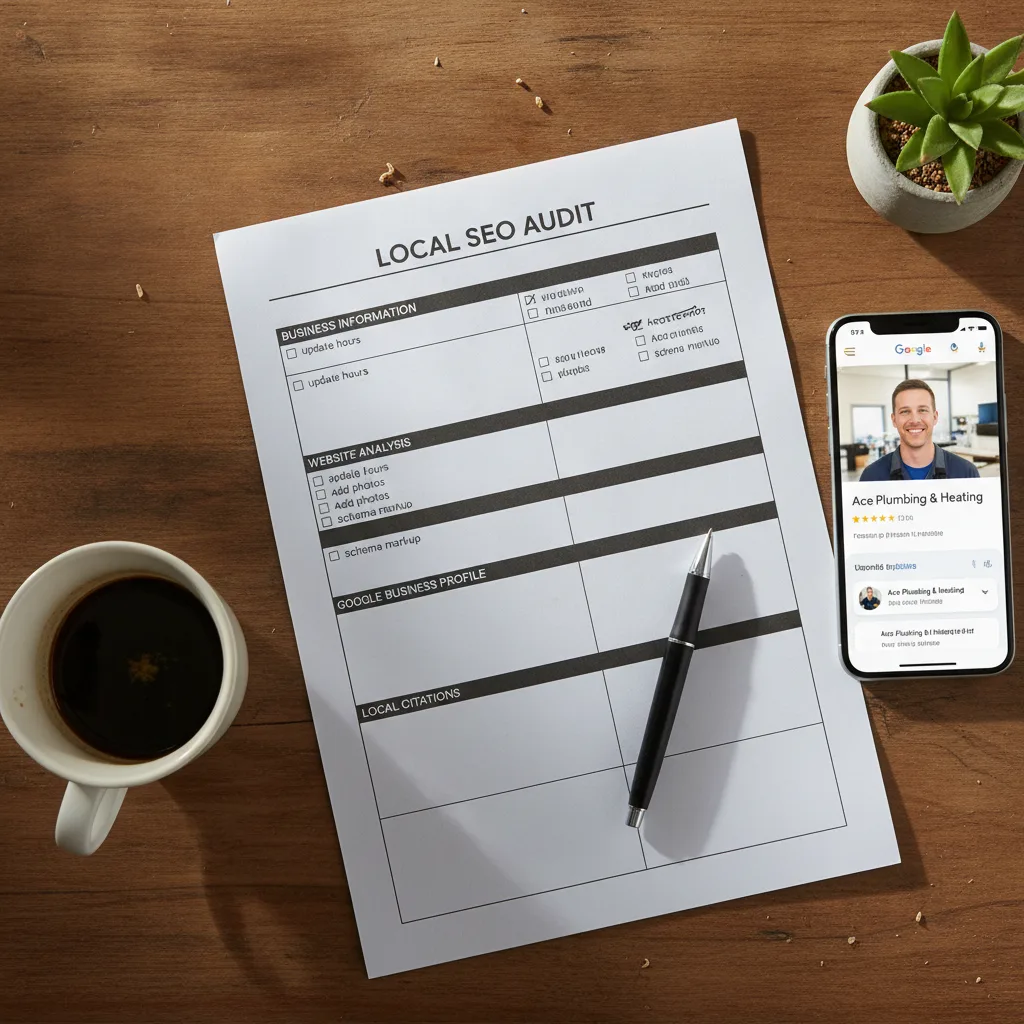
Start with the Knowledge Panel test: search your exact business name on Google desktop. A panel on the right side confirms entity recognition. No panel means you need to strengthen the foundation — verify your Google Business Profile, build out the sameAs schema connections, and push consistent citations to 10 or more authoritative industry directories. Next, use Google's free Natural Language API to audit your most important service pages. Paste the page content and check which entities are detected and at what salience scores. Your own business name and primary trade should appear as the top page entities with salience scores above 0.5. If a competitor's city or an unrelated concept scores higher, your page is not communicating the right entity signals to search engines — and you have a concrete, fixable problem.
The timeline for entity SEO results is realistic but not instant. Knowledge Panel appearance typically occurs within 60 to 180 days after Wikidata, sameAs, and GBP alignment. Branded search control — Google reliably returning your correct business information across all surfaces — improves within 30 to 90 days as cross-platform profiles get indexed and corroborated. AI citation eligibility typically arrives within 90 to 120 days as AI engines refresh their entity indexes. A 2025 Whitespark case study found businesses completing the entity claim process saw a 220% increase in AI Overview citations within 90 days. That's the benchmark to measure your own entity strategy against, not page-one keyword rankings.
Track four metrics monthly to measure entity SEO progress: Knowledge Panel presence (yes or no, then completeness score), branded search impression share in Google Search Console, AI Overview citation appearances (search your core service plus city queries and check whether your business appears in the overview block), and new user traffic from branded search terms. These aren't vanity metrics — they directly connect to whether a homeowner searching for an HVAC company in your city gets your name as the recommended answer. That recommendation is now worth more than a blue-link ranking because it comes with the authority of the AI tool behind it. Your entity strategy only improves as these numbers rise, and the data is free to collect.
Knowledge Panel appearance
30–180 days
Branded SERP control
30–90 days
AI Overview citation eligibility
90–120 days
AI Overview citation increase
+220% in 90 days (Whitespark, 2025)
Key takeaway
Businesses completing full entity alignment — Wikidata, sameAs schema, and GBP verification — saw a 220% increase in AI Overview citations within 90 days per a 2025 Whitespark case study, with Knowledge Panel appearance typically following within 60 to 180 days.
Chapter 6 · FAQ
Entity SEO FAQ: The Questions Contractors Actually Ask
Most entity SEO content is written for practitioners — not for the HVAC owner wondering why a competitor keeps showing up in AI recommendations when they aren't. This chapter answers the specific questions contractors ask when they first hear about entity-based SEO. The answers are designed to be direct and actionable. Where the honest answer is 'it depends,' we say what it depends on. Where there's a concrete first step, we give it. These questions come up repeatedly in strategy sessions — they deserve straight answers, not more jargon.
Does entity SEO replace keyword SEO?
No. Entity-based SEO is the layer underneath keyword optimization, not a replacement for it. Keywords tell search engines what words to match; entity signals tell them what real-world thing those words refer to. A plumber who ranks for 'water heater replacement Austin' but hasn't established entity clarity may win that click today and lose the AI recommendation tomorrow. The goal is both: keyword-optimized pages built on a foundation of clear entity signals. One without the other leaves money on the table — especially as search results pages shift toward AI Overviews that surface identifiable entities over individual keyword-matched pages.
Is SEO still relevant in 2026, or has AI replaced it?
Search engine optimization is more relevant in 2026 than it was five years ago — it's just evolved. AI Overviews, Knowledge Panels, and conversational AI tools all rely on the same underlying signals that SEO has always built: authoritative content, consistent entity data, structured data, and credibility signals from trusted third-party sources. The shift is that classic blue-link rankings now share the search results page with AI-generated summaries that pull from entities, not just pages. Businesses that treat entity-based SEO as their SEO strategy are positioning for both surfaces simultaneously. Those who ignore it are optimizing for a version of Google that no longer exists for most relevant search queries.
What is the difference between entity SEO and semantic SEO?
Semantic SEO is a broader practice focused on helping search engines understand the meaning and context of content — through semantic keywords, related concepts, and topic coverage depth. Entity SEO is a specific discipline within that framework focused on defining and connecting real-world entities: businesses, people, places, and concepts. For a home services contractor, semantic SEO means writing comprehensive content that covers your trade thoroughly. Entity SEO means making sure the business behind that content is recognized as a specific, defined entity in Google's Knowledge Graph. Both matter. Entity SEO is what gets you cited by name. Semantic SEO is what makes your pages show up in related searches.
How do entities affect AI search and ChatGPT recommendations?
AI tools like ChatGPT, Gemini, and Perplexity all use entity graphs and structured data as primary sources when generating local recommendations. When someone asks ChatGPT to recommend an electrician in Houston, the model cross-references its training data — which includes Google's Knowledge Graph, Yelp, directory listings, and indexed web content — to identify businesses that meet the query criteria. Businesses with strong entity signals appear as clearly defined, identifiable entities in those data sources. Businesses with weak or ambiguous signals either don't appear or get confused with other businesses. The practical fix is the same as the broader entity SEO strategy: verified GBP, consistent NAP, trade-specific schema, and sameAs cross-links to establish that all your platforms refer to the same entity.
How do I find the core entities tied to my business?
Start by identifying the entities that naturally connect to your trade and location. For an HVAC contractor in Austin, the core entities include your business itself, the trade (HVACBusiness as a schema type), the geographic entity (Austin, Texas, or specific service zip codes), and related entities like Austin Energy, ACCA (the HVAC trade association), and the specific equipment brands you install. Use Google's Natural Language API to see which entities Google is already extracting from your pages — that tells you what the search systems already associate with your business. Gaps in that list are opportunities to strengthen entity context through content, schema, and citations. Building entity connections methodically, rather than chasing semantic keywords in isolation, is what moves the needle for AI search visibility.
Key takeaway
The fastest entity SEO starting point for any contractor is verifying Google Business Profile, auditing NAP consistency across the top 10 directories, and deploying trade-specific schema markup — in that order, before any other entity work.
Mini-glossary — terms you'll see throughout this guide
Entity SEO
The practice of making a business a clearly defined, well-connected entity in Google's Knowledge Graph so search engines and AI tools recognize and recommend it — as opposed to optimizing only for keyword matches on web pages.
Knowledge Graph
Google's structured database of billions of real-world entities — people, places, organizations, concepts — launched in 2012. It powers Knowledge Panels, AI Overviews, and entity extraction in Gemini. When Google's AI answers a local query, it queries this graph, not individual web pages.
KGMID (Knowledge Graph Machine ID)
The unique identifier Google assigns to every recognized entity in its Knowledge Graph. Having a KGMID means Google treats your business as a distinct, identifiable entity rather than an ambiguous name string.
Entity Salience Score
A score from 0 to 1 assigned by Google's natural language processing systems to each entity detected on a page, indicating how central that entity is to the document. A score above 0.5 means the entity is a primary topic; scores above 0.7 correlate with significantly higher search rankings.
NAP Consistency
The practice of keeping a business's Name, Address, and Phone number identical across every directory, platform, and web property. NAP mismatches cause Google to treat inconsistent listings as potentially different businesses, suppressing both map-pack and AI visibility.
sameAs Schema
A structured data property that cross-links a business's on-site schema to its verified profiles on Google Business Profile, Yelp, Facebook, and other platforms. It tells Google's systems these disparate profiles all refer to the same entity.
Knowledge Panel
The information box Google displays on the right side of desktop search results for recognized entities, showing business hours, address, photos, and reviews. Its presence confirms Google has recognized the business as a known entity in its Knowledge Graph.
FAQPage Schema
Structured data markup applied to service pages that marks up question-and-answer content in a machine-readable format. Pages with FAQPage schema are 3.2x more likely to be cited in a Google AI Overview, making it a direct path to AI recommendation visibility.
Hub-and-Spoke Internal Linking
A site architecture model where a central pillar page (the entity hub) links to and receives links from all related cluster pages such as city-service pages and trade-specific blog content. This structure wires entity relationships across a site and amplifies entity salience scores on cluster pages.
AI Overview
Google's AI-generated summary block that appears at the top of search results for qualifying queries, synthesizing answers from multiple sources. As of 2026, AI Overviews appear on 68% of local business-type queries and generate about 35% more clicks for cited brands than uncited brands at comparable positions.
Entity Ambiguity
The state in which Google's systems cannot confidently determine whether multiple mentions of a business name refer to the same real-world entity. Caused by NAP mismatches, inconsistent business names, or missing corroborating signals. Results in suppressed map-pack and AI visibility.
Wikidata
A free, structured knowledge database that Google and AI engines use as a corroborating source for entity recognition. Creating a Wikidata entry for a local business — especially service-area businesses without a physical storefront — expands the entity connection map and accelerates Knowledge Panel appearance.
Don't Confuse a Knowledge Panel With Full Entity Recognition
Seeing your business in a Google Knowledge Panel is a good sign — but it's not the finish line. A local Knowledge Panel primarily comes from your Google Business Profile and confirms Google knows you exist. Full entity recognition in the Knowledge Graph means your business has confirmed attributes, sameAs cross-links, consistent citations, trade-specific schema, and content that earns high entity salience scores. The difference matters because AI tools like ChatGPT and Gemini pull from the broader entity graph, not just the GBP record. A contractor with only a GBP-sourced panel may show up in Maps but still be invisible when a homeowner asks an AI tool for a recommendation. Build toward the full stack, not just the panel.
Stan's Heating, Air, Plumbing & Electrical came to us more than a decade ago with a solid reputation but limited digital visibility. Today they rank for 150+ first-page keywords and have seen a 300% increase in organic leads — not because we chased rankings, but because we built their digital presence the right way: clear entity signals, structured data, consistent citations, and content that search engines and AI tools could recognize and trust. That's what entity SEO actually looks like in practice. If your business is running Google Ads, holding a spot in the local pack, and still not showing up when customers ask an AI tool for a recommendation — your entity signals are the gap. We include a free custom website (an $8K–$15K value) with every retainer, there are no long-term contracts, and we work with one client per trade per market. Book your free strategy session and we'll show you exactly where your entity signals stand today.
Frequently Asked Questions
What is entity SEO and how is it different from regular keyword SEO?
Entity SEO is the practice of making your business a clearly defined, identifiable entity in Google's Knowledge Graph, as opposed to optimizing individual pages for keyword matches. Unlike keywords, which describe what people type into a search bar, entities describe what people are actually searching for as real-world things. Search engines like Google use entity recognition to disambiguate meaning: "Austin Plumbing" as a generic concept versus your specific business that has been verified, categorized, and cross-referenced across the web. The practical difference: entity-based SEO determines whether AI tools like ChatGPT and Gemini recommend your business by name. Regular keyword SEO determines whether your website appears in blue-link search results. Both matter — entity SEO is the layer underneath keyword optimization, not a replacement for it.
Who benefits most from entity SEO as a home services contractor?
Local service businesses with high-ticket jobs benefit most from entity SEO — HVAC installs, roof replacements, and electrical panel upgrades — because a single AI recommendation can be worth $5,000 to $15,000 in revenue. The investment in entity work pays back faster when each converted lead has that kind of value. Contractors who rely almost entirely on referrals and Google Ads also benefit disproportionately because entity SEO generates organic leads that don't require ongoing ad spend to sustain. As of 2026, 35% of consumers already use ChatGPT or Gemini to find local services, while 88% of local businesses have no active strategy to appear in those results — making this an early-mover opportunity for contractors who act now.
Where do I start if I've done nothing with entity SEO?
Start with your Google Business Profile. Verify it, complete every attribute, add photos, and select the most specific primary category available for your trade. That single step is the fastest path to local entity recognition because GBP feeds directly into local Knowledge Panels and Google Maps. Then audit your NAP consistency across the top 10 directories — Google, Yelp, Angi, HomeAdvisor, Facebook, BBB, Houzz, Thumbtack, Nextdoor, and your local chamber. Fix every mismatch before adding any new citations. Then deploy trade-specific schema markup on your homepage: HVACBusiness, Plumber, RoofingContractor, or Electrician — not the generic LocalBusiness tag. Those three steps, done in order, build the entity foundation everything else rests on.
What is the biggest mistake contractors make with entity SEO?
Treating entity SEO as a one-time project is the biggest mistake. Entity signals decay when listings go out of date, when your NAP changes after a move or rebranding, or when new platforms launch and your business isn't listed. A second common mistake is using generic schema markup — the basic LocalBusiness type — instead of trade-specific subtypes like HVACBusiness or RoofingContractor. Generic markup sends weaker topical signals to Google's entity graph and significantly reduces inclusion in AI-generated answers. A third mistake is building citations without first fixing NAP inconsistencies. Adding 20 new directory listings with slightly different business name variations doesn't strengthen your entity — it creates entity ambiguity that suppresses both map-pack and AI visibility.
What can I skip or deprioritize in entity SEO?
You can deprioritize Wikidata early on if your GBP, schema, and citations are already strong. Wikidata matters more for businesses without a physical address — pure service-area businesses — where the GBP entity anchor is weaker. You can also deprioritize social media platform optimization until your core entity signals are clean. Fixing a NAP mismatch on Angi will move the needle faster than optimizing your LinkedIn bio. What you should never skip: FAQPage schema on service pages. Pages with FAQPage schema are 3.2x more likely to be cited in a Google AI Overview, and AI Overviews now appear on 68% of local business-type queries. That's a structural decision about whether AI tools pull from your page at all — not a minor detail.
How do I know if entity SEO is actually working?
Track three signals monthly. First: your Knowledge Panel. Search your exact business name on Google desktop — if a panel appears on the right side showing your hours, address, and reviews, Google has recognized you as a known entity. Second: AI Overview appearances. Search your core service plus city — "HVAC repair Austin" — and check whether your business is cited inside the AI-generated block at the top of results. Third: branded search impressions in Google Search Console. Rising branded impressions over time confirm that more people are searching for your business by name, which signals that AI tools and other sources are surfacing your entity with enough frequency to drive recognition. These three metrics, tracked monthly, tell you whether Google and AI engines are treating your business as a trustworthy, identifiable entity worth recommending.
Entity SEO for Home Services Contractors: The 2026 Complete Guide
Senior Digital Marketing Strategist at Geek Powered Studios
Google Ads Certified, Google Analytics Certified, 15+ years in digital marketing, Home Services SEO Specialist
Chris Johnson leads digital marketing strategy at Geek Powered Studios, where he has helped hundreds of home services contractors across Texas grow their businesses through SEO, paid media, and AI-powered lead automation. He specializes in translating complex search-engine changes into practical playbooks that actually move the needle for plumbers, roofers, HVAC, and electrical contractors.