Home Services Marketing: The Complete Guide for Contractors in 2026
November 25, 2026
💡 Quick Answer
Home services marketing is the system of digital and offline channels a contractor uses to generate a predictable, measurable flow of booked jobs. As of 2026, Google search (organic and paid combined) accounts for 54% of all new home service leads, while primary reliance on referrals has dropped from 61% to 38% since 2018. The five-layer system every home service business needs: Google Business Profile, Local Services Ads, organic SEO, website conversion optimization, and reputation management. Each layer reinforces the others. Running LSA and organic SEO together produces 42% more total leads and 40% lower cost per acquisition than either channel alone. The North Star metric is booked jobs, not clicks or impressions.
📊 Key Takeaways
Six data-backed facts that define the home services marketing system in 2026 — one for every chapter of this guide.
54% of new home service leads now come from Google search
Referrals dropped from 61% to 38% as the primary source since 2018 — the shift is structural, not cyclical
GBP signals account for 32–36% of local pack ranking weight
Map Pack optimization shows ranking results within 60–90 days — the fastest-return tactic in local SEO
LSA averaged $53 per lead across trades in February 2026
Roughly half the cost of standard paid search — because the pay-per-lead model eliminates wasted clicks
Organic SEO delivers leads at $10–$30 each once established
The 6–12 month build window means starting day one, not when you feel the pipeline gap
50-plus Google reviews earn businesses 266% more leads than those with fewer than 10
A 5-minute lead response is 21x more likely to convert than a 30-minute one
The right agency metrics: cost per qualified lead, landing page conversion rate, LSA booking rate, revenue per channel
Impressions and clicks don't pay crews — hold any marketing agency to booked-job reporting
Home services marketing used to mean referrals, truck wraps, and a yellow pages listing. As of 2026, it means something different: a sequenced, data-driven system that generates qualified leads from Google search, converts them on optimized landing pages, closes them through fast follow-up, and compounds over time through reviews and organic SEO. This guide is built for owner-operators running established trades companies — HVAC, plumbing, roofing, electrical, landscaping — doing $2M–$5M in annual revenue who already have some marketing in place but need a prioritized framework to generate consistent booked jobs beyond referrals. Each chapter in this guide covers one layer of that system, in the order you should build it.
The pillar answer
Home services marketing is the system of digital and offline channels a contractor uses to generate a predictable, measurable flow of booked jobs — not just clicks or impressions, but paying customers on the schedule. As of 2026, Google search (organic and paid combined) accounts for 54% of all new home service leads, while primary reliance on referrals has dropped from 61% to 38% since 2018. This guide covers the five layers every home service business needs: Google Business Profile, Local Services Ads, organic SEO, website conversion, and reputation management. It does not cover restaurants, e-commerce, or non-local businesses. The audience is owner-operators running established trades companies who want a prioritized sequence, not a channel list.
Chapter 1 · Foundation
Why Home Services Marketing Has Changed — and What Home Service Businesses Must Do Differently
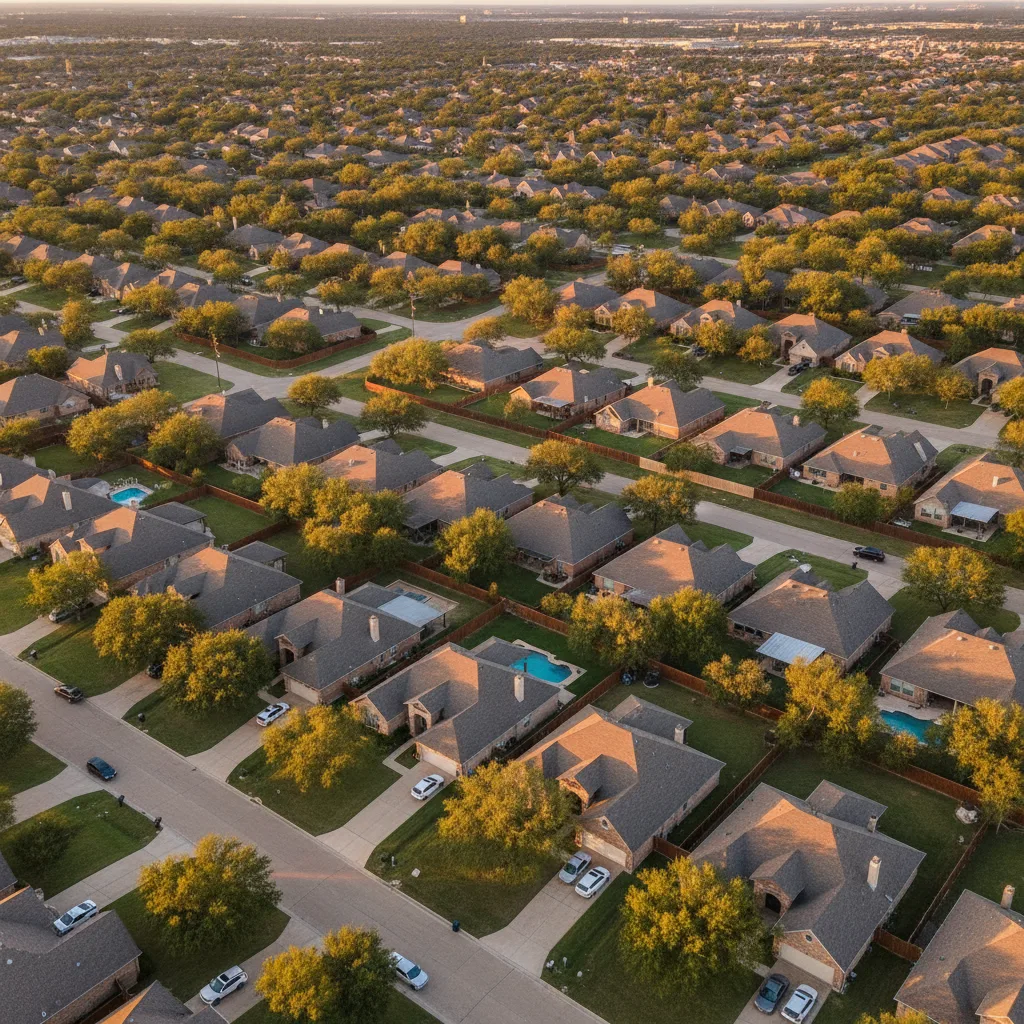
Referrals alone no longer sustain a growing home service business: primary reliance on referrals dropped from 61% to 38% between 2018 and 2026, while Google search now drives 54% of all new home service leads. The shift is structural. Homeowners research before they call — 84% search online before booking, and 76% of those searches happen on mobile. A plumber or HVAC company that depends on word-of-mouth is competing against contractors who show up in the Map Pack, run Local Services Ads, and collect reviews systematically. The US home service market sits at $842 billion in 2026, projected to reach $989 billion by 2031, and the South holds 34.73% of that market. Texas contractors are operating in the highest-opportunity regional market in the country.
The referral-to-digital shift is not a trend — it's a structural change driven by how homeowners make decisions. When a pipe bursts at 10 p.m., the homeowner searches 'emergency plumber Austin' on their phone. They are not calling a friend for a recommendation. Organic search leads close at 14.6%, nearly nine times the 1.7% close rate of cold outbound, because those searchers have already decided to hire someone — they are picking a company. That intent gap is the single most important fact in home services marketing.
The opportunity for contractors who get digital marketing right is real and growing. Forty-three percent of US homes are over 40 years old as of 2026, meaning aging HVAC systems, failing pipes, and deteriorating roofs are creating structural demand for home improvement and emergency repairs that isn't going away. Smaller contractors who build a digital presence now — before larger franchise operators fully saturate local markets — will hold a durable competitive position. The window is open, but it narrows every year as more operators recognize the same shift.
The common mistake is treating home services marketing as a channel selection problem: 'Should I do SEO or run ads?' The right frame is a sequenced system. Start with Google Business Profile, which produces ranking results faster than any other tactic. Layer in Local Services Ads for immediate pay-per-lead qualified traffic. Build organic SEO in parallel for the lowest long-term cost per lead. Manage reviews as an ongoing operation. Optimize landing pages before scaling ad spend. Each layer reinforces the others — running organic SEO and LSA together produces 42% more total leads and 40% lower cost per acquisition than either channel alone.
Budget context matters here too. Home service businesses in growth mode should allocate 8–12% of gross revenue to marketing. A contractor at $2M in annual revenue has a marketing budget to work with that is large enough to run a multi-channel program properly. Businesses in maintenance mode (schedule is full, they just want to hold position) can sustain at 5–7%. The mistake smaller contractors make is spreading a limited budget across six channels before any single channel is producing consistent results. Pick LSA and GBP first. Add organic SEO once those two are running. Then expand into retargeting campaigns and social media once a lead-generation foundation is proven.
Key takeaway
Google search now drives 54% of new home service leads as of 2026, and contractors running organic SEO plus LSA together generate 42% more total leads than single-channel operators — making the sequenced, multi-channel approach the only marketing strategy that compounds.
Chapter 2 · Local Visibility
Google Business Profile and Google Maps: The Fastest Path to More Booked Jobs
Google Business Profile (GBP) is the single highest-impact lever in local SEO for home service businesses, accounting for 32–36% of local pack ranking weight according to Whitespark's Local Search Ranking Factors survey. The top three results in the Google Map Pack capture 44% of all clicks on local-intent searches — meaning if you're not in those three spots, you're invisible to nearly half your potential customers before they even see your own website. GBP optimization produces ranking improvements faster than full organic SEO, often within 60–90 days, which makes it the right starting point for any contractor who needs results while longer-term channels build. It is also the most cost-effective starting point: fully optimizing a GBP listing costs staff time, not ad spend.
Getting into the Map Pack starts with the basics most contractors skip or do once and forget: selecting the right primary and secondary GBP categories, writing a keyword-relevant business description, and keeping service areas accurate. For a plumbing company, the primary category is 'Plumber' — not 'Contractor' or 'Home Services.' Secondary categories like 'Drainage Service' or 'Water Heater Repair Service' extend the searches you're eligible to appear for. These category selections directly affect which local searches trigger your listing, and most competitors have them wrong.
High-Quality Photos and Visual Content Drive More Engagement Than Most Contractors Expect
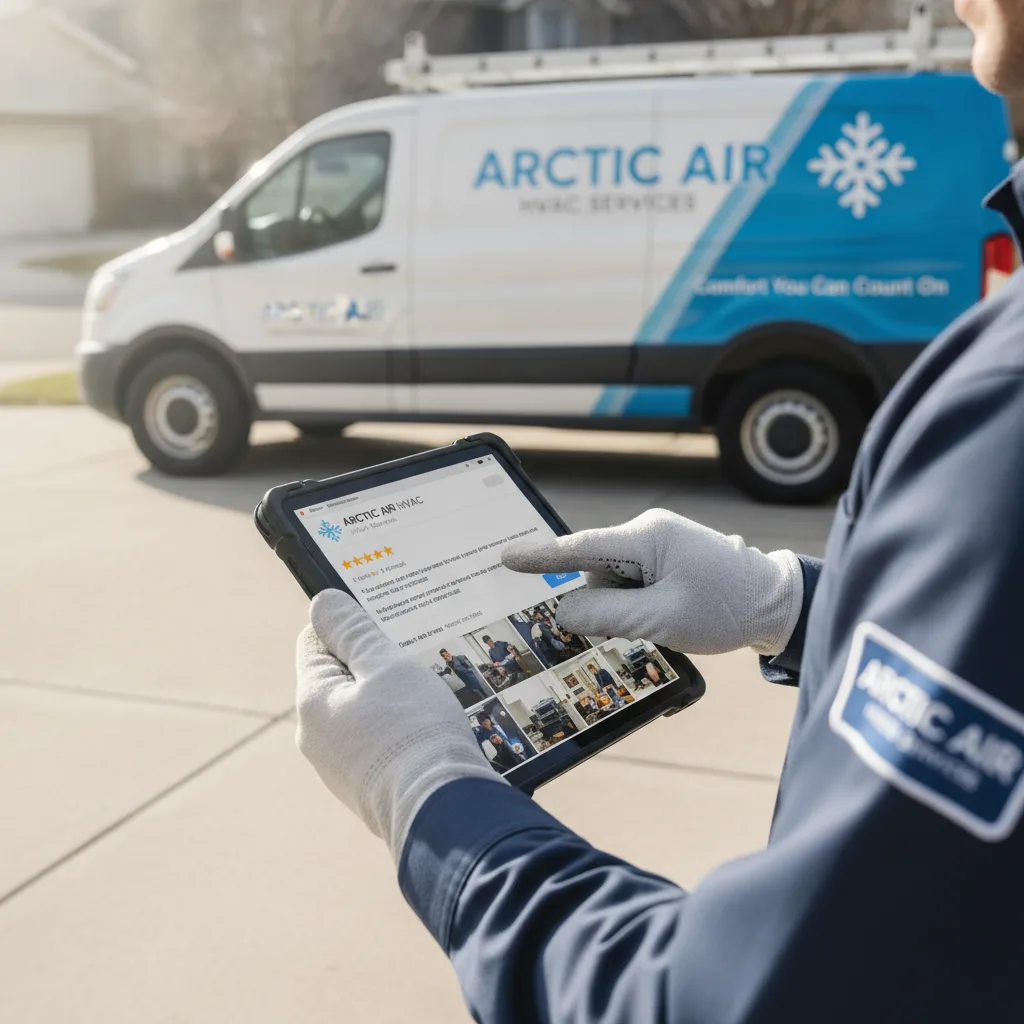
GBP listings with real job photos — before-and-after HVAC installs, completed roofing projects, branded vehicles at job sites — consistently outperform listings with stock images or no photos. Google treats photo activity as a freshness signal, so uploading new images after each major job keeps the profile active. Visual content on a GBP listing also communicates professionalism to homeowners scanning multiple options in the Map Pack: it's often the first impression before they click. Listings with branded vehicles in photos also reinforce brand recognition and local targeting in ways that text alone cannot.
GBP posts, Q&A management, and service-specific entries round out a fully optimized profile. Weekly or biweekly GBP posts about seasonal offers, completed projects, or community involvement signal active management to Google's algorithm. Answering questions in the Q&A section — including seeding your own FAQs about pricing, service areas, and emergency availability — captures decision-stage intent before the homeowner even visits your website. These are low-cost actions that most competitors ignore entirely, which creates an opportunity for home service providers willing to be consistent.
Call tracking integration with GBP is non-negotiable for any contractor serious about knowing what their marketing spend is producing. Tools like CallRail let you assign a tracked number to your GBP listing separately from your website, so you know exactly how many calls and direction requests came from Google Maps versus organic search versus paid ads. Without this, you're guessing. Data-driven marketing requires transparent reporting on cost per qualified lead, booking rate, and revenue per channel — and that reporting starts with call tracking set up at the GBP level before anything else.
Key takeaway
GBP signals account for 32–36% of local pack ranking weight, and Map Pack optimization typically shows ranking results within 60–90 days — faster than any other home services marketing tactic and the right starting point before any other channel.
Chapter 3 · Paid Advertising
Local Services Ads and Digital Advertising: Capturing Demand the Day You Turn Them On
Local Services Ads averaged $53 per lead across all home service trades in February 2026, based on $6.72 million in tracked spend across 888 contractors and 126,650 leads — roughly half the $90.92 average cost per lead from standard Google Search Ads. The reason LSA costs less is structural: it's pay-per-lead, not pay-per-click. You are charged only when a homeowner calls or messages about a local service you actually offer in your actual service area. No wasted spend on accidental clicks, competitor research, or irrelevant queries. For most home service businesses, LSA is the fastest channel to qualified leads and should be live before any other paid advertising. It also comes with a credibility layer that paid search ads cannot match.
Lead costs by trade vary significantly, and knowing your trade's benchmark matters for budget planning. As of February 2026, electrical contractors averaged $39 per LSA lead, HVAC ran $51, plumbing came in at $57, and roofing ran $71–$162 depending on market and competition. Standard Google Search Ads tell a different story: plumbing averages $129.02 per lead, HVAC $127.74, electrical $93.69, and roofing a steep $228.15. The gap between LSA and paid search cost per lead is widest in roofing — often $80–$160 cheaper per lead through LSA — which is why roofing contractors who skip LSA in favor of search ads are significantly overpaying for the same homeowner intent.
Electrical — LSA
$39/lead
HVAC — LSA
$51/lead
Plumbing — LSA
$57/lead
Electrical — Search Ads
$93.69/lead
Plumbing — Search Ads
$129.02/lead
HVAC — Search Ads
$127.74/lead
Roofing — Search Ads
$228.15/lead
The Google Guaranteed badge that comes with LSA approval is a trust signal that affects conversion rates before a homeowner even reads your reviews. When a homeowner sees a green checkmark next to your name in LSA search results, it communicates that Google has verified your license, insurance, and background checks. For trades like electrical and plumbing where homeowners are letting someone into their home, that verification carries real weight. It's a credibility layer that targeted ads in paid search formats do not provide, and it directly increases the likelihood that potential customers choose your listing over a competitor's.
Seasonal demand should drive LSA and paid search budget allocation, not a flat monthly spend. HVAC lead costs spike in May and June when every homeowner with a failing AC is searching simultaneously. A contractor running a flat monthly ad budget in that window is competing against the highest bids of the year with an average budget — and leaving significant summer revenue on the table. The right approach is to flex budget toward peak demand months and pull back during slow seasons, then redirect that slow-season ad spend toward SEO content and GBP improvements that pay off in the next demand spike.
Sending paid traffic to your homepage is a reliable way to cut conversion rates in half. Each paid campaign — LSA, Google Search Ads, or Meta retargeting campaigns — should land on a page built specifically for that trade, service, and city. A plumbing company running ads for water heater installation in San Antonio needs a landing page about water heater installation in San Antonio, not the homepage. Dedicated, service-specific landing pages are where the gap between a 3% conversion rate and an 8–12% rate actually lives. The same traffic, the right page, generates 2.6x more leads from the same ad spend.
Key takeaway
LSA averaged $53 per lead across trades in February 2026 — roughly half the cost of standard paid search — because the pay-per-lead model eliminates wasted spend on clicks that never become calls, and the Google Guaranteed badge lifts conversion before the first contact.
Chapter 4 · Long-Term Growth
Local SEO and Content Marketing: Building the Lowest-Cost Lead Channel Home Service Businesses Own
Once organic SEO is established, cost per lead drops to $10–$30 — the lowest of any marketing channel for home service businesses. The tradeoff is time: expect 6–12 months before organic search produces consistent lead volume, and 12–18 months for it to drive 25–40% of total leads. That timeline is why the sequencing matters: GBP and LSA fill the pipeline now, while SEO compounds in the background. A contractor who waits until they 'need' organic traffic to start building it has already lost 12 months of compounding. Start the SEO work on day one and let it run. Unlike ad spend, SEO builds an asset you own — search visibility that does not disappear when you stop paying.
Organic rankings below the Map Pack depend on three factors above all others, according to Whitespark's 2026 Local Search Ranking Factors survey: a dedicated page for each service (weighted at 210 points), geographic keyword relevance in content and metadata (190 points), and quality of inbound links from local and industry sources (187 points). One 'Services' page listing everything you offer is not enough. An HVAC company with eight service types needs eight pages — one for AC installation, one for furnace repair, one for duct cleaning, and so on — each optimized for a specific keyword and city. This is the architecture that generates first-page keyword rankings consistently.
Content Marketing and Brand Recognition: Capturing Research Searches That Live Outside the Map Pack
Content marketing captures research and pricing searches that sit entirely outside the Map Pack and paid ads. Homeowners searching 'how much does a water heater installation cost in Austin' or 'signs your HVAC needs replacement' are earlier in their decision cycle. A plumbing company with a detailed answer to that question — written for their actual service area — earns brand recognition before the homeowner is ready to call, then shows up again when emergency intent kicks in. These informational queries drive qualified leads months after the content is published, compounding over time in a way that ad spend never does.
Local SEO for home service businesses also includes citation consistency across directories — Google, Yelp, Angi, the BBB, and trade-specific directories — and service area pages for each city or neighborhood a contractor serves. A plumber who covers Austin, Round Rock, Cedar Park, and Pflugerville needs separate location pages with local context, not a single page that lists all four cities. References to specific neighborhoods, local landmarks, and community involvement on those pages improve local targeting and help Google understand geographic relevance, which directly affects Map Pack eligibility for each location.
Real-world results from this approach are documented in markets GPS operates in. Stan's Heating, Air, Plumbing & Electrical built more than 150 first-page keywords through a sustained SEO program and saw a 300% increase in organic leads over time, eventually becoming a household name in their market. Serview Home Pros started from a nearly non-existent online presence and reached $25 per qualified lead with 325-plus ranked keywords and a 6% conversion rate. Both results came from the same system: dedicated service pages, geographic content, consistent GBP management, and patience with the 6–12 month build window.
Key takeaway
Organic SEO delivers leads at $10–$30 each once established — the lowest cost per lead of any channel — but the 6–12 month build window means contractors must start day one, not when they feel the pipeline gap.
Chapter 5 · Reputation System
Reviews, Reputation Management, and the Follow-Up System That Determines Whether Marketing Actually Works
Moving from 4.0 to 4.5 stars on Google increases conversion by 25–35%; moving from 4.5 to 4.8 adds another 10–15%. Reviews directly affect Map Pack ranking, LSA ad rank, and whether homeowners call you or a competitor — making a systematic review-generation process one of the highest-ROI activities in home services marketing. Businesses with 50 or more Google reviews earn 266% more leads than those with fewer than 10. For most contractors, the problem isn't that satisfied customers refuse to leave reviews — it's that no one ever asks. The fix is a repeatable system that removes friction and adds timing, not a one-time push.
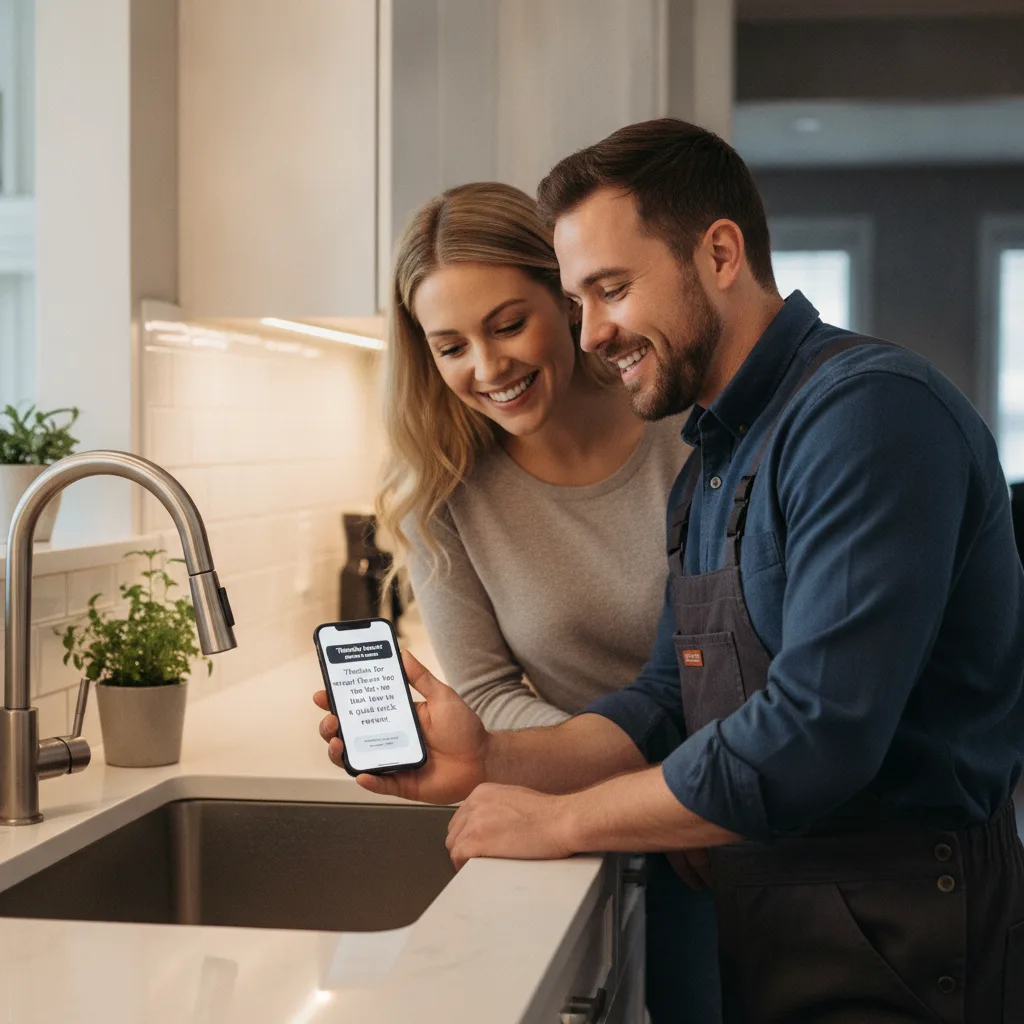
A review-request system works because it removes friction and adds timing. The highest-conversion moment for a review request is 15–30 minutes after a job is completed and the homeowner has seen the work — not three days later in an email. SMS outperforms email for review requests by 4–6x in conversion rate. Tools like Podium or the review-request feature inside GoHighLevel automate this sequence: technician closes the job, a text fires within minutes with a direct link to your Google review page, and the homeowner taps through in one step. The process costs almost nothing and compounds permanently — every new review raises your star rating and improves your LSA ranking.
Responding to reviews professionally is not optional. Potential customers — new customers considering whether to call — read the responses just as carefully as the reviews themselves. A 3-star review with a thoughtful, specific response from the owner signals professionalism and accountability. It often converts a fence-sitter better than five 5-star reviews with no responses. The target is 95-plus percent response rate on any review under 4 stars, with responses that acknowledge the concern, describe what was done, and invite the customer to continue the conversation offline. Never be defensive in a public response — it signals to every future homeowner reading the exchange that complaints are met with resistance, not resolution.
The follow-up speed problem kills more leads than bad marketing does. A 5-minute response to an inbound lead is 21 times more likely to qualify that lead than a 30-minute response (ServiceTitan, 2025 benchmark). Yet only 52% of calls to home service businesses actually reach a person, and 55% of home services companies never ask the caller to book the job, based on Invoca's analysis of 70 million-plus calls in 2026. The marketing system generates the opportunity. The phone answering, the follow-up text, the booking confirmation — that's where booked jobs are won or lost. No digital marketing strategy overcomes a slow or incomplete follow-up process.
CRM and automation tools close the follow-up gap without hiring more staff. GoHighLevel handles inbound lead capture, automated SMS follow-up sequences, missed-call text-back, review requests, and pipeline tracking in one system. When a homeowner fills out a form at 11 p.m., GoHighLevel fires an immediate text: 'Thanks for reaching out — we'll call you first thing in the morning. Need to reach us sooner? Reply here.' That single automation recovers a significant share of after-hours leads that would otherwise go to whichever competitor calls back first. Pair it with CallRail for call tracking, and you have transparent reporting on cost per lead and cost per booked job by channel — the reporting standard every home services marketing agency should be held to.
Key takeaway
Businesses with 50-plus Google reviews earn 266% more leads than those with fewer than 10, and a 5-minute lead response is 21 times more likely to convert than a 30-minute one — making reputation management and follow-up speed the highest-ROI pair in the entire system.
Chapter 6 · Agency Partnership
Choosing a Digital Marketing Agency for Home Service Businesses: What to Measure, What to Ask, What to Avoid
The right digital marketing agency for a home service business acts as a marketing strategic arm — producing qualified leads, tracking cost per booked job, and adjusting strategy by season and trade — not an order-taker that runs ads and sends a report full of impressions and clicks. Vanity metrics like impressions and page views are not booked jobs. The metrics that matter are cost per qualified lead, conversion rate by landing page, LSA booking rate, and revenue generated per channel. Any home services marketing agency relationship that can't answer those four questions within the first 60 days is not built for the trades. This chapter covers what to measure, what to ask, and what to avoid when evaluating a digital marketing agency for your contracting business.
Home services marketing agencies that specialize in the trades bring pre-built infrastructure: GBP category knowledge by trade, service-page templates proven to convert for plumbing versus HVAC versus roofing, LSA bid management experience across different markets, and benchmark data to know whether a $57 plumbing CPL is on target or overpriced. A generalist digital agency can learn the trades, but it costs the client 6–12 months of tuition while they figure out that electrical CPL benchmarks differ from roofing by a factor of four. Specialization is not a luxury — it's the difference between month three producing results and month nine still producing excuses.
Market exclusivity matters more than most home service owners realize when evaluating agency relationships. A marketing agency managing two HVAC companies in the same metro is structurally incentivized to split effort, and in some cases their strategies will directly conflict — the same keyword targets, the same LSA geography, the same review platforms competing for ranking. Ask explicitly: do you work with other companies in my trade in my city? A partner who offers market exclusivity per city per vertical is protecting both their results and yours. Lifetime value of a loyal agency relationship compounds the same way SEO does — but only if the partner isn't also serving your direct competitor.
The website is the conversion engine for every marketing channel, and home improvement companies that evaluate a digital marketing agency should ask whether a custom website is included in the engagement — built specifically for your trade, your service area, and your conversion goals — or whether you're expected to bring an existing site. A professionally built site for a home service business costs $8,000–$15,000 when scoped properly; getting it included as part of a marketing retainer fundamentally changes the ROI math of the engagement. It also means the agency is accountable for the whole system, not just the traffic they send to a site they didn't build and can't optimize.
The Questions That Reveal Whether You're Talking to a Specialist or a Generalist
What is your average cost per qualified lead for my trade in my market?
Can you show me case studies from actual contractors, with lead volume and cost per lead numbers?
How do you handle seasonal budget shifts for HVAC or roofing?
What call tracking setup do you use, and how do you report on booked jobs versus raw leads?
Do you have any other clients in my trade in my city?
How long before I should expect to see results from SEO versus LSA?
Is a custom website included, or is that a separate cost?
The answers reveal whether you're talking to a home services specialist or a generalist with a trades-focused landing page. Transparent reporting on booked jobs is the standard. Any digital marketing agency that deflects to impressions, clicks, or vague 'traffic improvements' when asked about booked jobs either doesn't have the tracking infrastructure in place or knows the numbers don't support the story they're telling. Both are disqualifying. The right agency runs month-to-month retainers because they prove their value every single month with the numbers that matter.
Key takeaway
The right agency metrics for home service businesses are cost per qualified lead, landing page conversion rate, LSA booking rate, and revenue per channel — not impressions, clicks, or page views. Any home services marketing agency that can't report on booked jobs within 60 days of engagement is measuring the wrong things.
Mini-glossary — terms you'll see throughout this guide
Google Business Profile (GBP)
The free listing that appears in Google Maps and the local Map Pack. It accounts for 32–36% of local pack ranking weight and is the single most impactful starting point for local SEO in home services.
Local Services Ads (LSA)
Google's pay-per-lead ad format for home service businesses. Advertisers are charged only when a homeowner calls or messages about a covered service — not per click. Averaged $53 per lead across all trades in February 2026.
Map Pack
The block of three local business listings that appear at the top of Google search results for location-based queries. The top three Map Pack results capture 44% of all clicks on local-intent searches.
Cost Per Lead (CPL)
Total marketing spend divided by the number of inbound leads generated in a given period. The North Star budget metric for home service businesses — more useful than cost per click or impressions.
Cost Per Acquisition (CPA)
Total marketing spend divided by the number of paying customers (booked jobs) generated. Contractors running LSA and organic SEO together average 40% lower CPA than single-channel operators.
Service Area Page
A dedicated website page targeting a specific city or neighborhood a contractor serves, with locally relevant content. Required for ranking in markets outside the contractor's primary business address.
Call Tracking
The practice of assigning unique phone numbers to specific marketing channels (GBP, LSA, paid ads, organic) to measure exactly how many calls and booked jobs each source generates. Tools include CallRail and GoHighLevel.
Google Guaranteed
A badge awarded to LSA advertisers who pass Google's background check, license verification, and insurance screening. Displayed on LSA listings; increases homeowner trust and conversion rate before the first click.
Landing Page
A web page built for a specific campaign, trade, service, and city. Dedicated landing pages convert at 8–12% for top-performing home service sites; sending paid traffic to a homepage reliably cuts conversion by half or more.
Reputation Management
The ongoing process of generating new Google reviews, responding to existing reviews professionally, and monitoring star ratings across platforms. Moving from 4.0 to 4.5 stars increases conversion by 25–35% for home service businesses.
Conversion Optimization
The process of improving a website or landing page so that a higher percentage of visitors take a desired action — calling, booking, or submitting a form. The average home services website converts at 3–5%; high performers hit 8–12%.
Market Exclusivity
An agency arrangement in which the agency agrees to work with only one client per trade per metro, eliminating the conflict of managing competing contractors in the same local market.
The Metric Your Agency Should Be Reporting — but Probably Isn't
If your monthly agency report leads with impressions, clicks, or 'traffic up 12%,' ask one question: how many booked jobs did this produce, and at what cost per job? Impressions don't pay crews. Clicks don't dispatch trucks. The reporting cadence that actually matters for home service businesses tracks cost per qualified lead by channel, conversion rate by landing page, LSA booking rate, and revenue generated per marketing dollar. Any digital marketing agency serving contractors that can't produce those four numbers within 60 days of engagement is measuring the wrong things. Transparent reporting on booked jobs — not vanity metrics — is the standard. Hold your agency to it.
Stan's Heating, Air, Plumbing & Electrical built over 150 first-page keywords and grew organic leads by 300% — not because they had a bigger budget, but because they ran the system in the right sequence: GBP first, LSA immediately after, organic SEO building in parallel, reviews managed as an operation, and landing pages optimized before ad spend scaled. That growth compounded over years into a household name in their market. Serview Home Pros started with almost no online presence and reached $25 per qualified lead with a 6% conversion rate. Both results came from the same framework this guide outlines. At Geek Powered Studios, we include a custom website (an $8K–$15K build) with every retainer, offer market exclusivity per city per trade, and operate month-to-month — because we prove our value every single month with the numbers that matter. If your current marketing can't tell you cost per booked job by channel, let's fix that. Book your free strategy session and we'll show you exactly what the system looks like for your trade and your market.
Frequently Asked Questions
What counts as "home services marketing" and what doesn't?
Home services marketing covers the digital and offline channels that drive booked jobs for local trade contractors: HVAC, plumbing, roofing, electrical, landscaping, painting, pressure washing, remodeling, and similar residential services. The five core layers are Google Business Profile, Local Services Ads, organic SEO, website conversion optimization, and reputation management. It does not apply to restaurants, e-commerce retailers, or non-local service businesses — the tactics in this guide depend on geographic intent and local search visibility. If your customers must be physically present in a service area for you to serve them, this framework applies.
Which home service businesses benefit most from digital marketing?
Contractors doing $500K or more in annual revenue see the clearest return on a structured digital marketing investment, because they have enough job volume to measure cost per booked job accurately across channels. The highest-impact beneficiaries are HVAC, plumbing, and electrical companies — trades where emergency-intent searches ("emergency plumber near me," "AC repair Austin") generate high-converting leads 24 hours a day. Roofing companies with strong seasonal peaks also benefit significantly from LSA and paid search. Landscapers and pressure washing companies see strong returns from GBP and content marketing targeting neighborhood-level searches.
Where should a home service business start with digital marketing?
Start with Google Business Profile. It is the highest-impact lever in local SEO and shows ranking results within 60–90 days — faster than any other tactic. Claim and fully optimize the profile: select the correct primary category by trade (not "Contractor" — use "Plumber," "HVAC Contractor," or "Electrician"), add high-quality photos, and set up call tracking with CallRail to measure inbound calls from Maps separately from other channels. Then activate Local Services Ads for immediate pay-per-lead qualified traffic. Build organic SEO in parallel. Do not spread budget across six channels before any single channel is producing consistent results.
What are the most common mistakes home service businesses make with marketing?
The most expensive mistake is sending paid traffic to a homepage instead of a dedicated service-specific landing page — this reliably cuts conversion rates by half or more. Close behind it: treating reviews as a one-time task instead of an ongoing system, running a flat monthly ad budget instead of flexing with seasonal demand, and spreading a limited budget across too many channels before any single one is working. On the agency side, the biggest mistake is accepting a reporting cadence built on vanity metrics — impressions, clicks, "traffic up 12%" — without insisting on cost per qualified lead and booked jobs by channel.
What should a home service business skip or deprioritize in marketing?
Skip Meta advertising (Facebook and Instagram) until GBP, LSA, and organic SEO are running consistently. Social media advertising targets audience demographics, not purchase intent — it works for brand recognition and retargeting campaigns once a foundation exists, but it rarely outperforms search-based channels for direct lead generation in the trades. Also skip print materials and direct mail as a primary lead channel at this stage — they are awareness tactics, not demand-capture tools, and the cost per booked job is difficult to measure accurately. Focus marketing spend on channels where homeowner intent is already established before the first impression.
How do I measure whether my home services marketing is actually working?
The four metrics that matter are: cost per qualified lead by channel, conversion rate by landing page, LSA booking rate, and revenue generated per marketing dollar spent. Set up CallRail to track calls from GBP, LSA, paid search, and organic separately — without call tracking, you are guessing at which channel is generating booked jobs. Use GoHighLevel or a similar CRM to track lead-to-booked-job conversion rates from every source. A digital marketing program that cannot tell you cost per booked job within 60 days of launch is not built for the trades. That is the standard. Demand it from any marketing agency you work with.
Home Services Marketing: The Complete Guide for Contractors in 2026
Senior Digital Marketing Strategist at Geek Powered Studios
Google Ads Certified, Google Analytics Certified, 15+ years in digital marketing, Home Services SEO Specialist
Chris Johnson leads digital marketing strategy at Geek Powered Studios, where he has helped hundreds of home services contractors across Texas grow their businesses through SEO, paid media, and AI-powered lead automation. He specializes in translating complex search-engine changes into practical playbooks that actually move the needle for plumbers, roofers, HVAC, and electrical contractors.