
Marketing for foundation repair companies works when it builds trust at Stage 3 of the buyer journey, not just fear at Stage 1. The system that consistently books signed jobs combines Google Local Services Ads ($60-$75 per lead), a fully optimized Google Business Profile, symptom-based Google Ads targeting cracks and settling at $8-$20 CPC, local SEO that generates organic leads closing at 14.6%, and Meta retargeting for homeowners who visited but did not call. Skip shared leads: at $80-$150 each with a 6% close rate, you pay $1,700-$2,500 per closed job versus roughly $280 per closed job through owned channels. The full system takes 4-6 weeks to deploy and produces Map Pack movement within 60-90 days.
-
$1,700-$2,500True cost per closed job on shared leads (Angi/HomeAdvisor)
-
$280Cost per closed job through exclusive, owned-channel leads
-
60-90 daysTime to first Map Pack movement after full GBP optimization
-
14.6%Organic search lead close rate vs. 1.7% for outbound leads
-
$60-$75Foundation repair Local Services Ads cost per verified lead
-
4-6 weeksFull system deployment time; GBP and LSA live in 7-10 days
Fear-based marketing for foundation repair companies kills signed jobs at the exact moment it matters most. The average residential foundation repair job runs $5,500-$21,000, with pier-based underpinning exceeding $40,000. At that price point, a homeowner frightened into paralysis by doom-laden ads does not book an inspection. They freeze, wait, and call nobody. The trust-first marketing system laid out in these seven steps is built for foundation repair businesses doing $2M-$5M in annual revenue that are done paying $1,700-$2,500 per closed job on shared leads and ready to generate exclusive, qualified leads through owned channels. Full deployment takes 4-6 weeks. Google Business Profile and Local Services Ads can be live within 7-10 days.
Before you start
- A verified Google Business Profile that is claimed and accessible by an owner-level account
- A website you control, or the willingness to build one focused on conversion speed, not aesthetics
- A defined service area with city and zip-code boundaries documented
- A basic sales process: someone who picks up the phone and follows up within 60 minutes
- A CallRail or equivalent call-tracking account to measure which channels produce real calls
- At least 10 Google reviews on your GBP that you can point to as social proof during the sales process
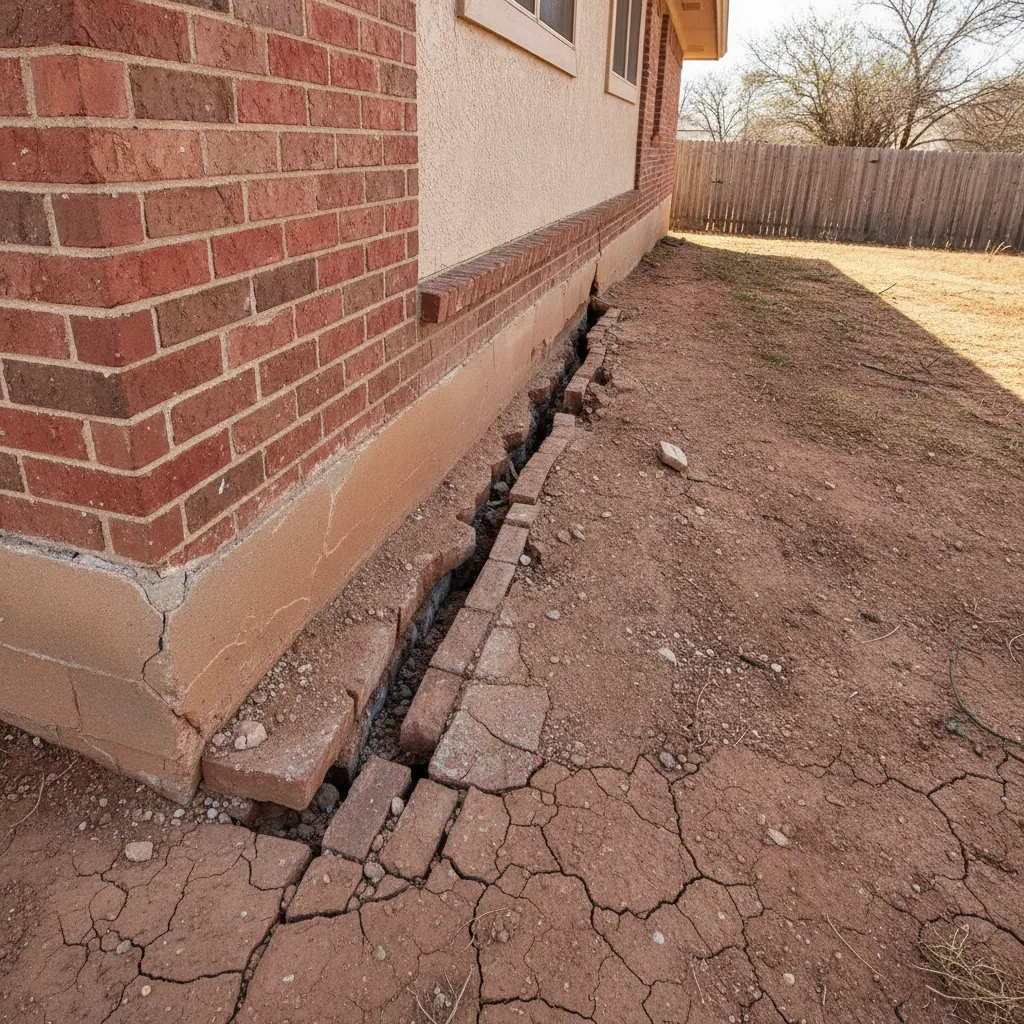
Understand Why Fear-Based Ads Kill Signed Jobs in Foundation Repair
Fear-based marketing for foundation repair companies backfires at the exact moment it matters most: Stage 3 of the buyer journey, when a homeowner decides who to trust with a $5,500-$21,000 repair. Foundation repair buyers move through three sequential mental stages: 'Something is wrong,' 'Is this serious?', and 'Who can I trust to fix it?' Ads that manufacture panic, collapsing walls, plummeting property values, worst-case doom scenarios, do their job at Stage 1. They fail completely at Stage 3, which is the only stage that produces a signed job.
The math explains why fear can freeze the buyer. At a $5,500-$21,000 price point, a frightened homeowner does not book immediately. They freeze, get a second opinion, or simply do nothing and hope the problem waits. Campaigns that amplify anxiety without a clear, confident next step actively suppress lead volume rather than grow it. Estimated 25% of all US homes experience foundation problems at some point, so the demand is real. The constraint is trust, not awareness.
Repeated exposure makes it worse. Fear-based ads cause habituation: homeowners become desensitized to threat cues, start skipping ads, and begin to associate the brand itself with manipulation. Homeowners researching foundation repair gimmicks have started treating alarmist language as a disqualifying red flag, not a buying signal. Consumer research published in 2026 documents homeowners using worst-case language, time-sensitive discounts, and doom-laden predictions as negative vetting criteria when choosing among foundation repair companies. The long-term cost is brand trust, and in foundation repair, trust is the variable that converts a click into a signature.
The Trust Gap
The three-stage buyer journey is the reason what makes foundation repair marketing different from other home services is the length and emotional weight of the decision window. Your ad copy determines whether you are perceived as a trusted expert or a pressure salesperson before the phone ever rings. Build messaging that validates concern and offers a confident, specific next step.
Stop Buying Shared Leads and Audit Your True Cost Per Signed Job
Shared lead platforms like Angi and HomeAdvisor send the same homeowner request to 4-5 foundation repair contractors simultaneously. The real cost per acquired customer on shared leads is 4-5 times the listed price once conversion rates are factored in. At $80-$150 per shared lead and a 6% overall close rate, you are paying $1,700-$2,500 per closed job. Compare that to exclusive leads generated through owned channels, which close at 26% and cost roughly $280 per closed job. That is an 80%+ difference in customer acquisition cost.
Run this audit before you touch another marketing channel. Pull your last 90 days of shared leads. Count how many became signed jobs. Divide your total spend by signed jobs, not leads. Most foundation repair owners who do this math for the first time find they have been paying two to three times what they thought for each job in the pipeline. That number becomes the baseline you are beating when you shift to owned channels. Track every lead source in a simple table: channel, spend, leads, close rate, signed jobs, cost per signed job.
The fix is not to buy more shared leads at higher volume. It is to build channels that produce exclusive leads, homeowners who found you specifically, chose to contact you specifically, and did not simultaneously fire off the same request to four competitors. Exclusive leads convert at 3-5 times higher rates than shared leads. The sales cycle is shorter. The conversation starts from earned credibility, not a race-to-the-bottom price comparison with several contractors the homeowner contacted in the same session.
CallRail
$45/mo
Track which channels produce actual phone calls and form fills, not just impressions, so you can calculate real CPL and cost per signed job by source.
Google Sheets or your CRM
Free / varies
Build a simple lead-source audit table: channel, spend, leads, close rate, signed jobs, cost per signed job. Run it monthly to catch channel decay early.
CRM Tools Matter Here
If your CRM tools do not connect lead source to signed job, you are flying blind. CallRail tags every inbound call and form fill with a source. Pipe that data into your CRM and you will have the cost-per-signed-job number your marketing partner should be reporting on every month.
Optimize Your Google Business Profile to Win the Map Pack
Google Business Profile optimization is the single strongest local ranking factor for foundation repair contractors in 2026. Businesses with complete, optimized GBP listings receive 7x more clicks than those with incomplete listings. Profiles with geotagged jobsite photos generate 42% more direction requests. Map Pack movement typically begins within 60-90 days of a full Google Business Profile optimization push, making GBP the fastest-return activity in the entire marketing system. 89% of 'foundation repair near me' searches in 2026 trigger the Map Pack, not just standard organic results, so an incomplete profile means invisibility for the highest-intent searches in your local market.
Complete every field: set your primary category to 'Foundation Repair Service,' add secondary categories for basement waterproofing, crawl space encapsulation, and structural repair services, write a 750-character business description loaded with symptom language (settling, cracks, bowing walls, sinking foundation), and define your service area by city and zip code. Add at least 20 photos including before/after jobsite shots, crew photos, and equipment, all geotagged with GPS coordinates before upload. Set up weekly Google Posts answering common questions like 'How do I know if my foundation crack is serious?' and 'What causes a sinking foundation in clay soil?' Each post keeps your GBP active and signals relevance to Google's local algorithm.
Reviews are the trust signal that closes the loop between a Map Pack impression and a booked inspection. A homeowner who finds you in the Map Pack and sees 80 reviews averaging 4.8 stars arrives at the call in a fundamentally different mental state than one who finds you through a fear ad. Build a post-job review request sequence using SMS automation and target 5 new reviews per month to maintain review velocity. Google Business Profile optimization at this level, combined with the right foundation repair SEO, moves your local rankings ahead of national franchise competitors within 4-6 months in most Texas markets. That timeline is the realistic one. Agencies promising faster results typically do not sustain them.
Podium
$289/mo
Automates post-job SMS review requests and centralizes all review responses in one dashboard, critical for maintaining review velocity without manual follow-up.
NiceJob
$75/mo
Lower-cost alternative to Podium for automated review generation; integrates with most field service CRMs and sends review requests via SMS within minutes of job completion.
BrightLocal
$39/mo
Tracks your GBP rankings across your full service area by city and zip code, so you can see Map Pack movement weekly and confirm optimization efforts are producing local rankings improvement.
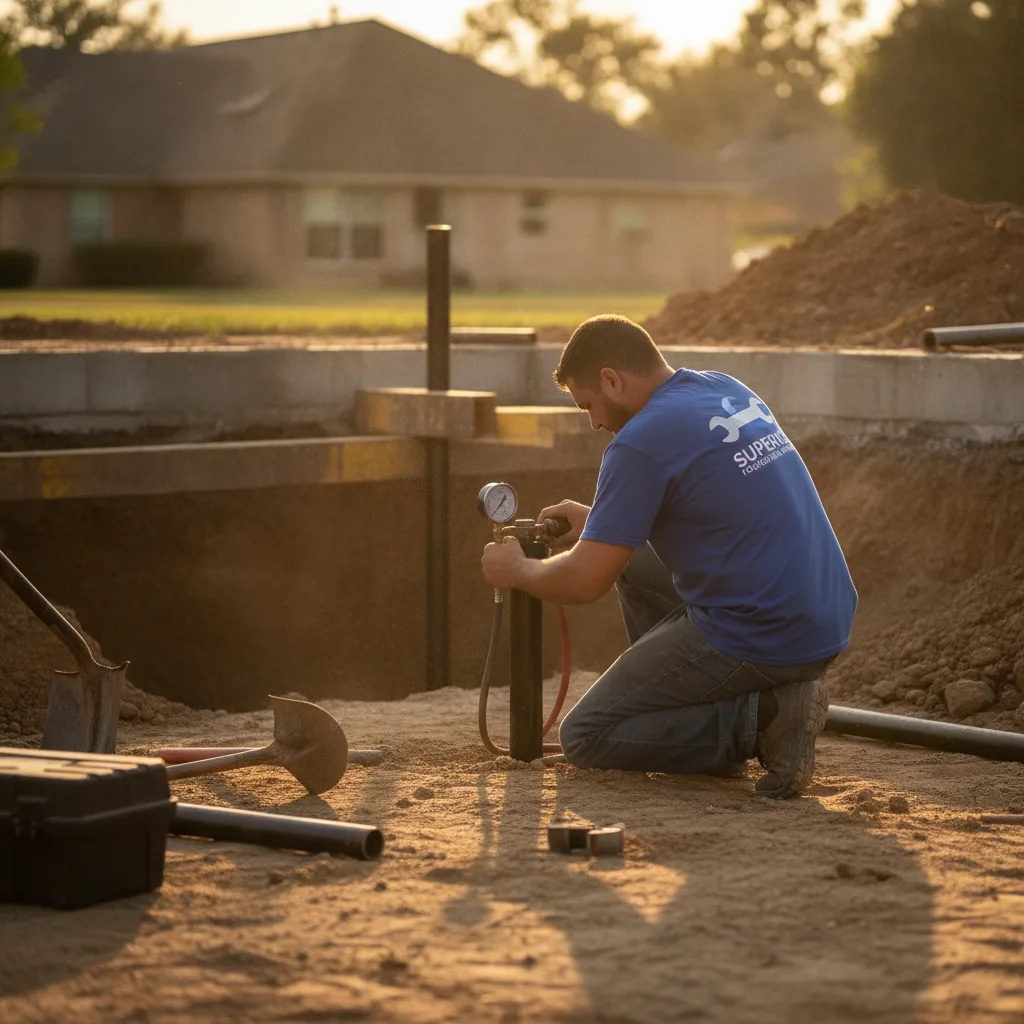
Run Google Local Services Ads and Symptom-Based Google Ads for Qualified Leads
Google Local Services Ads deliver foundation repair leads at $60-$75 per lead in standard markets because LSA bills per verified contact, not per click. Standard PPC campaigns run $130-$180 CPL in 2026. Run both, and your blended CPL drops to $90-$120 while the Google Guaranteed badge on your LSA listing does trust-building work that no ad copy can replicate. At a 25% close rate on qualified leads and a $9,000 average job, a $840/month LSA budget generates roughly $27,000 in revenue. That is a marketing cost of 3.1% of revenue, well inside healthy home service benchmarks. The Google Local Services Ads platform is the only paid search channel that displays the Google Guaranteed badge alongside your listing.
Structure your Google Ads campaigns around symptom-based keywords, not generic urgency. Keywords like 'foundation cracks in wall' and 'house settling and sticking doors' cost $8-$20 CPC and capture homeowners at Stage 1 and Stage 2 of the buyer journey. 'Foundation repair near me' costs $49 CPC in 2026 and captures Stage 3 buyers who are ready to book an inspection. Build separate ad groups for each symptom cluster: foundation crack repair, settling and sinking foundation, bowing walls, crawl space repair, basement waterproofing. Write ad copy that validates the concern and offers a confident, specific next step: 'Free inspection this week, we will tell you exactly what is wrong.' That is how you reach homeowners without triggering the freeze response.
Well-structured foundation repair Google Ads campaigns convert at 12-20%, which is among the highest conversion rates in home services. The difference between 12% and 20% is almost entirely the landing page. Send paid search traffic to a dedicated, fast-loading page, not your homepage, with a single call to action, a symptom-based headline, three trust signals (Google Guaranteed badge, review count, years in business), and a form that takes under 60 seconds to fill. Sending PPC advertising to a slow, generic website is the fastest way to destroy an otherwise solid campaign. Paid advertising economics only work when the page receiving the traffic is built to convert.
Google Local Services Ads
$60-$75 per lead (pay-per-lead)
Only paid search channel that displays the Google Guaranteed badge, which cuts cost per qualified lead versus standard PPC and builds immediate credibility in local search results.
Google Ads
$8-$49 CPC depending on keyword intent
Symptom-based keyword campaigns capture homeowners at Stage 1 and Stage 2 of the buyer journey at lower CPCs; remarketing layers re-engage them at Stage 3 when they are ready to book.
Heads Up
Running LSA and Google Ads simultaneously is not redundant. LSA wins on trust (Google Guaranteed badge) while Google Ads wins on keyword specificity and landing page control. The two channels serve different stages of the buyer journey and produce different lead quality profiles. Track them separately in CallRail and compare cost per signed job by source monthly.
Build Local SEO That Produces Organic Leads With a 14.6% Close Rate
Organic search leads close at 14.6% versus 1.7% for outbound leads. That gap exists because a homeowner who finds you organically while searching 'foundation crack repair Austin' chose to read your content, decided you knew what you were talking about, and then reached out. The sales conversation starts from earned authority, not interrupted attention. Foundation repair SEO takes 4-6 months to produce meaningful traffic, but the organic leads it generates are the highest-converting in the entire marketing system. Search engine optimization is the only channel that compounds over time instead of stopping when the budget stops.
The local SEO stack for foundation repair has four components. First, GBP optimization, covered in Step 3. Second, city and symptom-specific landing pages: one page per city you serve ('Foundation Repair Austin,' 'Foundation Repair San Antonio'), and one page per structural repair service ('Crawl Space Repair,' 'Basement Waterproofing,' 'Foundation Crack Repair,' 'Crawl Space Encapsulation,' 'Foundation Stabilization'). Third, educational content targeting symptom searches: 'Why are my doors suddenly sticking?', 'What causes a sinking foundation in clay soil?', 'How much does pier and beam repair cost in Texas?' These pages capture Stage 1 and Stage 2 buyers before competitors appear in their awareness. Fourth, consistent NAP citations across 60+ directories so Google's local algorithm trusts your service area data and the company ranks for those city-level searches.
Texas accounts for an estimated 18% of all US residential foundation repair expenditure, driven by expansive clay soils that shift seasonally and cause settling and cracks at higher rates than most US markets. That market concentration means a foundation repair company that dominates local search in Austin, San Antonio, Dallas, or Houston is competing in a $340M+ state market with search engine optimization as its primary long-term moat. National franchises have brand budgets but weak local content. Local foundation repair contractors who publish genuine symptom-based content, earn local citations, and maintain clean GBP listings outrank franchise players within six months in most Texas markets.
BrightLocal
$39/mo
Citation building and tracking across 60+ directories; confirms NAP consistency across your full service area so Google's local algorithm correctly attributes your rankings.
Ahrefs or Semrush
$99-$139/mo
Identify symptom-based keyword gaps your competitors are not targeting, track foundation repair SEO rankings by city page, and monitor which content pages are generating organic leads.
Timeline Reality
Foundation repair SEO produces Map Pack movement within 60-90 days and meaningful organic traffic by months 4-6. If an agency promises page-one rankings in 30 days, walk away. If they track signed jobs alongside keyword rankings, that is the right marketing partner to evaluate further.
Use Facebook and Instagram Ads for Retargeting and Trust-Building, Not First-Touch Lead Generation
Facebook and Instagram ads work best for foundation repair companies as retargeting and brand-familiarity channels, not first-touch lead drivers. Google is where active buyer intent lives for foundation repair searches. Meta is where you stay visible to homeowners who already visited your own website, watched your GBP video, or engaged with your content but did not book yet. Running Meta ads as a first-touch fear-based campaign, 'Is your foundation cracking?' with a stock photo of a crumbling wall, produces clicks from curious homeowners who are not ready to spend $10,000-$21,000 and will not call.
The right social media marketing play for foundation repair runs two campaigns. First, a retargeting campaign targeting your website visitors from the last 30 days: show them a 60-second before/after video from a real job in their neighborhood, a homeowner testimonial, or an explainer of what the inspection process looks like. Second, a brand awareness campaign targeting homeowners in pre-1980 housing in your service area: soft educational content, no panic, no urgency, just 'here is what early foundation settling looks like' with your logo and a link to your symptom guide. These social media campaigns build the familiarity that makes your name feel credible when a homeowner finds you through Google two weeks later. Targeted ads on Meta are at their most efficient when they reinforce trust rather than try to generate first-touch conversions.
Combine Meta retargeting with a post-inspection email nurture sequence. After every free inspection, load the contact into a 5-email drip: inspection summary, financing options, a real customer story with photos, a warranty explanation, and a soft follow-up at day 14. Most foundation repair sales cycles run 2-4 weeks between inspection and signed job. The contractors who close consistently are the ones still in the homeowner's inbox with helpful, non-pressuring content during that window. Potential clients who attended an inspection but did not sign are not lost. They are in a decision phase and need reassurance, not pressure.
Meta Ads Manager
Free (ad spend $500-$1,500/mo recommended for retargeting)
Retargets website visitors with before/after content and testimonials, rebuilds trust for homeowners who clicked but did not call the first time.
GoHighLevel
$97-$297/mo
Runs post-inspection email and SMS nurture sequences automatically, keeps your company visible during the 2-4 week decision window, and tracks every touchpoint in the sales cycle.
Track Signed Jobs, Not Leads, and Choose the Right Marketing Partner That Understands Foundation Repair
The right marketing system for foundation repair companies is measured in signed jobs and revenue, not clicks, impressions, or raw lead counts. A foundation repair marketing agency that reports on CPL, organic traffic, and keyword rankings without connecting those numbers to booked inspections and signed contracts is reporting vanity metrics. Demand a weekly or monthly dashboard that shows leads by channel, inspections booked, show rate, signed jobs, revenue attributed, and cost per signed job by source. That reporting stack is the one that tells you whether your marketing spend is working. Anything short of that is a marketing agency that does not understands foundation repair economics.
The economics justify the investment. A single residential foundation repair job averages $5,500-$21,000. At 18%-28% EBITDA margins, each job delivers $990-$5,880 to the bottom line. An LSA plus Google Ads plus local SEO stack running at $5,000/month that generates 12-15 signed jobs per month is producing $66,000-$315,000 in monthly revenue. What makes foundation repair marketing different from generic digital marketing services is the specificity: the three-stage buyer psychology, symptom-based content that reaches homeowners before competitors do, GBP optimization built around clay-soil markets, LSA campaigns structured around the Google Guaranteed badge, and a foundational marketing hub of city and symptom pages that compounds organic lead generation over time.
Geek Powered Studios is a digital marketing agency with a track record in home services and the specific industry knowledge foundation repair contractors need. Serview Home Pros started with nearly no online presence and grew to 25 qualified leads per month with 325 ranked keywords. Green Energy of San Antonio switched from TV and radio to digital, cut cost per paid lead by 13%, and grew leads 40% year over year. The model is proven. Foundation repair businesses at this scale need a marketing partner that measures success the same way you do: jobs on the schedule, not impressions in the dashboard. Ask any foundation repair marketing agency candidate how they define a signed contract, ask for a case study with specific CPL and revenue numbers, and ask whether they work with your direct competitors in your local market. Those three questions identify the right marketing partner faster than any sales call.
CallRail
$45/mo
Routes inbound calls by source and records them, so you can confirm which channel produced which signed job and calculate cost per signed job by channel.
GoHighLevel
$97-$297/mo
Full CRM, pipeline tracking, and automation in one platform; connects lead source to signed job so your foundation repair marketing agency and sales team see the same numbers.
What to Ask Any Foundation Repair Marketing Agency
Ask how they measure a signed contract, not a lead. Ask for a case study from a foundation repair or home service company with specific CPL and revenue numbers. Ask whether they work with your competitors in your market. A marketing partner worth hiring answers all three without hesitation and offers market exclusivity per city as a standard term, not a premium add-on.

The Free Inspection Offer Only Works If Your Website and Follow-Up Do Not Leak
Foundation repair companies run the free inspection offer across Google Ads, LSA, and their GBP listing, then wonder why booked inspections do not convert to signed jobs at the rates the numbers predict. The inspection offer is not the problem. The leak is almost always in one of three places: a slow website that loses the lead before the form loads (aim for under 2 seconds on mobile), a follow-up response time over 60 minutes (potential clients in Stage 3 call the next contractor on the list if you do not answer fast), or no nurture sequence after the inspection. Plug those leaks before scaling ad spend. More traffic to a broken funnel means a bigger bill for the same number of signed jobs.
When every channel in this system is running together, the outcome is a consistent pipeline of exclusive, qualified leads arriving through search engine optimization, Local Services Ads, and Google Ads, converting at 14.6% organically and 12-20% through paid search, with Meta retargeting and post-inspection email sequences closing the gap during the 2-4 week sales cycle. That is what trust-first marketing for foundation repair looks like at scale. Geek Powered Studios builds this exact system for foundation repair companies and home service contractors across Texas, and includes a free custom website ($8K-$15K value) with every retainer, built for speed, conversion, and local SEO from day one. No long-term contracts. Market exclusivity per city. If you want to see what this system looks like with your specific CPL, service area, and average job value, book a free strategy session and we will map it out together.
Frequently Asked Questions
Ready to get started? Contact Geek Powered Studios today.