
Build a retention-first medical weight loss marketing plan by following seven steps: calculate patient LTV, map your dropout window, staff a proper care team with a registered dietitian, set up a HIPAA-compliant CRM sequence, launch a maintenance membership, align SEO content with weight management programs search intent, and track cohort retention monthly. As of 2026, the national 6-month retention rate sits at 40–55%. Strong clinics hit 65–75% at 12 months by treating care infrastructure — not ad spend — as the primary growth lever. A patient retained for 12 months at $500/month generates $6,000, versus $1,000 for a 2-month dropout. Fix the retention gap first; then scale lead generation on top of a system that holds patients.
-
40–55%National 6-month weight loss program retention rate — the gap you're filling with ad spend
-
$6,000 vs $1,00012-month vs 2-month patient revenue at $500/month — the LTV math that changes everything
-
Month 3–4The highest-dropout window in GLP-1 programs — the plateau phase most clinics ignore
-
+25–40%12-month retention lift from structured patient engagement programs with regular check-ins
-
65–75%12-month completion rate at well-run clinics vs 40–55% industry average
-
3–5xPatient LTV increase from a maintenance membership vs single-program enrollment
-
$70–$150Google Ads cost per lead you're burning to replace patients a retention system would have kept
-
24 hoursMissed-appointment follow-up window that recovers 20–30% of at-risk patients
Your medical weight loss clinic is generating leads. Patients are booking consultations, starting programs, and picking up their first semaglutide or tirzepatide prescription. Then, somewhere between month three and month six, most of them disappear. The national 6-month retention rate for weight loss programs sits at 40–55% as of 2026 — meaning the majority of clinics lose most of their patients before those patients have generated half the revenue a single enrollment is capable of producing. At $300–$600 per month for a medical weight loss program, a 12-month patient is worth $3,600–$7,200 in program revenue alone, before lab work, body composition scans, and ancillary services. A 2-month dropout is worth $600–$1,200. That difference — not your Google Ads click-through rate — is the real marketing problem most clinics at $2M–$5M in annual revenue need to solve first. This plan walks through exactly how to do it, in seven steps, with specific tools, benchmarks, and sequences that well-run clinics are using right now to hit 65–75% 12-month completion rates instead of the industry average.
Before you start
- A HIPAA-compliant CRM (GoHighLevel, Salesforce Health Cloud, or equivalent) capable of automated patient follow-up sequences — with a signed Business Associate Agreement in place before any patient health data enters the system
- Baseline retention data: your current 3-month, 6-month, and 12-month patient completion rates pulled from your appointment system — you cannot optimize what you have not measured
- A defined program pricing structure ($300–$600/month is the current market range for medical weight loss programs) so you can calculate patient LTV accurately before making any marketing decisions
- At least one full-time care team member — a registered dietitian, nurse practitioner, or medical assistant — who owns patient engagement, not just clinical visits
- Google Analytics 4 and CallRail (or equivalent) tracking in place so you can attribute which marketing channels bring in patients who actually stay past month three
- Your clinic's appointment data for the past 12 months, organized by patient enrollment month, to identify your personal dropout window — most clinics find it clusters between month three and month four

Run the LTV Math Before You Spend Another Dollar on Leads
Most medical weight loss clinics are solving the wrong equation — optimizing for lead volume when the real revenue gap lives in patient retention. A patient enrolled in a $500/month weight loss program who stays two months generates $1,000. The same patient retained for 12 months generates $6,000 or more, plus ancillary lab work, body composition scans, and monitoring visits. That 6x difference in revenue per patient is the first step toward understanding where your marketing plan actually needs to focus.
Run this calculation right now: multiply your current monthly program fee by your average patient tenure in months. If that number is below $2,500, your retention is the leak — not your lead cost. Clinics with strong retention programs generate 40–60% of revenue from returning patients, which directly cuts the marketing spend required to maintain overall revenue. If your returning patient revenue share is below 30%, you are on a lead treadmill — spending $70–$150 per Google Ads lead just to refill a bucket that never stops leaking. The US medical weight loss market hit $28 billion in 2026; the clinics capturing a growing share of that are not outspending competitors on ads. They are out-retaining them.
Build a simple LTV model in Google Sheets: (monthly program fee) x (average months enrolled) x (monthly patient starts) = actual monthly recurring revenue. Then model what the same math looks like at 65% 12-month retention versus your current rate. That gap — the difference between what your program produces now and what it could produce with a functional retention system — is the number that should be driving every marketing budget conversation you have with your team or your agency.
GoHighLevel
$97–$297/mo
HIPAA-compatible CRM with pipeline views that let you track patients by tenure cohort — instantly shows where your dropout is concentrated.
Google Sheets (LTV model)
Free
Build a simple retention math model comparing current revenue per patient to projected revenue at 65–70% 12-month retention. The delta becomes your retention marketing budget justification.
Reality check
If you cannot tell me what percentage of patients who started in January 2026 are still enrolled in October 2026, your first task is pulling that cohort data before building any marketing plan. Guessing at your dropout window based on gut feel produces a plan built on the wrong foundation.
Identify Your Dropout Window — Most Clinics Find It at Month 3 to Month 4
The single biggest dropout window in GLP-1 weight loss programs is between month three and month four — the point where weight loss naturally plateaus for most patients. Patients who started semaglutide or tirzepatide in month one saw rapid early results, often 5–8 lbs in the first four weeks. When that pace slows at the plateau phase, patients interpret it as the program failing rather than as a normal physiological response to losing weight. Without proactive clinical communication, they discontinue and look for an alternative that promises faster results — usually a less supervised, less effective option.
Pull your appointment data and map cancellations and no-shows by month of enrollment. If your dropout clusters between weeks 10 and 16, you have a plateau-driven churn problem — which is clinical and operational, not a marketing failure. More than 30% of GLP-1 patients drop out within the first four weeks, before even reaching a therapeutic dose, which points to a separate onboarding gap driven primarily by digestive issues and insufficient side-effect education. Both windows need different interventions and different CRM sequences.
Document your two critical dropout windows: the first-four-weeks onboarding window and the month-3-to-4 plateau window. Every retention tactic in the steps that follow maps to one of these two moments. Clinics that throw more ad spend at these windows miss the point entirely — these are care infrastructure problems that marketing then amplifies once they are fixed. Knowing how much weight patients expect to lose versus how much they are actually losing at week 10 is the data your care team needs to intervene before the patient decides to quit.
Key data point
BCBS data shows that patients treated by providers with genuine expertise in obesity medicine — endocrinologists and obesity specialists — were measurably more likely to complete 12 weeks of treatment. If your clinic is staffed primarily by general practitioners or telemedicine-only providers, your 12-week completion rate will reflect that structural gap, and no amount of marketing spend will close it.
Build the Care Team Infrastructure That Healthy Weight Programs Actually Require
Well-run medical weight loss clinics hit 65–75% 12-month completion rates. The industry average sits at 40–55%. The difference is care team infrastructure, not marketing budget. Structured patient engagement programs — including monthly medical check-ins, body composition tracking, nutritional coaching on healthy eating, and proactive outreach when patients miss follow up appointments — can increase 12-month retention by 25–40%. These are not nice-to-haves; they are the clinical backbone that makes the marketing math work.
Your care team should include, at minimum: a supervising physician or nurse practitioner who owns the medical weight loss treatment plan and adjusts weight loss medications as needed; a registered dietitian who conducts monthly eating plan reviews and coaches patients on healthy diet modifications and healthy lifestyle habits during the plateau phase; and a patient engagement coordinator who monitors appointment adherence and triggers outreach within 24 hours of any missed follow-up appointment. That 24-hour missed-appointment follow-up recovers 20–30% of at-risk patients who would otherwise ghost the program entirely. Your team includes each of these roles for a reason — consolidating them produces worse outcomes.
Monthly provider check-ins alone add 30–40% to 6-month retention. Body composition tracking — showing patients measurable changes in fat mass and lean mass even when the scale stalls — adds another 15–20% retention improvement. Patients who can see they are losing excess weight as fat rather than muscle, and that their body mass index is trending down even through a plateau, do not quit. Patients who only see a scale number and interpret a weight plateau as failure do. The care team's job during months three and four is to reframe the plateau before the patient reframes it as a reason to stop. Coaching patients on increased physical activity and whole grains and healthy fats in the eating plan gives them process wins to focus on when the scale slows.
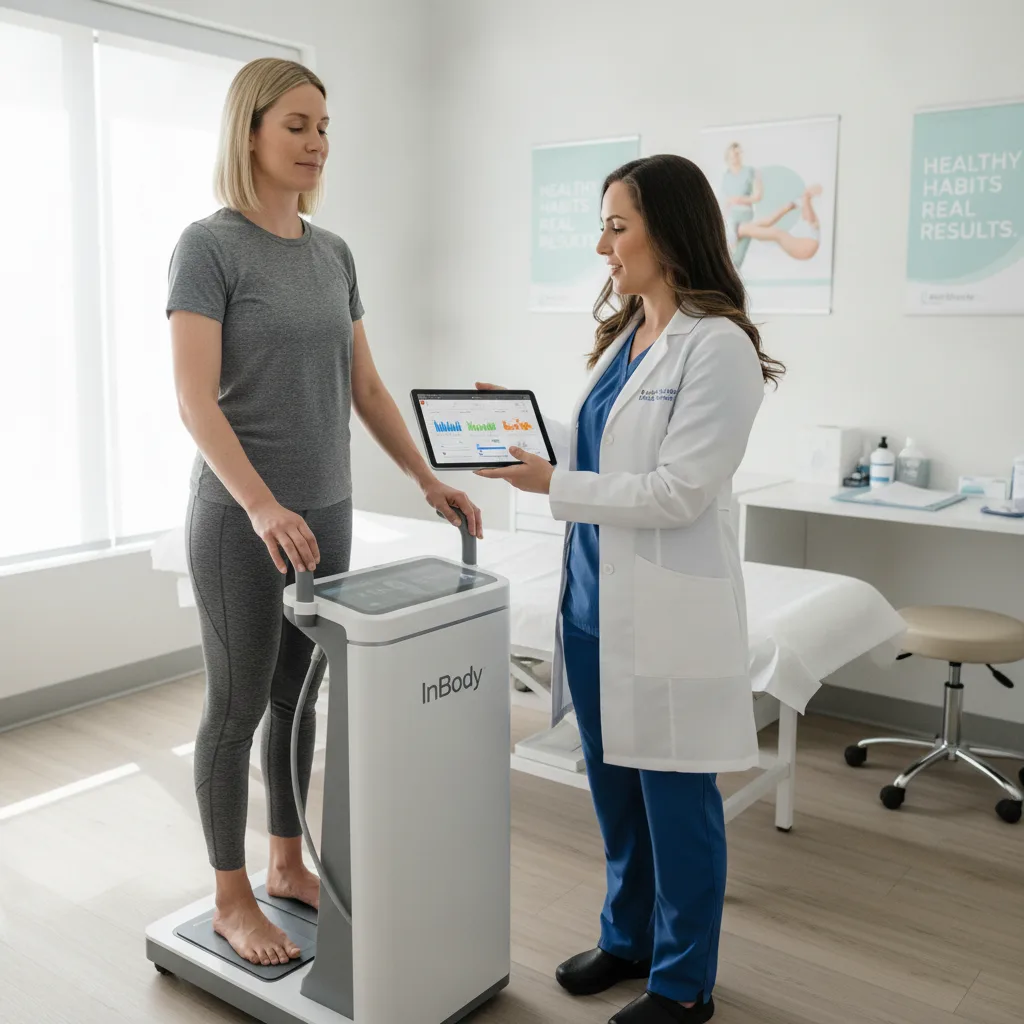
InBody 570 (body composition analyzer)
$6,000–$8,000 one-time
Gives patients objective data on fat mass, skeletal muscle mass, and visceral fat area — the metrics that show progress when the scale does not, directly cutting plateau-driven dropout.
Healthie
$49–$149/mo per provider
HIPAA-compliant platform for registered dietitian sessions, food logging, and ongoing support messaging — keeps the care team connected to patients between clinic visits.
Set Up a HIPAA-Compliant CRM Sequence Mapped to the Patient Journey for Ongoing Support
A HIPAA-compliant CRM with automated sequences tied to patient milestones is the operational engine behind a retention-first weight management program. The sequence logic is straightforward: trigger different messaging based on where the patient is in their treatment timeline, not based on calendar date. A patient who started week one needs onboarding support and side-effect education around digestive issues. A patient at week 10 needs plateau-specific reassurance and dietary goal reframing. A patient who missed a follow-up appointment needs a human call within 24 hours — automated outreach alone does not recover at-risk patients at the same rate as a live conversation.
Build three core automated sequences in your CRM. First, an onboarding sequence for weeks 1–4: daily check-in texts, GLP-1 side-effect FAQs covering digestive issues like nausea, and a scheduled call from the care team at day seven. Second, a plateau-intervention sequence that fires automatically at week 10: a message acknowledging that most people see a weight plateau around this point, a reframe around healthy habits and non-scale victories, and a prompt to book a body composition scan before they interpret a slowing scale as program failure. Third, a win-celebration sequence tied to milestone weight loss percentages: when a patient hits 5%, 10%, and 15% body weight reduction, automated messages highlight the health benefits — reduced blood pressure, improved obstructive sleep apnea risk, lower heart disease markers, better diabetes indicators — not just the number on the scale.
Behavioral goal-setting focused on dietary goals rather than weight targets improved goal attainment by 71% versus 39% for weight-loss-goal-only programs. Your CRM messaging should reflect this directly. Swap out any 'you should have lost X lbs by now' framing for 'here is the healthy eating and physical activity progress you have made this month.' Patients who feel successful at the process stay enrolled. Patients who feel behind on the outcome drop out. This is a messaging shift most clinics can make in a single afternoon of CRM sequence editing, and it changes the patient's relationship with their current weight trajectory.
GoHighLevel
$97–$297/mo
Built-in SMS, email, and phone sequences with HIPAA BAA available; integrates with most clinic scheduling software for milestone-triggered automation without a developer.
Podium
$399/mo
Manages patient text message communication and review requests at scale — critical for turning 10–15% body weight reduction milestones into Google reviews that feed organic search rankings.
Compliance note
GoHighLevel requires a signed Business Associate Agreement (BAA) to be HIPAA-compliant. Execute the BAA before storing any patient health information in the platform. A HIPAA violation from an improperly configured CRM can cost a clinic $100–$50,000 per incident — and that range makes the $297/month subscription look like a rounding error by comparison.
Build a Membership Program That Creates Predictable Revenue and Helps Patients Maintain Weight Loss
Membership programs for medical weight loss create predictable recurring revenue and increase patient lifetime value by 3–5x compared to single-program enrollment. The membership model solves a clinical and business problem simultaneously: 58% of patients regain weight within 12 months of GLP-1 discontinuation, and patients who stopped semaglutide or tirzepatide within the first three months lost only 3.6% of their body weight. A maintenance membership that keeps patients in supervised care after goal weight is reached turns a completed program into a lifelong commitment to healthy lifestyle maintenance rather than a one-time transaction — and positions your clinic as the long-term partner for overall health, not just a place to lose weight quickly.
Structure your maintenance membership at $150–$299/month to include: quarterly provider visits to review the medical weight loss treatment plan, monthly registered dietitian check-ins on eating plan adherence and healthy lifestyle habits, access to support groups or group coaching sessions focused on lifestyle changes and motivation, and annual lab panels to monitor metabolic health markers including blood pressure, diabetes indicators, and heart disease risk factors. This is the phase where patients achieve and maintain their results — and where clinics that lack a post-program offer lose patients back to the open market, only to re-acquire them at $70–$150 per Google Ads lead when they regain the weight.
Market the maintenance membership during months nine and ten of the active program — before goal weight is reached. Patients who are still enrolled and losing weight are at peak motivation and peak trust in your care team. That is the conversion window. Clinics that wait until program completion to introduce maintenance see far lower uptake because the urgency of losing weight is gone. Frame the membership around what happens to most people after they stop supervised care: lifestyle habits that produced results require ongoing support to maintain a healthy weight long-term. The clinical data on weight regain after GLP-1 discontinuation makes this an honest conversation, not a upsell.
Positioning tip
Never position the maintenance membership as keeping patients on weight loss medications indefinitely. Position it as structured support for maintaining healthy lifestyle habits and the weight loss they worked to achieve. The clinical data on post-discontinuation weight regain supports this framing — and so do your best patient outcomes.
Align Your SEO and Content Strategy With Weight Management Programs Search Intent
Patients searching for 'weight management programs near me' or 'medical weight loss program' have higher intent and better retention rates than patients acquired through broad awareness ads. These searchers are past the curiosity stage — they have already decided they want supervised care and are evaluating which clinic deserves their trust. Your SEO content strategy should target this intent explicitly by publishing treatment plan transparency pages, patient outcome data, and care team credential pages that answer the questions high-intent searchers are actually asking: how much weight can I realistically expect to lose, what does the care team include, what happens if I plateau, and how is this different from a telehealth-only GLP-1 program with no registered dietitian and no body composition tracking.
Clinics that publish real outcome data — 'our patients average 12–18% body weight reduction at 12 months with 10–15% body weight reduction driving measurable improvement in obstructive sleep apnea, heart disease risk, and metabolic function' — outrank thin content pages in Google AI Overviews and get cited in Perplexity and ChatGPT responses to weight management searches. Build one pillar page targeting 'weight management programs [city]' and four to six supporting pages: one on GLP-1 medications and what to expect (covering how to lose weight safely with supervised medical support), one on the plateau phase and how your care team responds, one on the registered dietitian role in your program and the eating plan structure, one on the maintenance membership, and one on how to choose a weight loss program that produces long-term success. Each page should offer guidance grounded in your clinic's actual outcomes, not generic category content that any competitor can replicate.
Short-form video (15–30 seconds) explaining your program structure outperforms static image ads by 40–70% in click-through rate on Meta for medical weight loss accounts. Produce three to five short videos featuring your care team — not stock footage — explaining the onboarding process, what monthly check-ins look like, and how your team handles the plateau phase. These videos serve double duty: they feed your paid social campaigns and they answer the trust questions that convert high-intent organic searchers into booked consultations. An insurance provider page covering which plans include weight management program benefits and how your team helps patients navigate coverage is another high-intent content gap most clinics leave unfilled.
Surfer SEO
$99–$219/mo
Optimizes your weight management program landing pages against what is actually ranking — identifies content gaps around terms like 'healthy eating plan,' 'care team,' and 'weight loss medications' that your competitors have not filled yet.
CallRail
$45–$145/mo
Tracks which organic keywords and paid campaigns generate calls that convert to enrolled patients — closes the loop between SEO investment and actual patient retention data by channel.
Measure Retention Marketing ROI With a Monthly Cohort Dashboard
A retention-first marketing plan only works if you are measuring retention, not just leads. Build a monthly cohort dashboard that tracks every patient group from their enrollment month through 12 months, recording the percentage still active at months one, three, six, nine, and 12. This cohort view immediately shows whether your retention interventions are working — you will see the month-three dropout rate shrink within two to three cohorts of implementing the plateau-intervention CRM sequence and the body composition tracking protocol. Without this view, you are flying blind on the most important metric in your business.
Track four numbers every month: your 90-day patient retention rate (industry average is roughly 50–60%; your target is 70%+), your 12-month patient completion rate (industry average 40–55%; strong clinics hit 65–75%), your revenue from returning patients as a percentage of total revenue (target: 40–60%), and your cost per enrolled patient versus cost per retained patient at 12 months. That last metric is the one that reframes every marketing budget conversation. If your Google Ads cost per lead is $100 but only 40% of those patients stay 12 months, your true cost per long-term patient is dramatically higher than the surface CPL suggests — and your agency should be able to show you that number, by channel, every month.
Report these numbers to your marketing team or agency monthly, broken down by acquisition channel. Organic search patients consistently show higher intent and better retention than patients from broad awareness social campaigns, and knowing that by channel helps you shift budget toward the traffic sources that produce patients who actually achieve and maintain their healthy weight goals — and who generate the reviews and referrals that make ongoing lead acquisition cheaper over time. One-year GLP-1 persistence improved from 33.2% in 2021 to 60.9% in 2024 as clinical support systems improved across the industry. As of 2026, the floor for what is achievable has already moved — if your 12-month retention is below 60%, you are not keeping pace with where the best-run weight management programs already are.
Looker Studio (formerly Google Data Studio)
Free
Connects to your CRM, Google Ads, and CallRail to build a single retention and marketing ROI dashboard visible to your whole team in real time — no data analyst required.
GoHighLevel Reporting
Included in subscription
Pipeline reports by enrollment date let you build cohort retention views without exporting to spreadsheets — essential for a clinic team focused on patient care, not manual data manipulation.
Benchmark to beat
One-year GLP-1 persistence improved from 33.2% in 2021 to 60.9% in 2024 as clinical support systems improved. That means the floor for what is achievable has already moved significantly. If your 12-month retention is below 60% as of 2026, you are not keeping pace with where the best-run programs already are — and your marketing spend is making up the difference by constantly replacing patients you should have kept.

The Biggest Mistake Medical Weight Loss Clinics Make With Their Marketing Budget
Scaling Google Ads spend on a clinic with a broken retention system is like filling a bathtub with the drain open. At $70–$150 per lead and a 40% 12-month retention rate, you are spending continuously to replace the patients your program is losing — while the clinic across town with a registered dietitian, a structured care team, body composition tracking, and a 70% retention rate is growing on referrals and returning patient revenue. Fix the drain first. Then turn up the water. Every dollar you spend on lead generation before fixing retention is a dollar that produces one-third of the patient lifetime value it could produce with the right support infrastructure in place.
The clinics winning on search and on revenue right now are doing the same thing: publishing patient outcome data, building care team credibility pages targeting weight management programs search intent, and running retention systems that keep patients engaged through the plateau phase and into long-term maintenance memberships. Geek Powered Studios works with medical weight loss clinics to build exactly this kind of retention-first marketing infrastructure — content that ranks, ad spend that targets high-intent patients, and CRM systems that track the cohort data proving it is all working. We work with one weight loss clinic per market to avoid conflict, so availability is limited by geography. If you want to see where your patient lifetime value is leaking and what a retention-first plan looks like for your clinic specifically, book a free strategy session and we will show you the exact gaps and how we would close them.
Frequently Asked Questions
Ready to get started? Contact Geek Powered Studios today.