
A winning restoration company PPC campaign runs 24/7 with six segmented ad groups (Water Damage, Mold, Flood, Fire, Storm, Emergency 24/7), call-only format for emergency intent traffic, and overnight bid adjustments of +20–30% from 10 PM to 6 AM. Pair that structure with a 300-plus-term negative keyword list to cut the 40–60% of budget typically wasted on irrelevant clicks, and add an insurance-adjacent keyword layer targeting homeowners whose carrier will pay the bill. One account rebuilt this way dropped cost per lead from $385 to $94 in 90 days while scaling monthly job volume from 37 to 89.
-
$385 to $94CPL drop after rebuilding on call-only format with 340-term negative list
-
6 ad groups minimumWater Damage, Mold, Flood, Fire, Storm, Emergency 24/7 — each separate
-
300+ negative keywordsRequired before spending a dollar on any restoration PPC campaign
-
+25% overnight bid adjustmentApplied 10 PM–6 AM when competitors abandon the auction
-
30 conversions/monthThreshold to switch from manual CPC to Target CPA bidding
-
36% lower CPCSavings for ads rated "Above average" on landing page and ad relevance
-
20–30% conversion rateTypical emergency intent traffic on call-only restoration campaigns
-
$3,867 average job valueNational average water damage restoration job; large-loss reaches $42,500
A restoration company PPC campaign built for a 9-to-5 service business bleeds money at exactly the hours it matters most. Water damage does not follow a schedule. Fire does not wait for business hours. The homeowner searching 'emergency water removal near me' at 2 AM is the highest-value lead in your market right now — and most of your competitors have already turned their ads off. This guide walks through a 6-step framework that positions any restoration business to capture that 2 AM call: six segmented ad groups, call-only format, a 300-plus-term negative keyword list, overnight bid adjustments, an insurance-adjacent keyword layer, and a Quality Score optimization path that reduces cost per click by 36%. Setup takes 3–5 hours. The ongoing weekly commitment is 1–2 hours. The return on investment when a single water damage job averages $3,867 — and large-loss insurance jobs reach $15,000–$42,500 — makes every dollar of that time defensible.
Before you start
- An active Google Ads account with billing enabled and conversion tracking installed
- CallRail or a comparable call-tracking platform connected to your Google Ads account to attribute every phone call to the exact campaign and keyword that drove it
- At least one dedicated landing page per service type (water damage, fire damage, mold remediation, storm) — not your homepage
- A negative keyword list started with a minimum of 50 terms before launch
- A monthly ad budget of at least $3,000 for a single market — $5,000–$15,000 for competitive metros like Houston, Miami, or Dallas
- IICRC certification or an equivalent credential to reference in ad copy for trust-signal purposes
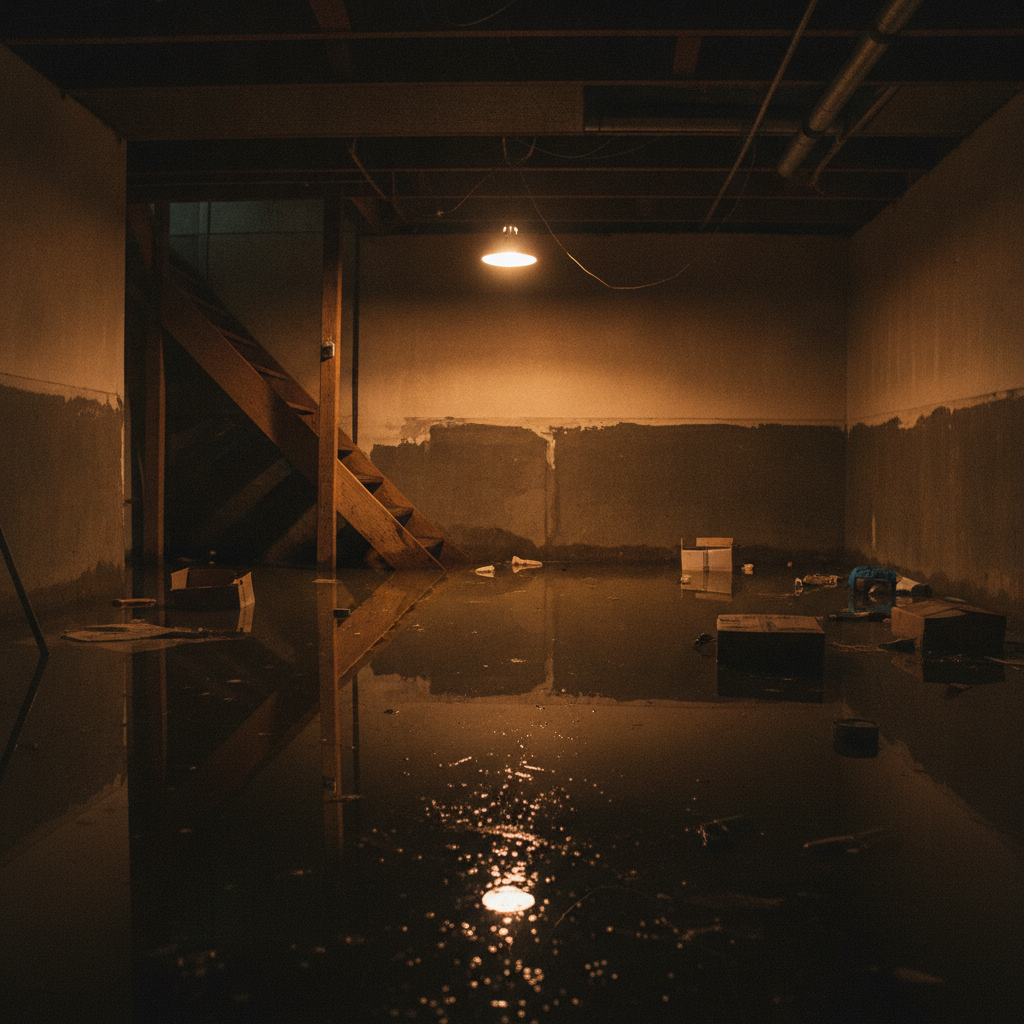
Segment Your Restoration PPC Campaigns by Intent Tier Before Writing a Single Ad
Restoration PPC campaigns fail when all keywords share the same budget, the same bid, and the same landing page — because a homeowner searching 'emergency water removal near me' at 2 AM and a property manager researching 'mold remediation cost' on a Tuesday afternoon are not the same buyer. Understanding your target audience at this level of detail is the foundation of every successful PPC campaign in damage restoration. Restoration keywords fall into three distinct intent tiers: emergency intent (CPC $15–$45, conversion rates above 10%), assessment intent (CPC $8–$25, conversion rates 5–8%), and insurance intent (CPC $5–$15, conversion rates 3–5%). Each tier needs its own campaign, its own bidding strategy, and its own ad copy. Mixing them is the structural mistake that turns a promising PPC strategy into a budget drain.
Within those tiers, build at least six ad groups: Water Damage, Mold, Flood, Fire, Storm, and Emergency 24/7. Emergency campaigns run around the clock with no scheduled pauses — these ads need to be live at the exact moment a homeowner's basement floods. Mold remediation and mold removal ads, by contrast, can pause overnight because those calls are never urgent. Paying peak-hour CPCs for off-hours impressions on mold keywords is straight wasted ad spend. Ad groups with 10–20 tightly themed keywords outperform broad ad groups by 28% on Quality Score and 35% on click-through rate, according to Semrush's 2024 PPC benchmark report. Tight grouping pays dividends in both ad relevance scores and lower CPCs — making it one of the most high-impact decisions in PPC campaign management.
This segmentation also sets up your restoration PPC campaigns for smarter budget control. When water damage CPCs spike to $145–$220 during peak hours — and up to $250-plus during a hurricane or freeze event — you need the flexibility to shift budget to emergency ad groups in real time without cannibalizing your mold or fire damage campaigns. Separate campaigns give you that control. One pooled campaign does not. Think of campaign segmentation as the architectural plan: get it wrong at the start, and every optimization you layer on top is fighting the structure underneath.
Google Ads
Free (ad spend required)
The primary PPC platform for restoration companies; emergency local intent searches happen here first, and Google dominates the search engine results pages that matter most for water damage repair and fire damage leads.
Semrush
$139/mo+
Keyword research and competitor keyword gap analysis to populate each intent-tier ad group with relevant keywords accurately — identifies high performing keywords your competitors are bidding on that you may be missing.
Don't mix intent tiers in the same campaign
Putting 'emergency flood cleanup' and 'mold testing cost' in the same campaign hands Google's algorithm a mixed signal. It will optimize toward whichever query type gets more clicks — usually the lower-intent, lower-value one. Keep them separated from day one.
Build Your Negative Keyword List to 300-Plus Terms Before Spending a Dollar
Restoration companies waste 40–60% of their Google Ads budget on irrelevant clicks caused by wrong match types and missing negative keyword lists — that is not a rounding error, it is the single biggest structural problem in most restoration PPC accounts. Three categories of negatives are non-negotiable: DIY terms ('water damage diy,' 'how to dry wet carpet yourself'), job seeker terms ('restoration technician jobs,' 'water damage restoration salary'), and unrelated 'restoration' search terms ('car restoration,' 'furniture restoration,' 'antique restoration'). Without these exclusions, your paid ads appear for searches that will never produce a booked job. Every irrelevant click is money that could have gone toward capturing a real emergency call.
Start your negative list at 300-plus terms. One documented account rebuilt on call-only format with a 340-term negative keyword list cut cost per lead from $385 to $94 within 90 days while scaling monthly job volume from 37 to 89. That 75% CPL reduction came primarily from eliminating irrelevant clicks — not from raising the ad budget. This is the kind of result that reflects what restoration PPC experts actually do differently from generalist pay per click PPC advertising managers: they understand the intricacies of this niche and know which search terms bleed budget in the restoration industry. For match types on the negative side, apply Exact Match negatives for branded competitor terms and Phrase Match negatives for DIY and job-seeker patterns.
Review your Search Terms report weekly for the first 60 days. Google's algorithm will find edge cases your initial list missed — especially as Broad Match and smart bidding expand reach into adjacent queries. Any search term that triggered your ad but generated zero phone calls gets added as a negative immediately. This ongoing keyword optimization discipline is what separates restoration PPC experts from set-it-and-forget-it campaign managers. Continuous monitoring of search terms is not optional — it is the process that keeps your budget working on buyers, not browsers.
Google Ads Search Terms Report
Free (inside Google Ads)
Shows the actual queries triggering your ads — the ground truth for negative keyword research and keyword optimization decisions.
CallRail
$45/mo+
Tracks which keywords drove actual phone calls vs. clicks that never converted, so you can identify and kill non-performing terms fast.
Use Phrase Match and Exact Match only for emergency keywords
Broad Match keywords on emergency intent terms will trigger ads for searches like 'is water damage covered by insurance' or 'water damage photos' — neither of which is a buyer calling you tonight. Stick to Phrase Match and Exact Match for all emergency ad groups to maintain keyword targeting precision.
Switch Emergency Campaigns to Call-Only Format and Set Up Proper Call Tracking
The default for most restoration Google Ads accounts is a website click campaign — and that is the wrong format for emergency intent traffic. Most restoration leads are phone calls, not form fills. A homeowner with a flooded basement at midnight is not going to browse your service pages and submit a contact form. They are going to tap the phone number. Call-only ads skip the landing page entirely on mobile and put your phone number front and center, which is exactly what emergency intent requires. Per click PPC advertising on call-only format directly serves the way emergency customers actually behave, and it removes a friction point — the website visit — that costs you conversions on high-intent traffic.
Set call-only ads as the default format for your Emergency 24/7 and Water Damage ad groups. Connect CallRail to your Google Ads account and configure 60-second call duration as your conversion event — a call under 60 seconds is almost never a qualified lead. This trains Google's algorithm to optimize toward actual conversations, not page visits. Mobile CTRs are typically 40% higher than desktop for local service searches, which means your call-only ads will capture the bulk of emergency mobile traffic that your desktop-focused competitors miss. The CTR advantage compounds: more qualified clicks at lower effective cost per click, better conversion data feeding the algorithm.
PPC conversion rates on emergency restoration traffic routinely exceed 20–30% when call-only format is paired with tight keyword targeting and fast response. That conversion rate is exceptional for any paid advertising channel. At a $65 average CPC, a 25% conversion rate means you are paying roughly $260 per qualified lead before Quality Score discounts — and a water damage restoration job averages $3,867 nationally, with large-loss insurance jobs reaching $15,000–$42,500. The math justifies the CPC decisively. Water damage PPC at those economics is not a cost center; it is a lead generation machine. Any restoration company that views paid search spend through the lens of cost rather than return on investment will chronically underinvest.
CallRail
$45/mo+
Attributes every inbound call to the exact campaign and keyword that drove it, feeding conversion data back to Google for algorithm optimization — essential for performance tracking on call-only campaigns.
Google Ads Call-Only Campaigns
Free (inside Google Ads)
Removes the landing page step for mobile emergency searchers and puts your phone number as the primary call-to-action — the correct format for 2 AM water damage leads.
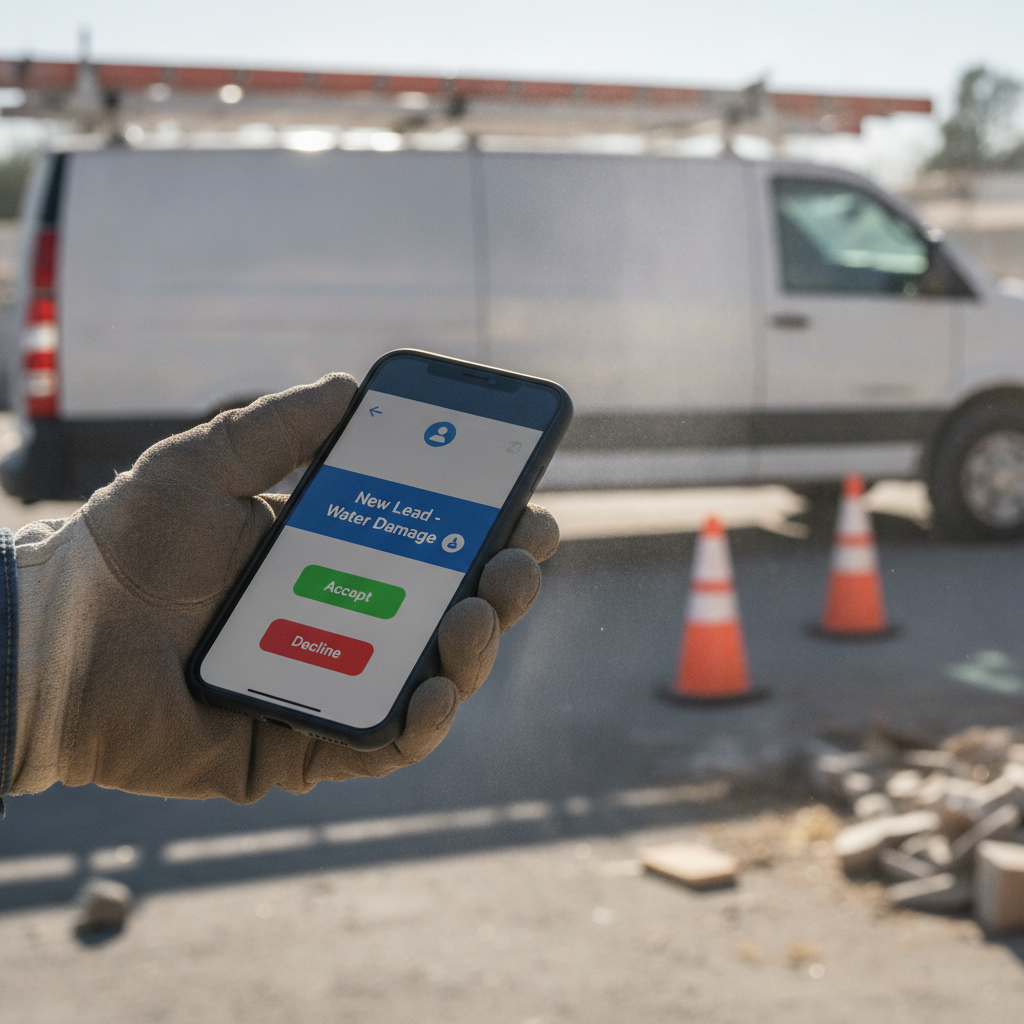
Apply Overnight Bid Adjustments to Capture the Window Your Competitors Abandon
Emergency restoration PPC campaigns should run 24/7 with bid adjustments of +20–30% during late-night hours — specifically 10 PM to 6 AM — because that window is when competition drops and searchers are the most motivated buyers in the market. Most restoration companies turn their ads off after business hours or let bids drop to their floor. That creates a capture opportunity: fewer advertisers competing means lower effective CPCs even with your adjustment applied, and the homeowner searching at 2 AM has no choice but to call whoever shows up in the search results. Your competitors' absence is your most efficient advertising hour.
In Google Ads, set time-of-day bid adjustments at the campaign level for your Emergency 24/7 and Water Damage campaigns. Apply +25% from 10 PM to 6 AM as your baseline. Run this schedule for 30 days and pull the hour-of-day report to see where your actual conversions cluster. Some markets show conversion spikes at 11 PM and again at 4–5 AM — adjust your bid modifier peaks to match your specific conversion data rather than running a flat adjustment across the entire overnight window. Data-driven bid decisions like this are what separate a high-performing restoration PPC strategy from a generic one.
Pair this with day-of-week adjustments. Fire damage statistically occurs more on evenings and weekends, so fire damage ad groups warrant +15–20% bid adjustments on Friday evenings through Sunday. Storm damage campaigns should have surge protocols ready: when a named storm enters your service areas, manually raise max CPCs by 30–40% to compete against national franchise damage restoration companies that will also spike their bids during weather events. Geo targeting at the ZIP code level during storm surges can further focus spend on the neighborhoods with the highest damage density — a tactic most generalist PPC agencies miss because they lack restoration industry experience.
Your crew schedule and your bid schedule must match
Running 24/7 ads is only an asset if someone answers the phone at 3 AM. If your crew goes dark after midnight, either staff an answering service or pull your overnight bids back down. An unanswered emergency call at 2 AM that goes to voicemail is a CPL you paid for and a job your competitor got.
Add the Insurance-Adjacent Keyword Layer to Attract Leads With No Price Ceiling
Insurance-adjacent keywords such as 'storm damage insurance claim help,' 'restoration company that works with insurance,' and 'direct insurance billing' target homeowners whose insurance will pay the restoration bill — leads that close faster, scope larger, and remove the homeowner's price ceiling entirely. Homeowner's insurance covers water damage in roughly 98% of non-flood claims, meaning nearly every caller from a water damage PPC ad already has funding ready. Average insurance claim payouts run $11,000–$14,000. That context makes paying $50–$150 per click on emergency keywords a straightforward ROI calculation, not a risk. Insurance-paid jobs are the highest-value segment in damage restoration marketing, and most PPC ads in this space do not address them directly.
Build a separate insurance intent ad group inside your Water Damage and Storm campaigns. Target Phrase Match keywords built around the insurance interaction: 'works with all insurance carriers,' 'water damage insurance claim,' 'direct billing to insurance.' Compelling ad copy for this group should lead with 'We Work With All Carriers' in headline 1 and reference zero out-of-pocket costs in the description. These ads speak to a different fear than emergency keywords — the homeowner is not panicking about the water damage repair, they are panicking about the bill. Address that directly. Your unique value proposition in this ad group is financial clarity, not speed.
Insurance-intent CPCs run $5–$15, making this the most cost-efficient tier in your restoration PPC campaigns. The conversion rate (3–5%) is lower than emergency intent, but the job value when one converts is often 3–5x a standard mitigation job. Run this ad group alongside your emergency campaigns — not instead of them. The full stack — emergency intent, assessment intent, and insurance intent — covers your potential clients at every point in the decision timeline. This three-tier approach is what restoration PPC services from a specialized agency deliver that a generalist digital marketing team typically misses.
Google Keyword Planner
Free (inside Google Ads)
Surfaces insurance-adjacent keyword variations and their search volume before you commit budget to the ad group — essential keyword research before creating insurance-intent campaigns.
Build Quality Score and Transition to Target CPA Bidding at 30 Monthly Conversions
A Quality Score of 9 can outrank a competitor bidding twice as much if that competitor holds a Quality Score of 5. Ads rated 'Above average' for landing page experience and ad relevance carry CPCs 36% below category average — roughly $25 less per click on a $65 keyword. That discount compounds across thousands of clicks per month and represents one of the clearest ways to maximize ROI without raising your budget. Quality Score is built on three factors: expected click-through rate (CTR), ad relevance, and landing page experience. Each one has a specific fix, and working all three simultaneously is how you build a successful PPC campaign that outperforms larger-spending competitors.
For ad relevance: write compelling ad copy that mirrors the exact keyword in the ad group. An 'emergency water removal' ad group needs 'Emergency Water Removal' in the headline — not a generic 'Water Damage Restoration Services' headline recycled across all groups. A/B testing two headline variations per ad group, then pausing the lower-performing variant every 30 days, is the practice that continuously improves CTR and ad creatives. For landing page optimization: dedicated service-specific pages convert 2–3x better than a generic services page and must load in under 1.5 seconds. Put the phone number above the fold, use a single call-to-action button, and include trust signals: IICRC certification, '24/7 Response,' and 'On-Site in 60 Minutes' are the three that move emergency callers fastest. Landing page creation for each service — water damage, fire damage, mold removal, storm — is non-negotiable if you want 'Above average' landing page scores. For expected CTR: include speed signals ('On-Site in 60 Minutes'), social proof ('500-plus Jobs Completed'), and credential signals ('IICRC Certified') in your ad copy rotation.
Start new restoration PPC campaigns on manual CPC bidding to gather clean conversion data. Once your account reaches 30 or more monthly conversions, switch Emergency campaigns to Target CPA bidding. Google's algorithm can reduce CPA by up to 30% versus manual management at that data threshold because it has enough conversion signals to optimize bids at the keyword, device, time-of-day, and audience level simultaneously. Layer in Local Service Ads (LSAs) alongside your standard Google search ads: LSAs display above all paid ads with the Google Guaranteed badge and charge per verified lead ($50–$150 for water damage), giving your restoration business maximum top-of-page visibility at two separate price points. Run both together — not one or the other. Transparent reporting on CPL by campaign, KPIs by service type, and post-campaign analysis of conversion data is the accountability layer that determines whether your investment compounds or stalls.
Google Ads
Free (ad spend required)
Target CPA bidding and Quality Score optimization both live natively in the platform — no third-party tool required once conversion tracking is solid and monthly conversions hit the 30-plus threshold.
Google Local Service Ads
$50–$150 per verified lead
Appears above standard paid ads with the Google Guaranteed badge, stacking your restoration company's visibility at the top of search results pages — essential for maximizing presence in competitive markets.
Unbounce or Webflow
$74/mo+ (Unbounce); included with GPS retainer (Webflow)
Build fast, service-specific landing pages that load under 1.5 seconds and carry a single call-to-action — required for 'Above average' landing page scores and higher conversion rates.
Transparent reporting is not optional at this stage
Once you shift to Target CPA bidding, track cost per lead by campaign every week — not just total ad spend. As of 2026, 47% of restoration companies do not track CPL by channel. That gap is why so many PPC accounts hemorrhage budget for months before anyone notices. Know your CPL for water damage, fire, mold, and storm separately, and set a ceiling before you scale.

The Biggest Restoration PPC Mistake Is Also the Most Common One
Most restoration PPC accounts are structured for a 9-to-5 service business — one campaign, Broad Match keywords, homepage landing page, ads that pause at 6 PM. Emergencies don't work that way. Water doesn't leak on a schedule. If your PPC advertising stops when your competitors' phones stop ringing, you're handing over the highest-value calls of the day to whoever stayed on. The fix isn't a bigger budget. It's a smarter structure: six segmented ad groups, call-only format, a 340-term negative list, +25% overnight bid adjustments, and a landing page that loads in under 1.5 seconds with one button. Build it right once and the system runs like a dispatcher who never sleeps.
The mechanics in this guide — campaign segmentation, negative keyword discipline, call-only format, overnight bid adjustments, insurance-adjacent keyword targeting, and Quality Score optimization — are not theoretical. They are the same PPC strategies that took Serview Home Pros from near-zero online presence to $25 per qualified lead with a 6% conversion rate and 325-plus ranked keywords feeding the organic side alongside paid ads. They are the same approach that helped Stan's Heating, Air, Plumbing and Electrical achieve 150-plus first-page keywords, 300% more organic leads, and a 23% conversion rate increase. Both results came from the same underlying principle: a restoration PPC campaign built around how customers actually behave when something goes wrong, not around what's easiest to configure in Google Ads. When your restoration company is ready to stop bleeding budget on the wrong clicks and start capturing the 2 AM calls your competitors are missing, we will show you exactly where the bleed is. Book a free strategy session and we'll audit your current account structure against this framework — no long-term contracts required to get started.
Ready to get started? Contact Geek Powered Studios today.