
Answer engine optimization (AEO) targets direct answers in Google AI Overviews, featured snippets, and voice assistants like Alexa and Google Assistant. Generative engine optimization (GEO) targets citations inside synthesized AI responses from ChatGPT, Perplexity, Claude, and Gemini. The key difference is the surface: AEO wins the moment a homeowner searches with expressed intent ("emergency plumber Houston"). GEO wins the research session two days earlier when that same homeowner asked ChatGPT "how do I know my water heater is failing?" For most Texas home-service contractors with a marketing budget above $1,500 per month, both disciplines belong in the 2026 playbook. AEO gets you found. GEO gets you chosen before the search even happens.
-
87%of HVAC and plumbing contractors have zero AI citation share in 2026
-
4–8 weeksto first AI Overview appearance after schema implementation (AEO)
-
8–12 weeksto measurable AI citation growth after GEO fundamentals launch
-
85%of AI brand citations originate from third-party pages, not your website
-
+41%AI citation visibility lift from adding statistics to content (Princeton KDD 2024)
-
3.2xmore AI citations for content updated within 30 days vs. older content
-
58–61%organic CTR drop on Google pages featuring an AI Overview (Ahrefs, 2026)
-
0.664 vs. 0.218brand mentions vs. backlinks correlation with AI citation probability (Averi.ai)
Answer engine optimization vs generative engine optimization is the most misunderstood terminology debate in home-services marketing right now — and the confusion is costing Texas contractors booked jobs. As of August 2026, 87% of independent HVAC and plumbing contractors have zero AI citation share in their own markets (Subscribe PR), yet Google AI Overviews appear on more than 80% of local service queries and ChatGPT crossed 1 billion weekly active users on July 31, 2026. These are not future channels. The operational distinction that matters: AEO targets direct-answer placements on Google surfaces. GEO targets citations inside synthesized responses from ChatGPT, Perplexity AI, Claude, and Gemini. Both require action. Neither replaces the other. And no, the industry hasn't agreed on clean definitions — Wikipedia confirms the taxonomy is unsettled as of 2026, and Digiday uses the terms interchangeably. This post cuts through the terminology war and tells you exactly what each discipline requires, which to start with, and how to run both simultaneously.
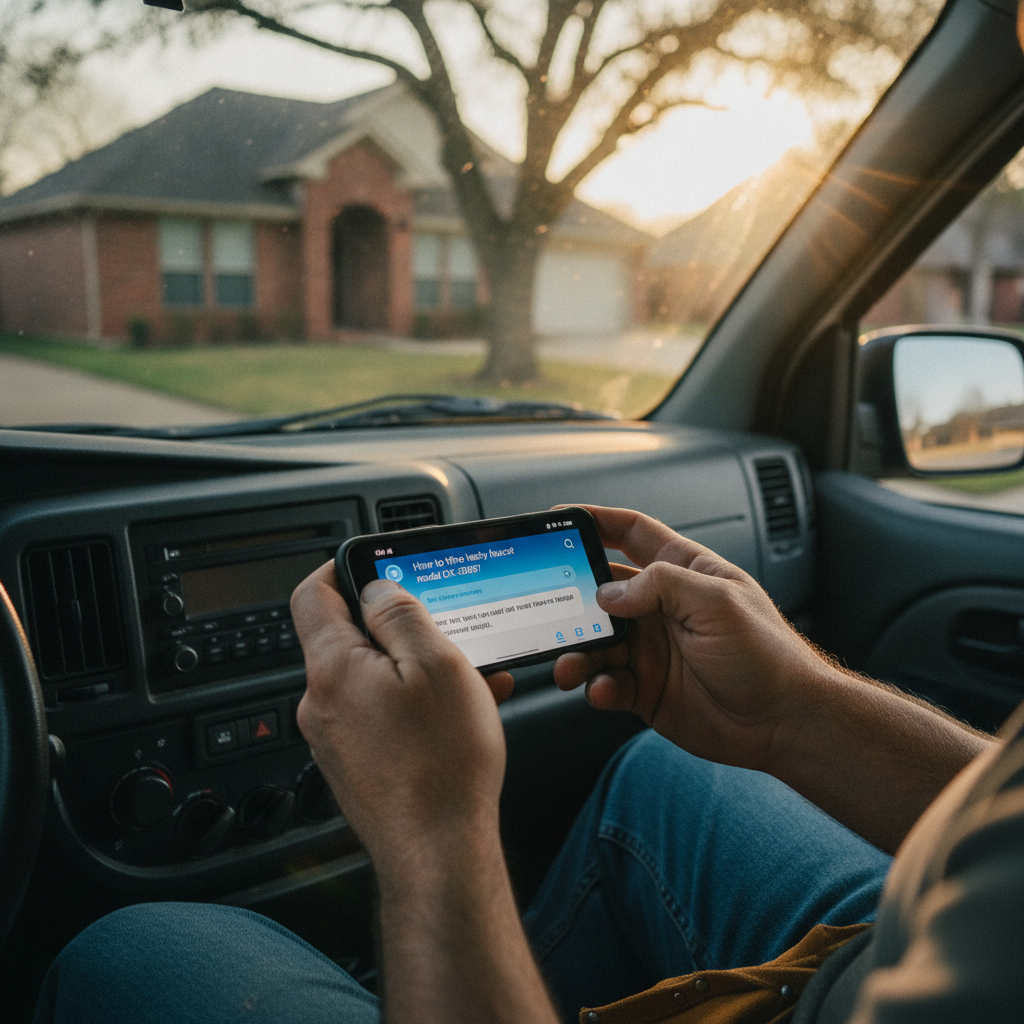
Option A
AEO (Answer Engine Optimization)
Win the moment a homeowner already knows what they need
- Primary surface: Featured snippets, Google AI Overviews, and voice assistants like Alexa and Google Assistant
- Core tactic: Answer-first on-site content plus LocalBusiness, FAQPage, and Service schema markup in JSON-LD
- Timeline: 4–8 weeks to first AI Overview or featured snippet appearance after schema implementation
- Measurement: Google Search Console impression share for direct answers; CallRail for call tracking from voice and snippet traffic
Option B
GEO (Generative Engine Optimization)
Get chosen before homeowners even know they need you
- Primary surface: Synthesized AI responses from ChatGPT, Perplexity AI, Claude, and Gemini — not Google's own search results
- Core tactic: Earned reviews, third-party directory presence on Yelp and Angi, stat-cited content, and local PR outreach
- Timeline: 8–12 weeks to measurable AI citation growth after implementing GEO fundamentals (GrowthPro AI, 2026)
- Measurement: AI visibility tracking via Profound or Scrunch AI; monthly manual prompt sampling across ChatGPT, Perplexity, and Gemini
How Answer Engine Optimization (AEO) Works for Home-Service Contractors
AEO (answer engine optimization) captures demand at the exact moment a homeowner expresses specific intent — the query typed into a search engine is already a buying signal. When someone searches 'AC repair San Antonio' or '24-hour plumber Austin TX,' they have already diagnosed the problem. AEO positions your business as the direct answer AI engines and voice assistants surface first. Unlike traditional SEO, which optimizes for rank position on search engine results pages, AEO focuses on earning the zero-position placement: the direct answer box above all organic results.
The core AEO stack for contractors has three components. First, schema markup in JSON-LD format: at minimum LocalBusiness, Service, and FAQPage schemas deployed on every key service page. Businesses with properly implemented schema see a 45% higher AI citation rate (Semrush), and pages with FAQ schema are 2.8x more likely to appear in AI-generated answers (FogLift, 2026). Second, answer-first content structure: every service page must open with a sentence that directly answers the most common query for that page — 'Fort Worth emergency plumbing service responds in under 60 minutes, 24/7' beats any paragraph that begins with your company history. Third, structured data completeness: Organization schema, Review schema, and knowledge panels all function as credibility signals that AI crawlers parse when deciding which pages to surface in direct answers.
Google deprecated FAQ rich results on May 7, 2026 — but schema markup did not lose its value. The Pixis AI post-deprecation analysis confirms schema now functions primarily as a machine-readability layer that AI crawlers use to build direct answers, making structured data more important for AI search than it ever was for SERP decoration. Voice assistants, in particular, pull almost exclusively from structured, answer-first pages — a service area page that doesn't open with a concise answer sentence is invisible to Google Assistant and Alexa queries. Track AEO performance in Google Search Console by monitoring impression share for FAQ and How-To rich results, and use CallRail to attribute inbound calls back to specific pages where voice and snippet traffic lands.
Unlike SEO, which optimizes primarily for traditional search engines and their ranking algorithms, AEO focuses on structuring content so AI engines can extract and cite it verbatim. Keyword stuffing and thin pages are penalized by both; the difference is that AEO rewards tight, concise answers with bullet points and clear headings over long-form narrative. An AEO-optimized service page for a roofing contractor might be 600 words — shorter than a traditional SEO target — but every paragraph leads with a direct answer sentence followed by two to three sentences of supporting specificity.
How Generative Engine Optimization (GEO) Works — and Why It's a Third-Party Game
GEO (generative engine optimization) targets the synthesized AI responses that ChatGPT, Perplexity AI, Claude, and Gemini generate when homeowners ask discovery questions — 'why is my AC blowing warm air,' 'how long do water heaters last,' 'what should I look for in a roofing contractor.' Unlike AEO, which optimizes content you control on your own site, GEO is primarily a third-party game. AirOps' analysis of over 1 billion AI citations found that 85% of brand mentions inside AI-generated responses originate from third-party pages, not brand-owned domains. Your own website contributes roughly 15% of citation probability.
The Princeton/Georgia Tech KDD 2024 academic study (Aggarwal et al.) — the first peer-reviewed study in the field — quantified exactly which content changes improve AI citation visibility. Adding statistics improves visibility by 41%. Adding quotations from named experts improves it by 28%. Citing authoritative external sources improves visibility by up to 115% for lower-ranked pages — what the researchers called the Equalizer Effect, meaning GEO strategies can lift smaller contractors above established competitors in AI-generated answers even when traditional search rankings favor the larger brand.
Brand mentions now correlate 3x more strongly with AI citation probability than backlinks: 0.664 correlation coefficient for brand mentions versus 0.218 for backlinks (Averi.ai, 2026). For home-service contractors, that reorders the priority list entirely. A complete and active Yelp profile, a fully built-out Angi listing, a mention in a local news article about hail season, and consistent five-star reviews across multiple review sites outweigh a link-building campaign for GEO purposes. GEO strategies must also account for content freshness: pages updated within 30 days earn 3.2x more AI citations than older content (AirOps/Writer.com), and Perplexity AI has the strongest recency bias — content older than 90 days enters a citation decay window on fast-moving queries.
Measuring GEO requires different tools than measuring traditional search visibility. Google Search Console shows nothing about how your brand appears in ChatGPT or Perplexity responses. AI visibility tracking platforms like Profound and Scrunch AI monitor your share-of-model — the percentage of relevant AI-generated answers that cite or recommend your brand — across multiple AI platforms simultaneously. For contractors without a budget for these tools, a manual prompt audit works: once per month, run 10 queries across ChatGPT, Perplexity, and Gemini searching your service category and city, then record whether your brand appears in the synthesized AI answer. That 30-minute exercise tells you exactly where your GEO gap stands.
AEO vs. GEO: The 8-Dimension Comparison for Contractors
| Dimension | AEO (Answer Engine Optimization) | GEO (Generative Engine Optimization) |
|---|---|---|
| Primary Target Surface | Featured snippets, Google AI Overviews, voice assistants (Alexa, Google Assistant) | Synthesized AI responses from ChatGPT, Perplexity AI, Claude, and Gemini |
| Search Intent Stage | Bottom-of-funnel: homeowner already knows they need a plumber, roofer, or HVAC tech | Top-of-funnel: homeowner researching symptoms ('why is my AC blowing warm air?') before they know they need a contractor |
| Core Tactic | Answer-first on-site content + LocalBusiness, FAQPage, and Service schema markup in JSON-LD | Earned reviews, third-party directory presence (Yelp, Angi, HomeAdvisor), stat-cited content, and PR outreach |
| Key Content Format | Concise Q&A pages, FAQ sections, structured How-To content with clear headings and bullet points | Stat-rich long-form content, expert quotes, and third-party mentions; content updated at least every 30 days |
| Ranking Signal | Schema markup, page authority, E-E-A-T signals, and keyword match to user queries | Brand mentions (0.664 correlation with AI citation) vs. backlinks (0.218 correlation) — Averi.ai, 2026 |
| Timeline to Results | 4–8 weeks to first featured snippet or AI Overview appearance after schema implementation | 8–12 weeks to measurable AI citation growth after implementing GEO fundamentals (GrowthPro AI, 2026) |
| Measurement Tool | Google Search Console (impression share for direct answers), CallRail for call tracking from voice and snippet traffic | AI visibility tracking via Profound, Scrunch AI, or manual prompt sampling across ChatGPT, Perplexity, and Gemini |
| Who Controls the Output | You control the on-site content; Google decides which pages surface in AI Overviews and featured snippets | 85% of AI brand citations come from third-party pages — you influence the ecosystem, not a single page (AirOps, 1B+ citations) |
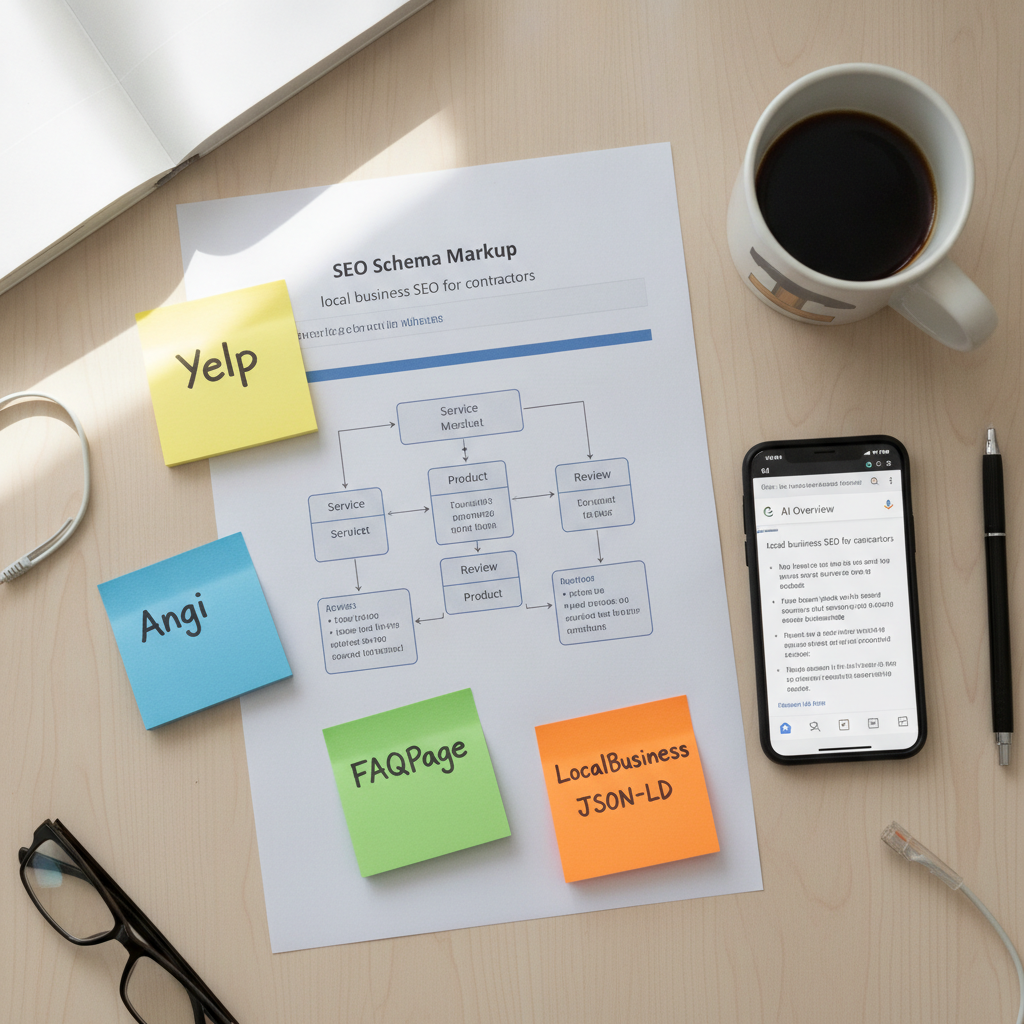
The Terminology War Is Real — Here's What to Ignore and What to Act On
As of August 2026, no academic consensus definition distinguishes AEO from GEO. Wikipedia confirms the taxonomy is unsettled. Digiday uses the terms interchangeably. Google's own May 2026 official documentation on optimizing for generative AI states that 'optimizing for generative AI search is optimizing for the search experience, and thus still SEO.' What this means for contractors: stop waiting for the industry to agree on definitions and start acting on the surfaces that already affect your business. Google AI Overviews appear on 80%+ of local service queries right now. ChatGPT crossed 1 billion weekly active users on July 31, 2026. Perplexity AI processes 780 million search queries per month. These are not future channels. The operational distinction that matters: AEO targets direct-answer placements on Google surfaces. GEO targets citations inside synthesized responses from ChatGPT, Perplexity, Claude, and Gemini. Both require action. Neither replaces the other.
Choose AEO First If Your Contractor Business Needs Leads Within 60 Days
AEO answer engine optimization is the right first move when your business has existing Google authority, zero schema markup, and a pipeline that needs booked jobs in the next two months. The gap between ranking on search engines and capturing the AI Overview above those results is almost entirely a schema and structuring content problem — and it's fixable in weeks, not quarters.
- Google AI Overviews appear on more than 80% of local service queries, yet users who see an AI Overview are 60% less likely to scroll to traditional organic results — a page-one ranking that used to drive 200 clicks per month may now drive 80.
- Implementing LocalBusiness + Service + FAQPage schema in JSON-LD produces a 45% higher AI citation rate (Semrush), and pages with FAQ schema are 2.8x more likely to appear in AI-generated answers (FogLift, 2026).
- High-intent queries like 'emergency plumber Houston,' 'AC repair San Antonio,' and 'roof replacement estimate Dallas' are AEO territory — homeowners typing these into Google Search have expressed intent and are ready to call.
- Google deprecated FAQ rich results on May 7, 2026, but schema still functions as a machine-readability layer that AI crawlers parse to build direct answers — it is more important for AI search than it was for SERP decoration.
- Voice assistants pull almost exclusively from structured, answer-first pages; a service area page that does not open with a direct answer sentence is invisible to Google Assistant and Alexa queries.
- Track results in Google Search Console and CallRail from day one — AEO is the only AI search discipline where you can tie a specific schema change to a measurable uptick in calls within four to eight weeks.
AEO is the right solo move when budget is constrained and the business needs a fast, measurable win tied to traditional search engines and Google's AI surfaces. The tradeoff is real: AEO captures homeowners with expressed intent but misses the growing share who never reach a traditional search engine at all. ChatGPT now has 1 billion weekly active users and Gemini has crossed 1 billion monthly active users. Those users are asking discovery questions and forming contractor shortlists before any search query gets typed. AEO alone leaves that audience entirely unaddressed.
Choose GEO First If Your Brand Has Zero AI Citation Share and a Long Sales Cycle
GEO generative engine optimization is the right first move for contractors whose brand is established in the market but invisible on AI platforms — a scenario that describes 87% of independent HVAC and plumbing contractors as of 2026 (Subscribe PR). The gap GEO closes is massive and barely contested. AI local-search usage jumped from 6% of US consumers in 2025 to 45% in 2026, and homeowners researching on Perplexity AI are building shortlists before they ever open Google Search.
- 87% of independent HVAC and plumbing contractors have zero AI citation share in their own market as of 2026 despite strong reviews and solid traditional search rankings — the competitive advantage in GEO is wide open.
- The Princeton KDD 2024 study proved that adding statistics to content improves AI citation visibility by 41%, and citing authoritative external sources improves visibility by up to 115% for lower-ranked pages — both are executable for any contractor without a large budget.
- Brand mentions now correlate 3x more strongly with AI citation probability than backlinks (0.664 vs. 0.218, Averi.ai) — Google Business Profile completeness, Yelp reviews, Angi listings, and local press mentions outweigh link-building for GEO.
- Content freshness is non-negotiable: pages updated within 30 days earn 3.2x more AI citations than older content (AirOps/Writer.com), and Perplexity AI enters a citation decay window for content older than 90 days.
- Businesses with ratings below 4.0 stars are significantly underrepresented in AI local recommendations (GrowthPro AI) — review generation targeting 4.0 stars or above is a GEO tactic, not just a reputation tactic.
- GEO strategies work on AI models that traditional search engine optimization and technical SEO cannot influence — Bing Chat, Claude, and Gemini all synthesize responses from third-party platforms and review sites, not just indexed web pages.
The GEO-only limitation is equally real: you will not capture bottom-of-funnel intent from homeowners typing 'AC repair near me' into Google Search. Google AI Overviews and featured snippets still require on-site schema and answer-first structure to surface your business. Gartner predicts organic search traffic will drop 50% by 2028 as generative AI search grows — but that still leaves a very large number of high-intent local queries running through traditional search engines in 2026. Running GEO without AEO means winning the discovery conversation and losing the conversion moment.
The Full Playbook: Run AEO and GEO Simultaneously for Maximum AI Search Coverage
The correct answer for almost every home-service contractor with a marketing budget above $1,500 per month is to run AEO and GEO simultaneously — because they target different surfaces at different stages of the same customer journey. AEO and GEO are not competing disciplines. AEO wins the query 'emergency plumber Austin TX.' GEO wins the research session that happened two days earlier on ChatGPT when the homeowner asked 'how do I know if my water heater is about to fail.' A Texas roofing contractor executing both disciplines deploys LocalBusiness + Service + FAQPage schema on its site (AEO), publishes a stat-cited storm-damage assessment guide updated after every major weather event (GEO freshness signal), earns a mention in a local news story about hail season (GEO third-party citation), and structures every service page so its first sentence is a citable direct answer (AEO and GEO overlap). The Princeton KDD 2024 study confirmed that adding statistics improves AI citation visibility 41% — that single tactic improves performance on both surfaces simultaneously.
The integrated stack for 2026 looks like this. Schema markup and answer-first content structure form the AEO foundation — these are first-party assets you control. A 30-day content refresh cadence, proactive review generation targeting 4.0 stars or above on multiple review sites, and third-party citation outreach to local press and home-improvement directories form the GEO layer — these build the ecosystem of brand mentions that AI systems use to synthesize recommendations. Track AEO in Google Search Console by monitoring impression share for FAQ and How-To results. Track GEO by running a monthly prompt audit across ChatGPT, Perplexity AI, and Gemini. With 94% of marketing leaders planning to increase GEO investment in 2026 (Conductor) and the GEO services market growing from $886 million in 2024 to a projected $7.3 billion by 2031, contractors who build both capabilities now are 12–18 months ahead of local competitors still treating AI search as a future problem.
Which Strategy Fits Your Contractor Business Right Now?
GEO Only
Scenario: Your Brand Exists in the Market But AI Engines Don't Know You
A Dallas HVAC company with 300 five-star Google reviews, a decade in business, and a well-ranked website can still have zero AI citation share — because GEO generative engine optimization is a third-party game, not a first-party one. AirOps' analysis of over 1 billion AI citations found that 85% of brand mentions inside AI-generated responses originate from third-party pages, not brand-owned domains. That means the contractor's own website, however well-optimized for traditional search engines, contributes only 15% of citation probability.
The GEO-only playbook for this scenario: audit your Yelp, Angi, HomeAdvisor, and BBB profiles for completeness and content recency; pitch a local home-improvement journalist for a quote in a 'how to choose an HVAC contractor' piece; update your blog with a stat-rich seasonal maintenance guide every 30 days; and get cited in a local news article at least once per quarter. Run a 10-prompt audit across ChatGPT, Perplexity AI, and Gemini to establish a baseline before you start, then re-run it at week 8 to measure AI visibility progress.
The GEO-only limitation: you will not capture bottom-of-funnel intent from homeowners typing 'AC repair near me' into Google or asking Google Assistant for a plumber. Gartner's forecast of a 50% decline in organic search traffic by 2028 still leaves a massive volume of high-intent local queries running through traditional search engines in 2026. GEO without AEO wins the discovery conversation and loses the conversion moment.
Both AEO + GEO
The Full Playbook: Two Different Surfaces, One Integrated Strategy for Texas Contractors
The right answer for almost every home-service contractor with a marketing budget above $1,500 per month is to run AEO answer engine optimization and GEO generative engine optimization simultaneously — because they target different AI platforms at different stages of the same customer journey. AEO wins the query 'emergency plumber Austin TX.' GEO wins the research session two days earlier on ChatGPT when the homeowner asked 'how do I know if my water heater is about to fail.' A Texas roofing contractor executing both disciplines deploys LocalBusiness + Service + FAQPage schema on its site (AEO), publishes a stat-cited storm-damage assessment guide updated after every major weather event (GEO freshness), earns a mention in a local news story about hail season (GEO third-party citation), and structures every service page so its first sentence is a citable direct answer (AEO and GEO overlap).
The integrated stack: schema markup and answer-first structuring content form the AEO foundation. A 90-day content refresh cadence, proactive review generation targeting 4.0 stars or above — since GrowthPro AI data shows sub-4.0 businesses are significantly underrepresented in AI local recommendations — and third-party citation outreach form the GEO layer. Track AEO performance in Google Search Console. Track GEO by running a monthly prompt audit across ChatGPT, Perplexity AI, and Gemini, searching your service category and city, then recording whether your brand appears in the synthesized AI answer.
With 94% of marketing leaders planning to increase GEO investment in 2026 (Conductor) and the GEO services market growing from $886 million in 2024 to a projected $7.3 billion by 2031, contractors who build both capabilities now are 12–18 months ahead of local competitors who are still treating AI search as a future problem. The competitive advantage in this AI era belongs to contractors who act on both surfaces in 2026.
AEO Only
Scenario: You Need Booked Jobs Now and Your Site Has No Schema
A plumbing company in Fort Worth with strong Google rankings but no schema markup is the ideal AEO-first candidate. As of 2026, Google AI Overviews appear on more than 80% of local service queries, yet users who see an AI Overview are 60% less likely to scroll to traditional organic results — a page-one ranking that drove 200 clicks per month may now drive 80. Implementing LocalBusiness + Service + FAQPage schema in JSON-LD, rewriting service pages so the first sentence directly answers the query, and adding a structured FAQ block with concise answers to the top 10 plumbing questions in your market is a complete AEO sprint. Expect first AI Overview appearances within 4–8 weeks.
AEO is the right solo move when budget is limited and the business needs a fast, measurable win tied to Google search results. Use Google Search Console to monitor impression share for direct answers and CallRail to attribute inbound calls to specific optimized pages. The tradeoff is real: AEO captures homeowners with expressed intent on traditional search engines but misses the growing share who never reach a traditional search interface at all. ChatGPT now has 1 billion weekly active users and Gemini has crossed 1 billion monthly active users. Those users are asking discovery questions and forming contractor shortlists before typing a single search engine query. AEO alone leaves that audience entirely unaddressed — which is why AEO and GEO together is the right long-term answer for any contractor building a durable lead pipeline in the AI era.
The macro trend is not reversible. Gartner forecasts a 50% drop in organic traffic by 2028 as generative AI search grows. Ahrefs and Seer Interactive already measure a 58–61% reduction in organic CTR on Google pages featuring an AI Overview. The 31.3% of US consumers using generative AI search in 2026 (EMARKETER) will be a majority within two years. For a Texas HVAC company, roofing contractor, or plumber, the practical response is not to debate whether AEO and GEO are the same thing — it is to ask two concrete questions: 'Does my site give AI engines a direct, structured answer when a homeowner asks what I do?' (AEO) and 'Does my brand appear when a homeowner asks ChatGPT or Perplexity AI for contractor recommendations in my city?' (GEO). If either answer is no, the gap is costing you booked jobs today, not in some abstract AI-powered future.
Start with the schema stack: LocalBusiness + Service + FAQPage + Organization in JSON-LD on your top five service pages. Audit your Yelp and Angi profiles for completeness and content recency. Publish one stat-rich service guide this month and update it in 30 days. Run a 10-prompt audit across ChatGPT and Perplexity AI to see where your brand currently stands in AI-generated answers. That is 30 days of work. The contractors who complete it in 2026 will be the ones AI engines recommend in 2027 — and their competitors who waited will be asking why their organic traffic dropped 50% right on schedule.
Frequently Asked Questions
Ready to get started? Contact Geek Powered Studios today.