For most Texas home services contractors, the AI chatbot for small business wins on after-hours lead capture and cost, while live chat wins on high-ticket closes. AI chatbots respond in under 2 seconds at $0.50–$1.00 per interaction and contain 70–90% of conversations without human intervention. Live chat converts visitors at 2.8x the rate of non-chat visitors and resolves 82% of complex cases versus 38% for AI alone. The 2026 data points to a hybrid stack: AI chatbot handles 24/7 triage and lead capture across website, Facebook Messenger, and SMS; a human CSR closes the $8,000–$15,000 jobs during business hours. Decide by average job ticket: under $2,500, AI wins. Over $5,000, staff the chat.
-
62%of home services calls go unanswered industry-wide
-
Under 2 secondsAI chatbot response time vs. 2 min 40 sec for live chat
-
$0.50–$1.00AI chatbot cost per interaction vs. $6–$25 for live chat
-
2.8xlive chat conversion rate vs. non-chat website visitors
-
82% vs. 38%complex case resolution: human agents vs. AI chatbots
-
35–40%of contractor leads arrive after business hours
-
$1.50 per interactionhybrid AI-first model average cost in 2026
-
21xconversion likelihood when responding within 5 minutes
62% of inbound calls to home services businesses go unanswered, and 86% of callers who hit voicemail hang up without leaving a message. That's the real problem an AI chatbot for small business or a live chat channel is solving — not "customer engagement" in the abstract, but the specific revenue leak that bleeds $1,200 per missed call, according to Invoca's analysis of 60 million home services calls. The question contractors in Texas should be asking is not which channel is technically superior. It's which channel stops the specific leak in your specific operation — and at what cost.
Option A
AI Chatbot
24/7 lead capture at $0.50–$1.00 per interaction, zero payroll
- Responds in under 2 seconds, 24 hours a day, 7 days a week — including 2 AM when a pipe bursts
- Costs $0.50–$1.00 per interaction, versus $6–$25 for a live human agent handling the same customer query
- Top deployments contain 70–90% of all incoming conversations autonomously, with no human intervention required
- Chatbot leads convert at 3x the rate of traditional website contact forms, which convert just 2–3% of visitors
Option B
Live Chat
2.8x conversion rate on high-ticket jobs when a human closes
- Live chat visitors are 2.8x more likely to convert and spend 60% more per purchase than non-chat website visitors
- Human agents resolve 82% of complex cases versus 38% for AI chatbots alone — critical on $5,000–$15,000 jobs
- Proactive live chat delivers 305% ROI and 94% customer satisfaction when the business initiates the conversation (Freshworks)
- Live chat carries an 88% average customer satisfaction score across all industries as of 2026
How an AI Chatbot for Small Business Seals the After-Hours Revenue Leak
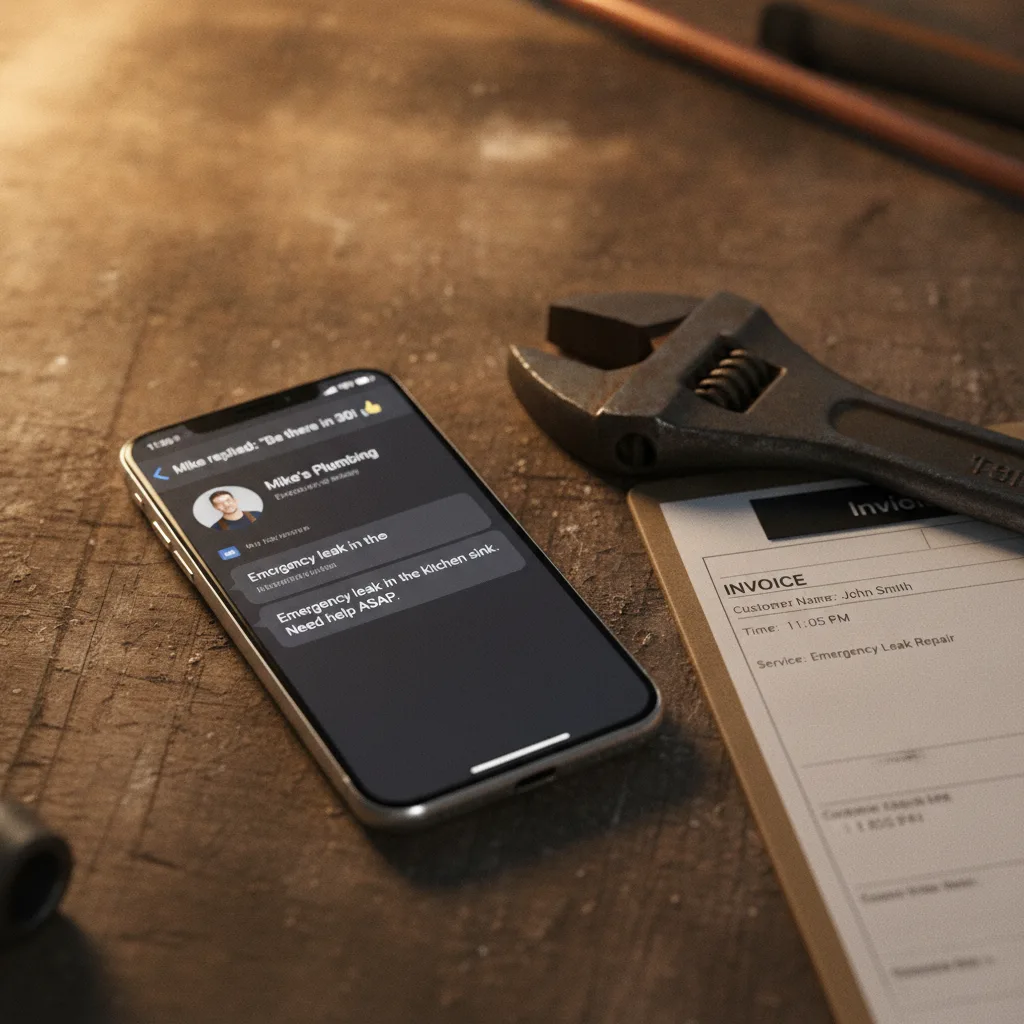
An AI chatbot for small business solves one problem better than any other channel: it responds instantly when no one on your team is available. That matters because 35–40% of inbound calls to HVAC, plumbing, and electrical contractors arrive outside business hours, and the weekend unanswered-call rate hits 41% compared to 18% on weekdays. Those are the exact windows when plumbing emergencies and AC failures happen. A small business chatbot that responds in under 2 seconds captures that lead; a contact form that sits in an inbox until Monday morning loses it.
The AI capabilities driving modern chatbots go well beyond scripted menus. Platforms like Tidio and Freshchat use natural language processing (NLP) and natural language understanding to parse customer inquiries in plain English, identify job type and urgency, collect customer information, and route emergency calls to an on-call tech — all without human intervention. Freddy AI inside Freshchat, for example, handles FAQ deflection and intent routing before a CSR ever touches the conversation. These AI assistants can schedule appointments automatically via Google Calendar integration, send confirmation texts via Podium, and log the conversation history in your CRM.
The cost math is the strongest argument for the small business AI chatbot. AI interactions run $0.50–$1.00 each. A Tidio setup handling 300 after-hours customer inquiries per month costs $150–$300 in interaction fees — less than the revenue lost on a single missed emergency call at the $1,200 Invoca benchmark. Freshchat's Growth plan starts at $15/agent/month with Freddy AI included, making it one of the most affordable entry points for small business owners who want AI-powered chatbots without enterprise overhead. Real monthly cost for a two-operator Tidio deployment with Lyro AI runs $150–$350 once conversation volume and operator seats are factored in.
Scalability is where the AI chatbot creates its sharpest separation from live chat. Top chatbot deployments contain 70–90% of all conversations autonomously — FAQs, service area confirmation, pricing ranges, scheduling, and after-hours lead capture. When call volume spikes after a hail storm or a summer heat wave, the AI chatbot handles the surge with no added cost and no support team scrambling to staff up. That efficiency ratio is impossible to match at typical contractor staffing budgets. The chatbot also deploys across multiple channels simultaneously: website widget, Facebook Messenger, Instagram DMs, and SMS via messaging platforms like Podium — capturing leads wherever website visitors and social followers actually engage customers.
How Live Chat Converts High-Ticket Customer Interactions That AI Agents Miss
Live chat wins on high-ticket, high-emotion customer interactions where a human agent's judgment, tone, and trust-building ability directly protect revenue. Human agents resolve 82% of complex cases versus 38% for AI chatbots. On a $12,000 roof replacement, that 44-point resolution gap is worth $5,280 per converted job. Staffed live chat is not a cost center for contractors with average job tickets over $5,000 — it's a closer.
The trigger logic separates good live chat deployments from average ones. Passive chat widgets sit in the corner of a webpage and wait for website visitors to click. Proactive live chat — where the system initiates the conversation based on visitor behavior — delivers 305% ROI and 94% customer satisfaction according to Freshworks research. Configure Podium or Freshchat to fire a chat invitation after a visitor spends 45 seconds on your estimate request page or storm damage service page. A CSR who opens with specific, local knowledge converts at 2.8x the rate of a widget waiting to be clicked.
The customer satisfaction scores from live chat are real and they feed the review pipeline. Live chat carries an 88% average satisfaction score, and live chat users spend 60% more per purchase than non-chat visitors. For contractors whose growth depends on Google reviews and referrals, those satisfaction numbers compound into long-term revenue. A human CSR who resolves a complex insurance claim question at 2 PM on a Tuesday builds the kind of trust that produces a five-star review and three referrals. An AI chatbot that collects a phone number and promises a callback does not deliver that outcome.
The staffing cost is the honest tradeoff. Smith.ai virtual receptionist starts at $300/month for 30 calls, but climbs past $1,900/month at 180 calls — a normal volume for a busy HVAC or plumbing contractor. Podium's entry-level plan runs $249–$399/month for one to four users. Live chat human agents cost $6–$25 per routine customer query. For after-hours coverage, live chat is effectively zero unless you staff nights and weekends — and 41% of weekend calls go unanswered in the industry. Those are the hard constraints that make staffed live chat the right answer for specific scenarios, not a universal default for small businesses with lean teams.
AI Chatbot vs. Live Chat: The 8-Dimension Comparison for Home Services
| Dimension | AI Chatbot | Live Chat |
|---|---|---|
| Response Speed | Under 2 seconds, 24/7 | 2 min 40 sec median; 7–12 min at peak; zero after hours |
| After-Hours Coverage | 100% — chatbot never sleeps; 35–40% of contractor leads arrive after hours | 0% unless you staff nights and weekends (41% weekend unanswered rate) |
| Cost Per Interaction | $0.50–$1.00 per interaction (hybrid AI-first: ~$1.50) | $6–$25 per routine query handled by a human agent |
| Lead Capture Rate | Chatbot leads convert at 3x contact form rate; 64% of businesses report more qualified leads | Live chat visitors are 2.8x more likely to convert vs. non-chat visitors when staffed |
| Complex Case Resolution | ~38% of complex cases resolved autonomously | ~82% of complex cases resolved by human agents |
| Conversion Rate Lift | +23% vs. control group (Glassix 2025); up to +30% with AI-first hybrid model | 2.8x conversion vs. non-chat visitors; 305% ROI on proactive live chat (Freshworks) |
| Scalability | 70–90% of conversations contained autonomously; handles volume spikes at no added cost | Scales only with headcount; Smith.ai hits $1,900+/month at 180 calls |
| Monthly Platform Cost | Tidio: $150–$350/month real cost; Freshchat: $15/agent/month (Growth plan) | Podium: $249–$399/month entry; Smith.ai: $300–$1,900+/month by call volume |

The $1,200 Question Every Texas Contractor Should Answer Before Choosing a Chat Channel
Invoca's analysis of over 60 million home services calls found each missed call costs a contractor approximately $1,200 in lost revenue. Before debating AI chatbot versus live chat, run this calculation: multiply your monthly missed-call count by $1,200. That number is your annual revenue leak. An AI chatbot at $0.50–$1.00 per interaction sealed against that leak costs a fraction of one missed job. A live chat agent at $6–$25 per interaction is still cheaper than losing a $5,000 HVAC replacement because no one answered at 9 PM on a Sunday. The question is not which channel is "better" — it's which leak in your specific operation is bleeding the most money right now. Most contractors need both, deployed in the right sequence: AI for 24/7 lead capture and qualification, a human for the high-ticket close.
Choose an AI Chatbot for Small Business If You're Losing Leads After 5 PM
The AI chatbot for small business is the right primary channel when your after-hours volume is high, your job tickets are under $2,500, and you need to capture leads across multiple channels without adding CSR payroll. The data is clear: 78% of home services customers hire the company that responds first, and only an AI chatbot guarantees first response at 2 AM when a pipe bursts.
- Your after-hours call volume is 35–40% of total inbound leads and your weekend unanswered rate sits at 41% — every unanswered inquiry costs ~$1,200 in lost revenue (Invoca, 60M+ calls analyzed).
- Your average job ticket is under $2,500 (standard plumbing repair, AC tune-up, electrical panel swap) and the conversion math favors speed over human touch.
- You're running Google Ads at $45–$79 CPL for HVAC, plumbing, or roofing and need every click captured — a chatbot that responds in under 2 seconds versus a form that sits unanswered for 8 hours is the difference between a booked job and wasted ad spend.
- You need to qualify leads across website, Facebook Messenger, and SMS messaging channels without adding headcount — top AI chatbot deployments contain 70–90% of all conversations without human intervention.
- Your current website converts only 2–3% of visitors via contact form — switching to an AI chatbot immediately triples lead conversion rate at a fraction of the cost of adding staff.
The small business chatbot is not a luxury for this contractor profile. It is the essential tool that captures the leads your ad spend already paid to attract. At $150–$350 per month for a Tidio or Freshchat deployment, the ROI on the first sealed after-hours emergency call pays for six months of platform fees.
Choose Live Chat When High-Ticket Customer Interactions Require a Human Close
Staffed live chat earns its cost when your average job ticket is $5,000 or higher and a human agent's ability to resolve complex cases — insurance claims, permit questions, material choices — directly protects that revenue. The 82% vs. 38% complex resolution gap is not a minor stat; it's the difference between closing a $12,000 roof replacement and losing it to a competitor who picked up the chat.
- Your average job ticket is $5,000–$15,000 (full roof replacement, complete HVAC system, whole-home rewire) and a human agent's 82% complex case resolution rate versus AI's 38% directly protects that revenue.
- You run proactive chat on high-intent pages (estimate request, storm damage service pages) where Freshworks data shows 305% ROI and 94% customer satisfaction — trigger logic, not a passive widget, is what makes live chat outperform.
- Your business hours are fully staffed 8 AM–6 PM and your team responds within 5 minutes — that's the threshold where customers are 21x more likely to convert, and a trained CSR outperforms any AI on trust-building for premium jobs.
- Customer satisfaction scores feed your referral and review pipeline — live chat carries an 88% average satisfaction score and live chat users spend 60% more per purchase than non-chat visitors.
At a $79 Google Ads CPL for roofing, a single proactive chat conversation that closes a $12,000 job pays for three months of Podium. The cost of live chat is a rounding error against the revenue at stake on these job sizes. Configure the trigger logic correctly — behavior-based, not passive — and staffed live chat is the highest-ROI channel in your stack.
The Stack That Converts More Leads Across Multiple Channels: AI Triage Plus Human Close
The 2026 data consistently points to one configuration for Texas home services contractors with average job tickets between $800 and $15,000: an AI-first hybrid model where the chatbot handles 24/7 triage and qualification and a human agent closes the high-value estimates during business hours. This stack averages ~$1.50 per interaction, compared to $0.70 for AI-only or $10–$25 for live-chat-only. At 2,000 conversations per month, the math is $3,000 for the hybrid versus $20,000–$50,000 for fully staffed live chat. The AI agents contain 70–90% of conversations autonomously — FAQs, scheduling, after-hours lead capture, service area confirmation — and escalate the remaining 10–30% to a human the next business morning or immediately during staffed hours.
For a 6-truck HVAC contractor in Houston, the practical stack looks like this: Freshchat's Growth plan at $15/agent/month handles daytime live chat with Freddy AI deflecting routine customer queries before a CSR ever touches them. After 6 PM and on weekends, the AI chatbot takes over completely, capturing the 35–40% of leads that arrive outside business hours and texting an immediate confirmation via Podium ($300/month entry). CallRail tracks which conversations convert to booked jobs so the support teams can identify which automated conversation flows produce the highest-quality leads versus which ones waste a tech's drive time. This layered approach — AI for availability, human for authority, CallRail for accountability — is what separates contractors who grow their booked-job rate from those who keep paying more per click for the same results.
Which Channel Wins at Your Revenue Stage: Three Real Scenarios
Live Chat Wins
Closing a $12,000 Roof Replacement Over Chat
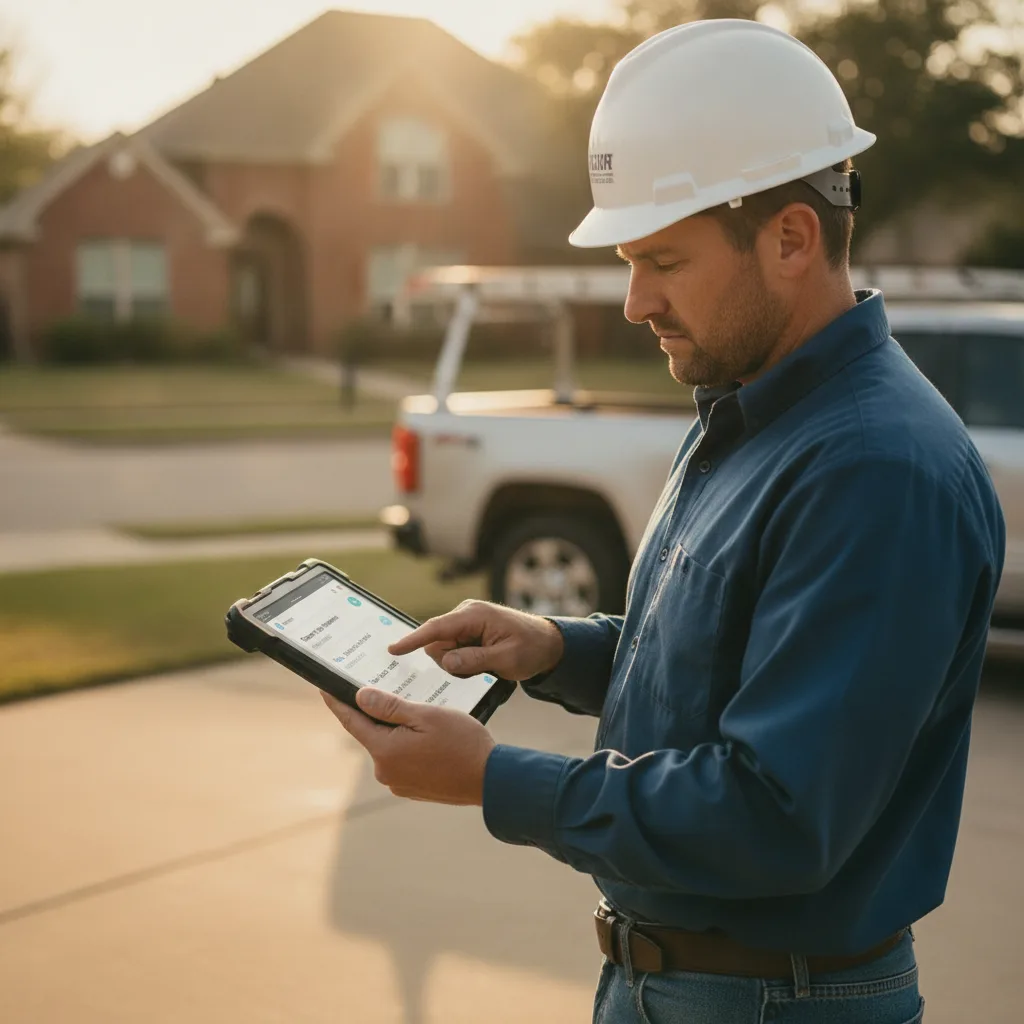
A roofing contractor in Dallas with a $12,000 average job ticket faces a different problem than an emergency plumber. Homeowners shopping for a full roof replacement after a hail storm are doing comparison research — they have three browser tabs open with competing quotes. An AI chatbot that collects a name and phone number does not close this customer. A trained CSR who can discuss insurance claims processes, show permit history, and answer specific questions about Owens Corning Duration shingles versus GAF Timberline HDZ will. Human agents resolve 82% of complex cases; AI resolves 38%. On a $12,000 ticket, that resolution gap is worth $5,280 per converted job.
The trigger for live chat here is proactive engagement on high-intent pages. Configure Podium or Freshchat to fire a chat invitation after a visitor spends 45 seconds on the estimate request page or the storm damage service page. A CSR who opens with specific, local knowledge — 'We've completed 14 roofs in your zip code this month, want to see photos?' — converts at 2.8x the rate of a passive chat widget. At a $79 Google Ads CPL for roofing, that conversion multiplier pays for a full month of live chat staffing in a single booked job.
Hybrid Wins
AI Triage Plus Human Close: The Stack That Scales
As of September 2026, 91% of companies with 50+ employees use chatbots somewhere in their customer journey — which means the AI chatbot for small business is no longer a competitive advantage for Texas contractors, it's the floor. The contractors who pull ahead deploy the hybrid stack correctly: AI agents handle after-hours triage and lead capture across website, Facebook Messenger, and SMS; human CSRs close the $8,000–$15,000 jobs during business hours with proactive live chat on high-intent pages; and CallRail ties every conversation back to a booked job so the data improves the system over time.
The conversational AI layer is what makes the hybrid model cost-effective for small business owners without dedicated support teams. Freshchat's Freddy AI uses natural language processing to deflect repetitive queries — service area questions, pricing ranges, scheduling requests — before they reach a CSR. That task automation reduces the workload on small teams by handling the routine customer interactions that eat into a CSR's capacity to close complex jobs. The AI assistants also collect customer data and populate the CRM automatically, giving sales teams a full conversation history before the first human interaction. Most contractors running this stack see the hybrid model pay for itself within the first month through after-hours lead capture alone.
Vendor security matters as of 2026. Drift was shut down in March 2026 after a security breach affecting over 700 organizations — a real-world reminder to evaluate platform security and data handling before committing. Tidio, Freshchat, and Podium all offer dedicated support and documented security policies for small businesses handling customer information.
AI Chatbot Wins
Best AI Chatbots for Small Businesses Running Lean: The After-Hours Emergency Plumber
A 4-truck plumbing shop in San Antonio running Google Ads at $52 CPL cannot afford to let after-hours calls ring out unanswered. Invoca's analysis of 60 million home services calls puts the cost of each missed call at $1,200 in lost revenue. With 35–40% of inbound calls arriving outside business hours and a weekend unanswered rate of 41%, this shop is bleeding $4,000–$8,000 per weekend before anyone on the team wakes up Monday morning.
Deploying Tidio or Freshchat as the primary AI chatbot for small business lead capture changes that math entirely. The chatbot responds in under 2 seconds, collects the job type, address, urgency level, and a callback number, then routes emergency calls to an on-call tech and schedule appointments automatically via Google Calendar integration. The chatbot also deploys across multiple platforms — website, Facebook Messenger, and SMS — to engage customers wherever they reach out. Real monthly cost for a 2-operator Tidio setup with Lyro AI runs $150–$350, less than the revenue lost on a single missed emergency call. At $0.50–$1.00 per interaction, a chatbot handling 300 after-hours customer inquiries per month costs $150–$300, versus the $1,200-per-missed-call alternative of doing nothing. The AI-powered chatbot also provides consistent customer support across every interaction — no variation in tone, no missed fields, no forgotten follow-ups.
The missed-call rate for home service businesses sits at 62% across the industry. The contractors who close that gap with a properly configured AI-first hybrid stack in 2026 will not just convert more leads — they will compound those gains every month while competitors keep paying $79 per roofing click to fill a voicemail no one checks. Customers expect instant responses: 71% expect real-time communication, and 78% hire the company that responds first. An AI chatbot is the only channel that guarantees first response around the clock, every day of the week.
The decision framework is straightforward. Average job ticket under $2,500: deploy an AI chatbot (Tidio or Freshchat) immediately, configure it for Facebook Messenger and SMS, and integrate CallRail to tie conversations to booked jobs. Average job ticket over $5,000: add proactive live chat on your estimate request and high-intent service pages during business hours, use behavior-based triggers, and let the AI chatbot handle everything after 6 PM. Both scenarios: use a user-friendly visual builder to design your conversation flow, build a knowledge base from your real FAQs, and review the conversation history weekly to improve the system. The contractors running this stack are not guessing which channel converts more leads — their business data tells them, conversation by conversation.
Frequently Asked Questions
Ready to get started? Contact Geek Powered Studios today.