
Restoration businesses can configure a 24/7 AI-powered emergency intake system in 3–5 hours using platforms like Rosie AI ($49–$149/mo), QuoteIQ Virtual Call Team ($29.99–$299/mo), or AnswerForce ($279/mo). The system answers inbound calls in under 60 seconds, asks seven triage questions mapped to IICRC water categories, captures the insurance carrier name and claim number, dispatches the on-call crew by SMS, and writes directly to ServiceTitan, Housecall Pro, Jobber, Albiware, or DASH. At a $4,000 average job value and 40% capture rate, that recovers 3–6 booked jobs per week — $12,000–$24,000 in weekly revenue — from calls that previously went to voicemail.
-
$45,000–$162,000Annual revenue lost per company to missed calls
-
62%Of SMB restoration calls go unanswered
-
Under 60 secondsTarget answer time for maximum lead conversion
-
$29–$350/moFull cost range of verified 2026 AI intake platforms
-
3–5 hoursTime to configure and go live with full AI intake stack
-
$12,000–$24,000/weekRecovered revenue from AI-answered calls at 40% capture rate
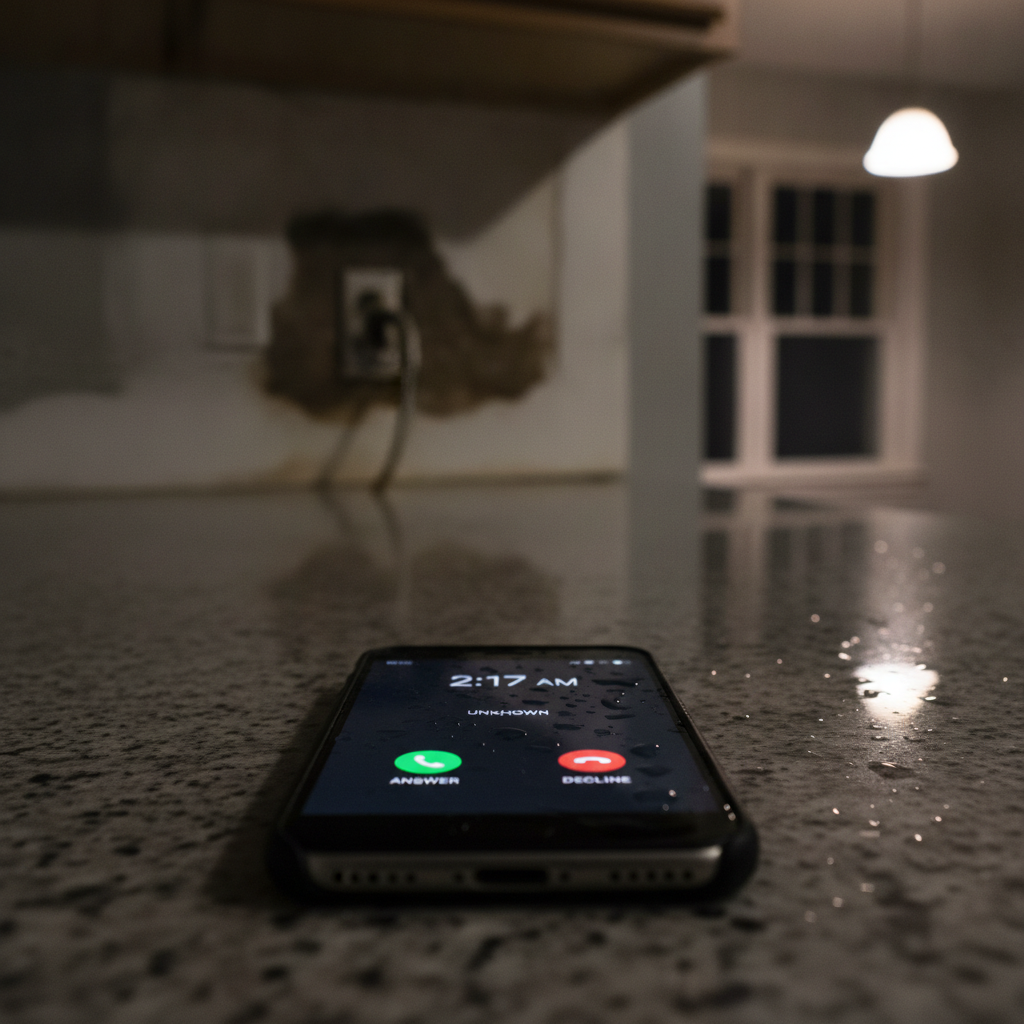
At 2 AM, a homeowner stands in three inches of water in her finished basement. She opens Google, taps the first restoration company on the list, and the phone rings four times before voicemail. She taps the second number. Same result. By the third call — which picks up in 40 seconds — she has a crew rolling. The first two companies just lost a $12,000 insurance job they paid $150 in Google Ads clicks to generate. As of August 2026, that scenario plays out dozens of times every night across the country, and it is the core problem that AI for home restoration marketing solves. This guide walks through the full six-step configuration: calculating your exact revenue bleed, selecting a restoration-specific AI platform, scripting IICRC triage, integrating with your job management system, setting response-time benchmarks, and measuring ROI. The entire setup takes 3–5 hours and costs $30–$350 per month. Start today — the next storm does not wait.
Before you start
- An active inbound phone number (Google Business Profile line, LSA number, or main business line) that can forward calls or port into an AI receptionist platform
- A job management system account — ServiceTitan, Housecall Pro, Jobber, Albiware, or DASH — with API access or Zapier integration enabled
- A list of your on-call crew members with cell numbers for SMS dispatch routing
- Basic familiarity with IICRC water damage categories: Cat 1 clean water, Cat 2 gray water, Cat 3 black water
- A Google Ads or LSA campaign already running so you have inbound call volume to measure before-and-after impact
- Admin access to your CRM or lead management system to verify new jobs write correctly after go-live
Calculate Your Missed-Call Revenue Bleed Before Touching Any Tool
Restoration businesses lose $45,000–$162,000 per year to missed calls, and the analysis takes under five minutes to run — do it before evaluating any AI tools so you have a concrete number to hold the investment accountable to. Pull your last 90 days of inbound call data from your phone provider or CallRail. Multiply total missed calls by your average job value. At the national average of $3,860 per water damage job and a 62% missed-call rate for small-to-medium home improvement contractors, a company fielding 20 inbound calls per week forfeits roughly $47,000 every quarter. That analysis takes less time than reading this paragraph. Understanding the full depth of that number changes how you account for every dollar in your marketing budget.
Water damage jobs skew the value of each missed call hard. Insurance claims average $11,098–$15,000, and large-loss sewage or structural projects reach $10,000–$50,000. A single missed First Notice of Loss from a TPA property management account can terminate a preferred-vendor relationship worth $200,000 or more in annual referral revenue. That is not a missed call — that is a missed season. Write your actual bleed number on a whiteboard before you open a pricing page. Using AI to close that gap is one of the best ways to improve the efficiency of your marketing spend. This analysis is the planning foundation every serious restoration business needs before comparing platforms or changing schedules.
After-hours exposure compounds the problem for restoration companies. Restoration emergencies disproportionately occur at night and on weekends: 35–45% of home service calls come outside standard business hours, and 76% of the week falls outside a standard 9-to-5 window. Contractors without after-hours coverage miss 100% of those calls. If your Google Ads budget runs 24/7 — and water damage keywords cost $50–$150 per click in competitive Texas markets — every unanswered night call is a paid lead you funded and then discarded. That is targeted advertising spend with a zero percent return on those specific impressions. The performance gap between a business that answers every urgent call and one that does not grows wider every year the problem goes unaddressed. Tracking your missed-call rate by time-of-day is the first practical step toward understanding where the biggest revenue leak lives in your current design.
CallRail
$45/mo
Tracks inbound calls by source, records missed calls with timestamps, and exports the data you need to calculate your exact revenue bleed by campaign
Quick Math
Missed calls per week x average job value x 52 weeks = annual bleed. A restoration company missing just 6 calls per week at a $4,000 average loses $1,248,000 in potential revenue annually before accounting for repeat customers or insurance referral chains.
Step 2 of 7
Choose a Restoration-Specific AI Receptionist — Not a Generic One
A restoration-specific AI receptionist triages IICRC water categories, routes the insurance carrier, and dispatches a crew in a single call — a generic AI receptionist just takes a message. This distinction eliminates the most common configuration failure in AI for home restoration marketing: home improvement contractors deploy a general-purpose scheduling bot trained on appointment booking, and it collapses on the first Cat 3 sewage call at 2 AM because it has no framework for emergency versus non-emergency routing. The caller hangs up and dials the next company on the Google search results list. Every restoration company should learn this lesson before signing a contract, not after. Compare platforms on this capability first — it matters more than price. The depth of a platform's restoration-specific design is what determines whether it helps you grow or just adds another subscription to manage.
As of August 2026, four purpose-built platforms dominate the restoration industry segment. Rosie AI ($49–$149/mo) suits solo operators and small crews; it answers calls, texts a job summary to the on-call tech, and integrates with Jobber and Housecall Pro. Smith.ai ($95–$292/mo) adds live-agent overflow for surge events and handles bilingual callers — critical in Dallas and Houston markets where Spanish-speaking homeowners represent a significant share of restoration services demand. QuoteIQ Virtual Call Team ($29.99–$299/mo) is the lowest entry cost with native Albiware and DASH write-back, making it the strongest fit for restoration businesses already on those platforms. AnswerForce ($279/mo flat) pairs AI intake with human escalation and is the preferred choice for TPA-heavy shops where a live voice on catastrophic losses protects the vendor relationship. Each platform design fits a different operator profile — find the one that matches your current FSM and call volume, and request a demo before making a final decision.
Marlie and Hank are two additional purpose-built options worth evaluating when you review AI tools for your stack. Marlie handles simultaneous surge calls during storm events with no busy signals — a capability that live answering services physically cannot match when dozens of homeowners call at once after a weather event. Hank's differentiation is empathetic caller handling: its training specifically addresses distressed callers, which matters when a homeowner is standing in three inches of water at midnight. Both platforms use machine learning to refine triage accuracy over time and write directly to the job record rather than sending a generic email summary. Adoption of either platform is straightforward for teams already using a cloud-based FSM. The ability to handle unlimited concurrent calls is a key capability that separates purpose-built restoration AI from general options — understand that difference before you start your platform selection process.
Rosie AI
$49–$149/mo
Restoration-aware intake scripts, SMS dispatch to on-call crew, Jobber and Housecall Pro integration — lowest cost for small restoration crews
Smith.ai
$95–$292/mo
AI-plus-live-agent hybrid handles storm surge overflow and bilingual callers; strong fit for Texas markets with Spanish-speaking homeowners
QuoteIQ Virtual Call Team
$29.99–$299/mo
Native write-back to Albiware and DASH eliminates manual data re-entry; lowest entry price in the verified 2026 restoration AI category
AnswerForce
$279/mo
AI intake plus human escalation protects TPA relationships on large-loss calls where a live voice is expected by the property manager
Marlie
Contact for pricing
Handles unlimited simultaneous calls during storm surges with sub-2-second answer time; no busy signals regardless of call volume
Hank
Contact for pricing
Purpose-built empathetic handling for distressed callers; direct CRM write-back with IICRC category identification built into the call script
Warning
Avoid any platform that charges per minute during storm surges. A single severe weather event can generate 40–80 simultaneous calls. Per-minute billing that looks affordable at $0.05/min becomes $200–$400 in a single night — wiping out three months of flat-rate savings.
Step 3 of 7
Build the Emergency Triage Script Your AI Will Run on Every Call
The AI triage script is where AI for home restoration marketing either wins the job or loses it — the first 90 seconds of the call must collect seven data points: caller name, property address, water source (IICRC category), affected square footage estimate, presence of standing water, insurance carrier name, and claim number if already filed. Each field maps directly to a job record field in your FSM. A script that collects all seven means your crew arrives with a complete intake; a script that misses even one means a tech is making a second call from the driveway. Good script design and careful planning at this stage protect the quality of every job that follows. Work through the questions carefully — the sequence and phrasing influence whether a panicked homeowner stays on the line long enough to build the complete record.
IICRC category identification is the hardest part to script correctly and the most consequential for project type routing. Cat 1 (clean water from a broken supply line) dispatches a standard drying crew. Cat 2 (gray water from an appliance or HVAC drain) requires protective gear and antimicrobial treatment. Cat 3 (black water from sewage or flooding) demands full PPE, containment, and a different crew certification level. Your AI script must ask: 'Is the water source a clean supply line, an appliance drain, or a toilet or outdoor flood?' Generic AI receptionists trained on appointment scheduling have none of this context, which is why integrating AI that is restoration-industry-specific matters from the very beginning. Getting the category right on the first call is an important efficiency gain for crews who reach the site ready to work — and it is easy to build in when you design the script correctly from day one.
The EPA's 24–48 hour mold-growth window makes documented response time a compliance issue, not just a customer-service metric. The AI must timestamp every call from the first ring, record the full conversation, and store the transcript against the job record. That timestamp is evidence in an insurance claim dispute. Configure the AI to announce at the top of every call: 'This call is recorded for quality and documentation purposes.' That single line protects the restoration business legally and signals professionalism and expertise to the homeowner. Consistency in your intake process is also what makes your data useful over time: structured records let you identify patterns, improve scripts, and strengthen your response to changing seasonal demand. Reach for this level of documentation from day one — it is hard to retrofit later and easy to build in at the start.
Script Template
Sequence your triage questions in this order: (1) Confirm address — dispatch cannot roll without it. (2) Ask water source to establish IICRC category. (3) Ask if there is standing water and how deep — determines crew size. (4) Collect insurance carrier and claim number. (5) Confirm callback number. (6) Advise the homeowner a crew will contact them within 15 minutes. Every item maps to a CRM field; sequence matters because distressed callers drop the call if you ask for insurance before confirming help is coming.
Step 4 of 7
Connect the AI to Your Job Management System — Direct Write, Not Email
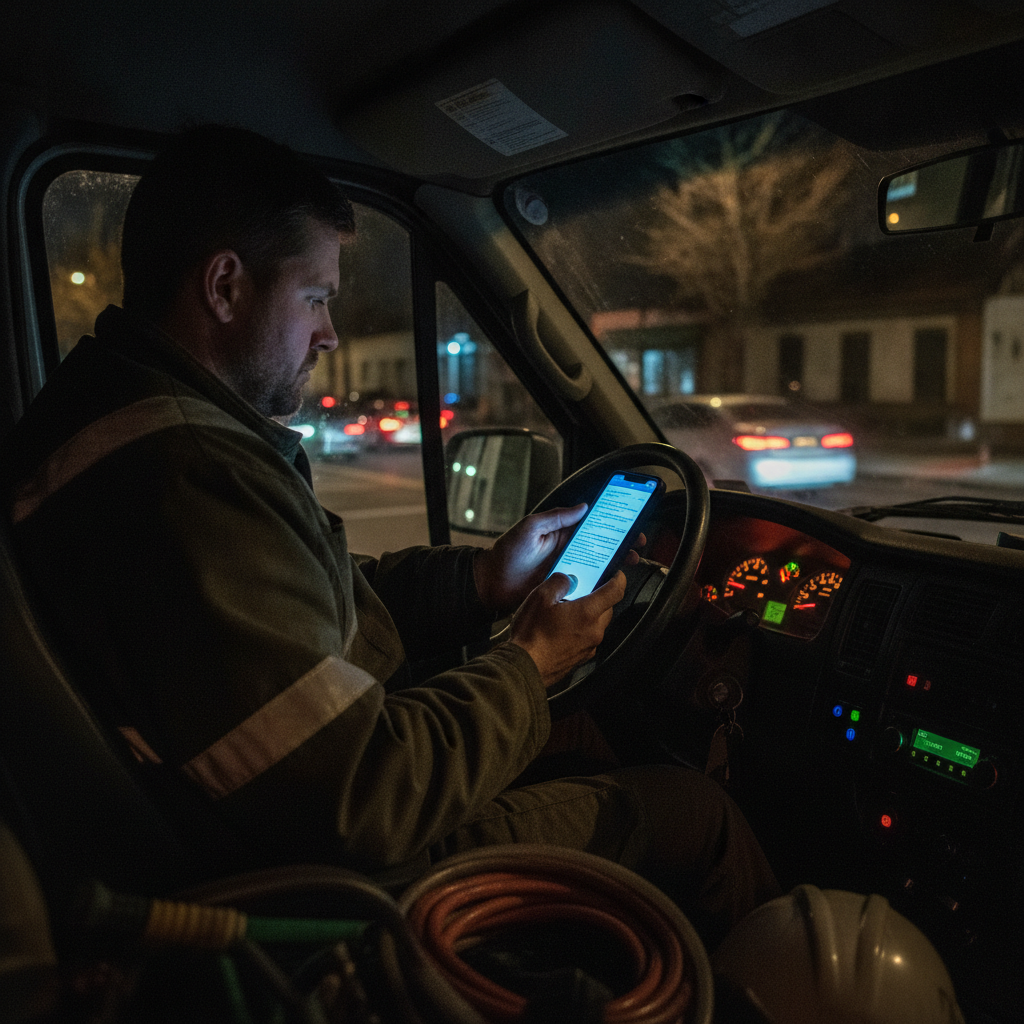
Restoration AI tools that write directly to the job management system eliminate manual data re-entry; tools that only send an email summary require someone on the team to manually enter the lead, and that step is exactly where jobs get lost during storm surges. This is the single most critical integration decision in the entire setup. An email summary sitting in an inbox at 3 AM does nothing for lead capture. A new job record created in ServiceTitan, Housecall Pro, Jobber, Albiware, or DASH with all seven triage fields populated means the dispatcher wakes up to a ready-to-dispatch job, not a voicemail to transcribe. Using AI with direct write-back capabilities is the efficient path — it removes a manual step that creates errors under pressure and helps the whole team work smarter.
Verify native integration before committing to a platform. QuoteIQ writes natively to Albiware and DASH. Rosie AI integrates natively with Housecall Pro and Jobber. Smith.ai uses Zapier for most FSM connections, which adds a dependency and a $20–$49/mo Zapier cost. AnswerForce has direct ServiceTitan integration documented as of June 2026. If your platform of choice only offers a Zapier bridge, build the Zap before go-live and test it with 10 simulated calls — Zapier task failures are silent unless you configure error alerts to notify your management team. Build those alerts into the system design from the start; they are easy to add and important for catching problems on busy nights. Tracking these error alerts each week is what separates businesses that grow steadily from those that plateau. Good planning here protects the consistency of your lead management process across every region you serve.
SMS dispatch to the on-call crew is the parallel action the AI takes the moment a job record is created. Texts open at 98% and pull a 45% response rate versus email's 6% — the on-call tech confirms availability by text, and the AI logs that confirmation back to the job record. Configure the dispatch SMS to include: property address, IICRC category, estimated square footage, and insurance carrier. A tech who arrives knowing it is a Cat 3 sewage loss at a 1,200 sq ft finished basement shows up with the right equipment the first time, which directly works to improve customer service quality and first-visit resolution rate. That precision in communication is what separates a professional restoration response from a scrambled one. It also strengthens the experience homeowners have on urgent, high-stress jobs — and that experience influences your online reviews.
Zapier
$20–$49/mo
Bridges AI receptionist platforms that lack native FSM integration; build error-alert Zaps so silent task failures do not cause missed jobs
ServiceTitan
$398+/mo
Industry-standard FSM for larger restoration companies; AnswerForce and select AI platforms offer direct write-back without a Zapier bridge
Housecall Pro
$79–$199/mo
Mid-market FSM with native Rosie AI integration; job records populate automatically from AI intake call data
Gotcha
Do not skip the test phase. Run 10 simulated calls with a colleague playing a distressed homeowner before going live. Confirm every field populates in the FSM, that the SMS dispatches to the correct on-call number, and that the call recording attaches to the job record. One missed field in production equals a crew dispatched without the insurance carrier name — which costs 20 minutes on-site and damages the homeowner's confidence before work begins.
Step 5 of 7
Set Response Time Targets That Match 2026 Buyer Expectations
Responding to a restoration lead within 5 minutes makes a contractor 100 times more likely to make contact and 21 times more likely to qualify that lead compared to waiting 30 minutes — and as of 2026, the competitive threshold has compressed further. Sub-60-second response now captures maximum conversion potential; lead value decays 29% by the 5-minute mark and 72% by the 30-minute mark. A homeowner standing in water calls down the Google list until somebody answers. The job that rings out is a $10,000–$50,000 insurance loss; whoever answers first wins it. That behavioral pattern means AI answering is not a convenience feature — it is the front line of your marketing efforts. The conversions that flow from a fast response are what make every ad click worth the money you spend. Understanding that relationship is how restoration businesses learn to focus their budget on the channels that reach the most ready-to-hire homeowners.
Configure the AI to answer within 2 rings — ideally under 2 seconds. Marlie's documented answer time is sub-2 seconds. Rosie AI and Smith.ai both target sub-4-second pickup. AnswerForce's human-escalation calls connect within 20–30 seconds. Any configuration where the AI plays more than 5 seconds of hold music before engaging is losing urgent callers who are already reaching for their phone to dial the next result. Test your answer time weekly using a dedicated test line and log it alongside your conversion data to identify any performance degradation. Scheduling those weekly checks into your calendar is what separates businesses that grow steadily from those that plateau. Build this review into your standing team schedules so it happens consistently, not just when something goes wrong.
78% of customers hire the first company to respond to a home service request. That first-responder advantage is the entire ROI argument for integrating AI into your restoration marketing strategy. A contractor spending $5,000/month on Google Ads at $50–$150 per click and missing 62% of those calls wastes $3,100/month — $37,200/year — on leads that never get a conversation. The AI answering service at $30–$350/month is not a cost center. It is the mechanism that makes every other marketing dollar generate more leads and more booked jobs. Home improvement professionals who understand that relationship are the ones who scale past $2M in annual revenue without simply increasing ad budgets. Using AI at this stage of your process is one of the best ways to increase conversions without increasing spend. The engagement improvement is immediate — you see it in your first 30 days of data.
Benchmark
Track three metrics from day one: (1) Answer rate — target 98%+. (2) Triage completion rate — percentage of calls that complete all seven intake fields before hanging up; target 85%+. (3) Dispatch-to-arrival time — from AI answer to crew on-site; target under 60 minutes for emergency water damage. These three numbers tell you whether the system is working as a revenue tool or just as a voicemail replacement.
Step 6 of 7
Measure ROI and Scale Across All AI Tools in Your Restoration Stack
At a conservative $4,000 average job value and a 40% capture rate from 24/7 AI answering, a restoration company recovers 3–6 booked jobs per week from calls that previously went to voicemail — $12,000 to $24,000 in weekly recovered revenue from a service that costs $30–$350 per month. Measure this in your CRM by tagging every job originated from an AI-powered call. After 30 days you will have a clean number: jobs booked from AI-answered calls divided by total AI-answered calls equals your AI capture rate. Compare it against your previous 30-day period using CallRail's missed-call data to determine the exact before-and-after delta. That data provides the insights your team needs to understand whether to increase budget on the channel, adjust the triage script, or review the dispatch process for bottlenecks. Those insights help you improve results continuously rather than guessing. Expert restoration-focused agencies — including Vinnie Mac Restoration Marketing — consistently suggest building this feedback loop into your monthly planning schedules from day one, because the analysis compounds in value the longer you run it.
AI for home restoration marketing extends beyond the answering service once the intake system is stable. The broader restoration AI stack includes Xactimate ($99–$199/mo) for AI-assisted estimating on insurance claims, Encircle Scope ($149/mo) for automated photo documentation and scope writing, and Podium ($399/mo) for post-job review generation. Home improvement contractors who add AI-powered review solicitation after job close see online review volume increase 2–3x, which compounds organic search visibility and reduces cost per lead from Google Ads campaigns over time. Online reviews and organic search rankings are long-term assets that paid campaigns cannot replicate — they strengthen online reputation and improve visibility in a way that ad spend alone does not. Vinnie Mac Restoration Marketing and other expert restoration-focused agencies consistently suggest building this full stack rather than stopping at the answering layer. The best ways to grow in this industry combine fast response with strong reputation, and using AI at both stages is how leading restoration businesses attract more clients efficiently. When you upload job photos and scope data into Encircle Scope, for example, the artificial intelligence does in 45 minutes what used to take a tech four hours — that is the kind of efficiency gain that changes the economics of running a restoration company.
The in-house comparison closes the business case for restoration businesses of any size. A fully loaded in-house receptionist costs $53,700 per year as of 2026. An AI receptionist providing equivalent 24/7 coverage costs $360–$4,200 per year — a 93–95% reduction. The financial argument is easy to make to any stakeholder: a single recovered job in month one covers the annual subscription cost on most plans. Home improvement professionals who treat AI tools as permanent infrastructure — not as experiments — recover that cost on the first booked job of the month, every month, indefinitely. Work smarter by committing to AI-powered tools in the same category as your truck fleet and your estimating software. The market trends in restoration all point in the same direction: the businesses that scale past $2M in annual revenue are the ones that build systems to generate leads consistently, answer every call, and execute lead management without gaps. Plan for long-term success by locking in this infrastructure before the next storm season, not after. Using AI throughout the full workflow — from first ring to final review request — is how restoration businesses strengthen their reputation, increase visibility in local search, and attract customers who reach out ready to hire.
Podium
$399/mo
Automates post-job review requests via SMS at 98% open rate; increases Google review volume to strengthen online reputation and organic search rankings
Xactimate
$99–$199/mo
Industry-standard AI-assisted estimating for insurance claims; outputs insurer-accepted scope and pricing documents that accelerate claim approval
Encircle Scope
$149/mo
AI photo documentation and automated scope writing from field images; cuts estimate preparation time from 4 hours to under 45 minutes per job
Scale Signal
Once your AI intake capture rate exceeds 85% for 60 consecutive days, add a content marketing layer: publish monthly storm-response blog posts targeting local water damage keywords. AI-answered calls generate structured job data — location, damage type, square footage — that feeds hyper-local content marketing topics: neighborhoods, property types, seasonal patterns. That data loop is how restoration businesses build SEO and content marketing moats that competitors without AI intake cannot replicate.
Step 7 of 7
Turn Your AI Call Data Into a Local SEO and Content Growth Engine
Every AI-answered call generates structured data your marketing team can put to work: caller location, IICRC category, job type, and outcome. That data is a direct input for local SEO — it tells you which neighborhoods, damage types, and seasonal patterns to build content around, so your blog and service pages match what homeowners are actually searching for instead of guessing. Feed that same call data into your Google Business Profile and review-request workflow (Podium or a comparable tool) and response speed starts compounding: faster answers drive more completed jobs, more completed jobs drive more reviews, and review volume and response-time signals both influence how visible your business is in local search results. Track this monthly — it is one of the easiest ways to turn operational data you are already capturing into organic growth instead of paying for every lead through ads.
The SEO upside also strengthens your sales conversations. When a property manager or insurance adjuster asks why they should trust your team over a competitor, a documented sub-60-second answer rate and a call-recording archive gives your team something concrete to point to — it is far easier to sell a service you can back up with real numbers than one you can only describe. Homeowners talk about restoration companies that answered immediately at 2 AM the same way they talk about ones that did not; that word-of-mouth and review activity is free content marketing your competitors without AI intake cannot match. Understand this compounding effect early: the businesses that treat response time as a growth channel, not just a service metric, are the ones whose organic visibility and review volume both improve every quarter instead of plateauing.
SEO Tip
Google Business Profile factors your response rate and response time into local ranking signals. A restoration business answering 98% of calls in under 60 seconds builds a measurably stronger local search profile than one relying on voicemail — the same AI configuration that recovers jobs also strengthens visibility.

The Configuration Mistake That Kills the ROI Before It Starts
The single most common failure mode among restoration companies deploying AI is choosing a platform with per-minute billing and no storm-surge cap. A generic AI receptionist that charges $0.05–$0.15 per minute looks affordable at normal call volume. During a hail event in DFW or a tropical system in Houston, you receive 60–100 calls in four hours. That same platform now invoices $270–$900 for a single night — and it still cannot triage IICRC categories, identify Cat 3 losses, or dispatch a crew. You paid surge pricing for a tool that took messages. The fix is a flat-rate, restoration-specific platform with unlimited concurrent call handling. Marlie, Rosie AI, and QuoteIQ Virtual Call Team all offer flat monthly pricing with no per-minute overage. AnswerForce caps surge costs through its managed-service model. Verify the surge billing terms in writing before signing any contract — protect your budget by reading the fine print.
The revenue math on AI for home restoration marketing is not subtle. Every restoration company already knows the 2 AM call problem exists. The crews are on active jobs, the dispatcher is driving, the owner is asleep, and the homeowner dials the next number on the list. What the data makes concrete — as of August 2026 — is the exact dollar value of that pattern: $45,000–$162,000 per year, per company, compounding every week the gap stays open. A $30–$350/month AI receptionist trained on IICRC categories, connected directly to your FSM, and dispatching via SMS in under 60 seconds converts that bleed into 3–6 recovered jobs per week. The technology is not experimental. Vinnie Mac Restoration Marketing, along with every serious restoration-industry operator tracking market trends in 2026, treats AI-powered intake as foundational infrastructure — helping businesses of every size answer every urgent call and capture every lead before a competitor does. Using AI consistently across your intake, estimating, and review-generation workflow is what changes the engagement trajectory of a restoration business over the long term. The only remaining variable is whether your restoration business is the one that answers at 2 AM — or the one that loses the job to a competitor who does. Configure the system this week. The next storm does not wait.
Frequently Asked Questions
Ready to get started? Contact Geek Powered Studios today.