
The highest-ROI dentist marketing tips in 2026 start with internal systems, not paid advertising. SMS patient reactivation converts 10-20% of lapsed patients at a platform cost of $189-$400/month. Google Business Profile Q&A management costs nothing and feeds AI Overviews directly. An AI receptionist at $200-$800/month stops the 32-38% of calls most practices miss during business hours — worth $850 per missed new-patient call. Pre-scheduling at the chair moves recall rates from 40% to 80-90% at zero cost. Only after those internal levers are working should a practice add paid channels: procedure-specific landing pages, Google Local Service Ads at $30-$80/lead, and a review velocity system hitting 12+ new Google reviews per month.
-
$457.86Median revenue per reactivated patient over 12 months via SMS
-
32%Google Business Profile's share of Local Pack ranking — the single largest factor
-
$850First-year revenue lost per missed new-patient call at the average practice
-
12.5% vs. 4.2%Landing page CVR vs. homepage CVR for dental paid advertising
-
80–90%Return rate for patients pre-scheduled at the chair vs. 35–45% without
-
$99,965Average new revenue active-marketing dental practices added in 2024 (2025 DAG Survey)
The average dental practice is already running Google Ads, asking for reviews, and posting on Facebook. The top 10% are doing something different: they've stopped treating each tactic as a standalone marketing task and started stacking them into a dental marketing strategy that compounds. The gap shows up in the numbers. The 2025 DAG Financial Survey found that active-marketing clinics added $99,965 in new revenue in a single year, while stagnant practices plateaued. Google Business Profile now outranks every paid digital option as the top new-patient channel, cited by 15.6% of 448 dental practices surveyed in 2026. And a single missed phone call costs $850 in first-year revenue and up to $25,000 in lifetime patient value. These 10 dentist marketing tips are the specific moves most practices skip — each one backed by a real number, a named tool, and a clear action. None of them are 'post more on Facebook.'
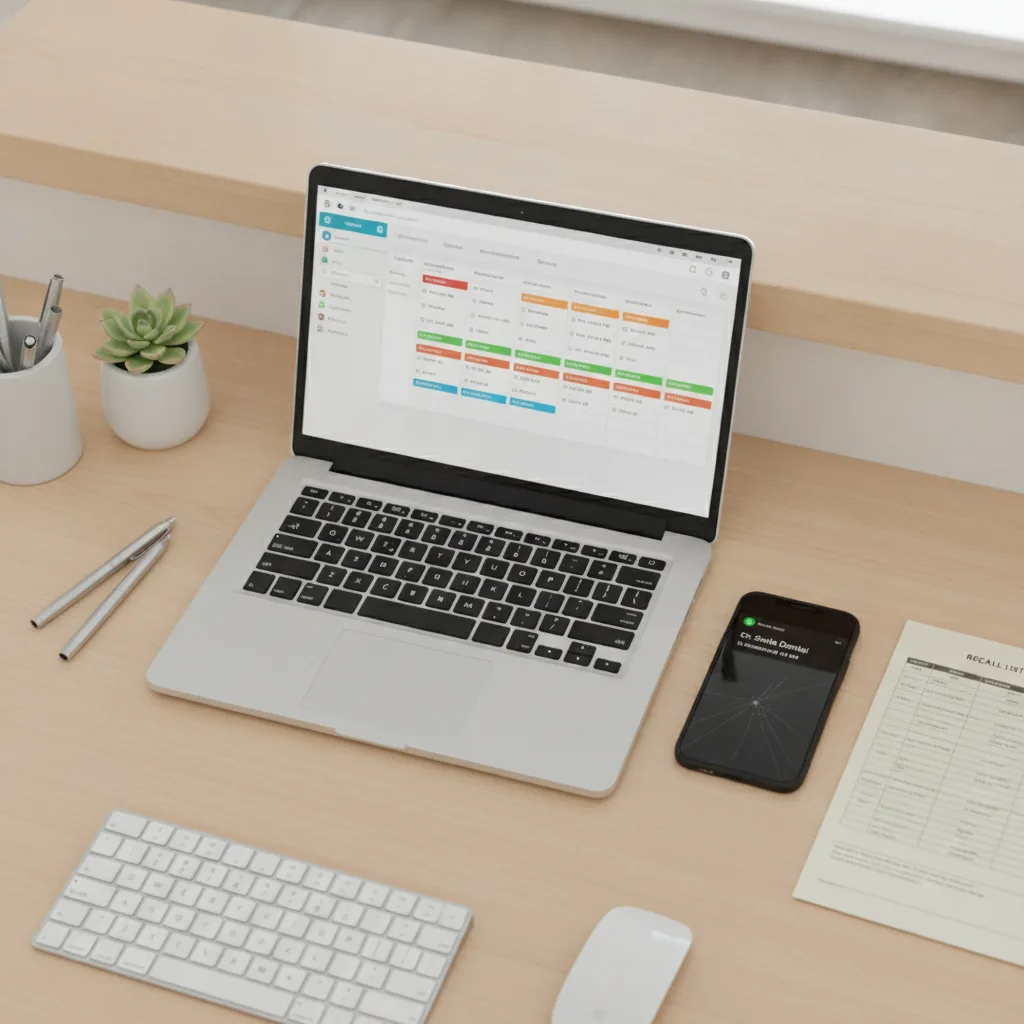
SMS-First Patient Reactivation Campaigns
Visit website ↗Reactivating a lapsed patient costs 5–25x less than acquiring a new one through paid advertising or direct mail, yet fewer than 30% of dental practices run a structured reactivation campaign. SMS is the channel that actually works: 82% open rates versus 21% for email, and a 52% response rate versus 28% for email outreach. Tools like RevenueWell (starting at $189/month) and Weave Pro ($249–$400/month) automate the sequence against your existing PMS patient list, turning dormant charts into booked appointments with no ad spend. A 200-patient reactivation SMS sequence converting at 15% generates 30 appointments and roughly $13,700 in revenue at the median $457.86 per patient — at a platform cost under $400. That's effective dental marketing built entirely on patients who already trust your practice.
Best for
- Practices with 500+ inactive patient records in Dentrix, Eaglesoft, or Open Dental
- Offices that have tried email reactivation with under 30% open rates
- Practices that want new revenue without increasing paid advertising budget
- Teams using RevenueWell, Weave, or Adit who haven't activated the reactivation module
Watch-outs
- SMS requires explicit opt-in consent — scrub your list before launching
- Generic 'we miss you' texts underperform segmented messages by procedure type
- Results taper after 90 days if you don't segment by last-visit date and treatment history
- Confirm your PMS syncs bi-directionally with the platform before signing up
Bottom line
A 200-patient SMS reactivation sequence converting at 15% generates 30 appointments and roughly $13,700 in revenue at the median $457.86 per patient — at a platform cost of under $400/month.
GBP Q&A Population for AI Overviews and Local SEO
Visit website ↗Google Business Profile signals account for 32% of Local Pack ranking weight — no other single factor in local SEO comes close. As of 2026, Google's AI-generated Q&A is rolling out across GBP profiles, which means practices that ignore this section risk having incorrect clinical answers displayed to potential patients searching for an emergency dentist or asking about Invisalign costs. Proactively seeding 15–20 accurate Q&A pairs covering your most common patient inquiries locks out bad AI-generated responses and feeds Google's AI Overviews with citable, practice-specific content. Practices with consistent NAP across 25+ directories rank 2.4 positions higher in the Local Pack — GBP Q&A management on top of that citation foundation puts your dental SEO in a category most competitors haven't touched. Top 10% profiles receive 7x more clicks and calls than average practices. The cost is one hour per week of staff time.
Best for
- Practices targeting local keywords like 'dentist near me' or 'emergency dentist [city]'
- Offices offering high-value procedures (implants, Invisalign, veneers) that patients research before calling
- Any practice whose GBP Q&A section currently shows zero owner-posted questions
- Multi-location groups that need consistent dental SEO signals across all profiles
Watch-outs
- Requires weekly monitoring — AI-generated answers can appear without notification
- Answers must be clinically accurate and HIPAA-compliant; loop in your clinical lead
- GBP alone won't overcome a weak citation profile — pair with 25+ consistent NAP directory listings
- Photo count still matters: profiles with 25+ photos outperform those with fewer in click-through rate
Bottom line
Practices with consistent NAP across 25+ directories rank 2.4 positions higher in the Local Pack, and adding weekly GBP Q&A management puts your local search visibility in a category most dental competitors haven't entered yet.
AI Receptionist to Stop Missed-Call Revenue Bleed
Visit website ↗The average dental practice misses 32–38% of incoming calls during regular business hours, and 67% of those callers immediately phone the next practice on the list. At $850 in first-year revenue per missed new-patient call, a practice fielding 40 calls per week and missing 35% is leaking roughly $595,000 in annual patient acquisition opportunity. An AI receptionist running on Adit ($400–$600/month) or Aron AI ($200–$800/month) answers every call, books appointments, and fires SMS confirmations — cutting no-shows from 15–25% down to 4–8%. At $600/month, an AI receptionist costs less than one day of a human receptionist's salary while answering 100% of calls 24/7, including the 28% of appointment requests that arrive after business hours. This is not cutting-edge technology — it's a solved operational problem that most practices are simply ignoring.
Best for
- Solo and dual-provider practices with one front-desk team member handling phones and check-in simultaneously
- Practices open evenings or Saturdays where staffing overflow is a real cost
- Offices that have audited call logs and found missed-call rates above 20%
- Any practice losing new patients to competitors who answer faster
Watch-outs
- AI handles scheduling and FAQs well — complex treatment plan questions still need a human
- PMS integration is non-negotiable: confirm compatibility with Dentrix, Eaglesoft, or Open Dental before signing
- Some patient demographics prefer human contact for first impressions — monitor satisfaction scores after launch
- Setup and voice training takes 2–4 weeks before the system handles edge cases reliably
Bottom line
At $600/month, an AI receptionist costs less than one day of a human receptionist's salary while answering 100% of calls 24/7 — including the 28% of appointment requests that arrive after business hours.
Review Velocity System (12+ New Google Reviews Per Month)
Visit website ↗Review recency now outweighs total review count: a practice adding 12 new Google reviews per month will outrank a competitor with 400 total positive reviews and nothing new in six months. 83% of Americans rely on online reviews to evaluate a dentist, and 52% won't consider a provider with fewer than 10 ratings. Online reputation has become the first stage of patient care — the decision happens before the first call. Tools like Podium (starting at $399/month) and Birdeye automate post-visit review requests via SMS, pushing satisfied patients who forget to leave feedback into a one-tap review flow before they pull out of the parking lot. Patient reviews carry 24% of Local Pack ranking weight — second only to GBP signals at 32%. A practice building consistent posting of review requests as part of every checkout workflow turns happy patients into the most effective marketing channel available.
Best for
- Practices with strong patient satisfaction scores but fewer than 50 Google reviews
- Offices facing a competitor with 200+ reviews who relied on organic word-of-mouth
- Practices targeting the Map Pack for high-value procedures like implants, Invisalign, or teeth whitening
- Multi-location groups needing centralized review management across profiles
Watch-outs
- Never incentivize reviews — Google's policies prohibit it and risk profile suspension
- Negative reviews need a public response within 24–48 hours; the platform handles requests, not reputation management
- Birdeye's pricing is quote-gated for multi-location; solo practices may find Podium more predictable
- Review volume spikes that look artificial (20+ in a week after months of none) can trigger Google filters
Bottom line
A practice hitting 12 new Google reviews per month consistently will outrank a competitor with a 400-review head start that has gone dark — and Podium or Birdeye makes that cadence automatic.
Procedure-Specific Landing Pages Tied to Individual Ad Campaigns
Visit website ↗75% of dental offices run Google Ads, but only 60% report a positive return — and the gap is almost always attribution and landing page architecture, not budget. Dental websites routing all paid advertising traffic to a clinic homepage convert at 4.2%. Practices with dedicated procedure-specific landing pages convert at 12.5%. Pairing procedure-segmented PMAX campaigns (mean CPL: $49 vs. $81 for undifferentiated search) with Google Local Service Ads ($30–$80/lead, Google Screened badge, appearing above both standard Google Ads and the Map Pack) produced 28% more appointment form submissions per month than running PMAX alone. The 41% form submission uplift from procedure-specific landing pages means a practice spending $3,000/month on dental advertising effectively gets the output of $4,230/month — without increasing the budget. Attribution requires a call-tracking tool like CallRail; form fills alone undercount conversions by 30–40%. Google Analytics must be configured to track booked appointments, not just page visits.
Best for
- Practices spending $2,000+/month on Google Ads without tracking cost-per-booked-appointment
- Offices running PMAX campaigns but routing traffic to the site homepage
- Practices offering high-margin procedures (implants, clear aligners, teeth whitening) that justify a dedicated page
- Any practice that hasn't yet applied for Google Local Service Ads and the Google Screened badge
Watch-outs
- LSA verification requires background checks and license confirmation — budget 4–6 weeks for approval
- PMAX campaigns need conversion tracking tied to booked appointments, not just form fills
- Landing pages must load in under 3 seconds on mobile or conversion gains evaporate
- Attribution still requires CallRail — form fills alone undercount conversions by 30–40%
Bottom line
The 41% form submission uplift from procedure-specific landing pages means a practice spending $3,000/month on dental advertising effectively gets the output of $4,230/month — without increasing the budget by a dollar.

Internal Marketing: Pre-Scheduling at the Chair
Visit website ↗Pre-scheduled patients return at 80–90% versus 35–45% for those who leave without a next appointment — making in-office booking the most cost-efficient internal marketing lever a practice has. The entire gap between an 80% recall rate and a 40% recall rate comes down to a scripted checkout conversation and a team member who books the next appointment before the patient stands up. Practices with documented marketing processes outperform peers by 23% in new patient acquisition, per Spear Education's 2024 practice analysis, and pre-scheduling is the most foundational of those processes. Moving recall rate from 40% to 80% on a 1,000-active-patient panel adds roughly 400 returning visits per cycle — at zero acquisition cost. No paid advertising channel, direct mail campaign, or social media management spend produces that ROI. Current patients are the most overlooked growth lever in dental marketing strategy.
Best for
- Practices with recall rates below 60% who are spending on paid ads to replace preventable attrition
- Offices where the front desk is too busy during checkout to consistently offer next-appointment booking
- Fee-for-service practices where existing patient retention directly protects revenue
- Any practice owner who hasn't reviewed their 12-month recall rate in the last quarter
Watch-outs
- Team member scripting must be trained and role-played — a passive 'do you want to schedule?' underperforms an active booking offer
- Pre-scheduling doesn't fix no-shows; pair it with SMS reminders at 72 hours and 24 hours pre-appointment
- Patients on insurance waitlists may resist booking 6 months out — offer a call-to-confirm option rather than a hard block
- Track pre-schedule rate monthly per team member; without a key metric, compliance drifts within 60 days
Bottom line
Moving recall rate from 40% to 80% on a 1,000-active-patient panel adds roughly 400 returning visits per cycle — at zero acquisition cost. No paid advertising channel produces that ROI.
Video Patient Testimonials Posted to GBP, Instagram, and YouTube
Visit website ↗79% of patients say watching a video testimonial makes them more likely to book an appointment — yet fewer than 20% of dental practices capture even one per month. A single smartphone, a treatment room with natural light, and a 60-second patient testimonial shot at checkout costs nothing and builds the emotional connection that before-and-after photos alone cannot. One periodontist using AI-generated short videos grew their Instagram by 13,000 followers and 852,000 views in under two weeks. Tools like PerioSpot Video Studio eliminate the need for a video editor entirely, and doctor-generated content converts at a higher trust level than patient testimonials alone. Post testimonials to GBP, YouTube, and Instagram for maximum local search and social media impact. Social media management for dental practices doesn't require a production budget — it requires a checkout workflow and a phone.
Best for
- Practices with strong clinical outcomes (Invisalign, implants, cosmetic work) that don't yet have social proof on video
- Offices whose social media consists mostly of stock images and oral health tips
- Practices targeting younger demographics (25–45) who research dentists on Instagram before Google
- Any practice owner willing to appear on camera — doctor content converts at a higher trust level than patient testimonials alone
Watch-outs
- HIPAA consent forms must be signed before any patient footage is recorded or posted
- Audio quality matters more than video quality — a $30 lapel mic eliminates the most common reason viewers drop off
- Consistent posting (2–3x per week) outperforms sporadic high-production uploads; algorithms reward cadence over production value
- GBP photo and video uploads improve Local Pack signals — post testimonials there, not just on social media platforms
Bottom line
A practice posting two patient testimonials per week to Instagram and GBP builds 100+ pieces of indexed social proof per year — at a production cost of zero if a team member handles filming at checkout.
Structured Patient Referral Program with a Written Ask
Visit website ↗Referred patients generate 37% higher lifetime value than patients acquired through advertising, per Dental Economics 2023 data. The problem is that most dental practices rely on organic word-of-mouth rather than a structured referral program with a written ask, a set reward, and a tracked outcome. 88% of people trust a personal recommendation over any marketing channel — but most satisfied patients won't refer unless asked directly. A team member scripted to say 'We're always accepting new patients for families like yours — would you be comfortable passing along our name?' at checkout converts happy patients into an active referral engine. A practice generating 10 patient referrals per month at a $3,000 average patient LTV adds $360,000 in annual revenue from a program that costs less than $2,000/year to run. Those patients also stay longer than any ad-acquired cohort, compounding the advantage over time. Sponsor local events or run community engagement programs and formalize the referral loop at every touchpoint — community events are an underused channel for new dentist introductions in competitive markets.
Best for
- Established practices (3+ years) with high patient satisfaction but flat new patient volume
- Fee-for-service practices where referred patients skew toward higher case acceptance
- Practices whose patient base includes young families — sibling and spouse referrals compound fast
- Offices that sponsor local events or run community engagement programs and want to formalize the referral loop
Watch-outs
- State dental board rules on patient incentives vary — confirm allowable reward structures before launching
- Referral tracking requires a source field in your PMS intake form; without it, you can't measure ROI
- A verbal ask at checkout outperforms a card in the bag — train every team member on the script
- Referral programs plateau without a relaunch every 6–12 months; rotate the incentive or communication channel
Bottom line
A practice generating 10 patient referrals per month at a $3,000 average LTV adds $360,000 in annual revenue from a program that costs less than $2,000/year to run — and those patients stay longer than any ad-acquired cohort.
Email Marketing Campaigns: 34% Open Rate Automation Sequences
Visit website ↗Dental and medical email marketing campaigns average 34.01% open rates — the highest of any local-services sector — because patients treat the message as a health communication rather than advertising. That's nearly double the 21% benchmark for generic marketing email. Most practices are leaving this channel on the table: they send appointment reminders but skip the five automation sequences that actually drive revenue. A declined-treatment nurture sequence alone (three emails over 90 days to patients who said no to a treatment plan) converts 8–12% of those patients into scheduled cases with no additional clinical time. Search engine optimization for dental practices builds long-term visibility, but email converts existing relationships faster than any other digital marketing channel. A five-sequence email program running on RevenueWell (starting at $189/month) pays for itself the moment one declined implant case converts. Email list hygiene matters: bounce rates above 2% tank deliverability and reduce effective open rates across all campaigns. Use a HIPAA-compliant email platform — standard Mailchimp accounts are not HIPAA-eligible without a BAA.
Best for
- Practices with an email list of 1,000+ patients who currently receive only appointment reminders
- Offices with a high volume of declined treatment plans (crown, periodontal, implant) that have no automated follow-up
- Practices that want to add a marketing channel without increasing ad spend
- Any practice using RevenueWell or Weave Pro that hasn't activated the automated email sequences already included in the platform
Watch-outs
- Email list hygiene matters — bounce rates above 2% tank deliverability and reduce effective open rates
- HIPAA-compliant platforms are non-negotiable; standard Mailchimp accounts are not HIPAA-eligible without a BAA
- Personalization by procedure type outperforms generic newsletters by 2–3x in click-through rate
- Email nurtures declined treatment but doesn't replace a phone call for high-case-value patients ($3,000+ treatment plans)
Bottom line
A five-sequence email automation program on RevenueWell pays for itself the moment one declined implant case converts — and a well-run declined-treatment sequence converts 8–12% of those patients within 90 days.
Geek Powered Studios: Full-Stack Dental Marketing Agency
Visit website ↗Geek Powered Studios is a full-service digital marketing agency headquartered in Austin, TX, serving healthcare providers and home services contractors nationwide. Search engine optimization, paid media, web design, and conversion optimization run as a single integrated retainer rather than a la carte channels, which means the strategy compounds across marketing efforts instead of producing isolated results. Deep vertical expertise in healthcare practices (LASIK, dental, chiropractic, weight loss) means the marketing approach is grounded in industry-specific search behavior, not generalist playbooks. For dental practices that want SEO services, Google Ads management, and dental websites redesigned and optimized under one roof — with qualified leads, not impressions, as the key metric — GPS is the agency benchmark in its verticals. Qualified leads delivered at $25 each for one client, versus a $250 industry average. For a new dental practice or an established group ready to scale, that lead-cost delta is the entire business case.
Best for
- Healthcare practices investing in local SEO and paid media simultaneously
- Dental groups that want SEO strategies, PPC, and web design under one roof
- Practices that benchmark on qualified leads and track ROI through Google Analytics
- Brands with a $3,500+/mo marketing budget ready to scale beyond word-of-mouth
Watch-outs
- Retainer model — engagements typically run 6+ months
- Specialized in home services and healthcare; other verticals require a discovery call
- Performance benchmarks tied to qualified leads and booked appointments, not impressions or rankings
- Texas-headquartered; most case studies are nationwide home services and healthcare practices
Bottom line
Delivered qualified leads at $25 each for one client versus the $250 industry average — the kind of cost-per-acquisition gap that justifies a full-stack agency retainer over managing multiple marketing channels in-house.
The Dental Marketing Math Most Practice Owners Haven't Run
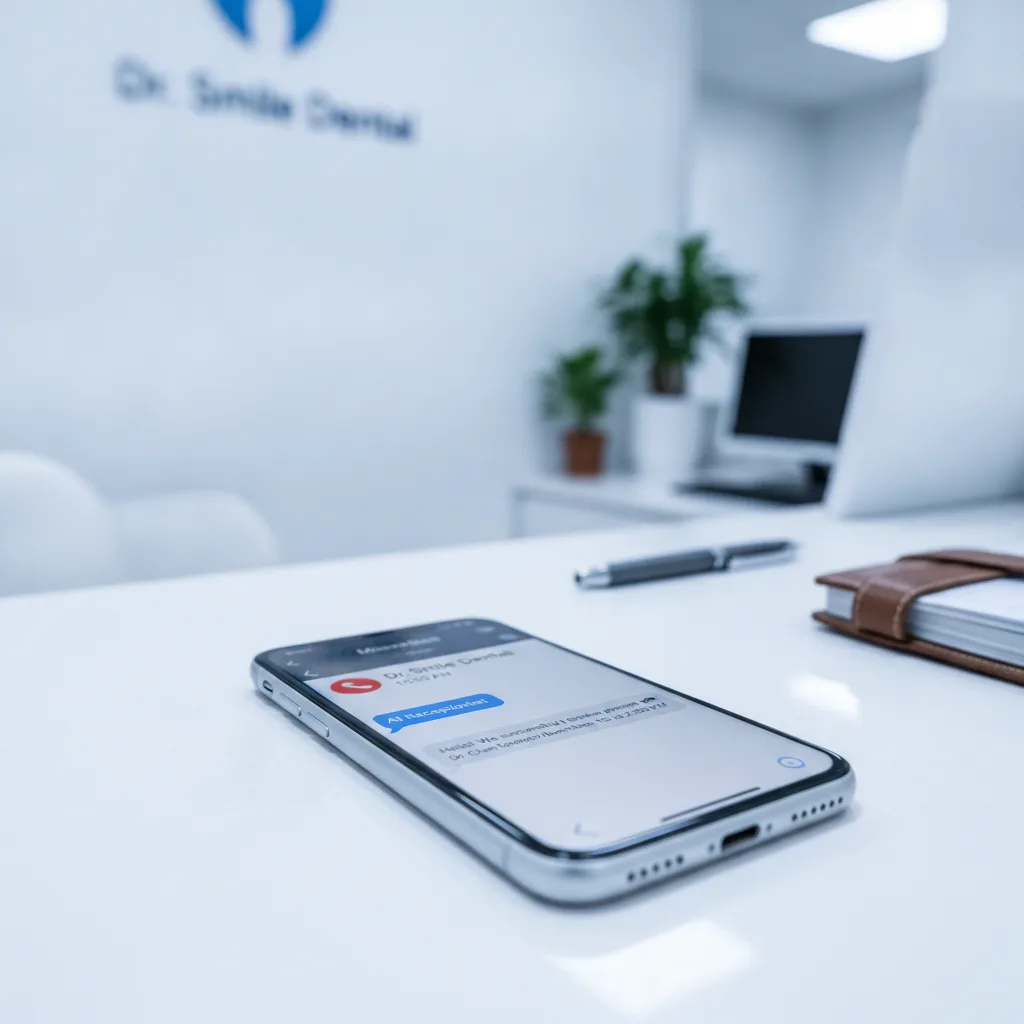
Your practice misses an average of 35% of incoming calls. At 40 calls per week, that's 14 missed contacts. At $850 in first-year revenue value per new patient, that's $11,900 per week — $618,800 per year — walking out the door before a single marketing dollar is spent. An AI receptionist at $600/month stops that bleed for $7,200/year. The ROI math on fixing internal systems almost always beats the ROI math on adding another ad channel. Run your missed-call audit first. Then add the acquisition channels.
Most dental practices have a marketing plan that looks like a checklist: run Google Ads, post on social media, ask for Google reviews, send recall reminders. The top 10% have a dental marketing strategy that looks like a system — every channel feeds the next, every patient touchpoint is scripted, and every dollar is tied to a booked appointment tracked through Google Analytics and CallRail. Start with internal marketing: pre-scheduling, SMS reactivation, and referral programs cost the least and compound the fastest. Then build the digital infrastructure: GBP Q&A, review velocity at 12+ per month, and procedure-specific landing pages that actually convert potential patients. Then add paid advertising on top of a foundation that works. That sequence is how the top 10% of practices added $99,965 in revenue in 2024 while their competitors stayed flat. The tactics are not secret. The execution discipline is. If your practice is ready to move from checklist to system, start with the missed-call audit and the SMS reactivation list. Both take under a week to implement and produce measurable results in 30 days.
Frequently Asked Questions
Ready to get started? Contact Geek Powered Studios today.