
Email marketing for plastic surgeons works best as a structured post-consult nurture sequence: six core emails through Day 30 (thank-you, FAQ, financing, before/after gallery, surgeon video, re-consult offer), a consideration-phase middle through Day 60, and a decision-nudge close through Day 84. The full system runs 6–12 weeks, targets a 41.5% open rate and 2–5% click-through rate, and must live on a HIPAA-compliant platform with a signed Business Associate Agreement — Paubox, ActiveCampaign Professional, or Aesthetix CRM. Practices that build this sequence move from the 40–50% industry median conversion rate toward the 75–85% top-10% benchmark, recovering $32,000–$48,000 in monthly revenue from leads already in their database.
-
40–50% vs. 75–85%Median vs. top-10% consult-to-surgery conversion rates
-
$134Average cost per consultation lead in cosmetic surgery (Promodo, 2026)
-
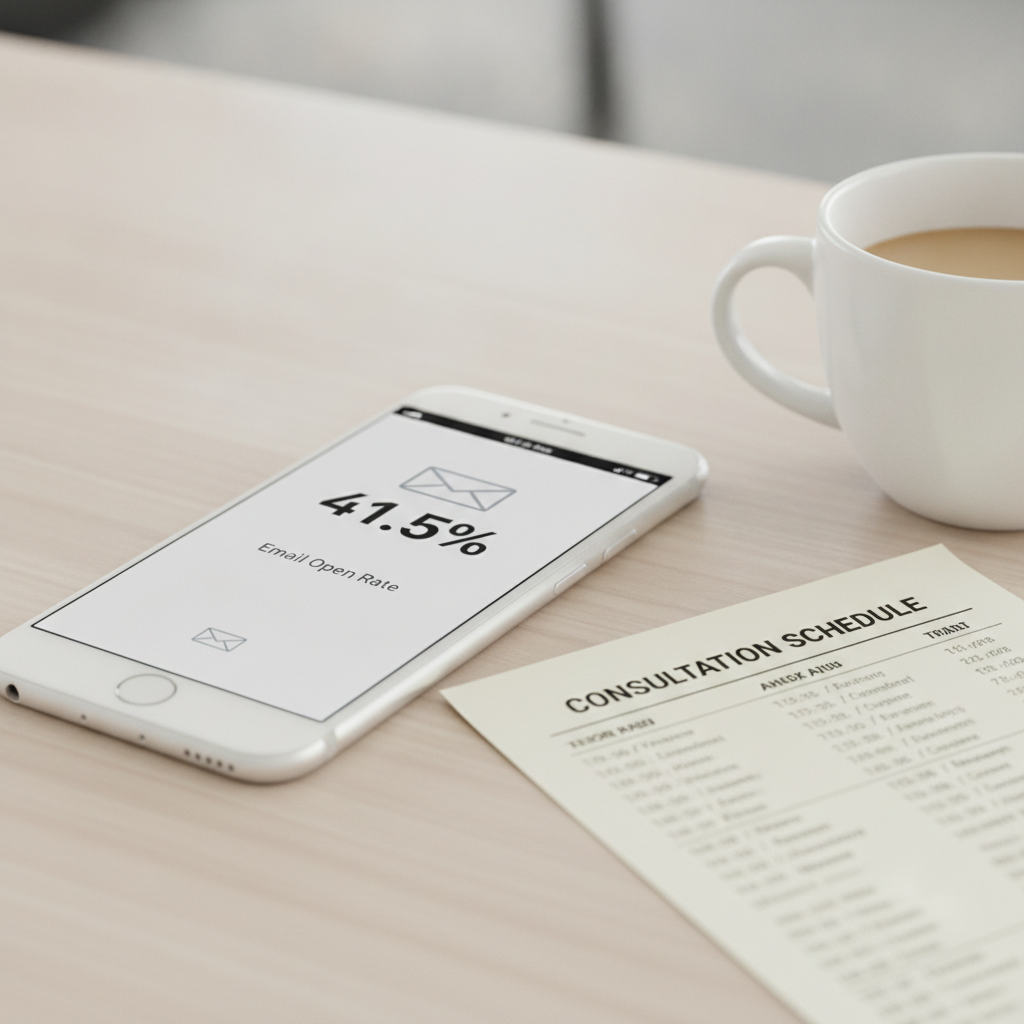
41.5%2026 plastic surgery email open rate benchmark — above all major industry averages
-
$42 per $1 spentEmail marketing ROI in the aesthetics channel (4,200% return)
-
6 emails, Days 0–30Core post-consult sequence length before consideration-phase emails begin
-
$50,000–$500,000HIPAA settlement range for email/pixel PHI violations, 2023–2025
-
20–30%Higher lifetime value for email-nurtured vs. non-nurtured patients
-
8–12%No-show rate with automated appointment reminders, down from 25–30% baseline
Your plastic surgery practice paid an average of $134 to generate each consultation lead. The median practice then converts 40–50% of those consultations to booked procedures — and sends the rest to silence. Top-performing practices convert 75–85%, and the difference is not surgical skill or advertising budget. It is a structured 6–12 week post-consult email nurture sequence built on a HIPAA-compliant platform, segmented by procedure, and triggered by real consultation behavior. This guide walks through every step: platform selection, baseline benchmarking, the six-email core sequence, the consideration-phase middle, the decision-nudge close, the post-surgery retention loop, and the four metrics that connect email activity to surgery revenue. Build time is 4–6 hours. The revenue recovery is $32,000–$48,000 per month for a practice running 20 breast augmentation consultations — from leads you already paid to generate. Email remains the highest-ROI channel in the specialty, and the practices that use email strategically are the ones consistently reaching top-10% conversion rates.
Before you start
- A HIPAA-compliant email platform with a signed BAA in place — Paubox, ActiveCampaign Professional/Enterprise, or Aesthetix CRM (not Mailchimp, not standard HubSpot, not Constant Contact)
- A tagged CRM or intake system that records procedure interest at the point of consultation inquiry — even a basic dropdown on the intake form qualifies
- At least 6 procedure-specific before/after photo sets cleared for marketing use with written patient consent on file
- Your consultation scheduling data for the past 90 days, to establish your current consult-to-surgery conversion baseline by procedure
- A practice email address sent from the surgeon's name (dr.smith@yourpractice.com rather than a generic info@ address)
- Basic familiarity with email automation triggers — specifically how to fire a sequence from a form submission or CRM stage change
Pick a HIPAA-Compliant Email Platform Before Writing a Single Word
The single most expensive mistake in email marketing for plastic surgeons is building a nurture sequence on the wrong platform. Mailchimp's terms of service prohibit transmitting protected health information (PHI). Standard HubSpot excludes healthcare use entirely. Constant Contact has no BAA option. A personalized subject line reading 'Your rhinoplasty consultation recap, Sarah' constitutes a HIPAA violation the moment it lands in an inbox on any of those platforms. HIPAA settlements for pixel and email PHI violations ran $50,000–$500,000 per case between 2023 and 2025. The platform decision is a legal decision, not a marketing one — and getting it wrong is an error that no amount of great copy or clever segmentation can fix.
As of August 2026, three platforms are defensible for plastic surgery email marketing campaigns. Paubox is the right choice when any email in your sequence might contain PHI — it encrypts at rest and in transit and signs BAAs at every plan tier starting at $99/month. ActiveCampaign Professional or Enterprise works for non-PHI educational drip sequences and signs a BAA at those paid tiers. Aesthetix CRM, purpose-built for aesthetic medical practices, starts at $299/month and handles both automation and the six-stage pipeline (new lead, contacted, consult scheduled, consult completed, quoted, booked surgery) that connects email activity to actual revenue. For practices already managing reputation with Birdeye, the Professional tier also signs a BAA and combines SMS alongside email in one platform. Getting started on the right platform takes less than an hour — the compliance cost of skipping this step is measured in hundreds of thousands of dollars.
One compliance rule that kills most DIY attempts: procedure interest in a subject line counts as PHI. 'Learn more about mommy makeover recovery' is safe as a generic educational send. 'Your mommy makeover consultation follow-up' names a specific procedure tied to a named recipient — that combination is PHI under HIPAA. Segment by procedure interest for content relevance, but keep subject lines worded as general health education rather than explicit procedure references tied to the recipient. Your platform's merge fields should pull in the surgeon's name and next-step language, not the clinical procedure label. Non-negotiable: get the BAA countersigned and saved before you import a single contact into any system.
Paubox Email Suite
From $99/month
HIPAA-compliant at every tier, encrypts in transit and at rest, signs BAAs without an enterprise negotiation — the cleanest option when any email could touch PHI.
ActiveCampaign (Professional or Enterprise)
From $187/month
Best-in-class automation logic and behavior triggers; signs a BAA at Professional tier and above, making it viable for non-PHI educational nurture sequences at scale.
Aesthetix CRM
From $299/month + $1,500 onboarding
Built specifically for plastic surgery and aesthetic practices — combines the HIPAA-compliant email platform, six-stage pipeline tracking, and SMS in one system.
Compliance check
Before importing a single contact, get the BAA countersigned and saved. If your platform cannot produce a signed BAA on request, stop and switch platforms. No nurture sequence is worth a five-figure settlement — and the gap from $50,000 to $500,000 often comes down to whether you had documented compliance controls in place.
Establish Your Baseline Conversion Rate by Procedure
The median plastic surgery practice converts 40–50% of consultations to booked procedures. The top 10% convert 75–85% — a 35-point gap driven entirely by post-consult follow-up systems. Before building any sequence, pull your last 90 days of consultation data and calculate your rate by procedure. Breast augmentation median sits at 51.5%; top-10% practices hit 70.9%. Liposuction median is 46.7%; top-10% reach 73.8%. Facelifts and rhinoplasty follow similar patterns. If your numbers are below median, you have a follow-up problem, not a lead quality problem. The research is clear: structured post-consult communication is the single variable that separates median from top-performing clinics.
Run the math on what the gap costs you in real dollar terms. A plastic surgery practice running 20 breast augmentation consultations per month at a 51.5% conversion rate books roughly 10 procedures. Shift that to 70.9% and you book 14 — four additional surgeries per month. At an average surgical fee of $8,000–$12,000, that gap is $32,000–$48,000 in monthly revenue sitting in your unconverted consult list. The cost per consultation lead in cosmetic surgery averages $134 (Promodo, 2026). Losing 8–10 of those leads per month to silence means your practice burns $1,072–$1,340 in acquisition cost monthly before accounting for the lost procedures themselves. That is not a small investment to walk away from.
Segment your consultation records by procedure interest before you build a single email. Prospective patients researching tummy tucks have different objections than those researching facelifts — financing timelines, recovery windows, and the before/after content that moves them forward are all procedure-specific. A flat 'thank you for your consultation' sequence sent to all leads treats a rhinoplasty prospect the same as a mommy makeover prospect. That is why generic sequences underperform. Tag every incoming consultation by procedure at the intake stage so your automation can branch correctly, and make sure your patient list reflects those tags from day one. Demographics like age and gender also shape which content resonates — women researching breast augmentation respond differently than patients exploring body contouring, so begin segmenting on those dimensions as your data matures.
Quick win
If your CRM does not currently capture procedure interest at intake, add a required dropdown to your consultation request form today. Even 30 days of clean data with proper procedure tags is enough to start segmenting your first sequence. Do not wait for a full quarter before building — start with your highest-volume procedure first.
Build the 6-Email Post-Consult Core Sequence (Days 0–30)
The proven post-consult email sequence for surgical procedures runs across six touchpoints: Day 0 (thank-you and next steps), Day 3 (procedure FAQ), Day 7 (financing options), Day 14 (before/after gallery for their specific procedure), Day 21 (surgeon video), Day 30 (re-consult offer or decision nudge). Each email serves a distinct function in the consideration arc. The Day 0 send must fire automatically within minutes of the consultation completing — 40–50% of plastic surgery practices lose consultation leads to silence simply because no structured follow-up exists at all. Plastic surgery leads go to the practice that responds first; automated first-touch replies are not optional. They are the margin between a booked case and a competitor's booked case. Use email templates as a starting point, but personalize the surgeon's name and the specific procedure focus in every send.
The Day 3 FAQ email is your heaviest-lifting trust asset. Cosmetic surgery patients spend months researching before booking, actively comparing surgeons, reading patient testimonials, and reviewing before/after galleries across multiple social media platforms. An email that answers the five most common questions for their specific procedure — recovery timeline, scarring, anesthesia, revision rates, post op care — stops that comparison shopping. Pull your actual patient success stories and patient testimonials from satisfied patients into this email, with their written consent on file. One real story from a past patient carries more persuasion weight than three paragraphs of general procedure description, and it builds trust in a way that no amount of compelling ad copy can replicate. Readers respond to voice and authenticity; generic educational content without a personal angle gets ignored.
Day 7 is the financing email, and it should lead with a number. 'Most patients finance their procedure for $X–$Y per month' is more actionable than 'financing is available.' CareCredit and Alphaeon Credit are the two most common options in plastic surgery practices; name them explicitly, link to the application, and include a clear call to action: 'Apply before your re-consult and we'll walk through your options together.' The Day 14 before/after gallery send is procedure-specific — not a general gallery link, but a curated set of 4–6 cases that match the patient's stated procedure interest area. The 2026 plastic surgery email open rate benchmarks at 41.5%, well above the 37.93% general e-commerce average, meaning your target audience is reading. Give them content worth reading. Mobile-friendly email design and mobile optimization are essential here — more than 60% of these emails are opened on a mobile device, and a layout that breaks on a smartphone kills engagement regardless of how strong the copy is.
Subject line rule
Personalized subject lines using the surgeon's name lift open rates by 26%. On a non-PHI platform, keep the merge field to the surgeon's name or a general topic label — not the clinical procedure name tied to the recipient. 'Dr. Smith wanted to share something' outperforms 'Your rhinoplasty information' from a compliance standpoint while still generating above-average open rates through name recognition.

Extend to 12 Weeks with a Consideration-Phase Middle Sequence (Days 31–60)
Surgical procedure nurture sequences should run 6–12 weeks total, with the densest touchpoints in the first 10 days after the consultation inquiry. After the 30-day core sequence, many practices go silent — and that silence hands the lead to whichever competitor maintained consistent contact. The consideration-phase middle sequence (Days 31–60) shifts tone from 'here is information' to 'here is what other patients experienced.' This is where patient stories, online reviews, and before/after content from social media channels like Instagram and Facebook do the work that no amount of procedure copy can replicate. These weeks are also where prospects are actively comparing your clinic to others — your email program is your most direct line of communication with them during that window.
Plan four marketing emails across Days 31–60: a patient testimonial feature at Day 35 (one long-form story from a past patient, written in their own voice, focused on the emotional outcome rather than clinical detail), a surgeon credentials and philosophy email at Day 42 (board certification, volume of procedures performed, specific training — prospective patients are still vetting at this stage and want credentials treated directly, not buried in an About page link), a seasonal or limited-availability send at Day 50 (a specific surgery date window or a financing promotion with a real end date — urgency tied to actual scheduling reality converts; manufactured urgency reads as pushy and damages trust), and a 60-day check-in email at Day 60 that opens with a direct question: 'Are you still considering a consultation with Dr. Smith? We hold a few new patient slots each month — here is how to claim one.' This welcome series approach to re-engagement keeps the practice top of mind without pressuring potential patients. The goal is to expand the relationship, not close a sale on their timeline.
The 80/20 rule for email marketing applies here: roughly 80% of your emails should deliver education, trust-building content, and answers to common questions and common concerns. No more than 20% should carry a direct promotional or scheduling call to action. Prospective cosmetic patients are making high-stakes, high-cost decisions — they do not respond to discount-ad energy in their inbox. Dynamic content that adapts to the patient's procedure interest and decision stage is the essential element that separates a successful marketing strategy from a generic newsletter. Email marketing campaigns built on education consistently outperform promotional emails in this specialty. The key is to engage prospects with relevant, valuable content that helps them decide with confidence — not pressure them toward a booking before they are ready.
Birdeye (Professional tier)
From $299/month
Combines review request automation, patient testimonial collection, and HIPAA-compliant email and SMS in one platform — useful for pulling Google and social media reviews into email content without manual copy-paste.
Add the Decision-Nudge and Re-Engagement Emails (Days 61–84)
Leads that reach Day 61 without booking fall into two groups: actively still deciding, or passively drifting toward a competitor. Your Day 61–84 emails serve different functions for each. For active deciders, the decision-nudge email at Day 63 should present one specific low-friction next step: a 15-minute phone call with the patient coordinator, not another full consultation. The re-consult offer is a bigger ask — save that for Day 75 or Day 84. Reducing the commitment size of the calls to action at this stage preserves leads that would otherwise ghost a 'book your surgery' prompt. The messaging must match where the lead actually is in their decision journey, not where you want them to be. Many prospects are not stalling — they are still doing research and comparing options. Calling that out directly, rather than ignoring it, builds credibility.
The Day 75 re-consult offer is the pivot point of the sequence. Frame it as an update appointment rather than a sales call: 'A lot can change in 60 weeks — financing options, procedure availability, recovery timing. We'd like to schedule a brief update call so Dr. Smith can answer any new questions before you make a final decision.' Practices that offer a no-pressure check-in call rather than a direct rebook push see meaningfully higher engagement at this stage. The language removes the implied judgment that the lead 'failed' to book and repositions the practice as the long-term resource it should be for potential patients doing multi-month research. That tone shift is not a small thing — it is often the difference between a reply and an unsubscribe.
At Day 84, send the re-engagement email with a genuine off-ramp: 'We don't want to fill your inbox if the timing isn't right. Reply to let us know where you are in your decision, or click here to pause emails for 60 days.' This email exists for list hygiene as much as conversion. Leads that click to pause are self-identified as still interested but not ready — re-enter them into the sequence after the pause window closes. Leads that unsubscribe clean your list. Both outcomes beat emailing a dead address for six more months and tanking your sender reputation, which directly affects whether future marketing emails from your practice land in the inbox or get flagged as spam. Watch your bounce rates and spam complaint rates closely during this phase — contacts that have been in your system for many months without engaging are the primary source of deliverability problems.
Re-engagement timing
If a lead clicks any link in the Day 61–84 range — even the 'pause emails' option — treat that as a re-engagement signal. Trigger a personal outreach task in your CRM for the patient coordinator to call within 24 hours. Automated nurture is a follow-up system; it is not a replacement for a human conversation at the decision stage.
Build the Post-Surgery Retention Sequence to Activate Repeat Revenue
The post-surgery email sequence is a direct revenue lever that most plastic surgery practices ignore. Approximately 40% of cosmetic surgery patients are repeat patients, and approximately 90% of aesthetic patients are satisfied with their procedure outcomes. Email-nurtured patients show 20–30% higher lifetime value than non-nurtured leads, with average patient LTV for comprehensive treatment plans running $12,000–$18,000 across repeat procedures and maintenance treatments. A post-surgery sequence that systematically moves satisfied patients toward their next procedure or toward active referrals generates $42 per $1 spent in the aesthetics channel — the highest ROI of any marketing channel available to plastic surgeons. This is not a soft marketing exercise. It is the most cost effective campaign your practice can run, and virtually every dollar invested returns measurable revenue.
Structure the post-surgery sequence around clinical milestones, not arbitrary calendar dates. Day 1 post-op: a care confirmation email with post op care instructions, emergency contact information, and what to expect in the first 48 hours. Day 7: a recovery check-in with a direct reply option so existing patients can ask questions without calling the office — this reduces inbound call volume and builds credibility simultaneously. Day 30: a results update email with a link to submit before/after photos for the practice gallery, with consent language built into the form. Day 90: invite satisfied patients to leave a positive review on Google, and briefly mention complementary new treatments or new procedures that pair well with their completed surgery — for example, Botox or filler maintenance after facelifts, or skin care after breast augmentation. Day 180: a re-booking prompt for the next logical procedure. These emails also serve as newsletters that keep your clientele engaged and your brand visible between visits.
The review request email at Day 90 deserves specific attention. Nine out of ten consumers check online reviews before choosing a medical practice. Glowing reviews from past patients are the most cost-effective marketing asset a plastic surgery practice can produce. Use Birdeye or a similar tool to route the review request directly to Google rather than a practice-owned platform — Google reviews carry the most weight for new patients doing local search and also feed into the AI overview results that increasingly surface for 'best plastic surgeon in [city]' queries. Encourage satisfied patients to share their experience in their own words; the authenticity of patient stories and patient testimonials beats any copy your team can write. Word of mouth referrals that begin with a glowing online review are among the highest-quality leads a clinic can attract — and they cost nothing beyond a well-timed email ask.
Birdeye (Review Automation)
Included in Professional tier, from $299/month
Automates Google review requests via email and SMS at the right post-procedure milestone, routing satisfied patients directly to Google rather than a generic feedback form.
Aesthetix CRM (Post-Surgery Pipeline)
From $299/month
Tracks each patient through the post-surgery pipeline with procedure-specific automation triggers tied to clinical milestones, not arbitrary marketing calendar dates.
Measure the Four Metrics That Connect Email Activity to Surgery Revenue
Email marketing for plastic surgeons produces four metrics that matter for business decisions: open rate (target 41.5% or above, matching the 2026 plastic surgery benchmark), click-through rate — CTR — (target 2–5% for nurture sequences against a 2.9% category average), consult-to-surgery conversion rate by procedure (benchmark against the Etna Interactive data: 51.5% median and 70.9% top-10% for breast augmentation; 46.7% median and 73.8% top-10% for liposuction), and no-show rate (target 8–12% with automated appointment reminder sends, down from the industry baseline of 25–30%). Track these four numbers monthly. Everything else is a vanity metric. Marketing experts who focus on open rates alone and ignore conversion rates miss the point — the goal is booked surgeries, not email opens. Use analytics to connect the two.
Set up a separate landing page for each primary call to action in the sequence — re-consult booking, financing application, review submission, photo consent form. Tracking which landing page generates conversions tells you which email in the sequence is doing the actual work. Many practices that run email campaigns without this attribution step conclude that 'email doesn't convert' when the actual problem is one broken call to action in a six-email sequence. UTM parameters on every link cost nothing to set up in Google Analytics 4 and make the diagnosis obvious within a single send cycle. Mobile optimization matters here too: a landing page that loads poorly on a mobile device kills conversion regardless of how good the email copy is. Test every landing page on multiple device types before you go live — this is a step that many doctors and practice managers skip and then wonder why click-through rates don't translate to appointments.
Run a 30-day audit every quarter: pull open rates, click-through rates, and conversion rates by sequence and by procedure segment. Sequences that fall below the 41.5% open rate benchmark get a subject line test — A/B two variants for two weeks, keep the winner. Sequences below 2% CTR get a body copy and calls to action audit. Sequences with conversion rates more than 15 points below the procedure median get a structural review: is the timing right, is the content procedure-specific, and is the ask in each email appropriately sized for the stage of the decision journey? Stay consistent with this quarterly cycle. Each refinement builds on the last. Practices that commit to 12 months of structured iteration consistently move from median toward top-10% conversion territory — turning email marketing for plastic surgeons into a steady stream of recovered revenue rather than a one-time project. The complexity of managing multiple procedure segments and compliance requirements is real, but the tools, strategies, and systems described in this guide make it manageable for any practice willing to invest the time to set it up correctly.
Google Analytics 4 (with UTM tracking)
Free
Maps email clicks to specific landing page conversions, connecting individual emails in the sequence to consult bookings and procedure inquiries.
ActiveCampaign Reports
Included in Professional tier
Provides per-automation open rate, click-through rate, and goal completion data segmented by sequence and contact tag — the minimum reporting setup to run quarterly sequence audits.
Benchmark reminder
The 2026 plastic surgery email open rate of 41.5% reflects a highly engaged audience — cosmetic patients actively want educational content from their surgeon. If your open rates are running below 35%, the problem is usually sender reputation (too many unsubscribes or spam flags) or a patient list with stale contacts from more than 18 months ago. Fix list hygiene before optimizing copy.
Do Not Build This Sequence on Mailchimp, Standard HubSpot, or Constant Contact
All three platforms refuse to sign Business Associate Agreements for healthcare use. A subject line that combines a patient's name with a procedure reference constitutes PHI under HIPAA — and every email you send on a non-BAA platform is a potential enforcement action. HIPAA settlements in the plastic surgery and aesthetic medicine space ran $50,000–$500,000 per incident between 2023 and 2025. The compliant options — Paubox, ActiveCampaign Professional/Enterprise with a signed BAA, or Aesthetix CRM — cost $99–$299/month. That is not a marketing expense. It is malpractice insurance for your email program.
Every unconverted consultation in your database represents $134 in sunk acquisition cost and a patient who is still researching, still deciding, and currently reading your competitor's Day 14 email. The conversion gap between a median plastic surgery practice and a top-10% practice is not surgical skill. It is a 6–12 week post-consult system that most practices have never built. The sequence architecture in this guide — six core emails through Day 30, a consideration-phase middle through Day 60, a decision-nudge close through Day 84, and a post-surgery retention loop — is the full patient lifecycle email strategy that top performers use to convert 75–85% of their consultations rather than the industry median of 40–50%. Build it once on a compliant platform, segment it by procedure, and measure the four metrics that actually connect to revenue. Four additional booked breast augmentation surgeries per month at a $10,000 average fee is $40,000 in monthly revenue recovered from leads your practice already paid to generate. That return is sitting in your email list right now — the only question is whether you have the marketing services and systems in place to capture it.
Frequently Asked Questions
Ready to get started? Contact Geek Powered Studios today.