
Foundation repair marketing works when every tactic is mapped to a specific homeowner fear it removes. Google Local Services Ads remove the credibility fear via the Google Guaranteed badge at $60-75 per lead. Local SEO and Google Maps Pack dominance generate exclusive leads at near-zero marginal cost once earned. A trust-first website with a "Schedule Your Free Inspection" CTA outperforms any fear-based copy. Honest reviews, point-of-sale financing through Wisetack or Hearth, and a real estate agent referral network complete the system. The single metric that determines whether it's working: cost per booked job, not impressions or click-through rates.
-
$60-$75Cost per lead on Google LSA in standard Texas markets (2026)
-
$3.57BGlobal foundation repair service market size as of 2026
-
2-3xHigher conversion rate from Google Maps Pack vs. organic listings
-
20-40%Close rate lift when offering point-of-sale financing on jobs over $5,000
-
$5,176National average foundation repair cost — the threshold where financing matters
-
8:1Revenue-per-ad-dollar benchmark to hold any marketing agency accountable to
-
45%Consumers using AI tools for local business recommendations as of 2026
-
$500Maximum cost per booked job on LSA before the channel needs a budget audit
Foundation repair marketing is a trust architecture problem, not a lead generation problem. The foundation repair service market hit $3.57 billion globally in 2026, growing at 6.8% CAGR, and the average job runs $5,176 nationally. At that ticket size, homeowners don't click and buy. They research for days, worry, stall, and then call the contractor who made them feel safest — not the contractor with the loudest ads. This guide builds the complete marketing system that converts anxious homeowners into booked inspections: Google Local Services Ads, local SEO and Maps Pack dominance, trust-first website design, a data-driven review strategy, point-of-sale financing, and a referral network with real estate agents and home inspectors. Budget 3-5 hours for the initial build; expect first measurable CPL improvements within 30-60 days.
Before you start
- An active Google Business Profile claimed and verified for your primary service area
- A mobile-responsive website with a phone number visible in the header
- At least 10 Google reviews (any star rating) to establish a review velocity baseline
- A Google Ads account with billing enabled for LSA and Search campaigns
- Access to your CRM or call log to track lead source and close rate by channel
- A defined primary service area — city plus 15-mile radius minimum — so geo-targeting is meaningful
Understand What Makes Foundation Repair Marketing Different From Every Other Trade
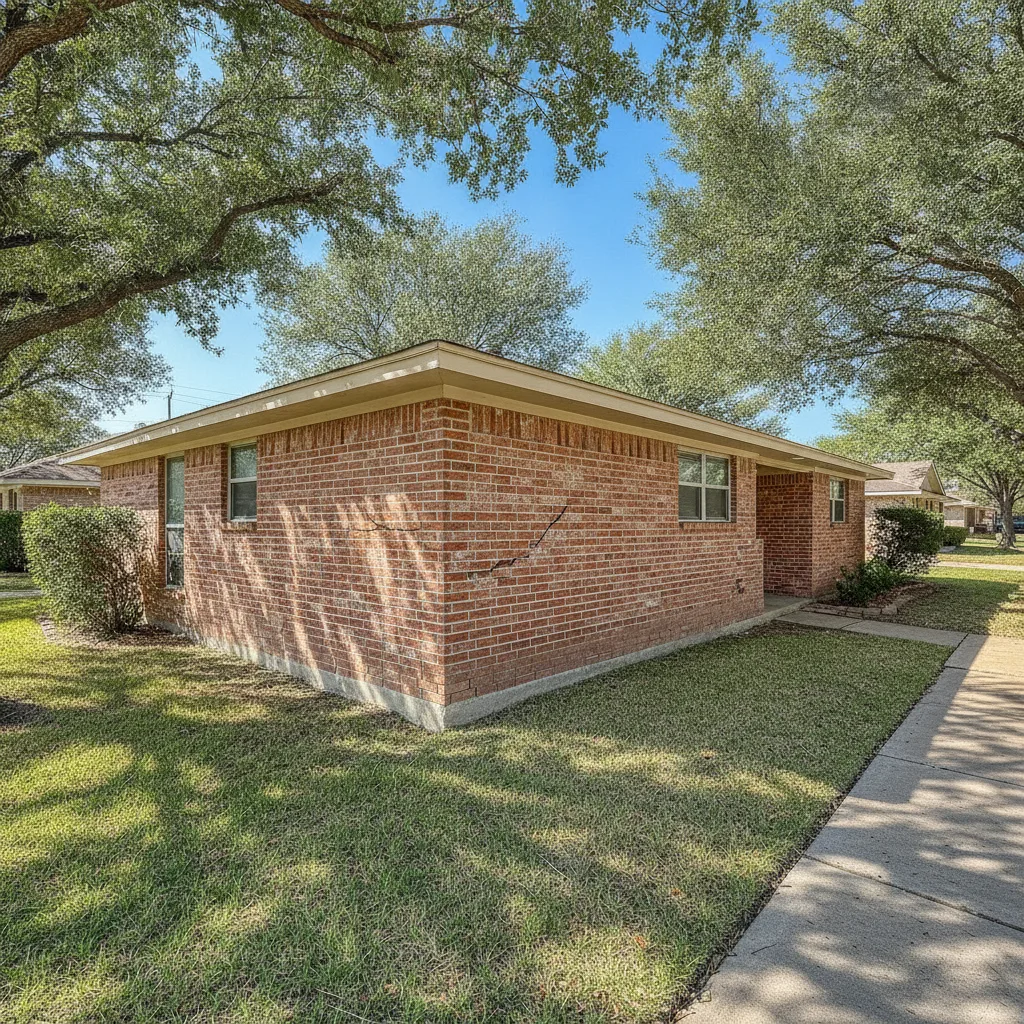
Foundation repair marketing fails most often because contractors treat it like HVAC or plumbing marketing — a visibility problem — when it is actually a trust architecture problem. Homeowners move through three distinct mental stages before booking: (1) something looks wrong, (2) is this actually serious, and (3) who can I trust to fix it. Most foundation repair marketing only shows up at stage 3, bidding on 'foundation repair near me' when the homeowner already has a credit card ready. Contractors who publish educational content about crack types, settlement causes, and when a crack is cosmetic versus structural intercept buyers at stages 1 and 2, when competition is still asleep.
In Texas, this trust deficit runs deeper than in most states. Over 60-80% of DFW homes sit on Blackland Prairie clay soil that shrinks in drought and swells after rain, producing annual foundation movement that homeowners mistake for catastrophic damage. Standard Texas homeowners insurance typically does not cover slow-onset foundation movement, which means the homeowner faces a $3,300-$9,000 bill entirely out of pocket with zero institutional backstop. As of 2026, 45% of consumers now use AI tools like ChatGPT and Perplexity for local business recommendations — up from 6% a year earlier. Contractors absent from AI-cited educational content about foundation crack repair and soil science are invisible to nearly half of researching homeowners before those homeowners ever reach a search engine.
The USDA NRCS data shows 75%+ of the DFW area is underlain by moderate-to-high shrink-swell soil. For Austin and San Antonio markets, roughly 1 in 3 Central Texas homes show noticeable foundation movement within the first two decades. Frame this as expected, not alarming. Contractors who open with soil science — 'your home was built to move with this soil' — convert better than those who open with damage photos, because that framing simultaneously educates the homeowner, sets realistic expectations, and positions the contractor as the honest expert rather than the alarmist.
Texas Soil Context
North Texas clay often exceeds 50% clay content in Dallas and Tarrant counties — some of the most expansive soil in the world. The ASCE estimates 1 in 4 U.S. homes will experience some disturbance from expansive soils. That figure, cited on your website and in your Google Business Profile posts, builds credibility with homeowners before they ever call.
Dominate Google Local Services Ads Before Allocating Any Search PPC Budget
Google Local Services Ads are the single highest-ROI paid channel in foundation repair marketing, and they should be funded before any Google Ads Search PPC budget is allocated. LSA delivers foundation repair leads at $60-$75 per lead in standard Texas markets as of 2026, compared to $130-$180 per lead on Search PPC campaigns in competitive markets. The Google Guaranteed badge that comes with LSA approval does something Search ads cannot: it answers the 'are they credible?' fear the moment a homeowner sees your listing, before they read a single word of copy.
The unit economics justify aggressive LSA investment. A $3,000 monthly LSA budget in a mid-size Texas market typically yields 40-50 leads. At a 20-25% close rate, that's 8-12 booked jobs. At a $7,000 average Texas job value, that's $56,000-$84,000 in revenue from one channel on one budget. A live case study from Oct 2025-Mar 2026 shows a foundation repair specialist achieved a blended CPL of $140 — down from a $250 baseline — on $25,400 in total ad spend, generating $300,000 per month in verified revenue. That is an 11.8x return on ad spend. The benchmark to hold: under $500 cost per booked job on LSA, and an 8:1 revenue-per-ad-dollar ratio within the first six months.
To activate LSA, you need a verified Google Business Profile, a background check completed through Google's partner Evident, and proof of general liability and workers' comp insurance. Approval takes 1-3 weeks. Once live, dispute every invalid lead inside the LSA dashboard — wrong-number calls, out-of-area requests, and non-foundation services all qualify for credits. Foundation repair contractors who actively dispute invalid leads cut their effective CPL by 10-20% without spending another dollar. Do not start LSA below $1,500 per month; below that threshold Google's algorithm lacks enough conversion data to optimize bid delivery.
Google Local Services Ads
Pay-per-lead; $60-$75/lead in standard TX markets
Carries the Google Guaranteed badge, which directly removes the credibility fear at the moment of first contact
CallRail
$45/mo (Essentials plan)
Tracks which LSA leads actually result in booked jobs, not just calls, so you can report true cost per booked inspection rather than cost per form fill
LSA Budget Floor
The minimum viable LSA budget for a single Texas metro is $2,000-$3,000 per month. Below $1,500, Google's delivery algorithm runs on too little data and you'll spend weeks on unqualified impressions. Scale to $4,000-$5,000 once your cost per booked job is confirmed under $500.
Build Local SEO and Google Maps Pack Dominance Across Your Service Area
The Google Maps Pack converts foundation repair searches at 2-3x the rate of regular organic listings — and once you've earned a top-3 Maps position, it costs nothing per click. The keyword 'foundation repair near me' runs $15-$35 CPC on Search; that same click is free from the Map Pack. For a contractor generating 30 leads per month from Maps, that's the equivalent of $450-$1,050 in free organic traffic every month. Local SEO for the Maps Pack is the only channel in foundation repair marketing where the marginal cost of a lead genuinely approaches zero at scale. Higher rankings here are the foundational marketing hub every other tactic leans on.
Three factors drive Map Pack rankings: relevance (does your Google Business Profile and website clearly signal foundation repair services, crawl space repair, basement waterproofing, and foundation stabilization?), distance (how close is your GBP address to the searcher?), and prominence (review count, review velocity, GBP photo freshness, citation consistency across directories). Search engines weight these three factors explicitly. For foundation repair contractors in competitive Texas metros like Dallas, Houston, and San Antonio, reaching Map Pack top-3 requires a minimum of 40-60 reviews, consistent NAP citations on 50+ directories, and GBP photos updated at least twice a month with real job-site images. BrightLocal's Track plan ($39/mo) monitors your local visibility across multiple service-area cities and flags citation inaccuracies before they cost you rankings.
On-page local SEO for foundation repair requires dedicated service-area landing pages — one per city or suburb you serve, not a single generic page. Each page needs the city name in the H1, a unique paragraph explaining local soil conditions (Blackland Prairie clay in DFW, Vertisol clay in Austin and Waco), the specific foundation repair services offered in that area (pier installation, slab leveling, foundation crack repair, crawl space encapsulation), and a local phone number tied to CallRail for tracking. Keyword research via Semrush identifies the exact city-modifier phrases homeowners search in each market. Pages built this way rank in search results for city-specific queries and generate exclusive leads that shared lead platforms like HomeAdvisor cannot sell to multiple contractors simultaneously. Link building to these pages — from local business directories, supplier sites, and home inspector association pages — accelerates ranking movement by 30-60 days versus on-page work alone.
BrightLocal
$39/mo (Track plan)
Monitors Map Pack rankings across multiple service-area cities and tracks citation accuracy across 80+ directories
Semrush
$139/mo (Pro plan)
Handles keyword research, on-page SEO audits, and backlink tracking — the three search engine optimization levers that move organic rankings in competitive markets
Design a High-Performing Website That Converts Anxious Homeowners — Not Just Homeowners Who Search
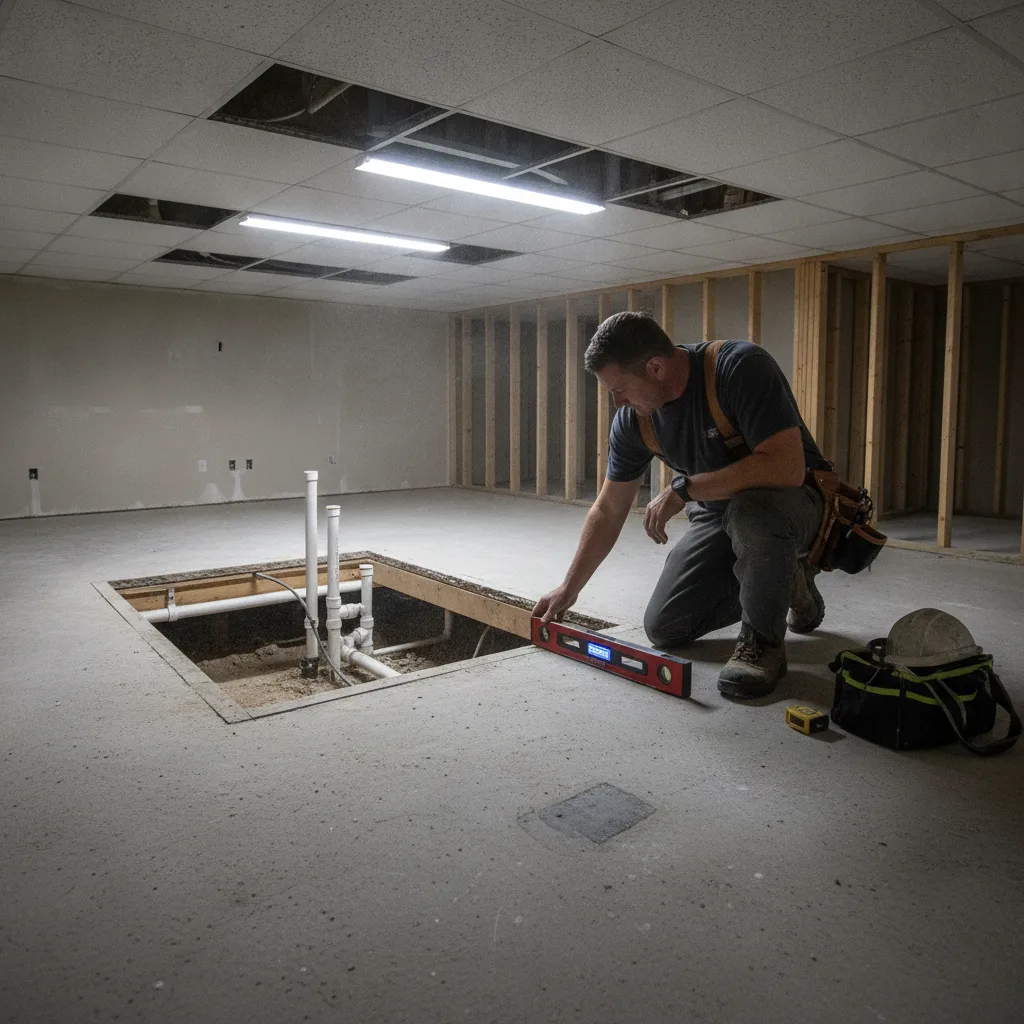
A high-performing website for a foundation repair company has one job: reduce uncertainty fast enough to get a scared homeowner to click 'Schedule Your Free Inspection' before they close the tab. Fear-mongering copy — dramatic crack photos, warnings about imminent collapse, urgency language designed to pressure a decision — actively backfires. Homeowners already worried about being oversold will distrust a site that looks like it's trying to scare them into a signature. The homepage should read like a calm, knowledgeable local contractor speaking to a worried neighbor. That tone alone separates the website's visibility and credibility from most competitors in any Texas market.
The four trust signals that convert foundation repair leads are: (1) a transferable lifetime warranty prominently displayed above the fold, (2) named certifications such as CHANCE Certified Installer or Ram Jack Authorized Dealer, (3) a 'What we won't sell you' section that explicitly describes cosmetic cracks and minor settlement that don't require structural repair, and (4) a video or photo of the actual owner or lead inspector — not a stock photo. Homeowners are buying a person's judgment on a $5,000-$40,000 decision. Anonymity kills conversion. This approach to web development puts trust signals ahead of service descriptions, which is what actually moves homeowners from browsing to booking.
The primary CTA must be 'Schedule Your Free Inspection,' not 'Get a Quote' or 'Contact Us.' 'Free Inspection' reduces purchase friction because it doesn't ask the homeowner to commit to a repair before they know what they're dealing with. Landing pages for Google Ads campaigns should match the ad's keyword intent exactly: a landing page tied to a 'foundation crack repair' ad should show foundation crack repair content, not a generic homepage. Each dedicated landing page needs a click-to-call phone number, a short form (name, phone, address, and one question about the issue), and a load time under 2.5 seconds on mobile. About 88% of local searches lead to a call or visit within 24 hours — if your page takes more than 3 seconds to load, you lose that call before the page renders. Use Google PageSpeed Insights (free) to fix the top 3 load issues before running any paid traffic.
Unbounce
$99/mo (Build plan)
Builds and A/B tests dedicated landing pages for Google Ads campaigns without requiring web development changes to the main site
Podium
$399/mo (Core plan)
Adds live webchat and SMS-based lead capture to the website so homeowners who won't call can still convert via text
Mobile Load Time
88% of local searches result in a call or visit within 24 hours. A site that takes more than 3 seconds to load on mobile loses those calls before the page renders. Run Google PageSpeed Insights (free) and fix the top 3 issues before launching any paid traffic to the page.
Build a Review Strategy and Reputation Management System Around Honest Assessments
One review that says 'the inspector told me my crack was cosmetic and I didn't need any repairs' is worth more for conversion than twenty generic five-star ratings. Foundation repair homeowners are specifically afraid of being scared into unnecessary structural repair — a contractor who publicly demonstrates honest assessments in review responses disarms that fear at scale. Reputation management in this industry is not about accumulating stars. It is about publishing documented proof that you don't oversell. That single positioning shift is what makes foundation repair marketing different from every other home service category.
The review velocity needed to rank in the Maps Pack in a competitive Texas metro is 2-4 new reviews per month, sustained indefinitely. The fastest system for generating more qualified leads through reviews is a two-step SMS sequence sent through Podium: a text 24 hours after job completion thanking the homeowner and asking for feedback, followed by a direct Google review link if they respond positively. Contractors using this system average a 35-45% review conversion rate on completed jobs. Contractors who ask verbally at the job site average under 10%. GatherUp ($99/mo) is a strong alternative that tracks review velocity over time and sends requests by both SMS and email.
Respond to every review, including the negative ones. A contractor who acknowledges a complaint publicly, explains what they did to resolve it, and invites the homeowner to call directly demonstrates accountability that a perfect 5.0 average cannot. For foundation repair businesses competing in markets where homeowners are already worried about contractor integrity, a thoughtful response to a 2-star review often converts more browsers than the ten 5-star reviews beneath it. Build this follow-up process into your operations, not as an afterthought after a bad review lands.
Podium Reviews
Included in $399/mo Core plan
Automates the post-job SMS review request sequence and consolidates all review responses into one dashboard
GatherUp
$99/mo (single location)
Sends review requests by both SMS and email and tracks review velocity over time — useful for contractors who want detailed reporting by lead source
Add Financing Options to Close More Leads Your Marketing Already Generated
Offering point-of-sale financing through Wisetack, Hearth, or GreenSky lifts close rates 20-40% on jobs over $5,000 — and foundation repair jobs average $5,176 nationally, which means the majority of your pipeline sits exactly at that financing threshold. Financed jobs average 4.5x the ticket size of cash-only jobs, because homeowners who can spread a $12,000 pier installation over 60 months at a manageable rate will approve a full structural repair rather than asking for the cheapest patchwork fix. Financing is not a sales tactic; it is a trust signal that tells homeowners you expect them to make a considered decision, not a panic-driven one.
The fastest financing platform to deploy for a foundation repair company is Wisetack: 3.9% flat dealer fee, no monthly subscription, and a homeowner application that takes under 2 minutes on a phone at the job site. GreenSky offers higher approval rates for credit-challenged applicants but charges dealer fees between 3-15% depending on the loan product. Hearth operates on a subscription model ($99-$199/month) but gives contractors a branded financing page they can link to directly from the website and inspection estimate emails — adding a pre-inspection trust signal before the inspector even arrives.
Financing must be mentioned in the marketing, not just at the job site. Adding 'financing available from $149/month' to LSA ad copy, landing pages, and inspection confirmation emails reduces sticker shock before the homeowner sees the repair quote. A homeowner who already knows financing is available walks into the inspection without the immediate mental barrier of 'I can't afford this.' That one messaging change — financing visible in the funnel earlier, not only at the close — can shift close rates 10-15 points on its own, turning more leads into more clients at the same ad spend.
Wisetack
3.9% flat dealer fee per financed job; no subscription
Fastest to deploy, simplest fee structure, and homeowner application runs entirely on mobile at the job site
Hearth
$99-$199/mo subscription
Provides a branded financing landing page that can be linked from ads and estimate emails, making financing a pre-inspection trust signal
Build a Referral Network With Real Estate Agents and Home Inspectors to Generate Exclusive Leads
Real estate agents and home inspectors are the two highest-value referral sources for foundation repair companies because they encounter homeowners at the exact moment foundation issues become urgent transaction blockers. A buyer whose home inspection flagged foundation settlement has 10-14 days to negotiate a repair credit or walk from the contract — that is the highest-urgency, highest-intent lead in the entire foundation repair industry, and it arrives before the homeowner has searched Google even once. These are exclusive leads by nature; no shared lead platform can replicate them, and no amount of ad spend can manufacture that level of urgency.
The referral network playbook starts with the top 50 real estate agents by transaction volume in your primary service area. Realtor.com's agent search and Zillow's agent profiles both show transaction count. Target agents who close 30+ transactions per year; each represents a potential pipeline of 5-15 foundation-related referrals annually. The specific offer that converts agents into consistent referral sources is a fast-turn inspection commitment: a written guarantee to complete the inspection report within 24-48 hours of a transaction request, a transferable warranty that the new buyer can present to their lender, and a real estate-specific one-page summary of findings — not a consumer repair proposal — that agents can attach to their transaction files. This approach also satisfies any foundation repair SEO company's recommendation to build local authority links, since many agent profiles will link to your inspection report resources over time.
For home inspector relationships, co-market educational content: a one-page 'Foundation Crack Severity Guide' that home inspectors can give to clients, with your company branding and phone number. Home inspectors cannot recommend specific contractors by name in most states, but they can hand a client a third-party educational resource. That resource, delivered at the moment of peak anxiety — the inspection report — positions your foundation repair company as the credible expert before any competitor shows up in a Google search. Build your agent relationships in January-February and August, when transaction pressure is lower and agents have time to meet. Lunch-and-learn presentations at real estate offices book 3-5x more referral partnerships than cold email outreach.
Referral Network Seasonality
Real estate transaction volume in Texas peaks March-June and again September-November. Build your agent relationships during the off season — January-February and August — when agents have time to meet. A 30-minute lunch-and-learn on 'How to Read Foundation Issues in a Home Inspection Report' converts far better than a cold email.
The Metric Most Foundation Repair Marketing Agencies Won't Show You
Cost per click and cost per lead are not enough in foundation repair. The only number that determines whether your marketing system is working is cost per booked job. LSA should produce booked jobs at under $500 each. Search PPC should stay under $800 per booked job. If your current marketing agency reports impressions, click-through rates, and form fills but cannot tell you your cost per booked inspection by channel, they are optimizing for their dashboard, not your revenue goals. Demand CPL, close rate by lead source, and revenue per ad dollar before signing any long-term contracts. The benchmark to hold any marketing partner to: an 8:1 revenue-per-ad-dollar ratio within the first six months of a well-structured LSA and local SEO campaign. A data-driven agency that understands foundation repair will show you this number by month two.
Foundation repair marketing is not complicated, but it is specific. The contractors winning in Dallas, Houston, Austin, and San Antonio in 2026 are not outspending their competitors — they are out-trusting them. They show up at stage 1 of the buyer's research with soil science and crack severity guides. They carry the Google Guaranteed badge through LSA. They publish reviews that prove honest assessments, not just happy customers. They offer financing before the inspector walks through the door. They have a real estate agent referral network generating exclusive, high-urgency leads that no shared lead platform can replicate. Build those five trust layers in order, measure cost per booked job at every channel, and foundation repair marketing stops being a guessing game and starts being a growth system with predictable output. If you want help building this system for your market, Geek Powered Studios specializes in home service digital marketing across Texas — reach out for a channel audit before you allocate next quarter's budget.
Frequently Asked Questions
Ready to get started? Contact Geek Powered Studios today.