
Running plastic surgery PPC ads on Google requires LegitScript Healthcare Certification ($975 application fee plus $2,150 per year per domain) before a single ad can serve. Once certified, build separate campaigns for each procedure — rhinoplasty, breast augmentation, liposuction, facelift — using intent-modified keywords that convert at 12.8% versus 1.2% for broad terms. Keep before-and-after images off ad creatives and on landing pages only. Use server-side conversion tracking to avoid HIPAA violations from client-side pixels. Start with Manual CPC bidding and switch to Target CPA only after hitting 30 verified consultation conversions per campaign per month. In major metros like Miami or Dallas, budget $8,000 or more per month to compete at $55–$100+ CPCs for Tier 1 procedure keywords.
-
$975 + $2,150/yrLegitScript fee per domain before Google approves ads
-
4–8 weeksTotal timeline from LegitScript submission to first live ad
-
12.8% vs. 1.2%Conversion rate: intent keyword vs. broad procedure term
-
$55–$100+ CPCTier 1 procedure keywords in major metros like Miami or Dallas
-
30 conversions/moMinimum per campaign before switching from Manual CPC to Target CPA
-
$126 avg. patient acquisition costGoogle Ads benchmark; 22% of leads become booked procedures
Plastic surgery PPC on Google Ads is not complex because the platform is hard to use. It is complex because three compliance frameworks — Google policy, HIPAA, and FTC endorsement rules — run simultaneously, and a violation in any one of them can suspend the account, draw a federal inquiry, or trigger a state medical board complaint. The practices and agencies that run profitable plastic surgery PPC campaigns as of August 2026 treat compliance as the first deliverable, not a footnote. This guide walks through every step, from pre-flight LegitScript certification to HIPAA-conscious conversion tracking, with the specific costs, timelines, and conversion benchmarks needed to make the economics work. At $126 average patient acquisition cost on Google Ads, a 22% lead-to-procedure conversion rate, and average cosmetic surgery case values of $6,000–$15,000, the return on ad spend is strong — but only if the account stays live.
Before you start
- Active Google Ads account with billing verified and a dedicated plastic surgery practice website on its own domain — not shared with a med spa, telehealth service, or compounding pharmacy referral page
- Physician credentials, medical license copies, and board certification documentation for every surgeon who will be named or implied in ads
- A separate procedure-specific landing page for each ad group: homepage traffic converts at 3.8% blended; dedicated pages hit 12–20%
- LegitScript application materials ready: all website domains the practice operates, board certification documentation, and a written advertising compliance policy
- Minimum committed monthly ad budget of $2,500 for smaller markets or $8,000 or more for major metros like Miami or Dallas — below these floors, click volume is too thin to generate the optimization data the campaigns need
- CallRail or another HIPAA-compliant call-tracking tool configured before launch — standard Google call forwarding numbers do not come with a Business Associate Agreement and expose PHI on intake pages
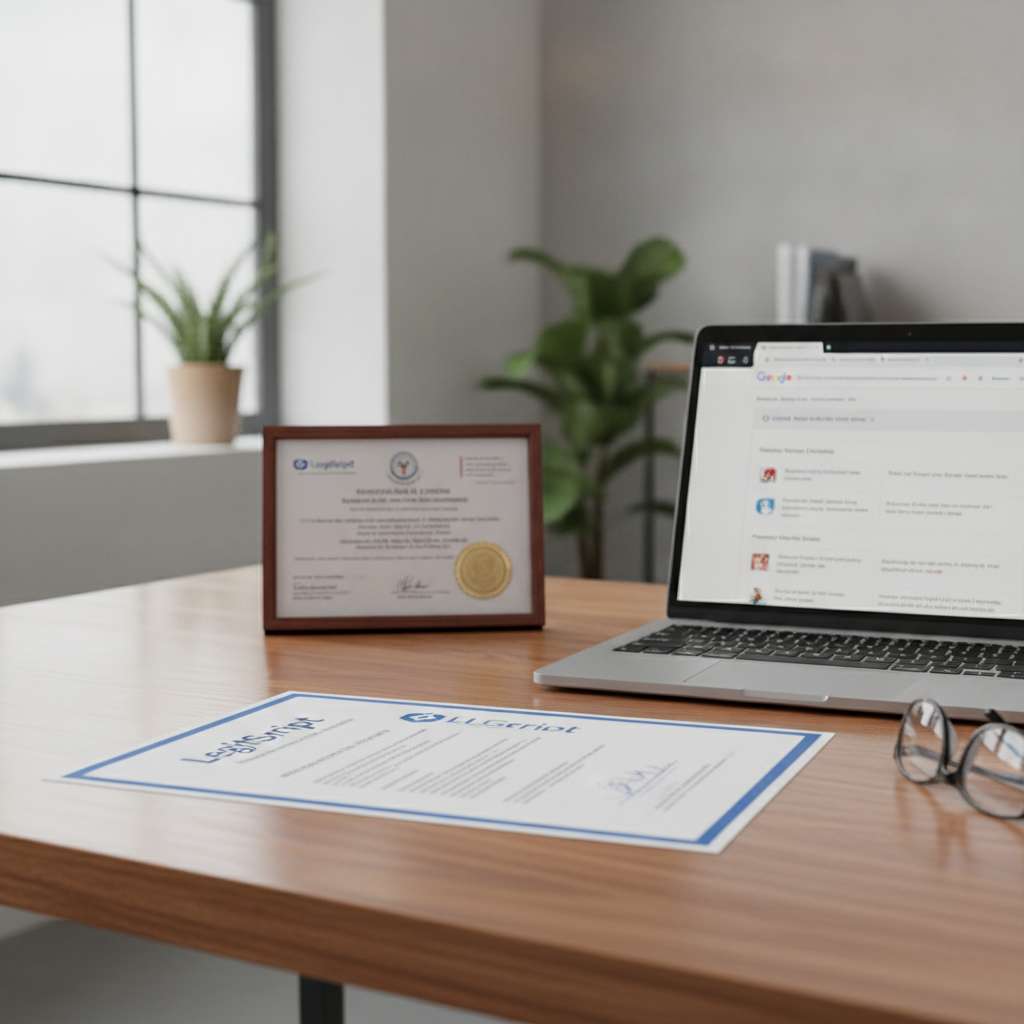
Obtain LegitScript Healthcare Certification Before Touching Google Ads
LegitScript certification is the non-negotiable gate for plastic surgery PPC ads on Google: running campaigns for liposuction, rhinoplasty, or breast augmentation without it results in immediate ad disapproval or full account suspension with no advance warning. Google does not send a compliance grace-period notice. The account simply stops serving, and reinstatement requires a manual appeal that can take weeks. There is no workaround and no phone escalation path for standard accounts.
The cost structure is fixed as of 2026: a $975 nonrefundable application fee per website domain, plus a $2,150 annual certification fee per domain at the standard tier. Practices with prior compliance issues land in the enhanced monitoring tier at roughly $3,995 per year. If the practice operates more than one website — a common setup when separate domains exist for rhinoplasty, body contouring, and the main brand — each domain requires its own application and fee. Submit all domains upfront; adding one later restarts the process and adds months to the timeline.
The review runs several weeks to a few months depending on how complete the initial submission is. LegitScript audits nine compliance standards, including physician licensure, transparency of pricing, and advertising practices. Submit board certification, state medical license copies, and a written advertising compliance policy in the first package to avoid back-and-forth that adds four to six weeks. The LegitScript portal verifies each credential individually — incomplete submissions go into a revision queue, not a fast-track lane. Start this process before the campaign build. The campaign architecture can be built in parallel during the waiting period, but the account should not touch the Google Ads policy center certification request until LegitScript approval is in hand.
LegitScript Healthcare Certification Portal
$975 application + $2,150/year (standard tier)
The only certification Google accepts for restricted healthcare ad categories including cosmetic surgery and invasive plastic surgery services
Common mistake
Agencies often build the full campaign structure while waiting for LegitScript approval — that is fine. What is not fine: requesting Google's healthcare certification through the Ads policy center before LegitScript approval arrives. The policy center denial goes on record and can trigger a proactive account review that flags the account for additional scrutiny even after certification is obtained.
Map the Full Google Ads Policy Stack for Plastic Surgery PPC Ads
Google's September 22, 2025 policy change removed mature cosmetic procedures — breast augmentation, buttock implants, vaginal rejuvenation — from its Sexual Content policy restrictions, ending years of geographic targeting limits tied to SafeSearch settings and user age. That update is real and meaningful for plastic surgery PPC ads. It is also widely misread: four other policy layers covering plastic surgeon advertising remained fully enforced the day the update went live and are still active as of August 2026.
The four policies that did not change: (1) the Healthcare and Medicines certification requirement, which still demands LegitScript approval for all invasive cosmetic procedures; (2) the nudity and sexually suggestive content policy, which still blocks imagery of unclothed or partially unclothed bodies in ad creatives; (3) the unsubstantiated outcome claims prohibition, which flags language like 'guaranteed results,' 'permanent fat removal,' or any superlative tied to a clinical outcome; and (4) the Health in Personalized Advertising policy, which restricts audience targeting for invasive cosmetic surgery and injection categories to predefined Google audiences only — no Customer Match, no site-based retargeting segments built from procedure-page visitors. Building a remarketing audience from visitors to a rhinoplasty or breast augmentation page creates a segment tied to a health condition of interest, which Google treats as a restricted health audience. Serving ads to that segment triggers disapproval.
The practical impact of the audience restriction deserves direct attention in any plastic surgery PPC campaign plan. The compliant remarketing path uses Google's own predefined in-market and affinity audiences — not advertiser-curated lists built from web pages the practice controls. This is a significant constraint on retargeting strategy and must be planned into the targeting architecture from day one, not discovered at the campaign review stage. The September 2025 update expanded where and to whom compliant ads can appear. It did not reduce the compliance requirements for the ads themselves.
Key distinction
The September 2025 update opened geographic and demographic targeting for previously restricted procedures. Treating it as a general signal that 'plastic surgery ads are now easy' is the fastest way to earn a suspension. The compliance framework for the ad content itself — certification, creative rules, audience restrictions — did not change.
Build Procedure-Level Campaign Architecture with the Best Keywords for Intent
The single highest-leverage structural decision in plastic surgery PPC is separating each procedure into its own campaign — rhinoplasty, breast augmentation, facelift, liposuction, and body contouring each get a dedicated campaign, not ad groups inside a shared 'plastic surgery' umbrella campaign. This separation controls ad spend at the procedure level, lets quality scores develop against tightly themed keyword sets, and makes disapproval risk containable: a flagged ad in one campaign does not affect the others. It also makes ppc management cleaner when one procedure has a higher seasonal demand or a higher CPC environment than others.
Keyword strategy inside each campaign splits into three tiers. Tier 1 covers high-intent, conversion-ready terms: 'rhinoplasty consultation [city],' 'breast augmentation surgeon near me,' and 'facelift cost [city].' These are the best keywords for driving consultation requests — they convert at roughly 12.8% versus 1.2% for broad procedure terms, a 10x gap documented across 2,400 clicks in a 2026 study of 12 practices. Tier 2 covers procedure-plus-qualifier terms like 'best rhinoplasty surgeon [city]' or 'board certified facelift surgeon [metro]' that signal active evaluation. Tier 3 is negative keywords applied at the campaign level: 'recovery,' 'before and after,' 'DIY,' 'rhinoplasty gone wrong,' and insurance-related modifiers that attract zero-intent clicks at $8–$25 CPCs. In Miami and other major metros, CPCs on Tier 1 terms reach $55–$100 or more, making negative keyword discipline worth 15–30% of recoverable budget.
Start with exact match and phrase match only. Broad match in a $55 CPC market burns through ad spend on tangential queries before enough search term data exists to cut intelligently. Pull the search terms report weekly for the first 60 days and add negatives from every irrelevant query that shows up. Relevant keywords tighten over time — this is operational PPC management work, not a one-time setup task. Using relevant keywords that map tightly to each procedure's intent signals is what drives quality scores up and effective CPC down over time. Google Keyword Planner gives baseline search volume and CPC estimates by procedure and metro; SEMrush or Ahrefs fills in competitor keyword gaps and surfaces additional terms for negative keyword lists.
Google Keyword Planner
Free (requires Google Ads account)
Baseline search volume and CPC estimates by procedure and metro before budget commitments are made
SEMrush or Ahrefs
$129–$199/month
Competitor keyword gap analysis and search term discovery for procedure-level negative keyword lists to fine tune targeting

Write Compliant Ad Copy and Build Procedure-Specific Landing Pages
Before-and-after imagery is banned from Google Ads creative units for cosmetic surgery — no exceptions. Place those photos on the procedure-specific landing page, not in any ad asset including responsive search ad image extensions or Performance Max creative bundles. An image of a surgical result inside the ad unit triggers disapproval under the Healthcare and Medicines policy regardless of whether the creative is subtle or clearly labeled. The landing page is the correct and compliant home for before-and-after content, and Google's approval of the ad itself does not cover what appears on the landing page under a separate FTC compliance review.
Ad copy must clear the unsubstantiated claims bar. Prohibited language includes: 'guaranteed results,' 'permanent,' 'painless,' 'risk-free,' '#1 surgeon in [city]' without a cited basis, and any phrasing that implies a specific clinical outcome for the reader. Compliant alternatives focus on credentials and process: 'Board-Certified Plastic Surgeon,' 'Schedule a Free Consultation,' 'View Before and After Gallery,' and procedure-specific calls to action like 'Learn About Rhinoplasty Recovery.' If a surgeon holds a specific distinction — 'Top Doctor as rated by [publication] 2025' — cite the source in the ad. FTC endorsement rules apply here independently of Google policy: results shown on landing pages must reflect typical patient outcomes, not best-case examples, and exceptional results require a 'results vary' disclosure.
Each procedure campaign needs its own landing page — not a tab on the homepage and not a generic 'procedures' overview page. Procedure-specific landing pages convert at 12–20%; homepage traffic converts at 3.8% blended. The page must mirror the exact keyword and headline from the ad — message match lifts quality scores and reduces effective CPC. Include the surgeon's credentials above the fold, a direct path to a consultation request form, and a load time under two seconds on mobile. Keep the form short: name, phone, procedure of interest, and preferred contact method. Every additional field cuts conversion rate measurably. Unbounce or Instapage allows iteration on these web pages without waiting on a CMS developer for every test.
Unbounce or Instapage
$99–$199/month
Dedicated landing page builders with A/B testing; faster to iterate than requesting CMS changes from a developer for each test
FTC reminder
Google approving an ad does not equal FTC compliance. Platform ad approval and FTC endorsement rules are two separate frameworks running in parallel. Before-and-after images that show atypical results without a 'results vary' disclosure on the landing page expose the practice to FTC enforcement independent of whether the ad itself was approved.
Set Up HIPAA-Conscious Conversion Tracking Before the First Click
Standard Google Ads conversion tracking pixels placed on procedure booking pages or intake forms can create HIPAA violations by associating a user's procedure interest with their device identifiers. OCR's December 2022 guidance warned exactly about this pattern, and over 70% of healthcare provider tracking implementations reviewed at the time were found to be inadvertently collecting protected health information (PHI) through standard tracking setups. For a plastic surgery practice, a pixel that fires when a user submits a rhinoplasty consultation request is transmitting what the government considers PHI to a third-party ad platform. The risk is not theoretical — enforcement actions have followed.
The compliant setup uses server-side tagging instead of client-side pixels on sensitive pages. Google Tag Manager's Server-Side container routes conversion signals through a practice-controlled server before sending stripped, non-PHI data to Google Ads. The conversion event that fires should confirm an actual form submission — not a page view of the thank-you page, which bots can trigger — with no procedure-specific URL path included in the payload. CallRail's HIPAA-compliant plan handles call tracking at $75–$125 per month depending on volume, with a Business Associate Agreement in place. Standard Google call forwarding numbers do not provide a BAA and should not be used on intake pages for plastic surgery services.
Track three conversion events: phone calls over 60 seconds, form submissions confirmed server-side, and online consultation booking completions if the practice uses scheduling software like PatientNow or Nextech. Do not track procedure-page views as conversions — that inflates conversion volume with research sessions and corrupts the conversion data that Target CPA smart bidding uses to optimize spend. The downstream benchmark to anchor to: roughly 22% of generated leads ultimately undergo a procedure, and the average patient acquisition cost through Google Ads is $126. Those numbers only become meaningful if the conversion data feeding the algorithm reflects actual consultation requests, not page views.
Google Tag Manager Server-Side Container
Free (GTM) + hosting costs approximately $30–$50/month on Google Cloud
Routes conversion data through a practice-controlled server to strip PHI before sending signals to Google Ads — the compliant alternative to client-side pixels on intake pages
CallRail (HIPAA-compliant plan)
$75–$125/month
Provides a BAA-backed call tracking solution; standard Google forwarding numbers carry no HIPAA protections and cannot be used on sensitive intake pages
Set Bids with Manual CPC First, Then Shift to Target CPA at 30 Conversions
Plastic surgery practices that switch to Target CPA smart bidding before accumulating 30 conversions per campaign per month will see erratic ad spend and loss of bid control. The algorithm does not have enough signal to set CPCs intelligently and will cycle between overbidding on weak traffic and underbidding on high-intent queries — the worst possible outcome in a $55–$100 CPC market. Manual CPC is the correct starting point. Set bids by procedure and match type based on the target cost per consultation lead: if the goal is $150 per lead and the landing page converts at 10%, the maximum CPC ceiling is $15. Adjust bids weekly for the first 30 days based on search term quality, not just cost alone.
Once a campaign generates 30 or more verified consultation-request conversions per month, switch to Target CPA with the initial target set 20% above the actual observed CPA — not at the theoretical goal. Google's algorithm needs room to explore before it tightens bid strategy. For a campaign averaging $200 per consultation lead, set the initial Target CPA at $240 and reduce it by $10–$15 increments every two weeks as volume holds. Dropping the target too fast starves impression share and crashes volume. This is the most common mistake practices and agencies make when transitioning from Manual CPC: they set the target at the desired CPA on day one and wonder why the campaign stops spending.
Performance Max is viable only for accounts above the 30-conversion threshold with clean audience signals loaded. Below that threshold, run Search-only campaigns. Local Service Ads for plastic surgeons run separately from standard Google Ads and require a background check plus Google's own verification — they are not a substitute for certified Search campaigns, but they add a second paid search slot in local search results at a cost-per-lead model rather than cost-per-click. Budget for both channels separately: LSA spend does not contribute to Google Ads conversion data and should not be blended into the same reporting view. YouTube ads for plastic surgery practices can support brand recognition and drive awareness traffic earlier in the 8–18 month patient consideration cycle, but they do not substitute for bottom-funnel paid search volume.
Budget floor
A plastic surgery PPC campaign running below $2,500 per month in a mid-size market generates too few clicks to reach 30 conversions in a reasonable time frame, trapping the account in Manual CPC indefinitely. In Miami, Houston, or Dallas, the floor is $8,000 per month to compete for Tier 1 procedure keywords at $55–$100 or more CPCs.
Audit for the Six Disapproval Triggers and Verify Compliance Before Launch
Google's six most common disapproval triggers for plastic surgery ad accounts are specific and avoidable: (1) unsubstantiated outcome claims in ad copy; (2) before-and-after imagery inside ad creative units or image extensions; (3) running ads in restricted procedure categories without LegitScript certification; (4) nudity or sexually suggestive content in any creative asset; (5) audience targeting using health condition data, including advertiser-built remarketing lists from procedure pages; and (6) landing pages with misleading claims or that fail to match the ad's implied offer. Run a line-by-line checklist against all six before requesting approval on any ad or campaign. The audit takes about 30 minutes per campaign and prevents suspensions that take weeks to clear.
When a disapproval does occur, the appeal path matters. For creative-level disapprovals, fix the specific asset and resubmit — do not appeal without changing the flagged element, because a denied appeal triggers a secondary review that can escalate a single ad disapproval to a campaign-level or account-level suspension. For policy-level disapprovals tied to certification, the only path is completing LegitScript and then submitting the certification number through the Google Ads policy appeal form. Agencies managing plastic surgery PPC services for multiple practices should keep a dedicated compliance checklist per account and audit all active ads quarterly — Google updates its policy language without major announcements, and ad copy that was compliant six months ago may not be displayed under updated standards.
Microsoft Ads (Bing) is worth activating as a secondary paid search channel for plastic surgery practices in larger markets. Microsoft's healthcare ad policies are similar to Google's but not identical — LegitScript certification accepted on Google does not auto-transfer to Microsoft, and the review process is separate. CPCs on Microsoft Ads for plastic surgery keywords typically run 30–50% lower than Google equivalents, and the audience demographic skews slightly older, which aligns well with facelift, blepharoplasty, and body contouring patients. Set up Microsoft Ads after Google Search is stable, using the same landing pages and negative keyword lists. As of August 2026, TikTok bans cosmetic surgery ads outright in the US, and Meta removed lower-funnel optimization events for healthcare advertisers in January 2025, making Google Search the primary paid advertising channel for surgical procedures in the plastic surgery industry.
Microsoft Advertising (Bing Ads)
Free to set up; CPC-based spend
Secondary paid search channel with 30–50% lower CPCs than Google for plastic surgery keywords and a strong older-demographic audience that aligns with facial and body contouring procedures

Do Not Run Ads on the Same Domain You Use for Telehealth or Prescription Services
LegitScript certifies websites, not practices. If the plastic surgery practice domain also hosts any telehealth consultation booking, prescription medication information, or compounding pharmacy referrals, it falls into a different and more scrutinized LegitScript certification category — one that takes longer to approve, costs more at renewal, and faces stricter ongoing monitoring. The cleanest digital marketing setup keeps the surgical practice on its own domain, keeps any med spa or injectable plastic surgery services on a second domain if marketed separately, and submits each domain independently to LegitScript. Trying to certify a mixed-use domain to save on fees is the most common reason plastic surgery PPC timelines slip by two to three months. The fee you save is not worth the delay.
A compliant, profitable plastic surgery PPC campaign on Google Ads looks like this at the 90-day mark: LegitScript certification in place, procedure-level campaigns running on Manual CPC with 60 days of search term data cleaned up, HIPAA-conscious server-side conversion tracking confirmed, and at least one campaign approaching the 30-conversion threshold for Target CPA. At that point, the paid search engine is doing what it is supposed to do: delivering potential patients who are actively searching for a specific procedure in the practice's market, at a patient acquisition cost of $126 on average, with 22% converting to a booked procedure. The online marketing compliance layer — LegitScript, HIPAA tracking, FTC endorsement rules, and Google's four still-active policy restrictions — is the only thing standing between a practice and that return. Get it right from day one, and the PPC advertising economics take care of themselves.
Frequently Asked Questions
Ready to get started? Contact Geek Powered Studios today.