
The most effective LASIK marketing ideas in 2026 target conversion rate, not lead volume. A practice converting 60% of 30 monthly consultations (18 surgeries at $5,000 bilateral average) outearns one converting 35% of 40 consultations (14 surgeries) by $20,000 per month — roughly $240,000 per year — without spending a dollar more on ads. The seven-step system in this guide covers audit and tracking setup, OD co-management referral programs, decision-stage content marketing and LASIK SEO, seasonal paid search ads measured to cost per booked surgery, in-room fear and cost objection scripts, a 30-day post-consult nurture sequence, and automated patient review solicitation. Implement in order. Fix conversion rate first. Then scale ad spend.
-
$240,000/yearRevenue gap between 35% and 60% conversion rates on the same consult volume
-
High-80th percentileConsult-to-surgery rate for OD-referred and word-of-mouth patients vs. cold digital leads
-
55–70%Benchmark consultation-to-procedure rate at well-run LASIK practices; industry average sits at 35–50%
-
$20–$80 CPCLASIK Google Ads cost per click — nearly 15x the 2026 cross-industry median of $5.42
-
Day 7 post-opOptimal timing for review solicitation SMS — vision stable, emotional high at its peak
-
$3,4002026 individual FSA contribution limit — cuts effective LASIK cost by 20–30% when presented upfront
-
4–8%Benchmark appointment-request conversion rate for LASIK landing pages; below 4% signals a page structure problem
-
35–55%Inquiry-to-consultation conversion rate for practices with automated post-inquiry nurture sequences vs. 15–25% with manual follow-up
The single number that separates a high-performing LASIK practice from an average one is not monthly lead volume — it is consultation-to-surgery conversion rate. A practice converting 60% of 30 monthly consultations (18 surgeries) at a $5,000 bilateral average outearns one converting 35% of 40 consultations (14 surgeries) by $20,000 per month, which compounds to roughly $240,000 per year in additional revenue with fewer leads, less ad spend, and a lighter coordinator schedule. As of 2026, the LASIK industry benchmark sits at 55–70% for well-run practices; the average practice lands between 35–50%. The seven LASIK marketing strategies in this guide address every stage where that gap opens: the audit, the referral channel, the content and paid search system, the consultation room itself, the 30-day follow-up window, and the patient review workflow. Implement them in order. The fastest returns come from fixing what already exists inside your funnel before you spend another dollar attracting potential patients from the top.
Before you start
- Active Google Business Profile claimed and verified for each practice location
- CRM or practice management software capable of automated email and SMS sequences (Salesforce Health Cloud, Kareo, or HubSpot with HIPAA-compliant add-ons)
- CallRail or a comparable HIPAA-compliant call-tracking account configured to attribute inbound calls to specific campaigns
- Google Ads account with conversion tracking set to booked consultations — not just clicks
- At least 3 post-surgery patient video testimonials with written consent to publish
- Baseline data: current monthly consult volume, consultation-to-surgery rate, and average bilateral procedure price
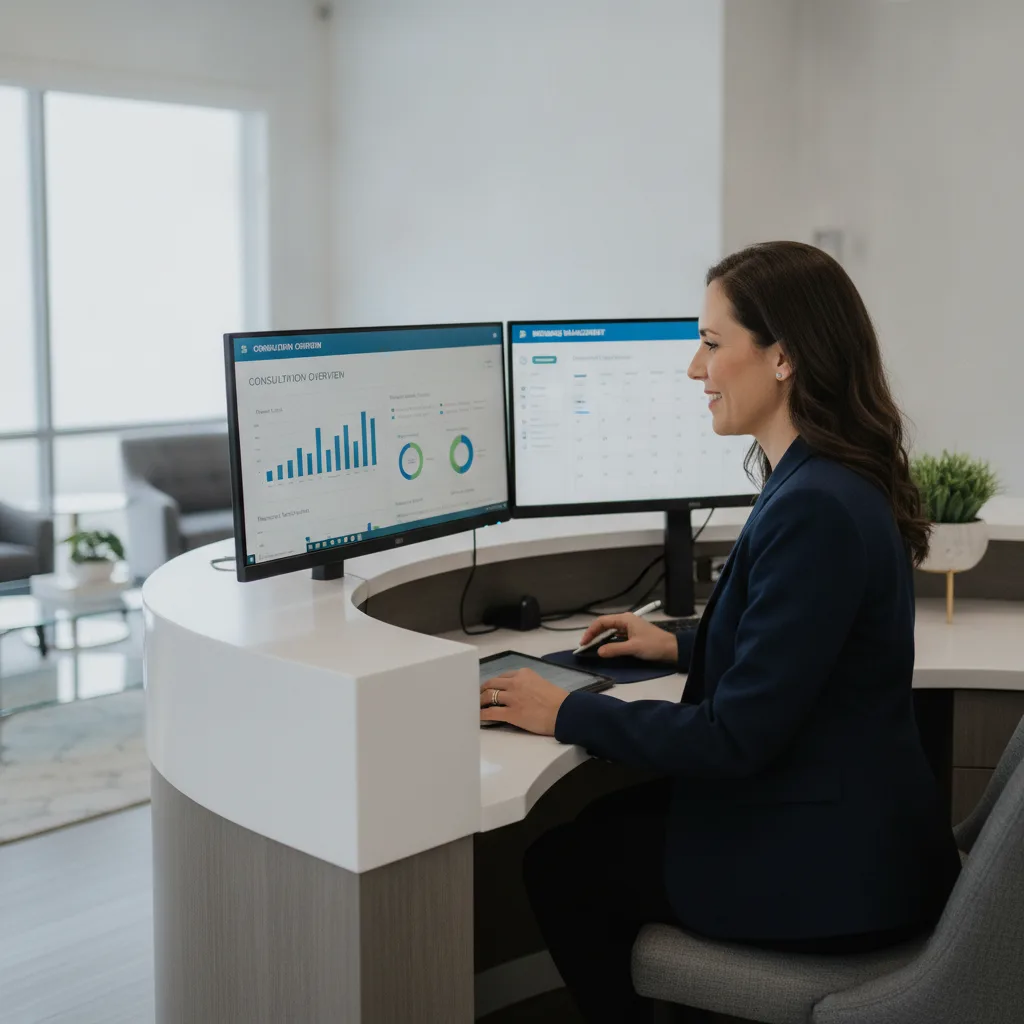
Audit Your Conversion Rate Before Touching Your Ad Budget
The number that actually runs your LASIK practice is your consultation-to-surgery conversion rate, not leads per month. A practice converting 60% of 30 monthly consults (18 surgeries) outperforms one converting 35% of 40 consults (14 surgeries) by $20,000 per month at a $5,000 bilateral average — roughly $240,000 per year, generated without a single additional ad dollar. Pull your last 90 days of consult and booking data before changing anything else. Most LASIK practices discover at this stage that 40–50% of their non-bookings left without a structured follow-up sequence ever reaching them.
The benchmark consultation-to-procedure rate for well-run LASIK practices is 55–70%; the LASIK industry average sits closer to 35–50%. If your rate is below 55%, your revenue leak is inside the funnel, not at the top of it. Three breakdown points account for the majority of lost surgeries: the pricing presentation sequence, the emotional arc of the consultation itself, and the post-consult follow-up window. You cannot fix what you have not measured, and you cannot improve performance through marketing efforts alone when the core conversion problem is structural.
Set up a simple tracking sheet that logs each consult by lead source, consult date, surgery date (or non-conversion reason), and whether a follow-up sequence was triggered. Google Sheets works fine for this. The goal is a clean 30-day baseline that identifies which lead sources produce the highest consultation-to-surgery conversion rates — because not all lead sources are equal, and your paid search budget should flow toward the sources that close at 60%+, not the sources that generate volume at 30%.
CallRail
$45/mo and up
HIPAA-compliant call tracking that ties every inbound call to its originating keyword or campaign — essential for separating high-converting lead sources from expensive low-converting ones and for measuring true cost per booked surgery.
Google Looker Studio
Free
Connects to Google Ads, Google Analytics 4, and Google Search Console to build a single conversion dashboard without paying for a third-party BI tool — lets you analyze conversion data across channels in one view.
Key distinction
Consult volume and consult-to-surgery rate are inverse levers for most LASIK practices. Buying more leads while your conversion rate is below 55% accelerates waste. Fix conversion rate first, then scale ad spend. Every week you delay costs approximately $4,600 in unbooked surgery revenue at the $240,000/year gap rate.
Build the Zero-Cost Channel: An OD Co-Management Referral Program
Word-of-mouth and optometrist-referred patients convert from consultation to surgery in the high 80th percentile — roughly double the rate of cold digital leads — making an OD co-management referral program the highest-ROI LASIK marketing idea available in 2026. A formal program with 10–20 local optometrists generates 5–15 pre-qualified LASIK consultation referrals per OD partner per month at near-zero patient acquisition cost. Most LASIK practices skip this entirely because it requires relationship work instead of a media budget. That is exactly why it remains an underused advantage in nearly every local market.
Start by mapping every independent OD within a 15-mile radius of your surgical center. Prioritize independent practices over corporate chains — independent ODs co-manage more readily because their patient relationships and income depend on keeping those patients satisfied long-term. Schedule in-person visits with your co-management liaison (or the surgeon directly for the first five contacts). Bring a one-page protocol covering post-op care responsibilities, communication cadence between your practice and the OD's office, and how you credit the referring OD in patient records. Practices that implement a formal tracking and reporting loop report OD referral volume increasing 30–60% within the first 90 days compared to untracked co-management relationships.
Track referrals by OD partner from day one using a UTM-tagged referral link or a dedicated phone number per partner in CallRail. OD partners who see their referral count reported back to them monthly send more patients — this is the single most effective thing you can do to grow your LASIK referral program after the initial relationship is established. Beyond OD referrals, structure a patient referral ask at day-7 and day-30 post-op to capture word-of-mouth referrals that would otherwise stay private. Referral patients convert at the same high-80th-percentile rate and cost nothing to acquire.
CallRail
$45/mo and up
Assign a unique tracking number to each OD partner to measure referral volume and conversion rate per source without adding manual data entry to your coordinator's workflow.
HubSpot CRM (Free tier)
Free
Log each OD contact, track outreach cadence, and store co-management agreements without paying for a dedicated referral management platform — sufficient for practices with up to 30 OD relationships.
Shortcut
Your existing satisfied past patients are a second zero-cost channel. A structured patient referral ask — delivered via a post-op email at day 7 and again at day 30 — captures word-of-mouth that would otherwise stay private. These referral patients convert at the same high-80th-percentile rate as OD referrals, which makes post-op patient engagement one of the highest-leverage LASIK marketing programs your team can run with no additional budget.
Publish LASIK Content Marketing That Captures Potential Patients 2–4 Months Before They Book
Prospective LASIK patients spend 2–4 months doing extensive research before they schedule an initial consultation. Informational search engine optimization content targeting decision-stage queries — 'LASIK vs SMILE,' 'is LASIK worth it,' 'LASIK recovery timeline' — captures that audience while they are still forming preferences and building trust with specific LASIK providers. This is the window where your LASIK practice either establishes authority or cedes it to a competitor. Google and AI search engines reward E-E-A-T signals: surgeon credentials, procedure-specific depth, and named outcome statistics that demonstrate real expertise — not generic content any marketing agency could publish without knowing your surgeons.
Each content piece should lead with a direct answer to the target query. A page targeting 'how much does LASIK cost' should open with: 'LASIK costs $2,246–$2,632 per eye on average in 2026, with bilateral procedures running $4,500–$5,300 at the midpoint — not the $1,500/eye figure discount LASIK clinics advertise.' That sentence is citable by AI search engines and positions your practice as transparent rather than evasive on pricing. Potential patients who find a cost transparency page on your site are significantly more likely to book a consultation than those who encounter a page that avoids the pricing conversation. LASIK SEO built on transparent, data-specific content is what improves search engine rankings and drives qualified traffic simultaneously.
Prioritize these five content formats for LASIK content marketing: a cost transparency page updated with the current year's data, a LASIK vs SMILE vs PRK comparison, a candidacy checker or eligibility quiz, a surgeon credentials and technology page, and a LASIK recovery timeline with day-by-day expectations. Local search engine optimization matters at every layer: city-specific landing pages for each metro area you serve, with location-specific schema markup and Google Maps embeds to support local SEO. Keyword research should focus on decision-stage terms — these have lower search volume than brand awareness terms but dramatically higher conversion intent. LASIK SEO compounds over 12–18 months in organic search results; the practices that outrank competitors two years from now started their content marketing programs this quarter.
Surfer SEO
$89/mo
Generates content briefs calibrated to each keyword's top-ranking competitors, with heading and term targets built in — cuts guesswork on what each LASIK content page needs to cover and reduces time-to-publish on new pages.
Google Search Console
Free
Shows which LASIK queries are already driving impressions to your site so you can prioritize optimization of existing pages over net-new content creation — the fastest path to improved search engine rankings on terms where you already have partial visibility.
Gotcha
Thin, generic LASIK blog posts without statistics or surgeon attribution do not build E-E-A-T and are actively filtered out of Google AI Overviews. Every page needs a named surgeon author, a publication date, and at least one cited clinical statistic to compete in 2026 Google search results. Procedure explanations must go beyond the surface level — describe specific laser technology, candidacy criteria for astigmatism correction, and realistic recovery expectations with specific timeframes. A comprehensive medical website for LASIK must be built for the hesitant patient doing extensive research, not for the already-convinced one.
Run Paid Search Ads Seasonally and Measure Cost Per Booked Surgery — Not Cost Per Click
LASIK Google Ads keywords command CPCs of $20–$80 for elective procedure terms — nearly 15x the 2026 cross-industry median of $5.42. Cost-per-lead for ophthalmology LASIK paid search ads campaigns runs $80–$200. Neither number matters unless you track it all the way to cost per booked surgery. A $200 CPL that converts at 60% into a $5,000 bilateral procedure costs $333 per surgery — a 14:1 return on patient acquisition. That same $200 CPL at 35% conversion costs $571 per surgery and narrows your margin to the point where scaling ad spend accelerates losses rather than growth. The conversion rate you fixed in Step 1 determines whether Google Ads is your most profitable channel or a money pit.
Plan your Google Ads budget around two annual demand spikes: January, driven by New Year's resolution searches for vision correction, and pre-summer in May and June, driven by outdoor and travel motivation. Practices that increase budget 30–40% during these two windows and pull back in shoulder months consistently lower their effective cost per booked consultation across the year. Run Performance Max campaigns for brand and retargeting, and manual CPC or tROAS Smart Bidding on high-intent search ads keywords like 'bladeless LASIK [city],' 'best LASIK surgeon near me,' and 'how much does LASIK cost [city].' Leveraging social media platforms including Facebook and Instagram for retargeting audiences who visited your LASIK pages but did not request an appointment reinforces your paid search ads and builds brand recognition at a lower CPM than search.
On the landing page: LASIK appointment request pages that convert at 4–8% are the benchmark for well-run digital marketing programs. Below 4% usually means the page leads with surgeon credentials before addressing the fear and cost objections every potential patient carries. Restructure the page to open with a social proof block — a patient testimonial video above the fold — followed by transparent pricing anchored to monthly financing, then credentials and technology details. Every paid search ad should point to a dedicated landing page, not the homepage. Mobile devices account for the majority of LASIK research queries, so the landing page must load in under 2 seconds and keep the appointment request form above the fold on a phone screen.
Google Ads
$3,000–$15,000/mo depending on market
The primary paid search platform for LASIK — no other channel matches purchase-intent search volume for 'LASIK near me' and procedure-specific queries, and the seasonal demand spikes in January and May make budget planning straightforward.
Unbounce
$99/mo
Build and A/B test LASIK landing pages without developer involvement — critical for reaching and maintaining the 4–8% appointment-request conversion benchmark through iterative page structure testing.
CallRail
$45/mo and up
Attribute phone calls from paid search ads to specific campaigns and keywords, completing the cost-per-booked-surgery tracking loop that most LASIK practices leave open.
Gotcha
HIPAA compliance applies to ad tracking. Standard Google Ads conversion pixels can capture protected health information if a patient's name or diagnosis appears in the URL or thank-you page. Use server-side conversion tracking or a HIPAA-compliant analytics wrapper (Freshpaint or Avo) to stay compliant while keeping conversion data intact. This is non-negotiable in healthcare digital marketing — a compliance violation costs far more than the monthly tool fee.
Neutralize Fear and Cost Objections Inside the Consultation Room
The two dominant LASIK patient objections at every stage of the funnel are fear and cost — and they do not disappear when a potential patient books an initial consultation. They intensify. Fear covers the laser itself, being awake during the LASIK procedure, the risk of losing vision, and the general anxiety of elective surgery. Cost covers the $4,500–$6,000 sticker price with no insurance coverage. A consultation script that does not address both objections in a specific sequence loses bookings that no ad campaign, content marketing program, or social media strategy can recover.
Present pricing anchored to monthly financing payments, not total procedure cost. A $5,000 bilateral LASIK surgery financed over 24 months at 0% through CareCredit or Alphaeon Credit runs approximately $208 per month — roughly the cost of two years of premium contact lenses and solution. When pricing is framed this way, same-day booking rates increase because the patient is comparing a monthly payment against a monthly expense they already carry. The 2026 individual FSA contribution limit is $3,400, which reduces the effective out-of-pocket LASIK cost by 20–30% through pre-tax savings. Every coordinator should confirm FSA and HSA status before presenting total price — it reframes a $5,000 LASIK procedure as a $3,500–$4,000 net cost for patients who have pre-funded accounts. Do not bury financing options at the end of the consultation.
Address fear with specificity, not generic reassurance. 'The laser is computer-guided and shuts off automatically if your eye moves more than 0.25 millimeters' is more persuasive than 'it's very safe.' Cite FDA outcome data: LASIK surgery achieves 96–99% patient satisfaction, and the FDA reports zero cases of blindness from the LASIK procedure. Give the patient the exact words they need to explain their decision to a skeptical spouse or family member who was not present in the consultation room. The consult room is where LASIK marketing ideas succeed or fail — not on the ad platform. Patient education delivered here, at the moment of highest intent, has more impact on your consultation-to-surgery conversion rate than any top-of-funnel digital marketing tactic.
Key rule
FSA and HSA dollars reduce LASIK's effective out-of-pocket cost by 20–30% through pre-tax savings — and the 2026 FSA limit is $3,400 per individual. This financing angle is not an afterthought in your LASIK marketing plan; it is a core objection-handling tool. Asking about FSA and HSA status before presenting total price is one of the highest-leverage LASIK marketing ideas your team can implement at zero additional cost, and it directly increases same-day booking rates during the consultation.
Deploy a 30-Day Post-Consult Nurture Sequence for Patients Who Did Not Book
A patient who left the consultation without booking is not lost. They are at the highest-intent moment of their entire patient journey and need one more specific answer — not another promotional offer. The most effective post-consult recovery tactic is a 30-day structured follow-up sequence that addresses the specific hesitation the patient expressed during the consultation. Practices with automated post-inquiry nurture sequences convert 35–55% of inquiries to consultations; the same principle applied to post-consult follow-up captures surgery revenue that would otherwise leave permanently. Generic 'just checking in' calls three days later do not engage hesitant patients — they signal that your practice did not listen during the consultation.
Map the sequence to the three most common non-booking reasons: (1) 'I need to think about it' — driven by fear, send a surgeon-authored FAQ video on day 2 and a patient success story on day 5; (2) 'It's too expensive right now' — driven by cost, send the FSA and HSA savings breakdown and monthly financing calculation on day 3 and a financing FAQ on day 7; (3) 'I want to research more' — driven by information need, send the LASIK vs SMILE comparison and the recovery timeline on day 4. Each touchpoint should reference the specific motivation the patient shared during their consultation, which is why the coordinator note at the end of every appointment is the most valuable data in your entire follow-up system.
Automate the sequence in your CRM or practice management software, triggered by the coordinator marking a consult as 'decision pending.' Use SMS for day-2 and day-7 touchpoints — open rates run 90%+ compared to 25% for email — and use email for longer content pieces like procedure explanations and patient success stories. Tag every sequence enrollee by non-booking reason so you can measure which message type closes which objection. After 30 days of sequence data, you will know exactly which hesitation costs you the most LASIK surgery revenue, and you can coach coordinators to probe for that objection more specifically during the initial consultation.
Podium
$399/mo
HIPAA-aware messaging platform that sends automated SMS follow-ups from a local number — open rates on its text-based review and follow-up requests significantly outperform email for time-sensitive post-consult recovery sequences.
HubSpot Marketing Hub
$800/mo (Professional)
Builds multi-step email and SMS workflows triggered by CRM status changes, with A/B testing built in to identify which follow-up message closes each objection type across your patient population.
Gotcha
Not every patient who did not book left for the same reason. Sending a financing email to a patient whose primary objection was fear does not move them to book — it can feel dismissive of their concerns. The coordinator note from the consultation is the data that makes personalization possible. If coordinators are not logging non-booking reason in the CRM at the end of every consult, the automation cannot personalize correctly, and the sequence performs at the generic level — which is significantly less effective than a tagged, personalized sequence.
Build Reputation Management and Patient Reviews Into the Post-Op Workflow
95% of prospective LASIK patients trust peer experiences more than advertisements — making patient reviews and video testimonials the highest-converting creative assets in any LASIK marketing plan. Online reputation management for LASIK practices starts with a Google Business Profile rating of 4.8 or higher, backed by a minimum of 50 reviews to generate statistical credibility. A rating below 4.7 actively deters consultation bookings for elective procedures — patients researching LASIK surgery set a higher trust threshold than those seeking emergency eye care because the decision is entirely optional and carries real perceived risk. Birdeye and Podium both centralize review monitoring across Google, Healthgrades, and Yelp from a single dashboard, which is the minimum infrastructure a LASIK practice needs to manage its online reputation at scale.
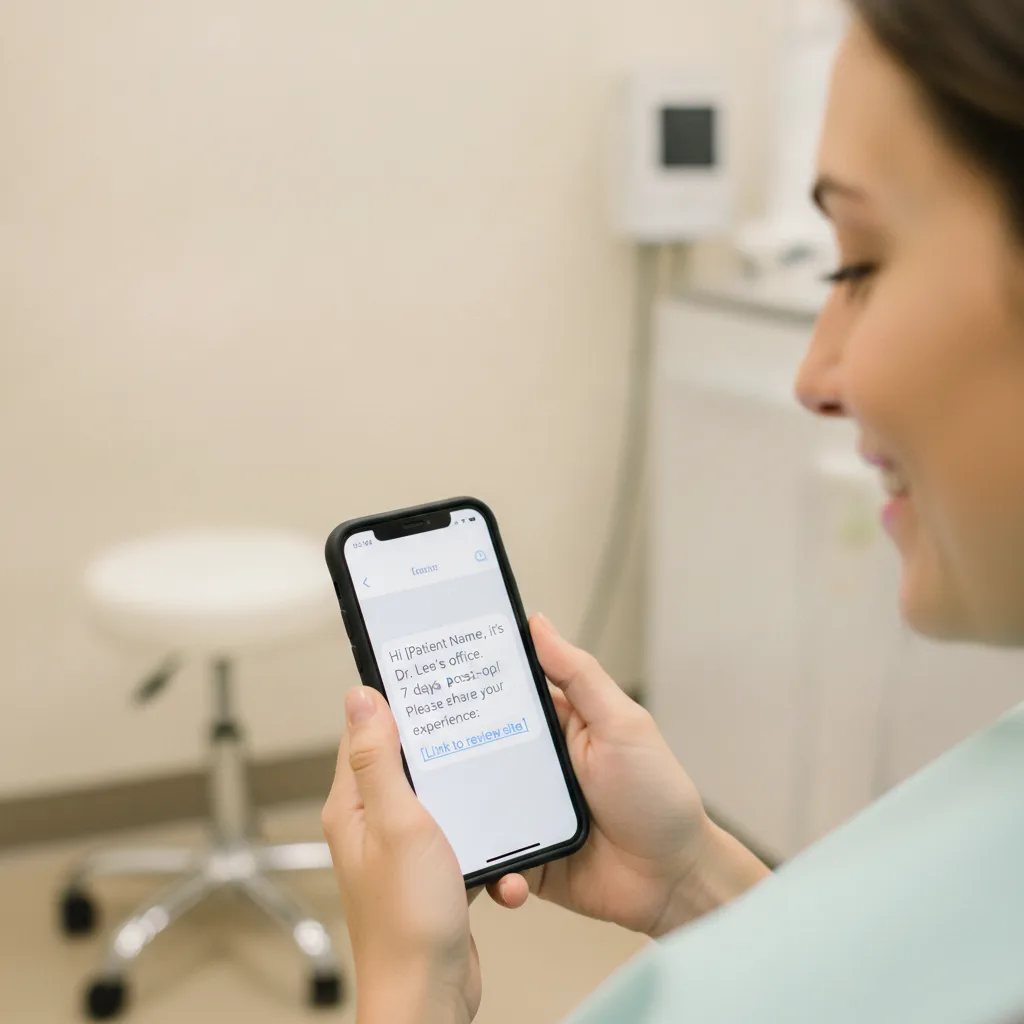
Automate the review solicitation process at the day-7 post-op milestone. This is the optimal timing for new patients: vision has stabilized, the emotional high of clear sight is fresh, and the patient is most likely to respond to a short SMS with a direct Google review link. A practice generating 18 surgeries per month should add 10–14 new online reviews per month if the solicitation process runs consistently — that volume compounds your local SEO signals and your SERP visibility against competing LASIK clinics over time. SMS-based review requests through Podium outperform email by 3–4x in response rate for post-op LASIK patients.
Patient success stories and video testimonials serve double duty in your LASIK marketing strategies: they anchor the top of funnel for new potential LASIK patients doing online research, and they function as the day-5 email asset in your post-consult nurture sequence. Video marketing for LASIK is most effective when patients answer one specific question: 'What were you most afraid of before surgery, and what surprised you about the experience?' That answer addresses fear directly in the patient's own words — more persuasive to hesitant patients than any scripted brand video or polished marketing materials your practice could produce. Shoot these videos at the day-30 post-op visit on a smartphone with good natural light. YouTube, Instagram, and Facebook are the right social media platforms to distribute them. The content is the asset; the production value is secondary.
Birdeye
$299/mo
Centralizes review monitoring across Google, Healthgrades, and Yelp, automates the review solicitation process via SMS and email, and flags negative reviews for immediate response — all from one reputation management dashboard.
Podium
$399/mo
SMS-first review solicitation with EHR integration — preferred for LASIK practices because its text-based review request outperforms email by 3–4x in response rate for post-op patients at the day-7 milestone.
Pro tip
Respond to every Google review — positive and negative — within 48 hours. Google's algorithm treats review response rate as a local SEO signal, and your response rate directly influences your Google Maps ranking against competing LASIK providers. For negative reviews, respond with a direct phone number or contact, never a defensive explanation. A thoughtful public response to a 2-star review frequently converts hesitant readers into booked consultations because it demonstrates how your LASIK practice handles problems — which is exactly the trust signal prospective patients are evaluating when they read through your reviews.
The Biggest LASIK Marketing Mistake: Scaling Ad Spend Before Fixing Conversion
Doubling your Google Ads budget while your consultation-to-surgery conversion rate sits at 35% does not double your revenue — it doubles your waste. At a $5,000 bilateral average, moving from 35% to 60% conversion on the same 30 consults per month adds $125,000 in annual revenue without a single additional lead. Every LASIK practice should reach 55%+ conversion rate before increasing paid search spend. The seven steps in this guide address the four places revenue leaks: the lead source mix (Step 2), the content and paid search system (Steps 3 and 4), the consultation room itself (Step 5), and the 30 days after the consult (Steps 6 and 7). Fix those stages in order. Then scale.
The LASIK practices that grow fastest in 2026 are not the ones with the largest ad budgets. They are the ones that treat the consultation room and the 30-day window after it as the real marketing channel — and build OD referral networks, FSA and HSA financing conversations, structured follow-up sequences, and patient review workflows around that center of gravity. A formal co-management program, a post-consult nurture sequence, and a review solicitation system cost a fraction of a monthly Google Ads budget and produce higher-converting leads than any paid search campaign. Implement the audit in Step 1 this week. Once you have your baseline conversion data, run Steps 2 and 5 simultaneously — the OD outreach and the consultation script change both take fewer than five business days to activate and produce measurable results within 30 days. Every week you delay costs your practice approximately $4,600 in unbooked surgery revenue at the $240,000/year gap rate. The math is not complicated. The execution is where practices separate.
Frequently Asked Questions
Ready to get started? Contact Geek Powered Studios today.