
A marketing agency for foundation repair companies should have Google Local Services Ads live within 7–10 days, Google Ads active by Day 14, and CRM tracking connected to signed jobs — not raw form fills — from day one. By Day 30, five infrastructure pieces should be live: LSA, Google Ads with symptom-based keywords, an optimized Google Business Profile, GoHighLevel pipeline with lead-source tagging, and CallRail call tracking. By Day 60, the agency should show Map Pack movement and a review velocity of at least one new review per week. By Day 90, they must report five numbers in a single dashboard: ad spend, leads, booked inspections, signed jobs, and revenue — all broken out by channel. Any agency that cannot produce that report on Day 90 is reporting vanity metrics.
-
7–10 DaysTime for LSA and GBP to go live and generate first verified leads
-
$60–$75Cost per lead on Local Services Ads — lowest paid channel in 2026
-
$130–$180Cost per lead on Google Ads for foundation repair campaigns
-
26%Close rate on exclusive leads from Google Ads, LSA, and local SEO
-
5.8 KDAverage keyword difficulty across 4,782 foundation repair keywords — lowest of any home-services category
-
$500–$720Cost per signed foundation repair job at a 25–30% PPC close rate
-
5 NumbersWhat your Day 90 report must show: spend, leads, inspections, signed jobs, revenue by channel
-
$3.57BGlobal foundation repair market size as of 2026, growing at 6.8% annually through 2030
A marketing agency for foundation repair companies should produce signed jobs — not clicks, not impressions, and not raw form fills. That sounds obvious, yet most foundation repair contractors have fired at least one agency that delivered monthly reports full of traffic graphs while the inspection calendar sat empty. This scorecard breaks the first 90 days into three gates — Day 1–30, Day 31–60, and Day 61–90 — with specific, named deliverables at each one. Use it before you sign with a new marketing partner, or run it against what your current agency is delivering right now. The numbers inside are real: benchmarks pulled from live foundation repair marketing campaigns, not industry averages padded with caveats.
Before you start
- An active Google Business Profile for your foundation repair company, or the credentials and willingness to create one during onboarding
- A defined service area with at least one primary city you want to dominate in local search results
- A CRM in place or willingness to adopt GoHighLevel ($297/month) to track leads from first click through signed contract
- A combined monthly marketing budget of at least $3,000–$5,000 (ad spend plus agency retainer) — below that threshold, campaigns won't generate enough data to optimize within 90 days
- At least 10 Google reviews already posted, or a concrete review generation plan to build toward 4.6 stars during onboarding
- A sales process that answers the phone, runs inspections, and closes estimates within 48 hours — the best lead generation system in the world fails if no one picks up the call
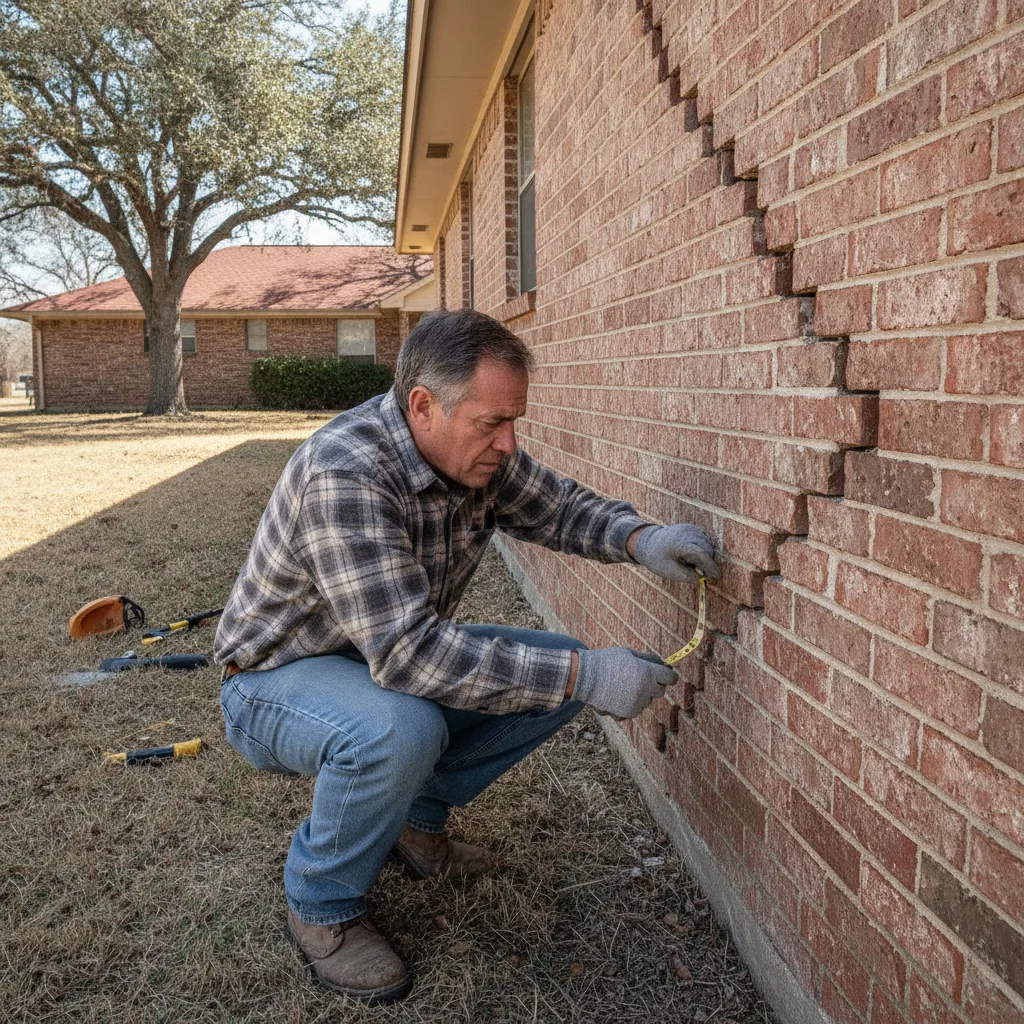
Understand Why Most Foundation Repair Marketing Agencies Fail the 90-Day Test
Most foundation repair contractors have fired at least one marketing agency that reported hundreds of clicks while the job board stayed empty. That disconnect has a name: the agency was optimizing for activity metrics instead of signed jobs. Clicks, impressions, and even raw form fills are not foundation repair leads. A booked inspection that converts to a signed contract is a lead. Any foundation repair marketing agency that cannot tell you your cost per signed job by Day 90 is not doing its job.
The foundation repair industry makes this problem worse than in most home service categories. The average residential ticket runs $5,176 nationally, with pier-and-beam structural repair jobs in Texas often landing between $12,000 and $30,000. At those ticket sizes, a 26% close rate on exclusive leads means a single signed job pays for months of marketing. Shared leads from marketplaces get sold to multiple foundation repair contractors simultaneously — the math never works. A real foundation repair marketing agency builds an exclusive pipeline, tracks it through GoHighLevel or an equivalent CRM, and reports on cost per signed job from day one.
The good news: foundation repair keyword difficulty averages just 5.8 across 4,782 keywords studied — the lowest of any home-services category. A properly built local SEO program can reach page one in 3–6 months rather than the 12–18 months typical of more competitive niches. Foundation repair SEO is genuinely winnable for local contractors who invest in a proper marketing plan. The scorecard below tells you exactly what your agency should deliver at each gate so you know whether you are on track or whether it is time to have a hard conversation.
Red flag to watch for
If an agency's onboarding call focuses on brand awareness, impressions, or social media follower counts before confirming your CRM integration plan, that is a signal they will report vanity metrics. Ask on Day 1: 'How will you show me cost per signed job?' If they pause, that is your answer.
Day 1–30: Lock in the Infrastructure That Generates Foundation Repair Leads Fast
Google Local Services Ads and a fully optimized Google Business Profile should be live and generating verified foundation repair leads within 7–10 days of launch — that is the fastest return on any channel in this industry. Your marketing agency's first month should be almost entirely infrastructure: Google Business Profile optimization, LSA setup and verification, Google Ads campaign build, CRM pipeline configuration, and a landing page audit. If none of those are live by Day 30, the engagement is already behind schedule.
On the Google Ads side, foundation repair campaigns in 2026 cost $130–$180 per lead with a 12–20% conversion rate on well-structured landing pages — among the highest conversion rates in home services. That rate only holds when the campaign targets symptom-based keywords: 'stair step crack in brick,' 'sticking doors,' 'sloping floors,' 'foundation crack repair near me.' Broad match terms pull in renters and DIYers who will never sign a contract. Your agency should deliver a keyword list for your approval before spending a single dollar in advertising spend, with negatives built in from day one.
Local Services Ads deserve special attention. LSA leads run $60–$75 each in 2026 — less than half the cost of standard Google Ads leads — and they carry Google's Verified badge, which builds trust with homeowners making a five-figure structural repair decision. Getting LSA verified requires a background check and license verification, so your agency should start that paperwork on Day 1, not Day 15. Meanwhile, Google Business Profile management should cover service-specific categories (foundation repair, crawl space repair, slab repair, pier-and-beam), real jobsite photos, and a Texas-specific cost range on each service description to satisfy Google's January 2026 core update requirements.
GoHighLevel CRM
$297/month
Tracks leads from first click through signed contract, automates text and email follow-up within 5 minutes of a form fill, and connects ad spend to booked inspections — not just form fills. The CRM integration your agency builds here is the reporting foundation for the entire 90 days.
Google Local Services Ads
$60–$75 per verified lead
Lowest cost-per-lead paid channel for foundation repair companies in 2026; carries Google's Verified badge that builds homeowner trust on high-ticket structural jobs and ranks above standard Google Ads in search results.
CallRail
$45/month
Tracks inbound phone calls by ad source so you know whether calls are coming from LSA, Google Ads, or organic search — required for accurate cost-per-signed-job reporting and essential for foundation repair businesses where most leads call before they fill out a form.
Day 30 checkpoint
By Day 30 your agency should hand you: (1) LSA live and receiving leads, (2) Google Ads campaign active with symptom-based keywords and negatives, (3) GBP fully optimized with photos and service-specific categories, (4) GoHighLevel pipeline with lead-source tracking active, (5) CallRail or equivalent call tracking installed. If fewer than four of these five are done, ask for a written catch-up plan with specific dates.
Day 31–60: Activate Local SEO and Google Ads Optimization to Build a Steady Flow of Foundation Repair Leads
Google Business Profile optimization produces Map Pack movement within 60–90 days for most foundation repair contractors, and 89% of 'foundation repair near me' searches trigger the Map Pack where the top three positions capture 42% of all clicks. That means your GBP ranking is not a cosmetic metric — it is a direct driver of inspection requests. By Day 45, your agency should show you keyword ranking reports for your primary city terms and a GBP Insights report showing direction request volume trending upward. Local rankings in the Map Pack are where most foundation repair businesses see their first organic traction.
Local SEO during this phase means more than Google Business Profile management. It means publishing service-specific pages for each repair type — pier-and-beam, slab repair, foundation crack repair, crawl space repair, basement wall stabilization — each with a Texas-specific cost range, at least one real jobsite photo, and a clear description of the repair method. Google's January 2026 core update penalized 28% of thin home-services pages that lacked demonstrated expertise. Generic pages with no location data and no technical specifics will not rank, and they will not convert homeowners who are comparing two or three foundation repair companies before booking an inspection. Search engine optimization in this niche rewards depth and specificity over volume.
On the paid side, Month 2 is when your Google Ads data gets actionable. Your agency should run a search term report at Day 45 and kill any keyword that has spent more than $150 without producing a lead. PPC advertising campaigns that reach Month 3 with proper structure should deliver 20–30 or more leads consistently, with ROAS climbing toward 6–10x. If your agency is not showing you a search term report and a negative keyword addition log by Day 60, they set it and forgot it.
Surfer SEO
$89/month
Scores service pages against top-ranking competitors for foundation repair terms so your agency can close content gaps before Google's algorithm does it for you — directly relevant after the January 2026 core update.
Podium
$399/month
Automates post-inspection review requests via SMS so you hit the 4.6-star threshold and one-new-review-per-week velocity that feeds both LSA and GBP local rankings. Faster review velocity means faster Map Pack movement.
Day 60 checkpoint
By Day 60 your agency should show you: (1) GBP ranking movement in your primary city's Map Pack, (2) at least 4 service-specific pages published and indexed, (3) Google Ads search term report with documented negative additions, (4) review velocity at 1 or more per week with average rating 4.6 or above, (5) CRM dashboard showing leads by source. Ask for cost-per-lead by channel in writing.

Day 61–90: Measure Signed Jobs, Not Just Leads, and Stress-Test the Entire Foundation Repair Marketing System
By Day 90, a properly run multi-channel foundation repair marketing campaign — Google Ads, LSAs, and GBP optimization running in parallel — should have produced a full pipeline of inspection requests, with the CRM showing which sources are converting to signed jobs. The metric that matters is not how many leads came in. It is cost per signed job, which at a 25–30% close rate on PPC leads runs $500–$720 — roughly 5–7% of a DFW or Houston ticket averaging $10,000–$15,000. That math makes paid advertising worth every dollar when the digital marketing services are set up correctly.
The 90-day report your agency delivers should include five numbers, all in one place: total advertising spend by channel, total leads by channel, booked inspections by channel, signed jobs by channel, and revenue generated by channel. If your agency reports clicks, impressions, or 'brand awareness' without those five numbers, you are not getting ROI-obsessed reporting. Push for the signed-job column. If the data is not in GoHighLevel yet, that is an infrastructure gap your agency owns.
Month 3 is also when the foundation repair SEO program should show its first measurable signals. You should see rankings for at least 10–15 target keywords in your primary service area, with organic traffic up meaningfully from baseline. Full SEO maturity in foundation repair takes 6–12 months, but keyword difficulty in this niche averages just 5.8 — the lowest of any home-services category — so early traction is realistic by Day 90. The organic channel matters more than most contractors realize: a properly run foundation repair SEO program generates 40–60% of total lead volume at less than half the cost-per-lead of Google Ads once it reaches months 12–18. The defensive value of that channel became clear in December 2024, when one foundation repair client's Google Ads CPL spiked 582% in a single month — from $121.59 to $829.21 — while organic leads held steady at roughly $250 each.
Day 90 scorecard: the five numbers that matter
Total ad spend by channel. Total leads by channel. Booked inspections by channel. Signed jobs by channel. Revenue generated by channel. If your foundation repair marketing agency cannot produce all five in a single report on Day 90, that is a gap — not a data limitation.
Evaluate PPC Advertising vs. Local SEO vs. LSA: What Each Channel Owes You by Day 90 for Foundation Repair Services
Foundation repair marketing companies that focus on only one channel consistently underperform against multi-channel competitors. Here is what each channel should produce by Day 90 on a properly managed campaign: Google Local Services Ads live by Day 7–10, delivering leads at $60–$75 each with Google's Verified badge; Google Ads PPC advertising active by Day 10–14, costing $130–$180 per lead with 12–20% conversion rates on landing pages optimized for symptom-based queries; local SEO and GBP showing Map Pack movement by Day 60–90 with service-specific pages indexed; Meta retargeting (social media marketing) running by Day 45–60, keeping your brand visible to homeowners who visited but did not book; and content marketing producing at least two authoritative service pages or blog posts per month built around high-intent foundation repair queries your target homeowners actually search.
The channel mix matters because each one serves a different stage of the homeowner's decision. Paid ads catch homeowners actively searching for foundation crack repair right now — high intent, short timeline. Local SEO and content marketing attract homeowners who noticed a stair step crack last week and are starting to research what it means — medium intent, longer timeline. Meta retargeting recaptures homeowners who visited your site but got distracted — they already know you exist. All three working together is what produces a full pipeline. Any foundation repair marketing agency that sells you only one channel is selling you an incomplete service mix.
One channel comparison deserves special attention: exclusive leads vs. shared leads. Exclusive leads generated through Google Ads, LSAs, and local SEO close at 26% and cost roughly $280 per signed foundation repair job. Shared lead marketplaces sell the same homeowner to multiple foundation repair contractors simultaneously, which destroys close rates. At a $10,000 average Texas ticket, a 26% close rate on exclusive leads generates $2,600 in revenue per $280 invested — an 830% return before any repeat or referral business. That is the math your marketing system should be hitting by Day 90, and it is the reason exclusive lead generation beats shared marketplaces every time for high ticket jobs in this industry.
Google Ads
$130–$180 per lead (ad spend)
Highest-volume paid lead channel for foundation repair services; converts at 12–20% on symptom-based campaigns targeting stair step cracks, sloping floors, and foundation crack repair queries when landing pages are properly optimized.
Google Business Profile (GBP)
Free to manage
Drives Map Pack visibility where 89% of 'foundation repair near me' searches appear; top 3 positions capture 42% of all clicks — free traffic that compounds over time and requires only Google Business Profile optimization to maintain.
Meta Ads (Facebook + Instagram)
$500–$1,500/month ad spend
Retargets website visitors who did not book an inspection, keeping your foundation repair company visible during a decision that often takes days or weeks — a trust-building layer, not a primary lead generation channel.
Choose the Right Marketing Partner: What Separates a Real Foundation Repair Marketing Agency from One That Just Reports Clicks
The right marketing partner for a foundation repair company understands that every deliverable connects to signed jobs. Hook Agency and Treehouse Marketing — the sister company of Supportworks and Contractor Nation — are both commonly cited in the foundation repair marketing agency category as of 2026, and both have built real capabilities. Foundational Marketing Hub is a foundation-only specialist with verified case study data showing 267% more booked inspections in 90 days using fast follow-up automations and inspection-tied tracking. The honest evaluation question for any of these is not which agency has the best website — it is which agency shows you cost per signed job in their reporting, tracks it through CRM tools, and has verifiable case studies from home service companies with specific revenue numbers. Ask every agency on your shortlist: 'Show me a current client's cost-per-signed-job report.' The ones who pull it up immediately are the ones who actually track it.
Geek Powered Studios has been in home services digital marketing for 15 years, and the numbers from actual clients tell the story. Serview Home Pros started with nearly zero online presence and reached 325 ranked keywords, $25 cost per qualified lead, and a 6% conversion rate. Stan's Heating, Air, Plumbing and Electrical grew to 150-plus first-page keywords and 300% more organic leads. The same search engine optimization and Google Ads infrastructure that built those results transfers directly to foundation repair businesses — the channel mix is identical, the CRM integration is the same, and the reporting structure is built around signed jobs from day one. We also include a custom website — an $8,000–$15,000 value in web design and website development — with every retainer, with no long-term contract required.
One final point on web design: your foundation repair company's website is the conversion engine that every paid and organic channel drives traffic to. A slow, generic site kills lead quality before the homeowner ever fills out a form. After Google's January 2026 core update, every service page needs at least one real jobsite photo, a Texas-specific cost range, and a clear description of the specific repair method — pier-and-beam, slab repair, crawl space repair, basement wall stabilization. If your current site doesn't have that, your agency's first month should include a full website audit and a build plan. That is not optional website maintenance. It is the foundation the entire marketing system sits on. A digital marketing agency that skips this step is prioritizing ad spend over conversion quality, and your cost per signed job will reflect that mistake for months.
Three questions to ask before you sign with any foundation repair marketing agency
1. Can you show me a current client's cost-per-signed-job report from their CRM? 2. Do you offer market exclusivity — meaning you will not take another foundation repair company in my city while I am a client? 3. What happens to the ad accounts and content if I stop working with you — do I own them? The answers tell you everything about whether the agency treats you as a marketing partner or a revenue line.
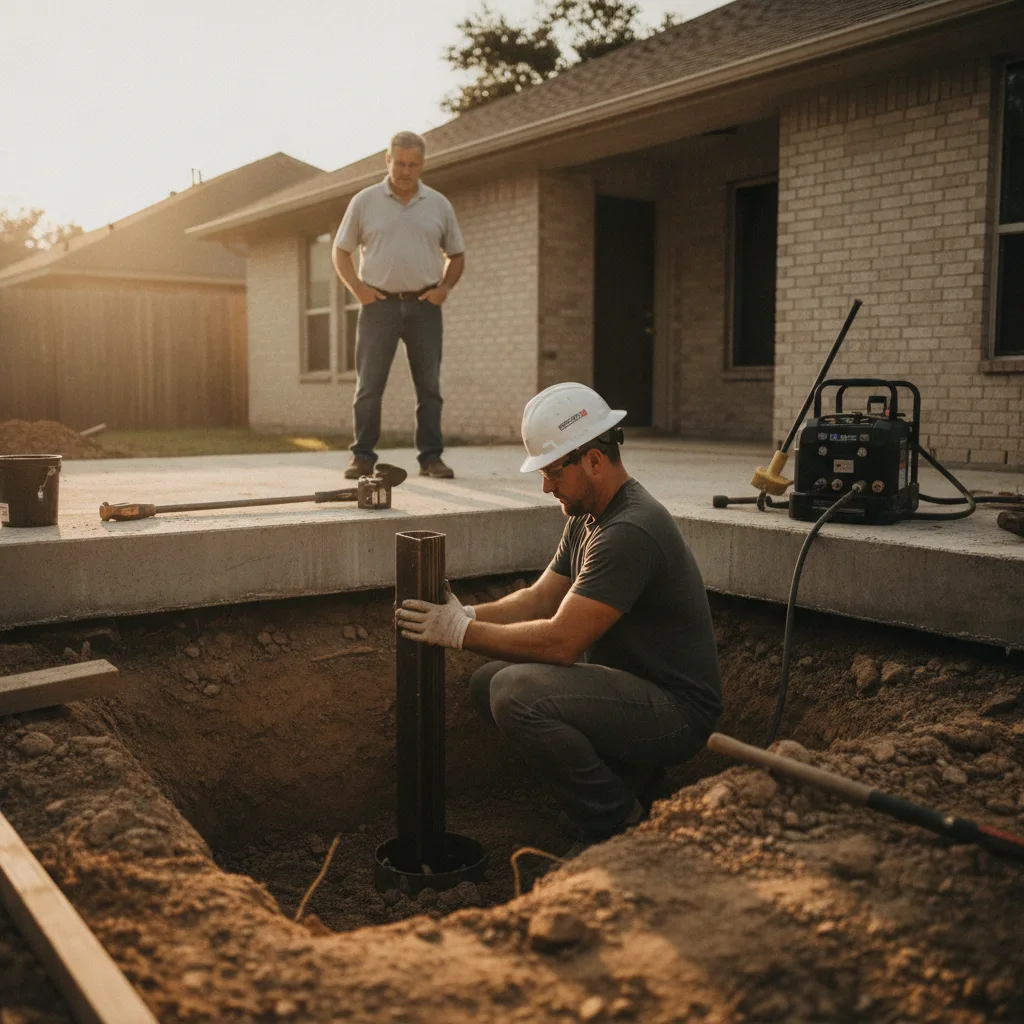
Don't Let Your Agency Report Clicks While Your Job Board Sits Empty
Foundation repair marketing companies that track clicks and impressions instead of signed jobs are charging you for data that does not pay your crews. The 90-day scorecard above is not aspirational — it is the minimum standard. If your current agency cannot show you cost per signed job in a single dashboard by Day 90, you are funding their learning curve. A real foundation repair marketing agency connects every dollar of advertising spend to a signed contract, automates lead follow-up through a CRM within minutes of a form fill, and builds the organic SEO layer that keeps your pipeline alive when paid ad costs spike. That is what ROI-obsessed actually means in this industry. Geek Powered Studios works with one foundation repair company per market — no conflicts, no shared leads, no excuses. The custom website is included. No long-term contract required. Book your free strategy session and we will show you exactly what this scorecard looks like populated with your numbers.
Foundation repair is a $3.57 billion industry growing at 6.8% annually through 2030 — the opportunity is real, and it belongs to the contractor who shows up first in search results when a homeowner notices a stair step crack or a sticking door. The only question is whether that contractor is you or your competitor. Geek Powered Studios has spent 15 years building exactly this kind of multi-channel lead generation system for home service companies across Texas. Google Ads live in 7–10 days. Local Services Ads generating $60–$75 leads. Local SEO compounding in the background. GoHighLevel tracking every signed job from first click to signed contract. The same system that took Serview Home Pros to $25 qualified leads and a 6% conversion rate and tripled organic leads for Stan's Heating, Air, Plumbing and Electrical is available to one foundation repair company per market. Book your free strategy session and let us show you what your 90-day scorecard looks like with real numbers.
Frequently Asked Questions
Ready to get started? Contact Geek Powered Studios today.