
Medical weight loss marketing is a clinical trust purchase. The GLP-1 patient begins their weight loss journey out of health urgency, not vanity, and spends 30–90 days in research before an initial consultation. Med spa marketing is an aspiration-led impulse category where before-and-after galleries drive 89% of booking decisions within a 7–30 day decision cycle. As of 2026, 70%+ of med spas now offer weight loss services — but the moment a practice prescribes GLP-1 medication, it operates under four independent regulatory layers: HIPAA, FTC outcome claim rules, FDA prescription advertising restrictions, and Google/Meta platform policy. Running the med spa playbook on a medical weight loss program creates compliance risk and underperforms on patient acquisition and patient retention simultaneously.
-
$30–$60 CPLGoogle Business Profile cost-per-lead for weight loss clinics vs. $55–$140 on paid GLP-1 search terms
-
89%Of medical weight loss practices fail to rank in the local Google Maps pack
-
40–55%National 6-month retention rate for weight loss programs — making retention marketing the highest-ROI spend
-
89%Of med spa clients cite before-and-after galleries as a key factor in their final booking decision
-
2.8xHigher lifetime value for med spa membership clients vs. non-members (83% vs. 57% annual retention)
-
4 regulatory layersHIPAA, FTC, FDA, and platform policy — each with independent enforcement risk the moment you prescribe GLP-1
-
3.1xMore new patient consultations for weight loss clinics with 40+ Google reviews vs. under 15
-
$3,600–$7,20012-month GLP-1 patient LTV at $300–$600/mo, before labs and ancillary services
Medical weight loss marketing and med spa marketing are not the same discipline. The GLP-1 era collapsed that line in the market — 70%+ of med spas now offer weight loss services as of 2026 — but it did not collapse the buyer psychology, the compliance requirements, or the retention economics that make these two categories structurally different. The weight loss clinic buyer is a patient making a clinical trust purchase, often driven by metabolic syndrome, obesity, or a physician referral. The med spa client is making an aspiration-led elective decision driven by before-and-after imagery, Instagram reviews, and a 7–30 day decision cycle. Running the wrong playbook doesn't just underperform — it creates HIPAA, FTC, and FDA compliance risk at the same time.
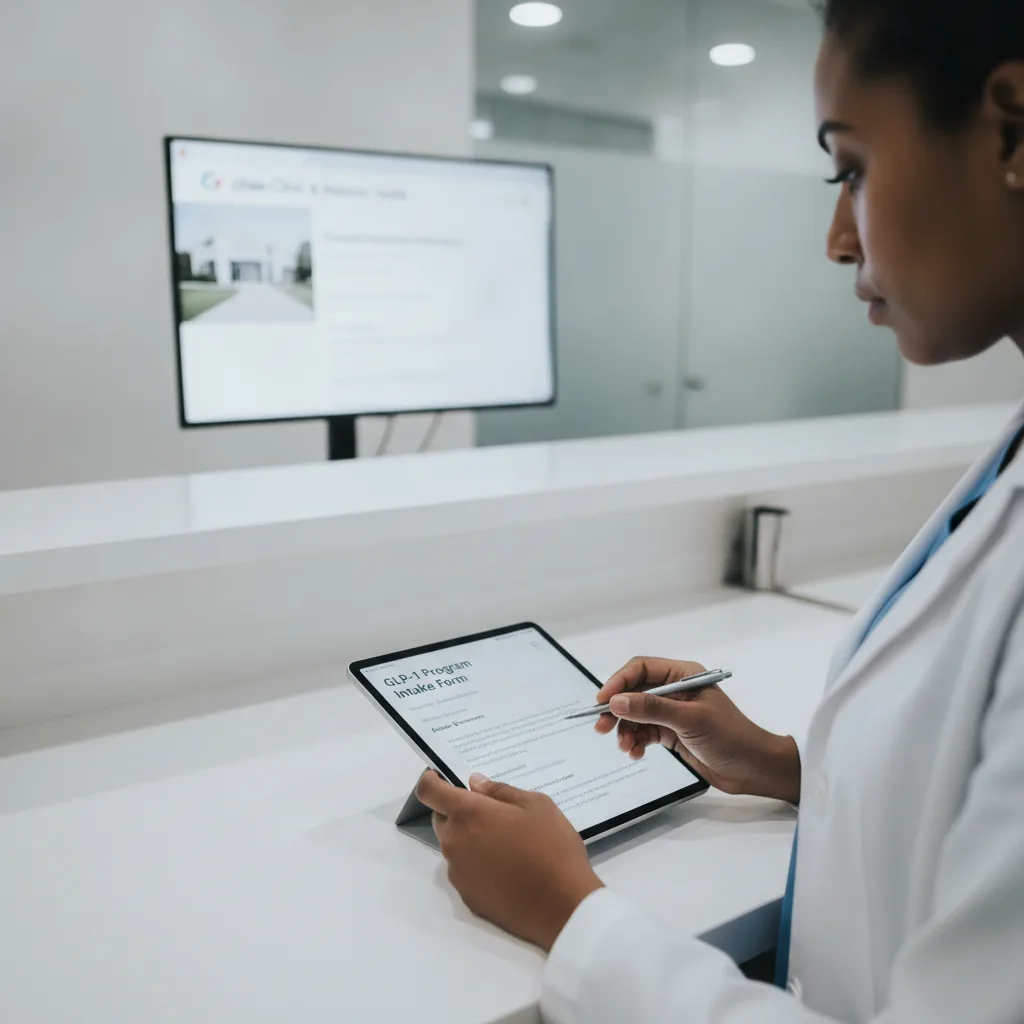
Option A
Medical Weight Loss Marketing
Clinical trust purchase: physician-supervised, GLP-1 driven, retention-first
- 30–90+ day decision cycle driven by health urgency and clinical research, not aesthetic aspiration
- Four regulatory layers HIPAA, FTC outcome claims, FDA GLP-1 restrictions, and Google/Meta platform policy — each with independent enforcement risk
- $3,600–$7,200 patient LTV at $300–$600/mo over 12 months, plus labs and ancillary services — but structurally tied to clinical retention
- Local SEO is the primary acquisition channel GBP delivers $30–$60 CPL vs. $55–$140 for GLP-1 paid search terms
Option B
Med Spa Marketing
Aesthetic impulse purchase: aspiration-led, visually driven, repeat-booking focused
- 7–30 day decision cycle aspiration-led and social-proof heavy; returning clients book in 1–3 days
- Before-and-after galleries drive 89% of booking decisions Instagram and Google reviews are the dominant acquisition channels
- $1,800–$5,200 LTV over 12 months without a membership; membership models push lifetime value 2.8x higher with 83% annual retention
- Standard ad creative works no prescription drug restrictions until the practice prescribes GLP-1 — then all four regulatory layers apply immediately
How Weight Loss Center Marketing Actually Works in 2026
Weight loss center marketing is not general healthcare marketing — it is a specialized discipline built around a clinical trust purchase that takes 30–90 days to convert and 12 months to retain. The US medical weight loss market hit $28 billion in 2026, with GLP-1 prescriptions now accounting for roughly 8% of all US prescriptions filled. The prospective patient searching for a weight loss clinic is not an aesthetic consumer. They have often already been told by a physician they have metabolic syndrome or obesity, they have done extensive research, and they are evaluating your clinical credibility before they ever book an initial consultation.
Local SEO is the first priority for weight loss marketing, not paid ads. An optimized Google Business Profile generates $30–$60 CPL for weight loss clinic patient acquisition, compared to $55–$140 CPL on GLP-1 Google Ads terms at $18–$45 CPC. The local SEO opportunity is unusually open: 89% of medical weight loss practices fail to rank in the local Maps pack, which means winning local search is primarily about executing the basics correctly. Clinics with 40+ Google reviews attract 3.1x more new patient consultations than those with fewer than 15 — making online reputation management and systematic review generation a direct patient acquisition tool, not a vanity metric.
On paid ads, weight loss advertising for GLP-1 programs requires LegitScript certification and compliant copy framing before launching on Google or Meta. Compliant ad copy positions the clinic as a 'provider of medically supervised weight management with GLP-1 prescription evaluation' — not by drug brand name, not with specific outcome promises, and not using terms like 'compounded semaglutide' or 'Ozempic equivalent' in ad headlines. The FDA issued 55 warning letters to telehealth GLP-1 companies in H1 2026 alone. Clinician-led short-form video (15–30 seconds, education-first content explaining program structure and physician oversight) outperforms static image ads by 40–70% in click-through rate on Meta and clears platform compliance review where transformation reels do not.
Patient education content is the highest-sustainability marketing investment for weight loss practices. About two-thirds of GLP-1 patients regain lost weight within a year of stopping the medication, per published trials. A clinic whose content marketing explains this clinical reality — and frames the supervised maintenance program as the actual offer — removes price as the deciding variable and attracts weight loss patients who are qualified for long-term retention. Well-structured GLP-1 program landing pages convert at 6–12% for consultation requests when they lead with program details and physician credentials rather than transformation promises.
Patient retention is where weight loss clinic marketing pays its highest return. The national 6-month retention rate for medical weight loss programs sits at 40–55% as of 2026 — meaning most clinics lose the majority of patients before those patients generate half of a single enrollment's revenue potential. Improving 90-day patient retention from 50% to 70% at a $400/month program adds significant revenue with zero new patient acquisition cost. HIPAA-compliant SMS automation through a CRM like GoHighLevel, milestone-based check-ins, and educational resources that keep patients engaged past the 90-day drop-off window are the structural fix most weight loss practices skip.
How Med Spa Marketing Works: Visual Proof, Short Cycles, Elective Decisions
Med spa marketing is an aspiration category where before-and-after content, Instagram presence, and Google review volume are the dominant acquisition levers. The med spa decision cycle runs 7–30 days for first-time clients and 1–3 days for returning clients booking repeat treatments. As of 2026, 87% of med spa clients initiate their weight loss journey via online research over 2–3 weeks, 76% consult multiple provider websites, and before-and-after galleries carry an 89% influence rate on final booking decisions. The patient experience discovery pathway is fundamentally visual and social.
Before-and-after photos in aesthetic medicine are still protected health information (PHI) under HIPAA — using them in marketing requires a separate signed HIPAA marketing authorization, not a standard treatment consent form — but the FTC atypical-results disclosure requirements are less burdensome than for weight loss outcome claims, and there are no FDA prescription advertising restrictions on injectable or body contouring campaigns. That lower compliance friction is a real structural advantage for med spa marketing efforts on paid media.
Membership programs are the structural move that closes the lifetime value gap in med spa marketing. Members retain at 83% annually vs. 57% for non-members, and their patient lifetime value runs 2.8x higher over 12 months. As of 2026, 34% of med spas run monthly membership models, up from 18% in 2022. The math makes acquisition costs sustainable: the average active med spa client spends $3,200 annually, with a 3-year LTV of $8,700. Treating injectables, body contouring, and weight loss services as separate marketing tracks — with separate landing pages, separate campaigns, and separate creative — is what separates the top-performing med spas from those whose marketing efforts underperform across the board.
The med spa category now faces a compliance fork in the road. More than 70% of med spas offer weight loss services as of 2026, which means the aesthetic marketing playbook that works for Botox, body contouring, and elective aesthetic services runs directly into four independent enforcement systems the moment the practice adds GLP-1 prescriptions. Ignoring that fork — running aesthetic ad creative on GLP-1 campaigns, skipping LegitScript certification, or treating weight loss patient data with the same workflows used for aesthetic services — creates compliance risk that the med spa marketing environment never required the practice to think about before.
Weight Loss Clinic Marketing vs. Med Spa Marketing: 8-Dimension Comparison
| Dimension | Medical Weight Loss Marketing | Med Spa Marketing |
|---|---|---|
| Buyer Decision Cycle | Research-driven, 30–90+ days; starts with health urgency, extends 12+ months via GLP-1 program enrollment | Aspiration-led, 7–30 days for first-time clients; 1–3 days for returning clients booking repeat treatments |
| Primary Trust Signal | Physician oversight, program structure, clinical credentials, and patient education on side effects and long-term health outcomes | Before-and-after galleries (89% influence rate on booking decisions), provider aesthetics, Google and Instagram reviews |
| Ad Platform Rules | Four overlapping regulatory layers: HIPAA, FTC outcome claims rules, FDA GLP-1 restrictions, and Google/Meta platform policy — each carries independent enforcement risk | Standard healthcare advertising rules; body image sensitivity policies apply, but no prescription drug restrictions or FTC atypical-results disclosure requirements for aesthetic services |
| Before-and-After Content | Before-and-after photos are PHI under HIPAA; require a separate signed HIPAA marketing authorization plus FTC atypical-results disclosure — not a standard treatment consent form | Before-and-after galleries are the dominant acquisition asset; 89% of med spa clients cite them as a key factor — far fewer compliance layers for aesthetic services |
| Patient / Client LTV | $3,600–$7,200 over 12 months at $300–$600/mo, plus ancillary labs; LTV is structurally tied to clinical retention, not elective repurchase | $1,800–$5,200 over 12 months without a membership; membership models increase lifetime value 2.8x, pushing annual retention from 57% to 83% |
| Local SEO Priority | Critical: 89% of weight loss practices fail to rank in the local Maps pack; GBP drives $30–$60 CPL vs. $55–$140 on GLP-1 paid search | Important but competitive differently: Instagram and Google reviews dominate discovery; 87% of med spa clients begin via online research over 2–3 weeks |
| Paid Ads CPL | GLP-1 Google Ads terms: $55–$140 CPL at $18–$45 CPC; compliant ad copy must frame the offer as medically supervised weight management — not drug brand names | Lower regulatory friction on ad creative; body contouring and injectable campaigns run on standard visual creative with before-and-after imagery as the primary conversion asset |
| Retention Marketing | Highest-ROI investment: national 6-month retention sits at 40–55%; improving 90-day retention from 50% to 70% at $400/mo adds significant revenue with zero new patient acquisition cost | Repeat booking driven by elective repurchase (Botox every 3–4 months, body contouring packages); membership programs are the structural fix, now used by 34% of med spas |

The Single Line That Separates Medical Weight Loss Marketing From Med Spa Marketing
Med spa marketing sells a result. Medical weight loss marketing sells a clinical relationship. The GLP-1 era collapsed that line in the market — 70%+ of med spas now offer weight loss services — but it did not collapse the compliance rules or the buyer psychology. A patient searching for physician-supervised weight management is not the same person as a client booking a body contouring session. When you market to them the same way, you do not just underperform. You create HIPAA, FTC, and FDA compliance risk simultaneously. The weight loss practices winning in 2026 are the ones who re-drew that line explicitly — in their ad copy, their content strategy, their patient education, and their retention systems — and built each playbook to match the buyer it is actually trying to reach.
Weight Loss Clinic Marketing Wins When Built Around Clinical Trust and Patient Retention
The GLP-1 buyer is searching out of health urgency. They need physician oversight messaging, program structure details, and patient education on side effects before they book. Every channel — local SEO, paid ads, content marketing, reputation management — has to earn clinical credibility first or it will not convert. The good news: most weight loss practices have not done the basics, so the bar to win is execution, not ad spend.
- Local SEO and GBP are your highest-ROI acquisition channels: clinics with 40+ Google reviews attract 3.1x more new patient consultations than those with under 15, and GBP delivers $30–$60 CPL vs. $140 on paid search
- 89% of medical weight loss practices fail to rank in the local Maps pack, so winning local search engine optimization is primarily about executing the basics correctly, not outspending competitors
- Retention marketing pays more than new patient acquisition: the national 6-month retention rate is 40–55%, meaning the majority of weight loss patients drop before generating half of a single enrollment's revenue potential
- Educational content that explains GLP-1 program structure — not transformation before-and-afters — outperforms promotional ad copy and passes platform compliance review
- Paid ads require LegitScript certification and compliant copy framing to avoid account suspension; 55 FDA warning letters went to telehealth GLP-1 companies in H1 2026 alone
- Clinician-led short-form video outperforms static image ads by 40–70% in click-through rate on Meta and clears platform compliance review where transformation reels do not
- A structured lead funnel drives +41% more program sign-ups and converts up to 2.8x more qualified leads within 30 days compared to unstructured follow-up
The weight loss clinic that wins is the one that frames its entire marketing argument around the supervised program — the clinical oversight, the nutrition guidance, the physician supervision, the maintenance plan — not the medication name. That framing removes price as the deciding variable, attracts prospective patients who are qualified for long-term retention, and passes every compliance layer simultaneously.
Med Spa Marketing Wins on Aspiration, Visual Proof, and Short-Cycle Elective Decisions
The med spa client is aspiration-driven and social-proof dependent. Before-and-after content, Instagram presence, and Google review volume are the dominant acquisition levers. With a 7–30 day decision cycle, med spa campaigns can optimize for fast conversions with visual creative and retargeting sequences in ways that simply do not apply to the longer medical weight loss patient journey.
- Before-and-after galleries carry an 89% influence rate on final booking decisions — build this asset first, with proper HIPAA marketing authorization, before investing in paid media
- 87% of med spa clients begin their journey via online research over 2–3 weeks, making organic traffic, search engine optimization, and your Google Business Profile your primary digital front desk
- Membership programs are the structural move that closes the LTV gap: members retain at 83% vs. 57% for non-members, with 2.8x higher lifetime value over 12 months
- Injectables, body contouring, and weight loss each require a separate marketing playbook — treating med spa marketing as one undifferentiated service is the primary cause of underperformance in this weight loss category
- Med spas now offering GLP-1 weight loss services face the same HIPAA, FTC, and FDA rules as medical weight loss clinics the moment they prescribe — ignoring that compliance layer is an existential business risk
Med spa marketing is a sustainable growth model when membership programs anchor the retention side and each aesthetic service line runs on its own campaign with its own creative and its own landing page. The practices that collapse all their aesthetic services into one generic campaign and skip the membership infrastructure are the ones generating high traffic but low patient lifetime value. That math does not scale.
Many Weight Loss Practices Running Both: How to Keep the Playbooks Separate
More than 70% of med spas now offer weight loss services as of 2026, which means many practices are trying to run both the med spa playbook and the medical weight loss playbook simultaneously. The problem: they are incompatible at the compliance layer. The moment your practice prescribes GLP-1 medications, you are operating under HIPAA, FTC outcome claim rules, FDA prescription advertising restrictions, and Google/Meta platform policy — four independent enforcement systems that your injectable marketing never triggered.
The right approach is clean separation. Build a dedicated GLP-1 program page with its own local SEO footprint, its own paid ad campaigns using compliant copy framing, and its own patient education content that explains program structure, nutrition guidance, and what happens when the medication stops. Run your aesthetic services on their own campaigns with their own before-and-after imagery and visual creative. Use a CRM like GoHighLevel to maintain separate nurture sequences — the med spa follow-up cadence (fast, visual, booking-focused) will actively hurt your weight loss program conversion if applied to patients in a 90-day clinical evaluation process.
Patient retention automation for the GLP-1 program runs on a 12-month timeline with milestone-based check-ins after 30, 60, and 90 days. Your Botox rebooking sequence runs on a 90-day cycle. Your body contouring package follow-up runs on a different cadence entirely. These are different systems. Practice management software like GoHighLevel or Podium can support both when configured correctly, but combining them into one generic drip sequence is a reliable way to lose weight loss patients at the 90-day drop-off window and lose aesthetic clients who want faster, more visually engaging communication.
Which Playbook Fits Your Practice Right Now?
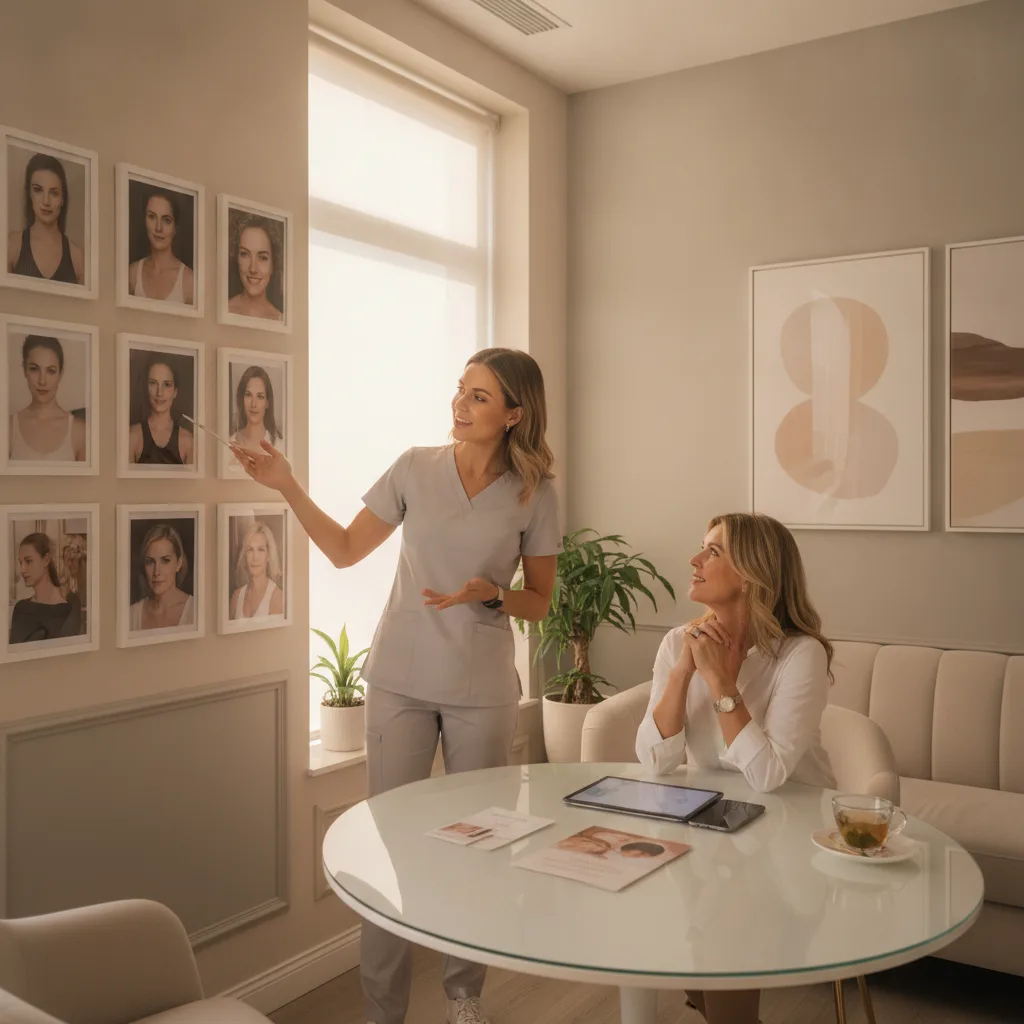
You run a med spa without GLP-1 services
Run the Med Spa Playbook: Aesthetic Focus, Visual Proof, Fast Conversion Cycles
If your med spa focuses on injectables, body contouring, and elective aesthetic services — without offering GLP-1 prescriptions — the standard med spa marketing playbook applies. Build your before-and-after gallery with proper HIPAA marketing authorization (separate from treatment consent), invest in systematic review generation on Google and Instagram, and structure your retargeting campaigns around the 7–30 day decision window. With 87% of med spa clients beginning their weight loss journey via online research, your digital presence is your front desk.
The highest-leverage structural move is a membership program. The data is clear: members retain at 83% vs. 57% for non-members, and their 12-month lifetime value runs 2.8x higher. That math makes acquisition costs sustainable and reduces your dependence on constant new client flow. Keep your injectable, body contouring, and wellness service lines on separate landing pages with separate campaigns — combining them into one generic 'med spa services' page is how most of this weight loss category's marketing efforts underperform. Patient stories and patient testimonials specific to each treatment type convert better than generic practice-level reviews.
Your med spa added GLP-1 weight loss services
Running Both: How to Keep the Playbooks Separate and Avoid the Compliance Risk
More than 70% of med spas now offer weight loss services as of 2026, which means many practices are running both playbooks simultaneously. The compliance layer is where they collide. The moment your practice prescribes GLP-1 medications, you are subject to HIPAA on patient data, FTC rules on outcome claims and before-and-after content, FDA restrictions on prescription weight loss advertising, and Google/Meta platform policies — four independent enforcement systems your injectable marketing never triggered.
Build clean separation. Create a dedicated GLP-1 program page with its own local SEO footprint, its own ad campaigns using compliant copy ('medically supervised weight management with GLP-1 evaluation'), and its own patient education content that explains program structure, nutrition guidance, clinical oversight, and what happens after the medication stops. Run your aesthetic services on separate campaigns with their own visual creative.
Use a CRM like GoHighLevel to maintain separate nurture sequences. The med spa follow-up cadence — fast, visual, booking-focused — will actively hurt your weight loss program conversion when applied to patients in a 90-day clinical evaluation process. The GLP-1 patient retention automation runs on a 12-month timeline. Your Botox rebooking sequence runs on a 90-day cycle. These are different systems, and running them on the same infrastructure without separation is the fastest way to both lose weight loss patients and confuse your aesthetic clients.
You run a dedicated medical weight loss clinic
Weight Loss Center Marketing Built for the GLP-1 Era: Clinical Credibility First, More Patients Through Retention
Dedicated medical weight loss clinics competing in 2026 are operating in a $28 billion US market where GLP-1 prescriptions now account for roughly 8% of all US prescriptions filled. The buyer in your funnel is not an aesthetic consumer. They are a patient — often presenting with metabolic syndrome or obesity — who has already done extensive research and is evaluating your clinical credibility before they ever book an initial consultation. Your marketing's job is to earn that trust before the phone rings.
Local SEO is your first priority, not paid ads. Clinics running optimized Google Business Profiles in mid-sized markets generate 40–80 new patient inquiries per month at $30–$60 CPL — a fraction of the $55–$140 CPL on GLP-1 Google Ads terms. Build city-specific landing pages that explain your program structure (not just the medication), invest in patient education content that addresses what happens when GLP-1 patients stop medicating (about two-thirds regain weight within a year per published trials), and generate positive reviews systematically via SMS automation after every milestone check-in. Clinics that frame the marketing argument around the supervised maintenance program — not the drug — remove price as the deciding variable and attract weight loss patients qualified for long-term retention.
On the paid ads side: use compliant copy framing only. Google and Meta both allow weight loss advertising when the clinic positions itself as a 'provider of medically supervised weight management with GLP-1 prescription evaluation' — not by drug brand name, not by specific outcome promises, and not using terms like 'compounded semaglutide' in ad headlines. Clinician-led short-form video (15–30 seconds, education-first) outperforms static image ads by 40–70% in click-through rate on Meta and clears platform compliance review. Well-structured GLP-1 program landing pages convert at 6–12% for consultation requests when they lead with program details and physician credentials rather than transformation promises. LegitScript certification is required before launching on Google or Meta — budget 2–6 weeks for that process before your campaign goes live.
We have built weight loss center marketing systems for clinics that came to us relying on physician referrals and left with 40–80 new patient inquiries per month from organic and paid search combined. At Geek Powered Studios, we have spent over a decade building lead generation for healthcare practices, and we know that GLP-1 marketing is a different animal than any other category — four regulatory layers, a 12-month patient journey, retention economics that dwarf new patient acquisition costs, and an ad platform environment where one wrong phrase gets your account suspended. We build the full system: compliant GLP-1 Google Ads and Meta campaigns, city-specific landing pages, optimized Google Business Profile, patient education content that ranks and converts, and HIPAA-compliant CRM automation that keeps patients enrolled past the 90-day drop-off window.
We work with one weight loss clinic per market. If yours is still available, the conversation starts with a free strategy session where we audit your current local SEO footprint, your GBP review velocity, your ad account compliance status, and your patient retention infrastructure — and tell you exactly where the fastest gains are. That is a 30-minute call, not a sales pitch.
The weight loss practices that win in 2026 are not the ones with the biggest ad spend. They are the ones with the clearest understanding of their buyer's clinical mindset, the most compliant and effective patient education content in their market, and the strongest retention systems keeping patients engaged past the first 90 days. If your current marketing is built on the aesthetic med spa model — visual transformation promises, undifferentiated service pages, and no retention automation — this is the year to rebuild it correctly.
Frequently Asked Questions
Ready to get started? Contact Geek Powered Studios today.