
Restoration company SEO lead generation comes down to five levers: a fully optimized Google Business Profile, consistent review velocity of at least five new reviews per month, a mobile site that loads fast and shows a tappable phone number, city-specific service pages for every market you dispatch into, and call tracking that connects organic search to actual phone calls. At maturity (12-plus months of consistent SEO investment), organic leads run $25-$45 each versus $210-plus through Google Ads and carry a 25-40% close rate versus 8-15% from platforms like Angi. The CPL math makes the case: own-channel SEO leads close at higher rates and cost less to acquire than any paid alternative.
-
GBP signals: 32% of Map Pack ranking weightFix your profile before anything else
-
5 new reviews per monthMinimum velocity to move Map Pack position
-
Mobile-first, sticky CTA72% of restoration leads arrive on mobile
-
One city page per dispatch zoneGeneric pages don't rank; local content does
-
$25-$45 organic CPL at month 12Beats Google Ads ($210+) on cost and close rate
-
Call tracking before any other spend74% of conversions happen over the phone
Restoration company SEO lead generation is not a brand awareness play. It is an emergency response system that either puts your business in front of a panicked homeowner at 11 p.m. or hands that job to whoever shows up instead. Most restoration businesses doing $2M-$5M in annual revenue already have some marketing in place: a website, maybe a Angi or Thumbtack account, possibly a generalist agency they hired and later fired. The problem is rarely effort. It is that the five levers that actually convert searchers into dispatched jobs are rarely all working at once. This guide names each lever, explains the mechanism behind it, and tells you which one to fix first.
Before you start
- An active Google Business Profile claimed and verified for your primary service location
- Access to your website CMS (WordPress, Webflow, or similar) with ability to edit pages and headers
- A CallRail account or equivalent call-tracking tool set up with at least one tracking number
- Google Analytics 4 and Google Search Console connected to your website
- A process for requesting reviews from customers post-job (a manual text message works to start)
- IICRC certification or equivalent credentials documented and ready to reference on your site
Optimize Your Google Business Profile for Local SEO and Map Pack Visibility
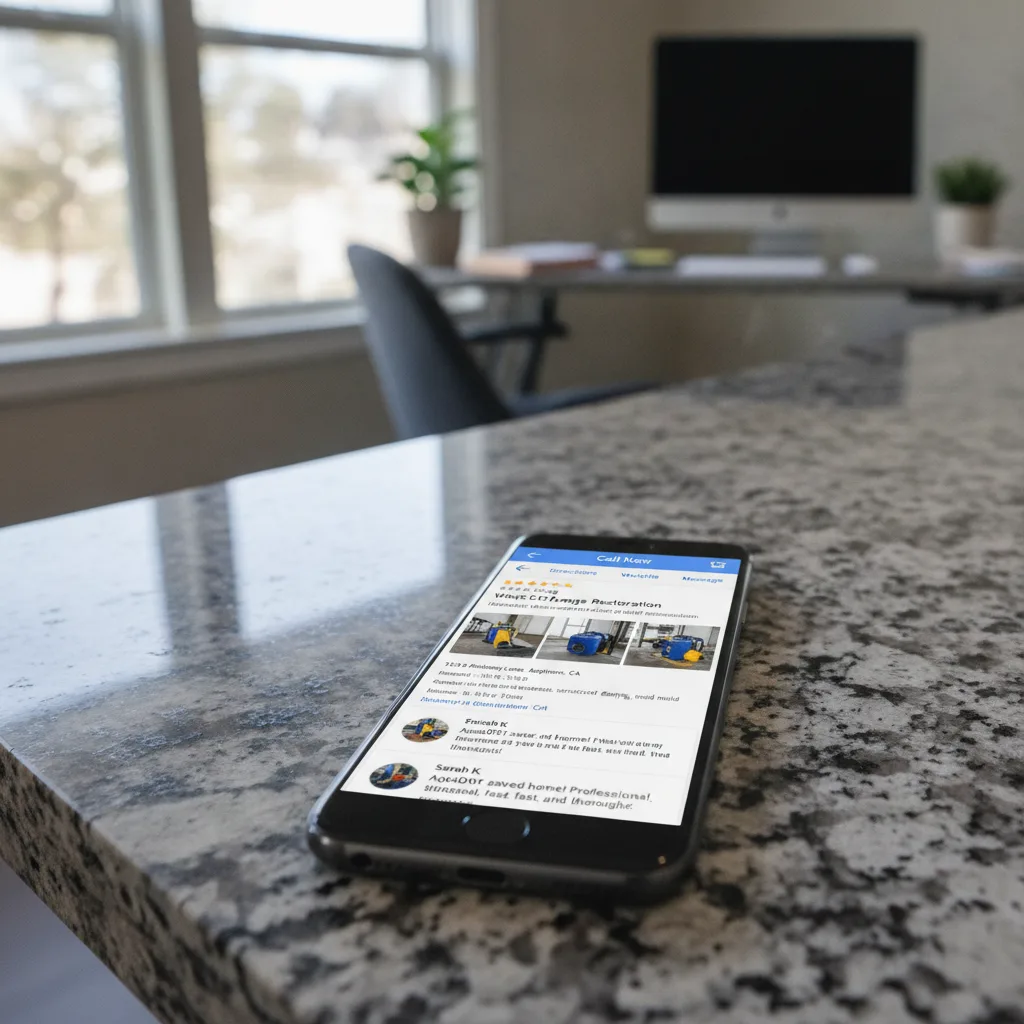
Your Google Business Profile is the single most important asset in your restoration company SEO lead generation system. GBP signals account for 32% of local pack ranking weight (BrightLocal, 2026), and 57% of restoration companies already identify it as their top lead source. If your profile is incomplete, you are losing Map Pack positions to competitors who simply filled in the fields you left blank.
Start with your primary category. Set it to 'Water Damage Restoration Service,' not 'General Contractor' and not 'Cleaning Service.' The wrong primary category dilutes your relevance signals for the searches that matter: 'water damage restoration near me,' 'emergency flood cleanup,' and similar high-intent queries. Add secondary categories for fire restoration, mold remediation, and any other damage types you handle, but the primary category has to be right first. Search engines use this signal to decide which restoration services your business actually provides.
Beyond category, fill every section: service descriptions with the specific damage types and cities you serve, your 24/7 availability hours, photos of actual jobs (before-and-after sets perform best), and your service area radius set to match your true dispatch range. Restoration companies with fully optimized profiles receive 5x more direction requests than those with incomplete listings. As of 2026, Google AI Overviews appear above the Map Pack for many local restoration searches and they cite the same businesses with strong GBP signals, so getting this right serves both classic search results and AI-generated answers simultaneously. Your target audience is searching on both surfaces and you need to show up on each one.
Google Business Profile Manager
Free
The direct interface for editing every GBP field, publishing posts, responding to reviews, and monitoring search and map impressions.
Local Falcon
From $29/mo
Grid-based rank tracker that shows exactly where your GBP ranks across your service area, so you can see which zip codes need attention.
Common Mistake
Many restoration business owners set their GBP service area so wide that it weakens relevance signals in the core city where they actually win jobs. Keep your radius tight to your real response zone, then expand only after your core market is ranking.
Build Review Velocity to Generate More Leads from Local Search
Review velocity is now one of the fastest-moving ranking factors in local search. In 2026, it jumped from rank 93 to rank 11 in Local Falcon's local ranking factor survey, representing roughly 10% of total local ranking weight. That is the single largest year-over-year weight increase in the local algorithm. Combined with the 16% weight that reviews contribute to the local pack (BrightLocal, 2026), review signals now account for more than a quarter of what determines whether your restoration company shows up in the Map Pack. Most restoration companies are not moving fast enough on this lever.
The practical target: a minimum of five new reviews per month per location. Going from two reviews per month to six can move a business 3-5 positions in Google Maps within 30 days (Whitespark, 2026). The timing and channel of your request matter as much as the ask itself. SMS requests sent within two hours of job completion average a 25-35% response rate (Podium benchmark data), compared to under 10% for email. The homeowner's relief is highest right after the crew packs up. That is your window to generate new leads from every completed job.
Use Podium or a similar review-request tool to automate the SMS sequence. The message should be short, personal, and link directly to your Google review page: one sentence acknowledging the specific job, one sentence making the ask, and a direct link. Do not route people through your website first. Every extra click is a review you do not collect. For restoration companies, 64% of homeowners choose the company with the most recent reviews, which means recency matters as much as total count. Social media posts sharing five-star reviews can extend the credibility signal further and build trust with potential clients who are still in research mode.
Podium
From $399/mo
Sends automated SMS review requests post-job and aggregates responses across Google and other platforms. SMS outperforms email by 3-4x for review collection.
Grade.us
From $110/mo
Lighter-weight review request automation with drip sequencing. Good option for restoration businesses not yet ready for the full Podium suite.
Quick Win
If you have no automation in place yet, start with a manual text from your personal phone to every job you close this week. A single personal message converts better than a polished automated email. Get the cadence right manually before you automate it.
Fix Mobile Site Speed and Add a Sticky Click-to-Call Button to Capture Leads
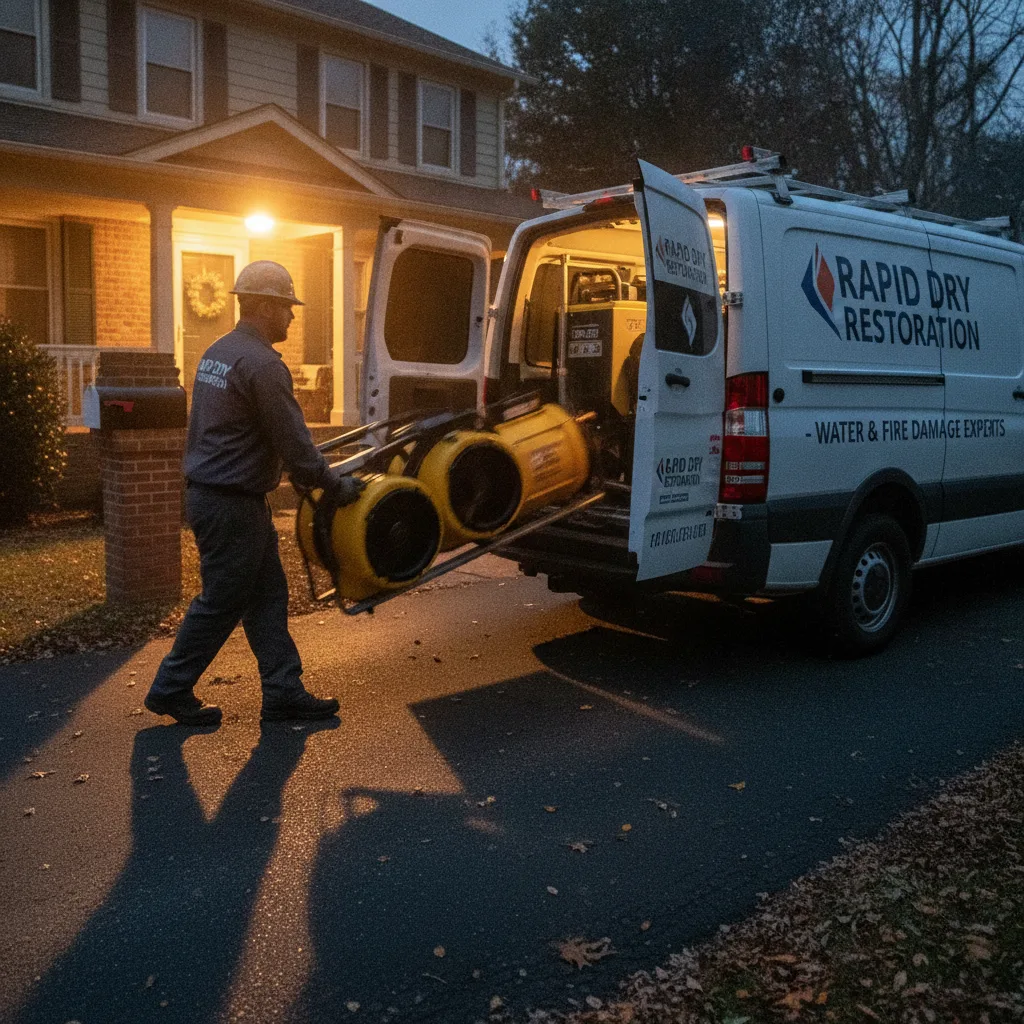
Seventy-two percent of restoration leads come from mobile devices during emergency situations. That means your website's mobile experience is the front door for most of your potential clients. The average restoration website renders its main content in 9.9 seconds (2026 benchmark data), which is 7.4 seconds above Google's 2.5-second passing threshold. Sites with LCP under 1.8 seconds convert 2.3x more calls than those above 3.5 seconds. Most restoration businesses are sitting well above that threshold and do not know it.
The two fastest fixes are image compression and a sticky click-to-call button. Run every image on your site through Squoosh or ShortPixel before upload. Switch to WebP format. Remove any page-blocking scripts that fire before your main content loads. These changes alone can cut two to four seconds off a slow site. Responsive web design paired with responsive design principles keeps your layout clean across screen sizes, but the sticky header button is the highest-ROI single change: prominently displaying a click-to-call button in a sticky header increases mobile call conversion rates by up to 200% compared to burying the phone number in a footer or behind a contact form.
Think about what a homeowner searching 'emergency water damage Austin' at midnight actually does. They hit your site, they are scared, water is on the floor. If your phone number is not immediately tappable, they go back and call the next result. Landing page optimization for restoration companies means putting the phone number and a clear emergency CTA at the top of every page, before anything else. Emergency-optimized pages reach 8-15% conversion rates versus 2-3% for average contractor sites. The difference is friction, not content. This lever requires no digital marketing budget to fix, only a few hours of CMS work.
Google PageSpeed Insights
Free
Measures LCP, FID, and CLS on both mobile and desktop. Shows exactly which elements are slowing your page load and in what order to fix them.
ShortPixel
From $4.99/mo
Bulk-compresses and converts images to WebP on upload. Integrates directly with WordPress and reduces image payload without visible quality loss.
Priority Call
If you can only make one change this week, add a sticky click-to-call button to your mobile header. It requires no developer for most CMS platforms and it is the highest-ROI single change a restoration website can make given the 72% mobile lead share.
Build City-Specific Service Pages That Win High-Quality Leads in Local Searches
City-specific landing pages targeting '[damage type] restoration in [city name]' routinely outrank both national franchise pages and generic service pages in local search results. Each page needs 800-1,500 words of genuinely local content: neighborhoods served, common local damage causes (flash flooding patterns, pipe freeze risk, local building stock age), response time from your nearest office, and local case study details where you have them. Thin pages with just your city name swapped in do not rank. Search engines understand the difference between local expertise and keyword insertion, and so do the potential clients reading the page.
Structure your pages around the customer's emergency, not your service menu. Lead with 'Available 24/7 in [City]' and your click-to-call button before anything else. Then follow with what you handle (water damage, fire restoration, mold remediation), why it matters locally, and what the process looks like from first call to final inspection. Add an FAQ section that addresses questions specific to that market. Using keywords naturally throughout the page, in headings, body copy, and meta descriptions, signals to search engines exactly which location and restoration services each page covers. Meta descriptions should include the city name and your 24/7 availability, since these details directly influence whether a searching homeowner clicks your result.
Prioritize pages for every city in your service areas where you have or want dispatch volume. A restoration business covering a metro like Austin should have individual pages for Austin, Round Rock, Cedar Park, Georgetown, Pflugerville, and Kyle at minimum. Each page should link back to your primary service hub page and to your GBP listing. This internal link structure is a powerful tool for helping search engines understand which location each page is meant to serve and strengthens the website signals pointing back to your GBP. Restoration companies that rank in Google's top 3 local results capture nearly 68% of all clicks. Getting to position 3 for 'water damage restoration in Round Rock' is worth more than ranking position 8 for a broad national term. Local SEO this specific generates 3x more qualified leads than broad national campaigns for water damage restoration companies (2026 benchmark data).
Content Marketing Shortcut
Interview one of your crew members who runs calls in each city. Ask what causes most of the water damage calls there. That local knowledge turns a generic page into something that actually helps the homeowner and signals genuine expertise to search engines.
Set Up Call Tracking and Measure Which Lead Generation Strategies Actually Pay Off
Seventy-four percent of water damage restoration conversions happen over the phone, yet most restoration business owners track only form fills in Google Analytics. That means most owners are measuring less than a quarter of their actual lead activity and making budget decisions based on incomplete data. Setting up call tracking is the prerequisite for knowing which SEO efforts are generating revenue, not just traffic. Without it, your lead generation efforts are essentially flying blind.
CallRail is the standard tool for restoration companies running any mix of organic SEO, PPC ads, and local service ads. Assign a unique tracking number to each channel: one for your GBP listing, one for your organic landing pages, one for any PPC ads you are running. Dynamic number insertion lets you use one number on the page that swaps based on how the visitor arrived. Connect CallRail to Google Analytics 4 so phone calls appear as conversion events alongside form fills. Once you can see which keywords and pages are generating calls, you can refine your content marketing strategy, shift PPC budget toward what converts, and cut what is not working. A 43% decrease in CPL within 30 days has been documented for restoration companies that completed call tracking integration with their ad accounts.
The CPL math is the reason all of this matters. At maturity (12-plus months of consistent SEO investment), organic restoration leads run $25-$45 each. Local Services Ads run $156-plus and Google Ads run $210-plus per lead. Lead platforms like Angi and Thumbtack deliver 8-15% close rates versus 25-40% for leads from your own marketing channels. A restoration business running three trucks at a $3,000 average ticket does not need more leads in total. It needs more leads that close at a higher rate and cost less to acquire. A mature restoration company lead generation system built on owned-channel SEO delivers exactly that, and call tracking is the instrument that tells you when you have built it. Paid search CPL for home services rose 10.51% year over year (LocaliQ, 2025 analysis of 3,211 campaigns), which makes the organic alternative more attractive every year.
CallRail
From $45/mo
Assigns unique tracking numbers per channel, records calls, transcribes conversations, and passes call conversions directly to Google Analytics 4 and Google Ads.
Google Analytics 4
Free
Tracks all web-based lead activity. When connected to CallRail and Search Console, it shows the full picture of which pages and keywords are generating revenue.
Watch Out
Using your main business phone number everywhere without tracking numbers means your data will always be incomplete. Even if you are not running PPC ads yet, set up at least two tracking numbers now: one for your GBP and one for your website. The comparison alone will tell you a lot about where your leads actually come from.

The Stall Pattern That Kills Restoration Company SEO Results
Stalled Map Pack rankings for restoration companies almost always trace back to one of three causes: NAP inconsistency across citations (your name, address, and phone number appearing differently across directories), review velocity below five new reviews per month, or weak website signals pointing to the GBP listing. If you have been investing in SEO for more than six months without meaningful movement, audit these three factors before changing anything else. Nine times out of ten, one of them is the culprit. Fix the citations first (use BrightLocal or Yext to find inconsistencies), then push review velocity past the five-per-month threshold, then confirm your city service pages are internally linking to your GBP URL. Link building from local directories like the BBB and the IICRC vendor directory also strengthens the website signals that search engines use to verify your location and expertise.
Restoration company SEO lead generation compounds in ways that no ad platform does. The city pages you build in month two keep generating qualified leads in month fourteen. The review velocity you build in the first 90 days pushes your Map Pack position higher every subsequent month. The call tracking you set up on day one tells you exactly which of your lead generation strategies are driving revenue so you can focus your team's time on what works. At Geek Powered Studios, we have built these systems for home services companies for 15 years. Every engagement includes a free custom website, and we work with one restoration company per market. The Stan's Heating, Air, Plumbing and Electrical case study shows what this compounding model delivers: 150-plus first-page keywords and a 300% increase in organic leads by running this exact approach consistently. If your city is still open, the next step is a free strategy session where we show you exactly what your dispatch board could look like in 12 months. Get in touch and let's find out what is possible.
Frequently Asked Questions
Ready to get started? Contact Geek Powered Studios today.