
A full-service San Antonio SEO engagement typically runs through seven distinct phases: discovery and audit, technical foundation or website rebuild, local SEO setup (citations, Google Business Profile, Map Pack signals), content strategy and ongoing blog production, paid ads launch, the compounding organic growth window in months 3–6, and ongoing monthly reporting and optimization. The process is not purely linear — local citation work and web development often run in parallel during the first six weeks. Meaningful organic traction typically appears in months 3–4, with compounding growth through month 6 and beyond. Green Energy of San Antonio went from zero trackable leads and a website scoring 54 on performance to 100+ leads per month using exactly this model.
-
Weeks 1–2Full audit completed before any content or ads touch the account
-
54 to 91PageSpeed score after Webflow rebuild for Green Energy of San Antonio
-
Months 3–4When meaningful organic traction typically first appears in San Antonio SEO
-
737 to 1,200+ keywordsRanked keyword growth for Green Energy of San Antonio after full engagement
-
30 organic leads per monthZero cost-per-click leads generated through SEO alone
-
One integrated teamThe structure that lets organic, paid search, and paid social share one data layer
Most San Antonio business owners who hire an SEO company have the same frustration: months pass, reports arrive, and nothing in the actual business changes. No new calls, no uptick in qualified leads, no visible movement in local search results. The problem is usually not that SEO doesn't work — it's that no one explained what a well-run San Antonio SEO engagement actually looks like from the inside. This walkthrough does exactly that. It maps the process phase by phase, using Green Energy of San Antonio as a real worked example, and explains who owns each step, what gets approved, and what you should expect to see at each milestone. If you're evaluating San Antonio SEO services or trying to hold a current engagement accountable, this is the reference you need.
Before the Engagement Starts: What to Have Ready
- Know where your leads are coming from right now — TV, radio, referrals, word of mouth — and be honest about what you can't track. This baseline shapes the entire keyword research and channel strategy.
- Pull your site's Google PageSpeed score at pagespeed.web.dev. If it's below 70, expect web design work to come before SEO content — a slow site cancels out strong content in a competitive market.
- Compile the specific services you want to rank for, not just your business category. 'Attic insulation San Antonio' and 'window replacement San Antonio' are different targets than 'home energy company.'
- Know your average ticket size. At $5,000+ per job, the ROI math on SEO investment becomes straightforward — but only if you know your numbers before the conversation starts.
- Note which competitors keep showing up when you search your own services in San Antonio, TX. You don't need a full audit — just notice who owns the Map Pack and the top organic search results.
- Be ready to grant access to Google Search Console, Google Analytics, and your Google Business Profile. No access means no data, and no data means no meaningful audit.
- Set realistic timeline expectations: San Antonio SEO typically shows meaningful traction in months 3–4, with compounding organic lead growth building through month 6 and beyond.

Week 1–2
Discovery and Audit: Finding Out What's Actually Broken
The San Antonio SEO process starts with a diagnostic, not a deliverable. Before writing a single word of content or touching a service page, the team runs a full audit covering site speed, indexed pages, existing keyword rankings, Google Business Profile completeness, local citation consistency, and the gap between where you rank now versus where competitors sit. For Green Energy of San Antonio, that audit revealed a site scoring 54 on performance — slow enough to lose visitors before they ever saw the company's services — and a digital presence that was generating zero trackable leads despite active TV and radio spend.
Keyword research at this stage is specific, not generic. The goal isn't a list of broad terms like 'home energy San Antonio' — it's identifying the exact phrases potential customers type when they're ready to buy: 'radiant barrier San Antonio,' 'window replacement San Antonio,' 'attic insulation San Antonio.' These carry purchase intent, not research intent, and they're the ones that actually produce calls. The audit maps which of those terms the site currently ranks for, which competitors own them, and where the fastest gaps to close exist. That gap analysis drives the entire competitive positioning strategy.
The audit also includes a local search snapshot: how the Google Business Profile looks, whether local citations are consistent across directories, and whether NAP data (name, address, phone) matches across the web. Inconsistent citations are one of the most common reasons San Antonio local businesses lose Map Pack visibility — and one of the fastest things to fix once found. This is the SEO process step that most business owners have never seen, because most San Antonio SEO company engagements skip the diagnostic and go straight to content.
What you approve at this stage
Before work begins in earnest, you review and sign off on the target keyword set and the overall strategy direction — organic-only, paid ads only, or a combined approach. This is the decision gate that sets the scope of everything that follows.
Weeks 2–6
Website Rebuild or Technical Foundation: What On-Page SEO Can't Overcome Alone
A slow, poorly structured website cancels out strong SEO content — and in San Antonio's competitive home services market, that's a death sentence for search visibility. For Green Energy of San Antonio, the existing WordPress site was rebuilt in Webflow, pushing the performance score from 54 to 91. Bounce rate dropped. Conversion rate climbed. That single infrastructure decision — platform migration plus a redesigned site structure — changed the entire trajectory of what the SEO campaign could accomplish. Web design and search engine optimization are not separate line items; they are load-bearing on each other.
During this phase, the technical work covers site structure (how pages link to each other via internal links, how service pages are organized), mobile performance (the majority of local searches in San Antonio happen on a phone), meta descriptions and title tags, and on-page SEO at the page level: headers structured around target keywords, service page copy built to answer specific search intent, and location signals woven throughout. This isn't template content — each service page is built around a specific keyword and a specific San Antonio audience. Product page optimization at this level is what separates a site search engines can read from one they ignore.
If a full web design rebuild isn't needed, this phase still involves meaningful on-page SEO work on existing pages: rewriting headlines, restructuring body copy, adding internal links to undersupported service pages, and fixing technical issues that suppress indexing. The output is a site that search engines can crawl completely and that local customers actually stay on. Site speed alone is a ranking signal — and a site that loads fast on a phone in Alamo Ranch or Schertz has a structural advantage over a competitor still running a 2019 WordPress build.
The on-page SEO handoff
You review and approve revised service pages before they go live. This is your chance to confirm the content accurately reflects your services, your service area, and your brand — before it's indexed by search engines.
Weeks 3–6 (runs parallel to web work)
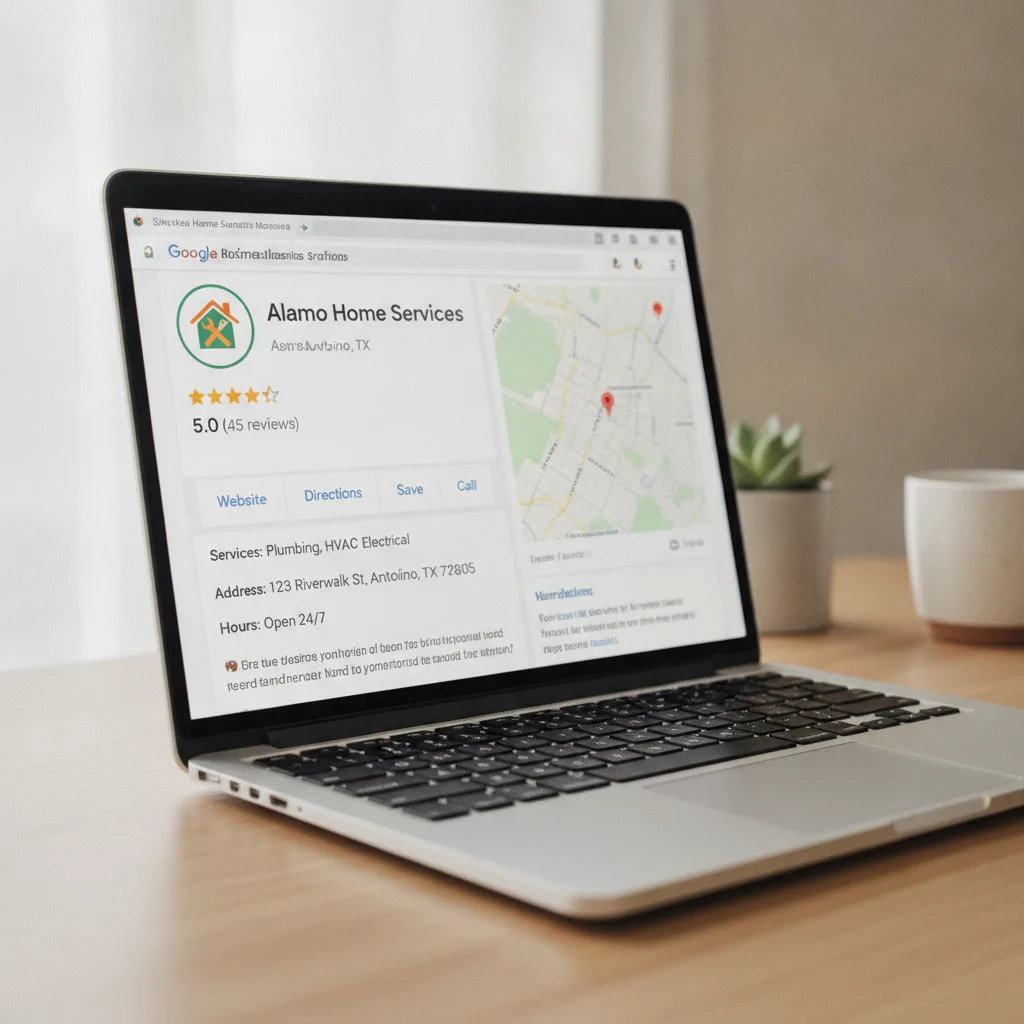
Local SEO Foundation: Citations, Google Business Profile, and Map Pack Signals
Focused local SEO for San Antonio businesses runs on three load-bearing signals: a fully optimized Google Business Profile, consistent local citations across directories, and a steady stream of genuine customer reviews. BrightLocal 2025 data shows 42% of searchers click Map Pack results for local-intent queries — meaning your Google Maps presence is often more important than your organic ranking for the keywords that drive calls. A strong local search strategy addresses all three signals at once, not just the one that's easiest to check off.
For Green Energy of San Antonio, local citation building involved two parallel tracks: manual citation submissions to high-authority directories and a listing management service to monitor and correct NAP inconsistencies across the web. This isn't a one-time task — citations drift over time as directories update their data, which is why ongoing citation management is part of the engagement, not a one-week project. Each corrected listing tightens the signal cluster that tells Google this business is exactly where it says it is.
Google Business Profile optimization at this stage goes beyond filling in business hours and uploading a logo. It means selecting the right primary and secondary categories, writing a keyword-informed business description, adding service areas that match the target suburban growth corridors (Alamo Ranch, Stone Oak, Schertz, Boerne, Cibolo), and building a review strategy so new customers are consistently asked to leave feedback. San Antonio's metro population hit 2,813,140 as of July 1, 2025 (U.S. Census Vintage 2025), and the city adds roughly 38,000–50,000 residents per year. Those new residents are actively searching for home services, and your Google Business Profile is often the first thing they see.
Month 2 Onward (ongoing)
Content Strategy and SEO Blog: Building Search Authority Over Time
Ongoing blog content is what turns a well-built site into a compounding lead source. For Green Energy of San Antonio, the content strategy targeted question-style queries that homeowners actually search before making a purchase decision: 'is fiberglass insulation toxic,' 'water softener life expectancy,' 'how long does radiant barrier last.' Several of those blog posts reached the top position in search results — bringing in qualified traffic from people who were actively researching services Green Energy sold. That's search intent matched to content creation, not content published and forgotten.
Service pages and blog content serve different purposes and need to be treated that way. Service pages target high-intent keywords with direct conversion copy ('attic insulation San Antonio') and are built to get someone to call or fill out a form. Blog posts target earlier-stage search behavior, build topical authority with search engines, and answer the questions that move a potential customer from 'considering' to 'ready to call.' Running both — optimized service pages plus an ongoing content strategy — is what pushed Green Energy's ranked keyword count from 737 to more than 1,200. That growth in search presence is what compounding organic search results actually look like.
Content production at this phase is owned by the SEO team, not the client. You review and approve drafts, but the keyword research, topic selection, writing, and on-page SEO are handled internally. What the client contributes: subject matter expertise when needed (what does a radiant barrier installation actually involve?) and a final review pass to confirm accuracy before publication. Expect two to four new content pieces per month depending on the engagement scope. The cadence compounds: website traffic in month 6 is partly built on content published in month 2.
What 'ongoing' actually means
Each content piece is researched, written, and optimized before it goes to you for review. The cadence compounds: month 6 results are partly built on content published in month 2, which is why consistency in production matters more than any single piece.
Month 1–2 (paid ads can launch before SEO shows traction)
Paid Ads Launch: Google Ads and Facebook Ads Running Alongside San Antonio SEO
Paid ads and San Antonio SEO services run on different clocks. Organic search builds over months; Google Ads can produce qualified leads in the first week. For Green Energy of San Antonio, the paid strategy started with Dynamic Search Ads — a smart way to let Google match ads to real search queries before the team had enough data to build keyword-based campaigns manually. Once that data came in, keyword campaigns were structured around the highest-converting terms the DSA campaigns identified. When Google Performance Max launched into the account, lead volume increased 176% and cost per lead dropped 44% comparing January–February 2022 to the same period in 2021.
Facebook Ads ran simultaneously but served a different role. Rather than capturing active searchers who already know they want attic insulation, Facebook reaches homeowners who don't yet know they need a service — awareness and consideration-stage demand. For Green Energy, continuous A/B testing of images, video, and ad copy brought qualified Facebook leads in at as low as $45 per lead. That figure made Facebook one of their highest-performing lead sources by cost per acquisition, a result most home services operators don't expect from social advertising.
The strategic decision that made all three channels work together was running them through one team and one data layer. When organic, paid search, and paid social are managed by separate vendors, the data stays siloed — you can't tell which channel is producing the best leads, only which channel is producing the most clicks. A single team managing all three channels can shift budget toward the highest-converting source, suppress underperforming ad sets, and use organic keyword data to inform which paid search terms to prioritize. That's what GPS identified as the 'trifecta' that drove Green Energy's real business growth.
What you decide at this stage
Before paid campaigns launch, you approve the ad creative, landing pages, and budget allocation. Call tracking also needs to be set up at this point — GPS uses CallRail to tie phone calls back to specific campaigns, so you know exactly which ad or keyword produced each lead.
Months 3–6
Months 3–6: When San Antonio SEO Starts to Compound
The first meaningful organic traction in a San Antonio SEO engagement typically shows up in months 3–4. This is when new service pages and blog content begin indexing and building search presence, citation signals stabilize, and Google Business Profile activity starts reflecting in Map Pack visibility. It's not overnight, and any SEO agency that tells you otherwise is selling you something. What you should see in this window: search traffic climbing, ranking keyword counts growing, and the first organic leads coming through the site without paid ad spend behind them.
For Green Energy of San Antonio, ranking for competitive local terms like 'radiant barrier San Antonio' and 'attic insulation San Antonio' was a milestone that took strategic content plus citation authority plus a well-structured site working together. No single piece got them there. That's the right frame for evaluating progress: not 'did one blog post rank' but 'is the full picture of our digital presence stronger than it was 90 days ago.' Competitive market SEO is a system, not a single tactic.
Month 6 is typically when the ROI conversation becomes straightforward. At a $5,000 average ticket and 30 organic leads per month — the volume Green Energy reached through SEO alone — even a 10–15% close rate produces revenue that dwarfs a typical monthly SEO investment. The math is what makes home services one of the best categories for San Antonio SEO: high ticket size, recurring demand, and a local market growing by tens of thousands of residents per year.
AI search and what it means for your San Antonio SEO strategy in 2026
AI Overviews are reshaping some San Antonio search behavior — data from April 2025 to April 2026 shows 'San Antonio SEO' queries dropped 47% year over year as AI search climbed 307%. But emergency and transactional queries held: HVAC searches grew 26%, plumbing 22%. If you're a home services operator, the searches that matter most — 'AC repair San Antonio,' 'water heater replacement San Antonio' — still land on traditional search results. A multi-channel approach combining organic SEO, paid ads, and a strong Google Business Profile is the right answer to AI disruption — not a reason to pause SEO investment.
Monthly (ongoing)
Reporting and Ongoing Optimization: What a Good SEO Company Shows You Each Month
Monthly reporting in a well-run San Antonio SEO engagement covers the metrics that connect to your business, not the ones that look impressive in a slide deck. Ranked keyword count and organic traffic are inputs; leads generated, cost per lead, and revenue-attributable calls are what you actually care about. Expect a report that shows which pages are driving conversions, which campaigns are producing the lowest cost per qualified lead, and where the next month's effort will be focused. That's the difference between a good SEO company and one that sends you a PDF of graphs and disappears.
Reporting cadence also includes a standing call or update — weekly for active campaigns, monthly for stable mature accounts. This is where escalations happen: if a campaign is underperforming, if a competitor has jumped you on a key term, or if a new service line needs content support, the monthly check-in is where that gets flagged and addressed. If you're chasing your SEO agency for updates, that's a signal worth paying attention to. It usually means client feedback isn't built into the workflow.
The ongoing optimization work that happens behind the reports includes A/B testing ad creative, refreshing underperforming blog posts with updated content, adding new location pages as your service area expands into Boerne, Schertz, or other San Antonio suburbs, and monitoring Google Business Profile signals including review response cadence and Q&A activity. As of 2026, only about 30% of San Antonio companies have fully optimized SEO strategies despite 65%+ having active websites. The gap between 'having a site' and 'winning in local search results' is exactly where this monthly work lives — and it's only the beginning of what a mature engagement can compound into.
When to escalate
If organic traffic has not meaningfully increased after 90 days, ask for a technical audit review. If ranked keyword counts are flat after 120 days, ask for a content gap analysis. These are decision points that call for a specific diagnosis — not a contract termination.

The Part That Surprises Most San Antonio Business Owners: Organic Leads Cost Zero Per Click
When Green Energy of San Antonio hit 30 organic leads per month through SEO, Richard Ramos was generating roughly one qualified lead every day without paying for a single click. At a $5,000 average ticket, that's a stream of potential revenue that runs whether the ad budget is on or off. San Antonio SEO builds a lead source that compounds month over month and doesn't turn off when the monthly budget runs out — and that's a fundamentally different kind of asset than a paid ads campaign. It's also why the two are most powerful when they run together rather than as either/or choices.
Green Energy of San Antonio went from a website scoring 54 on performance and generating zero trackable leads — spending heavily on TV and radio with nothing to show for it — to 100+ leads per month, 30 of them organic, ranking for competitive terms like 'radiant barrier San Antonio' and 'attic insulation San Antonio,' with Richard Ramos breaking revenue records annually since the engagement began. That's what happens when San Antonio SEO, paid ads, and web design run as one integrated strategy instead of three separate vendors pointing at three separate dashboards. If your San Antonio business is in a similar position — solid revenue, referral-dependent, a website that isn't pulling its weight — that's exactly the starting point this engagement is built for. GPS includes a custom website at no extra cost with every retainer, and there are no long-term contracts. Book your free strategy session and we'll show you what the numbers look like for your market.
Frequently Asked Questions
Ready to get started? Contact Geek Powered Studios today.