
SEO for restoration companies works by building separate, damage-type-specific service pages for water damage, fire damage, and mold remediation, optimizing a complete Google Business Profile for Map Pack rankings, fixing technical issues that silently kill organic leads, and building authoritative backlinks through citations and digital PR. Restoration companies that execute this system consistently for 12 months see 42–61% of all inbound leads originate from organic search. The setup requires 4–8 hours of initial work plus 3–5 hours of monthly maintenance. Core tools needed: Semrush or Ahrefs for keyword research, Screaming Frog for technical audits, BrightLocal for citation management, CallRail for call tracking, and a fully claimed Google Business Profile.
-
42–61%Share of inbound leads from organic search after 12 months of consistent SEO execution
-
9.9 secondsAverage restoration website LCP — 7.4 seconds over Google's threshold, costing 34% of organic leads
-
1,200–2,000 wordsRequired content depth per core service page for competitive water, fire, and mold rankings
-
22%Restoration companies currently using structured data schema — the biggest technical gap in the industry
-
$45/moStarting cost for CallRail call tracking — the only way to know which pages generate real emergency calls
-
+89%More calls from weekly Google Business Profile posts vs. monthly posting, across 18 tested restoration companies
SEO for restoration companies is a seven-step system that puts your service pages in the Google Map Pack and top organic search results for water damage, fire damage, and mold remediation searches — the exact queries homeowners type when disaster strikes at 2 AM. Restoration companies doing $2M–$5M in annual revenue and relying on referrals, TPA relationships, or paid ads are leaving a predictable lead pipeline on the table. Google Ads in this vertical cost $100–$200 per click in competitive US markets. The national average water damage lead costs $542. Organic search, once built correctly, generates those same leads for a fraction of that cost per lead, month after month. This guide covers the complete setup: keyword universe mapping, damage-type service page architecture, city-specific location pages, technical SEO fixes, Google Business Profile optimization, link building, and the call-tracking metrics that tell you which pages are actually producing revenue. Setup takes 4–8 hours. Ongoing maintenance runs 3–5 hours per month. The payoff: restoration companies with 12 months of consistent SEO investment see 42–61% of all inbound leads originate from organic search.
- Google Business Profile claimed and verified for your primary service location — without this, Map Pack optimization is impossible
- Google Search Console and Google Analytics 4 connected to your website so you have a baseline of which damage-type queries you already appear for
- Access to your website's CMS (WordPress, Webflow, or equivalent) with permission to create and edit service pages and location pages
- A keyword research tool — Semrush ($139/mo), Ahrefs ($129/mo), or Google Keyword Planner (free) at minimum
- NAP (name, address, phone number) confirmed and consistent across your website, GBP, and any existing directory listings — inconsistencies suppress Map Pack rankings
- IICRC certification documentation on hand for water damage, mold, and fire restoration — these go on your service pages as E-E-A-T trust signals that Google rewards

Map your keyword universe by damage type and search intent
Restoration SEO keyword research starts with three distinct intent categories, each requiring a separate page type: emergency searches ('emergency water damage restoration near me'), project searches ('mold remediation Austin TX'), and awareness searches ('how long does mold remediation take'). These are not interchangeable. A panicked homeowner at 2 AM types different phrases than someone researching options on a Tuesday afternoon — and Google treats those queries as completely separate ranking competitions with different search engine results pages.
Open Semrush or Ahrefs and run each core damage type as a seed keyword: water damage restoration, fire damage restoration, mold remediation, smoke damage cleanup, and biohazard cleanup. Filter for local intent by appending your primary city, surrounding suburbs, and county names. Pull 'near me' and '24 hour' variants too. As of 2026, 'near me' voice queries in the restoration vertical have grown 146% since 2023, and 81% of all restoration searches include local intent terms. These are not optional keyword flavors — they are where the calls come from.
Build a three-column spreadsheet: damage type, intent tier (emergency / project / awareness), and target page. Every keyword maps to exactly one page. If two keywords share the same intent and damage type, they go on the same page — they do not each get their own URL. If a query like 'emergency flood cleanup near me' has no dedicated page on your site today, that is a revenue gap. Google Search Console shows which damage-type queries your restoration company's website already appears for and which ones it is completely invisible on — start there to prioritize which pages to build first.
A keyword with 90 monthly searches and clear emergency intent ('24 hour water damage restoration Dallas') is worth more than a keyword with 1,200 searches and no purchase intent. Emergency-intent queries generate local Map Pack click-through rates 2–3x higher than informational queries. Prioritize emergency and project-intent keywords when sequencing which service pages to build first.
Build a dedicated service page for each damage type — no bundling
A single bundled 'restoration services' page competes for nothing specifically. Google treats water damage restoration, mold remediation, and fire damage restoration as distinct topics with distinct local search intent — each needs its own dedicated page. The minimum required page set for a full-service restoration company is: water damage restoration, fire damage restoration, mold remediation, smoke damage cleanup, and biohazard/contents cleaning. Each is a separate URL, separate title tag, and separate H1. This is the foundational architecture that search engines use to understand what your restoration business actually offers.
Each core service page needs 1,200–2,000 words of substantive content. That word count is not filler — it is the space where you cover your restoration process step by step, explain insurance claim procedures (this matters directly to homeowners filing claims), list your IICRC certifications, show before and after shots from real jobs, and place a strong CTA above the fold and again at the bottom. The target keyword for each page goes in the title tag, H1, and within the first 100 words of body copy. Meta descriptions should run 150–160 characters and include both the damage type and your primary city. These on-page elements are the signals search engines use to match your page to relevant keywords.
Structure each page the same way: a hero section with an emergency phone number visible without scrolling, a process section (extraction, drying, restoration — with equipment named), an insurance and claims section, IICRC certifications, an FAQ block targeting awareness-intent questions for that damage type, and a contact form. This structure serves both the panicked homeowner who needs to call immediately and the project-stage homeowner comparing multiple restoration companies. It also matches the content structure that Google's AI Overviews use to parse and cite service pages — which means the same build that helps you rank also helps you appear in AI-generated answers above the Map Pack.
Water damage restoration is the highest-volume and highest-competition keyword cluster in the restoration industry. Mold remediation and fire damage restoration pages often reach first-page search rankings faster because fewer restoration companies have properly built them out. Build all three — but if you need to sequence your content build, mold and fire damage pages typically deliver keyword rankings sooner while your water damage page builds domain authority over time.
Build city-specific location pages with real local signals
City-specific location pages convert at 1.8x the rate of generic pages when they include genuine local signals: the specific neighborhoods served, local damage causes common to that area (flash flooding from poor drainage, aging infrastructure, high humidity driving mold growth), typical insurance carriers active in that market, and your documented response time from that city. Swapping only the city name into a template produces thin pages that rank for nothing and convert no one. Google recognizes and penalizes this pattern — local customers searching for water damage restoration in a specific city deserve locally relevant content, and Google's ranking systems reward pages that provide it.
Each location page should run 800–1,500 words and target the formula: damage type plus restoration plus city. For a restoration company serving Dallas, that means separate pages for 'water damage restoration Dallas,' 'mold remediation Dallas,' and 'fire damage restoration Dallas' — not one Dallas page that mentions all three services in passing. Five cities times three damage types equals 15 location-specific service pages. That is a real content project. Restoration companies that complete this architecture see 42–61% of all inbound leads originating from organic search after 12 months of consistent SEO. The effort compounds — each page targets a distinct keyword and adds topical authority across your entire restoration website.
Internal linking ties the system together. Each location page links to the corresponding core service page and back. The core water damage page links to every city-specific water damage page. This creates a topical cluster that Google can map clearly: your site is the authority on water damage restoration services in these specific cities. That is the signal that produces dominant search engine rankings at scale and drives sustained website traffic without paying per click.
Fix the technical SEO issues silently killing your organic leads
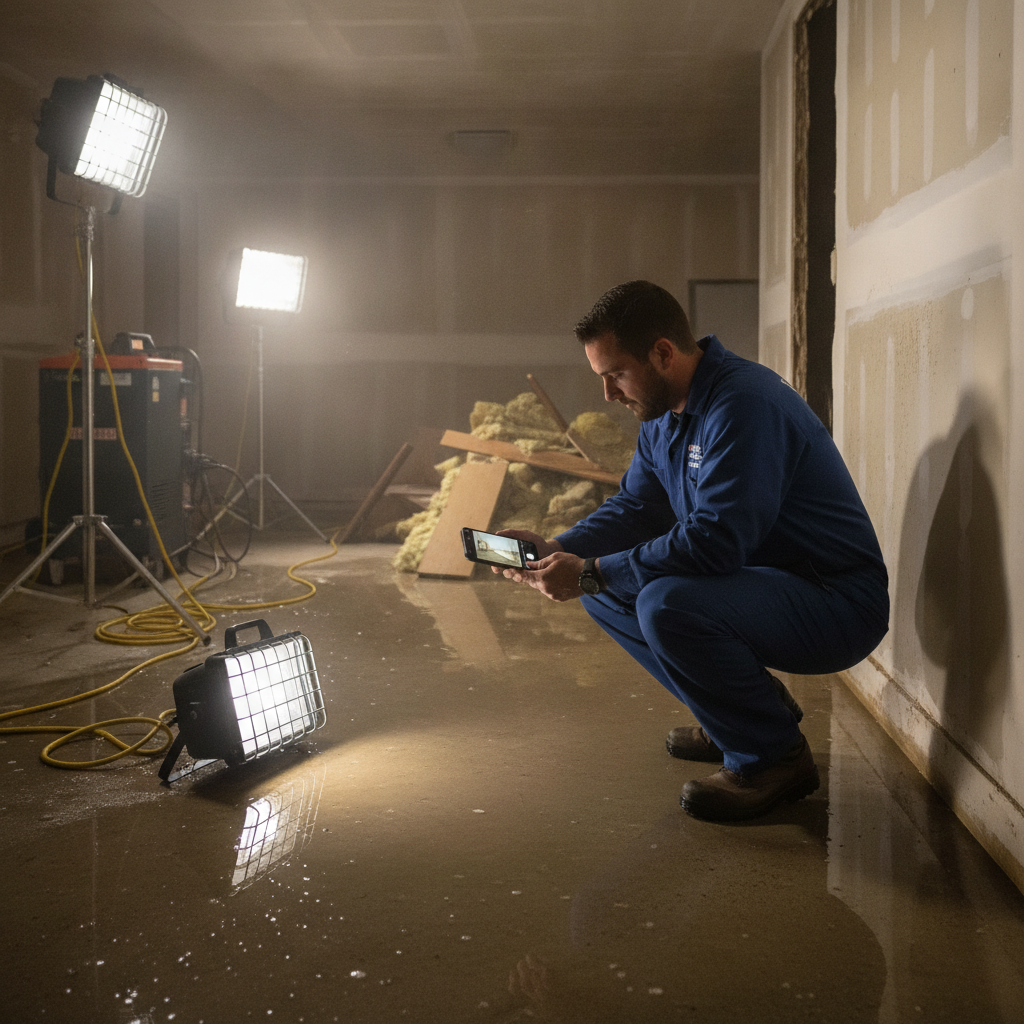
The average restoration website takes 9.9 seconds to render its main content — 7.4 seconds over Google's 2.5-second LCP threshold, according to Borah Labs data from July 2026. Restoration websites with LCP under 1.8 seconds convert 2.3x more calls than those above 3.5 seconds. That is not a performance metric — it is a revenue metric. A homeowner searching at 2 AM for emergency water removal on a mobile phone will close a slow tab in under 3 seconds. Restoration companies lose an estimated 34% of organic leads to these fixable technical issues. The math is straightforward: fix your page speed, recover a third of your lead volume.
Run a technical SEO audit using Google Search Console and Screaming Frog. The four issues that kill restoration websites most consistently: page speed failures (oversized images, unminified CSS and JavaScript, no caching), mobile rendering problems (57% of local restoration searches happen on mobile, and a site that requires pinching or horizontal scrolling loses the call), broken internal links and crawl errors, and missing or malformed structured data. A mobile-friendly site with fast load times is not a feature — it is the minimum requirement to compete for emergency searches. Your restoration company's website must load quickly and display a tappable phone number above the fold on every service page.
Structured data is the biggest competitive gap in the restoration industry as of 2026. Only about 22% of restoration companies use LocalBusiness and Service schema, compared to 44% of sites globally. Schema implementation drives 3x more AI Overview appearances in Google search results — meaning the same technical fix that improves your classic search engine rankings also puts you in Google's AI-generated answers above the Map Pack. Add LocalBusiness schema to your homepage, Service schema to each service page, and FAQPage schema to your FAQ blocks. This is a half-day of implementation with a payoff that compounds for years.
Emergency water damage and flood cleanup searches skew heavily mobile because homeowners are searching from inside the crisis — standing in a flooded basement or leaving a burning house. Your emergency service pages must load in under 2 seconds on a 4G connection, display a tap-to-call phone number above the fold, and require zero horizontal scrolling. 84% of homeowners search online before hiring a restoration contractor, and mobile performance determines whether they call you or the next result.
Optimize your Google Business Profile to win the Map Pack
Google Map Pack rankings for water damage restoration require GBP completeness, review velocity, NAP citation consistency, and website signals all working together. Restoration companies that focus exclusively on reviews while ignoring citation consistency or website signals plateau at positions 4–7 rather than achieving consistent top-3 placement. The Google Map Pack is a system with multiple ranking factors, not a single lever — and as of 2026, Google AI Overviews now appear above the Map Pack for many local searches, citing the same businesses that already have strong GBP profiles and review signals. Winning the Map Pack now also wins the AI answer.
Complete every field in your Google Business Profile. Set your primary category to 'Water Damage Restoration Service' and add Fire Damage Restoration and Mold Remediation as secondary categories. Write a keyword-rich business description that names your primary city and top three restoration services in the first two sentences. List your full service area with specific cities and neighborhoods. Upload real job photos weekly — before and after shots from actual water damage, mold remediation, and fire damage work. Enable messaging so potential clients can reach you directly from the profile. Post to Google Posts at least weekly: across 18 tested restoration companies, weekly GBP posting generated 89% more calls than monthly posting, and consistency outperformed content quality in every case.
Review velocity matters as much as review count. Five new reviews per month over six months is more powerful than 50 reviews posted in one week and then silence. Set up a post-job review request system: an SMS within 24 hours of job completion with a direct link to your GBP review form. Tools like Podium or NiceJob automate this process for field service businesses where your team is on job sites, not at a desk. The restoration companies that generate leads consistently at the local level are the ones treating GBP as a live marketing channel, not a profile they set up once and forgot.
Build authoritative backlinks through restoration-specific digital PR and citations
Link building for restoration companies works best through three channels: local citations, industry directory listings, and digital PR targeting local news and home services publications. Start with citations — your business name, address, and phone number must be identical across Yelp, Angi, HomeAdvisor, the BBB, your Chamber of Commerce, and any local neighborhood directories. A single citation with a wrong suite number or an old phone number sends a conflicting NAP signal that actively suppresses Map Pack rankings. BrightLocal's Citation Builder resolves this across 50+ directories in one workflow.
Industry directory listings that carry real authority for restoration companies include the IICRC contractor finder, the RIA (Restoration Industry Association) member directory, and Angi's verified pro listings. These links carry topical relevance that search engines recognize and reward. Guest posts on local home improvement blogs, neighborhood news sites, and real estate agent resource pages also produce quality backlinks with local geographic signals. Pitch articles on topics like 'What Austin Homeowners Should Do in the First Hour After a Pipe Burst' or 'How Dallas Homeowners Should Document Flood Damage for Insurance' — content that serves local customers and earns links simultaneously.
Digital PR produces the highest-authority backlinks. When a major storm hits your service area and calls spike over 300%, pitch your local ABC or NBC affiliate as a restoration expert source. These mentions produce .com and .org backlinks with city-specific geographic signals that citation building alone cannot replicate. OKC Restorations achieved 181% year-over-year organic click growth and first-page keyword rankings for 14 primary terms in three months by combining localized emergency-intent content with targeted link building. The content and the quality backlinks work together — neither produces full results in isolation.
Ten links from locally relevant, topically related sources — the IICRC directory, local news outlets, home improvement blogs — outperform 200 links from generic directory sites. Do not purchase link packages. A single manual penalty for unnatural links can remove your restoration company's website from search results for months, which is the exact opposite of what an emergency-dependent business can afford. Build links the slow way: earn them through citations, credentials, and digital PR.
Track the metrics that actually predict revenue, not just rankings
SEO success for restoration companies is measured in calls and qualified leads, not just keyword rankings. Set up call tracking with CallRail ($45/mo starting) and assign unique tracking numbers to each core service page and your GBP listing. This tells you exactly which pages and keywords generate phone calls, which lets you double investment in what is working and fix or cut what is not. Connect CallRail to Google Analytics 4 so every call event flows into your conversion reporting and you can see the full organic lead journey from first search to completed call. Measuring SEO success this way closes the loop between ranking data and actual revenue.
Monitor these metrics monthly: total organic calls by service page (water, fire, and mold broken out separately), cost per organic lead by damage type, keyword rankings for your top 10 target terms via Google Search Console or Semrush Position Tracking, GBP call and direction request volume, and page-level conversion rate for each service page. Meaningful organic movement typically shows up in Google Search Console within 3–6 months. Dominant organic lead share — where 42–61% of your inbound leads originate from organic search — takes 12 months of consistent execution. Do not cancel or reduce SEO efforts at month 4 because you have not yet hit that number.
Run a quarterly SEO audit using Screaming Frog and Google Search Console to catch technical issues before they compound. Google's algorithm updates in 2025 and 2026 have continued prioritizing E-E-A-T signals (experience, expertise, authoritativeness, trust) for restoration services and other home services businesses — which means your website needs to visibly demonstrate credentials, show real job documentation, and keep content current. Stale service pages with no updates signal to search engines that the business may no longer be active. Set a calendar reminder to review and refresh your core service pages every 90 days.
The 2 AM Test: Does Your Restoration Website Win the Emergency Call?
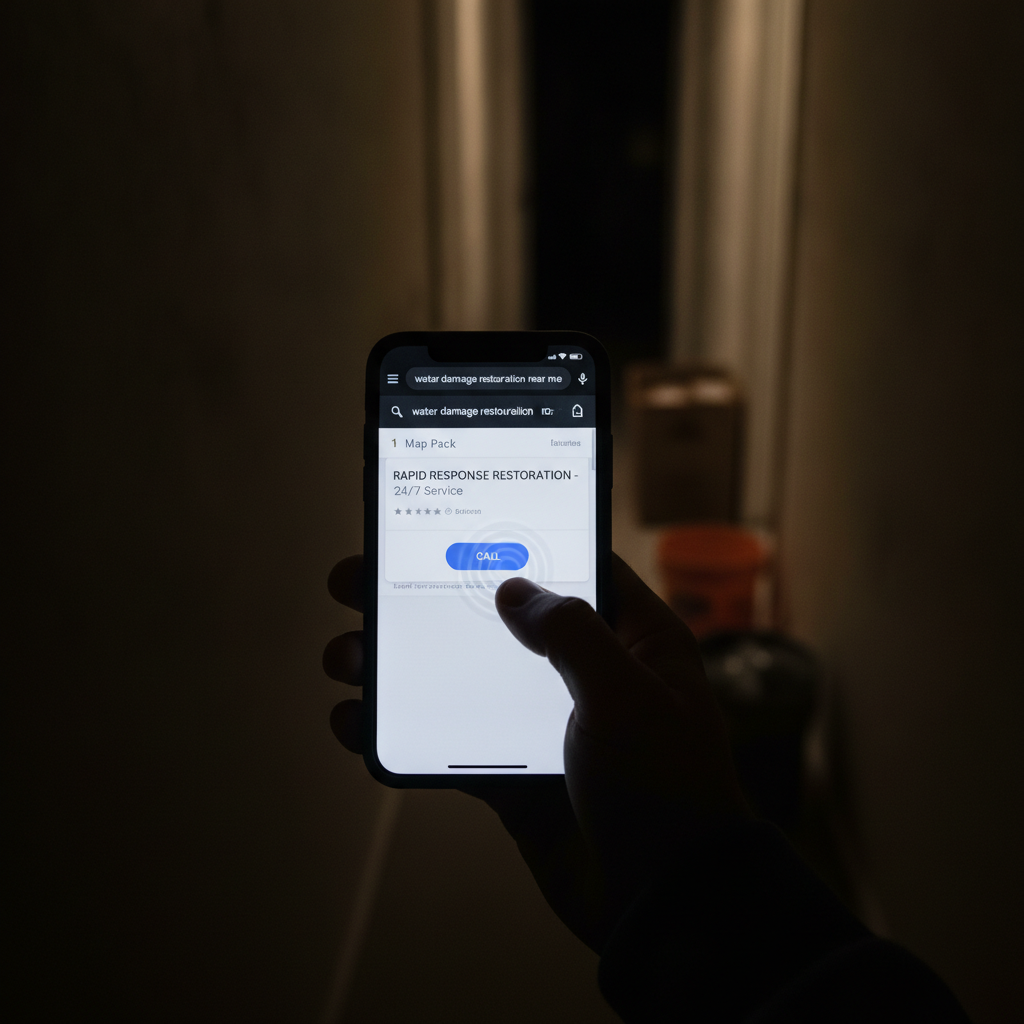
Pull up your website on a mobile phone right now. If the page takes more than 3 seconds to load, if your phone number is not tappable above the fold, or if you do not have a dedicated page for emergency water damage restoration — you are invisible at the exact moment a homeowner needs you most. Google Ads in this vertical cost $100–$200 per click in competitive markets. The national average water damage lead costs $542, and Dallas leads average $775. Your organic infrastructure, once built, generates those same leads for a fraction of that cost per lead, month after month. The restoration companies winning the most emergency calls are not out-spending competitors on paid ads — they have built the page architecture that shows up first when disaster strikes at 2 AM.
Ready to get started? Contact Geek Powered Studios today.