
The clearest sign it's time to fire your dental marketing agency is that their monthly report leads with impressions, clicks, or keyword rankings instead of new patients and cost per acquired patient. A dental SEO agency doing its job can tell you exactly how many new patient calls the account generated last month and what each one cost — sourced from call tracking software like CallRail and attributed from click to booked appointment. Other red flags include the agency owning your Google Ads account or Google Business Profile, a 12-to-24-month contract with no performance benchmarks, working with a competing dental practice in your metro, neglecting your Google Business Profile optimization, and going six or more months without a real strategy review. If two or more of these apply, the agency is protecting itself — not your practice.
-
Impressions don't fill chairsThe only two numbers that matter: new patients and cost per acquired patient
-
$3,000–$5,000+ lifetime value per patientWhat's at stake every month your agency runs on autopilot
-
Account ownership is non-negotiableYour Google Ads, GBP, and website must be in your name from day one
-
60–90 days for measurable call volume liftMinimum standard for any competent dental SEO agency
-
Market exclusivity is the minimum conditionAn agency serving your competitor cannot compete fully on your behalf
-
GBP neglect is a quiet revenue leakOptimized profiles receive 7x more patient calls than average dental practices
The average dental marketing agency relationship lasts only 5 months — and the red flags that end those relationships almost never show up during the sales call. They show up three months in, when you're staring at a report full of impressions and click counts while your schedule has more gaps than it did before you signed. A dental patient is worth $3,000–$5,000+ in lifetime value. That means every month your dental marketing agency runs the account on autopilot, ranks you for the wrong keywords, or hides behind vanity metrics is a month of real patient revenue walking out the door. This is a candid accountability checklist, ranked by how fast each red flag costs your practice money. If you recognize more than two of these signs, it's time to have a very direct conversation with your current dental marketing company — or find an SEO expert dentist marketing company that actually measures itself on new patients, not pageviews.

Your Monthly Reports Show Impressions, Not New Patients
Visit website ↗Vanity metric reporting is the easiest way for a dental marketing agency to look productive without producing real patient growth. Impressions, clicks, social engagement, and keyword rankings can all move dramatically upward while your phone sits quiet. Real reporting answers one question every month: how many new patients did this investment produce, and at what cost per acquired patient? If your current agency can't answer that within 24 hours, they're not measuring what matters.
What this looks like
- Monthly PDF shows organic traffic up 40% — but phone volume is flat
- Agency celebrates a ranking position without tying it to a booked appointment
- Report mentions social media engagement and reach with no patient count
- No call tracking software like CallRail in place to connect clicks to calls
- Patient acquisition cost is never mentioned in any report
The diagnostic question to ask this week
- Ask your agency: how many new patient calls did we generate last month, and what did each one cost?
- If they can't answer within 24 hours with attribution data, that's your answer
- Patient acquisition cost equals total marketing spend divided by new patients acquired — demand this number monthly
- A competent dental marketing agency should show measurable call increases within 60–90 days of launch
Bottom line
Impressions don't fill chairs. The only two numbers that matter for a dental practice owner are new patients per month and cost per acquired patient. Any dental marketing agency that leads with anything else is structurally protecting itself, not your practice.
They Own Your Website, Ad Account, or Google Business Profile
Visit website ↗Some dental marketing agencies build the practice website on agency-controlled hosting, run Google Ads from a master agency account, and manage the Google Business Profile from an agency login. When the practice tries to leave, it becomes a hostage situation: the practice website, ad campaign history, audiences, and review management access all vanish. This structural trap is one of the most common and most expensive patterns in the dental marketing industry. You lose the Google Ads optimization history, the organic search signals built into the domain, and the GBP management trail — and you start over from zero.
What this looks like
- You don't have admin access to your own Google Ads account
- Your dental website is hosted on the agency's server under their billing
- Google Business Profile was claimed under an agency email address
- Agency controls your review response logins and online reputation management tools
- Leaving means starting your Google Ads campaign history from scratch
The diagnostic question to ask this week
- Log into Google Ads and Google Business Profile right now — are you listed as the account owner?
- Ask your agency to send you the hosting login and CMS admin credentials today
- Verify that your domain registrar account is in your name, not the agency's
- If any of these are inaccessible to you, demand transfer before the next invoice clears
Bottom line
Your practice owns the digital assets. Any dental SEO agency worth keeping will hand over admin credentials on day one without hesitation. If they won't, that tells you exactly how they plan to hold the relationship together when results disappoint.
You're Locked Into a Long-Term Contract With No Performance Benchmarks
Visit website ↗Dental marketing agencies that lock practices into 12- to 24-month contracts with early termination penalties are structurally betting the practice owner will stay even when results never arrive. The mechanism is simple: once you're locked in, the agency's incentive to deliver shifts from performance to retention. A confident dental SEO company earns renewal month after month on results alone. The contract is the tell. If an agency needs legal lock-in to keep your business, they've already told you they don't trust their own digital marketing services to do the job.
What this looks like
- Contract runs 12–24 months with a penalty clause for early exit
- No defined performance benchmarks tied to new patients or cost per acquisition
- Agency uses 'SEO takes time' as a blanket defense when you ask about results
- Monthly retainer auto-renews with no structured check-in or review
- Scope of work lists activities, not outcomes — deliverables, not patient growth
The diagnostic question to ask this week
- Pull your contract and read the termination clause — what does it cost to leave today?
- Ask for a written list of performance benchmarks with a 90-day checkpoint built in
- If the agency responds that results take time without giving a concrete timeline, push for specifics
- Meaningful dental SEO movement takes 4–6 months — not 18 months of vague optimism
Bottom line
A contract that protects the agency but not the practice is a bad contract. Month-to-month agreements aren't a risk for confident dental marketing companies with proven strategies — they're the standard.

They're Working With a Competing Dental Practice in Your Market
Visit website ↗An agency working with a competing dental practice in the same metro area cannot deliver a uniquely competitive local SEO strategy. The content frameworks, link building relationships, keyword targets, and Google Business Profile optimization tactics get shared across competing listings — because using them twice is efficient for the agency, even when it's harmful to both clients. You're not getting a tailored strategy. You're getting the same playbook your competitor across town is already running on the same search engines.
What this looks like
- Agency can't confirm in writing that you're their only dental client in your city
- Your practice website content structure looks nearly identical to another local dental practice site
- Link building sources are the same directories used for competing dental offices
- Agency manages multiple dental groups or practices in your metro without geographic exclusivity
- Your strategy review feels templated — no mention of your specific local competitors by name
The diagnostic question to ask this week
- Ask directly: do you currently manage marketing for any other dental practices within 10 miles of our office?
- Request written confirmation of market exclusivity in your city and specialty
- Search the agency's portfolio — how many dental clients in your metro are listed?
- A dental marketing company that won't offer exclusivity is telling you your competitive advantage doesn't matter to them
Bottom line
Market exclusivity isn't a luxury — it's the minimum condition for a dental SEO agency to actually compete on your behalf. Without it, your retainer funds your competitor's local search rankings too.
Your Google Business Profile Is Neglected or Unoptimized
Visit website ↗Google Business Profile is the single most impactful local SEO asset for dental practices — more consequential for local pack visibility than the practice website itself. A Q1 2026 study found that the top 10% of optimized dental profiles received 7 times more patient calls than average practices. Google Business Profile optimization is not a one-time setup task: it requires active review management, regular posts, accurate service categories for high-intent queries like emergency dentist and implants, and ongoing photo updates. If your agency isn't treating your GBP as a live asset, they're ignoring your highest-leverage patient acquisition channel.
What this looks like
- No new posts, photos, or service updates on your GBP in the past 30 days
- Online review responses are missing, delayed, or obviously templated
- Agency has no active review acquisition process tied to patient communication
- High-intent queries like emergency dentist near me or implants near me aren't in your GBP services
- Profile was set up once and left alone — no ongoing local optimization
The diagnostic question to ask this week
- Open your GBP and check the last five actions taken — when were they, and who did them?
- Ask your agency for their review management process: how many new online reviews did they help generate last month?
- BrightLocal's 2026 Local Consumer Review Survey found 41% of patients always read reviews before booking — is your review count growing?
- Check whether high-intent services like Invisalign, implants, and emergency dentist are listed and described in your profile
Bottom line
GBP neglect is a quiet revenue leak. Patients search dentist near me on their phones and the local pack is what they see first. A dental SEO agency that ignores your Google Business Profile is ignoring your most direct path to new patient calls.
Your Agency Ranked You for the Wrong Keywords
Visit website ↗A traffic spike that produced zero new patients means the dental SEO agency ranked the practice for the wrong keywords. Informational blog traffic — posts about tooth anatomy, dental care tips, or the history of orthodontics — drives impressions and organic traffic without moving the appointment booking needle. The right keywords are commercial-intent, service-plus-city combinations: implant dentist Austin TX, emergency dentist near me, Invisalign Dallas. Patients search for a dentist with urgency and location intent. An agency that optimizes around broad informational terms is building search visibility in the wrong zip code of the internet.
What this looks like
- Organic traffic is up but new patient call volume is flat or declining
- Top-ranking pages are blog posts about dental care tips, not service pages
- Agency reports rankings for terms like what is a root canal rather than root canal dentist near me
- No commercial-intent keyword targeting tied to the practice's highest-value dental services
- Content strategy produces page views from patients already in treatment elsewhere
The diagnostic question to ask this week
- Ask your agency to show you the top 10 keywords driving organic traffic — are they service-plus-city or informational?
- Check Google Search Console for your top landing pages — do they convert visitors to appointment requests?
- Request a technical SEO and keyword audit focused on commercial-intent terms in your metro
- Data-driven SEO strategies for dental practices prioritize keywords that high-value patients actually type when they are ready to book
Bottom line
Organic search traffic without appointment bookings is a content strategy problem disguised as an SEO win. The right dental SEO company builds search visibility around the terms patients use when they have a toothache or need implants — not when they're doing homework.
No Strategic Review Has Happened in Over Six Months
Visit website ↗An agency that hasn't conducted a real strategy review of your dental practice's goals and marketing approach in over six months is running the account on autopilot. Dental marketing strategy needs to evolve with algorithm changes, competitive shifts in your local market, and your own practice growth priorities. A generalist internet marketing agency running dozens of dental clients on templated quarterly check-ins isn't adapting strategy — it's maintaining a retainer. The difference shows up when a competitor launches new service pages, a Google algorithm update hits local search results, or your target patient demographics shift and nobody on your account notices.
What this looks like
- Last strategy call was a status update, not a forward-looking plan
- Agency hasn't mentioned a Google algorithm update or explained how it affected your rankings
- Local competitors have launched new dental services pages and you haven't been told
- No mention of new keyword opportunities or shifts in patient search behavior
- The agency's marketing strategy recommendations this quarter are identical to last quarter
The diagnostic question to ask this week
- Request a strategic review call this month — not a reporting call, a forward-looking strategy session
- Ask: what has changed in our local market in the last 90 days, and how have we responded?
- A dental SEO agency using data-driven SEO strategies should know your top three local competitors' rankings by name
- If the agency can't name a single adjustment made to your dental marketing strategy in the last quarter, the account is on cruise control
Bottom line
Autopilot account management is the slow death of dental marketing ROI. Your local market shifts every quarter. A dental marketing agency that isn't adapting your strategy to match is quietly falling behind on your behalf — and billing you for the privilege.
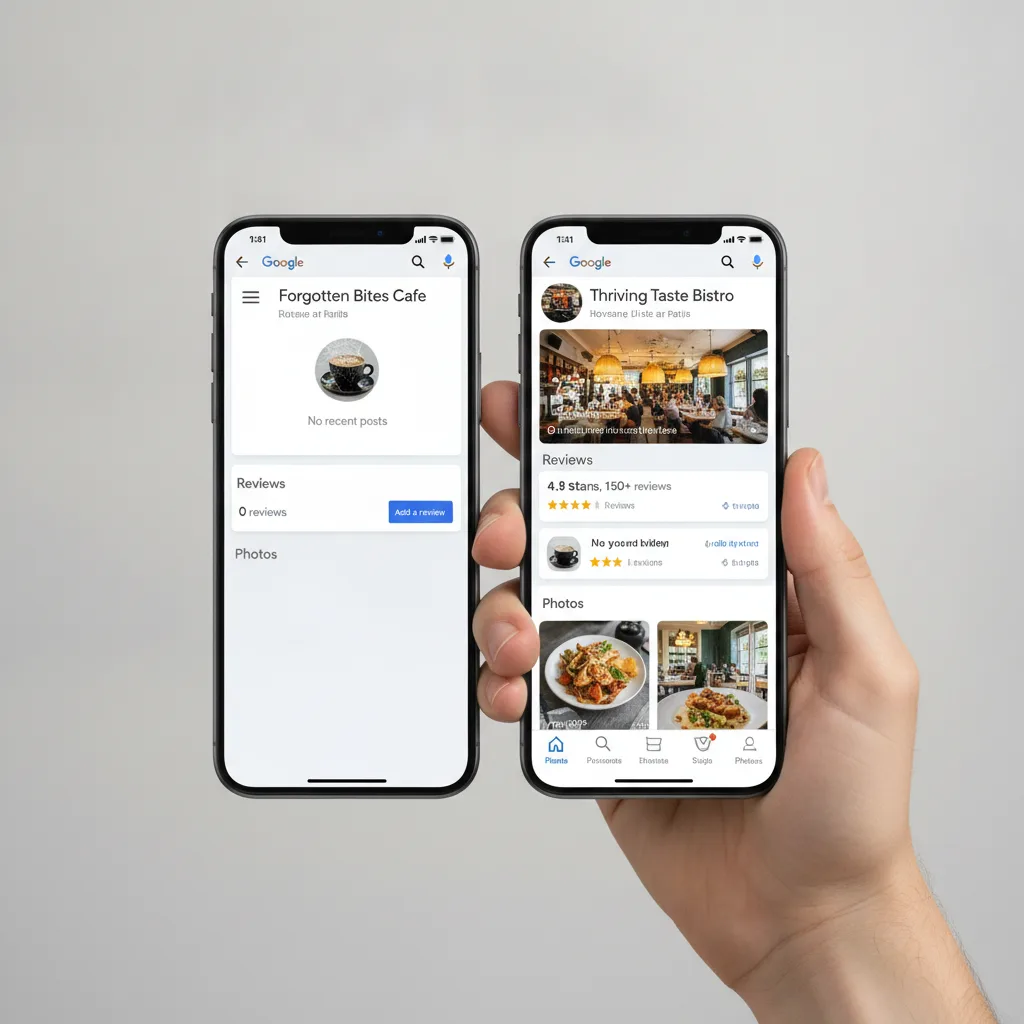
What Reporting Should Actually Look Like for Dental Practices
Every month, your dental SEO agency should hand you three numbers without you having to ask: new patient calls generated, new patient form submissions, and cost per acquired patient. Those three data points — pulled from call tracking software like CallRail and properly attributed from paid search or organic search click through to booked appointment — are the only report that tells you whether the marketing spend makes sense. Anything else is context. If your current agency's monthly report doesn't lead with those numbers, ask why. A confident dental marketing company with nothing to hide will have that data ready before you send the email. If they respond with a slide deck full of session counts and social media engagement, you have your answer.
Here's the honest version of what switching looks like. You fire a dental marketing agency that's been sending you impression reports for eight months. You move to a dental marketing partner that tracks everything from keyword click to booked appointment using real call tracking and attribution. Within 60–90 days, you see exactly how many new patient calls your marketing is generating and what each one costs. That's not a promise — it's the minimum standard for any competent dental SEO company. Geek Powered Studios applies this framework to healthcare and dental practices: SEO services, Google Ads, and Google Business Profile optimization running as one integrated strategy, with reporting tied to booked patients rather than organic traffic counts. Lakeway Cosmetic Dentistry saw plus 80% in organic leads year-over-year and plus 105% growth in paid ads leads. San Antonio Eye Specialists hit record-breaking sales months within six months. The approach is the same for dental practices. Market exclusivity means we don't work with your competitor down the street. A custom dental website design is included at no extra cost. And there's no long-term contract, because we'd rather earn your business every month on real patient growth than lock you into one. If any of the seven signs in this article sound familiar, book a free strategy session. We'll audit what's actually happening with your dental SEO services and show you what patient-tied reporting looks like before you sign anything.
Frequently Asked Questions
Ready to get started? Contact Geek Powered Studios today.